
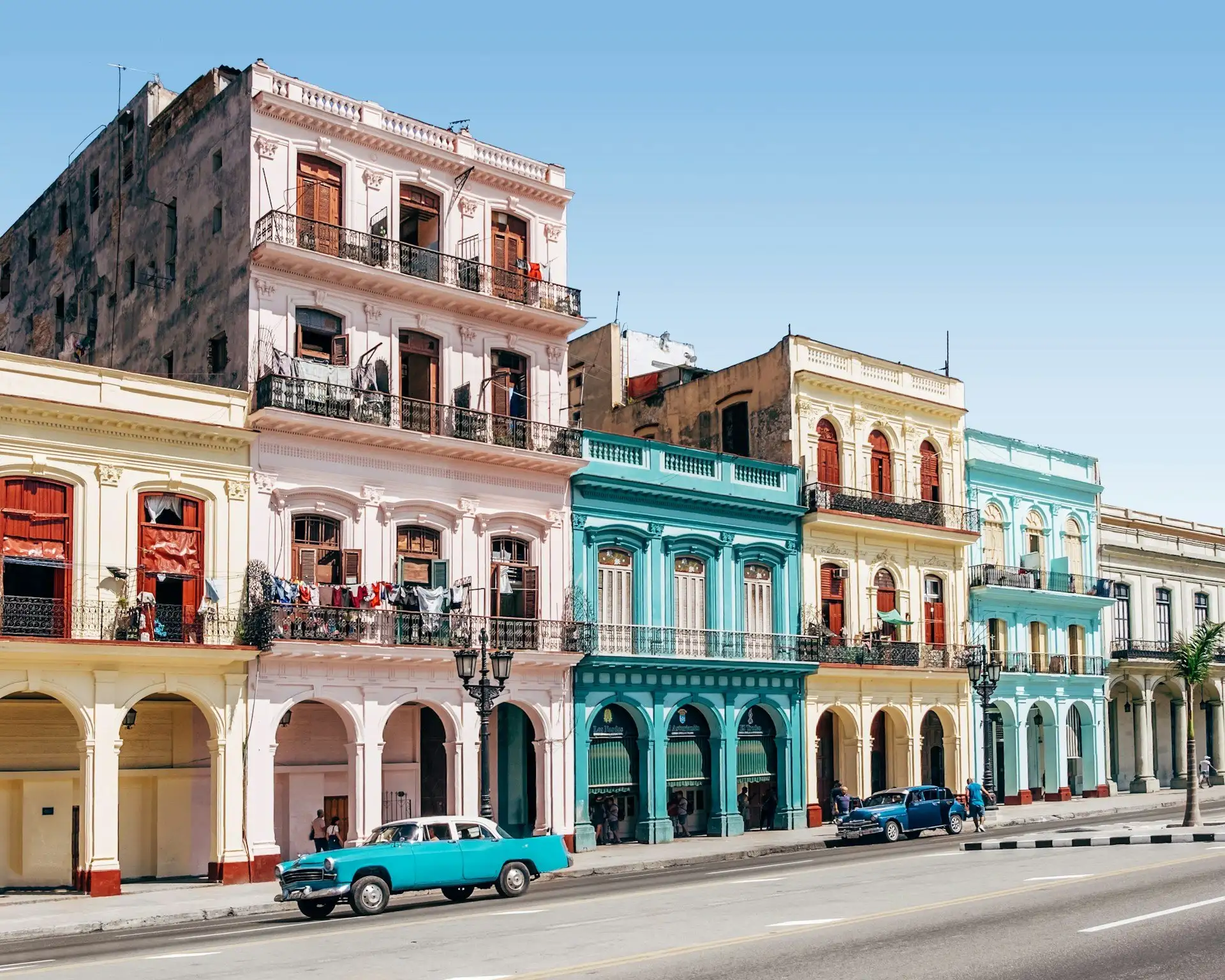
What You're Actually Getting Into
Cuba is the country that requires the most recalibration of any destination in the Western Hemisphere. Not because it's dangerous or difficult to navigate, but because almost everything works differently from what you expect. Cards may not work. The internet is expensive and slow by design. The official exchange rate and the informal rate have historically diverged in ways that matter to your budget. The same plate of rice and beans costs three very different prices depending on which restaurant you're in and who the owner is.
None of this is a reason not to go. It's a reason to go prepared. Cuba rewards travelers who arrive with flexibility instead of a rigid plan, cash instead of card dependency, and genuine curiosity rather than a checklist of Instagram coordinates. The country has a quality of encounter that is almost impossible to manufacture: you will have conversations here that wouldn't happen anywhere else, eat in someone's actual living room because their kitchen is now licensed as a restaurant, and watch a trumpet player rehearse in a doorway at 9am on a Tuesday on Obispo Street because that's just what mornings are like in Havana's old city.
The other thing to know upfront: Cuba is in a state of genuine economic difficulty. Power cuts (apagones) can last hours and occur without warning across the country. Some goods are scarce. The tourism infrastructure has frayed at the edges since the post-2016 boom ended. This is not a reason to skip Cuba. It is a reason to travel with empathy, spend money at private businesses rather than state-run ones, and keep your expectations calibrated to reality rather than vintage travel photography.
Cuba in 2026 is still one of the most singular places on earth. The music, the architecture, the coastline, the food coming out of the better private restaurants, the way a Sunday afternoon in Trinidad turns into a street party with no announcement or planning required. Go now, while it's still this complicated and this alive.
Cuba at a Glance
A History Worth Knowing
Cuba's history is one of the most compressed and dramatic in the Americas. The island Columbus reached in 1492 was home to the Taíno and Ciboney peoples. Within fifty years, the indigenous population had been devastated by disease and forced labor. The Spanish established Havana as a strategic port in 1519, and for the next three and a half centuries, Cuba became one of the wealthiest colonies in the Americas, its sugar economy built entirely on enslaved African labor. The legacy of that system is everywhere in Cuban culture today: in the music, in Afro-Cuban religious traditions like Santería, in the food, in the rhythmic structure of ordinary conversation.
The 19th century brought a series of independence wars. The Ten Years' War from 1868 to 1878, led by landowner Carlos Manuel de Céspedes who freed his slaves on the first day of the uprising, ended in stalemate. José Martí, poet and revolutionary, died in the opening days of the 1895 war that would finally end Spanish rule. The United States intervened in 1898, defeating Spain but then imposing the Platt Amendment, which gave Washington the right to intervene in Cuban affairs and established a naval base at Guantánamo Bay that the US still occupies today. Cuban sovereignty was real but constrained.
The decades between 1902 and 1959 produced a Cuba of extraordinary contradictions: Havana was glamorous and cosmopolitan, a playground for American tourists and organized crime, while the countryside remained deeply poor. Fulgencio Batista's dictatorship in the 1950s provided the political conditions for revolution. Fidel Castro, Che Guevara, and a small guerrilla force in the Sierra Maestra mountains defeated Batista's army on January 1, 1959. The Cuban Revolution is one of the defining events of the 20th century.
What followed was six decades of socialist governance, Cold War confrontations, a US trade embargo that began in 1962 and continues today, the missile crisis that brought the world to the edge of nuclear war, the mass exodus of Cuban professionals, and an economy that has lurched between Soviet subsidy and collapse. The Special Period in the early 1990s after the USSR dissolved was a genuine crisis: food shortages, blackouts, widespread poverty. Cuba survived it, partly through an unlikely source of income: tourism.
Understanding this history matters for how you travel in Cuba. The revolutionary murals are not just decoration. The free healthcare and education system that Cubans will tell you about are genuine achievements and sources of real pride, coexisting with genuine frustration about economic hardship and political restrictions. Don't arrive expecting to decode Cuba's politics in two weeks. Arrive listening.
Columbus lands in Cuba. Within decades, indigenous populations are decimated.
Established as a key port. For centuries, treasure fleets from the Americas stopped here.
First major independence uprising. Céspedes frees his slaves and declares war on Spain.
Spain defeated. Cuba nominally independent but under US influence through the Platt Amendment.
Fidel Castro enters Havana on January 8. The Batista government flees. A new era begins.
Thirteen days in October that brought the US and USSR to the brink of nuclear war.
Soviet Union collapses. Cuba loses 85% of its trade. A decade of severe hardship follows.
Fidel died in 2016. Economic pressures remain. Tourism and private enterprise expand cautiously.
Top Destinations
Cuba is a long, narrow island and you'll move along it largely from west to east, or in a loop. Havana is where almost everyone starts and many never leave, which is understandable but a mistake. The tobacco valleys of Viñales, the colonial perfection of Trinidad, and the completely different energy of Santiago de Cuba in the far east all reward the extra travel time required to reach them.
Havana
La Habana is a city in a state of permanent beautiful decay, and that combination produces something you can't find anywhere else. Habana Vieja, the old city, is a UNESCO World Heritage site: Plaza de la Catedral in the early morning before the tour groups arrive, the bar at Hotel Ambos Mundos where Hemingway wrote part of For Whom the Bell Tolls, the Malecón seawall where every evening feels like a neighborhood gathering. Stay at least four days. The first two you'll be adjusting. The last two you'll start to understand it.
Viñales
Three hours west of Havana by bus. The valley is dramatic: flat-topped limestone mogotes rising from red-soil farmland still worked by ox-drawn plows. The tobacco grown here is some of the finest in the world. Visit a farm and watch a veguero roll a cigar from fresh leaf. Rent a horse or a bike for the morning and ride between fields. Viñales town itself is small and friendly with excellent casas particulares. Two or three nights is right.
Trinidad
Trinidad is the best-preserved colonial town in the Caribbean. The cobblestone streets, painted in yellow and terracotta, climb toward the Iglesia de la Santísima Trinidad and look out over sugar mill ruins and the sea beyond. It's genuinely beautiful, it knows it, and the tourism infrastructure is accordingly robust. Still worth it. The Casa de la Música stairs at night become a street party without any formal occasion required. Allow two to three nights.
Santiago de Cuba
Cuba's second city and the birthplace of son music. It's in the far east, geographically and culturally distinct from Havana. More African in its influences, more intensely musical, more politically charged (it was here the Revolution was launched). The Casa de la Trova on Heredia Street is the most important music venue in Cuba and it starts filling at 10am. If you only go to one live music venue in the country, make it this one.
Zapata Peninsula
Cuba's largest wetland and one of the Caribbean's most important wildlife reserves. This is also the Bay of Pigs, where a CIA-backed invasion force was defeated in 1961. There's a small, honest museum at Playa Girón. The diving off the coast is some of the best in the country: wall dives with near-vertical coral drop-offs and visibility that makes you wish you'd learned to dive earlier.
Varadero
Cuba's most developed resort peninsula. Turquoise water, white sand, and a strip of all-inclusive hotels that could be anywhere in the Caribbean. If that's what you want, it delivers it competently. If you're reading this guide, Varadero is probably not your Cuba. Worth a day trip from Havana if you want a beach without building a whole itinerary around it.
Cienfuegos
The "Pearl of the South" sits on a wide bay and has a distinctly French-influenced colonial center that earned it UNESCO status. It's a natural stopping point between Havana and Trinidad. The Malecón here is quieter than Havana's. The Palacio de Valle, an eccentric Moorish-Gothic-Venetian mansion now functioning as a restaurant and bar, has a rooftop terrace worth climbing for the view over the bay.
Baracoa
Cuba's oldest city, tucked into the far northeastern corner of the island where the mountains meet the sea. It was isolated by geography for centuries and developed its own food culture, music style, and character. The chocolate grown here using the local cacao is genuinely excellent. Getting to Baracoa involves either a flight from Havana or the La Farola mountain road from Santiago de Cuba, which is one of the best drives in the Caribbean.
Culture & Etiquette
Cubans are among the most genuinely warm and socially open people you'll encounter anywhere. The culture runs on conversation. A stranger will start talking to you at a bus stop, in a park, in a queue, because that is how things work here and always have. This openness is real and wonderful. It also means that some conversations will involve requests for money, gifts, or your email address. Both things can be true at once. The art is in reading which is which, and that takes a day or two.
The pace is slower than you're used to. Queues (colas) for almost everything, bureaucracy that moves in its own time, restaurants that may be out of most items on the menu, guesthouses where the hot water takes fifteen minutes to arrive. Don't be in a hurry in Cuba. It won't help.
A simple "Buenos días" or "Buenas tardes" before any request or question is not optional. It's the baseline of polite interaction. Launching straight into "where is..." is considered abrupt.
Private restaurants (paladares) and casas particulares (private guesthouses) put money directly in Cuban families' pockets. State-run restaurants and hotels do not. Your choice of where to eat and sleep has real economic consequences here.
If a Cuban invites you for coffee, a rum, or to sit down and listen to music, say yes. These invitations are genuine. Refusing is possible but repeatedly declining makes you harder to talk to.
Breaking large peso notes is a persistent logistical challenge. Keep small denominations for street food, transport, and tips. Change is often genuinely unavailable.
English is spoken in tourist areas but not universally. "Por favor," "gracias," "cuánto cuesta," and "dónde está" will unlock a completely different quality of interaction across the country.
Cuba takes this seriously. Military installations, police checkpoints, and uniformed officers are off-limits as photography subjects. Ask before photographing anyone in an official capacity.
Cubans talk about politics among themselves, openly and with nuance. Tourists arriving with strong pre-formed opinions delivered at volume tend to close conversations rather than open them. Listen more than you speak.
Cubans live with shortages every day. A tourist complaining that there's no oat milk or that the wifi is slow is not a culturally neutral observation. It reads as tone-deaf.
The man in the guayabera shirt smoking a cigar outside a yellow building is a person, not a postcard. Ask before photographing people. Most will say yes. The act of asking matters.
Informal currency exchange (buying CUP on the informal market) is technically illegal and exposes you to short-changing. CADECA exchange bureaus are straightforward and legal.
The Music
Cuba's musical tradition is one of the most significant in the world. Son, salsa, rumba, bolero, timba, and trova all originated here or were shaped fundamentally by Cuban musicians. Music is not performed for tourists. It is played in parks, doorways, at funerals, and at family gatherings because that's what Cubans do. Sit and listen whenever you have the chance. Tip the musicians.
Santería
Afro-Cuban religious traditions, primarily Santería (also called Lucumí or Regla de Ocha), are practiced by a significant portion of the population alongside or instead of Catholicism. You'll see the color-coded beads of different orishas (deities), offerings at street corners, and occasional ceremonial drumming. This is not a tourist attraction. It's a living spiritual practice. Approach with respect and discretion.
The Cars
The famous American cars from the 1940s and 1950s are not a museum piece or a government-curated aesthetic. They exist because the US embargo made importing new vehicles essentially impossible for decades, and Cubans are extraordinarily skilled mechanics. The cars are working transport. The ones converted to tourist taxis charge accordingly. The ones that aren't are cheaper if you ask to share a colectivo route.
Jineteros
Jineteros are informal guides, hustlers, and fixers who approach tourists in major cities offering everything from cigar sales to restaurant recommendations (they get a commission for every tourist they bring in). They're a feature of Cuban tourist life, not a threat. A firm but polite "no gracias" works. Engaging with interest and then refusing is confusing. Be clear early.
Food & Drink
The honest truth about Cuban food: state-run restaurants serve food that is often mediocre, overpriced, and limited by genuine supply shortages. Private paladares, which have been operating legally since 1993 and proliferating rapidly since 2011, are a completely different experience. The best paladares in Havana, Trinidad, and Viñales produce food that reflects real Cuban home cooking: bold flavors, slow-cooked meat, black beans with rice (congrí or moros y cristianos), and the best fresh fish on the island.
The basic Cuban plate is ropa vieja (shredded beef slow-cooked in tomato and peppers), rice, black beans, fried plantains, and a small salad. It's modest by global standards. In a good paladar, it's deeply satisfying. The improvement in Cuban private dining over the last decade has been significant. Don't measure Cuban food against Paris. Measure it against what it is: hearty home cooking from a country that has had to be creative with limited ingredients.
Ropa Vieja
The national dish. Shredded flank steak braised in a sofrito of tomato, pepper, onion, and cumin, served over rice with black beans and fried plantains. Good versions are rich, complex, and deeply savory. Bad versions exist in state restaurants. In a paladar worth its salt, it's excellent.
Congrí
Black beans and rice cooked together in the same pot with garlic, cumin, and pork fat. In eastern Cuba it's called congrí; in Havana, moros y cristianos. The names are different but the result is the same: one of the great side dishes in Caribbean cooking. You'll eat this every day and not mind.
Seafood
Cuba is an island with excellent fishing waters, and the lobster (langosta) is remarkable and cheap by international standards. It appears on virtually every paladar menu along the coast. Grilled whole fish with garlic and lime, cooked outside over charcoal, is found in coastal towns from Baracoa to Viñales and is worth seeking out specifically.
Baracoan Food
The far-eastern region around Baracoa has its own food culture, distinct from the rest of Cuba. Cucurucho is a cone of coconut, honey, guava, and various fruits wrapped in palm leaf and sold on the roadside. The local cacao produces chocolate that is genuinely excellent. Tetí, tiny fish eaten in fritters, are found only here. Baracoa is worth the journey for the food alone.
Rum
Cuba produces some of the finest rum in the world. Havana Club 7 Años is the benchmark: smooth, complex, and designed for drinking neat or with a single ice cube, not drowning in mixer. Ron Santiago, produced in Santiago de Cuba, is arguably better and less internationally marketed. Buy a bottle at the source. Bring several home. At 5–8 CUC equivalent per bottle at source, the value is extraordinary.
Cigars
Cuban cigars are the reason the word "cigar" has global prestige. Cohiba, Montecristo, Romeo y Julieta. Buy them from state cigar shops (Casa del Habano) rather than from street vendors, regardless of what story accompanies the street offer. Factory tours in Havana and Viñales let you watch hand-rolling in action. A box of genuine Cohibas at the Casa del Habano costs more than you expect and less than at your local tobacconist.
When to Go
The dry season from November to April is when Cuba is at its most comfortable. December and January are the peak of the peak: warm days around 26°C in Havana, low humidity, virtually no rain, and evenings that are genuinely pleasant. February through April is slightly quieter in terms of tourists but the weather holds. This is when you want to be in Cuba if you have the choice.
Dry Season
Nov – AprClear skies, low humidity, comfortable temperatures for walking all day. December has the added energy of the Havana Jazz Festival. February to April is quieter and often better value than the Christmas-New Year peak.
Shoulder
May, Oct–NovMay and October have occasional showers but are generally fine. The island is greener and prices drop. October has the Festival Internacional de Ballet de La Habana in even-numbered years, which is worth planning around.
Hurricane Season
Jun – SepHot, humid, and the genuine risk of hurricanes particularly from August to October. Cuba has been hit hard in recent years (Hurricane Ian in 2022 devastated parts of the west). Some beach areas close and transport is unpredictable. The upside is prices drop significantly.
Trip Planning
Two weeks is the ideal Cuba trip. Less than ten days and you'll spend too much of it in Havana (which is wonderful but incomplete). Three weeks gets you to Santiago or Baracoa, which is a different Cuba entirely and worth every hour of travel. The biggest planning decision is cash: work out your entire budget in advance, convert it at the airport in your departure country, and arrive with everything you need. Do not rely on ATMs working.
Havana
Day one: arrive, orient yourself in Habana Vieja, walk the Malecón at sunset, find a good paladar. Days two and three: Vedado neighborhood for the Necrópolis Colón and the Coppelia ice cream park, the Museo de la Revolución, an evening in Habana Vieja's live music bars. Don't rush. Let the city come to you.
Viñales
Viazul bus west (3 hours). Book in advance at the Havana terminal. Two nights in a casa particular in the valley. Morning horseback or bike ride through tobacco fields. Visit a farm for a cigar demonstration. Evening on the casa terrace with rum and the sound of frogs.
Havana (Return)
Bus back to Havana. Final day for things you missed: the Fábrica de Arte Cubano (FAC) if it's open in 2026, the Callejón de Hamel for Afro-Cuban art and rumba on Sundays, one last sunset on the Malecón. Night flight home or early morning departure.
Havana
Four full days to explore properly. Habana Vieja on foot, Vedado by taxi. Take a half-day trip to the Playas del Este beaches. An evening at a genuine son music venue rather than a tourist performance. The difference is audible.
Viñales
Two nights in the valley. Sunset hikes up to the viewpoints north of town. A bottle of Havana Club on the casa terrace watching the mogotes go dark.
Cienfuegos
Bus east to Cienfuegos. Two nights. French colonial architecture and a quieter pace. The Palacio de Valle rooftop bar at sunset. Day trip by bicycle to Laguna Guanaroca for flamingos and crocodiles.
Trinidad
An hour from Cienfuegos. Three nights. Cobblestones and colors, the Casa de la Música steps at night, a day hiking in Topes de Collantes, a beach afternoon at Playa Ancón.
Back to Havana
Bus or shared taxi back via Cienfuegos. Final night in Havana. Fly out the next morning.
Havana
Full immersion. Include a Sunday morning at the Callejón de Hamel for rumba. An evening at the Fábrica de Arte Cubano. A proper cigar purchase at the Casa del Habano on Quinta Avenida in Miramar.
Viñales
Two nights in the tobacco country. Cave tour at Cueva del Indio. Early morning bike ride before the heat arrives.
Cienfuegos + Trinidad
Move east along the coast. Cienfuegos for a night, then two nights in Trinidad with the Topes de Collantes hiking day trip included.
Santiago de Cuba
Fly from Havana or take the overnight train. Four nights. The Casa de la Trova, the Moncada Barracks, the cemetery where Fidel Castro is buried, the Rumba Saturday morning at the Casa del Caribe. This is a different Cuba from Havana.
Baracoa + Return
Three to four nights in Cuba's most isolated city. The chocolate, the cucurucho, the El Yunque hike. Fly back from Baracoa's small airport or take La Farola road to Santiago and fly from there. Return to Havana for your international flight.
Vaccinations
No mandatory vaccinations. Recommended: Hepatitis A, Hepatitis B, Typhoid, and routine vaccines. If spending time in rural or coastal areas, consider protection against mosquito-borne illness. Cuba has had dengue outbreaks.
Full vaccine info →Connectivity
Cuba's internet is state-controlled. ETECSA wifi cards (sold at hotels and some stores) give you hourly access at hotspots. Mobile data SIMs are available for foreign phones at ETECSA offices. It's slow. Download everything offline before you arrive.
Get a Cuba eSIM →Power Cuts
Apagones (blackouts) occur throughout Cuba, sometimes for multiple hours per day. A good portable power bank is essential travel equipment here. Bring one with at least 20,000mAh capacity. Cuba uses 110V with Type A plugs.
Language
Spanish is essential. English is spoken by younger Cubans in major tourist areas but is genuinely limited in smaller towns. A pocket phrasebook or Google Translate offline pack for Spanish will improve your trip enormously.
Travel Insurance
Cuba actually requires proof of travel insurance to enter. This is checked at immigration. Make sure your policy covers Cuba specifically and carry printed proof. Some policies exclude Cuba due to US sanctions-related clauses. Check carefully before purchasing.
Medication
Pharmacies in Cuba have limited stock and chronic shortages. Bring all your medication and a generous surplus. Over-the-counter items like ibuprofen, antidiarrheal medication, and sunscreen can be difficult to find, especially outside Havana. Pack a comprehensive travel health kit.
Transport in Cuba
Getting around Cuba requires patience and advance planning in a way that few other destinations demand. The main tourist bus company, Viazul, connects major cities on a fixed schedule and is reliable if you book early. Seats fill up weeks in advance in high season. Show up at the terminal without a ticket and you may be stranded for days. Book at the Viazul office or at your casa particular.
Shared taxis (colectivos) are faster than the bus, cheaper than private taxis, and the way Cubans actually travel between cities. You wait at the departure point until the car has a full complement of passengers and then leave. The 1950s American cars used on many of these routes are the most atmospheric way to move across Cuba and cost roughly the same as the bus.
Viazul Bus
$10–50/routeThe main intercity bus for tourists. Reliable, air-conditioned, direct routes between all major destinations. Book at least a week ahead in high season. The Havana terminal is on Calle 26 in Nuevo Vedado.
Colectivo Taxi
Similar to busShared old American cars running fixed routes between cities. Faster than buses and with more character. Ask at your casa about departure points. Prices are negotiated; know the going rate before you arrive.
Private Taxi
Negotiate upfrontFaster and more flexible than buses for day trips and shorter routes. Always agree on a price before getting in. Classic car taxis in Havana are tourist-priced. State-run yellow taxis (Cubataxi) are metered and often cheaper for city rides.
Domestic Flights
$100–200Cubana and Aerogaviota connect Havana to Santiago, Baracoa, Holguín, and other eastern cities. Saves a day of bus travel. Book well in advance as capacity is limited. Domestic flights are the practical option for reaching Baracoa.
Train
Very cheapThe Havana-Santiago train runs overnight and takes 15-18 hours when it runs, which is not always guaranteed. It's an experience rather than a practical transport solution. Chinese locomotives, great views, uncertain schedules. For the adventurous traveler only.
Bicycle
$5–15/dayViñales and Trinidad are excellent by bicycle. Havana's Old City is manageable on two wheels in the morning. Most casas can arrange bike rental. The flat tobacco valley roads in Viñales are some of the best cycling in the Caribbean.
City Bus (Camello)
Almost freeLocal city buses in Havana are incredibly cheap and genuinely crowded. The articulated "camel" buses are a Cuban institution. Not practical for tourist navigation but worth experiencing once for the sheer density of Cuban urban life in a vehicle.
Bicitaxi
Negotiate per tripThree-wheeled bicycle taxis operating within city neighborhoods. Slow, cheap, and excellent for short distances in Havana Vieja and Trinidad. Negotiate the price before you get in. A short Habana Vieja ride should not cost more than a dollar or two equivalent.
Accommodation in Cuba
Stay in casas particulares. This is not optional advice. It is the correct choice in almost every situation. A licensed private home, typically with breakfast included for $3–5 extra, costs $25–60 per night and puts money directly into Cuban families' hands. Your hosts know everything: which paladares are worth eating at, which colectivo is leaving for Trinidad tomorrow morning, and which bar you should absolutely avoid. That knowledge is worth more than the hotel breakfast buffet.
State-run hotels are large, often in historic buildings, and frequently have excellent bars and architecture. They are also bureaucratically run, prone to maintenance issues, and more expensive than casas for comparable quality. Iberostar and Meliá manage some of the better hotel properties in Cuba under license; these are the exception rather than the rule for state hotels.
Casa Particular
$25–60/nightThe only correct choice for independent travelers. A private room in a Cuban home, usually with breakfast. The quality ranges from basic to genuinely luxurious. Book through Airbnb, booking platforms, or directly with the casa. The best ones fill months ahead in peak season.
State Hotel
$60–200/nightGrandiose historic buildings with variable service and maintenance. Hotel Nacional in Havana is genuinely impressive architecturally. The bar terrace is worth visiting even if you're not staying. Most mid-range state hotels are not worth their price over a good casa.
All-Inclusive Resort
$80–200+/nightPrimarily in Varadero. If your aim is beach, pool, and cocktails without logistical complexity, these work. They are geographically and culturally isolated from Cuba. Fine for what they are. Not what this guide is for.
Rural Casas
$15–35/nightIn Viñales, Baracoa, and smaller towns, casas are simpler and cheaper. The hospitality is often warmer and meals cooked on the premises. A Viñales casa with dinner included for $35 total is one of Cuba's great travel values.
Budget Planning
Cuba's costs for tourists have risen significantly since the early 2010s but remain cheaper than most Caribbean destinations. The critical variable is your choice of accommodation and food: state-run vs private. A traveler eating exclusively at paladares and staying in casas will spend less and eat better than someone in state hotels. The informal economy and peso prices for food exist but navigating them requires more effort and language skills.
The currency situation is worth understanding. Cuba uses the Cuban Peso (CUP). The previous dual currency system (with CUC) was abolished in 2021. Exchange euros, Canadian dollars, or British pounds at CADECA bureaus for the best rates. US dollars attract a penalty tax at official exchange points, so if you're American, bring euros or CAD instead.
- Basic casa particular
- Peso street food and small paladares
- Viazul buses for intercity travel
- ETECSA wifi cards for internet
- Local rum from peso shops
- Good casa particular with breakfast
- Paladares for lunch and dinner
- Mix of buses and shared taxis
- Tours and activities included
- Occasional cocktail bar evening
- Best casas or boutique state hotels
- Top paladares and lobster dinners
- Private taxis for flexibility
- Domestic flight for eastern Cuba
- Good cigars at the Casa del Habano
Quick Reference Prices
Visa & Entry
Most nationalities need a tourist card (tarjeta del turista) rather than a formal visa. It's a pink or green card that you fill out before boarding your flight to Cuba. Where you buy it and what it costs depends on your departure country. Some airlines include it in the ticket price; others sell it at check-in. You can also buy it in advance from Cuban embassies or specialist travel agencies. The standard tourist card is valid for 30 days from entry and can be extended once in Cuba at an immigration office for another 30 days.
Americans face a completely different set of rules. The US government prohibits general tourism to Cuba but permits travel under 12 authorized categories. The most commonly used by independent travelers is "Support for the Cuban People," which requires that you stay in casas particulares, eat at private restaurants, and interact with Cuban civil society rather than state enterprises. Keep receipts. If you return through the US, you may be asked to demonstrate compliance. As of 2026, direct flights from Miami operate but the political and regulatory status is subject to change with each administration. Check the current US Treasury OFAC guidelines before booking.
Most nationalities need a tarjeta del turista. Valid 30 days, extendable once. Buy from your airline, a Cuban embassy, or travel agent before departure.
Family Travel & Pets
Cuba is a good destination for families with older children (10 and up) who can handle a more adventurous travel experience: variable electricity, limited western food options, and logistics that require flexibility. For families with young children, the challenges multiply. Casas particulares are generally accommodating to families and often have kitchen access for making simple meals. Cots and children's facilities are available but not standardized. Pack more than you need for under-fives.
The genuine rewards for families with curious older children are significant. Cuba teaches things no classroom does: how people live differently, what history looks like in its physical form, and what it feels like to be in a country where the internet works badly on purpose. These are valuable experiences.
Horseback in Viñales
Guided horseback rides through the tobacco valley are one of Cuba's best family activities. Most operators cater to beginners and children. The routes pass through working farms, along river beds, and up to viewpoints with Viñales valley spread out below.
Snorkeling & Diving
The Bay of Pigs has excellent beginner snorkeling off the black rocks at Playa Girón. The warm, clear water and abundant reef fish make it genuinely accessible for children who can swim. Certified divers can arrange wall dives for far less than comparable Caribbean destinations.
Music & Dance
Cuban children learn to dance before they learn to read, and local families are genuinely welcoming to foreign children joining in. Many casas particulares in Trinidad and Havana can connect families with informal music or dance lessons. This is the kind of experience that gets remembered for decades.
Wildlife
Cuba has extraordinary endemic wildlife for its size. The bee hummingbird, the world's smallest bird, is found only here. The Zapata Peninsula has crocodiles, flamingos, and over 175 bird species. For children interested in nature, Cuba is unexpectedly rich.
Baracoa for Curious Kids
A cacao farm tour near Baracoa where children can see chocolate made from raw bean to finished product is one of Cuba's most genuinely educational activities. The resulting chocolate purchase is non-negotiable.
History Without the Boredom
The combination of American classic cars, revolutionary murals, Hemingway's house, and the Moncada Barracks museum in Santiago gives history-curious teenagers more genuine material than almost any European capital. The recent history here is not textbook distance. It's the building on the corner.
Traveling with Pets
Traveling to Cuba with pets is possible but involves significant bureaucratic complexity and is generally not recommended for short tourist visits. Cuba requires a health certificate issued by an accredited veterinarian no more than 10 days before travel, proof of vaccination against rabies and distemper, and an import permit from Cuban agricultural authorities (SENASA). The paperwork must be completed in advance.
In practice, Cuba is not a pet-friendly travel destination in the way that some European countries are. Casas particulares vary widely in their acceptance of animals, and there is no standardized pet-in-cabin airline policy among carriers flying to Cuba. Leave your pets at home and bring them back a box of Cuban cigars instead.
Safety in Cuba
Cuba is safer than most of its Caribbean neighbors for tourists. Violent crime against visitors is genuinely rare. The police presence in tourist areas is high and the government has historically treated crimes against foreign visitors very seriously. That said, petty theft, phone snatching, and scams targeting tourists have increased in Havana as the economic situation has deteriorated. Basic precautions apply.
The more significant safety variable in Cuba is infrastructure. Road accidents are a genuine concern: vehicles are old, road conditions vary, and lighting outside cities is minimal. Hurricane season is real, and Cuba's power infrastructure is vulnerable. Political speech in public carries risks that don't exist in Western countries. Photograph thoughtfully and express political opinions carefully.
General Safety
Low violent crime rate compared to regional neighbors. Havana Old City is safe to walk day and night in areas frequented by tourists. Standard urban awareness applies after midnight in Centro Habana.
Petty Theft
Increasing as economic pressure grows. Phone snatching on the Malecón, pickpocketing in crowded markets. Keep phones in pockets, bags fastened, don't display expensive cameras unnecessarily. This is Havana-city-level common sense.
Traffic
Road accidents are a leading cause of injury to tourists in Cuba. Old vehicles, poor lighting, and inconsistent road conditions make night driving genuinely hazardous. Take buses or shared taxis between cities rather than renting a car if possible.
Natural Disasters
Hurricane season runs June to October. Cuba is well-organized for evacuations and the government takes storm warnings seriously. Follow official instructions immediately if a storm warning is issued. Don't shelter in place hoping it passes.
Political Awareness
Cuba is a one-party state. Photographing military buildings, police operations, or protests is inadvisable. Public criticism of the government in earshot of officials is not something a tourist should test. This is not theoretical. Be discreet.
Solo Women
Cuba is relatively safe for solo female travelers by Caribbean standards. Harassment (piropos) in street culture is common and largely verbal. Most Cuban men back off immediately and completely when told firmly to. Traveling in pairs helps in Centro Habana at night.
Emergency Information
Your Embassy in Havana
Most embassies are in the Miramar district of Havana.
Book Your Cuba Trip
Everything in one place. Services worth actually using for Cuba.
Cuba Will Not Leave You Alone
Most travelers come back from Cuba with the same look: slightly dazed, talking too much about the music they heard at 2am in a bar that had no sign on the door. Cuba does something to people's sense of what normal is. Not because of the politics or the cars or the rum, though all of those play their part. Because Cubans are extraordinarily present in a way that is genuinely rare, and that presence is contagious.
There's a word Cubans use constantly: resolver. To resolve, to figure it out, to make something work with whatever you have. It describes how a country has functioned for decades under pressure. It also describes, quietly, one of the most useful attitudes you can carry through life. You'll come home with it. You may not come home with much else. That's enough.