
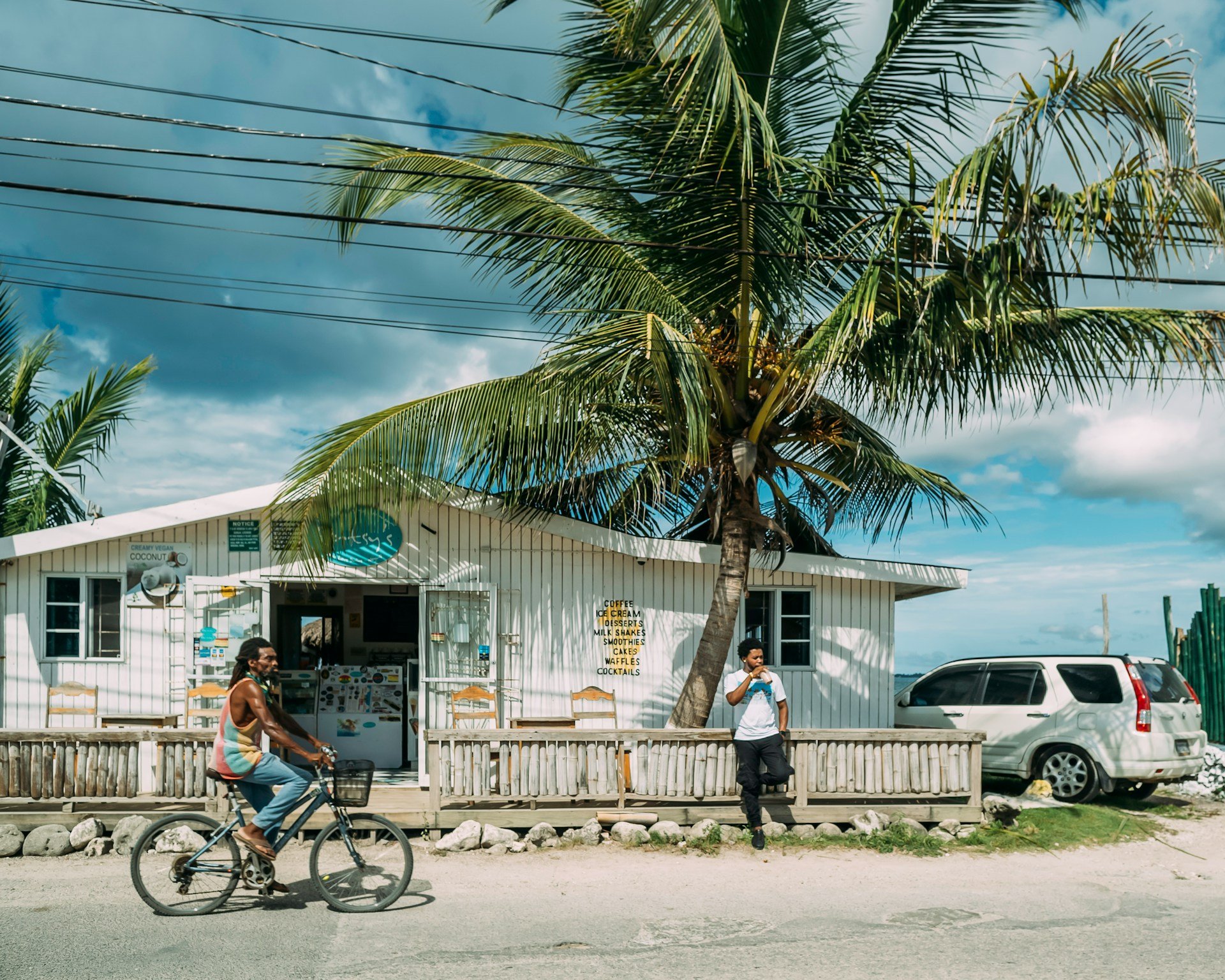
What You're Actually Getting Into
Jamaica is the most culturally significant island in the Caribbean by almost any measure. Reggae music, born in the Kingston yards of the 1960s, became one of the dominant popular music forms on the planet. Rastafari, a religious and philosophical movement that emerged in Jamaica in the 1930s, shaped not just music but how a generation globally thought about colonialism, African identity, and resistance. Jerk cooking — the technique of marinating and slow-cooking meat over pimento wood — is one of the great original culinary traditions of the Americas. Blue Mountain coffee grows at altitude in mist-covered peaks and produces a cup that sells at international auction for more than almost any other coffee in the world. And Usain Bolt, the fastest human being ever recorded, came from a banana-farming family in the parish of Trelawny.
What Jamaica is not: a uniformly safe, uniformly welcoming resort destination where every interaction is smooth. The country has a violent crime problem that is real and serious in specific areas, a hustler culture in tourist zones that can be aggressive and exhausting, and an inequality gap between the resort corridor and surrounding communities that is uncomfortable to observe once you see it clearly. None of this makes Jamaica less worth visiting. All of it makes it more important to visit with clarity rather than the filtered version that resort marketing provides.
The version of Jamaica most tourists experience is geographically real but culturally thin. Montego Bay's Hip Strip is functional beach resort territory with all the amenities and none of the character. Ocho Rios on a cruise ship day feels like a shopping center that has been placed adjacent to an ocean. These are not wrong places to visit if your goal is sun and cocktails with Jamaican background music. They are the wrong places if Jamaica is what you came for.
Jamaica is in Portland Parish, where Blue Lagoon and Reach Falls and Frenchman's Cove beach exist in near-complete isolation from the tourist circuit. Jamaica is in the Blue Mountains at 2am when you start the hike to the peak in complete darkness to arrive at the summit for sunrise. Jamaica is in Kingston's downtown where the National Gallery has the most important collection of Caribbean art anywhere and the Devon House ice cream queue on a Sunday afternoon is two hundred Jamaicans and almost no tourists. Jamaica is at a jerk centre in Boston Bay, St. Thomas, where the technique was born, eating from the pit at a table with no tablecloth. Go find that Jamaica. It will find you back.
Jamaica at a Glance
A History Worth Knowing
Jamaica was inhabited by the Taíno people when Columbus arrived in 1494 on his second voyage. He called it "the most beautiful island eyes have ever seen." The Taíno were gone within decades of Spanish arrival — killed by disease and forced labor. The Spanish colonized Jamaica but treated it as a second-tier holding. They introduced enslaved African people to work the sugar plantations and established the pattern of exploitation that would define the island for centuries. The Spanish colony never thrived under Madrid's management.
Britain seized Jamaica in 1655 during a military expedition and held it for three hundred years. The island became one of the most productive and profitable sugar colonies in the British empire, built entirely on enslaved African labor. At peak production in the late 18th century, Jamaica exported more sugar than all the British North American colonies combined. The enslaved population worked under conditions of extraordinary brutality calibrated, as in Saint-Domingue, to work people to death rather than maintain them. The profits from Jamaican sugar financed the industrial revolution in Britain and funded the estates, banks, and institutional buildings that still stand across England.
The most significant resistance to slavery in Jamaica was the Maroon communities. Escaped enslaved people, building on Taíno knowledge of the island's interior, established free communities in the mountain districts that the British repeatedly failed to destroy. The Maroon Wars of 1728 to 1740 and 1795 to 1796 ended in peace treaties that granted the Maroons formal recognition and land. The Maroon communities of Accompong in St. Elizabeth and Moore Town in Portland still exist, still hold their original treaty lands, and still maintain a degree of semi-autonomous governance. Accompong holds a celebration on January 6 each year commemorating the 1739 peace treaty that is one of the most historically significant events in the Caribbean calendar.
Sam Sharpe, an enslaved deacon who organized a peaceful labor strike on Christmas Day 1831 that turned into the Baptist War (the largest slave uprising in Jamaica's history), is a national hero. The uprising killed 14 white Jamaicans and led to the execution of over 300 enslaved people. It also shocked the British public and accelerated the abolition movement. Emancipation came in 1834, with a period of "apprenticeship" (compulsory labor under former enslavers) that lasted until 1838. The Morant Bay Rebellion in 1865, led by Paul Bogle and supported by elected assemblyman George William Gordon, was brutally suppressed by Governor Eyre in an atrocity that shocked British liberal opinion and became a landmark case in the history of colonial accountability.
Jamaica gained independence on August 6, 1962 — the first Caribbean territory to do so under British rule. The two-party political system that developed between the Jamaica Labour Party (JLP) and the People's National Party (PNP) became entangled with violence in the 1970s, as party political patronage connected to specific Kingston garrison communities created armed political factions. The garrison communities — Tivoli Gardens (JLP) and areas like Arnett Gardens (PNP) — developed internal governance structures run by dons (gang leaders) who delivered votes to parties in exchange for protection and resources. This political-gang nexus is the root of Jamaica's ongoing violence problem and has proved extraordinarily difficult to untangle.
The 1970s also produced Jamaica's most significant global cultural export. Bob Marley and the Wailers brought reggae, Rastafarian philosophy, and a message of resistance and redemption to a global audience. Marley died of cancer in 1981 at 36 years old. He remains one of the most significant cultural figures of the 20th century and his music has reached places no other Jamaican export has approached. Understanding Marley's Jamaica — the poverty of Trench Town where he grew up, the political violence of the 1970s in which he was shot in 1976, the spiritual framework of Rastafari that shaped everything he sang — makes the music more, not less, extraordinary.
Second voyage. Columbus calls it the most beautiful island he's seen. The Taíno are gone within decades of Spanish contact.
England takes Jamaica from Spain. The island becomes the most profitable sugar colony in the British empire, built on enslaved African labor.
Two wars between British forces and Maroon communities. End in peace treaties granting Maroons land and autonomy. Communities still exist today.
Sam Sharpe organizes a strike that becomes the largest slave uprising in Jamaican history. His execution helps accelerate British abolition.
The "apprenticeship" period ends. Formerly enslaved people are free without compensation from former enslavers. No reparations are paid to the enslaved.
August 6. Jamaica is the first Caribbean territory to gain independence from Britain. National motto: "Out of Many, One People."
Ska becomes rocksteady becomes reggae. Bob Marley brings Jamaica's music and Rastafarian philosophy to global consciousness. The garrison community political-violence nexus also develops in this period.
Aged 36, from cancer. He had refused amputation of a toe infected with melanoma on religious grounds. One of the most globally significant cultural losses of the 20th century.
Top Destinations
Jamaica is a long narrow island (235km by 82km at its widest) with very different characters in different parishes. The north coast has most of the tourist infrastructure. The south is less visited and has its own distinct personality. The mountains divide the island's climate and culture. The west is Negril's long beach. The east is Portland Parish's extraordinary isolation. Getting the most from Jamaica means choosing your Jamaica deliberately.
Negril
Seven miles of white sand beach running from the cliffs in the south to the river mouth in the north. Negril is Jamaica's most relaxed tourist destination — a place where the pace genuinely slows and the sunset from the limestone cliffs at Rick's Cafe produces a crowd every evening for the cliff divers and the light. West End, the cliff section, has smaller guesthouses and restaurants built into the rock above the Caribbean. The Seven Mile Beach section has the resort hotels. Negril is a real place with genuine character beneath the tourist layer: the Negril Lighthouse, the marshes behind the beach, the fishing community at the south end of the beach. Stay at least four nights to get underneath the surface.
Blue Mountains
The peak hike starts at 2am from Penlyne Castle at 1,500 meters, follows a steep forested trail for 7km to the summit at 2,256 meters, and arrives as the sun rises above the clouds over the Caribbean. On a clear morning you can see Cuba, 145km north. The coffee farms in the foothills around Mavis Bank and Silver Hill produce Blue Mountain coffee at estates open for tours. The Holywell Recreational Area at 1,200 meters has trails through cloud forest where the giant swallowtail butterfly — the largest in the Western Hemisphere — lives. You base for the Blue Mountains in the town of Newcastle or at the Starlight Chalet near Penlyne Castle.
Portland
The least visited and most scenically dramatic parish in Jamaica. Frenchman's Cove beach — a tiny, perfect crescent of white sand where a fresh river meets the Caribbean — is consistently cited as one of the most beautiful beaches in the world and charges a small entrance fee that keeps it from being overwhelmed. The Blue Lagoon, a 55-meter deep pool of turquoise water fed by fresh springs that mix with the Caribbean, is 15 minutes away. Reach Falls cascades through a jungle canyon 30 minutes west of Port Antonio. The Rio Grande rafting, on bamboo poles through narrow jungle gorges, was popularized by Errol Flynn who lived here in the 1940s.
Kingston
Kingston is not on most tourist itineraries and that is a significant oversight. The National Gallery of Jamaica on Orange Street has the most important collection of Caribbean art in existence — Edna Manley, Barrington Watson, and a comprehensive chronicle of Jamaican visual culture from the 18th century to the present. Devon House, a Victorian mansion in New Kingston built by Jamaica's first Black millionaire George Stiebel, has a café with ice cream so good there is consistently a long queue on weekends. The Bob Marley Museum on Hope Road is not optional. Trench Town, the community where reggae was born and where Marley grew up, is best visited with a local guide through the Trench Town Culture Yard organization.
Boston Bay, St. Thomas
Jerk cooking originated in the St. Thomas and Portland parishes, where the Maroon communities developed the technique of smoking marinated meat over pimento wood in covered pits. Boston Bay, east of Port Antonio, still has the roadside jerk pits where the technique was commercialized. The Boston Bay jerk is different from anything served in Montego Bay tourist restaurants: smoky, complex, genuinely spiced with scotch bonnet and allspice, pulled from the pit by a cook who has been doing this for twenty years. It is not made to your heat tolerance. It is made correctly.
Accompong
In the Cockpit Country of St. Elizabeth parish, Accompong is one of the original Maroon settlements guaranteed by the 1739 peace treaty. The community still holds its treaty land and maintains a Chief elected by community members. The annual Accompong Maroon Festival on January 6 commemorates the signing of the treaty and includes traditional Maroon music (Abeng horn, Kumina drumming), food, and ceremony. Visiting Accompong any day of the year requires arrangement with the community office — a small entrance fee goes directly to community funds.
Montego Bay
The main tourist gateway and the island's second city. Montego Bay's Hip Strip (Gloucester Avenue) has the beach hotels, the restaurants, and the tourist infrastructure that most first-time visitors use as a base. Doctor's Cave Beach is the famous beach — privately managed, very clean, very crowded on cruise ship days. The city has a colonial historic district worth walking, including the St. James Parish Church and the Square. MoBay is functional and well-serviced. It is not where Jamaica lives. It is where Jamaica receives people who come for the beach.
Black River & Great Morass
The Great Morass wetland in St. Elizabeth, at the mouth of the Black River, is the largest remaining wetland in Jamaica and one of the most significant in the Caribbean. Boat tours up the Black River are run by local operators from Black River town: American crocodiles basking on the banks, rare birds, and mangrove root systems that stretch for kilometers. The fishing community of Black River is one of the most intact small Caribbean towns on the island. Pairing with a visit to Treasure Beach, Jamaica's most authentic south coast beach community, makes a strong two-day circuit.
Culture & Etiquette
Jamaica has a cultural confidence that is entirely earned. Three million people from a 235km island produced music that changed the world, a philosophical movement that reshaped how a generation thought about race and resistance, a sprinting tradition that has no statistical equivalent anywhere on earth, and a culinary technique that has been borrowed and diluted and sold back to the world in forms that bear little relationship to the original. Jamaicans know this and carry it with a certain justified pride that visitors sometimes mistake for aggression or unfriendliness. It is not. It is the cultural self-possession of a people who know exactly what they gave the world and have watched it be taken and rarely credited.
Jamaica has a hustler and vendor culture in tourist zones that can be persistent and tiring. The drivers outside every tourist site, the hair braiders on the beach, the vendors along the Hip Strip in Montego Bay — they are there because the tourism economy creates these roles and because many Jamaicans have limited other economic options. A firm, repeated, not unkind "no thank you" is the right response. Engaging tentatively and then trying to back out is more frustrating for everyone than a clear refusal from the start.
Jamaicans respond exceptionally well to visitors who are genuinely curious about the country — its history, its music, its food — rather than treating it as a beach backdrop. Ask your taxi driver about Kingston's music scene. Ask the vendor about the jerk seasoning. The conversation will be better than anything on the resort activity board.
"Wah gwaan" (what's going on/how are you), "irie" (good, positive), "respect" (used as a general acknowledgment), and "one love" (goodbye, good feelings). These are not performance. They are how Jamaicans actually speak and using them sincerely is understood as respect for the culture.
Outside of official metered taxis (JUTA-registered), always agree on a price before getting in. Know the going rate for your journey from your accommodation and negotiate from there. This is not adversarial. It's the system.
Jerk from a roadside pit, ackee and saltfish at a local breakfast spot, festival and fish from a market stall. These are better and significantly cheaper than hotel dining. The culinary identity of Jamaica is not in hotel restaurants.
Rastafari is a living spiritual tradition, not a tourism costume. The dreadlocks, the red-gold-green colors, the dietary practices (Ital food) are expressions of faith. Ask before photographing people in religious contexts. Do not treat Rastafari as an aesthetic.
Cannabis is partially decriminalized in Jamaica (possession of up to 2oz is a non-criminal offense) but street drug sales still carry risk. Strangers who approach tourists with drug offers are often connected to operations that escalate to robbery or worse. The risk is not theoretical. Don't engage.
Particularly in communities, at markets, and in Kingston neighborhoods. The assumption that poverty makes people available for photography is an uncomfortable colonial inheritance. Ask first. Accept refusals gracefully.
This applies to all tourist areas in Jamaica, not just Kingston. After dark, use registered transport. Don't walk back to your hotel from a restaurant if it involves unfamiliar streets. The risk is elevated in a way it is not in, say, Barbados.
Jamaican Patois is a fully formed Creole language with its own grammar, phonology, and literature. It is not "broken English." Standard Jamaican English is the formal register. Patois is home. Treating it as amusing or exotic is tone-deaf.
Reggae & Music Culture
Reggae is UNESCO Intangible Cultural Heritage since 2018. But the music didn't stop with Bob Marley's death or with the canonization of roots reggae. Dancehall emerged in the late 1970s and became the dominant popular form. Shabba Ranks, Buju Banton, Beenie Man, Sizzla, and then later Vybz Kartel shaped global popular music in ways that are underrecognized in the Western critical establishment. The sound system culture that precedes all of it — competing selectors playing records outdoors for community audiences in Kingston yards — is the direct ancestor of DJ culture worldwide. Go to a sound clash if you can find one.
Rastafari
Rastafari emerged in Jamaica in the 1930s, partly inspired by Marcus Garvey's Pan-Africanist philosophy and the coronation of Haile Selassie I of Ethiopia in 1930, whom many Rastafari regarded as the fulfillment of prophecy. The movement encompasses theology, dietary practice (Ital: natural, livity-aligned food with no meat or processed ingredients), visual culture (the colors red, gold, and green representing blood, the gold of Africa, and the land), and the dreadlocks practice rooted in the Nazarite vow in Numbers 6. It is a living religion practiced globally, not a costume.
Athletic Culture
Jamaica's record in track and field is statistically extraordinary. A country of 3 million people produced Usain Bolt (100m, 200m world records), Shelly-Ann Fraser-Pryce, Elaine Thompson-Herah, Merlene Ottey, and generations of sprinters who have dominated Caribbean, Commonwealth, and Olympic competition for decades. The Inter-Secondary Schools Boys and Girls Championships held in Kingston each March is the most attended track meet in the world per capita and the event from which the Jamaica Athletics Administrative Association identifies talent. Attending is one of the most energetic sporting experiences in the Caribbean.
Literature & Art
Jamaica's literary and artistic tradition is significant and largely unknown outside Caribbean specialist circles. Claude McKay, born in Jamaica, was a central figure in the Harlem Renaissance. Louise Bennett-Coverley ("Miss Lou") is the poet who legitimized Jamaican Patois as a literary language. Olive Senior, Lorna Goodison, and Kei Miller write in contemporary English and Patois. The National Gallery in Kingston holds Edna Manley's sculpture alongside works that document 300 years of Jamaican visual experience. The gallery charges a small entrance fee and is genuinely world-class.
Food & Drink
Jamaican food is one of the great overlooked cuisines of the Americas. It has the same claim to originality and depth that Mexican or Peruvian cooking does, and receives a fraction of the international attention. The reasons are largely about which cuisines get the global platform, which restaurants get reviewed in New York and London, and which food cultures get taken seriously by the people who set those agendas. The cooking itself is extraordinary: layered, complex, historically dense, and rooted in a specific agricultural landscape that produces scotch bonnet peppers, allspice (pimento), thyme, callaloo, breadfruit, and ackee in combinations no other island has.
Ackee & Saltfish
The national dish and the definitive Jamaican breakfast. Ackee is a West African fruit — technically a fruit, eaten as a vegetable — that was brought to Jamaica on a slave ship in 1778. The bright yellow flesh of the cooked ackee has a buttery, slightly eggy texture that pairs with flaked salted cod (saltfish), sautéed with onion, tomato, scotch bonnet, and thyme. Served with fried dumplings, boiled green banana, and festival. At its best at a local breakfast spot in Kingston or Negril at 7am. At its worst at a hotel buffet where it sat for an hour. Find the former.
Jerk Pork & Chicken
The marinade is scotch bonnet pepper, allspice, thyme, garlic, ginger, and brown sugar. The wood is pimento (allspice tree). The cooking is slow, covered, over the smoke of the burning pimento. The result is dark, crackling, intensely flavored meat with a smokiness that penetrates to the bone. Boston Bay in St. Thomas is the origin point. The best in Kingston is at a roadside pit on Molynes Road toward the airport. The best in Negril is at a small shack called Cosmo's near the end of the beach road. Hotel "jerk" is a different product.
Peppered Shrimp & Festival
Middle Quarters in St. Elizabeth is a village whose entire economy runs on one product: peppered shrimp. Women stand at the roadside selling them from large drums — tiny fresh-water shrimp cooked in scotch bonnet and black pepper. A bag costs JMD 300–500. You eat them standing at the car, pulling the tiny shells off with your fingers, drinking whatever cold drink you bought at the same time. Festival is the sweet fried dough that accompanies fried fish throughout the island: slightly crispy outside, soft inside, mildly sweet, and genuinely good.
Curry Goat & Rice and Peas
The Sunday meal across Jamaica. Curry goat — bone-in goat meat braised for hours in Jamaican curry powder (which is distinctly different from Indian curry in its composition) until the meat falls from the bone. Served with rice and peas (rice cooked with kidney beans, coconut milk, thyme, and scallion). Available at rum bars and local restaurants every day. The best is always the version that has been cooking since morning: ask where the pot has been going longest.
Blue Mountain Coffee
Grown at 1,000 to 2,200 meters in the Blue Mountains in mineral-rich volcanic soil under consistent cloud cover. The cup produced is known for its mild acidity, clean sweetness, and lack of the bitterness common in lower-altitude coffees. Jamaica exports most of it to Japan, which has had exclusive buying relationships with Jamaican estates since the 1950s. What stays in Jamaica is the coffee you drink at estate tours. Buy beans to take home. They are expensive. They are worth it. Do not buy Jamaican coffee blends — if it says "blend" it is not Blue Mountain.
Rum
Jamaica produces the most characterful rums in the Caribbean. Appleton Estate in the Nassau Valley produces aged expressions that are internationally traded. Wray and Nephew Overproof Rum (63% ABV) is the Jamaican domestic spirit — a clear, raw rum used in cooking, mixed into punch, and drunk straight by people with strong opinions about rum. The rum punch ratio in Jamaica is one of sour (lime), two of sweet (sugar syrup), three of strong (rum), four of weak (water or juice) — served with a grating of nutmeg. When made correctly it is excellent. When made for tourists it has too much grenadine and not enough rum.
When to Go
December to April is the dry season and the best time for Jamaica. The Christmas-New Year period is Jamaican holiday season and the island is at its most festive. February and March are the most comfortable months — dry, not too hot, the Blue Mountains clear enough for the sunrise hike, and the beaches at their best. August has Reggae Sumfest in Montego Bay, which is the main music festival reason to visit during the wetter season.
Dry Season
Dec – AprConsistently good weather across the island. The Blue Mountain summit views are clearest November through February. December brings festive energy. February and March have the best beach conditions with lower humidity and the smallest crowds of the peak season.
Reggae Sumfest
AugReggae Sumfest in Montego Bay runs for a week in late July and early August. The main concerts are Thursday through Sunday night. Wetter weather, higher humidity, but the musical lineup — combining heritage reggae with contemporary dancehall — is worth the concession. Book accommodation 3–4 months ahead for Sumfest week.
Hurricane Season
Sep – OctJamaica sits in the Caribbean hurricane corridor. Hurricane Gilbert in 1988 was catastrophic. September and October carry the highest risk. Hotels offer deeply discounted rates. Travel insurance with hurricane cancellation cover is non-negotiable if traveling during this window.
Trip Planning
Ten days is the minimum for Jamaica to open up beyond the resort. Less than a week and you'll either have a beach holiday or rush through Kingston and the mountains without absorbing anything. Two weeks allows Negril, the Blue Mountains, Kingston, and Portland with breathing room. Three weeks gives you the south coast, Accompong, and the parts of Jamaica that most visitors never reach.
The main entry point decision: Montego Bay (MBJ) is the largest airport with the most international connections. Kingston (KIN) is smaller but puts you directly in the capital for those prioritizing culture over coast. Negril-bound travelers land at MBJ and transfer by road (90 minutes). Portland-bound travelers land at MBJ or KIN and face a mountain road either way.
Negril
Fly into Montego Bay, transfer to Negril (90 min). Four days: the Seven Mile Beach and the West End cliffs. Sunset at Rick's Cafe on day one. A snorkeling trip to the reef on day two. Day three: hire a driver for the day and go to Mayfield Falls in Westmoreland — small natural waterfall pools in jungle that are genuinely beautiful and see a fraction of the tourists that Dunns River Falls does. Day four: slow beach day before moving.
Blue Mountains
Drive or transfer via Kingston to the Blue Mountains base at Newcastle or Penlyne Castle. Night two at Starlight Chalet. The 2am summit hike for sunrise is day three of this section. Afternoon: coffee farm visit and tasting at Mavis Bank. Drive back to Kingston, fly home from KIN or MBJ.
Kingston
Fly into Kingston. Day one: Bob Marley Museum on Hope Road (morning, before tourist groups), National Gallery of Jamaica (afternoon). Devon House ice cream. Day two: Trench Town Culture Yard with a local guide (morning). The Kingston waterfront and the Coronation Market (afternoon — take a guide for the market).
Blue Mountains
Drive up from Kingston. Coffee farm tour and tasting. The 2am summit hike for sunrise on day four. Return to Kingston by afternoon.
Portland
Four days in Port Antonio and the surrounding area. Frenchman's Cove, Blue Lagoon, Reach Falls, Boston Bay jerk. Rio Grande rafting on day seven. The town of Port Antonio itself — a faded Victorian Caribbean town — deserves an afternoon walk.
Negril
Drive west across the island (4–5 hours, spectacular road). Five days on the West End cliffs and Seven Mile Beach. One day trip to the Cockpit Country and Accompong. Fly home from MBJ.
Kingston & Culture
Three full days: the National Gallery, Bob Marley Museum, Trench Town, the Inter-Schools Championships if timing works (March), and a full evening at a Kingston sound system event or live reggae venue.
Blue Mountains
Three nights in the mountains: two coffee farm visits (Clifton Mount and Mavis Bank are different characters), the 2am summit hike, a full day hiking the ridge trails through cloud forest, birding for the giant swallowtail butterfly.
Portland & East
Four nights in Port Antonio. All the Portland essentials plus the Nonsuch Caves, a day trip to Morant Bay and the site of the 1865 rebellion, and one evening at a local rum bar rather than a tourist restaurant.
South Coast
Drive the south coast: Treasure Beach (genuine fishing community, no resort development), the Middle Quarters peppered shrimp stop, Black River and the Great Morass crocodile tour, the YS Falls in St. Elizabeth.
West: Negril & Cockpit Country
Five nights in Negril: the West End cliffs for the sunsets, Seven Mile Beach for the mornings, the Cockpit Country and Accompong for the history and landscape. Fly home from MBJ on day 21.
Vaccinations
No mandatory vaccinations. Recommended: Hepatitis A, Hepatitis B, Typhoid, and routine vaccines. No malaria risk. Dengue has been present — mosquito protection is advisable. Water hygiene is important; drink bottled water throughout.
Full vaccine info →Connectivity
Digicel and Flow are the main providers with good coverage in tourist areas. Mobile coverage is limited in parts of the Blue Mountains interior. Download offline maps before heading into the mountains. An eSIM with Caribbean coverage is the simplest setup for international visitors.
Get a Jamaica eSIM →Currency
Jamaican Dollars (JMD). US dollars are widely accepted in tourist areas. Exchange at official cambios rather than hotel desks for better rates. ATMs at Scotia Bank and NCB are reliable. The exchange rate has historically favored US dollars at around JMD 155–160 to $1 USD, but fluctuates.
Driving
Driving is on the left. Roads in tourist areas are generally good. Mountain roads to the Blue Mountains are narrow and winding. Kingston driving is aggressive and chaotic for unfamiliar visitors. Renting a car gives independence but Kingston city driving is best avoided. International driving permit technically required alongside your home license.
Travel Insurance
Strongly recommended. Medical facilities are better in Kingston than in rural parishes. Serious injuries may require evacuation. Include hurricane cancellation cover if visiting June through November. Standard Caribbean travel insurance from a reputable provider covers the most common scenarios.
Blue Mountain Hike Prep
The summit hike starts at 2am and takes 3–4 hours to the top. Temperatures at the summit can drop to 5–8°C even in summer. Bring warm layers, a headlamp with fresh batteries, waterproof jacket, hiking boots (not trainers — the trail is muddy), and at least 2L of water. Hire a guide from your base accommodation. Do not attempt alone.
Transport in Jamaica
Jamaica's transport options for tourists run from private charter and resort transfers (expensive, comfortable) to route taxis (local shared taxis running fixed routes, extremely cheap, requires local knowledge to navigate). Most independent travelers use a combination of JUTA-registered tourist taxis, car rental, and organized shuttle services between major destinations. The Kingston public bus system is functional for locals but complex for visitors unfamiliar with the city.
Airports
US direct flights to MBJSangster International Airport in Montego Bay (MBJ) is the main gateway with direct flights from New York, Miami, Toronto, London, and other major hubs. Norman Manley International in Kingston (KIN) is smaller with fewer direct connections. Fly into Kingston if your itinerary prioritizes culture and the Blue Mountains; MBJ for Negril and the north coast resort belt.
JUTA Tourist Taxi
Negotiate upfrontThe Jamaica Union of Travellers Association operates licensed tourist taxis — red license plates with PPV lettering. These are the registered, insured, government-approved tourist transport option. Negotiate the price before getting in and know the going rates from your accommodation. Never get in an unmarked car offered by strangers at the airport or tourist sites.
Route Taxi
JMD 80–300 per hopShared cars running fixed routes marked on their windscreens. Extremely cheap and how Jamaicans actually move between towns. They fill to capacity before leaving. You call out your stop to the driver. Requires confidence, some local knowledge, and the ability to understand Jamaican English at speed. Excellent for getting off the tourist circuit.
Car Rental
$50–80 USD/dayAvailable at both airports and in major towns. Driving on the left. The freedom to stop at the Middle Quarters shrimp ladies, detour to Frenchman's Cove, or reach the Blue Mountains on your own schedule is worth the cost. Kingston city driving is not recommended for rental cars. An international driving permit is required alongside your home license.
Knutsford Express
$15–25 USD per routeThe best intercity bus service in Jamaica. Air-conditioned coaches on fixed schedules between Kingston, Montego Bay, Ocho Rios, Mandeville, and other major cities. Online booking available. Significantly more comfortable than route taxis for long distances. The Kingston to Montego Bay route takes about 2.5 hours and is reliable.
Rio Grande Rafting
$70–100 per raft (2 pax)Not transport in the conventional sense but a full-day river journey through the jungle gorges of Portland on bamboo pole rafts, steered by local raftsmen who have worked the river for decades. Starts at Grant's Level and ends at Rafter's Rest near St. Margaret's Bay. Arrangements through your Portland accommodation or Rafter's Village at the start point.
Accommodation in Jamaica
Jamaica has the full range of Caribbean accommodation from mega all-inclusive resort complexes (Sandals and Couples dominate this segment) to small guesthouses in Portland that charge JMD 3,000 a night and have no website. The correct choice entirely depends on what you came to Jamaica for. The all-inclusive model works well for families wanting a secured, activity-rich beach holiday. It is actively wrong for anyone wanting to understand Jamaica. The guesthouse model gets you closer to the country at significantly lower cost.
All-Inclusive Resort
$200–600+/nightSandals, Couples, and large-scale properties in Montego Bay, Ocho Rios, and Negril. All food, drink, and activities included. Well-secured. Largely self-contained. Good for families with young children. The island you'll experience from inside them is not representative of Jamaica.
Boutique Hotel
$80–200/nightNegril's West End has excellent cliff-top guesthouses and small hotels at every price point: Xtabi Resort, Tensing Pen, and The Caves are the most distinctive. In Portland, Geejam is the well-regarded boutique option. In Kingston, the Courtleigh Manor in New Kingston serves business travelers and independent tourists.
Guesthouse
$30–70/nightThe best value option throughout Jamaica. Portland's guesthouses are particularly good: small family operations in Port Antonio and its surroundings, often with breakfast included and hosts who can organize the Reach Falls and Rio Grande rafting directly. The Blue Mountain guesthouses (Starlight Chalet, Whitfield Hall) are basic but perfectly placed for the summit hike.
Coffee Estate Stay
$100–180/nightSeveral Blue Mountain coffee estates offer accommodation: Strawberry Hill (the most famous, and expensive, owned by Chris Blackwell of Island Records) and smaller farm-based lodgings around Mavis Bank and Irish Town. These put you at altitude in the coffee country and include access to working farms. The cold mountain mornings with a cup of estate coffee are genuinely exceptional.
Budget Planning
Jamaica has an unusually wide price range depending on how you travel. An all-inclusive resort at $400 per night and a guesthouse in Portland at $40 per night are both Jamaica. The mid-range independent travel budget — guesthouse accommodation, local restaurants, public transport, and organized day tours — runs at $80–130 per day and gives you a significantly richer experience than the all-inclusive at triple the cost. The main budget drivers are accommodation and transport; food at local restaurants is very affordable.
- Guesthouse or hostel
- Ackee and saltfish at local spots
- Route taxis and Knutsford Express
- Self-organized beach and hiking days
- Red Stripe beer at JMD 180 at rum bars
- Small hotel or boutique guesthouse
- Mix of local and tourist restaurants
- JUTA taxis and occasional car rental
- Blue Mountain hike with guide
- Organized tours to Accompong, Portland
- Boutique cliff hotel or coffee estate
- Geejam or Strawberry Hill dining
- Private car and driver for the day
- All-inclusive resort option
- Blue Mountain coffee beans to take home
Quick Reference Prices
Visa & Entry
Jamaica is one of the most straightforward Caribbean destinations for entry. Citizens of the United States, United Kingdom, Canada, all EU member states, Australia, New Zealand, and most other Western nations do not need a visa. Entry is permitted for stays of up to 90 days on a tourist basis. You need a valid passport, a return or onward ticket, and proof of accommodation.
The C5 arrival form is filled out on the aircraft and submitted at immigration. Keep your departure counterpart for when you leave. No tourist card fee is charged for most nationalities. The immigration process at Montego Bay is generally efficient; Kingston can have longer queues on busy international flight days.
Most Western passport holders enter without a visa. No tourist card fee for most nationalities. Straightforward entry process at both international airports.
Family Travel & Pets
Jamaica is one of the better Caribbean family destinations, particularly for families using the all-inclusive resort model which handles the logistical complexity well. The resorts in Montego Bay and Negril have children's clubs, calm shallow beaches, watersports, and secure environments. For families with older children wanting more, Portland's waterfalls and the Blue Mountains offer genuinely memorable experiences. Jamaican people are warm toward children in a way that makes daily interactions smooth.
The main considerations for families: security in urban areas (Kingston particularly requires more parental management than resort areas), food hygiene for young children (local restaurants are excellent but choose carefully; the all-inclusive buffet is safer for uncertain young stomachs), and sun protection (the Jamaican sun is intense year-round).
Negril Seven Mile Beach
The beach on Jamaica's west coast has gentle waves, gradual depth, and the watersports infrastructure (kayaks, paddleboards, snorkeling) that keeps children of all ages engaged. The gently shelving bottom and calm water make it genuinely safe for young swimmers in a way that some Caribbean Atlantic-facing beaches are not.
Reach Falls (Portland)
A series of waterfall pools cascading through a jungle canyon, accessible on a guided walk. The swimming pools at the base of each waterfall are calm and clear. Children who can swim confidently find the experience genuinely thrilling. Organized tours from Port Antonio include transport and a guide who knows the safe areas for swimming at different water levels.
Blue Mountains Wildlife
The Blue Mountain hike is for adults and fit teenagers (13+) only — the 2am start and 3,000m of trail is demanding. For families with younger children, the Holywell Recreational Area at 1,200 meters has accessible trails through cloud forest with the giant swallowtail butterfly, hummingbirds, and extraordinary views. Coffee farm tours work well for children interested in food origins.
Black River Boat Tour
The boat tour up the Black River through the Great Morass wetland, with American crocodile sightings, is an immediately engaging wildlife experience for children who are interested in reptiles. The boats are stable and the guides provide genuine information about the ecosystem. Pairs well with a stop at the Middle Quarters shrimp ladies — children's reactions to the peppered shrimp are memorable.
Bob Marley Museum (Older Children)
The Bob Marley Museum at 56 Hope Road in Kingston is appropriate for older children (12+) who have context for the civil rights and colonial history that shaped Marley's music. The bullet holes in the walls, the preserved recording studio, and the guided tour by people who knew him personally produce real historical engagement that a museum about someone they'll have heard of works well for older teenagers.
Dolphin & Animal Encounters
Dolphin Cove near Ocho Rios offers dolphin and stingray encounters, shark shows, and jungle trail walks. This is a well-run tourist attraction that families with young children consistently rate highly. It is not representative of Jamaica's wild ecology. For families wanting real wildlife, the Black River wetlands and Blue Mountains provide better encounters without the captive animal ethical concerns.
Traveling with Pets
Bringing pets to Jamaica requires a veterinary health certificate issued no more than 7 days before travel, proof of current rabies vaccination administered at least 6 months before entry, and a permit from Jamaica's Veterinary Services Division. Dogs additionally require proof of current vaccination against distemper, parvovirus, and infectious hepatitis.
Jamaica is not a well-developed pet travel destination. The resort hotels that dominate the accommodation sector largely do not permit pets. Guesthouses vary widely. The heat and humidity are stressful for most domestic animals. For any stay under a month, the paperwork burden versus practical benefit strongly favors leaving pets at home.
Safety in Jamaica
Jamaica's safety situation requires the same honest zone-based assessment as Honduras: the national crime statistics are serious and reflect real concentrated violence in specific urban communities. The tourist areas have a significantly better safety record and millions of visitors travel safely every year. The most relevant risks for tourists are petty theft, aggressive vendor harassment in tourist areas, and the transport risk from unlicensed taxis. Violent crime against tourists is real but far less common than the national homicide rate implies.
Resort Areas & Negril
The all-inclusive resort corridors in Montego Bay and Negril's Seven Mile Beach have good security. Within these environments, crime against tourists is rare. The cliff area of West End Negril has more open boundaries but remains broadly safe with standard precautions.
Portland & Blue Mountains
Portland and the Blue Mountain communities are among the safest areas in Jamaica for visitors. The small scale and community nature of the tourism infrastructure creates accountability. Port Antonio is genuinely low-risk. Reach Falls and the Blue Mountain trails are safe with guide arrangements made through accommodation.
Kingston
Kingston is manageable for informed visitors who use registered transport and stick to New Kingston, the National Gallery area, and Hope Road neighborhoods. Downtown Kingston requires either local guidance or genuine familiarity. Ask your accommodation specifically about current conditions in any area you want to explore.
Vendor & Hustler Harassment
In Montego Bay, Ocho Rios, and busy beach areas, persistent vendors and hustlers targeting tourists are a consistent friction point. A firm, repeated, not unkind refusal is the right approach. Engaging tentatively and gradually trying to disengage is more frustrating for everyone than a clear "no thank you" from the start.
Transport Scams
Unlicensed taxi drivers at both airports and tourist sites have been involved in serious incidents. Only use JUTA-registered taxis (red PPV license plates) or pre-booked transfers. This is the single most preventable safety risk for tourists in Jamaica.
Solo Women
Street harassment is more persistent in Jamaica than in many Caribbean destinations. Solo women should use registered transport after dark, avoid deserted beach sections at night, and treat persistent solicitations with firm, immediate refusals rather than gradual disengagement. The resort environments are considerably safer than non-resort areas for solo female travel.
Emergency Information
Your Embassy in Kingston
Most embassies are in the New Kingston and Liguanea districts.
Book Your Jamaica Trip
Everything in one place. Jamaica rewards good preparation.
The Island That Keeps Giving
Jamaica is the most culturally generous island in the Caribbean and one of the most in the world. Every decade it produces something that changes the global cultural conversation, then produces something else before the world has finished processing the first thing. Reggae went global in the 1970s. Dancehall reshaped popular music in the 1980s and 1990s. Jamaican sprinting has produced statistical outliers at a rate that demographic probability cannot explain. Blue Mountain coffee is in the top flight of specialty coffee globally. Jerk seasoning is in every supermarket on five continents. The island has a population smaller than many individual cities and an output that belongs to countries with a hundred times the resources.
The Jamaican greeting and farewell — "one love" — comes from Bob Marley's music but predates his use of it in Rastafarian tradition. One love means: we share something that is larger than either of us. It is offered not as a transaction but as a recognition of shared humanity. It is, in a phrase, what Jamaica gives the world in exchange for everything the world took from it during three centuries of colonial extraction. One love is not naive. It is a hard-won philosophical position from a people who have earned the right to offer it on their own terms. When someone says it to you in Jamaica, they mean it.