
United States
50 states, 4 time zones, one continent's worth of landscapes and 330 million people with opinions about all of them. The country is not what its image exports suggest — it is simultaneously more extraordinary and more ordinary, more generous and more difficult, than the version that arrives on screens everywhere else in the world. The only way to understand it is to go.
What You're Actually Getting Into
The United States is not a country in the way that Belgium or Thailand is a country. It is a continent-scale experiment in a particular set of ideas — individual liberty, the self-made person, the frontier always ahead — played out across 9.8 million square kilometres and 50 states with dramatically different landscapes, laws, cultures, and politics. The California you visit and the Mississippi you visit are operating under different legal systems, different climates, different food cultures, and different assumptions about the relationship between citizen and state. Treating the USA as a single destination is like treating "Europe" as a single destination. The parts are the point.
What international visitors consistently underestimate is the scale. The distance from New York City to Los Angeles is greater than the distance from London to Istanbul. Driving from Miami to Seattle would take you through nine states over three days of continuous driving. The national parks of the Southwest — the Grand Canyon, Zion, Bryce Canyon, Arches — are each individually enormous and are separated from each other by hours of driving across spectacular desert. Plan for one region at a time. Return for the rest.
The things nobody adequately warns you about before your first American trip. Tipping: it is not optional. The percentage you leave at a restaurant is part of the server's wage, and 18–22% on the pre-tax total is the floor, not the ceiling. Portions: they are large in ways that will initially seem implausible. Healthcare: there is no national health service. An emergency room visit without insurance can bankrupt a family. As a tourist, travel insurance with robust medical coverage is the most important practical step you can take before boarding your flight. And the car: outside New York, Chicago, San Francisco, and a handful of other walkable cities, you will need one. America was built for cars, and the things worth seeing are often only reachable by them.
What makes it worth all of this: the Grand Canyon at dawn. New York on a Wednesday evening in September when the light is golden and the city is going about its business with the ambient energy of a place that has decided to be the center of something. New Orleans in the evening with a brass band turning a corner and the music filling the street. A Montana highway with no other cars and the Rockies ahead. The particular openness of Americans to strangers — not the performed friendliness of the service industry but the genuine curiosity about where you're from and what you think of the place. The USA produces experiences that have no equivalent elsewhere. It just also has a specific set of practical realities that require advance preparation.
USA at a Glance
A History Worth Knowing
The land that became the United States has been inhabited for at least 15,000 years — most likely longer. Indigenous peoples developed hundreds of distinct civilizations across the continent: the Haudenosaunee (Iroquois) confederation in the northeast, whose governance structure influenced the US Constitution's design; the Mississippian mound builders who constructed cities larger than contemporary London; the Pueblo peoples of the Southwest whose cliff dwellings at Mesa Verde and Chaco Canyon remain. The pre-Columbian Americas were not empty land waiting to be discovered. They were occupied, managed, and deeply known by the people who had lived there for millennia.
European colonization began in earnest in the 16th century — Spanish in the Southwest and Florida, Dutch in New York, British along the Atlantic seaboard. The English colonies that became the United States were established primarily between 1607 (Jamestown, Virginia) and the late 17th century. The economy of the southern colonies was built on enslaved labor — African people transported across the Atlantic against their will, whose forced work created the wealth that would fund the new nation. The Transatlantic Slave Trade brought an estimated 388,000 enslaved Africans directly to North America; hundreds of thousands more came through the Caribbean. By 1860, the US enslaved population had grown to approximately 4 million people through natural increase in conditions of bondage.
The American Revolution (1775–1783) established the United States as an independent nation with a set of founding documents — the Declaration of Independence (1776), the Constitution (1787), and the Bill of Rights (1791) — whose ideals and contradictions have structured every subsequent political debate. "All men are created equal" was written by Thomas Jefferson, who enslaved over 600 people over his lifetime. The contradiction was not accidental or unnoticed at the time — it was the founding fault line of the republic, deferred rather than resolved.
Westward expansion drove the 19th century. The Louisiana Purchase (1803) doubled the country's size. The Indian Removal Act (1830) and subsequent Trail of Tears forcibly displaced approximately 60,000 Native Americans to territories west of the Mississippi, killing an estimated 4,000 in the process. The Mexican-American War (1846–1848) added California, Texas, and the Southwest. The transcontinental railroad, completed in 1869 and built largely by Chinese immigrant labor under brutal conditions, connected the coasts. By the 1890s the continental United States was settled — its Indigenous populations confined to reservations on a fraction of their former territories.
The Civil War (1861–1865) was fought over slavery — whatever the "states' rights" euphemism claims. The Confederate states seceded because they believed the federal government would eventually move to abolish slavery. Abraham Lincoln's Emancipation Proclamation (1863) and the 13th Amendment (1865) formally abolished slavery. Reconstruction — the decade of federal governance in the South intended to integrate the formerly enslaved population into full citizenship — was violently dismantled by 1877. Jim Crow segregation laws replaced formal slavery with legalized racial hierarchy that lasted until the Civil Rights Movement of the 1950s and 1960s forced the Civil Rights Act (1964) and the Voting Rights Act (1965).
The 20th century saw the United States become the dominant world power — through the First and Second World Wars, the Cold War with the Soviet Union, the Korean War and the Vietnam War (which killed approximately 58,000 Americans and an estimated 2–3.5 million Vietnamese), the civil rights struggle, the space program, and the extraordinary economic expansion that produced the consumer culture the world now operates within. The September 11, 2001 attacks on the World Trade Center and Pentagon killed 2,977 people and triggered the War on Terror — the invasions of Afghanistan (2001) and Iraq (2003) — that reshaped global politics for the following two decades. The Obama presidency (2009–2017), the first of an African American, and the Trump elections (2016 and 2024) represent the ongoing polarization of a country still working out what it actually believes about itself.
Indigenous civilizations inhabit the continent for millennia. Hundreds of distinct nations, languages, and cultures. The land is not empty.
English, Dutch, French, Spanish settlements along the Atlantic seaboard. The southern economy built on enslaved African labor from the outset.
"All men are created equal." Written by a slaveholder. The founding contradiction that has never fully resolved.
Forced displacement of Native nations to west of the Mississippi. The Trail of Tears kills thousands. Westward expansion proceeds.
Fought over slavery. 620,000 soldiers dead. 13th Amendment abolishes slavery. Reconstruction follows, then is dismantled.
A century after the Civil War, the Civil Rights Act and Voting Rights Act formally end legal racial segregation. The struggle continues.
2,977 dead. The War on Terror — Afghanistan, Iraq — reshapes global politics for two decades. America's relationship with the world changes permanently.
Deep political polarization, ongoing racial reckoning, tech dominance, and the largest economy on earth. Still figuring out what it believes about itself.
Top Destinations
The United States contains multitudes. What follows are eight regional destinations that represent genuinely distinct Americas — not a ranked list but a set of options for the most important planning decision in any US trip: which America do you want to encounter? Pick one or two regions and go deep. The country rewards the approach and punishes the attempt to cover too much ground on a single visit.
New York City
No other city on earth produces quite the feeling of New York: the particular velocity of it, the vertical architecture, the neighborhood-to-neighborhood variation in culture and character, the sense that whatever matters in the world is somehow being filtered through here. Manhattan is the obvious destination — the High Line, the Met, Central Park, Brooklyn Bridge at dawn — but the outer boroughs hold the city's actual diversity: Flushing for the best dim sum outside China, Jackson Heights for South Asian and Latin food, the Bronx for the birthplace of hip-hop. Budget at least five days. The city changes with the light and the season. Arrive with comfortable shoes and no fixed plan for evenings — just walk until something stops you.
Grand Canyon, Utah & Las Vegas
The American Southwest is the continent's geological showcase — the Colorado Plateau has been carving and uplifting for hundreds of millions of years to produce landscapes that seem designed to demonstrate what time and water can do given sufficient amounts of both. The Grand Canyon (1.6km deep, 446km long) is the signature, but Zion's slot canyons, Bryce Canyon's hoodoos, Arches' red sandstone spans, and Monument Valley's buttes are each extraordinary. Las Vegas is the correct base of operations and the correct introduction to the region's spectacular illogic — a city of 2 million people in the Mojave Desert, entirely dependent on imported water, that has decided to be the most excessive entertainment destination on earth. Rent a car. Drive the parks. The Southwest makes no sense from a window seat on an aircraft.
California — LA to San Francisco
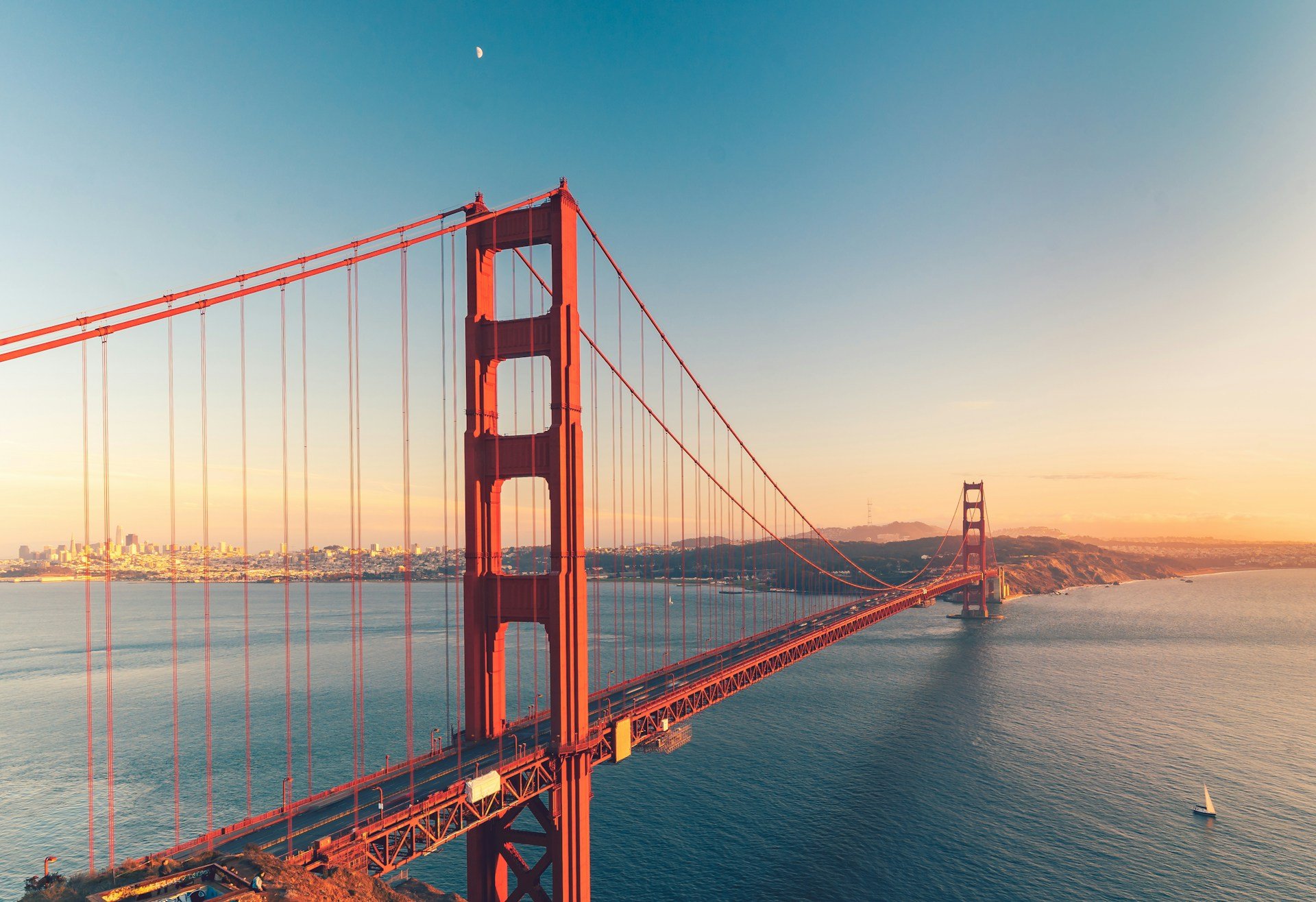
The California that the world has constructed in its imagination from 80 years of Hollywood is simultaneously accurate and misleading. Los Angeles is real — the light, the sprawl, the car culture, the beaches, the industry — but it is also a city of remarkable neighborhoods (Silver Lake, Koreatown, East LA) that are nothing like the image. The Pacific Coast Highway from LA to San Francisco — one of the world's great drives — passes Big Sur, where the Santa Lucia mountains drop directly into the Pacific at a drama that no photograph quite captures. San Francisco is a city in acute crisis (tech wealth, homelessness, and housing costs interacting badly) that is still one of the world's most beautiful and food-obsessed cities. Budget 7–10 days for the full California experience.
Yellowstone & the Rockies
Yellowstone is a supervolcano — a caldera 70km across sitting on top of one of the most active geothermal systems on earth. The consequence is a landscape of geysers (Old Faithful is the famous one but Steamboat Geyser is more dramatic), hot springs in colors from turquoise to orange from heat-loving bacteria, boiling mud pots, and a wildlife population that has recovered to extraordinary density since wolf reintroduction in 1995 — bison herds of thousands, grizzlies, black bears, wolves, and elk. Grand Teton National Park, 80km south, adds perhaps the most dramatically photogenic mountain skyline in North America. Glacier National Park in Montana, further north, has receding glaciers and the Going-to-the-Sun Road. Fly into Denver or Bozeman and drive.
New Orleans & Nashville
New Orleans is the most distinctively un-American American city — a place built by French and Spanish colonizers, shaped by its African and Caribbean cultural heritage, and operating at a pace and with a relationship to pleasure that the Protestant work ethic never fully colonized. The French Quarter's evening music, the weekend jazz funerals, the Creole food, the cocktail culture — all of it is genuinely distinct from anywhere else in the country. Nashville, four hours north, has leveraged its country music heritage into a full hospitality economy. The live music on Lower Broadway, the honky-tonks, and the recently excellent food scene make it one of the South's more visitor-friendly cities. Road trip the two together via the Natchez Trace Parkway — one of America's most beautiful and undervisited drives.
Seattle, Oregon & the Cascades
The Pacific Northwest is America's most environmentally self-aware region — the combination of extreme natural beauty (the Cascade volcanoes, the Columbia River Gorge, the Olympic rainforest, the San Juan Islands) and the progressive urban culture of Seattle and Portland has produced a distinct regional identity. Seattle's Pike Place Market, coffee culture (this is where Starbucks started, though the serious coffee came later), and the Space Needle belong to the tourist circuit. But the drives are the point: the North Cascades Highway, the Columbia River Gorge, the coast from Astoria to Newport — all extraordinary. Oregon's Crater Lake (the deepest lake in the US) is a six-hour drive from Portland but worth it entirely.
Florida
Florida is three distinct destinations that happen to share a peninsula: South Florida (Miami and the Keys — a Latin American-inflected global city and the coral reef archipelago beyond it), Central Florida (Orlando's theme park concentration — Walt Disney World, Universal, and others — the world's most visited family tourism zone), and North Florida (the Gulf Coast's white-sand beaches, the Florida Panhandle, and the Everglades). The Everglades — a slow-moving river of grass 160km wide — is one of North America's most extraordinary ecosystems: manatees, alligators, roseate spoonbills, and Florida panthers in a landscape with no equivalent on the continent. Miami's Wynwood Walls and food culture are world-class. The Keys drive is one of America's great road experiences.
Chicago & the Midwest
Chicago is arguably the most architecturally significant city in the United States — the birthplace of the modern skyscraper, home to the world's greatest collection of 20th-century architecture, and a city whose food culture (deep-dish pizza, Chicago-style hot dogs, and one of the best restaurant scenes in the country) and music history (blues, jazz, house music, gospel) reward serious engagement. The Art Institute of Chicago and the Chicago Symphony Orchestra are at the top of their respective fields globally. Lake Michigan's waterfront is magnificent. The Midwest more broadly — Indiana Dunes, the Great Lakes, the Mississippi River towns — is undervisited by international tourists and holds an authentic America that the coasts have largely overwritten.
Culture & Things to Know
American culture is simultaneously the most exported and most misunderstood culture in the world. Decades of film, television, and social media have given most international visitors a version of America that is not wrong but is dramatically incomplete. The country is less uniform, more regionally distinct, more racially complex, more religiously varied, and more politically diverse than the exported image suggests. The version you encounter depends enormously on which America you visit.
Some things are genuinely consistent across all fifty states. The friendliness is real — Americans talk to strangers readily, hold doors, ask where you're from, and mean it. The service culture is performative but the underlying goodwill is not. The "how are you" is not an invitation to answer honestly; it is a social lubricant. "Have a great day" means exactly nothing as specific content and everything as ambient warmth. Accept it for what it is.
18–22% at sit-down restaurants, on the pre-tax total. $1–2 per drink at bars. $5 per bag for hotel bell service. $2–5 per night for housekeeping (left daily, not at check-out). Taxi/Uber 15–20%. Coffee shop: optional but $1–2 is kind. This is not generosity. It is part of the wage structure. The people serving you earn $2.13/hr from their employer (federal minimum) and rely on tips for the rest.
This cannot be stated strongly enough. American healthcare costs are catastrophic without coverage. A weekend in hospital can cost $50,000–150,000 USD. Insurance with a minimum $100,000 medical coverage limit is not paranoia — it is the minimum responsible preparation for any US visit. Read the policy before buying and confirm it covers emergency room visits, hospitalization, and medical evacuation.
Texas is not California is not New York is not Mississippi. The regional variation in food, politics, religion, and culture is profound. The most interesting conversations in America happen when visitors ask genuine questions about the place they're in rather than projecting the version they expected. Most Americans find genuine interest in their specific corner of the country flattering and are happy to explain it.
Prices displayed in American shops, restaurants, and menus are pre-tax. Sales tax — which ranges from 0% (Oregon) to nearly 10% depending on the state and city — is added at the register. A $10 meal can cost $11.80 after tax and tip. Always mentally add 25–30% to any displayed price when budgeting for food and shopping.
In many states, carrying ID is legally required or practically necessary for purchasing alcohol, accessing certain venues, or interacting with law enforcement. Your passport is the safest ID as an international visitor. Keep a photo of it on your phone and the original in a secure location — don't carry your passport in a back pocket in a crowded city.
The most common planning error for international visitors. Los Angeles to the Grand Canyon is 7 hours driving. The Grand Canyon to Zion is 3.5 hours. New York to Niagara Falls is 7 hours. The country is large in a way that maps consistently fail to convey. Before planning any multi-stop itinerary, Google Map the driving distances and decide realistically whether you're building a trip or a commute.
In New York, Chicago, and San Francisco, public transport is your friend. In almost every other American city, it ranges from unreliable to non-existent. The US is built for cars. A map that shows Phoenix and the Grand Canyon as nearby may suggest the bus goes there. It does not. Rent a car for any trip that involves national parks, road trips, or non-walkable cities.
These are subjects on which Americans hold deep, identity-level convictions that are directly opposite to each other depending on where you are and who you're talking to. Opinions that are considered moderate centrist in Western Europe can be heard as deeply political in parts of America. This doesn't mean you shouldn't discuss these topics — the conversations are often fascinating — but reading the room before opening the subject saves everyone involved.
Tap water in the United States is safe to drink essentially everywhere and is served at restaurants automatically (and free). The restaurant water refill culture — where your glass is refilled without being asked — is one of the small persistent pleasures of eating in America. Bottled water is sold everywhere but is rarely necessary for drinking purposes.
Bourbon Street in New Orleans is a tourist trap of spectacular cynicism — expensive drinks, plastic cups, bachelor parties, and music being played at volume for people who don't know what New Orleans music actually is. Frenchmen Street, 10 minutes away in the Marigny neighborhood, is where the actual musicians play for people who came to listen. This distinction is New Orleans in miniature: tourist American next to real American, easily mistaken for each other.
Gun Culture
The United States has approximately 120 guns per 100 residents — more guns than people, the highest rate on earth. In most states, people may legally carry firearms openly or concealed in public. The Second Amendment right to bear arms is not a fringe position but a deeply held constitutional conviction shared by tens of millions of Americans. Mass shootings — defined as incidents where four or more people are shot — occur at a rate that has no parallel in any other developed nation. For international visitors, this is part of the ambient reality of being in America. It does not make most of the country dangerous to visit. It does make it different from home.
American Food Culture
American food is both better and worse than its reputation. The worst version — the fast food monoculture that the country exported globally — exists and is ubiquitous. But American regional food cultures are extraordinary: New England clam chowder and lobster rolls, New Orleans Creole and Cajun cooking, Texas barbecue slow-smoked for 14 hours, Chicago deep-dish pizza, San Francisco sourdough and Bay Area restaurant culture, Memphis ribs, Carolina pulled pork. The country invented craft beer, the modern cocktail bar, and farm-to-table dining. Eat regionally, not from the brands you recognize from home.
Plugs & Voltage
The US uses 120V at 60Hz with Type A/B plugs (two flat pins, sometimes with a round ground pin). European appliances (220V) will not work in the US without a voltage converter, not just an adapter — the adapter changes the plug shape but not the voltage, and plugging a 220V device into 120V often either doesn't work or damages the device. Most modern electronics (laptops, phone chargers, camera chargers) are dual-voltage and only need an adapter. Check the small print on your device's power brick — if it says "100–240V," an adapter is sufficient.
Sports Culture
American sports culture — NFL football, NBA basketball, MLB baseball, NHL hockey — is one of the country's richest cultural institutions, with fan loyalty that is closer to the English football tradition than the casual spectatorship that international visitors often expect. Going to a live game (any of the four major sports) is one of the best American experiences available and is particularly easy in major cities — tickets to NBA or MLB regular season games are often remarkably affordable. The Super Bowl in early February briefly unites the country in a way that almost nothing else does.
Food & Drink
American food is regional in a way that decades of fast-food globalization have obscured but not eliminated. The country is large enough and diverse enough to have developed genuinely distinct food cultures that are as different from each other as Italian and Thai. The greatest mistake in American eating is defaulting to the global chain brands rather than eating where the locals eat — the regional traditions are not harder to find, just less visible from the highway.
The portions are large. Significantly larger than European equivalents. A lunch entree in many American restaurants is a European dinner portion. Sharing is common and accepted. A restaurant that doesn't offer a to-go box is unusual — taking half your meal home is standard practice and not considered impolite.
BBQ (Barbecue)
American barbecue is not what Europeans call barbecue. It is slow-smoked meat — brisket, pork ribs, pulled pork shoulder, chicken — cooked for 8–16 hours over wood smoke until the connective tissue has dissolved and the meat falls apart. The regional styles are distinct: Texas (beef brisket, salt-and-pepper rub, no sauce), Kansas City (sweet tomato-based sauce), Carolina (vinegar-based, pulled pork), Memphis (dry-rubbed ribs). A proper Texas brisket at a Central Texas barbecue joint — smoked in a stick-burner, sliced to order on butcher paper — is one of the greatest things you can eat in America.
New England Seafood
The Maine lobster roll — steamed lobster meat, cold, with just enough mayonnaise, in a split-top hot dog bun — is one of the more perfect sandwiches in existence. Available at lobster shacks throughout coastal Maine and Massachusetts from June through September. The New England clam chowder (cream-based, not Manhattan's red tomato version) at a dockside restaurant in Gloucester or Portland is similarly excellent. Oysters from the Cape Cod estuaries are some of the best on the Atlantic coast.
New York & Chicago Pizza
New York pizza is a large, thin, foldable slice eaten standing up from a counter — one of the world's great street foods. Chicago deep-dish is the opposite: a pie with a thick buttery crust, filled with cheese and chunky tomato sauce, engineered for a knife and fork and 45 minutes of eating. Both are legitimate and neither resembles what the rest of the world exports under the name "pizza." New York's old school joints (Di Fara, Lucali, John's of Bleecker) and Chicago's deep-dish originals (Lou Malnati's, Pequod's) are worth specific planning around.
New Orleans Creole & Cajun
New Orleans has the most distinctive food culture of any American city — a hybrid of French technique, African culinary tradition, Spanish influence, and the specific ingredients of the Louisiana bayou. Gumbo (a thick roux-based stew with okra, sausage, and shellfish) and jambalaya (a rice dish with similar flavors) are the signatures. Beignets at Café Du Monde at 2am. A muffuletta sandwich from Central Grocery. A po'boy of fried shrimp. Bananas Foster at Brennan's where it was invented. The city takes its food with the same seriousness it takes its music.
The American Burger
The American hamburger at its best — freshly ground beef, properly seasoned, cooked on a flat-top griddle with a smash that creates a crust, on a toasted bun with American cheese that melts correctly — is something genuinely different from the international chain version. Shake Shack elevated the national conversation but the best burgers are at regional institutions: In-N-Out in California, Whataburger in Texas, Wahlburgers in New England, or simply a diner counter anywhere in America where they've been making the same burger for 40 years. Order it with a milkshake.
Coffee Culture
American coffee has undergone a genuine transformation since the 1990s. The third-wave specialty coffee movement — which treats coffee with the same seriousness as wine — began in the US (Blue Bottle, Intelligentsia, Stumptown) and has produced a coffee culture in cities like San Francisco, Portland, Seattle, and New York that rivals anywhere in the world. Drip coffee is still available everywhere and is not the terrible thing its reputation suggests at a good diner. The Starbucks on every corner is not the starting point for coffee exploration — it is a fallback.
When to Go
The USA spans 6 time zones, 3 climate zones, and essentially every type of weather simultaneously. There is no single "best time" for the country — it depends entirely on where you're going. The table below gives region-specific guidance. The universal answer is: avoid school vacation peak periods (mid-June through August, late December, and spring break in March) if you want cheaper flights, fewer crowds at parks, and available accommodation at the most popular destinations.
East Coast Cities
Apr–Jun, Sep–OctNew York, Washington D.C., Boston, Philadelphia. Spring and fall bring comfortable temperatures (15–22°C), low humidity, and the best light for street photography. Avoid July–August (hot, humid, crowded) and January–February (cold, though manageable with the right clothing). Fall foliage in New England (October) is spectacular.
National Parks (SW)
Mar–May, Sep–OctGrand Canyon, Zion, Bryce, Arches, and the Southwest parks. Spring and fall avoid summer's brutal heat (45°C+ in July in the canyon bottoms), the peak crowds, and the summer thunderstorm season. March–May has wildflowers. October has the best light and comfortable hiking temperatures. Avoid July–August unless you're specifically prepared for extreme heat.
Yellowstone & Rockies
Jun–SepYellowstone is only fully accessible June–October (some roads close in winter). Peak wildlife activity is September–October when elk are rutting and bears are hyperphagia feeding. July–August is peak crowds at Yellowstone — arrive at dawn to beat the tour buses at the main thermal features. Glacier National Park's Going-to-the-Sun Road opens mid-June to mid-October.
California Year-Round
Year-round, peak Apr–JunCalifornia's climate is mild year-round, particularly the coast. Spring (April–June) has the greenest landscapes after winter rains. September–November is warm and clear with lower crowds than summer. December–February is mild but some northern areas get significant rainfall. Los Angeles and San Diego are comfortable year-round. San Francisco is famously cool even in summer (bring a layer).
Trip Planning
Ten to fourteen days is the right length for a focused US region trip. Less than ten days means flight time consumes a significant proportion of the experience. Three weeks allows two regions done properly, or one region done deeply with flexibility for detours. The most valuable planning decision is which region: commit early, resist the urge to add more stops, and accept that you will not see everything on one trip. The United States rewards returning visitors who know what they're actually looking for.
Las Vegas & Grand Canyon
Fly into Las Vegas. Day one: arrive and adjust to the time zone — walk the Strip at night for the sheer spectacle of it. Day two: dawn drive to the Grand Canyon South Rim (4.5 hours). Spend the full day on the rim — the Bright Angel Trail for 30–90 minutes down, the Rim Trail at sunset. Overnight in Tusayan or the park. Day three: South Rim morning light, then drive west to Zion (3.5 hours via the Colorado River bridge).
Zion & Bryce Canyon
Day four: Zion National Park — the Narrows (wade up the Virgin River through slot canyons) or Angels Landing (permit required; exposed chains on a 454m summit with vertiginous views). Day five: Bryce Canyon — the hoodoos at Sunrise Point at dawn are among the most beautiful geological sights in the US. Drive to Page, Arizona in the evening for the next day's Horseshoe Bend and Antelope Canyon.
Antelope Canyon & Monument Valley
Day six: Horseshoe Bend at dawn (a 10-minute walk from the car park to a 300m vertical drop with the Colorado River below in a perfect horseshoe — one of the US's most photographed views). Guided tour of Lower Antelope Canyon (the slot canyon with famous light beams — book ahead). Day seven: Monument Valley at sunrise, then Moab and Arches National Park (the Delicate Arch hike at sunset). Return to Las Vegas (5 hours) on day eight for departure.
California Extension (Optional)
Fly from Las Vegas to Los Angeles (1 hour) or San Francisco. Three California days: Pacific Coast Highway north from LA to Big Sur, stopping at Malibu, Santa Barbara, and Hearst Castle. Or: San Francisco for Alcatraz, the Ferry Building, the Mission District, and a day trip to Muir Woods. Return flight from LA or SF.
New York City
Five days is the minimum for New York. Day one: Brooklyn Bridge, DUMBO, the High Line, Chelsea Market. Day two: The Met (arrive at opening, spend the morning in the European paintings then the Egyptian wing). Central Park afternoon. Day three: Williamsburg Brooklyn, the Brooklyn Museum, prospect Park. Day four: Staten Island Ferry (free, with Statue of Liberty views), Lower Manhattan and the 9/11 Memorial and Museum. Day five: MoMA or the Guggenheim, then Lincoln Center area and a Broadway or off-Broadway show in the evening. Fly to New Orleans on day six.
New Orleans
Four days. Day six: arrive, eat gumbo, walk the Garden District and Lafayette Cemetery. Frenchmen Street in the evening for live music. Day seven: French Quarter walking tour focusing on the history (not the Bourbon Street version), the Tremé neighborhood and the musical history it holds, lunch at Dooky Chase's. Day eight: Café Du Monde beignets at dawn, then a swamp tour (alligators and cypress knees). Day nine: Whitney Plantation, an hour from New Orleans — the only plantation museum in Louisiana that centers the enslaved people's experience rather than the plantation house. Fly to Nashville.
Nashville & the Natchez Trace
Three days. Day ten: Lower Broadway honky-tonks, Country Music Hall of Fame, Johnny Cash Museum. Day eleven: drive the Natchez Trace Parkway south toward Tupelo (Elvis's birthplace, worth a stop) — the Trace is a 715km National Parkway with no trucks and almost no commercial development, through forest and Civil War sites. Day twelve: continue on the Trace or fly home from Nashville.
Washington D.C.
Option: fly from Nashville to Washington D.C. before flying home. Two days: the Smithsonian museums on the National Mall are all free — the National Museum of African American History and Culture is the most significant new museum built in the US in a generation (book timed-entry ahead). The National Air and Space Museum. The Lincoln Memorial at night. Arlington National Cemetery. The US Holocaust Memorial Museum.
San Francisco
Fly into SFO. Four days: Alcatraz (book ahead — sell out weeks in advance), the Ferry Building and its food market, the Mission District (murals and taquerias), Golden Gate Bridge walk or cycle across, Muir Woods redwoods (book ahead — timed entry), and the best restaurant in the city on the last night (Zuni Café, Nopa, or Frances for New California cooking).
Pacific Coast Highway South
Rent a car. Drive south on Highway 1. Day five: Half Moon Bay, Santa Cruz, and Monterey (the aquarium is extraordinary). Day six: Big Sur — the most dramatic section of the coast, Point Lobos, the Bixby Bridge. Day seven: Hearst Castle (William Randolph Hearst's baroque palace on a hilltop with zoo animals and a Neptune pool — unmissable for its sheer excess), then Santa Barbara. Day eight: LA arrival, check in to a Silver Lake or Echo Park hotel.
Los Angeles
Four days. LACMA or the Getty Center (architecturally extraordinary, free, with panoramic LA views). Santa Monica and Venice Beach. A drive up Mulholland Drive for the Hollywood Hills perspective. The Museum of Jurassic Technology in Culver City (the strangest museum in the United States and therefore essential). A Dodgers game at Dodger Stadium if the season is running. Koreatown and Boyle Heights for food that reflects what LA actually eats.
Southwest Parks Circuit
Fly or drive from LA to Las Vegas. Five days: Grand Canyon South Rim, Zion Narrows, Bryce Canyon hoodoos, Horseshoe Bend, Antelope Canyon, Monument Valley, Arches at sunset. This is the Southwest's greatest hits on a road trip loop. Stay in Page, Moab, and a canyon-rim lodge at the Grand Canyon.
Pacific Northwest
Fly from Las Vegas to Seattle. Four days: Pike Place Market at opening time (before the crowds), the Seattle Art Museum, a ferry to Bainbridge Island. Day nineteen: Mount Rainier — the drive around the mountain, the wildflower meadows at Paradise. Day twenty: drive south to Portland, Powell's Books (the world's largest independent bookstore), the Pearl District food scene. Day twenty-one: Crater Lake day trip from Portland (5 hours drive each way — stay overnight if the schedule allows). Fly home from Portland.
Travel Insurance — Critical
American healthcare costs are catastrophic without coverage. A minimum $100,000 USD medical coverage is not conservative — it is the floor. Many policies cap out at $50,000 which is insufficient for a serious emergency. Read the policy and confirm it covers: emergency room visits, hospitalization, surgery, medical evacuation, and trip cancellation. For longer trips or adventure activities (hiking, skiing), confirm specific coverage. Buy before you fly — pre-existing condition clauses mean some conditions aren't covered if you buy after symptoms start.
ESTA or Visa
VWP country citizens (UK, EU, Japan, Australia, NZ, and others) need ESTA approval before travel — apply at esta.cbp.dhs.gov, costs $21, usually approved within minutes but can take 72 hours. Non-VWP countries need a B-1/B-2 visa — apply at your US embassy, costs $185, requires an in-person interview, and can take weeks or months to process. Apply for a B-2 visa as early as possible — interview appointment availability is the main constraint.
Renting a Car
Required for national parks, road trips, and most non-city travel. You need a valid driving licence from your home country (an international driving permit is accepted alongside it in all 50 states). A credit card is required for the security deposit. Under-25 drivers pay a young driver surcharge of $25–35/day. Rental prices vary enormously — book early for peak season. Consider the one-way rental fee if you're doing a one-directional road trip (e.g., Las Vegas to Denver).
Search car rentals →National Park Passes
The America the Beautiful Annual Pass ($80 USD) provides entrance to all 420+ national parks for one year and covers the vehicle plus occupants. If you're visiting more than 3–4 parks on a trip, it pays for itself. Buy at recreation.gov or at the first park gate. Separate timed-entry reservations may still be required for the most popular parks regardless of having the pass — check recreation.gov for each park individually.
Connectivity
US networks use different frequencies from most international phones — check that your phone supports the bands used by T-Mobile and AT&T (the main nationwide carriers). An eSIM through Airalo with a US data plan is the simplest solution. Physical SIMs are available at airports and phone stores. Coverage in cities and along major highways is excellent. National parks, particularly in the Southwest and Rockies, have no mobile coverage — download offline maps before entering.
Get USA eSIM →Power Adapters
The US uses 120V at 60Hz with Type A (two flat parallel pins) and Type B (same plus a round ground pin) outlets. European appliances require both an adapter and a voltage converter unless the device is dual-voltage (100–240V). Most modern laptop chargers, phone chargers, and camera chargers are dual-voltage — check the power brick. A universal travel adapter handles the plug shape; the voltage issue requires reading the device label first.
Transport in the USA
The United States was built for the car. The interstate highway system — 77,000km of high-speed highway connecting every major city — is the circulatory system of the country, and the most authentic American travel experiences are usually accessed by road. The national parks are not reachable by public transport. The Natchez Trace is not reachable by train. Big Sur is technically passable by bus but doing it any way other than by car misses the point entirely.
That said: New York, Chicago, and San Francisco have excellent public transport systems that make having a car actively counterproductive in those cities. In NYC specifically, a car is a burden — parking is expensive, traffic is slow, and the subway gets you anywhere you need to go faster. Know which category your destinations fall into and plan accordingly.
Rental Car
$40–100+/dayThe primary transport for national parks, road trips, and most non-major-city travel. Book well in advance for peak season (summer, holidays) as inventory depletes and prices spike dramatically. Enterprise, Hertz, Avis, Budget, and National are the main operators. Airport rental locations are most convenient. Confirm GPS is included or use Google Maps on your phone. American highways have a generous speed limit (65–80mph/105–130km/h on interstates).
Domestic Flights
$60–350/routeThe US has an extensive domestic aviation network — flying coast to coast takes 5–6 hours and can be cheaper than ground transport. Southwest, Delta, American, United, and Alaska are the main carriers. Budget airlines (Spirit, Frontier, Allegiant) offer ultra-low base fares with extensive add-on fees. Book 4–6 weeks ahead for best prices. Domestic flight security at most airports takes 30–60 minutes — arrive 90 minutes ahead.
NYC Subway
$2.90/ride or $34/weekThe New York City subway runs 24/7 to almost every corner of the five boroughs. A 7-day unlimited MetroCard is the best value for multi-day visitors. Tap with a credit card directly at modern turnstiles (OMNY system). The subway is fast, covers everywhere, and is safe in the overwhelming majority of circumstances. The express trains (lettered and numbered differently from the local trains) skip many stops — check which stops your train makes before boarding.
Uber & Lyft
App-basedAvailable in all major cities and many smaller ones. More reliable than taxis in most American cities. Prices surge during peak demand periods (Friday/Saturday nights, rain, major events). In New York, the subway is almost always faster — use Uber for non-subway situations (airport, late night, heavy luggage). In cities without good subway systems (LA, Miami, Dallas), Uber is the primary visitor transport.
Greyhound & Bus
$25–80/routeGreyhound and FlixBus operate intercity bus routes across the country. Cheap but slow — the New York to Washington D.C. bus takes 4–5 hours versus 3 hours on Amtrak. Useful for budget travelers on routes with poor train service. The bus journey itself is often an authentic cross-section of working-class American travel. Book online for the cheapest fares.
Amtrak
$30–200/routeAmtrak's regional trains are efficient in the Northeast Corridor (Boston-New York-Washington D.C.) and scenic everywhere else. The California Zephyr (Chicago to San Francisco, 52 hours), the Empire Builder (Chicago to Seattle, 46 hours), and the Coast Starlight (Seattle to LA, 35 hours) are among the world's great train journeys. Long-distance trains are frequently late — don't plan tight connections. Sleeper car bookings sell out months ahead on scenic routes.
Bike Share
$4–10/tripCiti Bike in New York, Divvy in Chicago, Bay Wheels in San Francisco, and Capital Bikeshare in Washington D.C. are all excellent bike-share systems for city exploration. Electric-assist bikes make hills manageable. The best way to see Central Park, Golden Gate Park, the Washington Mall, and Chicago's lakefront path. Day passes are available without a monthly subscription.
Ferry
Free–$40The Staten Island Ferry (NYC) is free and gives unobstructed views of the Statue of Liberty. San Francisco Bay ferries connect the city to Sausalito, Tiburon, and Angel Island. The Washington State Ferries connect Seattle to the islands of Puget Sound — one of the more scenic ferry systems in the world. Cape Cod ferries to Martha's Vineyard and Nantucket run May–October.
Accommodation in the USA
American accommodation spans from the world's most extravagant luxury hotels to roadside motels where the beds are thin and the walls are thinner. The key insight is that a good mid-range hotel in a US city is not equivalent to a European mid-range hotel — American hotel mid-range often means large chain properties with functional rooms, decent beds, and limited character. The independent boutique hotel sector is growing but the US hotel landscape is dominated by chains in ways that European cities are not.
Resort fees — an American-specific phenomenon — are charges added to the advertised room rate at check-in, typically $20–50/night, covering amenities you may not use (pool access, gym, WiFi). These are legal, common in Las Vegas and resort areas, and entirely annoying. The booking site price is not the final price — always check for resort fees and parking fees (often $30–60/night in city hotels) before committing.
City Hotels
$150–600+/nightNew York, LA, San Francisco, and Chicago all have excellent luxury and boutique hotel options alongside the chains. In NYC, the neighborhoods matter: Midtown for proximity to major sights, SoHo or the West Village for character and restaurant access, Williamsburg for a younger Brooklyn feel. The Nomad Hotel, The Bowery Hotel, and Ace Hotel represent the boutique mid-range well. Airbnb can be significantly cheaper in non-peak periods for apartment-style stays.
National Park Lodges
$150–450/nightStaying inside the national parks — at the El Tovar Hotel on the Grand Canyon's South Rim, the Old Faithful Inn in Yellowstone, the Ahwahnee in Yosemite — is the correct way to experience the parks without commuting from outside. These lodges are historic, atmospheric, and book out 6–12 months in advance. Check recreation.gov for availability. The alternative is lodging in the gateway towns (Tusayan for Grand Canyon, West Yellowstone for Yellowstone) which are generally cheaper and occasionally functional.
Motels & Road Trip Stays
$60–150/nightThe American motel — a room with parking directly outside, television, ice machine in the corridor, and a pool of varying utility — is a legitimate institution for road trip travel and does not need to be avoided. Comfort Inn, Hampton Inn, and La Quinta are the best mid-range motel chains with consistent standards. Booking.com and Google Maps show motels along any road trip route with current availability and reviews. Budget: $80–130/night for a reliable mid-range motel in a small town.
Camping
$20–50/nightNational park camping is among the best-value experiences in the US and puts you inside the landscape rather than outside it — waking up to the Grand Canyon at dawn from a tent on the South Rim is different from driving in at 9am. Campground reservations open 6 months in advance on recreation.gov and fill within minutes for peak dates at popular parks. Car camping (driving to the campsite) requires no special skills. Backcountry permits (for overnight hiking) are more limited and more rewarding.
Budget Planning
The United States is an expensive country for international visitors — particularly from countries where the local currency has weakened against the dollar. The combination of the base cost of accommodation and food, the tipping system (which adds 18–22% to all restaurant bills and 15–20% to most service transactions), and the sales tax that is not included in displayed prices means that the effective cost of any purchase is 25–30% above the stated price. Budget accordingly and don't be unpleasantly surprised.
The range is enormous: budget travelers who camp in national parks, cook their own food, and sleep in hostels can manage $80–100/day. Mid-range city travel with restaurant meals, good hotels, and activities runs $250–400/day easily. The luxury end — New York five-star hotels, Michelin-starred restaurants, private tours — is unlimited upward.
- Hostel dorm or budget motel
- Diners, food trucks, grocery stores
- National park campgrounds
- Greyhound or driving own car
- Free museum days (many cities)
- Good hotel ($150–250/night)
- Mix of restaurants and casual dining
- Rental car or domestic flights
- Major museum entries
- Tours and activities
- Boutique or luxury hotel
- Nice restaurants including dinner
- First class domestic flights
- Private tours and experiences
- Concerts, Broadway, major events
Quick Reference Prices
Visa & ESTA
Entry to the United States depends on your nationality. Citizens of the 42 Visa Waiver Program (VWP) countries — including the United Kingdom, all EU member states, Japan, South Korea, Australia, New Zealand, and others — can visit for up to 90 days without a full visa, but must obtain ESTA (Electronic System for Travel Authorization) approval before travel. ESTA is not a visa but it is a mandatory prerequisite. Citizens of countries not in the VWP must apply for a B-1/B-2 visitor visa, which requires a consular interview and significantly more lead time.
Apply at esta.cbp.dhs.gov. $21 USD. Usually approved in minutes but can take up to 72 hours. Valid for 2 years or until passport expiry. Non-VWP countries: B-2 tourist visa required — apply at your US Embassy with significant lead time.
Family Travel & Pets
The United States is one of the world's best family travel destinations — the national parks are universally accessible and genuinely extraordinary for children, the theme parks of Florida are engineered for family entertainment, and the general child-friendliness of American hospitality culture (portions adjusted, menus accommodated, staff actively helpful with families) makes logistics easier than in many other destinations. The practical constraints are the cost (the US is expensive for families) and the distances (the parks are far from cities, and children's tolerance for long drives requires managing).
National Parks
The national parks are among the world's best family travel experiences — children engage with the Grand Canyon, the Yellowstone geysers, and the redwood forests at a visceral level that no classroom can match. The Junior Ranger program (available at almost every national park) gives children an activity book, a mission to complete, and a badge at the end. It is genuinely excellent. The America the Beautiful pass at $80 covers the whole vehicle and family for a year.
Florida Theme Parks
Walt Disney World (4 parks), Universal Orlando (3 parks), SeaWorld, LEGOLAND, and others in the Orlando area represent the world's most concentrated theme park destination. A week in Orlando doesn't scratch the surface of Disney alone. The Wizarding World of Harry Potter at Universal is consistently the best single themed experience in the complex. Book tickets and fast passes months ahead for peak periods. Expect queue times of 60–120 minutes for major rides without fast passes in summer.
Beach Destinations
California beaches, Florida Gulf Coast (Clearwater, Siesta Key), Hawaii (Maui, Oahu), the Outer Banks of North Carolina, and Cape Cod in Massachusetts are all excellent family beach destinations at different price points. The Gulf Coast's calm, warm water is the best for young children. Hawaii requires a long flight but is perhaps the world's best all-around family beach destination. The California coast is beautiful but the Pacific water is cold even in summer.
Cities with Children
New York for children: the American Museum of Natural History (the dinosaurs alone justify the visit), the Brooklyn Children's Museum, Central Park's playgrounds and rowboat lake, and the Staten Island Ferry. Washington D.C.: all Smithsonian museums are free, and the Air and Space Museum's airplane and spacecraft collection is universally loved. Chicago's Field Museum and Shedd Aquarium. The exploratoriums and children's museums in most major American cities are genuinely excellent.
Camping & Road Trips
An American road trip with children — stopping at roadside diners, sleeping in motels, arriving at national parks and watching children encounter the Grand Canyon for the first time — is one of the great family travel experiences available anywhere. The logistics of a car trip are much more manageable with children than long-haul flights between multiple cities. Pack for entertainment on long drives (vast stretches of Nevada and Utah have no mobile coverage).
Wildlife Encounters
Yellowstone's bison and wolves, the Everglades' alligators and manatees, the California coast's sea lions and elephant seals at Año Nuevo, the whale watching off Cape Cod and Monterey — American wildlife encounters for families don't require flying to Africa. Many are accessible as day trips from major cities. The National Aquarium in Baltimore, the Shedd Aquarium in Chicago, and the Monterey Bay Aquarium in California are among the world's best.
Traveling with Pets
The United States is one of the world's most pet-friendly travel destinations, particularly for dogs. Domestic travel with pets is straightforward: dogs and cats can travel in the cabin of most domestic flights in carriers (usually up to 20 lbs/9 kg) for a fee of $95–125 each way, or as checked baggage in temperature-controlled holds on larger aircraft. Drive with pets: most motels and many hotels accept pets with a deposit. The national parks have strict pet rules — dogs must be on a leash at all times and are not permitted on most hiking trails, in wilderness areas, or in park buildings.
International travelers bringing pets to the US need to confirm their pet meets CDC import requirements: dogs must have proof of being current on rabies vaccination (if vaccinated outside the US) or go through a specific certification process. The requirements changed in 2024 — check the CDC website for current regulations as they have been updated and enforcement has increased.
Safety in the USA
The United States is a safe country to visit in most circumstances, but it has genuine safety challenges that differ from other developed nations and require honest acknowledgment. Gun violence — including both the mass shooting phenomenon and everyday urban gun crime — exists at a rate with no equivalent in Western Europe, Australia, or Japan. Most tourist destinations are not high-risk zones and the statistical probability of being affected is low. But the cultural and environmental context is different from home and awareness helps.
National Parks & Natural Areas
Very safe from human threats. Physical risks from wildlife (bears — carry bear spray in bear country; keep food secured), weather (flash floods in slot canyons, lightning at altitude, extreme heat in the desert), and terrain (unguarded cliff edges at the Grand Canyon and Zion) require awareness and preparation. More people die from falls at the Grand Canyon than from wildlife.
Tourist Areas in Major Cities
Generally safe in daytime and the evenings in tourist-facing neighborhoods. Midtown Manhattan, the French Quarter in New Orleans, the Magnificent Mile in Chicago, the French Quarter, Fisherman's Wharf in San Francisco — all heavily trafficked and safe for visitors. Standard urban precautions (don't display expensive phones/cameras, be aware at night in unfamiliar areas) apply as they would anywhere.
Urban Crime Hotspots
Every major American city has neighborhoods with significantly elevated crime rates that visitors don't typically need to enter. The South Side of Chicago, parts of Baltimore, certain areas of Memphis, and the Tenderloin district of San Francisco are examples. These areas rarely intersect with tourist circuits — but if you're venturing beyond the main tourist areas, check local knowledge before going.
Gun Violence Context
Mass shootings at public venues (concerts, malls, schools, places of worship) have become a recurring feature of American public life. There is no reliable way to predict where the next one will occur. "Run, hide, fight" is the US standard protocol. Active shooter drills are conducted in American schools and many workplaces — it is part of the ambient reality of public space in America in a way that will feel jarring to most international visitors.
Natural Disasters
The US is geographically diverse enough to offer almost every kind of natural disaster. Hurricanes along the Gulf and Atlantic coasts (June–November). Tornadoes in the Central Plains ("Tornado Alley," spring and early summer). Wildfires in California and the West (July–October). Earthquakes in California. Flash floods in the Southwest canyon country. Check NOAA weather alerts and the NWS (National Weather Service) for current conditions and warnings in your specific destination.
Healthcare
American hospitals are world-class but financially devastating without insurance. In a medical emergency, call 911 — the ambulance will take you to the nearest emergency room. In a non-emergency, urgent care clinics are cheaper than ERs ($150–250 per visit versus $1,500–5,000+ at an ER). Tell the ER your insurance information first. Keep travel insurance documents and the emergency number for your insurer on your phone.
Emergency Information
Your Embassy in Washington D.C.
Most embassies are in Washington D.C. Major countries also have consulates in New York, Los Angeles, Chicago, Houston, and other cities — a consulate may be closer than the embassy for practical emergencies.
Book Your Trip
Everything in one place. These are services worth actually using.
Bigger Than Its Own Image
The United States has exported its image so comprehensively that most people arrive having already formed an opinion — usually an opinion of a country assembled from the films and television and politics that reach everywhere else on earth. What most visitors find, if they go beyond the familiar landmarks, is a country that is simultaneously more ordinary and more extraordinary than the exported version. More contradictory. More generous in unexpected moments. More troubled in documented ways. Bigger, in every sense, than its own projection of itself.
The Grand Canyon genuinely does not fit in a photograph. New York genuinely does make people feel like something is possible that isn't possible elsewhere. New Orleans genuinely does have a relationship with joy that is specific to that city and that city alone. The open American highway with nothing between you and the horizon genuinely does produce a specific kind of freedom that doesn't have an equivalent in the countries where most visitors come from. Go. Bring the right expectations — which means low expectations for infrastructure, medium expectations for food, high expectations for nature, and absolutely no expectations for the politics — and return with the trip that can't fit in one visit.