
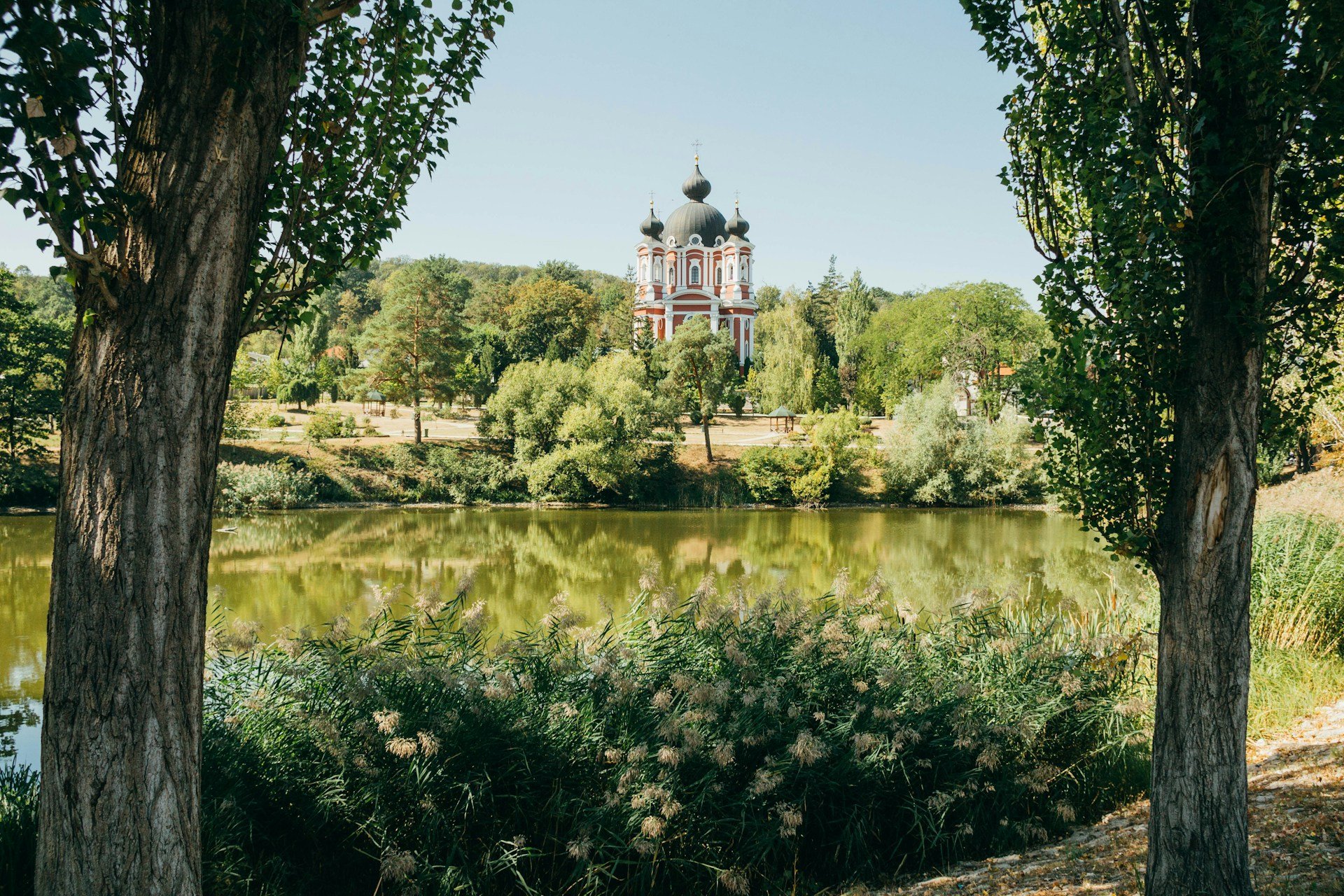
What You're Actually Getting Into
Moldova is a small, landlocked country wedged between Romania and Ukraine that most travelers couldn't place on a map, and that is precisely its appeal. It has no coastline, no mountain range, and no single landmark that dominates a postcard. What it has instead is wine on a genuinely industrial-historic scale: two Soviet-era limestone quarries near Chisinau were converted into underground cellar cities, one of them holding the largest wine collection on earth by Guinness's own count, and both are open to anyone who books a tour. It has a cave monastery from the 13th century carved straight into a cliff face above a river bend, and a capital city that still runs on a human, unhurried pace that Central and Western Europe largely lost a generation ago.
It is also, by most measures, one of the poorest countries in Europe, a fact tied directly to a difficult modern history: Soviet annexation, a war in 1992 that froze off a slice of the country along the Dniester River, and decades of emigration that have sent a large share of the working-age population abroad to Romania, Russia and Italy for work. None of that is hidden from visitors, and it shouldn't be from you either. What you get in exchange is a country actively, visibly trying to reinvent itself: EU accession talks opened multiple negotiating chapters in 2026, Chisinau's restaurant and wine-bar scene has grown up fast, and prices for genuinely good food and wine remain a fraction of anywhere in Western Europe.
The honest complications
Tourist infrastructure outside Chisinau is genuinely thin: English drops off quickly once you leave the capital, road quality on rural routes is inconsistent, and a rental car or an organized tour does more work here than in most of Europe. Transnistria, the breakaway strip along the eastern border, remains a live and currently escalating security question rather than settled history, covered honestly in the safety chapter rather than glossed over. And Moldova's economic reality is visible if you look for it: Soviet-block apartment buildings ring Chisinau, many villages have emptied out as working-age residents left for jobs abroad, and the tourism industry, while growing fast, is still finding its footing. None of this makes Moldova unsafe or unpleasant to visit. It makes it a country in transition, and an honest guide says so.
A History Worth Knowing
Moldova's history is largely the history of who controlled it. The medieval Principality of Moldavia, founded in the 1350s, reached its high point under Stephen the Great, who held off the Ottomans, Hungarians and Poles for nearly five decades. From there the region passed through Ottoman vassalage, Russian imperial annexation, a brief union with Romania, Soviet rule, and finally independence in 1991, immediately followed by a war that split the country along a river that still divides it today.
- 1457–1504
Stephen the Great. Moldavia's golden age: military victories against the Ottomans, Hungarians and Poles, and dozens of monasteries and churches built across the principality, many still standing.
- 1812
Bessarabia annexed by Russia. The eastern half of the old principality, roughly today's Moldova, passes to the Russian Empire after a Russo-Turkish war.
- 1918
Union with Romania. Amid the chaos following the Russian Revolution and WWI, Bessarabia votes to unite with the Kingdom of Romania.
- 1940–1944
Soviet annexation. The USSR forces Romania to cede the territory in 1940; after a wartime interlude it is re-annexed in 1944 and becomes the Moldavian SSR.
- 1991
Independence. Declared 27 August 1991 as the Soviet Union dissolves.
- 1992
The Transnistria War. A short, sharp conflict along the Dniester River ends in a ceasefire that has never become a lasting settlement. Russian troops remain in the breakaway region to this day.
- 2022–2026
The EU push. Moldova applies for EU candidacy days after Russia's invasion of Ukraine, is granted candidate status in June 2022, opens accession negotiations in 2024, and moves through multiple negotiating clusters in 2026 under President Maia Sandu's pro-European government.
Read the full history: Stephen the Great, Bessarabia, and the road to Europe
Stephen the Great (Stefan cel Mare) ruled Moldavia from 1457 to 1504 and remains the country's defining historical figure, honored with statues in nearly every town and the name of Chisinau's main boulevard. He fought the Ottoman Empire, the Kingdom of Hungary and the Polish-Lithuanian Commonwealth to a standstill across dozens of battles, and endowed monasteries after his victories, a tradition that left Moldova with a scattering of medieval religious architecture disproportionate to its size. Moldavia became an Ottoman vassal state in 1538, retaining its own prince and internal administration in exchange for tribute, a lighter form of control than direct incorporation.
The modern border question begins in 1812, when Russia annexed the eastern half of the principality, called Bessarabia, following a Russo-Turkish war. Bessarabia remained under Russian imperial rule until the chaos of 1917 to 1918, when it voted to unite with the recently formed Kingdom of Romania. That union lasted barely two decades: the Molotov-Ribbentrop Pact's secret protocols assigned Bessarabia to Soviet influence, and the USSR forced Romania to cede it in 1940. After a wartime reoccupation by Romania alongside Nazi Germany, the Red Army retook the territory in 1944, and it became the Moldavian Soviet Socialist Republic, remaining part of the USSR until 1991.
The Transnistria War. As the Soviet Union collapsed, the Slavic-majority population east of the Dniester River, fearing both Moldovan nationalism and potential reunification with Romania, declared their own breakaway republic in 1990. Fighting broke out in March 1992 and lasted until a July 1992 ceasefire, brokered with Russian involvement; a Russian military contingent has remained in the region ever since, and the conflict has never been formally resolved. Transnistria today functions as a self-governing, internationally unrecognized territory with its own currency, parliament and border checkpoints, a genuine anomaly inside a European country's internationally recognized borders.
Toward Europe. Moldova applied for European Union candidacy within days of Russia's full-scale invasion of Ukraine in February 2022 and was granted candidate status that June. President Maia Sandu, re-elected in 2024 on an explicitly pro-EU platform, has pushed anti-corruption and judicial reforms alongside the accession process; by mid-2026 Moldova had opened negotiations on several EU accession clusters, including the foundational "fundamentals" chapter in June and an "external relations" chapter in July, with an official government target of 2028 for membership, though most EU officials view the early 2030s as more realistic.
Top Destinations
Moldova is compact, smaller than the US state of Maryland, and almost everything worth seeing sits within two hours of Chisinau by car. The country splits naturally into the capital, the wine country that surrounds it, the cave monastery country along the central river valleys, and the north toward Ukraine.
Chisinau, the green capital
Chisinau is a low-rise, tree-lined capital built and rebuilt after a 1940 earthquake and WWII bombing left much of it flattened, which is why it reads more Soviet-modernist than medieval. Stefan cel Mare Boulevard is the spine of the city, running past the Triumphal Arch, the Nativity Cathedral and the National Museum of Ethnography and Natural History, and the 114-hectare Valea Morilor park with its own lake sits an easy walk from the center. The full Chisinau city guide covers neighborhoods, hotels and restaurants in depth.
Cricova & Milestii Mici
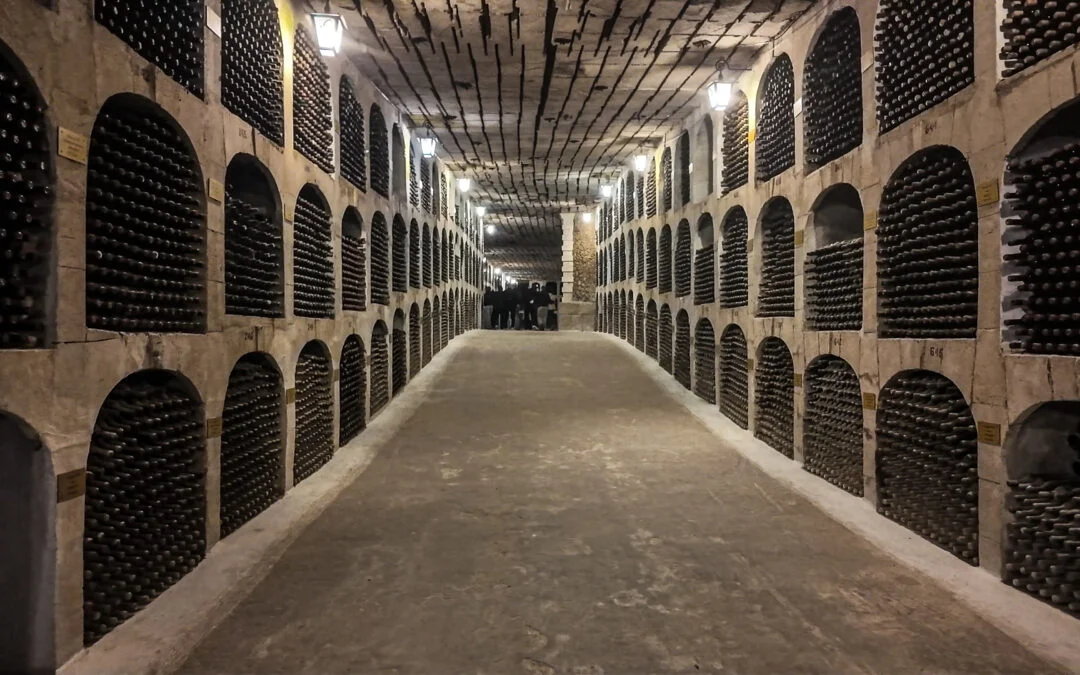
Two former limestone quarries just outside Chisinau were converted into wine cellar cities on a scale that's hard to grasp until you're standing in one. Milestii Mici, about 20km south of the capital, holds the Guinness World Record for the largest wine collection on earth, roughly 1.5 to 2 million bottles along some 200km of underground streets with their own street names and traffic signs. Cricova, founded in 1952 and roughly the same distance north, has 120km of tunnels and a similarly theatrical tour by electric car through wine maturation halls and a national collection that has hosted heads of state. Both run guided tastings; book ahead, especially on weekends.
Purcari, the south
Moldova's oldest winery, founded in 1827, sits about 75km southeast of Chisinau in the Stefan Voda wine region near the Ukrainian border, a roughly 90-minute drive. Purcari's French-chateau-style estate and its wines, exported to more than 25 countries, are widely considered Moldova's best-known label abroad. Tours run about 45 minutes through the processing and historic cellar areas, usually combined with a countryside drive through traditional villages.
Orheiul Vechi, the cliffside monastery
About 45 to 50 minutes north of Chisinau, Orheiul Vechi is a limestone cliff complex above a bend in the Raut River that has been inhabited in some form since antiquity, with a cave monastery dating to at least the 13th century carved directly into the rock. A handful of monks still live and hold services inside it. Women should cover their heads to enter; scarves are usually available to borrow at the base of the stairs. The complex also holds the ruins of a Golden Horde-era settlement and a small medieval Moldavian church, layers of history stacked on the same cliff. Most visitors treat it as a half-day trip, though staying overnight in the adjacent village of Butuceni, in a traditional guesthouse, is a genuinely good way to slow down.
Soroca, the fortress and the Roma capital
Soroca sits on the Dniester River in Moldova's north, built around a compact, near-perfectly round 14th-century fortress constructed for a garrison rather than for comfort. The town is also known informally as Moldova's Roma capital, home to a distinctive style of large, ornate mansions built by the local Roma community, visible on the hillside above the fortress. It's a longer trip from Chisinau, roughly two hours each way, and works best as part of a wider northern loop.
Tipova & Saharna
Further along the Dniester, Tipova holds the largest cave monastery complex in Moldova and one of the largest in Europe, dating to the 11th century and carved into the riverside cliffs. Nearby Saharna combines a series of waterfalls on the Saharna River with the Holy Trinity Monastery, a pilgrimage site for many Moldovans. Both are roughly 100km north of Chisinau and are usually visited together as a full-day trip by car.
Culture & Etiquette
Moldovan identity sits at a genuine crossroads: the official language is Romanian, and most Moldovans are ethnically and culturally close to Romanians, but nearly five decades of Soviet rule left Russian widely spoken, especially in Chisinau and among older generations, and the two languages coexist in daily life rather than one simply replacing the other. Orthodox Christianity is the dominant religion and shapes everyday etiquette, from headscarves at monasteries to name-day celebrations that rival birthdays in importance.
Do
- Accept hospitality, especially wine. Being offered homemade wine, food, or an invitation into someone's home is common and genuinely meant; a polite taste or a toast back is the expected response.
- Dress modestly for monasteries. Cover shoulders and knees, and women should carry a headscarf; Orheiul Vechi and other active monasteries expect this.
- Learn a few Romanian words. Multumesc (thank you), Buna ziua (good day), Da (yes), Nu (no). Attempting Romanian is noticed and appreciated, even where Russian is also spoken.
- Carry cash (lei). Cards work in Chisinau hotels and restaurants, but markets, rural areas and small wineries are often cash-only.
- Book wine cellar tours ahead. Cricova and Milestii Mici run on scheduled tour groups; walking in without a reservation, especially on weekends, often means waiting or missing out.
Don't
- Assume everyone speaks English. It's common with younger people in Chisinau, far less so outside the capital or with older generations.
- Call the language "Moldovan" to a Romanian speaker's face without care. The language is linguistically Romanian; some older or Russian-leaning Moldovans still use "Moldovan" as a political and identity marker, and the terminology can be a genuinely sensitive topic best avoided with strangers.
- Photograph military, border, or government buildings. Standard practice near any sensitive infrastructure, doubly relevant given Moldova's border tensions.
- Head toward Transnistria without reading the safety chapter first. It looks like a normal day trip on a map. It currently isn't treated as one; see below.
- Expect Western European pace. Service, transport and bureaucracy all move more slowly than in Western Europe; patience is the right default.
Deeper culture: the language question, Orthodox tradition, and emigration
The language question. Romanian was reaffirmed as the sole state language in a 2023 legal change (replacing the Soviet-era term "Moldovan" in official use), though the underlying political and identity debate, tied closely to attitudes toward Romania and Russia, remains genuinely alive in Moldovan society rather than a settled historical footnote.
Orthodox Christianity shapes the calendar as much as the church: name days are widely celebrated, Easter (on the Orthodox calendar, which usually differs from the Western date) is the year's major holiday, and monasteries like Orheiul Vechi, Tipova and Saharna remain active religious sites, not museums, with resident monks and regular services.
Emigration and remittances. A significant share of Moldova's working-age population lives and works abroad, primarily in Romania, Russia and Italy, and remittances form a substantial part of the national economy. It's common to meet Moldovans whose immediate family is scattered across two or three countries, a lived reality that shapes conversations about the country's future more than any single political event.
Food & Drink
Moldovan food sits close to Romanian cuisine with its own regional touches: cornmeal, fresh produce, slow-cooked meats and, above everything, wine that's treated as a household staple rather than a luxury. Portions are generous and prices, even at Chisinau's better restaurants, remain low by European standards.
Mamaliga ~30-60 MDL
Moldova's national dish: a thick, sticky cornmeal polenta, usually served with brinza (sheep or cow's cheese), sour cream, and a braised pork or meat topping. Simple peasant food elevated to a national identity marker.
Placinte ~20-40 MDL
Savory or sweet stuffed pastries, filled with cheese, potato, cabbage, meat, or seasonal fruit like cherry or pumpkin. Sold everywhere from market stalls to sit-down restaurants; La Placinte, a Chisinau chain, is the reliable, budget-friendly place to try the full range.
Zeama ~40-70 MDL
A sour, herby chicken soup with hand-cut egg noodles, celery leaf, dill and parsley, closer to a restorative broth than a heavy meal. A common home-cooked dish that also appears on most traditional restaurant menus.
Moldovan wine ~150-400 MDL/bottle
Reds, whites and sparkling wines from Codru, Stefan Voda and Purcari appellations. Restaurant house wine is often decent and cheap; a good bottle at a wine shop runs 150 to 400 lei, with premium Purcari labels going higher.
Sarmale & grilled meats ~90-180 MDL
Cabbage or grape-leaf rolls stuffed with meat and rice, plus mici (grilled minced-meat rolls) and other charcoal-grilled meats shared with the Romanian table, usually served with mamaliga on the side.
Divin (Moldovan brandy)
Moldova's answer to cognac, an aged grape brandy produced under strict rules similar to the French original. Often poured as a digestif alongside coffee at the end of a meal.
When to Go & Itineraries
May, June, September and early October are Moldova's sweet spot: mild temperatures, green countryside, and comfortable conditions for both the wine cellars (which stay cool year-round regardless of season) and the cliffside monasteries. Late September brings the grape harvest and Chisinau's wine festival, a genuinely good time to visit if crowds at the two main wineries don't bother you. Winters are cold and grey with limited daylight; summers can turn hot and humid in July and August.
All four seasons compared, with temperatures
| Season | Verdict | Temps | Notes |
|---|---|---|---|
| May-Jun & Sep-Oct | Best | 15-25°C | Mild, green, comfortable for touring and wine cellars |
| Jul-Aug | Good (hot) | 25-33°C | Warm and sometimes humid; cellars stay cool year-round |
| Mar-Apr | Good | 8-18°C | Quiet, low prices, occasional rain |
| Nov-Feb | Cold | -4 to 5°C | Grey and cold; indoor sights and cellars still work well |
Chisinau averages around 21°C in summer and can drop below freezing in January; the underground wine cellars hold a steady 12-14°C regardless of the season outside.
Itineraries
Moldova's small size means most of the country is reachable from a single Chisinau base. Four days covers the essentials comfortably; a week allows a genuinely unhurried pace with an overnight outside the capital.
- Day 1
Chisinau. Stefan cel Mare Boulevard, the Triumphal Arch and Nativity Cathedral, the National Museum of Ethnography, and dinner in the Centru district.
- Day 2
Wine cellars. Milestii Mici or Cricova, booked ahead, with the tasting doubling as lunch. Back in Chisinau by evening for Valea Morilor Park.
- Day 3
Orheiul Vechi. A half-day at the cliff monastery, with time for the village of Butuceni and, traffic depending, a stop at a rural wine stall on the way back.
- Day 4
Chisinau, unhurried. Parks, a second neighborhood, and a proper sit-down restaurant meal before departure.
- Days 1-2
Chisinau. The full city guide's two-day pace: landmarks, museums, neighborhoods and restaurants.
- Day 3
Cricova or Milestii Mici, booked ahead, treated as a half-day with lunch built in.
- Day 4
Orheiul Vechi, with an overnight in Butuceni village for a slower pace and an evening away from the capital.
- Day 5
Purcari & the south. Moldova's oldest winery and a countryside drive through the Stefan Voda region.
- Days 6-7
The north. Soroca's fortress, and Tipova and Saharna along the Dniester, before returning to Chisinau for departure.
Getting there & around
Chisinau International Airport (KIV) is Moldova's main gateway; direct connections are more limited than most European capitals, though routes have been expanding through 2026. Many travelers instead fly into Iasi, Romania, about 100km west, and cross the land border by car, bus or private transfer, a well-established workaround given Chisinau's smaller route network. Within the country, a rental car is the most practical way to reach the wine cellars and Orheiul Vechi in a single day; organized day tours from Chisinau cover the same ground without driving.
All transport options with prices: trolleybuses, taxis, rentals
| Option | Price | Notes |
|---|---|---|
| City trolleybus/bus | ~7 MDL/ride | Run by Regia Transport Electric; covers Chisinau well but awkward with luggage. |
| Taxis (app-based) | ~100-160 MDL airport run | No standardized metered tariff; use the Yandex Go app for a fixed quoted fare rather than negotiating curbside. |
| Rental car | ~€25-45/day | The practical way to combine wine cellars and Orheiul Vechi in one day; international driving permit recommended. |
| Chisinau-Iasi transfer | Varies | ~100km land crossing to Romania's Iasi Airport, a common alternative gateway to Moldova. |
Practical prep: buy a local SIM at the airport or arrange an eSIM before landing; signal is reliable in Chisinau and along main roads, less consistent in rural areas near Orheiul Vechi. Standard travel insurance is advisable, and given Moldova's border situation, a policy that clearly covers the country (not just "Europe" broadly) is worth double-checking.
Where to stay
The capital as your base
Nearly every visitor bases themselves entirely in Chisinau and day-trips from there; the full Chisinau city guide covers neighborhoods, named hotels and prices in detail.
Butuceni village guesthouses
Traditional stone guesthouses in the village beside Orheiul Vechi, several with home-cooked dinners included, are the best way to experience the cliff monastery outside day-tripper hours, at sunrise or sunset.
Budget Planning
Moldova is one of the least expensive countries in Europe to visit, a direct reflection of its low cost of living. Budget travelers manage comfortably on 500 to 800 lei a day, and even a mid-range trip with good restaurants and a rental car rarely approaches Western European prices.
- Hostel dorm ~250 MDL
- Placinte & market meals 20-60 MDL
- City trolleybus/bus, 7 MDL/ride
- Free parks and city sights
- Private room or apartment 600-2,000 MDL
- Restaurant meals 150-300 MDL
- Rental car ~€25-45/day
- Wine cellar tour & tasting
- Best available Chisinau hotels
- Fine dining with premium Moldovan wine
- Private guided day trips
- Purcari & multi-winery tours
Quick reference prices: coffee, meals, cellars
| Coffee (espresso) | ~20-30 MDL |
| Placinte from a bakery | ~20-30 MDL |
| Mid-range restaurant meal | 150-250 MDL |
| Bottle of decent Moldovan wine | 150-400 MDL |
| Wine cellar tour with tasting | ~300-600 MDL |
| Chisinau mid-range hotel | ~900-1,800 MDL/night |
| Rental car | ~€25-45/day |
Prices reflect August 2026 research and are a planning baseline; the leu has held roughly steady against the dollar over the past year (about 17 MDL to 1 USD), but check a live rate before your trip.
Visa & Entry
Moldova has a permissive visa regime for most Western passport holders: US, EU, UK, Canadian and Australian citizens can enter visa-free for up to 90 days within any 180-day period. Moldova is not in Schengen and is not yet an EU member, though it is actively negotiating accession; the Moldovan Ministry of Foreign Affairs is the authoritative source for current entry rules.
✓ Valid passport
At least 6 months validity beyond your planned stay is commonly required; keep a photocopy separate from the original.
✓ 90 days per 180
Applies per rolling 180-day window, not per calendar year; track your days if combining Moldova with other non-Schengen Balkan or Eastern European stops.
✓ Accommodation details
Hotels register foreign guests automatically; keep your first night's address accessible at the border.
✓ Not Schengen
Time in Moldova doesn't count toward a Schengen 90-day allowance, useful for longer combined European trips.
| Moldova | Georgia | |
|---|---|---|
| Wine culture | Underground cellar cities, Guinness-record collection at Milestii Mici | 8,000-year qvevri clay-vessel winemaking tradition |
| EU path | Actively negotiating, multiple clusters opened in 2026, targeting 2028 | Accession process frozen since 2024 amid democratic backsliding |
| Frozen conflict | Transnistria, Russian troops present, elevated 2026 tensions | Abkhazia & South Ossetia, Russian-occupied since 2008 |
| Daily budget | 500-800 MDL (~$30-47), among Europe's cheapest | Similarly affordable, slightly more developed tourist infrastructure |
| Schengen | No, doesn't touch your 90 days | No, same advantage |
Safety, Solo Women & Family
The Moldova most visitors see, Chisinau and the wine and monastery circuit around it, carries a US State Department Level 2 rating, Exercise Increased Caution, the same tier as much of Western Europe. Violent crime against tourists is rare. The exception, and it's a genuine one, is Transnistria, covered honestly below rather than folded quietly into the general advice.
Petty crime
Pickpocketing and purse-snatching occur in crowded tourist spots, markets and on public transport, at a level typical of most European capitals. Keep bags closed and in front of you.
Fake police
Be wary of people posing as police officers demanding on-the-spot fines. Genuine officers carry ID and won't object to you asking to see it or to move to a police station.
Rural driving
Road quality and lighting vary widely outside main highways; avoid unfamiliar rural roads after dark and drive defensively around livestock and horse carts.
Transnistria: what it is, and why we're not sending you there right now
Solo women travelers
Chisinau rates reasonably well for solo women, with standard city precautions covering most of the real risk: avoid poorly lit areas alone at night, use a licensed taxi or the Yandex Go app rather than an unmarked car after dark, and keep the usual awareness around bags and pockets in markets and on public transport. Outside the capital, rural Moldova is conservative but not unwelcoming; the besa-style hospitality tradition common across the wider region generally extends real protectiveness toward guests.
Emergency numbers
Why there's only one number, and embassy contacts
Moldova consolidated police, fire and ambulance dispatch into the single European-standard 112 number; operators redirect the call to the appropriate service, and English-speaking staff are generally available in Chisinau, though less reliably elsewhere. The General Police Inspectorate is at Str. Tiraspol 11/1 in Chisinau.
The US Embassy in Chisinau is the main point of contact for American citizens needing consular help; most Western embassies maintain offices in the capital, and it's worth noting their contact details before a trip that includes rural travel.
Family travel
Moldova works reasonably well for families with older children: the wine cellars have a genuine novelty factor for kids old enough to appreciate an underground "city," Valea Morilor Park in Chisinau has boating and open space, and Orheiul Vechi's cliffs and caves tend to land well with anyone curious about castles and caves. It's a less obviously kid-oriented destination than Western Europe's bigger tourist circuits, and rural areas have thinner medical infrastructure, worth factoring in if traveling with very young children away from Chisinau.
Moldova FAQ
Is Moldova safe to visit?
Yes, for the country most visitors see. The US State Department rates Moldova Level 2, Exercise Increased Caution, the same tier as much of Western Europe. The separate, breakaway region of Transnistria carries a stronger Reconsider Travel rating and is a different question entirely.
Do I need a visa for Moldova?
Citizens of the US, EU, UK, Canada and Australia can enter visa-free for up to 90 days within any 180-day period. Moldova is not in Schengen, so time there does not count against a Schengen 90-day allowance.
What currency does Moldova use?
The Moldovan leu (MDL), not the euro. Roughly 17 lei to the US dollar as of 2026. Moldova is an EU candidate but is years from adopting the euro even if it eventually joins.
How many days do you need in Moldova?
Four to five days covers the essentials well: two in Chisinau, one for the wine cellars at Cricova or Milestii Mici, and one for Orheiul Vechi. A week adds Purcari's vineyards in the south or Soroca's fortress in the north.
When is the best time to visit Moldova?
May, June, September and early October: mild weather, green countryside, and the wine cellars and monasteries are pleasant to visit without summer heat. Late September brings the grape harvest and Chisinau's wine festival.
Is Moldova safe for solo female travelers?
Generally yes, especially in Chisinau. Standard city precautions apply: pickpocketing in crowded markets and on public transport, and using licensed taxis or a ride-hailing app rather than unmarked cars, particularly at night.
Is Moldova in the EU or Schengen?
Neither yet. Moldova has been an EU candidate since June 2022 and opened multiple negotiating clusters through 2026, with a self-set target of 2028, though EU officials generally see 2030 as more realistic. It has never been in Schengen.
What language is spoken in Moldova?
Romanian is the official language, spoken by the large majority. Russian remains widely used, especially in Chisinau and among older generations, a legacy of the Soviet period. English is common with younger people in the capital, less so elsewhere.
Is Moldova cheap to visit?
Yes, among the cheapest countries in Europe. Budget travelers manage on 500-800 lei (about 30-47 dollars) a day, and a good restaurant meal in Chisinau costs 150-250 lei.
What is Transnistria and can I visit it?
A breakaway, Russian-backed strip of Moldova along the Dniester River that has run its own unrecognized administration since a 1992 war. It hosts around 1,500 Russian troops and a large Soviet-era ammunition depot. The US State Department currently rates it Reconsider Travel, a step above the rest of Moldova, and advises against visiting given the elevated 2026 tensions.
Is Moldova known for wine?
Very much so. Milestii Mici holds the Guinness World Record for the largest wine collection on Earth in over 200km of underground galleries, and neighboring Cricova has 120km of its own tunnels used since 1952. Purcari, Moldova's oldest winery, dates to 1827.
What Stays With You
Moldova doesn't announce itself. There's no single monument that sums the country up on a magazine cover, no beach or mountain range doing the marketing for it. What you remember instead is standing in a tunnel a hundred meters underground surrounded by more wine than seems physically reasonable, a monk's chant echoing out of a cave cut into a cliff by hands that worked eight centuries before yours, and a Chisinau evening where a coffee, a plate of placinte and an hour of nobody rushing you cost less than a single metro ride in most of the cities Moldova gets compared to.
It's a small country working hard, visibly and unglamorously, to become something else, without pretending its harder history isn't part of the story. Go while it's still figuring that out; the honesty is most of the appeal.