
What You're Actually Getting Into
Malta is the smallest and one of the most densely populated countries in the European Union, an archipelago of three inhabited islands you can drive from top to bottom in under an hour, and it is stacked with more layered history than countries fifty times its size. Phoenicians, Romans, Arabs, Normans, Sicilians, the crusading Knights of St John, Napoleon and finally the British each left something behind, and the result is a place where a Baroque cathedral, a medieval walled city and a Neolithic temple older than the Egyptian pyramids can all sit within a single afternoon's drive.
It is also, unusually for the Mediterranean, an English-speaking country: English has been an official language alongside Maltese since independence, a legacy of British rule that ended in 1964, so menus, road signs and conversations with strangers rarely require translation. Malta joined the EU in 2004, adopted the euro in 2008, and joined the Schengen Area in 2007, so there is none of the visa friction some nearby countries carry.
The honest complications
Malta's small size cuts both ways: it means everything is close, but it also means the harbour towns around Valletta, Sliema and St Julian's are genuinely dense and can feel more like a continuous city than a series of villages, with cranes and construction a constant backdrop to the older architecture. Peak summer (July-August) brings serious heat, often above 35°C with little relief after dark, and the most photogenic sites, the Blue Lagoon especially, get crowded fast once the day-tripper boats arrive. Driving is on the left with narrow, often confusing one-way streets in the older towns, and Malta is not the bargain destination it was fifteen years ago: prices have risen with tourism, though it still undercuts Italy and southern France for comparable quality.
A History Worth Knowing
Malta's prehistoric temple builders were raising megalithic structures around 3600 BCE, centuries before Stonehenge or the pyramids of Giza. Phoenicians, Carthaginians and Romans followed; Arab rule from the 9th century left the Semitic backbone of the Maltese language. The Knights of St John arrived in 1530, survived the Great Siege of 1565, and built Valletta. The British ruled from 1800 until independence in 1964; Malta was a republic by 1974 and joined the EU in 2004.
- c. 3600 BCE
The temple builders. Malta's Neolithic inhabitants raise Ġgantija, Ħaġar Qim and Mnajdra, among the oldest free-standing stone structures on Earth.
- 218 BCE–870 CE
Rome, then the Arabs. Roman rule brings the villa at Rabat; Arab rule from 870 introduces citrus, irrigation, and the Semitic roots of the Maltese language.
- 1530
The Knights of St John arrive. Charles V grants Malta to the crusading order after their expulsion from Rhodes; they fortify the harbour and rule as a sovereign state.
- 1565
The Great Siege. Ottoman forces besiege Malta for nearly four months; the Knights hold, and Grand Master Jean de Vallette founds the fortress city that bears his name the following year.
- 1800–1964
British rule. Malta becomes a British colony after Napoleon's brief occupation is expelled; the George Cross is awarded to the whole population for endurance under WWII siege in 1942. Independence follows in 1964.
- 2004–2008
Europe, fully. Malta joins the EU in 2004, the Schengen Area in 2007, and adopts the euro in 2008.
Read the full history: temples, the Knights, the Great Siege and the George Cross
Malta's Neolithic temple period, roughly 3600 to 2500 BCE, produced some of the oldest free-standing stone monuments anywhere in the world, predating both Stonehenge and the pyramids of Giza. Ġgantija on Gozo, Ħaġar Qim and Mnajdra on the main island, and the underground Ħal Saflieni Hypogeum are all UNESCO World Heritage Sites, and their builders vanished from the archaeological record without a clear explanation around 2500 BCE, one of the more genuine mysteries in European prehistory.
Phoenician and later Carthaginian traders used Malta's harbours from around the 8th century BCE; Rome absorbed the islands in 218 BCE during the Second Punic War, and the Acts of the Apostles records St Paul's shipwreck on Malta around 60 CE, an event central to Maltese Catholic identity. Arab rule from 870 CE lasted roughly two centuries and left its clearest legacy in the Maltese language itself, a Semitic tongue related to Siculo-Arabic, later overlaid with Sicilian, Italian and English vocabulary but never displaced.
The Knights of St John, formally the Sovereign Military Hospitaller Order, arrived in 1530 after Holy Roman Emperor Charles V granted them Malta following their expulsion from Rhodes by the Ottomans, for the annual rent of a single Maltese falcon. They fortified the Grand Harbour and, in 1565, withstood the Great Siege: an Ottoman force of some 40,000 against a few thousand defenders and Maltese irregulars, over nearly four months of the hottest part of summer. Grand Master Jean Parisot de Vallette, who led the defence, founded the new fortress capital that bears his name in 1566, and the Knights ruled Malta as a sovereign state, complete with their own currency and diplomacy, until Napoleon evicted them in 1798 on his way to Egypt.
British Malta and WWII. The British, invited in by the Maltese after Napoleon's occupation grew unpopular, formally took control in 1814 and built Malta into a key naval base guarding the central Mediterranean. That strategic value made Malta one of the most heavily bombed places on Earth during WWII: over 3,000 air raids between 1940 and 1942 as Axis forces tried to cut Allied supply lines to North Africa. King George VI awarded the George Cross to the entire population in April 1942 for its endurance, and the medal still appears in the canton of Malta's national flag today. Independence came peacefully in 1964, a republic was declared in 1974, and Malta's EU accession in 2004 completed a long pivot from garrison outpost to European member state.
Top Destinations
Malta divides naturally into five zones: fortress Valletta and its harbour, the walled quiet of Mdina and Rabat, the quieter sister island of Gozo, the beaches and the almost-uninhabited islet of Comino, and the prehistoric temple sites scattered across the south. The whole country is small enough that every zone is a same-day trip from anywhere you're staying, which is part of what makes it such an efficient place to travel.
Valletta, the fortress capital
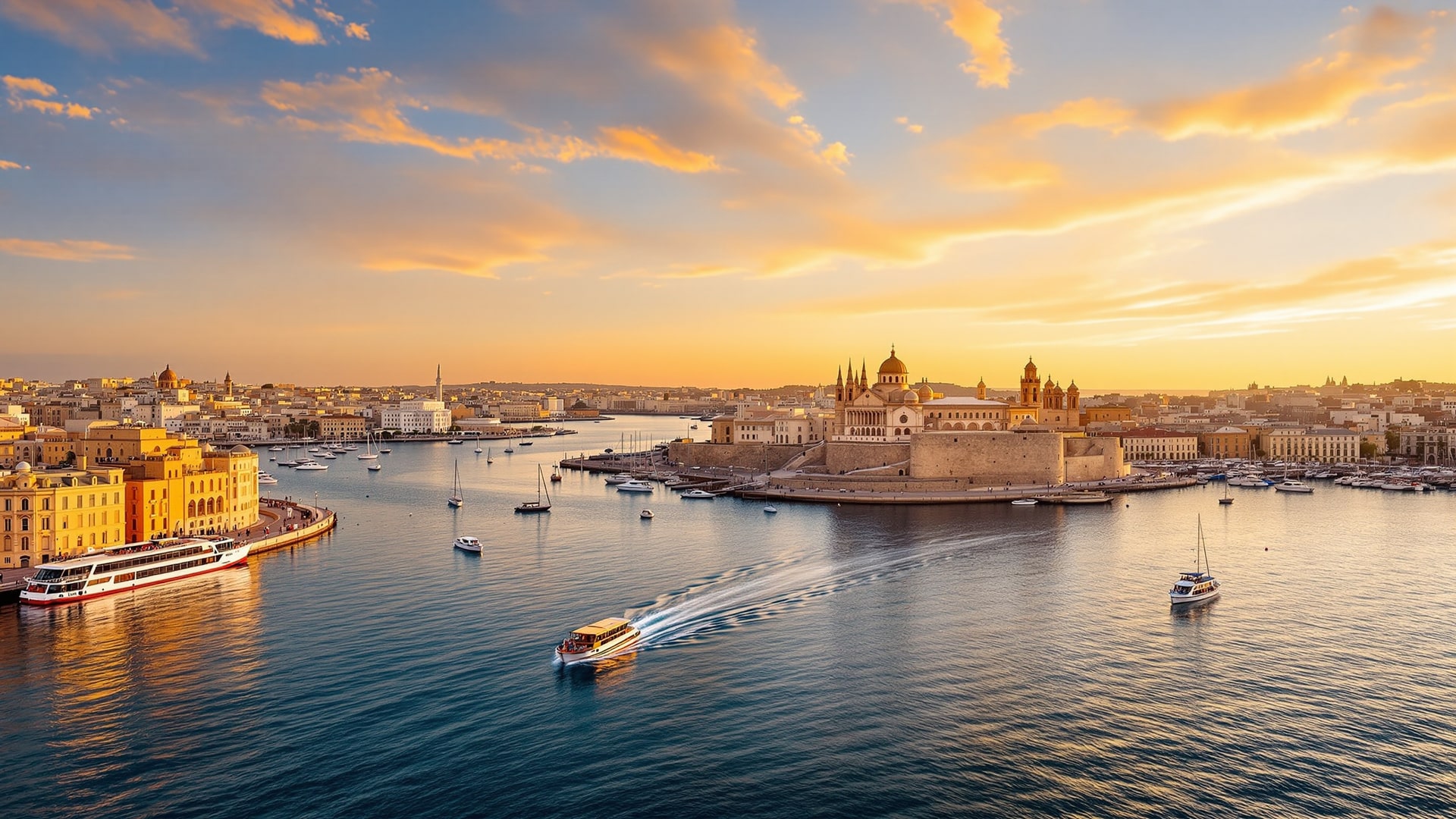
Valletta is a UNESCO World Heritage city built almost entirely between 1566 and 1580, a compact grid of honey-coloured limestone packed onto a peninsula between two harbours. St John's Co-Cathedral looks austere from outside and overwhelming within: gilded Baroque vaulting over the tombs of Knights, and Caravaggio's "The Beheading of Saint John the Baptist," the only work the artist ever signed (€15 entry, closed Sundays). The Upper Barrakka Gardens look straight down over the Grand Harbour to the Three Cities, and the Saluting Battery below fires its noon-day gun daily. Republic Street is the main artery; Is-Suq tal-Belt, the restored 19th-century covered market, is the easiest spot for a varied lunch. Across the water, the Three Cities, Birgu, Senglea and Cospicua, were the Knights' original stronghold before Valletta existed, and are noticeably quieter: Fort St Angelo dominates Birgu's waterfront, and the ferry across from Valletta costs a couple of euros and is a better way to arrive than by road.
Mdina, the Silent City
Mdina was Malta's capital until the Knights built Valletta, and it still feels like a different century: a walled, honey-stone hill town where private cars are banned for all but residents, and the loudest sound most afternoons is a church bell. Palazzo Falson, a restored medieval noble house turned museum, and the Mdina Cathedral, rebuilt after a 1693 earthquake, are the two interiors worth the entry fee; otherwise the pleasure of Mdina is simply walking its narrow streets in the late afternoon light after the day-tripping tour groups have thinned out.
Rabat, next door
Rabat, immediately outside Mdina's walls, holds the St Paul's Catacombs, an extensive Roman and early Christian underground burial complex (€6 entry), and the Domvs Romana, a Roman townhouse with intact mosaic floors. For lunch, Serkin (Crystal Palace) on Triq San Pawl has been serving pastizzi since the 1940s and remains one of the most authentic pastizzerija experiences in Malta, cash only, standing room, pastizzi from around €0.60 each.
Gozo, Malta's quieter sister
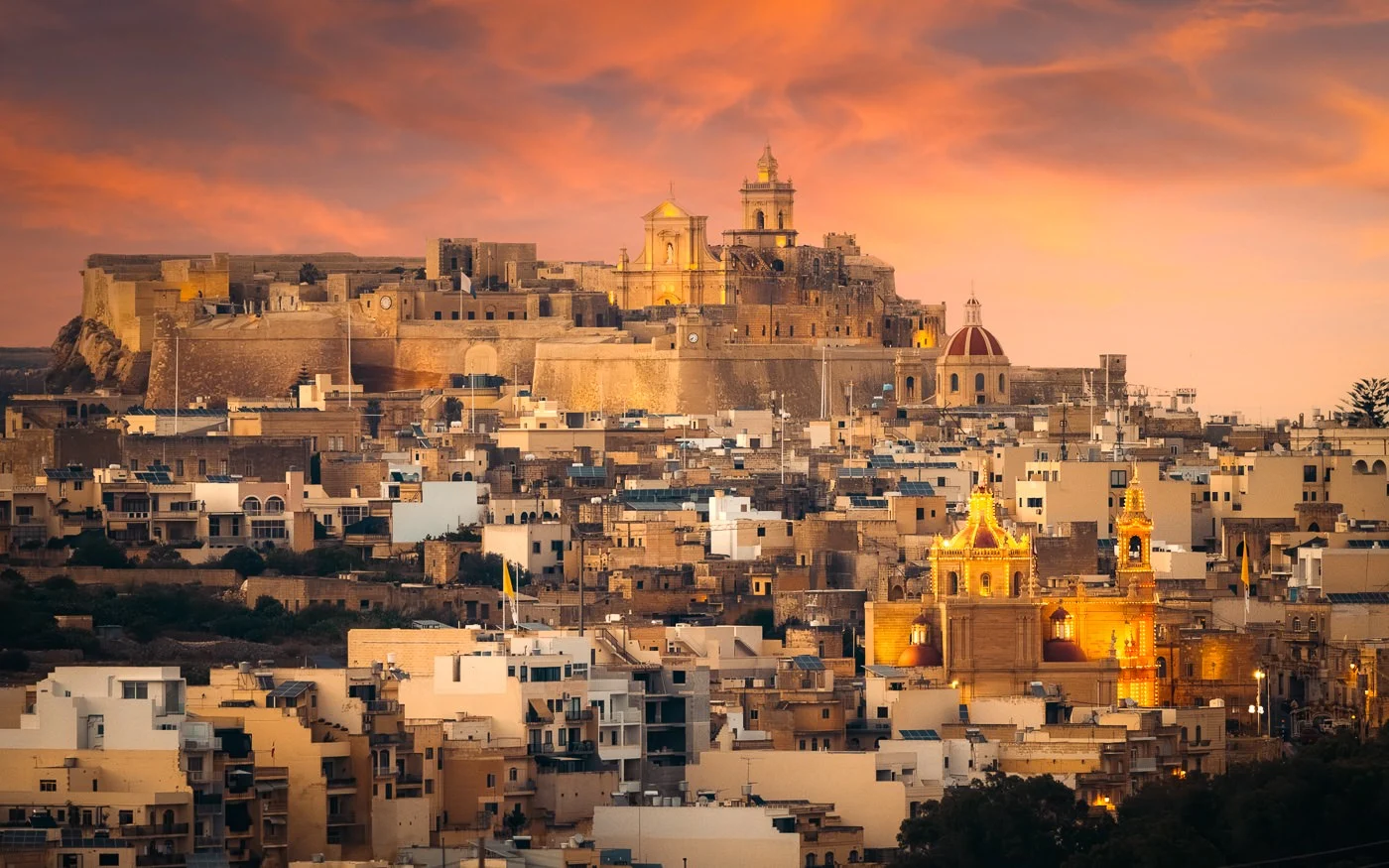
Gozo is greener, hillier and noticeably slower than the main island, reachable by the Gozo Channel car ferry from Ċirkewwa (about 25 minutes, €4.65 return on foot) or the passenger-only Gozo Fast Ferry direct from Valletta's Grand Harbour (about 45 minutes, from €7.50 one way). Victoria (Rabat), Gozo's capital, is dominated by the Citadel, a fortified hilltop old town with free access to the ramparts and a combined Heritage Malta ticket (€5) covering its museums. Dwejra Bay on the west coast lost its most famous feature, the Azure Window natural arch, when it collapsed in a storm in March 2017; the site is still worth visiting for the Inland Sea boat trip through a tunnel to open water and for the Blue Hole, rated one of the best shore dives in the Mediterranean. Ramla Bay, with its distinctive red-orange sand, is Gozo's best beach.
Comino & the Blue Lagoon
Comino, the islet between Malta and Gozo, has a year-round population in single digits and almost no traffic. Its reason for fame is the Blue Lagoon, a shallow, sand-bottomed inlet with water so bright turquoise it looks colour-corrected. It is not a secret: a free Visitor Pass must be booked online before arrival, especially June to September, and boats from Sliema, Bugibba and Gozo pack the bay from mid-morning; arriving before 10am or staying past 4pm makes a real difference. Boat trips from Sliema run €20-40 for a full day including snorkelling stops.
The west coast beaches
Golden Bay and, one headland further, the quieter Għajn Tuffieħa (Riviera) Beach are Malta's best sandy beaches, backed by clay cliffs and a 17th-century watchtower; the walk down to Għajn Tuffieħa keeps the crowds thinner than Golden Bay next door. Mellieħa Bay is the largest sandy beach on the main island and the easiest for families.
Ħaġar Qim & Mnajdra
Two UNESCO-listed megalithic temple complexes on a clifftop above the sea near Qrendi, built around 3600-3200 BCE and covered by protective modern canopies to slow weathering. The setting, limestone megaliths against open Mediterranean horizon, is as striking as the archaeology (€10 entry, includes both sites and a small interpretation centre).
The Ħal Saflieni Hypogeum
An underground complex of interconnected chambers cut into rock over multiple prehistoric phases, the only known prehistoric underground temple structure in the world. Visitor numbers are capped daily to protect the site, and tickets for peak season (June-September) routinely sell out two to three months ahead through Heritage Malta's official site, the only authorised seller; last-minute tickets exist but cost more and are not guaranteed.
Ġgantija, on Gozo
The oldest of Malta's temple sites, dated to around 3600 BCE, meaning it predates the pyramids of Giza by roughly a thousand years. Entry (€10) includes the nearby Ta' Kola Windmill.
Hidden gems beyond the main circuit
The zones above cover a first visit well. With extra days, these reward the detour.
St Peter's Pool
A natural limestone swimming pool cut into the rock coast, a 15-minute walk from Marsaxlokk's fish market. No sand, no facilities, and it's exactly why it stays uncrowded on weekdays.
Wied il-Għasri
A narrow limestone canyon that opens onto a tiny pebble cove; steep steps down, but the swim through the channel out to open sea is one of Gozo's best half-hour detours.
Dingli Cliffs
Malta's highest point, sheer 250-metre drops to the sea with almost no barriers and almost no other visitors, especially at sunset. Bring a car or a taxi; buses run infrequently.
Fort Rinella
A restored Victorian-era British fort housing the Armstrong 100-ton gun, one of only two ever installed, with costumed re-enactment demonstrations on selected days. A quirky, under-visited piece of Malta's garrison history.
Ta' Qali Crafts Village
A former WWII airfield converted into workshops for Malta's glassblowing and filigree traditions, with a national park and Sunday market alongside it. Better for buying a genuine souvenir than the tourist shops in Valletta.
Xlendi Bay
A narrow fjord-like inlet with a small working harbour, cliffside walking path, and noticeably fewer tourists than Marsalforn on the other side of the island.
Culture & Etiquette
Malta is around 90% Roman Catholic and the calendar still runs on it: every town and village has a patron saint's festa each summer, a genuinely loud, joyful mix of brass bands, fireworks competitions between rival local factions, and street processions carrying the saint's statue. Maltese and English are both official languages, and Maltese, the only Semitic language written in Latin script, is spoken alongside English almost everywhere rather than instead of it.
Do
- Dress modestly in churches. Shoulders and knees covered is expected at St John's Co-Cathedral and Mdina Cathedral in particular; both have signs and, occasionally, wraps at the door.
- Time village visits around a festa if you can. Summer weekends bring fireworks and street parties to a different town most weeks; ask locally, they're genuinely welcoming to visitors who wander in.
- Learn a couple of Maltese words. Bonġu (good morning) and Grazzi (thank you) land well, even though English works everywhere.
- Remember Malta drives on the left, right-hand-drive cars included, a British-era holdover unique among its Mediterranean neighbours.
- Book ahead for the Hypogeum and, in peak summer, the Blue Lagoon Visitor Pass. Both cap numbers and both sell out.
Don't
- Expect Sunday hours everywhere. St John's Co-Cathedral and some smaller sites close on Sundays; churches themselves are often only open around Mass times outside tourist zones.
- Assume the whole island is beach resort. Valletta, Mdina and the Three Cities are working historic towns first; treat residential streets with the same courtesy you'd want shown at home.
- Underestimate August heat. Midday temperatures regularly exceed 35°C with little shade in Valletta's stone streets; plan outdoor sightseeing for morning or early evening.
- Confuse Malta's "Blue Lagoon" crowds for a quiet swim spot in summer. It is beautiful and it is busy; arrive early or treat it as a shoulder-season trip.
- Drive into Valletta's old town expecting to park easily. Use the Park & Ride at Floriana or a car park outside the bastion walls instead.
Deeper culture: the Maltese language, the festa tradition, and the George Cross
The Maltese language. Descended from Siculo-Arabic with heavy layers of Sicilian, Italian and, more recently, English vocabulary, Maltese is unique as the only Semitic language that is both written in the Latin alphabet and an official language of the European Union. Road signs, government documents and most media appear in both Maltese and English.
The festa. Each parish's summer festa centres on its patron saint, with weeks of buildup culminating in a weekend of Mass, a statue procession through streets strung with lights, brass band marches, and often a genuinely serious fireworks display, sometimes involving rival band clubs competing for the loudest or most elaborate show. It is one of the most authentic, non-staged cultural events available to a visitor anywhere in Europe.
The George Cross. Awarded by King George VI in April 1942 to the entire population of Malta for its endurance under sustained WWII bombing, the medal still appears in the canton of the national flag, a point of quiet, genuine pride that comes up in conversation more than a visitor might expect.
Food & Drink
Maltese food carries a strong Sicilian and Italian accent, layered with Arabic and British influence, plus genuine local specialities you won't find anywhere else. The best of it is unglamorous: a pastizzerija counter, a Sunday family table, a village bar with a chalkboard menu, not the harbourfront restaurants aimed squarely at cruise-ship day-trippers.
Pastizzi ~€0.60-1
Flaky diamond-shaped pastry filled with ricotta or mushy peas, the island's defining street food, eaten any time of day. Serkin (Crystal Palace) in Rabat has been making them since the 1940s.
Fenkata (Rabbit Stew) €15-25
Rabbit slow-cooked with garlic, bay and red wine, Malta's national dish and traditionally a Sunday family meal. Most traditional restaurants serve it; some in rural villages still do it as a full multi-course fenkata sitting.
Ftira €5-9
A dense, ring-shaped sourdough bread, split and packed with tuna, olives, capers, tomato and onion for a filling lunch that predates the word "sandwich" in Maltese food culture.
Bragioli (Beef Olives) €14-20
Thin beef slices wrapped around a stuffing of egg, breadcrumbs, bacon and herbs, braised in red wine and tomato. A Sunday-lunch classic at family-run trattorias.
Ġbejniet €2-4
Small rounds of sheep's or goat's milk cheese, served fresh, sun-dried, or peppered; a Gozo speciality in particular, sold at village markets and roadside stalls.
Kinnie & Cisk €2-4
Kinnie, a bittersweet carbonated soft drink flavoured with bitter oranges and aromatic herbs, is Malta's answer to Italian amaro sodas. Cisk is the local lager, ubiquitous in every bar.
When to Go & Itineraries
May, June, September and October are the sweet spot: warm enough to swim comfortably, noticeably fewer crowds than peak summer, and lower accommodation prices. July and August are hot, busy and the most expensive; winter is mild by northern European standards (rarely below 10°C) and a legitimate off-season option for sightseeing without the heat, though some beach infrastructure closes.
All four seasons compared, with temperatures
| Season | Verdict | Temps | Prices & crowds |
|---|---|---|---|
| May-Jun & Sep-Oct | Best | 20-28°C, sea 22-26°C | Mid prices, manageable crowds |
| Jul-Aug | Good (hot) | 28-36°C, can exceed 38°C | Peak prices, busiest month by far |
| Mar-Apr | Good | 15-21°C | Low prices, sea still cool for swimming |
| Nov-Feb | Quiet | 10-16°C | Lowest prices; some coastal spots close, more rain |
Malta averages over 300 sunny days a year and is the warmest EU member by annual average temperature. Winter rarely drops below 10°C, mild by northern European standards even if too cool to swim comfortably.
Itineraries
Because the whole country can be crossed in under an hour, Malta rewards even a short trip. Four days covers the essentials; a week adds real depth without ever feeling like a long journey between stops.
- Day 1
Valletta. St John's Co-Cathedral, Upper Barrakka Gardens, Republic Street, lunch at Is-Suq tal-Belt.
- Day 2
Mdina, Rabat & the temples. Morning in Mdina and Rabat's catacombs, afternoon at Ħaġar Qim and Mnajdra.
- Day 3
Gozo day trip. Ferry from Ċirkewwa, the Citadel in Victoria, Dwejra's Inland Sea, Ramla Bay for a swim.
- Day 4
Comino & the beaches. Boat to the Blue Lagoon early, or Golden Bay and Għajn Tuffieħa if the boats are booked out.
- Days 1-2
Valletta & the Three Cities. Full day in Valletta, second day across the ferry to Birgu and Fort St Angelo, evening in Sliema or St Julian's.
- Day 3
Mdina, Rabat & Dingli Cliffs. Morning in the Silent City, afternoon at Dingli Cliffs for sunset.
- Day 4
The temples & Marsaxlokk. Ħaġar Qim and Mnajdra in the morning, Marsaxlokk's fish market and St Peter's Pool in the afternoon.
- Days 5-6
Gozo, properly. Two nights: the Citadel, Ġgantija, Dwejra and the Blue Hole, Ramla Bay, Wied il-Għasri.
- Day 7
Comino & the west coast. Blue Lagoon early, Għajn Tuffieħa for the afternoon.
- Days 1-3
Valletta & the harbour towns extended. Add Fort Rinella in Kalkara and an unhurried second pass through the Three Cities.
- Days 4-5
Central & south Malta. Mdina, Rabat, Dingli Cliffs, the temples at Ħaġar Qim and Mnajdra, Marsaxlokk and St Peter's Pool.
- Days 6-8
Gozo unhurried. Three nights: the Citadel, Ġgantija, Dwejra and diving the Blue Hole, Ramla Bay, Xlendi and Wied il-Għasri.
- Days 9-10
Comino & the west coast. An early Blue Lagoon morning, then unhurried days at Għajn Tuffieħa and Mellieħa Bay before flying out.
Getting there & around
Malta International Airport (MLA) at Luqa is the only airport, with Ryanair, Wizz Air, easyJet and KM Malta Airlines, the national carrier that replaced the former Air Malta in 2024, connecting most European capitals directly (about 3 hrs from London, 1.5 from Rome, flights €40-160). Malta drives on the left with right-hand-drive cars: a rental (from about €40-60 a week for an economy car) is worth it for reaching Gozo's countryside or quieter beaches independently, but for a short trip in the harbour towns and Valletta, public transport plus the odd Bolt ride is genuinely easier, since old-town parking is scarce and one-way systems are confusing to newcomers.
All transport options with prices: buses, ferries, taxis
| Option | Price | Notes |
|---|---|---|
| Malta Public Transport bus | €1.50-2/ride | Single fare valid two hours; the Tallinja Explore card (€21) covers seven days of unlimited travel and is the best value for a short trip. |
| Gozo Channel car ferry | €4.65 return, foot passenger | Ċirkewwa to Mġarr, about 25 minutes, runs 24 hours; you pay only on the return leg. |
| Gozo Fast Ferry | from €7.50 one way | Passenger-only, direct from Valletta's Grand Harbour to Mġarr, about 45 minutes. |
| Bolt / eCabs | €8-25 | Cheaper and more reliable than hailing a street taxi; airport to Sliema runs roughly €18-25 depending on demand. |
Practical prep: buy a Maltese SIM or an eSIM before landing; coverage is reliable islandwide including on Gozo. Standard travel insurance covers most itineraries, though check it includes diving if the Blue Hole is on the list. GetTransfer offers fixed-price airport pickups from MLA.
Where to stay
Sliema & St Julian's
The most practical base for a first visit: flat, walkable seafront, dense with hotels and restaurants, ferry across to Valletta, and no need for a car. Read our Sliema city guide for specific picks.
Valletta itself
Fewer hotels and quieter at night than Sliema, but you wake up inside the UNESCO old town. Best for travelers who want atmosphere over nightlife and don't mind fewer dining options after 10pm.
Mellieħa & the north
Closer to the west coast beaches and the Gozo ferry terminal at Ċirkewwa; a good base for a beach-heavy trip, less central for Valletta sightseeing.
Victoria & Marsalforn, Gozo
Basing on Gozo itself for two or more nights, rather than day-tripping, lets you catch the Citadel and Dwejra at sunrise and sunset without the ferry crowds.
Budget Planning
Malta is not the bargain it was a decade ago, but it remains noticeably cheaper than Italy or southern France for comparable quality, especially outside the harbour-town restaurant strips. Summer (July-August) pushes accommodation prices up 30-40% over the shoulder season.
- Hostel dorm €20-30
- Pastizzi and market meals €5-10
- Bus travel with a Tallinja Explore card
- Free beaches and UNESCO ramparts
- 3-star hotel or boutique guesthouse
- Restaurant dinners €20-35/person
- Rental car or regular Bolt rides
- Comino boat trip, one temple site
- Seafront hotels in Sliema or Valletta
- Fine dining and premium Gozo wine
- Private boat charters, guided tours
- Peak-season accommodation
Quick reference prices: pastizzi, ferries, entry fees
| Pastizzi (each) | €0.60-1 |
| Coffee (espresso) | €1.50-2.50 |
| Casual restaurant meal | €12-20 |
| Mid-range restaurant meal | €25-40 |
| Cisk lager (bar) | €2.50-4 |
| Tallinja bus, single ride | €1.50-2 |
| Gozo Channel ferry, foot passenger return | ~€4.65 |
| Ħaġar Qim & Mnajdra entry | ~€10 |
| St John's Co-Cathedral entry | ~€15 |
| Hypogeum, advance ticket | ~€40 |
Prices reflect August 2026 research and drift over time, especially peak-season accommodation. Treat them as a planning baseline, not a quote.
Visa & Entry
Malta is a full Schengen Area member, so entry rules follow the Schengen standard: US, UK, Canadian, Australian and New Zealand citizens can stay visa-free for up to 90 days in any 180-day period, a limit shared across the entire Schengen Area, not reset by crossing into Malta. EU/EEA/Swiss citizens enter freely with a valid ID card or passport. The Ministry for Foreign and European Affairs is the authoritative source for current rules, not third-party paid "e-visa" sites.
✓ Valid passport
At least 3 months validity beyond your planned departure date from the Schengen Area.
✓ Proof of accommodation
May be requested at immigration; hotels register guests automatically.
✓ ETIAS from late 2026
Visa-exempt travellers will need a pre-travel ETIAS authorisation (€7, valid three years) once the system goes live; check the current status before flying.
✓ It counts toward Schengen 90 days
Unlike some Balkan neighbours, time spent in Malta does count against your overall Schengen 90/180-day allowance.
| Malta | Sicily | |
|---|---|---|
| Size & pace | Whole country crossable in under an hour; see it all in 4-7 days | Much larger; needs 10+ days to cover well |
| Language | English is official and universal | Italian; English common in tourist areas only |
| History on show | Neolithic temples, Knights' fortresses, WWII sites | Greek temples, Norman cathedrals, Baroque towns |
| Beaches | Comino's Blue Lagoon, west coast sand beaches | Longer coastline, wider variety, less crowded off-peak |
| Daily budget | €45-65 gets you far | Comparable to slightly higher for similar quality |
Safety, Solo Women & Family
Malta is one of the safer countries in Europe for visitors. Violent crime against tourists is rare, the harbour towns are fine to walk at night with normal urban awareness, and the main risks are pickpocketing in dense tourist crowds, traffic on narrow roads, and heat exhaustion in peak summer, not crime against the person.
Pickpocketing
Concentrated around Valletta's Republic Street, ferry terminals, and Marsaxlokk's Sunday market on the busiest days. Keep bags closed and in front of you in crowds.
Traffic & driving
Left-hand driving, narrow one-way streets in old towns, and locally assertive driving habits. Cross at marked points and drive defensively if renting a car.
Heat & sun
July-August regularly exceeds 35°C with little shade in stone-paved old towns. Carry water, avoid midday walking tours, and use sunscreen even on overcast days.
Two more things worth knowing: Paceville nightlife and unregulated boat operators
Paceville, St Julian's dense nightclub district, carries the usual big-city club-strip caution: some pushy behaviour toward solo women late at night, and drink-safety awareness (never leave a drink unattended) is worth the same care it would get in any similar district elsewhere.
Boat operators around Comino. Most are legitimate, but a handful of unregulated operators have been reported quoting a low upfront price to the Blue Lagoon and then demanding extra for the return leg or "premium" seating. Book with an established, reviewed operator with published prices rather than the first tout you meet on the Sliema seafront.
The 3 scams to actually know about
Malta is not a high-scam destination, but three patterns catch uninformed visitors consistently. The full country list lives on our Malta travel alerts page.
Unlicensed taxi overcharging
Unofficial drivers near the airport or cruise terminal quote inflated flat rates instead of using the meter. Use the official metered rank, or book through Bolt or eCabs, both reliable and transparent on price.
The "extra fee" boat trip
A handful of unregulated operators quote a low price to Comino, then add charges for the return leg or better seats. Book an established operator with published, all-in pricing.
The scratch-card holiday club
Street promoters offer a "free" scratch card that always "wins" a prize, leading into a high-pressure timeshare-style sales pitch. Politely decline and keep walking; there is no actual prize.
Solo women travelers
Malta rates well for solo women (8.0/10 on our scale). Street harassment is uncommon in Valletta, Sliema, St Julian's and on Gozo, and the compact size makes it easy to base somewhere central and never feel far from help. The one area worth ordinary big-city-nightlife caution is Paceville, St Julian's dense club strip, where pushy behaviour has been reported late at night; the standard precautions (don't leave drinks unattended, arrange your own transport home rather than accepting a lift) apply. Full detail on our Solo Woman Explorer pages.
Emergency numbers
Embassies and hospital contacts
112 is the EU-standard emergency number with English-speaking operators. Mater Dei Hospital in Msida is Malta's main public hospital with English-speaking staff throughout (main line +356 2545 0000, Accident & Emergency +356 2545 4030). Most embassies and high commissions cluster around Ta' Xbiex, just across the creek from Sliema.
- USA
- +356 2561 4000
- UK
- +356 2323 0000
- Germany
- +356 2260 4000
- Italy
- +356 2248 9800
- France
- via embassy in Ta' Xbiex
- Australia
- via Rome, +39-06-852-721
- Canada
- via Rome, +39-06-854-442-911
- Netherlands
- via embassy in Ta' Xbiex
Family travel & pets
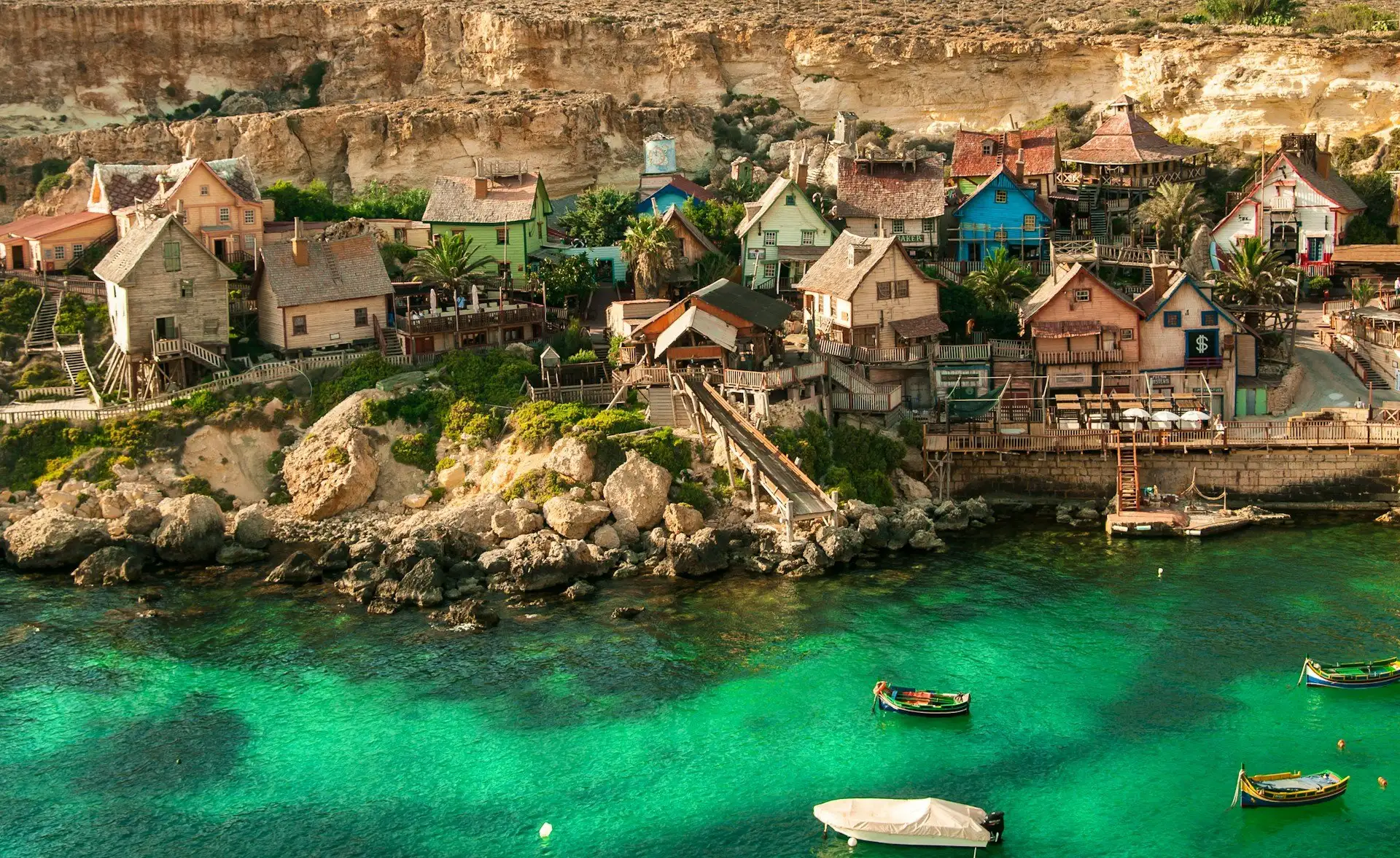
Malta is a solid family destination (8.0/10): compact distances mean less time in transit between activities, the west coast sand beaches suit small children, and sites like the Ta' Qali crafts village and Popeye Village, the surviving film set from the 1980 Robin Williams movie, near Mellieħa, land well with younger kids.
Kids at the temples, and bringing pets
Popeye Village near Mellieħa (€18-25 adult depending on season) works well for children under 10; older kids may find it thin after an hour. Ħaġar Qim and Mnajdra are interesting for children roughly 8 and up who can handle a clifftop walk in the sun; the underground Hypogeum requires quiet and stillness and suits older, patient children better than toddlers.
Pets: EU pet passport holders can enter with dogs, cats and ferrets given valid rabies vaccination and microchip. Non-EU visitors need an EU health certificate issued by an official vet within 10 days of travel, current rabies vaccination, and to enter via an approved travellers' point of entry. Malta International Airport accepts pet arrivals; check current EU pet travel rules before booking, as requirements can change.
Malta FAQ
Is Malta safe to visit?
Yes, Malta is one of the safest countries in Europe. Violent crime against visitors is rare. The main risks are pickpocketing in tourist crowds, traffic on narrow roads, and the usual late-night caution around Paceville's club strip.
How many days do you need in Malta?
Four days covers Valletta, the Three Cities and one Gozo day trip. A week lets you add Mdina, the ancient temples and the west coast beaches without rushing. Ten days is a genuinely relaxed pace across both islands.
Do I need a visa for Malta?
Malta is a full Schengen member. US, UK, Canadian, Australian and New Zealand citizens can enter visa-free for up to 90 days in any 180-day period, shared with the rest of the Schengen Area. EU/EEA citizens enter freely with an ID card or passport.
When is the best time to visit Malta?
May, June, September and October: warm enough to swim, far fewer crowds than peak summer, and noticeably lower accommodation prices. July and August are hot, busy and the most expensive.
How much does Malta cost per day?
Budget travelers manage on €45-65 a day, mid-range on €90-150. Malta is not as cheap as it once was, but it remains less expensive than Italy or southern France for comparable quality.
What is the Blue Lagoon and do I need to book?
A turquoise, shallow bay on the tiny island of Comino, reached by boat from Malta or Gozo. A free Visitor Pass must be booked online in advance, especially June to September, and arriving before 10am avoids the worst of the midday boat crowds.
Is it worth renting a car in Malta?
For a short trip, no: buses, ferries and rideshare apps cover the compact islands well and parking in Valletta and Sliema is difficult. For a longer stay reaching quieter beaches and Gozo's countryside independently, a rental car helps, remembering Malta drives on the left.
Is Malta in the European Union and the Eurozone?
Yes to both. Malta joined the EU in 2004, adopted the euro in 2008, and joined the Schengen Area in 2007, so it has none of the border formalities of a non-Schengen country.
What language is spoken in Malta?
Maltese and English are both official languages. Maltese is the only Semitic language written in Latin script. English is spoken fluently almost everywhere, a legacy of British rule until 1964.
Is Malta safe for solo female travelers?
Yes, Malta rates well for solo women. Street harassment is uncommon in Valletta, Sliema and St Julian's. The exception is Paceville, St Julian's dense nightclub strip, where the usual big-city club-district caution applies.
Is Malta good for a short weekend trip?
Very good. The whole main island can be crossed in under an hour by car, so even three or four days delivers Valletta, a Gozo day trip and a beach afternoon without feeling rushed.
What Stays With You
What surprises most first-time visitors to Malta isn't any single sight, it's the density: a country you can cross in under an hour holding temples a thousand years older than the pyramids, a fortress capital built in fourteen years by knights who'd just survived a siege, a sister island quiet enough to hear the Angelus bells, and water so clear it looks touched up. None of it is spread thin the way it is in bigger countries; it's all stacked close together, in English, with a Sunday fish market that hasn't changed for anyone.
Go before the harbour towns finish filling in the gaps between the old stone, and save at least one unhurried evening for the Upper Barrakka Gardens at sunset, watching the Grand Harbour do what it's done since the Knights built it to be watched.