
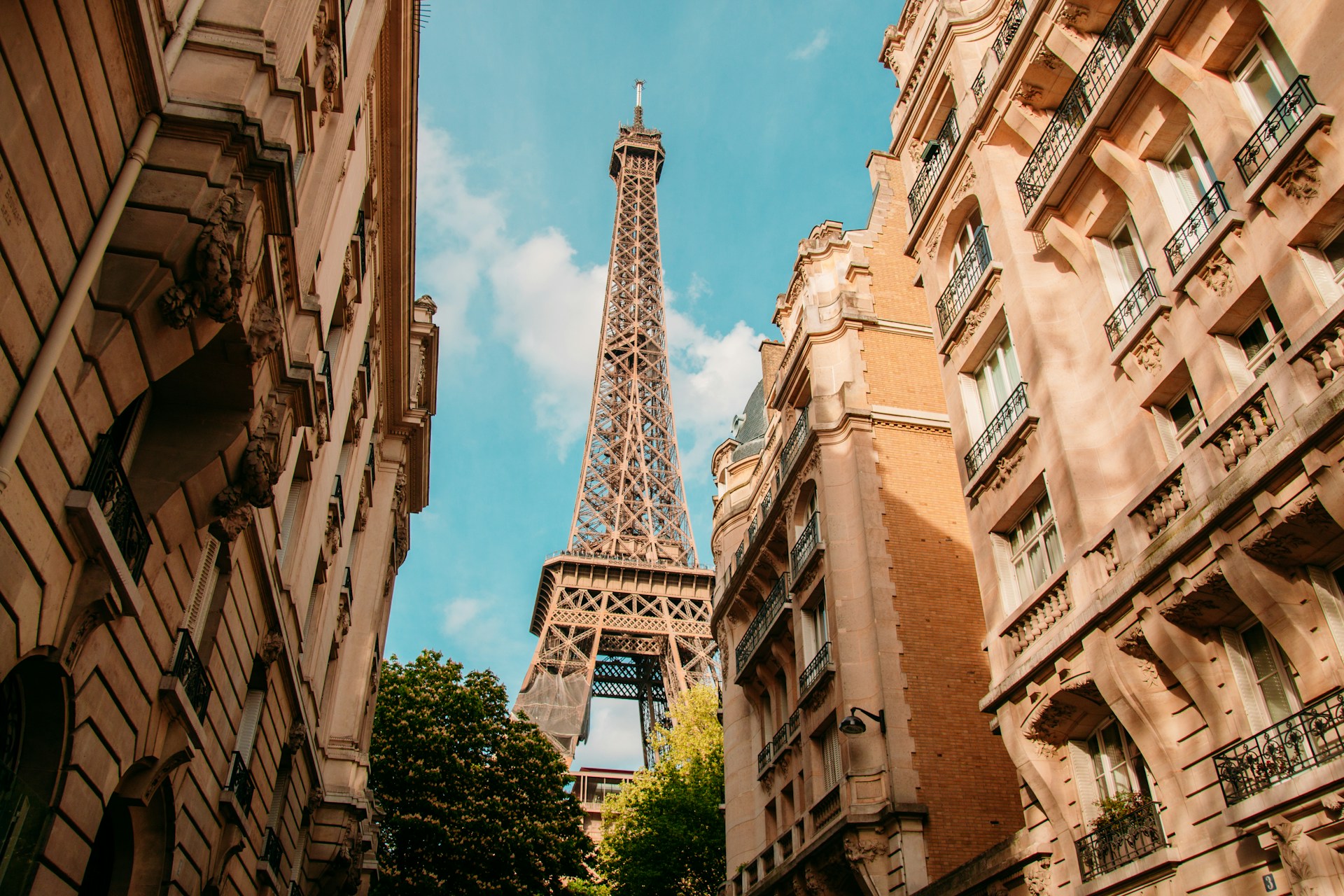
The city everyone thinks they already know
Paris carries more pre-formed expectations than almost any city on earth, and the strange thing is how often it meets them anyway. The Seine really does look like that at golden hour. The Louvre really does hold more art than a single visit can process. And Notre-Dame, closed for five and a half years after the 2019 fire, reopened on 7 December 2024 restored in a way that visibly moved people who thought they'd seen every version of the building already.
What the postcard version leaves out is scale and texture: this is a genuinely large, dense, working capital of 68 million French citizens' government and culture, not a theme park built around a handful of monuments. Two streets back from any major sight is a neighbourhood that runs on its own schedule, where the bakery queue is entirely local and the lunch menu is handwritten on a chalkboard. Both versions of Paris are real, and a good visit spends real time in both.
The honest complications
Paris is not cheap by French standards, let alone by Balkan or Southeast Asian ones: expect to pay a premium on hotels, museum tickets and restaurant meals compared to almost anywhere else in the country. Pickpocketing around the Eiffel Tower, on line 1 of the metro and near the Louvre queue is a genuine, persistent issue, not an exaggerated internet talking point. The Centre Pompidou, one of the city's headline modern art museums, closed in September 2025 for a five-year renovation and will not reopen before 2030, which changes how a "greatest hits" itinerary should be built. And August empties the city of a meaningful share of its restaurant and shop owners, who close for their own summer holiday just as international visitor numbers peak; a favorite address found online may simply be shuttered that week. None of this is a reason to skip Paris. It's a reason to check opening hours and book the big-ticket items before you land rather than after.
Twenty arrondissements, five that matter most
Paris spirals outward from the Louvre in twenty numbered arrondissements. First-time visitors rarely need more than a handful of them, and where you base yourself comes down to how central versus how local you want your mornings to feel.
Le Marais
Medieval streets too narrow for Haussmann's 19th-century boulevard redesign to touch, which is why Le Marais still feels architecturally distinct from the rest of central Paris. It holds the historic Jewish quarter around Rue des Rosiers, the city's most visible LGBTQ+ nightlife district, and a dense concentration of boutiques and galleries. Central enough to walk to Île de la Cité, Bastille or the Louvre in twenty minutes.
Saint-Germain-des-Prés
The Left Bank's intellectual heart, home to the historic cafés Café de Flore and Les Deux Magots, both former haunts of Sartre, Hemingway and de Beauvoir and still functioning cafés rather than museum pieces. Upscale shopping and art galleries fill the surrounding streets, and the Luxembourg Gardens sit at its southern edge.
Montmartre
The hilltop village Paris annexed in 1860, still visibly separate in character: steep cobbled streets, the white domes of Sacré-Cœur at the summit, and Place du Tertre where portrait artists work in view of day-trippers. Genuinely charming early morning or evening, considerably more crowded at midday. Staying here means real hills and a longer walk to the Louvre-Marais core.
The Latin Quarter
Named for the Latin once spoken by Sorbonne students, this is Paris's oldest continuously inhabited district: the Panthéon, the Sorbonne itself, and the stained glass of Sainte-Chapelle a short walk north on Île de la Cité. Rue Mouffetard's market street is one of the best places in the city for an unplanned lunch.
Canal Saint-Martin & the 11th
East of the tourist core, this is where a meaningful share of Paris actually eats out: Bistrot Paul Bert and the Michelin-starred Septime both sit in the 11th, and Du Pain et des Idées, one of the city's most celebrated bakeries, is a short walk from the canal itself. Fewer landmarks, considerably better prices, and a genuinely local evening out.
From palace hotels to a curtained hostel pod
Paris hotel prices run well above the French national average across every bracket, but the range still spans from genuine palace-hotel luxury to well-run hostels with private pod beds. These picks cover that range.
At the very top, Hôtel Plaza Athénée on Avenue Montaigne is the definition of Paris luxury: art deco interiors, marble bathrooms, and a rate that regularly runs well over €1,500 a night, one of the handful of addresses that still justifies the word "iconic."
In the boutique bracket, Hôtel des Grands Boulevards in the 2nd arrondissement pairs 18th-century architecture with contemporary design across fifty recently refurbished rooms, from around €250 a night, and is well located for walking to both Le Marais and the department stores around Opéra.
At the budget end, Generator Paris is the city's best-known design-forward hostel, with dorm beds from roughly €27-40 depending on room size and season, and St Christopher's Inn Gare du Nord, a short walk from the CDG train terminus, offers modern pod-style dorm beds with privacy curtains averaging around €36 a night.
Bistros, bakeries and the two-hour lunch
Paris eating rewards distance from the sights more reliably than almost any other major capital: the closer a restaurant sits to the Eiffel Tower or the Louvre, the less likely it is to be where the city actually eats. The addresses below are the exceptions, or a short walk from the tourist core.
Classic bistro
Bistrot Paul Bert, tucked away near Faidherbe-Chaligny, is the bistro regularly cited as Paris's best of its kind: complimentary gougères, a rich steak au poivre, and the chaotic, genuinely Parisian atmosphere the genre is named for. Book ahead; it fills up on reputation alone.
Modern tasting menu
Septime, also in the 11th, holds a Michelin star and a reputation as one of the hardest reservations in Paris: bookings open online three weeks ahead and fill within minutes. The vegetable-forward, seasonally driven tasting menu is worth the planning if you can catch a slot.
Falafel in the Marais
L'As du Fallafel on Rue des Rosiers has served the same kosher falafel sandwich since 1979 to a queue that regularly spills into the street. Widely considered the city's best, and one of the few genuinely cheap, genuinely excellent meals in central Paris.
Bakery
Du Pain et des Idées on Rue Yves Toudic has operated since 1875 and, under baker Christophe Vasseur since 2002, become one of the most celebrated bakeries in the city; the chocolate-pistachio escargot pastry is the thing to order alongside a standard baguette tradition.
Historic Saint-Germain cafés
Café de Flore and Les Deux Magots, facing each other in Saint-Germain-des-Prés, were the working cafés of Sartre, de Beauvoir and a generation of postwar writers, and both still function as full cafés rather than roped-off landmarks. Prices run tourist-district high; go for the history and the people-watching, not for the cheapest coffee in the city.
The Louvre, a rebuilt cathedral, and a closed modern art museum
Paris's headline sights genuinely deserve their reputation, but 2026 has real logistics to plan around: the Louvre's new dual pricing, a restored but timed-entry Notre-Dame, and a Centre Pompidou that simply is not open. Book the big three ahead rather than queuing on the day.
The Louvre & Musée d'Orsay
The Louvre introduced dual pricing in January 2026: €22 for EEA residents, €32 for everyone else, with free entry on the first Sunday of each month. Even a focused visit to the Mona Lisa, the Winged Victory of Samothrace and the Venus de Milo takes half a day; book a timed slot online rather than queuing at the pyramid. Across the river, the Musée d'Orsay (€16, €12 on Thursday evenings after 6pm) holds the world's best Impressionist collection in a converted Belle Époque train station, and is a more manageable single visit than the Louvre.
Notre-Dame & Sainte-Chapelle
Notre-Dame reopened on 7 December 2024 after the 2019 fire and a five-and-a-half-year restoration; entry is free but a timed online reservation is strongly recommended April through October to avoid one-to-three-hour waits. A five-minute walk away, Sainte-Chapelle (€22 non-EEA, €16 EEA; the chapel closes daily 1-2:15pm) holds some of the finest surviving medieval stained glass in the world inside a comparatively small, easily overlooked building.
The Eiffel Tower & Arc de Triomphe
The Eiffel Tower summit by lift runs €36.70 for adults 25 and over; the stairs-to-second-floor-plus-lift-to-summit combo (€28) is the better-value route to the top for anyone able to manage the stairs. Book up to 60 days ahead, since summit slots sell out in peak season. The Arc de Triomphe rooftop terrace costs €22 from April to September and €16 October to March, and the walk up its 284 steps delivers one of the best orientation views in the city, arguably better than the Eiffel Tower's own.
Montmartre & the Catacombs
Sacré-Cœur basilica itself is free to enter; the dome and crypt cost €8. Go early morning to see Montmartre's steep streets before the day-trip crowds arrive. The Catacombs of Paris (€31 adult, €25 for students 18-26, €12 for children 5-17, timed entry with audio guide included), the underground ossuary holding the remains of six million Parisians, is one of the city's strangest and most memorable sights; book well ahead as slots sell out days in advance in summer.
Two, four or six days, planned neighbourhood by neighbourhood
Four full days covers Paris's essentials without a sprint; two days hits the highlights if that's all you have. Six days adds Giverny and a genuinely unhurried pace through the neighbourhoods above.
- Day 1
Île de la Cité & the Louvre. Notre-Dame, Sainte-Chapelle, then an afternoon at the Louvre. Dinner in Le Marais, falafel at L'As du Fallafel for lunch if timing allows.
- Day 2
The Eiffel Tower & Montmartre. Morning at the Eiffel Tower, afternoon crossing to Saint-Germain for the historic cafés, evening up in Montmartre for Sacré-Cœur at sunset.
- Day 1
Île de la Cité & the Louvre, as above.
- Day 2
Eiffel Tower & Saint-Germain, as above, adding the Musée d'Orsay in the afternoon.
- Day 3
Montmartre & Le Marais. Sacré-Cœur and Place du Tertre in the morning before the crowds, then Le Marais in the afternoon and Bistrot Paul Bert or Septime in the 11th for dinner.
- Day 4
Versailles. A full day trip by RER C; the Palace, Hall of Mirrors and gardens easily fill the day.
- Days 1-4
The four-day route above, at a gentler pace.
- Day 5
Giverny. Train from Saint-Lazare to Vernon, then the shuttle to Monet's house and gardens.
- Day 6
Canal Saint-Martin & the Catacombs. A slower morning around the canal and Du Pain et des Idées, then the Catacombs in the afternoon before a final dinner in the 11th.
Two airports, a dense metro, and a walkable core
Paris has two main airports. Charles de Gaulle (CDG), the primary international gateway, connects to the centre via the RER B train: about 25-35 minutes to stations like Gare du Nord, Châtelet-Les Halles or Saint-Michel Notre-Dame, for roughly €11.80-14 one way, running every 10-20 minutes from around 4:50am to just before midnight. Orly (ORY), used more for domestic and some European routes, connects via metro line 14 or the Orlyval shuttle plus RER B to Antony; the Orlybus stopped running in March 2025, so a single "Paris Region ↔ Airports" fare of €14 now covers either remaining route into the centre in about 30-40 minutes.
Within the city, the Navigo transit system covers the metro, RER, buses and trams. A single ticket costs €2.55, a day pass runs about €12.30, and the Navigo Découverte weekly pass costs about €32.40 plus a one-time €5 card fee, worthwhile for a stay of four days or more. Central Paris is dense and genuinely walkable between neighbourhoods; the metro is faster for longer hops, especially between the Eiffel Tower area and Le Marais or Montmartre.
Best time to visit and the August closures
Paris works as a city break year-round, but May, June, September and October give the best balance of mild weather and manageable crowds. July and August are warmer and busier, and this is also when a meaningful share of independent restaurants, bakeries and small shops close for two to four weeks as owners take the traditional French summer holiday; a favorite address found online may simply be shuttered. Winter is quiet and atmospheric, with shorter museum queues and the occasional cold snap.
One of Western Europe's pricier capitals
Paris runs above the French national average across every category, on par with London or Amsterdam rather than with provincial France. The main cost trap is the same as any major capital: eating and drinking within sight of the Eiffel Tower or the Louvre instead of walking a few minutes into a residential street.
- Hostel dorm bed €27-40
- Bakery lunches and market meals
- Navigo day pass or single tickets
- Free sights: churches, parks, Sacré-Cœur exterior
- Boutique hotel €200-280
- Bistro dinners with wine €35-60
- Navigo Découverte weekly pass
- Louvre, Musée d'Orsay, one more paid sight
- Palace hotels €1,500+
- Tasting menus at Septime-level restaurants
- Private guides and skip-the-line tours
- Taxis or private transfers over the RER
Safe by capital-city standards, with a real pickpocketing problem
Paris is safe for tourists. Violent crime against visitors is rare, and the city is walkable at night in the central arrondissements with normal urban awareness. The genuine, persistent risk is petty theft, not personal safety, and it's concentrated in predictable places.
The three things that actually catch visitors: pickpocketing, concentrated at the Eiffel Tower, the Louvre queue, Montmartre and on crowded metro lines, especially line 1, so keep bags zipped and in front of you; distraction scams, including fake petition clipboards, "found ring" approaches and friendship-bracelet sellers near major monuments, all designed to occupy your attention while a second person works your bag; and fake transit inspectors demanding on-the-spot cash fines on metro platforms, a scam real inspectors, who carry official ID and don't take cash, never actually run. Standard advice applies to solo women: normal precautions on late-night transit and around nightlife areas, nothing markedly different from other major European capitals.
Emergency numbers match the rest of France: 112 general emergency (works from any phone, English-speaking operators), 15 medical (SAMU), 17 police, 18 fire.
Versailles and Monet's gardens, both without a car
Paris's position at the centre of Île-de-France makes several major sights realistic day trips by train, no rental car required.
Palace of Versailles
The Palace ticket costs €21 full price (€19 reduced); the full Passport covering the Palace, Trianon estate and gardens runs €25 in low season and €35 in high season (1 April-31 October) for non-EEA visitors, slightly less for EEA residents. The RER C runs directly to Versailles Château - Rive Gauche, the station closest to the entrance, for a standard single Île-de-France fare of about €2.50. Budget a full day; the Hall of Mirrors, the gardens and the Trianon estate are each worth real time.
Giverny & Monet's Gardens
Monet's house and water-lily gardens cost €11.50 for adults. Trains run from Gare Saint-Lazare to Vernon (around 50 minutes, roughly €36 round trip), followed by a dedicated shuttle bus from Vernon station to Giverny (about 20 minutes, €10 round trip). Book garden tickets in advance in summer to avoid long entrance queues.
Disneyland Paris
Disneyland Paris sits at the end of RER A line, a direct ride of around 35-40 minutes from central Paris with no transfer required, making it a straightforward day trip for families. Ticket prices vary significantly by date and season; check the official Disneyland Paris site directly for current pricing rather than relying on a fixed figure.
Paris FAQ
Is Paris safe for tourists?
Yes. Violent crime against visitors is rare. Pickpocketing on the metro and around major sights like the Eiffel Tower and Montmartre is the real practical risk, not personal safety.
How many days do I need in Paris?
Four full days covers the essentials well: one for the Louvre and Île de la Cité, one for the Eiffel Tower and Saint-Germain, one for Montmartre and Le Marais, one for a day trip to Versailles. Six days lets you add Giverny or a slower pace throughout.
How much does Paris cost per day?
Budget travellers manage on roughly €90-120 a day with hostels and bakery meals; mid-range runs €180-260. Paris is one of Western Europe's more expensive capitals, on par with London and above most of the rest of France.
When is the best time to visit Paris?
May, June, September and October: mild weather and manageable crowds. July and August are warmer and busier, and many independent restaurants and shops close for two to four weeks as owners take their summer break.
Is Notre-Dame open again?
Yes. Notre-Dame reopened on 7 December 2024 after a five-and-a-half-year restoration following the 2019 fire. Entry is free, and booking a timed slot online is strongly recommended April through October to avoid long waits.
Is the Centre Pompidou open?
No. The Centre Pompidou closed in September 2025 for a five-year renovation and is not expected to reopen before 2030. Its collection is on temporary display at partner venues in France and abroad during the closure.
How do I get from CDG airport to central Paris?
The RER B train runs from CDG to central stations like Gare du Nord in about 25-35 minutes for roughly €11.80-14 one way. Trains run every 10-20 minutes from around 4:50am to just before midnight.
What is the best area to stay in Paris?
Le Marais or Saint-Germain-des-Prés for first-timers: central, walkable, and close to the best eating. Montmartre is more atmospheric but hillier and further from the main sights; Canal Saint-Martin suits travellers who want a more local pace.
Do I need to book Louvre or Eiffel Tower tickets in advance?
Yes, strongly recommended for both. Louvre tickets sell out on busy days and walk-up queues can run over an hour; Eiffel Tower summit tickets can be booked up to 60 days ahead and sell out during peak season.
Is the Paris Navigo pass worth it for a short visit?
For a visit of four days or more, the Navigo Découverte weekly pass (about €32.40 plus a €5 card fee) usually beats paying per single ticket at €2.55 each. For shorter stays, a carnet of single tickets or a day pass (about €12.30) is simpler.
What Stays With You
Paris does not need anyone's help selling itself, and there's a temptation to visit it purely as a checklist: Louvre, Eiffel Tower, Notre-Dame, done. The version that actually stays with people is smaller and slower: the smell of a bakery at seven in the morning before the tourist day has started, the particular quality of light on the Seine that every painter who ever lived here tried to get right, the fixed-price lunch at a bistro that has no interest in your language or your itinerary.
Sit somewhere ordinary on your last evening, a café that isn't Flore or Deux Magots, order the house wine, and let the city do what it has done for everyone who has ever tried to describe it: convince you that you'll be back.