
Thailand
The country that invented the gap-year itinerary for good reason. Genuinely kind to visitors, genuinely extraordinary in what it offers, and genuinely affordable at every budget level. The temples are real working spiritual sites, not monuments. The food is among the world's finest at any price point. And the country is considerably more complex than its beach-and-temple tourist image suggests, which is why people who come for two weeks keep coming back for months.
What You're Actually Getting Into
Thailand receives around 40 million international visitors per year and has built the most sophisticated mass-tourism infrastructure in Southeast Asia to handle them. The result is a country that is simultaneously genuinely extraordinary and genuinely well-trodden. The temples, the markets, the food, the islands are everything they're advertised to be. But the distance between the tourist experience and the Thai experience is sometimes larger than casual visitors realize. This is not a problem, it's just information. Knowing that Khao San Road is designed to process backpackers rather than show you Thailand means you can decide what relationship you want with the infrastructure and what lies beyond it.
The heat is the first practical reality. Bangkok in March is 36°C with humidity that makes it feel closer to 44°C. Thailand is tropical and hot year-round everywhere except the northern highlands in December and January. The cool season (November to February) is the most comfortable and the most visited for exactly that reason. Temperatures in Bangkok drop to around 28 to 30°C (warm by European standards, very comfortable by Thai ones). The correct adjustment: plan outdoor activity for early mornings before 10am, take a break in air conditioning through the hottest midday hours, and don't expect to walk comfortably between temples at 2pm in April.
Buddhism is not a backdrop in Thailand. It's the operating spiritual system of approximately 95% of the population. The 40,000 Buddhist temples across the country are not monuments to a historical tradition; they are functioning religious sites where monks live, meditate, and receive offerings from the community every morning at dawn. The temple rules exist because these are places of active worship and the people who use them for worship are present while tourists are visiting. Engaging with Buddhist culture as a practice rather than a spectacle is the difference between a Thailand holiday and a Thailand experience.
One context worth knowing: Thailand has had 13 successful military coups since 1932 and operates under a constitutional monarchy protected by some of the world's strictest lese-majeste laws. Section 112 of the Criminal Code carries 3 to 15 years imprisonment per count for criticism or insult of the royal family. The law has been applied to foreigners. Personal safety is not typically at risk from political context, but social media posts, public comments, and any engagement with Thailand's pro-democracy movement require awareness of the legal environment. Respect what Thais around you respect and don't make public statements about the monarchy.
Thailand vs Bali vs Vietnam: Why Thailand Wins for First-Timers
Domestic flights connect Bangkok to Chiang Mai, Phuket, and Krabi for under $30. Overnight trains save hotel nights. Ferries run on schedule between islands. Getting around Thailand is genuinely easy in a way Bali (one island, traffic-choked roads) and Vietnam (long and thin, distances are brutal) are not.
A pad kra pao from a street cart at midnight costs 60 baht. A Michelin-starred meal in Bangkok costs $100. Both are world-class. Vietnam has great food but Thailand's street food accessibility and variety is unmatched in the region.
No advance paperwork for citizens of 60+ countries. Arrive, get stamped, done. Vietnam requires an e-visa. Bali has a 30-day visa-on-arrival that costs money. Thailand lets you just land.
Thailand at a Glance
A History Worth Knowing
The land that is now Thailand has been inhabited for at least 40,000 years. The Ban Chiang culture in northeast Thailand (dated to approximately 2100 to 200 BCE) produced some of the world's earliest bronze artifacts and shows evidence of rice agriculture that predates equivalents elsewhere. The region sat at the intersection of Indian Ocean trade routes, and the cultural influence of India, including Theravada Buddhism, Sanskrit-influenced language, and Hindu cosmology absorbed into royal ritual, arrived from the west and became the foundation of Thai civilization from around the 7th century CE.
The Sukhothai Kingdom (1238 to 1438) is regarded as the founding of what would become the Thai state. King Ramkhamhaeng developed the Thai script, still in use today, established Theravada Buddhism as the state religion, and built the administrative and cultural framework that subsequent kingdoms elaborated. The Ayutthaya Kingdom (1350 to 1767), centered on a royal capital 80km north of modern Bangkok, became one of the wealthiest states in Southeast Asia. At its peak it had a population of one million and traded extensively with China, Japan, India, Persia, and the European powers that arrived from the 16th century onward.
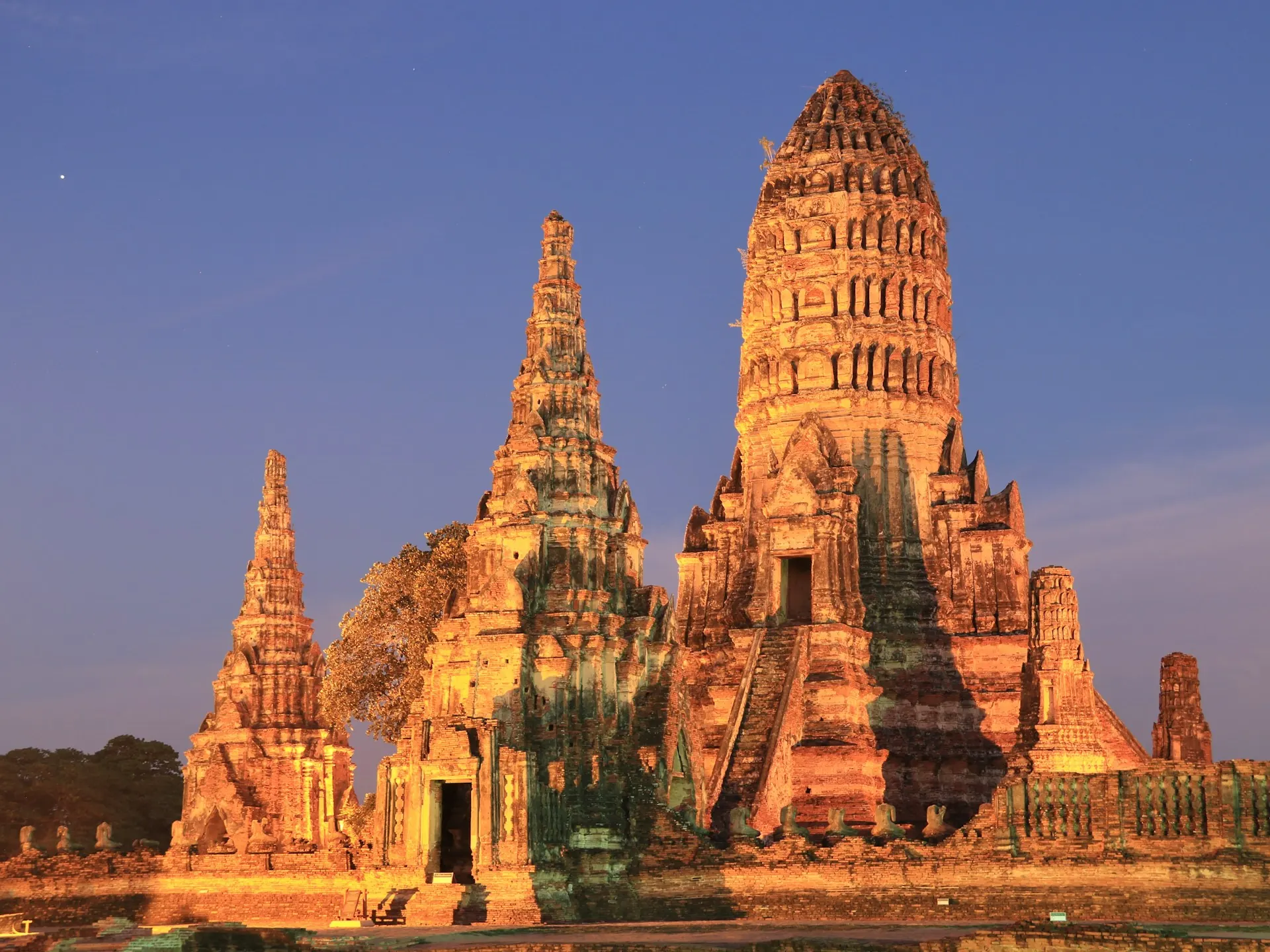
Ayutthaya was destroyed in 1767 by the Burmese army. The temples and palaces were burned, the population scattered, the court dissolved. The ruins now form a UNESCO World Heritage Site 80km north of Bangkok. Buddha heads wrapped in tree roots, headless statues, broken brick temple spires. The physical memory of a civilization destroyed in a single military campaign, and one of Southeast Asia's most significant archaeological sites.
Thailand's extraordinary political achievement in the colonial era was maintaining independence. Uniquely among Southeast Asian countries, it was never formally colonized. Kings Mongkut and Chulalongkorn (Rama IV and V) skillfully played the British and French against each other, ceding some territory to both as buffer states while modernizing the country enough to satisfy colonial powers' criteria for "civilized" governance. Thailand's geography as a buffer zone between British Burma and French Indochina helped considerably. The result: the only country in Southeast Asia that did not lose sovereignty to a European power.
Among the world's earliest bronze-working civilizations. Northeast Thailand was a major early civilization center, not a peripheral region.
Thai script developed. Theravada Buddhism established as state religion. The cultural and administrative foundation of what becomes Thailand.
One of the world's largest and wealthiest cities. Extensive trade with China, Japan, Persia, and Europe. Destroyed by Burma in 1767. The ruins are now UNESCO-listed.
Rama I founds Bangkok and the current royal dynasty. The Grand Palace and Wat Phra Kaew built. The capital established where it remains today.
Mongkut (Rama IV) and Chulalongkorn (Rama V) navigate the colonial era through diplomatic skill. The only Southeast Asian country to maintain independence throughout the colonial period.
Bloodless coup ends absolute monarchy. The cycle of military and civilian governments begins. 13 successful coups since 1932.
General Prayut seizes power. 2023 elections produce massive pro-reform mandate. Move Forward Party blocked from forming government by conservative establishment. The political negotiation continues.
The world's most visited country in Southeast Asia. A young pro-democracy movement operating under strict lese-majeste law. Tourism and internal political change running simultaneously.
Top Destinations in Thailand
Thailand divides into four circuits: Bangkok and the central region, northern Thailand (Chiang Mai and surroundings), the Gulf of Thailand islands (Koh Samui, Koh Phangan, Koh Tao), and the Andaman coast (Phuket, Krabi, Koh Lanta, Koh Phi Phi). Most two-week itineraries combine Bangkok with either the north or the islands. Combining north and south requires either longer trips or mostly being on planes.
Bangkok
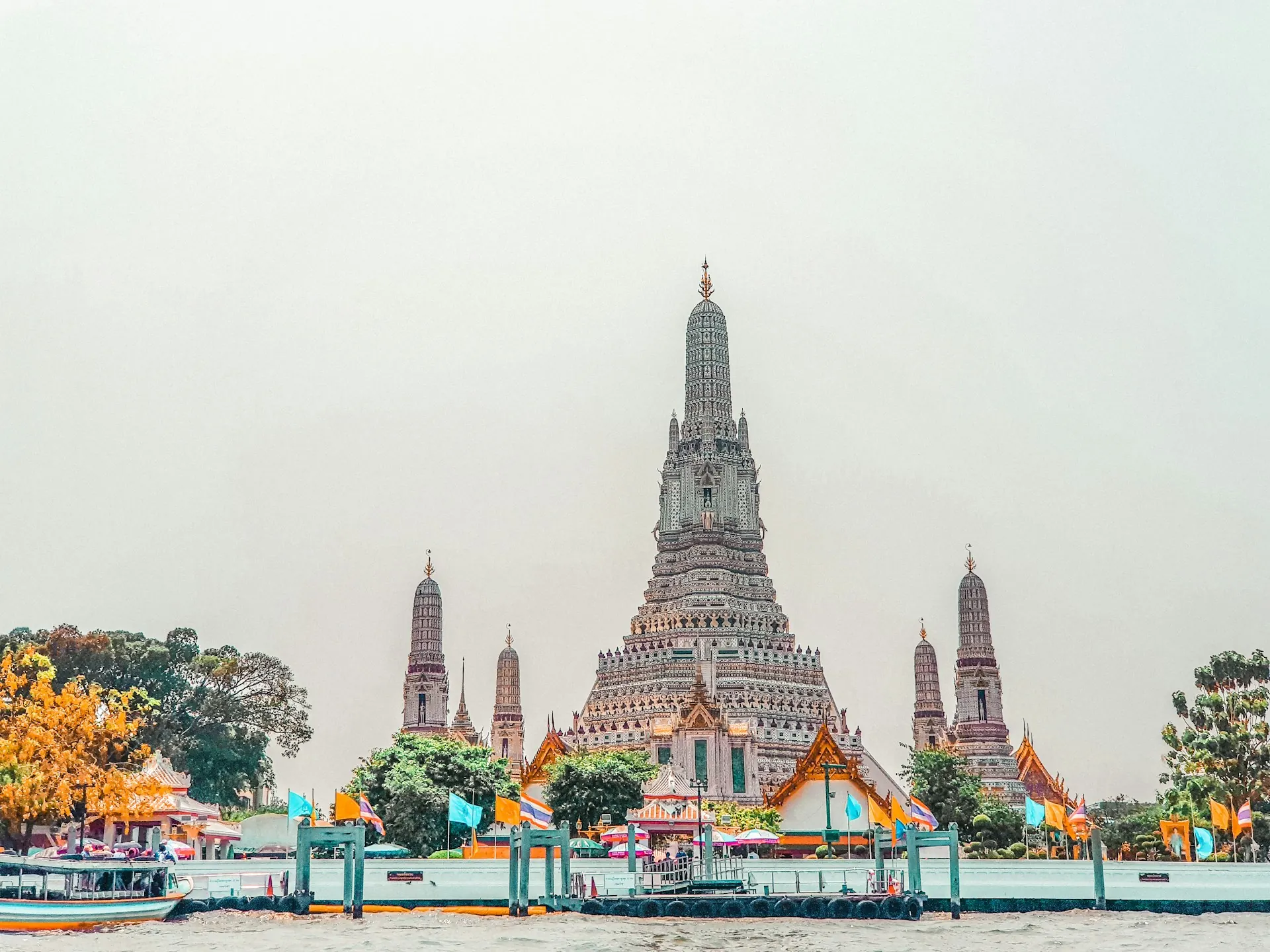
Bangkok is simultaneously one of Asia's most chaotic and most rewarding cities. The temples of Rattanakosin Island, Wat Phra Kaew (the Emerald Buddha, inside the Grand Palace complex), Wat Pho (the largest and oldest temple in Bangkok, home to the enormous Reclining Buddha), and Wat Arun (Temple of Dawn, on the opposite bank of the Chao Phraya) are the cultural core. The markets are the social one: Chatuchak weekend market for everything imaginable, Or Tor Kor for the finest produce market in Asia, Talad Rot Fai night markets for vintage and street food. The BTS Skytrain and MRT metro have transformed city navigation. The food, from predawn street cart rice porridge to rooftop cocktails at midnight, is the reason people come back. Give Bangkok at least three full days. Five is better.
Chiang Mai
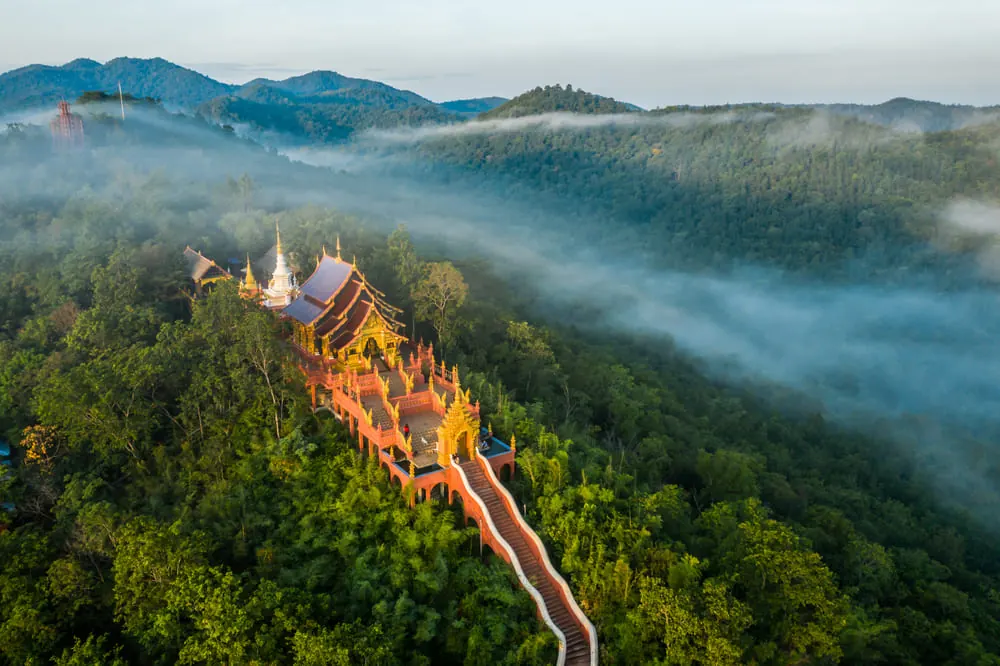
Chiang Mai is what Bangkok visitors dream of when they're overwhelmed: a city of 300,000 with a 14th-century moat and old city wall, 300+ temples within the moated area, excellent food, a strong coffee culture built on genuinely world-class highland-grown Thai arabica, and the Elephant Nature Park, the world-famous ethical elephant sanctuary, accessible as a day or multi-day experience. Doi Suthep, the temple on the mountain above the city visible from most of Chiang Mai, is reached by a 300-step staircase flanked by naga serpent balustrades. The Sunday Walking Street transforms the moat road into a kilometer of craft vendors, food stalls, and street performers. Chiang Mai is the starting point for the Golden Triangle, Pai, and the mountain village communities of the north.
Krabi, Koh Lanta & the Andaman
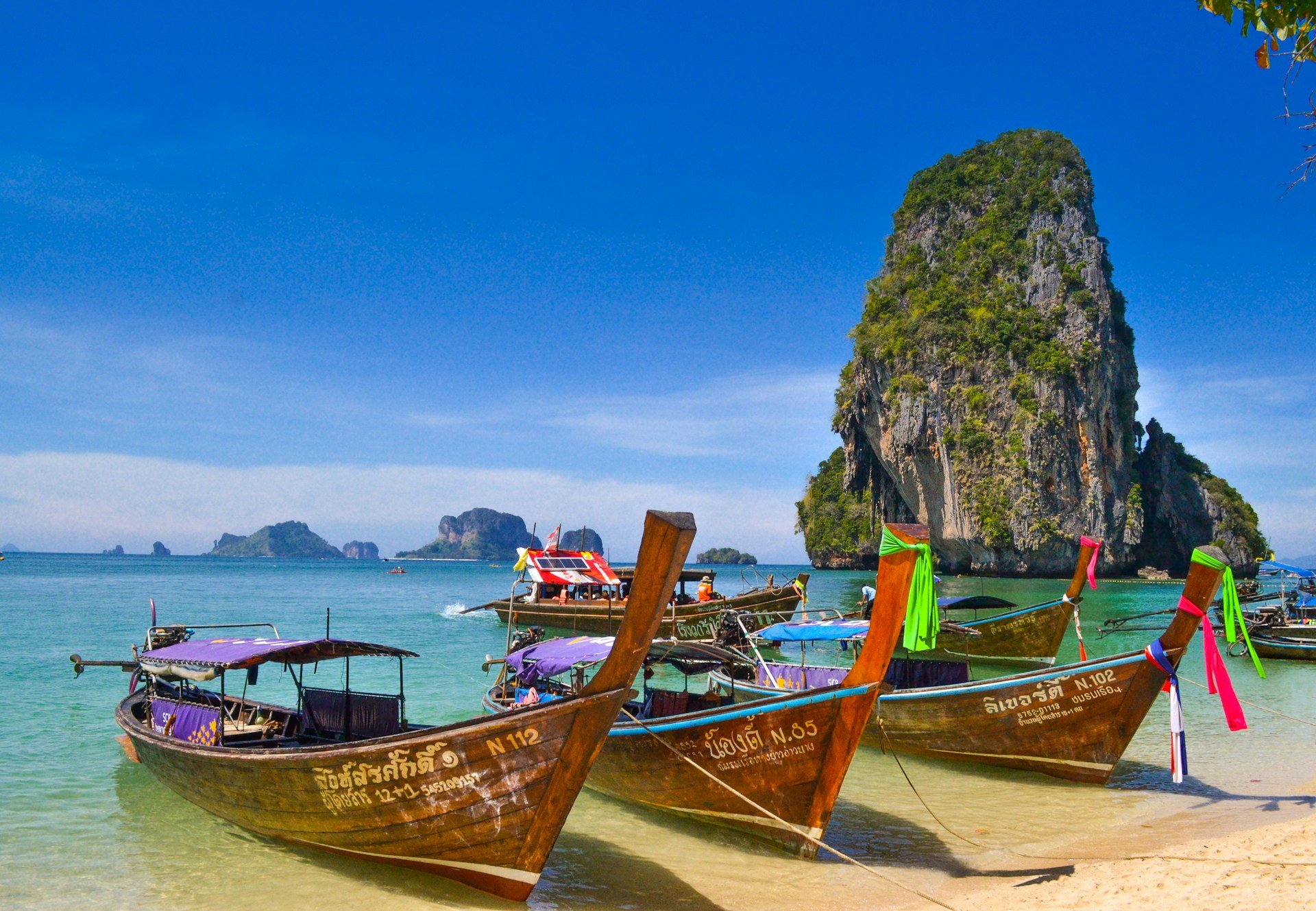
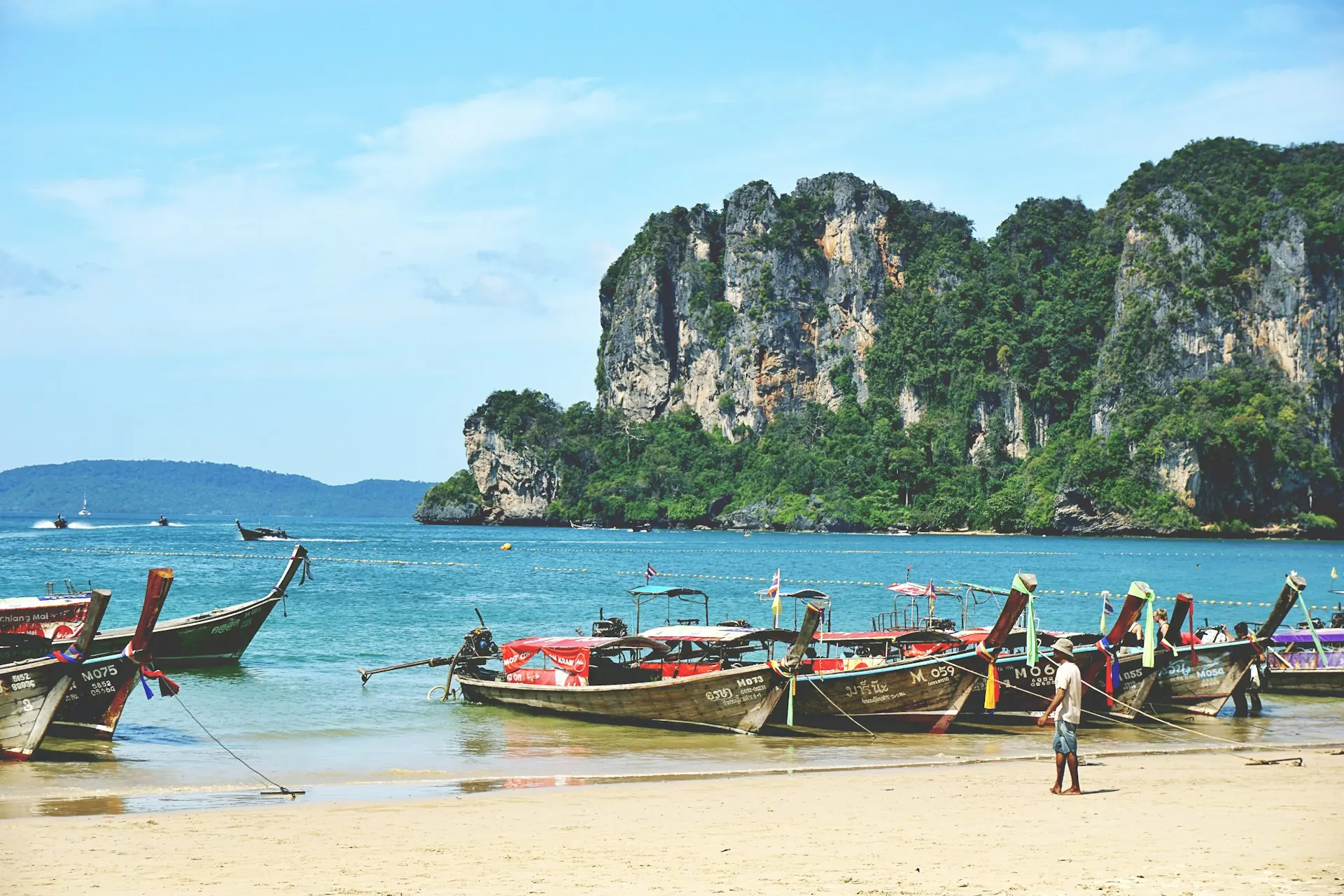
The Andaman coast's extraordinary karst limestone geography produces some of the world's most photographed marine landscapes. Railay Beach (accessible only by longboat from Krabi, no road access) and Maya Bay on Koh Phi Phi are the iconic images. Koh Lanta is more relaxed than Phi Phi, a longer flatter island better for diving and less overrun. The Similan Islands National Park (November to April) provides the finest diving in Thailand, with whale sharks, manta rays, and extraordinary coral. Base from Krabi or Koh Lanta for the full Andaman experience.
Koh Samui, Koh Tao & Koh Phangan
The Gulf's three main islands each have distinct characters. Koh Samui is the most developed and expensive, with international hotels and easy airport access. Koh Phangan is most famous for the Full Moon Party, a monthly all-night beach event for tens of thousands, but also has a genuinely good yoga and wellness scene away from Hat Rin. Koh Tao (Turtle Island) is Thailand's primary diving destination, with warm shallow water and some of the cheapest PADI Open Water certification in Asia. All three are connected by ferry. Koh Nang Yuan, accessible by boat from Koh Tao, is the Gulf's most photogenic island.
Ayutthaya & Sukhothai
The ruins of Thailand's two great predecessor kingdoms are among Southeast Asia's most significant historical sites. Ayutthaya (80km north of Bangkok, 1.5 hours by train) was the Ayutthayan capital for 417 years before the Burmese burned it in 1767. The ruins span 7km², best explored by bicycle. The famous Buddha-head-in-tree-roots image is at Wat Mahathat. Sukhothai (420km north, accessible by bus from Phitsanulok) is the earlier capital with 190 ruins spread across a larger historical park, less visited and more tranquil. Both are UNESCO World Heritage Sites and both deserve more time than Bangkok day-trippers typically give them.
Pai
Pai in Mae Hong Son province, 3 hours north of Chiang Mai by minibus through 762 curves (bring motion sickness tablets), is a small town in a river valley between mountain ranges that became a backpacker haven in the 2000s. It has excellent food, a walkable old town of wooden shophouses, hot springs, waterfalls, and a specific laid-back energy that reliably produces the "just one more day" effect. The Pai Canyon walk and the Pambok waterfall are the main natural draws. Best November to February when the mountain weather is cool and dry.
Phuket
Thailand's most visited island has 30+ distinct beaches ranging from the loud tourist excess of Patong Beach to the quieter sophistication of Kamala and Surin beaches on the west coast. Phuket Old Town has some of the finest Sino-Portuguese architecture in Southeast Asia: heritage shophouses in soft pastel colors, excellent coffee, and the most interesting food scene on the island. For visitors seeking something beyond resort Thailand, Phuket is the departure point for the Similan Islands, Phi Phi, and the Andaman coast further south.
Chiang Rai & the Golden Triangle
Chiang Rai (180km north of Chiang Mai) is the base for the White Temple (Wat Rong Khun, a striking all-white contemporary temple with mirror glass embedded in the exterior by artist Chalermchai Kositpipat), the Blue Temple (Wat Rong Suea Ten), and the Golden Triangle, the meeting point of Thailand, Laos, and Myanmar at the confluence of the Mekong and Ruak rivers. The border crossing to Laos by slow boat on the Mekong is one of the classic overland Asia routes.
Culture & Etiquette in Thailand
Thai culture operates on values that are deeply embedded and visible in everyday life: sanuk (fun as a positive value), mai pen rai (never mind, a philosophy of equanimity), kreng jai (consideration for others, reluctance to impose), and the concept of face, that one's social dignity and the dignity of others should be maintained at all times. Public confrontation, raised voices, and visible displays of negative emotion are face-losing behaviors that Thais generally avoid and find genuinely uncomfortable in foreigners. The smile that Thailand is famous for is partly genuine warmth and partly a social technology for maintaining equilibrium. A Thai smile does not always mean what a Western smile means, and a Thai "yes" sometimes means "I don't want to tell you no." Context and relationship matter.
Before visiting any major temples, also check our Thailand travel scams guide which covers the most common situations targeting tourists at temple entrances.
Lightweight cotton scarves (available everywhere for ฿50 to 100) work as both shade and temple coverage. The monks at any major temple will turn you away at the gate if you are not appropriately dressed. This is genuinely enforced. Bringing your own covering rather than using the temple's borrowed sarong is more respectful. This applies to men as well as women.
Any building with a Buddha image requires removing shoes at the entrance. Look for the pile of shoes outside to confirm. This applies to small neighborhood shrines as well as major tourist temples. The floors are swept and clean; removing shoes is practical as well as respectful.
The Thai greeting is the wai, a slight bow with hands pressed together at chest or chin level (the higher the hands, the more respectful). Return a wai when given one. Don't initiate a wai to monks or royalty. To service staff, a nod and a smile is sufficient. The wai to elders, monks, and senior figures is an expression of genuine respect.
The national anthem plays at 8am and 6pm at public spaces throughout Thailand. Thais stop and stand. Visitors should do the same. The royal anthem plays before movies in cinemas. Stand when the audience stands. These are not optional social conventions.
"Khob khun khrap/kha" (thank you), "Sawadee khrap/kha" (hello/goodbye), "Aroy mak" (very delicious), "Mai phet" (not spicy). The tonal nature of Thai means pronunciation matters more than in most languages, but making the effort and getting it wrong produces warm laughter. Making no effort produces polite indifference.
In Thai Buddhist culture, the head is the most spiritually elevated part of the body and the feet are the lowest. Do not touch anyone's head, including children (the Western habit of ruffling a child's hair is particularly offensive). Do not point feet toward people, Buddha images, or sacred objects. Sit with legs tucked to the side in temple settings.
Section 112 (lese-majeste) applies to any criticism, insult, or defamation of the King, Queen, Heir-Apparent, or Regent. This includes social media posts made while in Thailand. The law carries 3 to 15 years imprisonment per count and has been applied to foreigners. Follow the respectful behavior of Thais around you.
Public displays of anger produce shutdown rather than resolution. If a service situation goes wrong, staying calm, smiling, and explaining the problem quietly and politely is dramatically more effective than becoming visibly upset. A Thai who loses face in front of others becomes difficult to engage constructively.
Buddhist monks in Thailand are not allowed to touch women or receive items directly from women. Women who want to give something to a monk should place it on a cloth or on a table in front of him. Items for monks should be presented via a man if possible. This applies to all female visitors regardless of religious background.
Thailand's UV index is extreme. The sun at midday can cause visible sunburn in under 20 minutes on fair skin, even with partial cloud cover. Heatstroke is a genuine medical risk. Schedule active outdoor time for before 10am and after 4pm. The heat that feels manageable at 9am feels dangerous at 1pm.
Songkran, Thai New Year
Songkran (April 13 to 15) is the Thai New Year and the world's largest water festival. The traditional blessing of washing away the old year's misfortune has evolved into a three-day national water fight where the entire country, tourists included, emerges onto the streets with water guns, buckets, and trucks with water tanks. In Chiang Mai the festival is the most intense in the country. The old city moat fills with spectators and combatants and the fight runs continuously for three days. If you don't want to spend three days soaked: don't be in Thailand on April 13 to 15. If you do: it's one of the most joyful communal celebrations on earth.
Loy Krathong
Loy Krathong (full moon of the 12th lunar month, typically November) is the festival of light. Small lotus-shaped floats made of banana leaf with a candle and incense are released on rivers as an offering to the water spirits. In Chiang Mai, the festival coincides with Yi Peng, when thousands of paper sky lanterns are released simultaneously. The sight of thousands of lights ascending into the dark sky above the city is among the most extraordinary things in the Thai festival calendar. Most visitors who witness it describe it as the finest thing they saw in Thailand.
Making Merit
At dawn in any Thai town, monks walk in single file along the streets while residents kneel and place food into the monks' alms bowls (tak bat). This is a daily religious practice, not a tourist activity. Observing it respectfully, quietly and at a distance without flash photography, is appropriate. Joining the procession or photographing from close range disrupts the practice. Chiang Mai at dawn around the Wat Suan Dok area is the best place to observe without disturbing it.
Muay Thai
Muay Thai, the Thai martial art using fists, elbows, knees, and shins, is Thailand's national sport and a living cultural tradition with a spiritual dimension (the pre-fight wai kru ritual, the sacred armband and headband worn by fighters). The stadiums of Bangkok, Lumpinee and Rajadamnern, host professional bouts several times per week. Attending a genuine professional bout rather than the tourist-oriented shows on the islands is one of Bangkok's most specific experiences. Tickets at Rajadamnern start at approximately ฿1,000 for ringside.
Food & Drink in Thailand
Thai cuisine is one of the world's great food cultures. A complex tradition that balances sweet, sour, salty, spicy, and bitter in combinations that are simultaneously instantly satisfying and endlessly nuanced. UNESCO recognized Thai food as an Intangible Cultural Heritage in 2023, acknowledging what most visitors already know intuitively: the pad kra pao from the restaurant under the expressway at 10pm and the bowl of kuay tiew from the noodle boat on the canal at 7am are genuinely extraordinary food experiences at ฿40 to 60 apiece.
The key insight for eating in Thailand: the best food is almost never at the tourist-facing restaurant. It's at the raan khao man gai (chicken rice shop) that opens at 6am, the raan som tum (papaya salad stall) open at noon, the raan khao kha moo (stewed pork leg rice) that operates from 9pm. Following Thais rather than reviews in English produces the best food at the lowest prices.
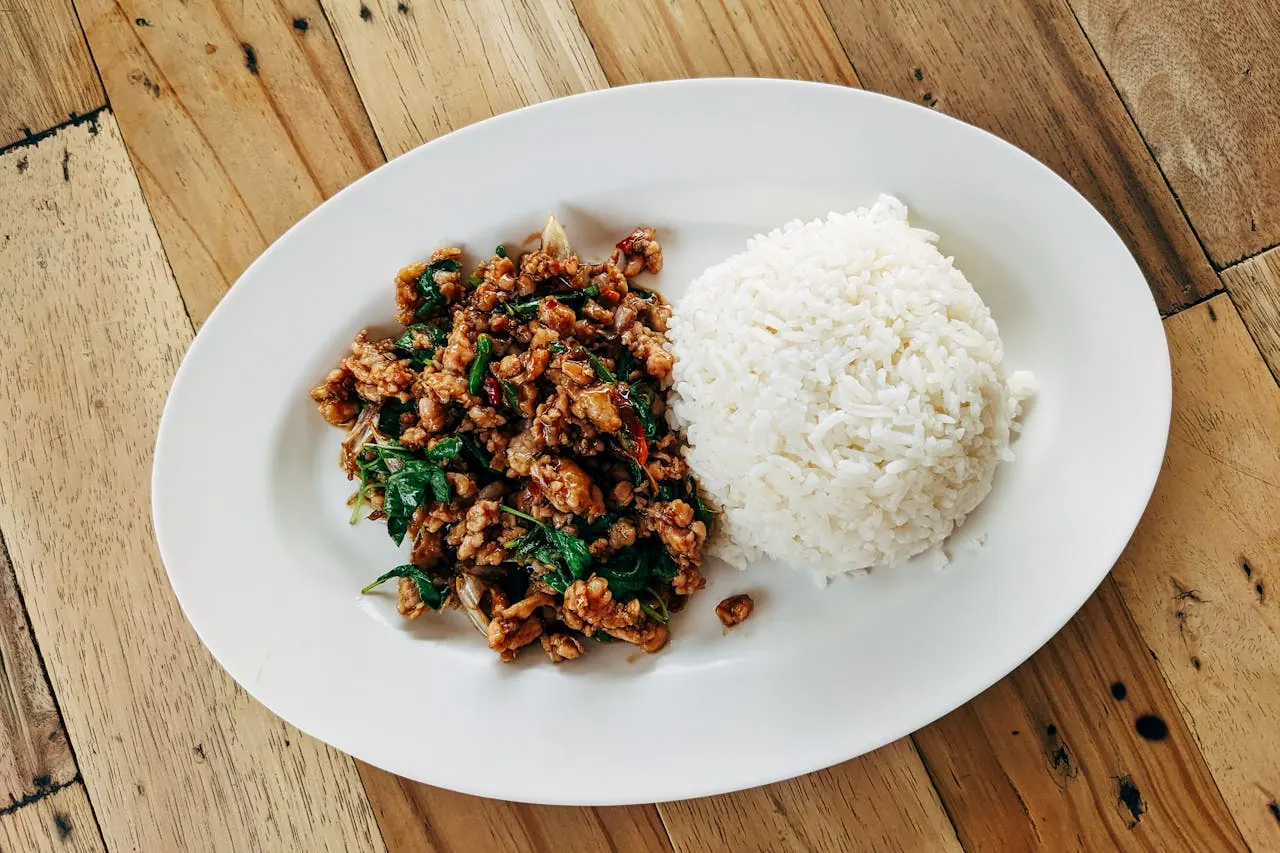 Pad kra pao
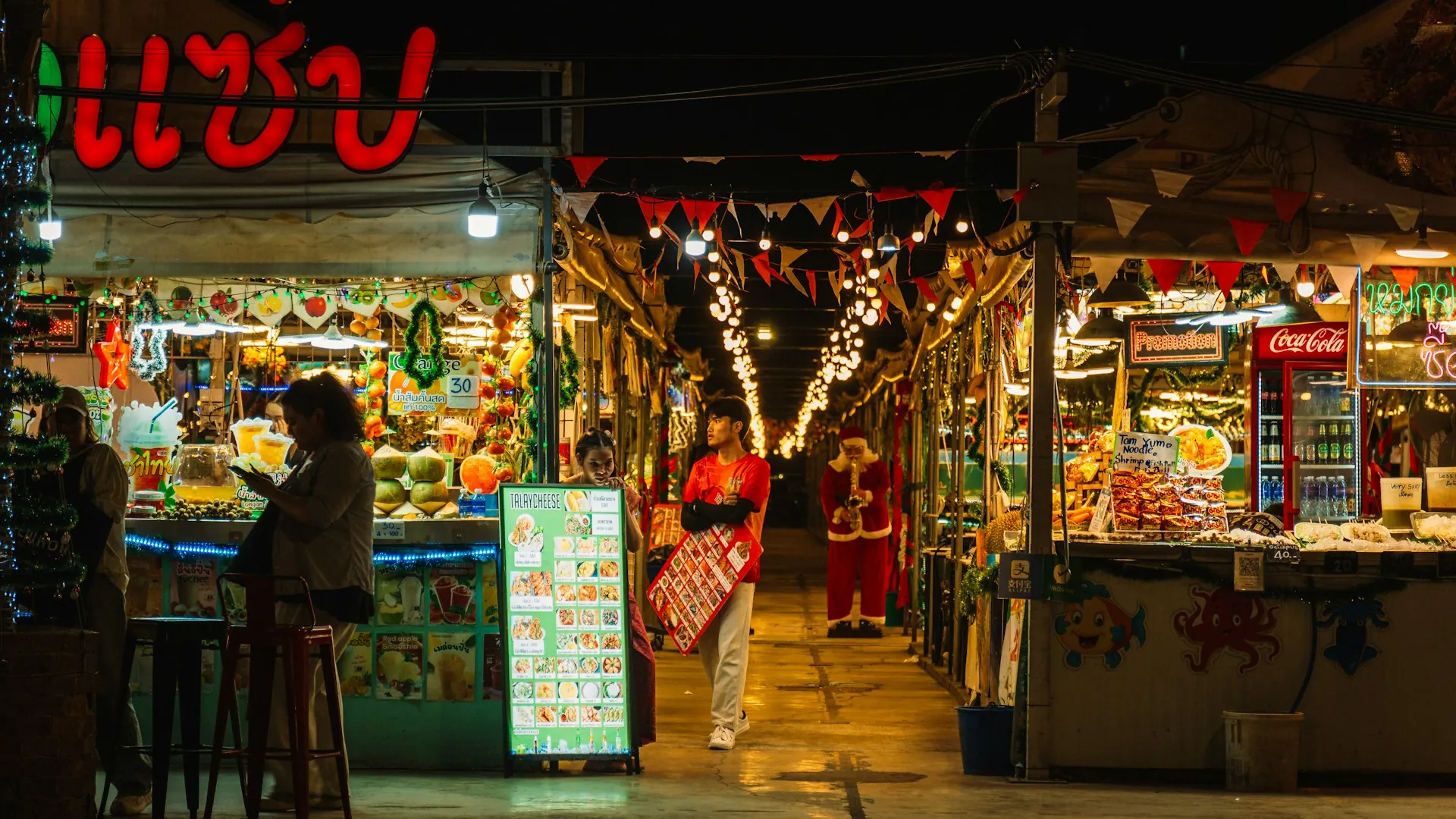 Bangkok street food
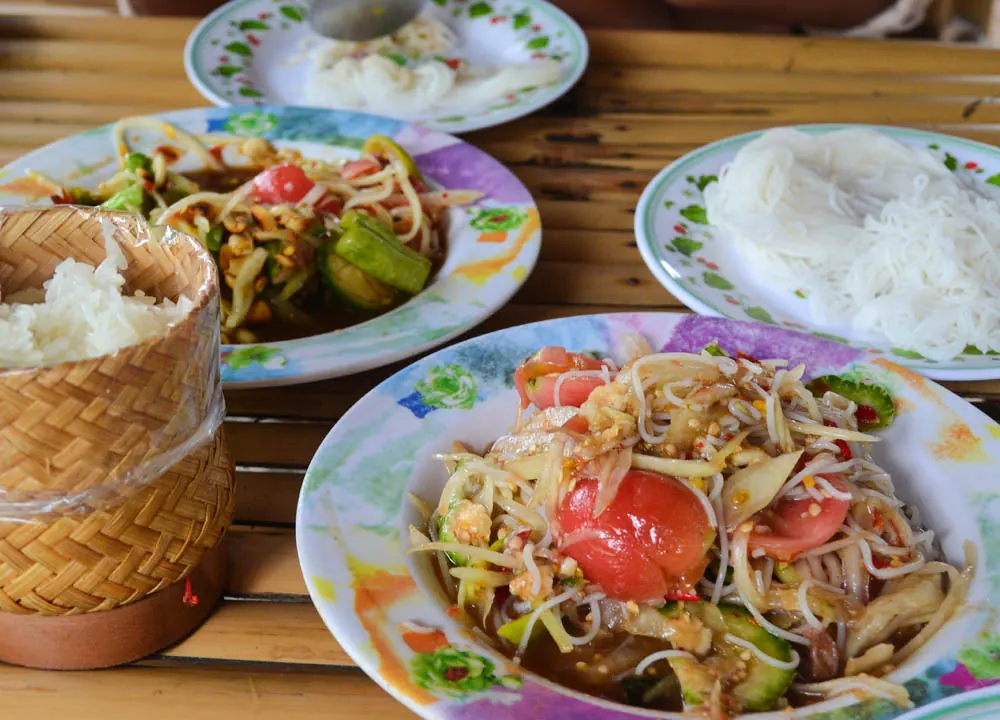 Som tum papaya salad
Pad Kra Pao (Basil Stir-Fry)
The most-ordered dish in Thailand: pork, chicken, or beef stir-fried with holy basil, fish sauce, oyster sauce, chili, and garlic, served over rice with a fried egg (khai dao) on top. Ubiquitous at every price point, never worse than good at a proper Thai restaurant, and at its best at a late-night shopfront where the wok heat is real. Order it phet (spicy) if you can manage it. If ordering away from tourist areas, standard Thai spice is significantly hotter than the tourist-restaurant default.
Tom Yum & Tom Kha
Tom yum, the hot and sour soup of lemongrass, kaffir lime leaves, galangal, chili, fish sauce, and lime juice, is Thailand's most internationally known soup and, properly made with fresh aromatics and good seafood, one of the world's great soups. Tom kha adds coconut milk for richness and is slightly gentler. Both are light broths eaten with rice. Proper Thai tom yum is clear and intensely aromatic, not thick like the Westernized versions. The galangal and lemongrass are for flavor only; slide them to the side of the bowl.
Som Tum (Green Papaya Salad)
A pounded salad of shredded unripe papaya, cherry tomatoes, long beans, dried shrimp, peanuts, palm sugar, lime juice, fish sauce, and chili, made to order in a clay mortar. From Isaan (northeast Thailand), eaten with sticky rice and grilled chicken as the complete northeastern Thai meal. Som tum restaurants are stalls with a mortar, a pile of unripe papayas, and plastic stools on the pavement. They are everywhere and the food costs ฿50 to 80.
Massaman Curry
The rich slow-cooked curry of Malay and Persian influence: beef or lamb slow-cooked in coconut milk with potatoes, onions, peanuts, cardamom, cinnamon, star anise, and palm sugar to a deep, complex stew. One of the least spicy Thai curries and one of the most deeply flavored. The spice mix is closer to Persian or Indian than to the galangal-lemongrass profile of green and red curries. CNN named it the world's most delicious food in 2011. Order it with roti, the Indian-style flatbread that arrived in the south via the Muslim community of the peninsular provinces.
Khao Man Gai (Chicken Rice)
The Thai version of Hainanese chicken rice: poached chicken sliced over rice cooked in chicken stock with garlic, a specific pounded ginger-garlic-black soybean sauce on the side, cucumber slices, and a small bowl of clear chicken broth. Eaten for breakfast, lunch, and late night. Available from ฿45 to 60. One of the world's finest breakfast foods and one of the most underrated dishes in Thai cuisine by visitors who associate Thai food exclusively with spice.
Thai Iced Tea & Beverages
Cha yen (Thai iced tea) is a sweet milky tea made from Thai red tea brewed strong with star anise and cinnamon, mixed with sweetened condensed milk over ice. The bright orange color comes from the tea blend. Available from enormous metal teapots at street stalls for ฿15 to 25. Fresh coconut water (ma phrao) cold from a young coconut is the correct beverage for temple visits in the heat. And the Chiang Mai coffee culture around highland-grown Thai arabica single origin is genuinely world-class and available for ฿60 to 100 at specialty cafes throughout the city.
When to Visit Thailand
Thailand's seasonal divisions are not uniform across the country. The two coastlines face different weather patterns and the north has a distinct cool-dry-hot-wet cycle. The general rule: the cool season (November to February) is ideal for Bangkok, Chiang Mai, and the Gulf coast islands. The Andaman coast (Phuket, Krabi, Koh Lanta) is also best then. March to May is the hot season. Bangkok can hit 40°C+. The monsoon (June to October) brings rain that is often brief and intense rather than continuous, lower prices, and lush scenery. Koh Samui specifically has its own wet season October to December when the Gulf receives the Northeast Monsoon.
Cool Season
Nov – FebThe best time for most of Thailand. Bangkok is most comfortable at 28 to 32°C with lower humidity. Chiang Mai is excellent at 20 to 28°C during the day with cooler nights. Both coastlines are dry. November's Loy Krathong floating lanterns and December to January's international visitor peak coincide. February is excellent with lower crowds. Prices are at annual highs in December and January.
Green Season
Jun – OctRain comes as afternoon showers (typically 1 to 3 hours) rather than all-day coverage in most regions. 30 to 50% lower prices at hotels. Fewer tourists at major sites. Temples in the morning and ruins in the afternoon are genuinely less crowded. Lush green landscapes. The Andaman coast has rougher seas and some dive sites close. The Gulf coast is actually better in green season than the Andaman.
Shoulder Season
Mar–May, OctMarch to May is the hot season. Bangkok hits 38 to 40°C and uncomfortable temple-hopping between 10am and 4pm. But prices are lower, the Andaman coast is still dry, and northern Thailand is manageable with early starts. April 13 to 15 is Songkran, the national water festival and Thai New Year. October is the transition month, the monsoon ending, prices still low, landscape at its greenest.
Koh Samui Oct–Dec
Gulf east coast onlyKoh Samui and the Koh Phangan/Koh Tao group on the Gulf east coast receives the Northeast Monsoon October to December. Heavy rain and rough seas during this window. The Andaman coast (Phuket, Krabi) is good in this window. If your itinerary involves the Gulf islands, avoid October to December. If it involves the Andaman, this window is fine.
Trip Planning
Two weeks is the standard first Thailand trip and covers Bangkok (3 to 4 days) plus either northern Thailand (Chiang Mai 4 to 5 days, Pai 2 to 3 days) or islands (3 to 5 days on one island circuit). Three weeks allows Bangkok plus both north and islands with a domestic flight between them. The country is significantly more manageable than its size suggests because the tourist infrastructure is superb. Trains, flights, buses, and ferries between all major destinations are well-organized and cheap.
The transport hierarchy: fly for any journey over 4 hours (Bangkok to Chiang Mai is 1 hour by flight vs 10 hours by overnight train; the train is romantic, the flight is practical); overnight train for 6 to 12 hour journeys where you want to save a hotel night; ferry between islands; local tuk-tuk or songthaew within towns.
Bangkok
Day one: arrive Suvarnabhumi Airport. Take the BTS Airport Rail Link to the city (cheapest and fastest transfer). Yaowarat (Chinatown) evening for the best street food approach to Bangkok. Day two: Rattanakosin, Grand Palace and Wat Phra Kaew in the morning (arrive before 8:30am), Wat Pho in the afternoon, Wat Arun at sunset by ferry. Day three: Chatuchak weekend market (Saturday or Sunday only) or the floating market at Amphawa. Day four: day trip to Ayutthaya by train (8am from Hua Lamphong, 1.5 hours, ฿20). Overnight train to Chiang Mai.
Chiang Mai
Arrive 7am from overnight train. Day five: check in, Doi Suthep afternoon (take the songthaew from the Chiang Mai Zoo road, ฿50 per person), old city wats in the evening. Day six: Elephant Nature Park full day (book weeks ahead). Day seven: Thai cooking class morning (Thai Farm Cooking School or Zabb E Lee are excellent) and afternoon walking the old city. Day eight: Chiang Rai day trip, White Temple at 9am, Golden Triangle in the afternoon. Day nine: morning market at Warorot, afternoon flight or departure.
Pai
Minibus from Chiang Mai to Pai (3 hours, 762 curves; take motion sickness tablets). Three days: Pai Canyon at sunset (15-minute walk from town), Tha Pai Hot Springs morning, Pambok waterfall (hire a scooter for ฿200 per day). The Pai weekend night market. Return to Chiang Mai by minibus for departure.
Bangkok
Four days. All Rattanakosin temples, the markets, and on day four: a canal boat tour on the Bangkok yai canal network west of the Chao Phraya, still alive with floating market activity and temple boat landings. The canal tour transforms understanding of Bangkok as a waterway city. Book through operators in the Banglamphu area or through your hotel.
Andaman Coast
Fly from Bangkok to Krabi (1.5 hours) or Phuket. Base in Krabi town or Ao Nang beach. Day six: Railay Beach by longtail boat (45 minutes from Ao Nang), the limestone karst beaches accessible only by water. Day seven: Four Islands snorkelling day tour (Koh Poda, Koh Gai, Tup Island, Koh Mor). Day eight: day trip to Phi Phi Islands. Day nine: ferry to Koh Lanta (2 hours from Krabi) for the final days.
Koh Lanta
Five Koh Lanta days. Rent a scooter (฿200 per day) and ride the west coast road stopping at beaches. Klong Nin for swimming, Nui Bay for snorkelling, the old town of Ban Lanta at the south end (a historic sea-gypsy fishing village of old wooden houses on stilts over the water). Day trip to the Emerald Cave (Tham Morakot on Koh Mook, only accessible by swimming through 90m of dark sea cave to reach the hidden beach inside). Fly from Trang or Krabi back to Bangkok.
Bangkok in Depth
Five days. All temples, markets, and waterways, plus: the Jim Thompson House (a complex of traditional Thai houses in Khlong Toei, now a museum of Southeast Asian art), the Bangkok Art and Culture Centre, and the Artist's House in Khlong Bang Luang (a surviving traditional wooden house on a canal in Thonburi, local artists' cooperative, extraordinary time-warp atmosphere). One evening at Muay Thai at Rajadamnern Stadium. Day trip to Ayutthaya.
Chiang Mai & the North
Fly to Chiang Mai. Five days: Elephant Nature Park, cooking class, Doi Suthep, Chiang Rai day trip. Add: the Sunday Walking Street market, the Chiang Mai University Saturday market (larger and more local), and one day in the mountain villages with a licensed community-based trekking tour (look for operators affiliated with the Responsible Tourism Institute).
Pai
Three days in Pai as above. Return to Chiang Mai for overnight train or flight south to islands.
Gulf Islands
Fly or overnight train to Surat Thani, ferry to Koh Samui or Koh Phangan. If Full Moon Party timing works (check the lunar calendar before booking), Koh Phangan for the event plus the gentler daytimes of the island's north and west coast. If not Full Moon timing, Koh Samui for the beach infrastructure with a day trip to Koh Tao for snorkelling. Koh Tao PADI certification takes 3.5 days if diving is the priority.
Andaman Coast
Ferry or fly to Phuket or Krabi. Four days: Railay Beach, snorkelling day trip, one day at a quieter Krabi beach (Ao Nang's Nopparatthara Beach is significantly less crowded than the main strip). Fly home from Phuket or Krabi via Bangkok.
Motorbike Rental, Know the Risk
Renting a motorbike in Thailand is how most visitors explore islands and smaller towns. It is also one of the most common causes of tourist injury and death. The roads on the islands are not the issue: inexperienced riders, uneven road surfaces, unpredictable other riders, and the left-hand traffic (counterintuitive for many visitors) are. If you have no prior motorbike experience, don't start in Thailand. If you are experienced: always wear a full-face helmet, drive slowly, never ride after drinking, and be cautious on roads with sudden sand or gravel patches. This is the most consequential safety warning in this guide.
Vaccinations
Hepatitis A strongly recommended. Typhoid recommended if eating at street stalls. Rabies vaccination for longer stays or anyone likely to interact with animals. Dengue fever is present throughout Thailand year-round. DEET repellent at dawn and dusk is essential everywhere. Malaria prophylaxis for travel to the northern border areas but not for Bangkok, Chiang Mai, or the islands. Japanese encephalitis vaccine for longer stays or rural areas.
Full vaccine info →Connectivity
Thailand has excellent mobile coverage. DTAC (True), AIS, and TrueMove are the main operators, all offering tourist SIMs at Suvarnabhumi Airport arrival hall for approximately ฿299 to 599 for 7 to 30 day unlimited data plans. Buy immediately on arrival. An eSIM through Airalo is the alternative. Download Google Maps offline for every area before leaving WiFi range.
Get Thailand eSIM →Water Safety
Tap water in Thailand is not safe to drink. Bottled water is cheap and universally available (฿7 to 10 for 1.5L at any 7-Eleven). Ice at established restaurants is made from purified water and is safe. Refill stations (filtered water dispensers, ฿1 per litre with your own bottle) are available across Thailand and significantly reduce plastic waste. Bring a reusable bottle and use the refill stations.
Medications to Bring
Motion sickness tablets for the Pai minibus (762 curves, non-negotiable for anyone susceptible). Oral rehydration salts for stomach issues. Antidiarrheal tablets (loperamide). Sunscreen SPF 50+. DEET repellent. Antifungal cream (athlete's foot is extremely common in Thailand's heat and humidity). A general antibiotic prescription from your GP for emergency use is worth having.
Travel Insurance
Essential for Thailand. Specifically confirm it covers: motorbike riding (many standard policies exclude this, you must often tick an additional box), water sports, and adequate medical coverage at private hospitals. Bangkok's Bumrungrad International Hospital is one of the finest hospitals in Asia and genuinely expensive without coverage. Confirm your policy covers treatment there or at equivalent private hospitals.
Transport in Thailand
Thailand's internal transport is exceptionally good value and well-organized. Bangkok has the BTS Skytrain and MRT metro for city movement. Domestic flights (Air Asia, Nok Air, Bangkok Airways, Thai Lion Air) connect all major destinations cheaply. Overnight trains are a comfortable and atmospheric way to travel. The inter-island ferry network covers all main island groups. The challenge is Bangkok's road traffic: a journey of 5km can take 45 minutes in peak hour. Time city movements for off-peak (before 8am, after 8pm) whenever possible.
Domestic Flights
฿600–2,500/routeAir Asia, Nok Air, Thai Lion Air, and Bangkok Airways connect Bangkok to Chiang Mai, Phuket, Krabi, Koh Samui, and all major destinations. Book 3 to 4 weeks ahead for best prices. Air Asia and Nok Air use Don Mueang (DMK), 30km north of the city center and significantly more inconvenient than Suvarnabhumi. Factor this into connection planning.
Bangkok BTS & MRT
฿16–59/rideThe BTS Skytrain (two elevated lines) and MRT underground connect the tourist, shopping, and business districts of central Bangkok. The BTS Airport Rail Link connects Suvarnabhumi to Phaya Thai station (45 minutes, ฿45), the cheapest and often fastest airport transfer. Buy a stored-value Rabbit card for BTS (sold at any station) to avoid queuing for single-journey tickets.
Chao Phraya Express Boat
฿15–40/journeyThe river express boats on the Chao Phraya connect Nonthaburi in the north to Sathorn in the south, stopping at the tourist piers. The orange and yellow flag boats are the express services. Best used for temple-hopping between the major riverside wats: Tha Tian for Wat Pho and Grand Palace, Phra Arthit for Khao San, Si Phraya for riverside hotels.
Grab
App rateGrab operates throughout Thailand with car and motorbike options. GPS-tracked, price transparent, no negotiation. For Bangkok traffic, GrabBike (motorbike taxi, faster in gridlock) is the pragmatic solution for short distances. In tourist areas, metered taxis are also reliable. Confirm the meter is running before going and don't accept fixed prices before entering.
Overnight Train
฿600–1,500 (sleeper)The sleeper trains to Chiang Mai (overnight, departs Bangkok around 6pm, arrives Chiang Mai 7am) and south (for Surat Thani, connecting to Koh Samui ferries) are comfortable, atmospheric, and save a hotel night. Second-class sleeper (air-conditioned, upper or lower berth with bedding) is ฿600 to 900. Book at thairailwayticket.net. Trains are often late; don't plan tight connections.
Island Ferries
฿150–600/routeFerries connect the major island groups from mainland ports. Gulf islands: Chumphon for Koh Tao, Surat Thani for Koh Samui and Koh Phangan. Andaman islands: Ao Nang for Railay, Krabi for Koh Phi Phi, Trang for Koh Lanta. Book at ferry piers or through travel agencies. Popular routes during high season fill up; book ahead.
Tuk-Tuk
฿50–200 (negotiate)Bangkok's tuk-tuks are iconic but rarely the best option: slower than taxis, more expensive than Grab, fume-exposed. Fun for a short daytime ride between nearby temples. Negotiate the price before boarding and confirm the destination. The "tuk-tuk gem scam" (driver offers to take you to the Grand Palace, says it's closed today for a special Buddhist holiday, steers you to a gem shop instead) is Bangkok's most documented tourist scam. The Grand Palace is never closed for a special holiday.
Songthaew (Shared Red Truck)
฿20–50/personSongthaews, converted pickup trucks with two bench seats in the back, are the primary local transport in Chiang Mai and most Thai towns. In Chiang Mai, shared songthaews circle the old city for ฿20 per person; chartered ones go anywhere for ฿50 to 150. Hail by waving and tell the driver your destination. Far cheaper than tuk-tuks and genuinely used by locals daily.
Accommodation in Thailand
Thailand has one of the world's most developed budget and mid-range accommodation sectors. Competition, tourism volume, and Thai hospitality produce very good accommodation at prices that consistently surprise European visitors. A quality guesthouse room in Chiang Mai or Bangkok costs ฿400 to 800 per night ($11 to 22 USD). A boutique hotel in the same cities costs ฿1,500 to 3,000 per night. A genuinely luxurious stay at one of Bangkok's landmark hotels (Mandarin Oriental, The Peninsula) costs ฿12,000 to 30,000 per night, still significantly less than the equivalent in London or New York.
Bangkok Hotel
฿800–5,000/nightStay near a BTS station. This is more important than any neighborhood consideration in Bangkok. Sukhumvit (Asok, Nana, Phrom Phong, Thong Lo) is convenient for eating and nightlife. For the temples: the Phra Nakhon/Banglamphu area near the river piers. Luxury: Mandarin Oriental (river facing, the grandest address in Bangkok), Capella Bangkok, The Peninsula. Mid-range: Millennium Hilton, Hotel Muse Bangkok. Budget: NapPark Hostel, Lub d Bangkok Silom.
Chiang Mai Guesthouse
฿400–3,000/nightChiang Mai's old city has dozens of excellent guesthouses and small boutique hotels within or adjacent to the moat. This is the correct area for temple access and the night market. Rachamankha (luxury boutique, in the old city) and the Dhara Dhevi (grand resort outside the city) are the premium options. Mid-range: Tamarind Village, 137 Pillars House. Budget: Tea House Boutique Hostel (old city, rooftop, excellent breakfast). The Nimman area is the arts and café neighborhood with more contemporary boutique hotels.
Island Beach Bungalow
฿500–5,000/nightThailand's islands have a complete spectrum from bamboo beach bungalows (฿500 per night, fan, cold water, directly on the beach) to luxury pool villas at Four Seasons Koh Samui. The sweet spot: mid-range guesthouses 50 to 100m from the beach with air conditioning and hot water, ฿800 to 1,500 per night. Koh Lanta's north coast has excellent mid-range options. On Phuket, avoid Patong unless party tourism is explicitly the goal.
Heritage & Boutique
฿2,000–8,000/nightThailand's heritage boutique hotel sector is excellent: converted traditional Thai houses in Chiang Mai, restored colonial mansions in Bangkok, Sino-Portuguese shophouses in Phuket Old Town. The Lisu Lodge near Chiang Rai (community-based guesthouse in a Lisu hill tribe village), Tamarind Village in Chiang Mai's old city, and Devasom Hua Hin (Thai-style beach resort 3 hours from Bangkok) are different versions of a format where the host's knowledge of the destination is the additional value.
Budget Planning for Thailand
Thailand is one of the world's best-value destinations at every price point, from genuine backpacker travel at $30 per day to luxury resort experiences that cost a fraction of equivalents in Europe or North America. The range is part of what makes Thailand the perennial favorite for first-time Asia visitors: you can spend almost any budget well and have an extraordinary experience.
- Hostel dorm (฿250–450)
- Street food all meals (฿40–80 each)
- Local transport (BTS, songthaew)
- Free temples and beaches
- Night buses instead of flights
- Guesthouse or boutique hotel
- Mix of street food and restaurants
- Domestic flights between regions
- Cooking classes, elephant sanctuary
- Day tours and activities
- Luxury hotel or resort
- Restaurant meals with wine or cocktails
- Private transfers and tours
- Spa treatments daily
- Luxury island villa or suite
Quick Reference Prices
Thailand Visa & Entry
Thailand extended its visa exemption from 30 to 60 days in late 2023 for citizens of most Western countries. Citizens of over 60 countries including the US, UK, all EU nations, Australia, Canada, Japan, and South Korea are currently eligible. No advance application is required: arrive at the airport, fill in the arrival card, receive your 60-day stamp. The policy has been changing frequently. Check the Thai Ministry of Foreign Affairs website (mfa.go.th) for current exemption lists before travel.
Arrive at the airport with your passport, fill in the TM6 arrival card, receive a 60-day stamp. Extendable once at an immigration office for an additional 30 days (฿1,900 fee). Check mfa.go.th for current exemption lists as policy has been updated frequently since 2023.
Family Travel & Pets
Thailand is one of the world's best family travel destinations. Thais are genuinely warm toward children, the food culture is accessible to children who like flavors (simply specify "mai phet" for no chili), the beach and island experiences are universally appealing, and the ethical elephant sanctuary experience is specifically extraordinary for children. The main family considerations are the heat (children are more vulnerable to heat exhaustion than adults) and the temple etiquette requirements (straightforward for older children who understand the context).
Ethical Elephant Sanctuary
The Elephant Nature Park experience, a full day walking with and observing rescued elephants in natural behavior, bathing them in the river, watching them forage in the reserve, is specifically extraordinary for children old enough to walk 2 to 3km (roughly 5+). The elephants at ENP include rescues from tourist riding operations, logging, and begging circuits. Their histories are explained to visitors and the contrast with what they experienced previously and what they experience now is tangible. Children who spend a day with these animals carry the memory permanently.
Family Islands
Koh Lanta on the Andaman coast and Koh Samui on the Gulf are the best islands for families: calm west-facing beaches with gentle swimming, good accommodation infrastructure, and day-trip options that work for all ages. The Emerald Cave (Tham Morakot on Koh Mook near Koh Lanta), reached by swimming through 90m of dark sea cave at the right tide to find a hidden beach inside, is recommended for adventurous families with children aged 8+ who are strong swimmers.
Food for Children
Thai food for children: khao man gai (poached chicken over rice, mild and universally liked), pad see ew (wide rice noodles with egg and greens, mild and sweet), khao phat (fried rice, ordered "mai phet" for no chili), fresh fruit (mango, papaya, watermelon, available everywhere at ฿30 to 50 for a bag), and the variety of noodle soups that form the backbone of everyday Thai eating. Children who eat adventurously will be rewarded. Children who eat conservatively will find mild options at every meal.
Cultural Experiences for Children
The Loy Krathong floating lantern release in Chiang Mai (November) is one of the most beautiful experiences available to families in Asia: releasing a paper lantern into a sky already full of thousands of them, watching it rise and join the stream of lights above the city. Appropriate for any age child. The Songkran water festival in April is universally loved by children old enough to participate in a sustained water fight. The National Museum in Bangkok's Rattanakosin area has good English-language exhibits for older children (10+).
Snorkelling for Families
Thailand's coral reefs provide exceptional family snorkelling: warm clear water at manageable depths, colorful reef fish, and in the right locations sea turtles, blacktip reef sharks (harmless), and giant clams. The best family snorkelling: Koh Nang Yuan near Koh Tao (shallow coral around the connecting sandbar), the marine park islands off Krabi, and the southern Koh Lanta marine park. Children 5+ can snorkel with a foam noodle for safety.
Bangkok for Families
Bangkok with children: the Grand Palace complex for scale and spectacle (the Emerald Buddha, gold-tiled chedis, giant guardian statues), the SEA LIFE Bangkok Ocean World at Siam Paragon mall (a well-designed aquarium with a shark tank tunnel), and the overnight train to Chiang Mai (departing 6pm, arriving 7am) which children who find sleeping in a moving train irresistible will love. The Children's Discovery Museum at Chatuchak has good hands-on science exhibits.
Traveling with Pets
Thailand permits the import of dogs and cats with documentation: a health certificate from an accredited vet, valid rabies vaccination, a microchip, and import documentation through the Thai Department of Livestock Development (DLD). The Thai DLD issues import permits that must be arranged in advance through the Thai embassy. Thailand is in a "Group 3" rabies-endemic country classification for many source nations, which means animals from the UK, Australia, and other low-rabies countries require specific documentation.
Practically: Thailand is not a pet-friendly travel destination in the tourist sense. The heat and humidity are challenging for animals from temperate climates. The beaches and national parks that make Thailand extraordinary are not accessible with pets. No animals are allowed in national parks, hotel pet acceptance is limited, and the ferry and transport infrastructure is not designed for pet travel. For a holiday trip, leaving pets at home is strongly the practical recommendation.
Safety in Thailand
Thailand is generally safe for tourists. It receives 40 million visitors annually and the vast majority have experiences that are unremarkable from a safety perspective. The main risks are road accidents (particularly motorbike-related), scams targeting tourists (primarily the tuk-tuk gem scam and related confidence tricks), drink spiking at party venues, and the specific legal risk of the lese-majeste law. Violent crime against tourists is relatively rare. You can also read our detailed Thailand travel scams guide which covers every documented scenario by city and region.
Tourist Areas Generally
Bangkok's tourist circuit (Rattanakosin, Sukhumvit, Silom, Khao San), Chiang Mai's old city, and the main island beach areas are all safe from serious crime. Primary concerns are opportunistic petty theft and scams. Standard precautions, secure valuables, be skeptical of unsolicited friendliness from strangers, use official transport, cover the main risk profile.
Motorbike Accidents
Motorbike accidents are Thailand's primary cause of tourist injury and death. An estimated 90%+ of foreign tourist deaths in Thailand involve motorbikes. If you have no experience, don't ride. If experienced: always wear a helmet, ride slowly, drive sober, don't ride at night on unfamiliar roads. Photograph all existing damage on the bike before signing anything to protect against pre-existing damage charges on return.
Drink Spiking
Drink spiking at bars and clubs, particularly at the Full Moon Party on Koh Phangan and at Khao San Road in Bangkok, is documented. Never leave your drink unattended. Don't accept drinks from strangers. Be aware of the bucket cocktails at the Full Moon Party. The combination of alcohol volume, heat, and exhaustion creates vulnerability. Maintain a buddy system throughout the night at these events.
Scams
The tuk-tuk gem scam is the most famous but not the only one. Others include: overpriced fixed-rate taxi to the airport (insist on the meter or use Grab), the closed temple (never true), the tailor shop tour (poor-quality suits from anyone offering to show you around), and the "boat tour to coral island" that takes you to souvenir shops instead. A skeptical but not paranoid approach and using Grab for taxis covers most scenarios.
Drugs
Drug laws in Thailand are very strict. Cannabis was legalized in 2022, then partially recriminalized in 2024. Check current status as the law has been changing. Hard drug possession carries severe penalties including life imprisonment and the death penalty for certain quantities. The Full Moon Party and other venues have a documented drug culture but the legal risk is significant and the penalties are not theoretical.
Medical Facilities
Bangkok has some of Asia's finest private hospitals. Bumrungrad International (500,000+ outpatient visits per year including medical tourists from 190 countries), Bangkok Hospital group, and Samitivej are the main private hospital networks. Medical care in Thailand is excellent at private hospitals and significantly cheaper than the US or Australia. On islands: basic medical clinics. Serious cases require transfer to a mainland city hospital.
Emergency Information
Your Embassy in Bangkok
Most foreign embassies are in the Wireless Road (Thanon Withayu), Sathorn, and Sukhumvit areas of Bangkok.
Book Your Trip
Everything in one place. These are services worth actually using.
The Monk at Dawn
In any Thai town at around 6am, the monks walk. They walk in single file in saffron robes along the street outside the temple, and the residents of the neighborhood kneel at their doorways and fill the monks' alms bowls with food. This has been happening every morning for centuries. It is happening this morning. The exchange is called tak bat and it is simultaneously a practical distribution of food and a religious transaction. The resident gives merit, the monk gives blessing. The mechanics of it have not changed because they work.
This is the thing about Thailand that beach photos and temple Instagram posts don't quite convey: the spiritual life of the country is not a tourist experience. It is a living daily practice that happens around visitors who are willing to be quiet and attentive enough to observe it. The 40,000 temples are full of monks who rose at 4am to meditate and will meditate again tonight. The spirit houses outside every building receive fresh flowers and incense every morning. This country is genuinely, non-performatively religious in its daily life in a way most Western visitors have not encountered before. Going slowly enough to see it is the difference between a holiday and an education.