
Iran
One of the world's oldest civilizations, a country of extraordinary Islamic architecture, ancient Persian ruins, the most hospitable strangers you will encounter anywhere, and a geopolitical situation that requires honest thought before you book. All of these things are true at the same time.
What You're Actually Getting Into
Iran is the destination that most surprises the people who go. The gap between the country as it appears in Western news coverage, a revolutionary Islamic state defined by its hostility to the United States and Israel, its nuclear program, and its human rights record, and the country as it is experienced by the visitors who arrive in Isfahan or Shiraz or Tehran, is among the widest of any destination in the world. This doesn't mean the political picture is wrong. It means that the country contains both things simultaneously: a government whose policies generate legitimate international concern, and a population of 88 million people, educated, historically deep, intensely curious about foreigners, and possessed of a hospitality tradition that is genuinely among the most exceptional on earth.
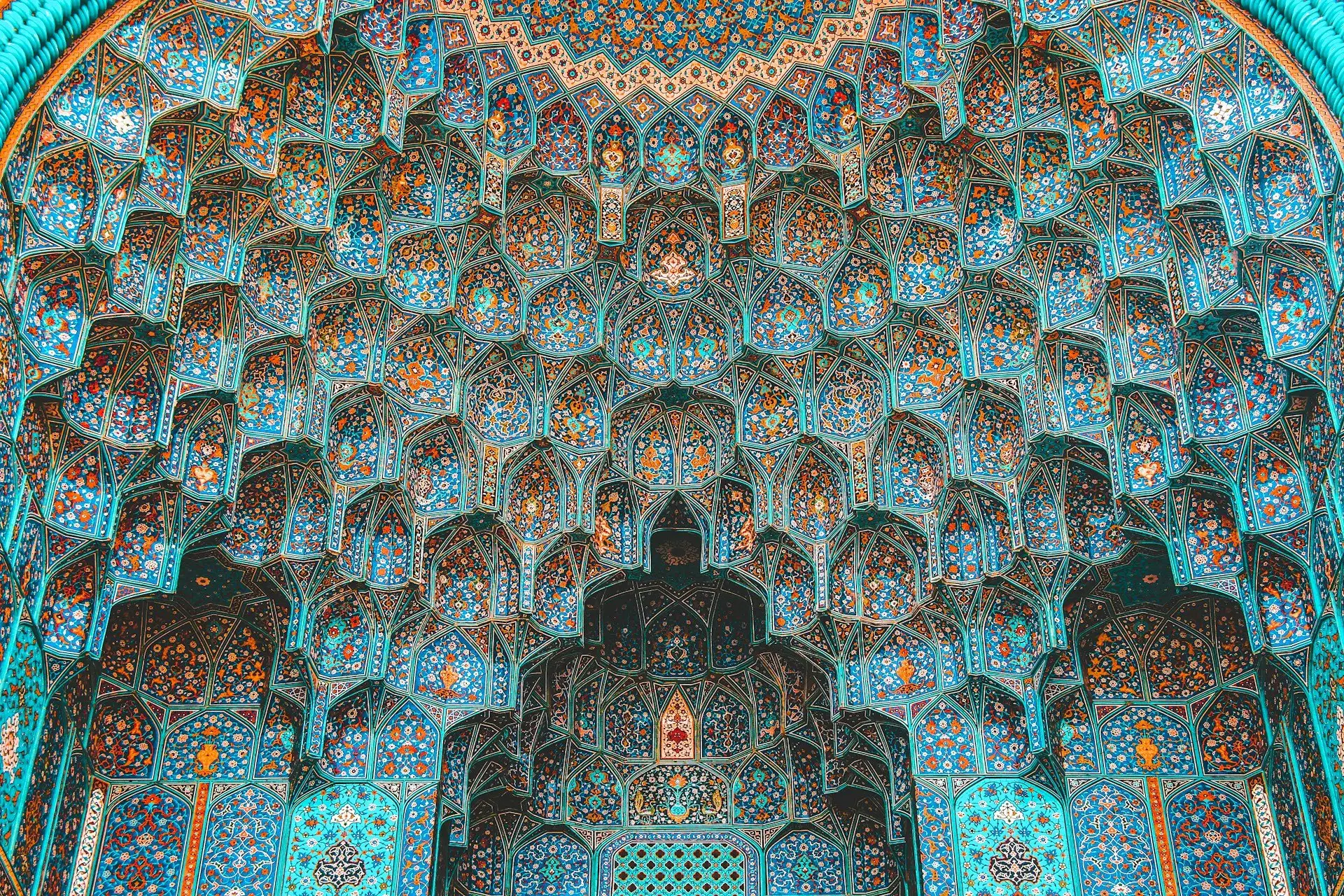
The physical country is staggering. Persepolis, the ceremonial capital of the Achaemenid Persian Empire that ruled from Egypt to India in the 5th century BCE, is an archaeological site whose scale and the precision of its carved stone reliefs competes with anything in Greece or Egypt. The dome of Isfahan's Imam Mosque, covered in tilework of such complexity and color that it took 27 years to complete, is one of the greatest works of Islamic architecture ever produced. The Nasir ol-Molk mosque in Shiraz, the "Pink Mosque," transforms morning sunlight through stained glass into a kaleidoscope of colored light on the prayer hall carpet that is one of the most photographed interiors in the world. The desert city of Yazd, with its wind towers and its mud-brick adobe lanes unchanged since the 14th century, is the best-preserved traditional city in the Middle East. These are not minor attractions. They are world-class.
The practical reality of visiting: no Western bank cards work anywhere in Iran due to international sanctions. Bring cash in euros or dollars, convert on arrival, and carry enough for your entire trip. The dress code for women is legally enforced: headscarf and modest clothing in all public spaces, no exceptions. Internet access is restricted and a VPN is useful. The geopolitical climate between Iran and several Western countries fluctuates and can affect the visa process and the safety calculus for specific passport holders.
For most European passport holders and for many other nationalities, Iran is accessible, affordable, and extraordinary. For US, UK, and Canadian passport holders, travel is possible but requires a licensed tour guide and carries elevated risk. The safety section covers this distinction in detail. Read it before deciding.
Iran at a Glance
A History Worth Knowing
The Iranian plateau has been inhabited and politically organized for longer than almost any other region on earth. The Elamite civilization in the southwest, contemporary with Mesopotamia, was producing complex urban culture in the 3rd millennium BCE. The Medes unified much of the plateau in the 7th century BCE. But it is the Achaemenid Persian Empire that first makes Iran legible to the wider historical record and that remains the foundational reference point for Persian cultural identity today.
Cyrus the Great, who founded the Achaemenid dynasty around 550 BCE, created the largest empire the world had yet seen by conquering the Medes, the Lydians, and the Babylonians in rapid succession. What distinguished Cyrus from most conquerors was not the scale of his conquests but his approach to governance: he permitted conquered peoples to maintain their own religions, customs, and local administrators, released the Jews from their Babylonian captivity and allowed them to return to Jerusalem, and articulated a principle of imperial tolerance that appears on the Cyrus Cylinder, now in the British Museum, in terms that some scholars describe as the world's first human rights declaration. This tolerance became the ideological foundation of an empire that at its peak under Darius I and Xerxes I controlled 44 percent of the world's population.
Alexander the Great destroyed the Achaemenid Empire in 330 BCE, burning Persepolis in an act that Iranian culture has not forgotten in 2,300 years. The Hellenistic Seleucid and Parthian empires that followed maintained much of the Persian administrative structure. The Sassanid Empire (224–651 CE) produced a second Persian golden age: new cities, new architecture, the Zoroastrian religion at the height of its institutional power, and a civilization that competed as equals with Rome and later Byzantium. The royal court at Ctesiphon near modern Baghdad was the most splendid in the world.
The Arab Muslim conquest of 651 CE ended Sassanid rule and introduced Islam to the Iranian plateau. The process of conversion was gradual rather than immediate, and the Persians who became Muslim brought their language, their literary tradition, and their cultural sophistication to the new civilization. The result was not the replacement of Persian culture by Arab culture but the synthesis of both: the Islamic civilization of the medieval world was substantially Persian in its science, poetry, philosophy, and administration. The great medieval mathematicians al-Khwarizmi (whose name gives us "algorithm") and Omar Khayyam, the physicians Ibn Sina (Avicenna) and al-Razi, the poets Rumi, Hafez, and Ferdowsi, and the historians and administrators who organized the Abbasid Caliphate were overwhelmingly of Persian origin writing in Arabic or in the new literary Persian that emerged from the synthesis.
The Safavid dynasty (1501–1736) is the period that shaped modern Iran most directly. Shah Ismail I declared Twelver Shia Islam the state religion of Iran, distinguishing the country from its Sunni Ottoman and Central Asian neighbors in a sectarian division that still defines Iranian identity and politics. The Safavid capital at Isfahan became one of the great cities of the world: Naqsh-e Jahan Square, completed under Shah Abbas I in the early 17th century, is the second-largest public square on earth and the most beautiful. The bazaar, the mosques, the palace pavilions, and the bridge over the Zayandeh River that frame it are what Isfahan's worldwide reputation rests on and they were built in a twenty-year burst of imperial construction that has few parallels.
The Qajar dynasty that followed saw Iran squeezed between British and Russian imperial interests in the 19th century, losing territory to both and signing humiliating treaties that gave foreign powers economic concessions over Iranian oil and industry. The Constitutional Revolution of 1905 to 1911 established Iran's first parliament. The discovery of oil by the Anglo-Persian Oil Company in 1908 began the extraction economy that would shape the 20th century. The CIA-assisted coup of 1953 that overthrew Prime Minister Mohammad Mosaddegh, who had nationalized the oil industry, and reinstated the Shah, is the event that explains more about contemporary Iranian attitudes toward the United States than any other single fact in the bilateral relationship.
The 1979 Islamic Revolution under Ayatollah Khomeini replaced the Pahlavi monarchy with an Islamic Republic that remains in power today. The revolution's early years were defined by the hostage crisis (444 days of American embassy staff held in Tehran), the Iran-Iraq War (1980–1988, estimated one million dead), and the consolidation of theocratic governance over all aspects of Iranian civil life. The subsequent decades have been marked by periodic reformist movements, most recently the 2019 and 2022 protests, and by the international sanctions regime imposed in response to the nuclear program, which has significantly damaged the economy while also generating a specific dynamic in which ordinary Iranians feel simultaneously proud of their civilization and frustrated by the conditions their government has created.
Understanding this history changes what you see in Iran. The bazaars are not just commercial spaces: they are the financial arteries of a merchant class that funded the Constitutional Revolution and has always been one of the independent power centers in Iranian politics. The mosques are not just religious buildings: they are the institutional expression of a theological governance tradition that has shaped Persian architecture for 1,400 years. The hospitality of ordinary Iranians toward foreign visitors carries within it the awareness that their country is seen from outside primarily through its government's actions rather than through their own lived reality. They know this. Their hospitality is, in part, a statement about the gap.
The largest empire the world has seen. Tolerance of conquered peoples' religions and customs. The Cyrus Cylinder. The Jews freed from Babylon. An empire stretching from Egypt to India.
The Achaemenid Empire is destroyed. Alexander burns the ceremonial capital. 2,300 years later, Iranian culture still references this as an act of cultural vandalism that demands acknowledgment.
The second Persian golden age. Zoroastrianism at its height. The most splendid royal court in the world at Ctesiphon. Direct rivals to Rome and Byzantium for five centuries.
The Sassanid Empire falls to the Arab Muslim armies. Conversion is gradual. Persians bring their cultural tradition to the new Islamic civilization and shape it profoundly.
Twelver Shia Islam becomes the state religion, defining Iran's identity against Ottoman and Sunni neighbors. Isfahan's Naqsh-e Jahan Square, the great mosques, and the bridge pavilions are built. One of the world's great cities.
The democratically elected prime minister who nationalized the oil industry is overthrown by a CIA-MI6 operation. The Shah is reinstated. This event explains more about Iranian-American relations than anything else.
Ayatollah Khomeini returns from exile. The Shah flees. The Islamic Republic is established. The hostage crisis begins. The Iran-Iraq War follows. The country that exists today is shaped by what happened in 1979.
Following the death of Mahsa Amini in morality police custody, mass protests spread across Iran under the slogan "Woman, Life, Freedom." The protests are suppressed. The tensions they expressed remain.
Top Destinations
The standard Iran circuit covers Tehran, Kashan, Isfahan, Yazd, Shiraz, and Persepolis. This can be done in ten days at a reasonable pace and provides a genuine cross-section of Iranian history, architecture, and urban culture. Two weeks allows more depth in each city. The country is large and every region has its own character; what follows are the destinations most rewarding for first-time visitors.
Isfahan
Isfahan is the destination that reduces even the most jaded traveler to silence. Naqsh-e Jahan Square, 512 meters long and 163 meters wide, was built between 1598 and 1629 under Shah Abbas I and remains one of the greatest urban spaces ever created: the Imam Mosque at the south end with its enormous turquoise dome of 18 million tiles, the Sheikh Lotfollah Mosque on the east side with its single dome of cream and buff faience (built as the royal prayer hall and accessible to no one else, which explains its perfect preservation), the Ali Qapu palace pavilion where the Shah watched polo games and music performances from a height, and the Grand Bazaar filling the northern end. The square is still alive: families picnic on the grass, children chase pigeons, horses draw carriages around the perimeter at dusk, and the dome of the Imam Mosque changes color continuously as the angle of the light shifts through the day from cream to gold to cobalt. Plan at least two full days. The Vank Cathedral in the Armenian Christian quarter, built by Armenian craftsmen brought to Isfahan by Shah Abbas, is a startling synthesis of Armenian and Safavid architectural styles and worth the walk across the river.
Persepolis & Shiraz
Persepolis, the ceremonial capital of the Achaemenid Persian Empire, sits on a terrace cut into the Zagros Mountains 57 kilometers northeast of Shiraz. It was built by Darius I beginning around 515 BCE and added to by Xerxes, Artaxerxes, and their successors for 150 years. The carved stone reliefs that line the Apadana staircase depict delegations from 23 subject nations of the empire bringing tribute gifts to the king: Egyptians with vases, Indians with fabric and cattle, Lydians with vessels, Ethiopians with an okapi. The precision of the carving after 2,500 years of weather is extraordinary. Shiraz itself is a city of gardens, poets, and wine (now consumed privately): the shrine of Hafez, the 14th-century lyric poet whose verses are quoted by Iranians in everyday conversation with a fluency that has no equivalent in Western culture, is the most visited tomb in Iran. The Nasir ol-Molk mosque, the Pink Mosque, transforms morning light through its stained glass windows into a prayer hall full of colored shadow that is among the most beautiful interior spaces in the world.
Yazd
Yazd is a UNESCO World Heritage City that has been inhabited continuously since the 5th millennium BCE and whose historic center, built in mud brick and adobe, looks as it might have looked in the 14th century if you stay in the covered lanes of the old city and look upward to the forest of badgirs (wind towers) that have cooled the city's buildings through natural ventilation for a thousand years. The Jameh Mosque with the tallest minarets in Iran. The fire temple where a flame has been burning continuously since 470 CE. The Zoroastrian Towers of Silence on a hill outside the city where the dead were once exposed for birds to consume rather than buried in earth. The old city's labyrinthine lanes at night, lit by the glow of tea houses and carpet workshops. Yazd is the best-preserved traditional city in the Middle East and is also genuinely less touristed than Isfahan and Shiraz, which gives encounters with residents a different quality.
Kashan
Kashan sits at the edge of the Dasht-e Kavir desert and has been producing silk, carpets, and ceramic tiles since the Seljuk period. The historic houses of the 18th and 19th-century merchant families, converted to guesthouses, are the most atmospheric accommodation in Iran: the Tabatabaei House, the Boroujerdi House, and the Ameriha House all have the specific quality of Iranian traditional domestic architecture — the courtyard at the center, the wind towers above, the pool and the pomegranate garden, the stucco carving on every surface — that makes staying in them feel like inhabiting a different century. The Fin Garden, a formal Persian garden with flowing water channels and cypress trees, is the oldest existing Persian garden in Iran and the place where the reformist prime minister Amir Kabir was murdered by the Qajar Shah in 1852 in the bathhouse at the garden's edge. The rose water distilleries in the village of Qamsar, 25 kilometers north of Kashan, are active every May during the rose harvest season and produce the rose water that perfumes Iranian food and sweets and goes into the best Iranian pomegranate juice.
Tehran
Tehran is a city of 15 million people sprawling against the Alborz Mountains to the north and the desert to the south, and it is the city that most contradicts the Western image of Iran: young, educated, fashion-conscious (discreetly), art-producing, and possessed of a café and restaurant culture that is one of the most sophisticated in the Middle East. The Golestan Palace complex, the Qajar royal residence that is a UNESCO World Heritage Site, contains seven palaces and gardens of extraordinary tilework. The National Museum has the best pre-Islamic Persian collection in existence. The Niavaran Palace complex, the last residence of the Pahlavi dynasty, is a strange and affecting museum of a royal family that left in a hurry. The Tehran bazaar, the largest covered bazaar in the world, is a financial and social institution that moves hundreds of millions of dollars of goods daily and has been operating in the same location since the Qajar period.
Abyaneh Village
Abyaneh, 80 kilometers south of Kashan in the Karkas Mountains, is an ancient village of ochre-red mud brick houses that seems to have grown from the mountain it sits on rather than been built on it. The village speaks a dialect of Middle Persian largely unchanged since the Sassanid period. The women's traditional dress, which includes a white floral chador, is distinctive and specific to Abyaneh alone. The village's location at 2,228 meters elevation and its traditional fire temple make it one of the most complete surviving examples of pre-Islamic Iranian village culture. The drive through the Karkas Mountains from Kashan is itself worth the journey, particularly in autumn when the canyon walls turn red and gold.
Kandovan & Northwest Iran
The northwest of Iran, the Azerbaijan region bordering Turkey and the autonomous region of Azerbaijan, has a character entirely different from the Persian heartland: Turkish-speaking, with a landscape of volcanic mountains, salt lakes, and inhabited cave villages. Kandovan, a village near Tabriz where houses have been carved into volcanic tufa cones, has been occupied for 700 years and continues to be inhabited today: families live in conical rooms carved from the rock, growing gardens on the shelves of stone around their doorways. Lake Urmia, the second-largest salt lake in the world, turns pink or red in the dry season as the salt-tolerant algae concentrate. Tabriz's Bazaar, a UNESCO site, is the oldest bazaar in Iran and one of the oldest in the world.
Hormuz Island
Hormuz Island in the Strait of Hormuz, 8 kilometers south of Bandar Abbas by ferry, is one of the most visually extraordinary landscapes in Iran: the island's earth contains enough iron oxide and mineral deposits to color the soil red, orange, yellow, purple, and ochre in bands that shift with the angle of the sun. The Portuguese Castle on the northern shore is a 16th-century ruin. The "Rainbow Valley" where the mineral colors are most concentrated is the island's most photographed site. The local salt and mineral pigments are sold as edible food coloring and used in the local cuisine's flatbreads. Hormuz is almost entirely unknown to foreign tourists and entirely unlike any other landscape in the Middle East.
Culture & Etiquette
Iranian culture is shaped by a Persian literary and intellectual tradition that predates Islam and runs alongside it, and by an Islamic practice that in the Shia tradition takes different institutional forms from the Sunni Islam of neighboring countries. The combination produces a culture that is simultaneously conservative in its public forms and surprisingly liberal in its private life: a country where alcohol is illegal and yet consumed widely in private homes, where the dress code is enforced publicly and yet fashion is an elaborate and creative discipline conducted within the rules, and where the government's politics and the population's sentiments diverge more consistently than in most countries.
Ta'arof is the social ritual that governs Iranian politeness and that will confuse you repeatedly until you understand it. Ta'arof is a system of ritualized offers and refusals: a shopkeeper will tell you the goods are free (ta'arof), you refuse, he insists, you refuse again, and eventually the normal price is discussed. A host will offer you everything in the house repeatedly; you are expected to refuse, accept eventually when the offer is clearly sincere, and express genuine gratitude. The first refusal of any offer in Iran is almost never genuine; the fourth or fifth might be. Understanding this system as genuine social courtesy rather than hypocrisy makes Iranian interactions dramatically more enjoyable.
Women are legally required to wear a headscarf (hijab) covering their hair and a loose coat or manteau covering arms and hips in all public spaces. Trousers or a long skirt below the knee is required. This is not a cultural preference: it is enforced law. The level of enforcement has varied since the 2022 protests but the law remains in place. Foreign women are subject to it. Plan your packing accordingly: a lightweight scarf and loose long-sleeved layer solves most of it.
When an Iranian offers you tea, a meal, a place to stay, or help of any kind, the first refusal is expected. Accept when the offer is renewed. The hospitality is genuine and the social contract of receiving it graciously matters deeply to the host. Being invited into an Iranian home is one of the great experiences the country offers.
Salaam (hello), mamnoon or mersi (thank you), befarmaa'id (please, help yourself — the universal polite offering phrase), and khoshhal shodam (pleased to meet you) open genuine warmth everywhere. Persians are linguistically proud: the attempt to speak even badly is always received well.
Always at private homes. At mosques, follow the guidance at the entrance: some require shoe removal, others do not. The carpet of a mosque interior is treated as sacred space and cleanliness of the floor is genuinely important. When in doubt, look at what Iranians around you are doing.
With no card payments available, you are carrying your entire travel budget in cash. Distribute it: some in a money belt, some in your bag, small denominations for daily spending in an accessible pocket. Exchange money at licensed sarafi (exchange offices) rather than at hotels (rates are worse) or black market changers (risk of counterfeit notes).
Alcohol is completely prohibited in Iran. It is not sold publicly, not available in hotels or restaurants, and importing it through customs is a serious criminal offence. Iranians who consume alcohol do so in private and take significant personal risk. Do not ask about it, seek it out, or attempt to bring it in. This is absolute.
Unmarried couples should not display physical affection in public spaces. The definition of public includes everywhere outside your private accommodation. This is socially conservative practice with legal backing. Note that same-sex relationships are illegal in Iran and same-sex travelers need to be aware of this context throughout their visit.
Photography of anything with a security, military, or government function creates real risk of detention. This includes airports, border posts, checkpoints, and any building with a visible official presence. The nuclear sites are obvious, but the rule extends broadly. Photographs in bazaars, mosques, and of landscapes are generally fine; ask before photographing people.
Public criticism of the Islamic Republic, its leadership, or the principle of velayat-e faqih (clerical rule) carries serious legal risk. Express any such views only in completely private settings, and be aware that hotel rooms in Iran are not necessarily private. This is not theoretical caution: foreign visitors have been detained for social media posts and private conversations.
In Iran, the thumbs up is an obscene gesture equivalent to the middle finger in Western culture. It is the most reliable single piece of body language advice for Iran: whatever you're tempted to communicate with a thumbs up, find another way to express it. Use the open hand or a nod instead.
Persian Poetry
Persian poetry occupies in Iranian culture a position that has no direct equivalent in Western societies. The 14th-century lyric poet Hafez is quoted from memory by ordinary Iranians in everyday conversation: at a dinner table, in a taxi, on a bus, someone will cite a verse from the Divan of Hafez as a relevant comment on the situation. The same applies to Rumi, Saadi, Omar Khayyam, and Ferdowsi. The Shahnameh of Ferdowsi (the Book of Kings), written in 60,000 couplets at the turn of the 11th century, is the foundational text of Persian national identity in the way that Homer's Iliad was once foundational to Greek identity, except that Iranians actually read and quote it. Understanding this gives you a way into conversations with Iranians that few foreign visitors find.
Nowruz — Persian New Year
Nowruz, the Persian New Year at the spring equinox on March 20 or 21, is the most important celebration in Iranian culture and one of the oldest holidays in the world, predating Islam by two thousand years. The two weeks surrounding Nowruz see the entire country visiting family, cleaning homes, and setting up the haft-sin table with seven symbolic items beginning with the Persian letter S. The Nowruz holiday also means that major tourist sites can be extremely crowded with domestic visitors: Persepolis on Nowruz day can have 100,000 visitors. If visiting in late March, plan around this or embrace the festive energy.
The Craft Tradition
Iran's artisanal tradition is one of the richest in the world: Persian carpets, miniature painting, tilework, metalwork, lacquerwork, and the carved plasterwork that covers mosque interiors to a depth of design that makes every square centimeter a study. Isfahan's coppersmith bazaar, Tabriz's carpet workshops, Yazd's silk looms, Kashan's ceramic tile factories: these are working craft traditions, not heritage performances. Buying directly from artisans is both cheaper than tourist shops and a better economic transaction. A genuine hand-knotted Persian rug, examined properly and purchased from a workshop where you can watch its production, is one of the best purchases you can make in any craft tradition in the world.
Tea and the Chai Khaneh
Iranian tea culture revolves around the chai khaneh (tea house), which functions as the social gathering space of Iranian male public life in the traditional city quarters. Tea is served in a glass, strong and black, and sweetened by holding a sugar cube between the front teeth while drinking rather than dissolving it. The tea house in the roof of the Bazaar of the Coppersmith in Isfahan, open since the 14th century, serves tea under a painted ceiling while the sound of hammering copper rises from below. It is one of those places where sitting for an hour with nothing particular to do feels like the most productive possible use of time.
Food & Drink
Persian cuisine is one of the great cuisines of the world and one of the least well-known outside the Middle East, despite the fact that it is older than most of the European cooking traditions that receive more international attention. The defining characteristics of Persian food are the use of fruit and nuts in savory dishes (pomegranate, dried barberries, walnuts, dried apricots), the layering of herbs (fresh mint, fenugreek, dill, cilantro, parsley used by the handful rather than the pinch), the specific souring agents (pomegranate paste, dried lime, sour grapes, tamarind) that give Iranian stews their distinctive tart depth, and the saffron and rose water that appear across both savory and sweet preparations. This is a cuisine of subtle complexity rather than immediate impact: it rewards attention and repeat eating.
Alcohol is not available in any public venue in Iran. The drinks culture runs on tea, fresh fruit juices, and the extraordinary Iranian tradition of doogh (cold yoghurt drink with mint and dried herbs) and fresh pomegranate juice. The pomegranate juice from fresh pomegranates pressed at street stalls and served immediately is one of the genuinely great food experiences in Iran and tastes nothing like bottled pomegranate juice anywhere in the world.
Chelow & Persian Rice
Persian rice is the most technically demanding rice preparation in the world: par-boiled, then finished by steaming over very low heat with a layer of fat at the bottom of the pot that creates the tahdig, the crispy golden crust that comes free with every meal and is the most fought-over element at any Iranian dinner table. The rice is long, aromatic, and separate: never sticky, never clumped. Chelow (plain rice) accompanies almost every main dish. Polo is rice cooked together with other ingredients: barberry polo with lamb, dill polo with fava beans and lamb, jeweled rice (morasa polo) with saffron, candied orange peel, dried cherries, and pistachios served at weddings and celebrations.
Khoresht (Persian Stews)
The Persian stew tradition is the soul of Iranian cooking: slow-cooked combinations of meat, herbs, fruit, and nuts with a complexity that comes from hours of reduction. Khoresht-e fesenjan, duck or chicken braised in pomegranate molasses and crushed walnuts, is the most celebrated: a dark, thick, intensely sour and rich sauce with no equivalent in any other cuisine. Khoresht-e ghormeh sabzi, lamb with dried fenugreek, kidney beans, and dried limes, is the most beloved everyday stew. Khoresht-e bademjan, lamb with eggplant and tomato. Each is a complete argument about what slow cooking can achieve.
Kebab
Iranian kebab is the street-level and restaurant staple: koobideh, seasoned minced lamb formed around flat skewers and grilled over charcoal, served on bread with grilled tomatoes and a pat of butter that melts into the still-hot meat; joujeh, whole pieces of saffron-marinated chicken grilled over the same fire; and chenjeh, cubes of lamb fillet. The quality of the charcoal, the freshness of the meat, and the specific seasoning ratio of the koobideh are points of fierce regional and family pride. Iranian kebab houses are plain, smoke-scented, and produce food that the plainness of the setting has no bearing on.
Ash (Persian Soups)
The Persian soup tradition, called ash, produces thick, filling, herb-heavy preparations that function as complete meals. Ash-e reshte, the most famous, is a noodle soup with spinach, chickpeas, kidney beans, lentils, dried herbs, and fried onions, topped with whey, mint oil, and fried onions, served at Nowruz and whenever someone needs feeding up. Ash-e anar in Yazd is pomegranate soup. The tradition of large communal pots of ash cooked for pilgrims at shrines and sold at modest prices from street carts in old city neighborhoods is one of the most Iranian possible food experiences.
Persian Sweets & Pastries
Iran's sweet tradition is as complex as its savory cooking: saffron and rosewater ice cream (bastani-e sonnati) served in a brioche bun or a waffle cone, the crispy fried pastries of Isfahan (gaz, the city's famous nougat with pistachios), the almond and rosewater cookies of Yazd, the halva made with saffron and rosewater and served at mourning ceremonies in quantities that defeat any attempt at abstinence, the saffron-ricewater pudding fereni. These are not desserts in the Western sense: they are independent treats consumed at tea time, at bazaar tea houses, and as markers of celebration.
Drinks
Doogh, the cold yoghurt drink with dried mint and salt, is the correct accompaniment to any meal in Iran and tastes completely different from the diluted bottled versions found outside the country: thicker, more sour, genuinely cooling in a way that cold water is not. Fresh pomegranate juice pressed to order at street stalls throughout the cities. Saffron and rosewater sharbat (sweet cold drinks with soaked seeds floating in them). And the tea culture described in the culture section: three glasses minimum at any social encounter, poured continuously until you cover the glass with your hand to signal you have had enough.
When to Go
Iran's climate varies dramatically from region to region: the Caspian coast in the north is subtropical and wet, the Persian Gulf coast in the south is extremely hot and humid, the central desert cities (Yazd, Isfahan, Kashan) have severe summer heat and mild winters, and the Alborz and Zagros mountains have genuine four-season alpine conditions. The standard tourist circuit through the central cities is best done in spring or autumn. October is widely considered the optimal single month: clear skies, temperatures in the 15–25°C range across most of the circuit, excellent light for photography, and the rose harvest finished and the pomegranates coming in.
Autumn
Sep – NovThe finest travel window. Temperatures perfect across the main circuit. October has the best combination of clear skies, comfortable walking temperatures, and the pomegranate harvest. The Zagros mountains begin to color. The light on the tiles of the Isfahan mosques in October afternoon is particularly extraordinary.
Spring
Mar – MayRose harvest season in Kashan and Qamsar (May). Spring flowers across the mountain passes. Nowruz New Year in late March brings festivity but also crowds: the major sites are packed with domestic visitors for about two weeks. April to May after Nowruz is excellent. The Kashan rose water distilleries at peak production in early May are worth planning around.
Winter
Dec – FebCold in Tehran and the north (occasionally below freezing) but Shiraz and the Persian Gulf coast remain mild. The central cities are cool and clear. Fewer tourists at all sites. Skiing in the Alborz Mountains north of Tehran (Dizin resort) is underrated. The Caspian coast with its lush green hills and fish restaurants is attractive in winter when the summer humidity is gone.
Summer
Jun – AugExtreme heat across the central desert cities. Yazd and Kashan regularly reach 42–45°C in July. Outdoor movement is practical only at dawn and dusk. The Persian Gulf coast is genuinely dangerous: 40°C with 80% humidity. If you must visit in summer, focus on the Caspian coast, the Alborz and Zagros mountain highlands, and plan outdoor activities only for before 9am.
Trip Planning
Planning an Iran trip requires more advance work than most destinations: the visa authorization code must be obtained before departure, cash must be calculated and organized in advance, and a VPN should be installed on your phone and laptop before landing. None of these is complicated. The reward for doing the work in advance is a trip to a country that has surprised virtually everyone who has made it.
Ten to fourteen days covers the standard circuit (Tehran, Kashan, Isfahan, Yazd, Shiraz, Persepolis) with time to breathe in each place. Two weeks adds depth: more time in Isfahan, a detour to Abyaneh or the Zagros villages, a day or two on the Persian Gulf coast. US, UK, and Canadian passport holders must travel with a licensed guide, which changes the character of the trip but does not diminish it: a good Iranian guide is an extraordinary asset in a country where language and context are significant barriers.
Tehran
Day one: arrive Tehran, Golestan Palace complex, National Museum. Day two: Tehran Grand Bazaar morning walk (get lost, have tea offered to you, find the carpet section), Niavaran Palace afternoon, dinner at a Tehran restaurant for chelow kebab. Night train or flight to Kashan.
Kashan & Isfahan
Day three: Kashan Tabatabaei House morning, Fin Garden afternoon, check into a traditional merchant house guesthouse for the night. Day four: drive or bus to Isfahan (2.5 hours). Afternoon orientation walk along the Zayandeh River bridges. Evening at Naqsh-e Jahan Square as the lights come on and the families arrive for the evening.
Isfahan in Depth
Day five: Imam Mosque at dawn (arrive before 8am), Sheikh Lotfollah Mosque mid-morning (the cream-buff dome interior is best in morning light), Ali Qapu Palace, Grand Bazaar copper section with tea, Vank Cathedral. Day six: Chehel Sotoun Palace, Armenian quarter of Jolfa, Khajoo Bridge at sunset, Isfahan traditional restaurant for khoresht fesenjan.
Yazd
Bus or train from Isfahan to Yazd (3 hours). Day seven: afternoon arrival, old city lanes, fire temple. Day eight: Amir Chakhmaq Square dawn, Jameh Mosque minarets, Towers of Silence outside the city, wind tower rooftop at dusk. Overnight bus to Shiraz.
Shiraz & Persepolis
Day nine: Nasir ol-Molk mosque at 8am (stained glass light), Vakil Bazaar, Hafez shrine evening. Day ten: Persepolis full day (arrive at opening, hire guide at the site, give it 4 hours), Naqsh-e Rostam royal tombs on the return. Fly home from Shiraz.
Tehran
Three days in Tehran: the National Museum, Golestan Palace, Tehran Bazaar, the Sa'dabad complex (the Pahlavi royal summer residence with multiple museums), the Museum of Contemporary Art (holdings include significant Western 20th century art purchased before the revolution that has rarely been exhibited since), and a day trip to the ski resort of Dizin in the Alborz in winter or a mountain walk in the Tochal foothills in spring and autumn.
Kashan Extended
Two nights in a traditional house in Kashan. The rose water distilleries at Qamsar if visiting in May. The Silk Road caravanserai of Aghazadeh outside town. Abyaneh village day trip through the mountain canyon. The thermal springs at Qamsar. Kashan rewards slow exploration more than most Iranian cities because the traditional domestic architecture is the real thing.
Isfahan Extended
Four days in Isfahan: all the main sites plus the less-visited Friday Mosque (Masjed-e Jame), which contains architectural elements from every major period of Iranian Islamic architecture stacked within a single mosque complex; the Armenian village of Jolfa south of the river; and a day trip to the ancient Zoroastrian village of Abyaneh through the Zagros foothills.
Yazd & Shiraz Extended
Two nights in Yazd: deeper exploration of the old city, a visit to the Zoroastrian community's private ceremony spaces if welcomed, and the desert landscape east of the city where the landscape approaches the Dasht-e Kavir. Three nights around Shiraz: Persepolis, the Pasargadae tomb of Cyrus the Great (more affecting and less visited than Persepolis), and the village of Bishapur with its Sassanid rock reliefs.
Tehran & The North
Tehran base. Day trip to the Caspian coast via the Alborz pass: the drive from the desert capital through alpine landscapes to the subtropical Caspian littoral in two hours is one of the most dramatic environmental transitions in the world. The rice terraces, the dense forested slopes, the seafood restaurants on the Caspian shore: an entirely different Iran from the one in the tourist brochures. Overnight at a Caspian guesthouse before returning to Tehran.
The Classic Circuit: Kashan, Isfahan, Yazd
The full 10-day classic circuit condensed into six days by eliminating the longer stays. This works if you've been before or have specific priorities. For a first visit, the extended 14-day version of this circuit is more satisfying.
Shiraz, Persepolis & The Gulf
Shiraz extended: Persepolis, Naqsh-e Rostam, Pasargadae (tomb of Cyrus), Bishapur Sassanid reliefs. Fly from Shiraz to Bandar Abbas for the ferry to Hormuz Island: one night on the island of mineral colors, the Portuguese Castle, the salt and mineral landscape of the Rainbow Valley. Return to Bandar Abbas and fly to Tehran for the international connection.
Northwest Iran
Fly Tehran to Tabriz. Three days: Tabriz Bazaar, Kandovan cave village, Lake Urmia pink/red salt lake. Drive south through the Kurdish regions (Orumiyeh, Maragheh with its 13th-century Mongol observatory) to Kermanshah and the Taq-e Bostan Sassanid rock carvings. Return Tehran by bus or fly. The northwest is the Iran that almost no foreign visitor sees and that rewards the effort completely.
Cash — The Most Critical Preparation
No international cards work anywhere in Iran. Bring euros or US dollars for the entire trip, including an emergency buffer of 25%. Exchange at licensed sarafi offices, not hotels. The rate fluctuates with sanctions pressure: check the current informal rate before departure. Keep cash in multiple locations: money belt plus bag plus small change accessible. There is literally no fallback if you run out.
VPN
Iran restricts access to most social media, messaging apps including WhatsApp and Telegram (though Telegram is widely used despite being nominally blocked), and news sites. Install a VPN before departure: you cannot reliably download VPN apps from within Iran. Psiphon and Lantern are specifically designed for circumventing censorship and work more reliably than commercial VPNs in Iran. The government's internet restrictions and enforcement fluctuate.
Vaccinations
No mandatory vaccinations for most nationalities. Hepatitis A recommended. Routine vaccines should be up to date. Medical facilities are good in Tehran and adequate in Isfahan and Shiraz. Rural areas have limited facilities. Bring adequate prescription medications for your entire trip: some international medications are unavailable due to sanctions affecting pharmaceutical imports, a fact with humanitarian implications that travelers should be aware of.
Full vaccine info →Connectivity
Tourist SIMs from Irancell and Hamrah-e Aval are available at Tehran airport. Coverage is good in cities and along the main routes. Rural and mountain areas have limited coverage. The SIM gives you local data for navigation and local messaging. Combine with your VPN for access to blocked services. Offline maps downloaded before arrival are essential.
Women's Packing
Pack light, loose-fitting clothing that covers arms and legs: linen and cotton in neutral colors work well in the heat. Three or four lightweight scarves that can be worn or adjusted depending on the setting. A long coat or manteau (available very cheaply in Tehran's bazaars if you want to buy locally). Forget about showing hair, shoulders, or upper arms in any public space. The constraint is real but manageable; the country on the other side of it is worth every concession.
Language
Persian (Farsi) is the official language. English is spoken by younger educated Iranians in cities and by people in the tourism sector. Outside tourist areas, English coverage drops significantly. Google Translate with Persian downloaded offline works well. Learning ten phrases including the ta'arof responses transforms daily interactions. Persian script is beautiful and does not take long to learn the alphabet if you have a week before departure.
Transport in Iran
Iran's domestic transport infrastructure is extensive and affordable. The intercity bus network is the backbone of budget travel: comfortable air-conditioned coaches connect all major cities at prices that are extraordinary for the distances covered. Domestic flights exist and are useful for the longer routes (Tehran to Shiraz, Tehran to Tabriz). The railway between Tehran, Isfahan, Yazd, and Shiraz is comfortable but slower than the bus and requires more advance booking. Within cities, taxis are cheap and Snapp (Iranian Uber equivalent) operates in the major cities.
Intercity Bus
$3–10 / routeThe primary intercity transport and excellent value. VIP buses (large seats, minimal stops) connect Tehran to Isfahan in 5 hours, Isfahan to Shiraz in 5 hours, Isfahan to Yazd in 3.5 hours. Book at the bus terminal or through agencies. Night buses with reclining seats are the standard for longer routes. Significantly cheaper than domestic flights and more comfortable than the train for most routes.
Domestic Flights
$20–60 / routeIran Air and Mahan Air connect Tehran to Shiraz, Tabriz, Mashhad, Bandar Abbas, and other cities. Prices are very cheap by international standards due to fuel subsidies. Book through local agencies or through online booking services. Note that Western passengers may face difficulties booking on some platforms due to sanctions: a local travel agency can handle this. Airport domestic terminals are well-organized.
Taxi & Snapp
$1–5 / city tripSnapp (the Iranian equivalent of Uber) operates in Tehran, Isfahan, Shiraz, and other major cities. Download and set up the app before arrival (requires Iranian phone number from your local SIM). Standard taxis are cheap but require either negotiation or a meter: establish the price before getting in unless the meter is running. Hotel receptions can call taxis and establish prices for you.
Metro
Under $0.20 / tripTehran has a good metro system with 8 lines covering the city. Isfahan has a more limited metro. Tehran's metro is the most practical way to navigate the capital: fast, cheap, and the stations are clearly signed in both Persian and English. Women's carriages exist at the front and back of each train and are required: foreign women should use them.
Train
$5–15 / routeThe Tehran to Isfahan and Tehran to Shiraz overnight trains are comfortable alternatives to night buses. First class sleeper compartments are clean and the service is reliable. Book through Raja Railway's website (in Persian: use a local agency) or at station ticket offices. Night trains save a night's accommodation but the bus is faster for daytime travel.
Private Driver / Car Hire
$50–100 / dayFor rural destinations, day trips from cities, and the Persepolis–Naqsh-e Rostam–Pasargadae circuit around Shiraz, hiring a driver for the day is practical and affordable. Most guesthouses and hotels can arrange this. Agree the price and the itinerary in advance. Self-drive car rental is available in Iran but international driving licenses are required and navigating without Farsi is challenging outside the cities.
Iran's VIP bus system is genuinely one of the best intercity bus networks in the world for the price. The buses are air-conditioned to a level that requires a layer in the summer, comfortable, and stop at roadside service areas with cheap food and tea. The bus terminal in each city (called the terminal-e gharb or terminal-e jonoob depending on direction) is where you buy tickets and board. Arrive 30 minutes before departure. Most routes have multiple departures per day. Female passengers can request a seat next to another woman by specifying this when buying the ticket.
Accommodation in Iran
Iran's most distinctive accommodation is the traditional house guesthouse (khaneh-ye sonnati), typically a restored 18th or 19th century merchant or aristocratic family home built around a central courtyard with a pool, pomegranate trees, and the specific architectural language of traditional Iranian domestic space: carved plasterwork, stained glass, and rooms arranged around the courtyard on multiple levels. Kashan has the finest concentration. Isfahan has good options. Yazd has several that are genuinely extraordinary for their completeness of preservation.
International hotel chains have limited presence in Iran due to sanctions, which means the hotel market is entirely domestic. The best international-standard hotels are in Tehran. The traditional guesthouses, which often cost less than standard hotels, provide an experience unavailable anywhere else in the world.
Traditional House Guesthouse
$30–80/nightThe most memorable Iran accommodation. The Manouchehri House in Kashan, the Abbasi Hotel in Isfahan (a converted Safavid-era caravanserai with an extraordinary garden courtyard), and the Moshir al-Mamalek Garden Hotel in Yazd are the benchmarks. Staying in a traditional house guesthouse is not a compromise for budget travelers: it is often the better choice at any budget because the architecture and atmosphere of a properly preserved traditional house is irreplaceable.
International-Standard Hotel
$60–150/nightThe Espinas Palace Hotel and the Azadi Grand Hotel in Tehran are the most reliable international-standard properties. The Homa Hotel chain operates good mid-range hotels in Isfahan, Shiraz, and other cities. Standards are generally lower than comparable Western hotels at the same price: book the specific hotel on recent reviews rather than star ratings.
Budget Guesthouse
$10–30/nightBudget guesthouses throughout the tourist circuit offer clean rooms at very low prices. The Silk Road Hotel in Yazd and several options in the Isfahan old city are reliable budget choices. The gap between budget and traditional house accommodation is often smaller than the price gap suggests: the traditional houses frequently offer better value for a modest additional cost.
Desert Eco-Camp
$25–60/nightSeveral desert camps operate near Varzaneh (east of Isfahan) and in the Dasht-e Kavir and Dasht-e Lut desert regions: tent accommodation, camel rides at sunset, stargazing in some of the darkest skies in the Middle East. The Iranian desert at night, with no light pollution and a sky that stretches from horizon to horizon, is a specific and deeply affecting experience. Arrange through guesthouses in Yazd or Isfahan.
Budget Planning
Iran is one of the most affordable tourist destinations in the world because international sanctions have caused the rial to depreciate dramatically against hard currencies. The result is a country where a full dinner costs the equivalent of one to two dollars at a local restaurant, a bus journey of 500 kilometers costs five dollars, and a night in a traditional guesthouse costs thirty dollars. This affordability is real but comes with the cash-only constraint: you must bring everything in advance and there is no safety net if you miscalculate.
Note on currency: Iranians quote prices in "toman," which is 10 rials. The official exchange rate differs significantly from the unofficial ("free market") rate available at licensed exchange offices. You should always exchange at the licensed sarafi offices for the better rate. Prices in this guide are in USD equivalents at the informal rate.
- Budget guesthouse or traditional house
- Local restaurants and kebab houses
- Intercity VIP buses
- Free or near-free site entries
- Chai from street stands
- Traditional house guesthouse (better tier)
- Good Iranian restaurants
- Occasional domestic flights
- Private driver for day trips
- Cooking class or craft workshop
- Best traditional houses (Abbasi Hotel, Manouchehri)
- Licensed guide for historical sites
- Private car throughout the circuit
- Desert eco-camp night
- Luxury carpet purchase budget
Quick Reference Prices (USD equivalent)
Visa & Entry
The most practical visa route for most nationalities is the authorization code system: apply online through an Iranian travel agency or visa service, receive an authorization code by email, and collect the physical visa stamp on arrival at Tehran's Imam Khomeini International Airport or other designated ports. The process takes 3 to 10 business days. The visa fee is typically USD 75 to 100 depending on nationality.
Visa on arrival without a pre-arranged authorization code is technically possible at certain airports but is less reliable and involves longer airport queues. The authorization code process is faster, more predictable, and strongly recommended. Several Iranian travel agencies provide this service specifically for foreign tourists: they require a scan of your passport, basic personal information, and the fee. Once approved, the code is presented at the port of entry and the visa is stamped.
US, UK, and Canadian passport holders face fundamentally different requirements: they must arrange the visa through an Iranian embassy or consulate, must travel with a licensed Iranian guide at all times (solo independent travel is not permitted), and face elevated risk related to detention that other passport holders do not face to the same degree. These restrictions and risks are described in more detail in the safety section.
Apply online through an Iranian travel agency 2–3 weeks before departure. Receive email authorization code. Present at the airport to receive the visa stamp. Most nationalities USD 75–100.
Safety in Iran
For the majority of European passport holders and many others, Iran has a low rate of crime against tourists. Violent crime targeting foreign visitors is essentially unrecorded. Iranians are genuinely welcoming to foreign visitors in a way that repeatedly surprises people who arrive with the image of Iran formed by news coverage. The main risks are legal rather than criminal: dress code violations, photography restrictions, the laws around alcohol, and the consequences of political expression.
The specific elevated risk for US, UK, and Canadian passport holders is the documented practice of dual-national detention: the Iranian government has detained dual nationals (particularly Iranian-Americans and Iranian-British nationals) on vague national security charges and used them as bargaining chips in diplomatic negotiations. Foreign nationals without Iranian dual citizenship have also been detained in some cases. The US, UK, and Canadian governments maintain specific travel advisories for Iran that are more severe than those of most European countries. Anyone holding these passports should read their government's current advisory in full before making any decision about visiting.
The 2022 protests following the death of Mahsa Amini in morality police custody changed the social dynamic in Iran in ways that are still evolving. The dress code enforcement became the subject of active political resistance, particularly by younger Iranian women. For visitors, this means: the situation on the ground may look different from the legal requirement. This guide recommends complying with the law as written (headscarf for women in all public spaces) regardless of what you observe locally, because the enforcement is inconsistent and the consequences of a bad encounter outweigh the comfort of not wearing a headscarf.
General Safety (Most Nationalities)
Very safe from violent crime. Iranians are overwhelmingly welcoming to foreign visitors. Petty theft is uncommon. The main risks are legal: dress code, alcohol prohibition, photography restrictions, and the laws around political expression. Operate within the legal framework and the experience is safe and extraordinary.
US, UK & Canadian Passport Holders
Elevated risk. The governments of all three countries issue Do Not Travel advisories for Iran. Dual nationals face specific documented risks of detention. Those who choose to visit must travel with a licensed guide, should not discuss sensitive political topics under any circumstances, and should register their trip with their embassy's STEP program before departure. The decision to visit with one of these passports requires careful personal risk assessment.
Women Traveling Solo
Solo female travel in Iran is possible and many women do it independently with positive outcomes. The dress code requirement applies constantly. Iranian women are generally warm and helpful to foreign female travelers. The main reported issues are unwanted attention and harassment in the cities, which is significantly less severe than in several neighboring countries. Traveling with a companion reduces friction. Using the women's carriages on the metro and seeking guidance from your guesthouse on areas and hours to avoid is standard practice.
Photography Restrictions
Photograph freely in mosques, bazaars, and landscapes. Ask before photographing people. Do not photograph government buildings, military installations, checkpoints, airports, or anything with an official function. The rule is broadly defined and enforcement is inconsistent, which means the cost of getting it wrong is unpredictable. When in doubt, don't. The consequence for photographing the wrong thing can range from being asked to delete photos to temporary detention.
Political Demonstrations
Political demonstrations in Iran can turn violent or result in mass arrests with little warning. Being present at a demonstration as a foreign visitor, even as an observer, creates risk of detention. Monitor local news and your embassy's alerts, and avoid any gathering that has a political character. The 2022 protest period showed that demonstrations can spread rapidly and affect areas where tourists are present.
Healthcare
Tehran's hospitals are good quality by regional standards. Isfahan and Shiraz have adequate facilities. Rural areas have limited capabilities. Bring prescription medications in sufficient quantity for your entire trip, as some may be unavailable due to sanctions. Travel insurance covering medical evacuation to a neighboring country (Turkey or UAE) is essential.
Emergency Information
Your Embassy in Tehran
Several Western countries have suspended or closed their Tehran embassies. Consular assistance may be provided remotely or through a third-country embassy. Verify your country's current consular representation before travel.
Book Your Iran Trip
Due to international sanctions, some services have limited availability in Iran. These are the tools and services useful for the planning and travel to and from Iran.
The Gap
There is a word in Persian, ta'arof, that translates imprecisely as "ritualized courtesy" but that actually describes something more interesting: a system for maintaining the appearance of generosity and goodwill even when the practical reality is more complicated. Iranians use it constantly, with each other and with strangers. When an Iranian invites you to his home the moment you meet him on a street in Isfahan and you demur and he insists and you decline again and he insists more and eventually you find yourself sitting in a family's living room eating fresh walnuts and pomegranate seeds and drinking tea while three generations of the family ask you sincere and curious questions about where you are from and whether you have eaten anything good yet: this is ta'arof working at its best. The courtesy was ritual. The welcome was real. The distinction between the two disappeared somewhere between the third cup of tea and the moment the grandmother produced a plate of homemade sweets from another room.
Iran is a country that contains within it a gap between the official version and the lived reality that is larger than in almost any other destination in this guide. The government's policies are not the people's preferences. The law's requirements are not always the population's practice. The image projected outward is not what visitors find when they arrive. This gap is not comfortable to think about from a political standpoint: the people who live in it bear its costs in ways that a tourist does not. But it is the thing that makes Iran, for the visitors who go, one of the most genuinely surprising countries on earth. Almost everyone who goes says the same thing afterward: I didn't expect it to be like this. No one ever quite explains what they expected. They just say the gap was larger than they thought, and in the better direction.