
Indonesia
17,000 islands, 300 languages, and a plate of nasi goreng at 2am that will ruin all other fried rice for the rest of your life. You'll arrive planning two weeks and start Googling flights back before the first one ends.
What You're Actually Getting Into
Indonesia is not a country in the way most countries are countries. It's an archipelago the width of the continental United States, strung across the equator, containing more linguistic diversity than all of Europe combined. The Java you'll see in Yogyakarta, with its shadow puppet theaters and court gamelan music still playing after 500 years, has almost nothing culturally in common with the Papuan highlands six time zones to the east. "Indonesia" is less a single place than an agreement between islands to share a passport.
That's the thing most first-time visitors miss. They come for Bali, which is extraordinary, and leave thinking they've seen Indonesia. They haven't. Bali is one island. One Hindu island in a Muslim-majority nation of 275 million people. It's like going to Iceland and thinking you've seen Europe.
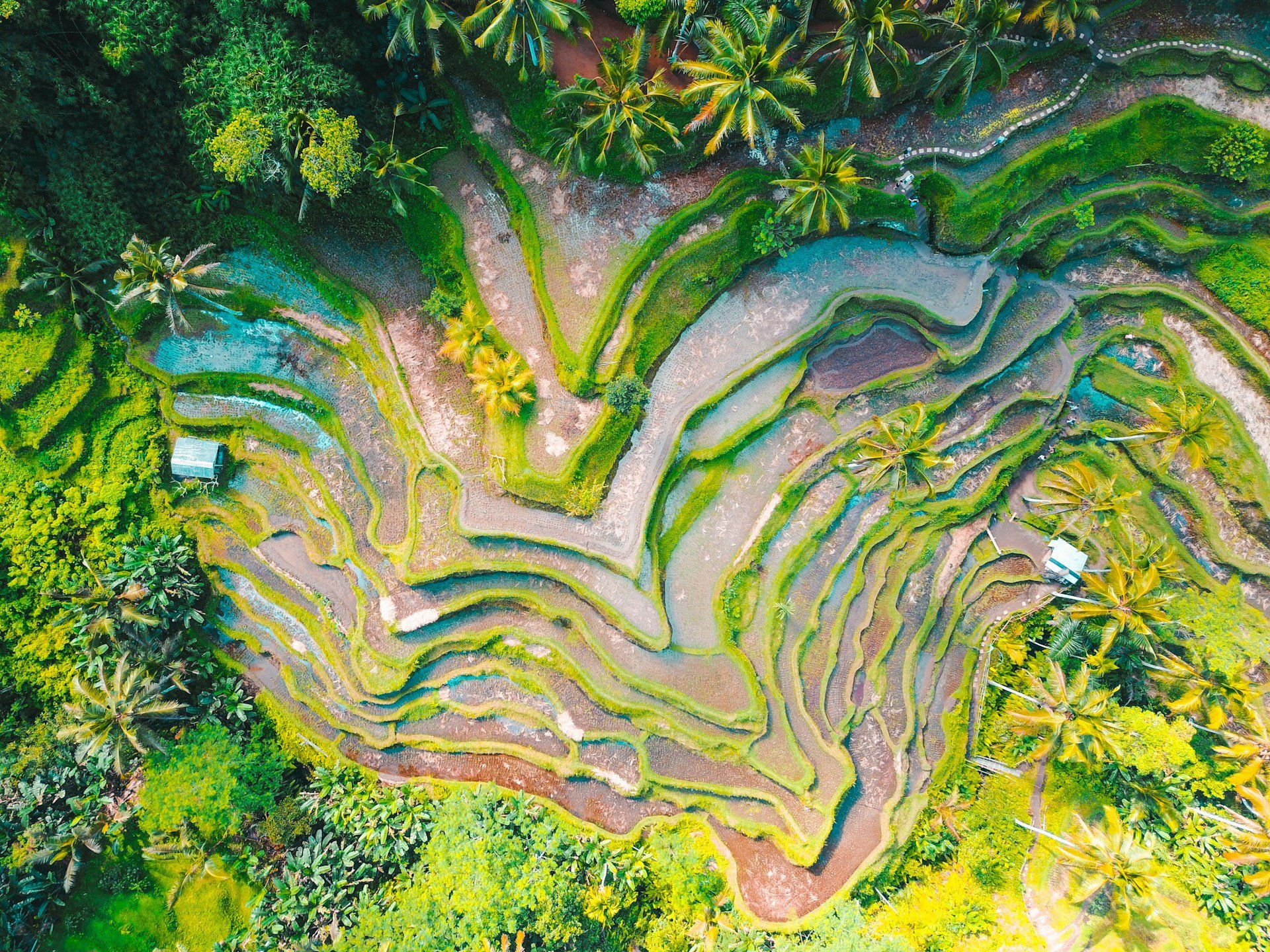
Not that Bali is the wrong choice. The rice terraces above Tegallalang at 7am, before the tour vans arrive and the drone pilots set up their rigs, still look like something a landscape painter spent a lifetime imagining. The surf off Uluwatu is world-class. The food in Seminyak has quietly become some of the best in Asia. But Bali is the beginning, not the whole story.
The practical reality of Indonesia: it's cheap, it's hot, it's logistically complicated in ways that will either delight or exhaust you depending on your personality, and it has more natural spectacle per square kilometer than almost any country on earth. Active volcanoes you can hike before breakfast. Coral reefs so intact that marine biologists fly in specifically to study them. Ancient temples that were reclaimed by jungle for centuries and only fully excavated within living memory. An island where Komodo dragons still hunt in the wild.
The single biggest planning mistake most visitors make is trying to cover too much ground too quickly. The distances are real. Flores to Raja Ampat isn't a bus ride. Give yourself fewer islands and more time on each. You'll leave more satisfied and considerably less exhausted.
Indonesia at a Glance
A History Worth Knowing
The story of Indonesia starts with spice. For most of recorded history, the tiny Banda Islands in what is now eastern Indonesia were the only place on earth where nutmeg grew. That single fact is enough to explain several centuries of European naval history, at least two massacres, and why the Dutch once traded Manhattan to the British in exchange for the island of Run. When nutmeg was worth more than gold by weight in 17th-century Amsterdam, people did extraordinary things to control its source.
But the archipelago had already been trading with the world for centuries before the Europeans arrived. The Srivijaya Empire, based in what is now Sumatra, controlled the Strait of Malacca from the 7th century onward and grew extraordinarily wealthy taxing the trade routes between India and China. Indian Hinduism and Buddhism arrived along these same routes, which is why Borobudur, the world's largest Buddhist monument, sits in the middle of Java and was built in the 9th century by a dynasty whose descendants later converted to Islam.
Borobudur is worth understanding before you visit it. The monument was essentially abandoned sometime in the 14th century as Java converted to Islam and the surrounding population shifted away. It was swallowed by volcanic ash and jungle. A British colonial official named Stamford Raffles heard local stories about a great monument buried somewhere in the interior and commissioned an expedition in 1814. What they found was an almost complete 9th-century Buddhist temple complex preserved under a millennium of vegetation. The full restoration wasn't finished until the 1980s. The structure itself, 2 million blocks of volcanic stone arranged across nine stacked platforms and carved with 2,672 relief panels, is genuinely jaw-dropping in person. The story of its rediscovery is almost as good.
The colonial period under the Dutch East Indies lasted roughly 350 years and was extractive by design. The Java War of 1825 to 1830, led by Prince Diponegoro, was one of the most significant anti-colonial uprisings of the 19th century and cost an estimated 200,000 lives. Independence finally came in August 1945, declared by Sukarno and Mohammad Hatta just two days after Japan's surrender ended the wartime occupation that had replaced Dutch rule.
The decades that followed were turbulent. Sukarno's guided democracy gave way to Suharto's New Order in 1965 after a contested coup and one of the worst episodes of political killing in the 20th century, in which somewhere between 500,000 and one million people died. Suharto ruled for 31 years. The economic growth he oversaw came with authoritarian control and significant corruption. He resigned in 1998 during the Asian financial crisis amid mass protests, and what followed was a genuinely remarkable democratic transition for a country of 200 million people that had never attempted one. Indonesia today is the world's third-largest democracy, a fact that receives far less international attention than it deserves.
What all this layering means for the traveler: you can walk through a Hindu temple in the morning, eat lunch beside a mosque's night market, and end the evening at a Dutch colonial-era hotel bar, all in the same Indonesian city. The country's complexity is right there on the surface if you know to look for it.
Maritime trading empire controls the Strait of Malacca. Buddhism and Hinduism arrive via Indian trade routes.
The world's largest Buddhist temple constructed in central Java by the Sailendra dynasty. Later abandoned, buried by volcanic ash, and lost for centuries.
The Dutch East India Company establishes control over the spice trade. Three and a half centuries of colonial rule begin.
Raffles commissions the excavation of a jungle-buried monument. The world finds out Borobudur exists.
Sukarno declares independence two days after Japan's WWII surrender. The Dutch spend four more years trying to reclaim the colony before giving up.
31 years of authoritarian rule, rapid economic growth, and political repression. Suharto resigns during the 1998 financial crisis amid mass protests.
277 million people, 17,000 islands, and a functioning democratic government that surprised most analysts by actually holding together.
Top Destinations
The honest version: Indonesia rewards island loyalty more than island-hopping. The travelers who try to hit Bali, Lombok, Flores, Sulawesi, and Raja Ampat in two weeks spend most of that time in airports and arrive at each place already exhausted. Pick two or three islands, go deep, leave with something real. The architecture of a great Indonesia trip is more vertical than horizontal.
Bali
Yes, Bali is overrun in places. Yes, the Ubud wellness complex can feel like a lifestyle brand that swallowed a rice field. None of that changes the fact that Bali is genuinely beautiful in a way that photographs cannot fully account for. The temple at Tanah Lot at dusk with waves crashing against the sea stack below. The terraced fields above Jatiluwih, a UNESCO site that almost nobody visits because it requires renting a scooter and navigating a mediocre road. The black sand beach at Lovina in the north, where the tourist infrastructure is fifteen years behind the south and fishing boats still go out before sunrise. Stay in Canggu if you want nightlife, Ubud if you want green and quiet, Seminyak if you want good food and are willing to spend for it. Avoid Kuta unless you specifically enjoy the Australian schoolies scene, which is a valid preference but a different trip entirely.
Yogyakarta
Java's cultural capital and the base for two of the most important monuments in Asia. Borobudur and Prambanan are both within an hour's drive and both are extraordinary. But Yogyakarta itself earns the time: the kraton (royal palace) still functions as a working court, the batik workshops in the Prawirotaman district produce some of the finest fabric in Indonesia, and Jalan Malioboro at night is one of the great people-watching streets in Southeast Asia. Wayang kulit shadow puppet performances still run in traditional venues several nights a week. The city produces more artists per capita than anywhere else in Indonesia and it shows. Stay at least three nights.
Komodo & Flores
Komodo dragons are real and they are not small. Adults reach three meters, weigh 70 kilograms, and carry a bite that introduces bacteria capable of killing a water buffalo over several days. Watching one stalk across a hillside on Rinca Island is something your nervous system will remember. Flores itself is one of Indonesia's most underrated islands: the crater lakes of Kelimutu, three calderas that each turn a different color based on volcanic mineral chemistry, look like something from a science fiction novel and barely anyone visits them. A liveaboard east from Labuan Bajo through Komodo National Park is one of the great itineraries in Southeast Asia.
Raja Ampat
At the far end of West Papua, accessible via a flight to Sorong and a ferry, Raja Ampat has more species of coral and reef fish than anywhere else on the planet. Marine biologists study the numbers and still can't fully explain the concentration. For divers and snorkelers it's the pilgrimage destination. The surface, limestone karst islands covered in jungle rising straight from turquoise water, is equally extraordinary. It's not cheap, it's not easy to reach, and it will be one of the best trips you ever take.
Lombok & Rinjani
Bali's neighbor to the east is quieter, rougher around the edges, and home to Gunung Rinjani, Indonesia's second-highest volcano. The three-day trek to the crater rim and caldera lake is legitimately demanding and among the most spectacular mountain hikes in Southeast Asia. The Gili Islands, three small spots off Lombok's northwest coast with no motorized vehicles and bioluminescent plankton that light up the water at night, make for an excellent recovery program afterward.
Mount Bromo & Ijen
The image of a lone figure standing on a volcanic crater rim with a sea of clouds below and an active cone smoking in the distance: that's Bromo, and the reality is as good as the photo. Pair it with the Ijen crater two hours east, where sulfur miners carry 70-kilogram loads up from a crater lake so acidic it would dissolve you. The blue fire phenomenon visible at Ijen before dawn is one of the stranger things you will see anywhere. Both can be done in a long overnight from Surabaya.
Borneo (Kalimantan)
The Indonesian portion of Borneo is called Kalimantan and covers more than half the island. Tanjung Puting National Park in Central Kalimantan is where you go to see wild orangutans at close range. Boat camps along the Sekonyer River put you within a few meters of animals that look uncannily thoughtful. The jungle itself, intact primary rainforest with hornbills calling overhead and proboscis monkeys rattling through the canopy, is worth the journey entirely independently of the primates.
Jakarta
Nobody goes to Jakarta on purpose as a tourist, and that's exactly what makes it interesting. The traffic is genuinely legendary in the worst sense. But Kota Tua, the old Dutch colonial quarter, is architecturally striking and almost entirely unvisited. The food scene is world-class in a way that doesn't get enough international attention. The National Museum holds one of the best collections of Hindu-Buddhist antiquities in Southeast Asia, with almost no queues. Two days maximum, either as a transit stop or a deliberate detour for the food.
Culture & Etiquette
Indonesia is predominantly Muslim, though the interpretation varies enormously from the strictly observant communities in Aceh to the syncretic Javanese blend of Islam, Hindu, and animist traditions, to Bali which is Hindu altogether. Understanding which island you're on matters more here than in most countries. What's unremarkable at Bali's beach bars is inappropriate in Lombok's market towns ten minutes away by ferry.
The core principle that applies everywhere: Indonesians place high value on respect, harmony, and avoiding public embarrassment. The concept of malu, roughly translatable as shame or social embarrassment, is a real social force. You don't need to master the cultural theory. You just need to know that losing your temper in public, speaking loudly in a way that draws attention, or being openly dismissive of someone in front of others lands very differently here than it might at home.
Cover shoulders and knees. Most Balinese temples provide sarongs and sashes at the entrance. Wearing them is not optional, and you won't be let in without them.
The left hand is considered unclean. Give and receive objects, money, and food with your right hand. Eating with your left hand at a local warung will be noticed, quietly, by everyone.
A row of sandals outside the door is the universal signal. Follow it without being asked. No one will tell you to remove your shoes. They'll just notice that you didn't.
Terima kasih (thank you), tolong (please), maaf (sorry), and selamat pagi (good morning) will open more doors than you'd expect. Indonesian is phonetically consistent and has no tones — it's one of the easier languages to pick up basics in.
Eat and drink discreetly during daylight in conservative areas. Restaurants still serve tourists, but eating conspicuously in front of fasting locals is considered thoughtless.
The head is considered sacred. Ruffling a child's hair, which might be affectionate in your culture, is genuinely offensive here. Keep hands away from heads in all contexts.
Pointing at people or sacred objects with a single extended finger is rude. Use your whole hand with palm upward, or your thumb, to direct someone's attention.
If you encounter someone mid-prayer at a mosque or roadside shrine, wait or walk around. Passing directly in front of someone in prayer is a significant breach.
Holding hands as a couple is generally fine across Indonesia. Kissing in public in conservative Muslim areas is not. Read the immediate environment before deciding.
Haggling is expected at markets and with transport drivers. But the difference between a fair negotiation and aggressive bargaining is noticed. A few extra thousand rupiah means nothing to you and something real to a market vendor.
Bali's Ceremony Calendar
Bali runs on its own Hindu-Balinese calendar and there is almost always a ceremony happening somewhere on the island. If you see a procession blocking the road, a temple courtyard full of women in white carrying offerings on their heads, or gamelan music drifting from behind a stone gate at midnight, you are not in the way. You are witnessing something that has been running continuously for centuries. Watch from a respectful distance, don't photograph without permission, and consider yourself fortunate to be there.
The Call to Prayer
The adhan sounds five times a day from mosques across most of Indonesia. In cities with dense mosque concentrations it can be loud at 4:30am. This is not something you complain about or expect to change. Bring earplugs if you sleep lightly, book accommodation with decent soundproofing in conservative areas, and accept that you are in a Muslim country where religious practice is public and timed. It becomes part of the rhythm of the place within a day or two.
The Warmth Is Real
Indonesian hospitality is not a tourism talking point. Strangers will offer you fruit from their garden. Motorbike drivers will stop to ask if you're lost and then take you there themselves. Families will invite you for meals before you've exchanged names. This is genuinely how people behave, and it can catch visitors completely off guard coming from cultures where unsolicited kindness from strangers is treated with suspicion. Receive it graciously.
The Scooter Economy
In most of Indonesia outside the major cities, the scooter is the default transport unit. Everyone rides them, including people carrying impossible loads: gas canisters, live chickens, sheets of glass, entire families of four. Renting one in Bali or Lombok gives you access to places no tourist van can reach. Know your limits before you ride. South Bali traffic requires actual concentration and the hospital infrastructure there exists primarily because of tourist scooter accidents.
Food & Drink
Indonesian food is among the most diverse and underrated cuisines in Asia, which is saying something given the competition. There are over 5,000 documented traditional recipes across the archipelago and most Indonesians will tell you their region's version is the only correct one. They're all wrong. They're all also right. The Padang food of West Sumatra is fiercely spiced and eaten by selecting dishes from a counter of perhaps thirty options. Javanese food is sweeter and more aromatic. Balinese food uses an entirely different spice base including shrimp paste, fresh chili, and coconut, and tastes like nothing else in the country.
The most important thing to know about eating in Indonesia: the warungs will save you. A warung is a small family-run food stall, sometimes just a few plastic chairs and a cart, sometimes a proper little room with a handwritten menu. The food is always local, often extraordinary, and priced between 15,000 and 40,000 rupiah — one to three US dollars. There is no better indicator of a good neighborhood warung than whether any tourists are eating there. If there are none, you've found the right one.
Nasi Goreng
Fried rice, yes, but describing it that way is like calling Beethoven "some piano music." Done properly at a street stall at midnight, with a fried egg on top and kecap manis darkening the whole thing with a scatter of fried shallots, it is one of the great late-night foods on earth. Every region has a version. Bali's is different from Java's. Java's is different from Aceh's. Order it everywhere and compare notes.
Rendang
West Sumatran beef rendang is not the gentle curry you may have had at an Indonesian restaurant abroad. The real version involves hours of slow-cooking in coconut milk until all the liquid has evaporated and the beef is coated in dark, intensely spiced caramelized paste. Get it in Padang or at a proper Padang restaurant. The version served lukewarm from a steam tray is a different and lesser product.
Satay
Chicken, goat, beef, or pork (in non-Muslim areas) on bamboo skewers over charcoal, served with peanut sauce that tastes nothing like what's sold outside Indonesia. The Madura style, made with young chicken and a sweet thick sauce, is particularly good. Eat it at a street cart where the smoke is still visible and the charcoal is glowing. That is the only correct context.
Padang Food
The system at a Padang restaurant is unlike anywhere else: you sit down and the waiter immediately covers your table with small plates of perhaps twenty dishes. You eat what you want and pay only for what you've touched. The rest goes back. It sounds chaotic, it is chaotic, and it is wonderful. The gulai curry and sambal hijau green chili condiment are the things to focus on.
Drinks
Indonesia is mostly a non-drinking Muslim country in its interior regions but has a sophisticated drinking culture in Bali and parts of Java. Bintang beer is the reliable default. Arak Bali, the local rice-based spirit, deserves caution: stories of methanol poisoning from low-quality arak are genuine and not urban legends. Stick to named bottles or drinks made with arak at reputable bars. Balinese coffee, brewed thick and left to settle before drinking, costs 8,000 rupiah at any warung and is excellent.
Jamu
The traditional herbal medicine drinks of Java have been sold by women carrying wooden frames of bottles through the streets for centuries. Jamu gendong vendors still work early mornings in Yogyakarta and Solo. The drinks, made from turmeric, ginger, tamarind, and various roots, taste medicinal in the best possible way. Drinking one on a warm morning while sitting outside a market as the city wakes up around you is a particular kind of pleasure that has no equivalent elsewhere.
When to Go
Indonesia straddles the equator, which means the dry and wet season logic varies by island and region. The short version: May through September is the safest window for most of the archipelago. But the exceptions matter. Raja Ampat's best visibility runs October to April. If you want to experience Bali at its most atmospheric, go during Galungan, a Balinese Hindu festival where every road fills with towering bamboo offerings and every temple is in full ceremony. It occurs roughly every 210 days and is worth building your trip around.
Dry Season
May – SepThe most reliable window for most of Indonesia. Lower humidity, clearer skies, and calmer seas for island hopping. Bali and Lombok in July are crowded but the weather is consistent. Komodo National Park is at its best June through August.
Shoulder Season
Apr & OctThe sweet spots. Prices come down, crowds thin out, and the weather is still generally manageable. Transition months have occasional rain that rarely ruins more than an afternoon. Good for Yogyakarta and the Java volcanoes before the summer tour groups arrive.
Wet Season
Nov – MarHeavy rain in Java and Bali but usually just a few hours in the afternoon rather than all-day downpours. Prices drop significantly. For Raja Ampat and parts of Sulawesi this is actually peak diving season. Maluku and Papua are at their clearest for underwater visibility.
Lebaran (Eid)
Varies — end of RamadanThe week around Eid al-Fitr sees Indonesia's internal migration at its most extreme: tens of millions of people traveling to their home islands simultaneously. Transport books out. Roads gridlock. Hotels in popular destinations triple in price. Plan around it or book everything six months in advance.
Trip Planning
Two weeks is enough for one or two islands done properly. Three weeks opens up a corridor: Yogyakarta and the Java volcanoes, then Bali, then Lombok or a liveaboard to Komodo. Four weeks or more and you start accessing the parts of Indonesia that most travelers never reach and that fundamentally change how you think about the country.
The logistics need more advance thought than most of Southeast Asia. Raja Ampat liveaboards book out months in advance. Komodo National Park introduced a significant entry fee in recent years. The fast boats between Bali and the Gilis run on a schedule that is more of a suggestion than a guarantee. Build more buffer time between islands than you think you need.
Arrive Bali — South
Land at Ngurah Rai, check into Seminyak or Canggu. First evening: drink a Bintang on the beach while the sun drops behind the horizon. Next morning, rent a scooter before 8am and ride to Tanah Lot before the tour buses get there.
Ubud & the Highlands
Hire a driver for one day: Tegallalang terraces at 7am, Tirta Empul holy spring, Kintamani volcano viewpoint before noon. Second day in Ubud proper: walk the Campuhan Ridge, browse the morning market, eat at the warung your driver recommends rather than the one on TripAdvisor's front page.
Gili Islands or Uluwatu
If surf is your thing: head south to Uluwatu and the Bukit Peninsula for the last three days. If you want beach and simplicity: fast boat to Gili Trawangan (2.5 hours), snorkel the turtles off Gili Meno, read a book. Fly home from Bali on day seven.
Yogyakarta & Java
Fly in. Day one: get oriented in Jogja, walk Jalan Malioboro at night. Day two: hire a driver for Borobudur at sunrise and Prambanan in the afternoon. Day three: overnight trip east to Bromo or Ijen (Ijen's blue fire is the more unusual; Bromo's landscape is the more cinematic). Day four: return to Yogyakarta, batik workshop, evening wayang kulit shadow puppet performance.
Bali
Fly Jogja to Bali. Five days splits well: two days in the south (Seminyak, Uluwatu, a sunset at Jimbaran seafood), two days based in Ubud, one day driving the north (Munduk waterfalls, Lake Bratan, the black sand beach at Lovina). The north is dramatically quieter and feels like a different island.
Lombok & the Gilis
Fast boat from Padang Bai (2.5 hours to Gili Air). Two nights on Gili Air, which is quieter than Trawangan and has better food. Then across to Lombok proper: the south coast has great surf and mostly empty beaches. End in Mataram for your flight home.
Java: Yogyakarta + Volcanoes
Fly into Yogyakarta. Full exploration of Borobudur, Prambanan, the kraton, and local food. Overnight trip to Bromo and Ijen. Enough time to feel the place rather than rush through it.
Bali: All Regions
North, south, east, and the highlands. Five days lets you cover Bali in a way most one-week visitors miss entirely. Amed in the east for diving the Liberty wreck. Munduk in the highlands for cool air and waterfall walks. The Bukit Peninsula for cliff-top temples and world-class surf.
Flores & Komodo
Fly Bali to Labuan Bajo. Three-night liveaboard through Komodo National Park: dragons on Rinca, manta rays at Manta Point, pink beach at Pantai Merah, and diving the channels. Two days in Labuan Bajo to recover and watch the fireflies on the mangroves at night.
Sulawesi or Lombok
Fly from Flores to Makassar for the Torajan highlands and their extraordinary funeral ceremonies if the timing works, or return to Lombok for a quieter ending: south coast beaches, a night in a simple homestay where the family cooks for you. Fly home from Mataram or Makassar.
Vaccinations
Hepatitis A and Typhoid are recommended for all visitors. Rabies pre-exposure vaccination is worth considering for rural travel — Indonesia has one of the highest rabies burdens in Asia, and Bali had a significant outbreak in 2008 that is still present. Dengue is active year-round; mosquito protection is not optional.
Full vaccine info →Connectivity
Indonesian SIM cards are cheap and easy to buy at any airport. Telkomsel has the best rural coverage. A two-week data plan costs around USD 6. Far better value than international roaming and essential for using Gojek and Grab. Get one before you leave arrivals.
Or get an Indonesia eSIM →Power & Plugs
Indonesia uses Type C and F plugs at 220–230V. American and British visitors need adapters. Power cuts occur occasionally outside tourist areas. A small power bank is genuinely useful on longer ferry and bus journeys where charging points aren't available.
Language
Bahasa Indonesia is one of the most accessible languages in Asia to learn basics in: phonetically consistent, no tones, and grammatically forgiving. In tourist areas English works. In rural Java, Sumatra, or eastern Indonesia, you may encounter no English at all. Google Translate with Indonesian downloaded offline is essential.
Travel Insurance
Non-negotiable. Indonesian hospitals in tourist areas are serviceable; in rural areas they are not. Medical evacuation from Raja Ampat or a remote part of Kalimantan to a proper facility in Bali or Singapore costs serious money. Ensure your policy covers diving if you plan to dive.
Health Precautions
Don't drink tap water anywhere in Indonesia. Bottled water is everywhere and cheap. Most traveler's stomach issues come from ice in drinks made with unfiltered water, not the food itself. Bring oral rehydration salts and antiseptic hand gel. Apply DEET mosquito repellent at dusk.
Transport in Indonesia
Getting around Indonesia requires accepting that transport will sometimes be part of the adventure in ways you didn't plan for. The fast boat from Bali to Lombok might run an hour late. The domestic flight to Labuan Bajo may be reassigned to a slightly different departure time. The road between two temples in Java might be under construction in a way that adds 45 minutes to a journey your app said was 20. Build buffer. Then build more.
The domestic flight network is actually excellent and affordable by global standards. Garuda Indonesia and Lion Air connect most major islands. The inter-island ferry network run by PELNI is slow but genuinely interesting for longer crossings where watching Indonesia move past the ship rail is worthwhile in itself.
Domestic Flights
Rp200K–900KThe most practical option between major islands. Garuda is reliable and safe. Lion Air is cheaper and occasionally creative with its schedule. Book in advance during peak season; routes between Bali, Labuan Bajo, and Sorong fill fast.
Fast Boats
Rp350K–800KBali to the Gili Islands (2.5 hrs) and Bali to Lombok (1.5 hrs) are the main tourist routes. Book with Eka Jaya or Gili Getaway for more reliable operators. Conditions can be rough outside dry season. Sit in the middle of the boat if you're prone to seasickness.
Scooter Rental
Rp75K–150K/dayThe essential local transport in Bali and Lombok. Gives you total freedom on roads too narrow for cars. Know how to ride before you rent. Traffic in south Bali is a different experience from a quiet highland road and requires genuine attention.
Private Driver
Rp400K–700K/dayA private driver in Bali or Yogyakarta for a full day of temples and viewpoints is one of the best value travel decisions you'll make in Indonesia. Drivers double as guides, translators, and restaurant recommenders. Book through your guesthouse or ask locally.
Ride Apps
Rp15K–80K/tripGojek and Grab operate in most Indonesian cities and are the easiest and most honestly priced way to get around. Set your pickup in the app before stepping outside. Both also do food delivery, which matters more than you'd think at 11pm in a new city.
Long-Distance Bus
Rp80K–300KAir-conditioned tourist buses between Yogyakarta, the Bromo gateway town of Probolinggo, and Surabaya are reasonable options. Public buses are extremely cheap, slower, and give you a very different view of the country. Book Sari Harum or similar services online in advance.
Liveaboard
$150–350/day all-inThe way to see Komodo, Raja Ampat, and the Banda Sea properly. A three-to-seven-night boat takes you between dive sites and remote beaches while you sleep. Research your operator carefully. The range in quality and safety standards across liveaboard companies in Indonesia is significant.
PELNI Ferries
Rp200K–600KThe national ferry network connects islands that domestic flights don't serve. Slow, social, occasionally chaotic, and genuinely interesting. Second-class cabins are fine for overnight crossings. The experience of watching smaller islands appear and disappear behind the stern is worth at least one PELNI journey.
You technically need an international driving permit and a motorcycle license to legally ride in Indonesia. In practice, foreigners ride rental scooters throughout Bali and Lombok every day without issue. What you genuinely need is the ability to actually ride one. Bali's southern traffic is legitimately challenging. If you've never ridden a scooter, learn on a quiet road before committing to Kuta at rush hour. The hospital infrastructure in South Bali exists primarily because of tourist scooter accidents. This is not a hypothetical risk.
Accommodation in Indonesia
Indonesia's accommodation range is extraordinary from the bottom to the top. A beachfront villa in Seminyak with a private pool and a breakfast that takes half an hour to eat can run $80 a night and make you question every hotel you've ever stayed at. A bamboo guesthouse in the Ubud rice fields with roosters outside the window and a family who brings you ginger tea in the morning costs $12 and is somehow better than the villa. Choose based on what kind of morning you want to wake up to.
Villa (Bali)
$60–300/nightPrivate villas with plunge pools are Bali's signature accommodation and excellent value compared to equivalent properties elsewhere. Canggu and Seminyak have the best concentration. Book direct with the villa for the best rates; platforms take a significant cut.
Eco Lodge
$30–120/nightBamboo and natural-material lodges in the Ubud highlands, the Flores interior, and the Sulawesi uplands. The best ones are built with genuine care for the local environment and run by communities who benefit directly from the revenue. Ask questions about ownership before you book.
Homestay (Losmen)
$8–25/nightThe traditional Indonesian guesthouse, often family-run with a shared kitchen and a breakfast based on whatever was fresh at the market that morning. Ubud's Jalan Bisma road still has a handful of good ones. In Yogyakarta, the area around Prawirotaman is full of them.
Liveaboard
$150–350/day all-inFor Komodo and Raja Ampat, a liveaboard is less a splurge and more the only sensible option. It puts you at dive sites at first light before day-trippers arrive and covers water that's unreachable from shore. Research the operator's safety record carefully before committing.
Budget Planning
Indonesia is genuinely affordable if you travel the way Indonesians travel: warungs for meals, local transport, guesthouses. Where it gets expensive is when you're paying tourist prices inside the Bali tourism bubble: $15 smoothie bowls in Canggu, steep Komodo National Park entry fees, liveaboard diving at global resort rates. The gap between budget Indonesia and luxury Indonesia is wider than almost anywhere else in Asia.
The current exchange rate makes Indonesia particularly good value for holders of US dollars, euros, and British pounds. The rupiah has been weak since 2022 and your money goes significantly further now than it did five years ago.
- Homestay or losmen guesthouse
- Warung meals three times a day
- Scooter rental for all local transport
- Free beaches, temples with small entry fees
- Local buses between destinations
- Boutique guesthouse or small villa
- Mix of warungs and mid-range restaurants
- Private driver for day trips
- Domestic flights between islands
- Diving, snorkeling, and guided treks
- Private pool villa or luxury resort
- Restaurant dining for every meal
- Liveaboard diving in Komodo or Raja Ampat
- Spa treatments, surf lessons, guided volcano treks
- Charter boats for private island access
Quick Reference Prices
Visa & Entry
Indonesia operates a Visa on Arrival system for most nationalities at major international airports including Ngurah Rai (Bali), Soekarno-Hatta (Jakarta), Juanda (Surabaya), and Kualanamu (Medan). The fee is USD 35 and grants 30 days, extendable once at an immigration office for another 30 days. Some ASEAN nationalities receive visa-free access. A small number of passport holders do not qualify for Visa on Arrival and must apply for a visa before traveling. Check the Indonesian Directorate General of Immigration website before booking your flights.
Bali introduced the Bali Tourism Fund in 2024: a levy of IDR 150,000 (around USD 10) charged to all foreign visitors arriving specifically in Bali. This is separate from the Visa on Arrival fee and is collected at the airport. It can be paid in advance online. It is not optional.
Available for most Western passport holders at major international airports. USD 35, payable by cash or card at the dedicated counter before the main immigration queues.
Family Travel & Pets
Bali in particular is one of the most family-friendly destinations in Asia and it's not a close call. Indonesian culture is genuinely warm toward children at a level that surprises many Western visitors: strangers interact with your kids spontaneously, restaurants welcome them, and the pace of life in most of Bali is gentle enough that even young children find their rhythm within a day or two.
The main practical challenges are health (water safety, sun exposure, dengue mosquitoes, and Bali's rabies situation) and transport (scooters are not safe with young children, and roads in rural Java and Flores are rough). A private driver removes most of the transport stress and doubles as a guide. Stick to bottled water without exception. Apply DEET-based mosquito repellent at dusk.
Komodo for Older Kids
Children who are old enough to understand what they're looking at will be genuinely awed by wild Komodo dragons. The ranger-guided walks on Rinca Island keep groups at a safe distance. The boat journey through the national park, with dolphins, manta rays, and the pink beach at Pantai Merah, is compelling regardless of age.
Orangutans in Borneo
Watching wild or semi-wild orangutans with children creates a particular kind of silence that most parents describe as one of the better moments of their travels. Tanjung Puting in Indonesian Borneo is more immersive than the Malaysian alternatives. It requires planning but it isn't technically difficult to reach.
Beach & Water
The calm north and east coasts of Bali are far better for families with young children than the surf-heavy south. Sanur, on the east coast, has a long shallow beach protected by a reef and has been the go-to family beach in Bali for 40 years for exactly this reason. The Gili Islands have calm turquoise water and sea turtles visible from the shore.
Balinese Culture for Kids
The visual richness of Balinese Hinduism registers powerfully with children: flower offerings left on every doorstep each morning, dancers in full ceremonial makeup, gamelan music that seems to come from everywhere at once. Find a Kecak fire dance performance at Uluwatu at sunset and watch a seven-year-old's face.
Food with Picky Eaters
Nasi goreng, mie goreng, satay, banana pancakes, and fresh tropical fruit are universally available and unlikely to cause drama with determined non-adventurous eaters. Most mid-range restaurants in Bali have straightforward children's options. The real victory is getting kids eating at warungs early. Once they've had proper nasi campur from a food cart, they'll ask for it voluntarily.
Ocean Safety
Indonesian waters are beautiful and can be dangerous. Currents around Lombok, the Gilis, and Flores change seasonally and some beaches have strong rip currents with no warning signs or lifeguards. Swim only at beaches where you can see locals swimming. The appearance of the water tells you nothing about the current underneath it.
Traveling with Pets
Indonesia has strict biosecurity rules for pet entry and a genuine rabies situation on several islands that makes compliance worth taking seriously. Dogs and cats require microchipping to ISO standards, a valid rabies vaccination, a health certificate from an accredited veterinarian issued within 14 days of travel, and import approval from the Indonesian Agricultural Quarantine Agency obtained before departure.
Bali specifically has endemic rabies that was not present until a 2008 outbreak that killed several hundred people before it was brought under partial control. Bringing a pet to Bali requires full documentation compliance and may involve quarantine on arrival. Contact the Indonesian Ministry of Agriculture directly for current requirements, which change periodically and should not be relied on secondhand.
Pet-friendly accommodation exists in Bali, particularly among villa rentals, but traditional guesthouses and most hotels do not accommodate pets. Research each specific property before booking. Dogs on public transport require carriers.
Safety in Indonesia
Indonesia is a safe country for travelers in the way that a large, diverse nation of 277 million people spread across 17,000 islands is safe: generally fine, with specific areas and specific risks worth being informed about before you go. Violent crime targeting tourists is rare. The real risks are more mundane and more manageable with preparation.
General Safety
Tourist areas in Bali, Yogyakarta, and the major cities are safe and well-traveled. Petty theft exists in urban areas: phone snatching from motorbikes and pickpocketing in crowded markets. Keep phones in pockets rather than hands in Jakarta and Surabaya city centers.
Solo Women
Generally manageable with standard precautions. Bali is one of Southeast Asia's more comfortable destinations for solo female travelers. Conservative Muslim areas of Java, Sumatra, and Lombok require more attention to dress and behavior. Avoid traveling alone at night in rural areas.
Natural Disasters
Indonesia sits on the Pacific Ring of Fire. Earthquakes and volcanic eruptions are genuine ongoing risks. The 2018 Lombok earthquake and periodic volcanic activity across Java and Sumatra are recent reminders. Download the BMKG app and register your visit with your embassy on arrival.
Ocean & Water
Rip currents and offshore swells kill tourists in Bali and Lombok every year, often at beaches with no lifeguards and no warning flags. Ask locals before swimming anywhere new. The Indian Ocean swell is not forgiving to swimmers who underestimate it.
Scams
Taxi overcharging at airports, fake tour operators in Kuta and Ubud, and the classic "closed for ceremony" redirect scam (someone tells you your destination temple is closed and offers to take you to their cousin's shop) are the main ones. All are avoidable with a basic level of awareness.
Healthcare
Decent medical facilities exist in tourist areas. BIMC and SOS Medika in Bali are international-standard. In rural areas, facilities are basic and evacuation to Bali or Singapore is sometimes the only option. Travel insurance with full medical cover is not optional in Indonesia.
Emergency Information
Your Embassy in Jakarta
Most embassies are in the Kuningan and Menteng districts of South and Central Jakarta.
Book Your Indonesia Trip
Everything in one place. These are services worth actually using.
It Stays With You
There's a moment that happens to almost everyone somewhere in Indonesia, usually in an unexpected place at an unexpected time. You're on the back of a scooter at dawn watching rice fields catch the first light, or standing on a boat deck watching a volcano let off a quiet plume in the distance, or sitting in someone's kitchen eating food you can't name and can't stop eating. And you realize the world is substantially larger and stranger and more generous than you had been allowing yourself to believe.
Indonesia doesn't reveal itself quickly. It rewards the people who slow down, who take the wrong road, who say yes to the family that invites them to a ceremony they don't fully understand. The country is 17,000 islands worth of invitation. You just have to accept it.