

What You're Actually Getting Into
The Gambia is geography made strange by 19th-century colonial competition. The country is essentially the Gambia River plus a thin strip of land on either bank, an average of 48 kilometers wide, stretching 320 kilometers inland from the Atlantic, because the British took the river corridor and the French took everything around it. The result makes no ethnic or geographic sense and has produced its own distinct identity anyway: English as the official language, the oldest English-speaking country in West Africa, and a scale so compact that a single trip can genuinely cover birdwatching, river wildlife, slave-trade heritage, village life and beach without the logistics that larger countries demand.
What locals and returning visitors both call it, the Smiling Coast, holds up in practice more than most tourist-board nicknames. Greetings are unhurried, hospitality is genuine rather than performed for tips, and the scale of the country means you're never more than a few hours from anywhere in it. It is also affordable: a full plate of grilled barracuda at a beach shack costs about $5, a domoda lunch at a local chop house costs $2 to $4, and budget travelers manage comfortably on $40 to $70 a day outside the all-inclusive resort segment.
The honest complications
The Gambia is genuinely poor, and the tourist coastal strip runs on an economy of persistent, low-stakes hassle from young men known as bumsters, offering guiding, goods or company. It rarely escalates beyond annoying, but it is constant enough that first-time visitors should expect it rather than be unsettled by it. Malaria is present year-round across the whole country, including the coast, and prophylaxis is not optional. Homosexuality remains criminalized and the environment is not welcoming to LGBTQ+ travelers, who should exercise discretion throughout. And the country's recent history is not ancient: the 22-year dictatorship of Yahya Jammeh ended only in 2017, its victims are still waiting for full justice through a special tribunal approved in December 2024, and the Gambia you are visiting is a young democracy still building the institutions a free country needs.
A History Worth Knowing
The Gambia River has carried trade for over a thousand years: Arab traders brought Islam from the 9th century, Mandinka kingdoms rose along its banks, and the Portuguese arrived in 1455 as the first Europeans. The British took a fort on a river island in 1661 and ran one of West Africa's major slave-trading operations from it for close to a century and a half. Independence came in 1965, a 1994 coup installed 22 years of dictatorship, and a 2016 election that the dictator tried and failed to overturn gave the country its defining modern story: #GambiaHasDecided.
- 9th-15th c.
Islam and the Mandinka kingdoms. Arab traders introduce Islam along Senegambian trade routes; Mandinka, Wolof, Fula and Jola societies flourish along the river. The Portuguese arrive in 1455.
- 1661-1807
James Island and the slave trade. Britain fortifies a river island and processes an estimated 6,000 enslaved people a year through the Senegambia region at the trade's peak.
- 18 Feb 1965
Independence. The Gambia becomes independent under Dawda Jawara, the oldest English-speaking country in West Africa. Stable, democratic, economically limited.
- 1994-2016
Jammeh's dictatorship. Lieutenant Yahya Jammeh seizes power in a bloodless coup at 29 and rules for 22 years: disappearances, torture, and the National Intelligence Agency as an instrument of terror.
- 2016-2017
#GambiaHasDecided. Adama Barrow defeats Jammeh at the ballot box. Jammeh refuses to leave; ECOWAS threatens intervention; Jammeh flies into exile on 27 January 2017.
- 2017-present
Rebuilding. The Gambia rejoins the Commonwealth, a Truth, Reconciliation and Reparations Commission documents the Jammeh years, and a special tribunal to try his crimes is approved in December 2024.
Read the full history: the slave trade, Kunta Kinte and Jammeh's fall
By the 11th and 12th centuries, Mandinka kingdoms along the river were converting to Islam and integrating into the trans-Saharan trade network: gold, ivory and enslaved people moving north, manufactured goods moving south. Britain took a small island in the river in 1661, naming it James Island after the future King James II, and built a fort that became one of West Africa's main processing points for the Atlantic slave trade. Armed parties and local traders worked the interior, capturing people from Mandinka, Fula and other communities and marching them to the river for shipment across the Middle Passage.
The island's place in global memory was fixed by Alex Haley's 1976 novel Roots, which traces his family history to Kunta Kinte, a Mandinka man from the north-bank village of Juffureh, captured in the late 18th century and shipped to slavery in Virginia. The 1977 television adaptation was watched by 88 million Americans in its final episode, one of the most-viewed broadcasts in US television history. The island was renamed Kunta Kinteh Island in 2011, and UNESCO listed it and the associated sites in 2003.
Independence in 1965 under Dawda Jawara produced nearly three decades of stability without much economic transformation. That ended on 22 July 1994, when 29-year-old Lieutenant Yahya Jammeh staged a bloodless coup. What followed was 22 years of increasingly erratic authoritarian rule: Jammeh claimed to cure AIDS with herbs on Thursdays, threatened to behead homosexuals, withdrew The Gambia from the Commonwealth in 2013, and renamed the country the "Islamic Republic of The Gambia" in 2015. Hundreds were tortured, disappeared or killed by the NIA and the paramilitary unit known as the Jungulers.
On 1 December 2016, a coalition of nine opposition parties united behind real estate developer Adama Barrow, who won 43.3 percent of the vote to Jammeh's 39.6. Jammeh conceded, then reversed course, declared a state of emergency and refused to leave. ECOWAS authorized military intervention; Senegalese troops advanced to the border; the hashtag #GambiaHasDecided spread from walls in Banjul to the global Gambian diaspora. On 21 January 2017 Jammeh announced he would step down, and on 27 January he flew into exile in Equatorial Guinea, reportedly taking $11.4 million in state funds with him. He remains there. In December 2024, ECOWAS approved a special tribunal to try crimes committed during his rule.
Top Destinations
The Gambia divides naturally into five zones that are all, by the standards of most countries, close together: the capital and coastal resort strip, the Kunta Kinteh Island heritage circuit, the upcountry wildlife and stone circles, the quieter south coast beaches, and a cluster of nature reserves within a half-day of the coast. The whole country is small enough that a week covers the coast and the river island properly; ten days adds the upcountry trip.
Kololi and the resort strip
Kololi, home to the Senegambia Strip, is where most first-time visitors base themselves: the highest concentration of hotels, restaurants and nightlife in the country, with the calmer neighborhoods of Kotu and Bijilo a short walk either side. It's the practical hub for day trips to everywhere else on this page. See our full Kololi city guide for where to stay, eat and what to do.
Banjul, the small capital
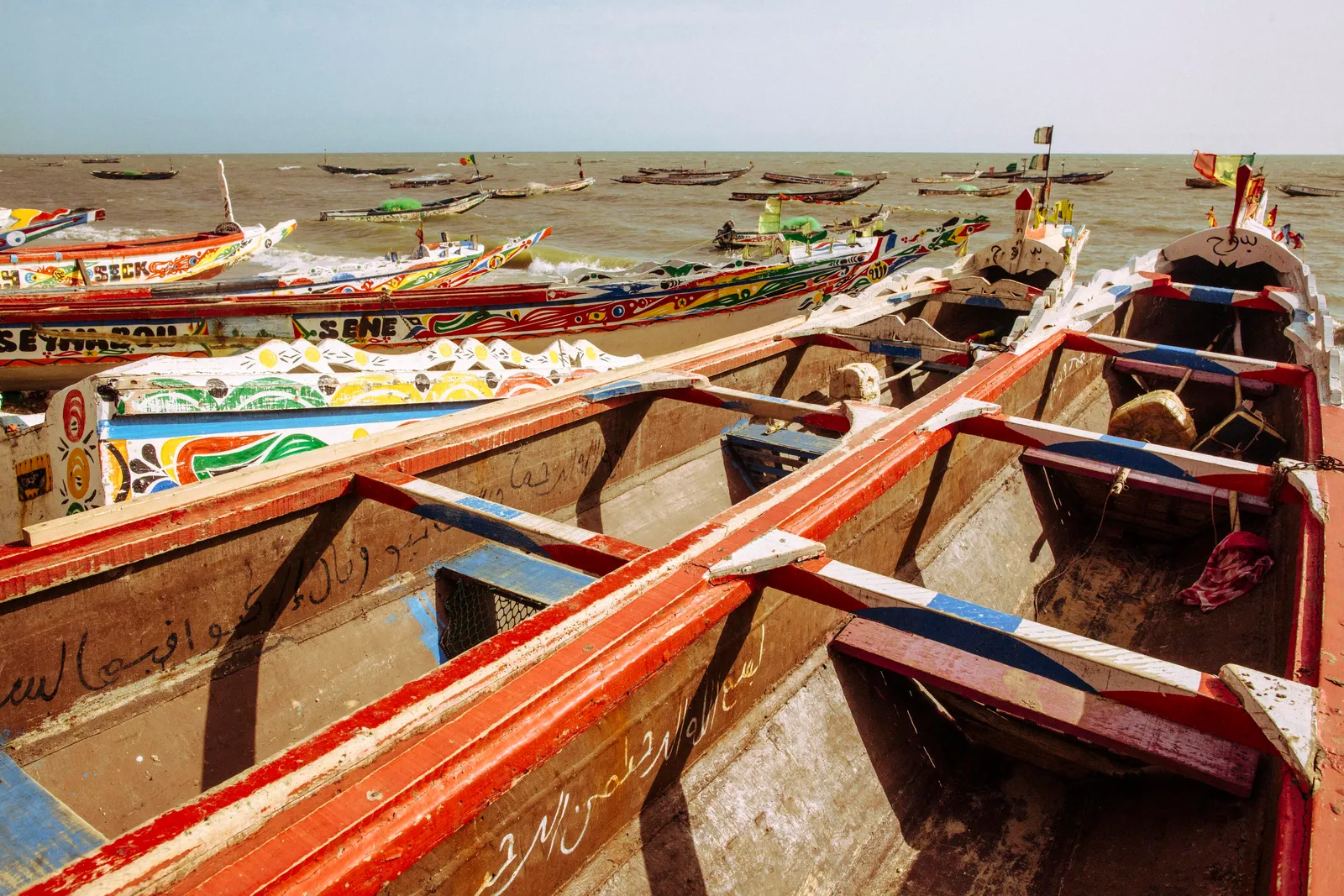
Banjul sits on an island where the river meets the Atlantic, population around 30,000, one of Africa's smallest capitals and not a slick tourist city. The Albert Market is the place for fabrics and produce, the National Museum covers the slave trade and Gambian culture, and Arch 22, a 35-meter triumphal arch Jammeh built to celebrate his own 1994 coup, has the best view over the city from its observation platform, now a viewpoint for the country that voted him out. The Atlantic side of Banjul has wide brown beaches with painted pirogues hauled above the tideline and no tourist infrastructure at all, the most honest place to watch the city's daily rhythm.
Kunta Kinteh Island & Juffureh
A small island in the Gambia River about 25 kilometers upstream from Banjul, surrounded by mangroves and eroding into the water: UNESCO estimates it has shrunk to roughly a sixth of its original size. The ruined walls of the British fort, old cannons and interpretive boards carry the specific weight of a place that processed tens of thousands of people as cargo; the ruins are partly submerged at high tide and the trees are reclaiming the stone. On the north bank opposite is Juffureh, the village where Alex Haley traced his ancestor Kunta Kinte in Roots, a real village of a few hundred people rather than a museum, so approach it as a living place, not an exhibit. The Albreda museum and the ruins of the French trading post nearby are part of the same UNESCO listing. Arrange the excursion as a full-day river trip from Banjul, combining the island, Juffureh and birding along the mangrove banks.
River Gambia National Park, the Baboon Islands
Five forested islands in the Gambia River in the Central River Region, around five hours from Banjul, and a UNESCO Biosphere Reserve home to one of West Africa's most important chimpanzee rehabilitation projects, run by the Chimpanzee Rehabilitation Trust since 1979. The chimps live wild on the islands and are viewed from boats without landing; hippos work the river channels, and the surrounding banks are exceptional for birding: African fish eagle, African jacana, herons, pelicans and multiple kingfisher species. Base yourself at Janjanbureh (Georgetown), a quiet river town on its own island with a colonial past and the Freedom Tree, where escaping slaves could once claim liberty.
Wassu Stone Circles
On the north bank in the Central River Region, also around five hours from Banjul: prehistoric megalithic circles of dark laterite stone, one to two and a half meters tall, standing in clusters across the wider Senegambia landscape, the most concentrated field of megalithic stone circles outside Europe. Dated to roughly 200-1200 CE and believed to mark burial sites of an unknown civilization, with over 1,000 individual monuments across the region. UNESCO listed since 2006. The site museum has the background; the long-standing site caretaker has better stories, and the laterite glows richest in morning and late-afternoon light.
Sanyang & Tanji
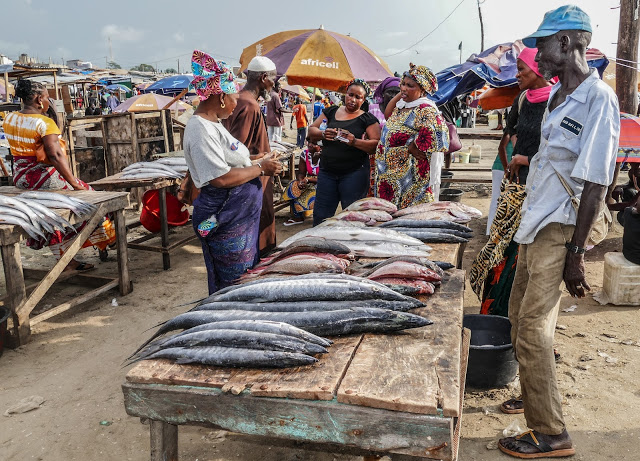
Sanyang Beach, also called Paradise Beach, is one of the finest stretches of Atlantic coast in the country: wide, golden, no resort development, backed by a fishing village, with a handful of simple beach restaurants grilling fresh barracuda at plastic tables in the shade. Tanji, a working fishing village between Kololi and Sanyang, has one of West Africa's most visually dramatic scenes at its fish market: hundreds of painted pirogues, thousands of fish drying in the sun, best seen as the boats come in near sunset. The adjacent Tanji Bird Reserve is the country's best site for shorebirds and coastal species.
Kartong
South of Sanyang toward the Senegal border, Kartong is quieter still: mangrove creeks for kayaking, a small reptile farm, and a coastline that sees a fraction of Kololi's traffic. The contrast between this stretch and the commercial energy of the Senegambia Strip is total, and worth experiencing both to understand the range the Gambian coast actually offers.
Abuko Nature Reserve
The Gambia's first protected area, established in 1968: 105 hectares of gallery forest and savannah about 15 kilometers from Banjul, and the most accessible quality wildlife site in the country. Green vervet and red colobus monkeys are habituated to visitors, crocodiles rest in the pools, and over 270 bird species have been recorded, including the superb sunbird and African pygmy kingfisher. Walkable in a half-day from any coastal hotel.
Makasutu Culture Forest & Kachikally
Makasutu, meaning "holy forest" in Mandinka, is a 1,000-acre reserve of mangrove, gallery forest and savannah near Brikama, developed as a community eco-tourism project: mangrove boat trips, guided forest walks with strong birding, and a traditional market run by the local Kembujeh community. Kachikally Crocodile Pool in Bakau is a different kind of site entirely: a freshwater pool sacred to the Mandinka people, associated with fertility, where the resident Nile crocodiles are wild but docile enough to approach under a custodian's guidance. It has functioned as a genuine sacred site, not a tourist stunt, for decades.
Hidden gems beyond the main circuit
The zones above cover a first trip well. With extra days or a repeat visit, these reward the detour.
Roots Homecoming Festival
A week of cultural events, performances and diaspora pilgrimages to Juffureh and Kunta Kinteh Island, established in 2003. The most emotionally charged time to see the heritage sites in context.
Bao Bolong Wetland Reserve
A Ramsar-listed wetland rarely visited by tourists, worth the overnight trip for specialists: Pel's fishing owl at night, violet turaco, and migratory waders in season.
Traditional wrestling (laamb)
Weekend wrestling tournaments on sandy grounds across the country: drummers, griots praising the wrestlers, and a festive local crowd few tourists ever see. Ask your hotel about upcoming matches.
Culture & Etiquette
Gambian social life runs on unhurried greetings: Asalamu aleikum (peace be upon you), a question about your family, a question about your health, before any actual business gets discussed. The country is roughly 90 percent Muslim with a genuine tradition of tolerance: Christians and Muslims typically attend each other's major celebrations, and the call to prayer coexists easily with church bells in the same towns. The kora, a 21-string instrument built from a gourd, is the sound of the country: the instrument of the griot, the hereditary praise-singers and oral historians of Mandinka noble families, and The Gambia is one of the best places in the world to hear it played live.
Do
- Let greetings breathe. Rushing straight to your question after a bare hello reads as rude. Ask how someone's family is, ask how their health is, then get to business.
- Ask before photographing people. Expect to pay occasionally, and never photograph mosques, government buildings or military installations without explicit permission.
- Accept an attaya invitation. The tea ceremony, three rounds over 20 to 40 minutes, is an invitation to sit and be present, not a sales pitch.
- Dress modestly away from the resort strip. Cover shoulders and knees in Banjul, markets, mosques and rural villages; swimwear is fine on Kololi beach itself.
- Bring kola nuts or Café Touba if invited to a family compound. Never bring alcohol as a gift.
Don't
- Engage extended conversation with bumsters if you don't want a guide. A firm, polite single "no thank you" without prolonged eye contact ends it faster than debate.
- Display same-sex affection publicly. Homosexuality is criminalized in The Gambia; discretion is essential throughout the country.
- Swim without asking locally first. Currents on the Atlantic beaches are strong and vary by stretch; ask fishermen or hotel staff which sections are safe that day.
- Rush an attaya round or a market negotiation. Both run on a slower rhythm than most visitors are used to, and hurrying reads as impatience with the person, not the process.
- Underestimate the sun. On river excursions especially, there is no shade for hours; sunscreen and a hat are not optional.
Deeper culture: the kora, wrestling and the Roots Homecoming
The kora. Native to the wider Senegambia region, the kora produces a shimmering, rippling sound built for storytelling rather than melody in the European sense. It's the instrument of the djali, the hereditary praise singer and historian for specific Mandinka noble families. Hear it at cultural centers and beach bars in Kololi and Serrekunda, or arrange a workshop through your hotel to understand its social function, not just its sound.
Laamb, traditional wrestling. Mandinka boroh and the related Wolof laamb tradition are popular nationwide, with weekend nawetan tournaments on sandy grounds in the dry season. Drummers, griots praising the wrestlers, protective rituals before each match: a genuinely local scene that rewards asking your hotel about the nearest upcoming match.
The Roots Homecoming Festival. Established in 2003, held each April or May, bringing the African-American, Afro-Caribbean and Afro-European diaspora to Juffureh and Kunta Kinteh Island for a week of performances, visits and community engagement. It is the single most significant time to experience the heritage sites, and hotel rooms on the coast book out well in advance.
Food & Drink
Gambian food runs on rice and fish: the Atlantic supplies fresh barracuda, grouper, bream and sole, the river adds tilapia and catfish, and the flavor base is groundnut oil, fermented locust beans, palm oil and fresh chili. It isn't a sophisticated cuisine and doesn't try to be, and the best of it is found at beach stalls and local chop houses rather than hotel restaurants, where a full lunch costs a few dollars rather than hotel-restaurant markups.
Domoda $2-4
The national dish: a rich peanut and groundnut stew with beef, chicken or fish, tomatoes, sweet potato and palm oil, served over rice. Every family's version is slightly different, and the best one you eat is likely from a home cook or small chop house, not a hotel.
Benachin
The Gambian take on West Africa's one-pot rice dish: rice cooked in a spiced tomato and onion base with fish or meat and vegetables, all in the same pot. Related to Senegal's thiéboudienne but drier and differently spiced, and the communal dish of choice at family gatherings.
Grilled beach fish $4-7/kg
At Sanyang, Tanji and coastal beach stalls: fresh barracuda, snapper or grouper grilled over charcoal, served with rice, fried plantain and a lime salad. Ordered by weight, about a kilo of barracuda for roughly $5, feeding two.
Chicken Yassa
Chicken marinated in lemon, mustard, garlic and hot pepper, then grilled or fried and simmered back into the sauce with onions, served over rice. Sharp, tangy and one of the easier entry points for first-time visitors to Gambian food.
Superkanja
Okra stew with fish, boiled in palm oil and finished with onion and pepper over rice. Thick, slightly sticky in the way good okra dishes are meant to be, and a staple rather than a novelty.
Chere (millet couscous)
Coarser and nuttier than North African semolina couscous, common upriver in the Central and Upper River Regions, served with fish or meat stew, or with sour milk in Fula communities for a lighter version.
When to Go & Itineraries
November to April, the dry season, is the best window for nearly everyone: cooler temperatures, minimal rain, and the arrival of Palearctic migrant birds from Europe that make this the peak birdwatching period. June to October brings heavy rain, high humidity and the year's most serious malaria risk, but also empty coastlines, lower prices and a greener, more dramatic landscape for travelers comfortable with simpler logistics.
Both seasons compared, with temperatures
| Season | Verdict | Temps | Notes |
|---|---|---|---|
| Nov-Apr | Best | 25-30°C | Dry, low humidity, peak birding, peak tourist season on the coast |
| Jun-Oct | Budget option | 28-34°C | Heavy rain especially Aug-Sep, upcountry roads can flood, far fewer tourists, lower prices |
The Roots Homecoming Festival typically falls in April or May, right at the seam between the two seasons; book well ahead if visiting then.
Itineraries
A week covers the coastal strip, Banjul and Kunta Kinteh Island comfortably. Ten days adds a proper upcountry loop to the Baboon Islands and Wassu without rushing either.
- Days 1-2
Kololi & the coast. Settle in, walk Kotu Beach, morning birding at Bijilo Forest Park and Kotu Pond, evening on the Senegambia Strip.
- Day 3
Banjul. Albert Market, the National Museum, Arch 22 for the view over the river, domoda for lunch near the market.
- Day 4
Kunta Kinteh Island & Juffureh. Full-day river trip from Banjul, combining the island, Juffureh village and mangrove birding.
- Day 5
Abuko Nature Reserve & Kachikally. Morning at Abuko for monkeys and birds, afternoon at the sacred crocodile pool in Bakau.
- Days 6-7
Tanji & Sanyang. Tanji fish market at sunset, then a full day at Sanyang Beach for grilled barracuda and the Atlantic.
- Days 1-4
The 7-day route, compressed: coast and birding, Banjul, Kunta Kinteh Island, Abuko and Kachikally.
- Day 5
Makasutu Culture Forest. Mangrove boat trip, forest walk, the community market at Brikama.
- Days 6-8
Upcountry. Drive to Janjanbureh (5 hours), boat trip to the Baboon Islands for chimps and hippos, afternoon at the Wassu Stone Circles.
- Days 9-10
South coast. Tanji fish market and bird reserve, a full day at Sanyang, optional Kartong for mangrove kayaking.
Getting there & around
Banjul International Airport (BJL) is the only international airport, with Brussels Airlines, British Airways (seasonal), Condor, Edelweiss and Transavia connecting from the UK and Northern Europe, plus Air Senegal via Dakar. From North America, route through London or Brussels. On the coastal strip, green tourist-registered taxis are the standard for independent travel; there are no meters, so agree the fare before getting in. Gelly-gelly shared minibuses cover longer routes cheaply. For upcountry, hire a car and driver through your hotel, roughly $60-80 a day.
All transport options with prices: taxis, ferries, minibuses
| Option | Price | Notes |
|---|---|---|
| Green tourist taxi | ~$3-12 | No meters, agree fare first. Airport to Kololi runs about D800 (~$11) at the official rate. |
| Gelly-gelly minibus | Very cheap | Shared minibuses on fixed routes: Banjul-Serrekunda-Brikama and beyond. Cheap, crowded, functional. |
| Banjul-Barra ferry | ~35 GMD (~$0.50) | Essential for north-bank travel. Notionally 30 minutes, allow 2 hours for loading vehicles and livestock. |
| Upcountry car + driver | ~$60-80/day | Arrange through your hotel. 4x4 not strictly necessary in dry season, recommended for upcountry tracks in the rains. |
Practical prep: buy an Africell or QCell SIM at the airport for cheap data; 4G covers Banjul and the coast well but drops off fast upcountry. Malaria prophylaxis should be arranged with a travel clinic 4 to 6 weeks before departure, and a yellow fever certificate is required if arriving from a yellow fever-endemic country. Avoid boda-boda motorcycle taxis; there's no Uber or Bolt in the country. GetTransfer offers fixed-price airport pickups from BJL if you'd rather not negotiate on arrival.
Where to stay
Budget guesthouses
Basic guesthouses on and around the coastal strip, walkable to the beach and the Senegambia Strip's restaurants. The cheapest and most flexible way to base yourself in Kololi or Kotu.
Coastal resort hotels
Senegambia Beach Hotel and Kairaba Beach Hotel anchor the strip with extensive grounds and direct beach access; Ocean Bay Hotel & Resort is a further option toward Bakau. Mid-range, package-tourism-oriented, and the default choice for most visitors.
Boutique & eco-lodges
Coco Ocean Resort & Spa in Bijilo and Ngala Lodge toward Cape Point are the smarter end of the coast; the floating rooms at Mandina Lodges inside Makasutu Culture Forest are the country's most distinctive stay.
Janjanbureh riverside stays
Simple riverside accommodation in Janjanbureh (Georgetown) is the base for the Baboon Islands and Wassu; book through your Banjul tour operator alongside the transport, since options are limited and fill during the Nov-Apr peak.
Budget Planning
The Gambia is affordable by most international standards, with one exception: all-inclusive beach resorts in peak season, which carry the same pricing as the European package-tourism market they're built for. Street food, local transport and reserve entry fees are all genuinely cheap.
- Basic guesthouse $15-25
- Chop houses & beach stalls $2-7
- Gelly-gelly minibuses
- Reserve entry fees under $5
- Coastal resort hotel $50-90
- Mix of local & tourist restaurants
- Green taxis & organized day trips
- Kunta Kinteh Island excursion
- All-inclusive resort package
- In-resort dining & activities
- Organized excursions throughout
- Private guides & transfers
Quick reference prices: food, transport, entry fees
| Domoda at a local chop house | $2-4 |
| Grilled barracuda, beach shack (per kg) | $4-7 |
| Julbrew beer (bar) | $1-2 |
| Abuko Nature Reserve entry | ~$3.50 |
| Bijilo Forest Park entry | ~$4 |
| Kunta Kinteh Island full-day excursion | $60-100 pp |
| Green taxi, short hop | $3-6 |
| Airport to Kololi (official taxi rate) | ~$11 |
Prices reflect August 2026 research and drift with the dalasi's exchange rate, which has been volatile. Treat them as a planning baseline, not a quote.
Visa & Entry
The Gambia has a permissive visa regime for most Western travelers: citizens of the US, UK, EU member states and most Commonwealth countries enter visa-free for up to 90 days, with no pre-arrangement needed beyond presenting a valid passport at immigration. Travelers from other countries apply for an e-visa in advance at the government's official visa portal, not the third-party sites that often rank higher in search and charge extra for the same thing.
✓ Valid passport
At least six months validity from date of entry, with blank pages for stamps.
⚠ Yellow fever certificate
Required only if arriving from a yellow fever-endemic country. Not typically checked for travelers arriving directly from Europe or North America, but recommended regardless given regional disease patterns.
✓ Proof of funds
May be requested at immigration; have an idea of your accommodation and onward plans ready.
⚠ LGBTQ+ travelers
Homosexuality is criminalized in The Gambia. Public displays of same-sex affection carry real legal risk; discretion is essential throughout the country.
| The Gambia | Senegal | |
|---|---|---|
| Scale | Small enough to cross in a day, low logistical overhead | Much larger, more ground to cover between highlights |
| Language | English official, easy for Anglophone visitors | French official, Wolof widely spoken |
| Birdwatching | 580+ species, exceptional density for the size | Also excellent, especially Djoudj National Park |
| Heritage sites | Kunta Kinteh Island, intimate and specific | Gorée Island, a larger and more visited slave-trade site |
| Budget | $40-70/day covers most independent travel | Broadly similar, Dakar runs pricier than the regions |
Safety, Solo Women & Family
The Gambia is genuinely one of the safer countries in West Africa for visitors: violent crime against tourists is rare, and millions of visitors have come through the coastal resorts over the decades without serious incident. The real risks are road accidents, malaria and strong Atlantic currents, not crime, and the most common friction point, beach touts known as bumsters, is a persistent annoyance rather than a danger.
Road traffic
The leading cause of serious tourist incidents. Vehicles are often poorly maintained and roads have unmarked hazards; avoid night driving upcountry and don't rush a fatigued driver.
Malaria
Present year-round across the whole country, including the coast. Prophylaxis, DEET repellent and covering up after dusk are not optional precautions.
Swimming currents
Atlantic beaches have strong, variable currents, and drownings occur most years among visitors who underestimate the sea. Ask fishermen or hotel staff which stretch is safe before swimming.
Two more things worth knowing: pickpocketing and checkpoints
Pickpocketing is documented in crowded spaces: Albert Market, the Banjul-Barra ferry and its landing stages, and busy beach areas. Keep bags secured and phones out of sight in these specific spots; the rest of the coastal strip is comparatively low-risk.
Government checkpoints on upcountry roads are routine and not a sign of danger. Cooperate pleasantly and carry your passport or a copy of it at all times outside the coastal strip.
The 3 scams to actually know about
The Gambia is not a high-scam destination by regional standards, but three patterns catch uninformed visitors on the coastal strip. Knowing them going in avoids nearly all of it. The full country list lives on our Gambia travel alerts page.
The bumster "friend"
A friendly stranger claims to recognize you or to work at your hotel, builds rapport over a few days, then asks for money, gifts or help with travel documents. Politely decline extended engagement with unsolicited "old friends" you don't actually recognize.
Street currency exchange
Informal money changers on the strip offer rates that sound better than the bank but shortchange with sleight of hand. Exchange at banks or hotels, and count change on the spot.
Unlicensed excursion touts
Independent operators offering Kunta Kinteh Island or river trips at the waterfront can be unreliable on safety and quality. Book through your hotel or a licensed Banjul tour operator instead.
Solo women travelers
The Gambia is generally fine for solo women, especially on the coastal strip where the tourism industry is well established. The main friction is the same bumster attention every visitor gets, sometimes more persistent toward women; a firm, polite refusal without extended eye contact or conversation is the standard response, and walking the beach alone after dark is best avoided, as it would be anywhere. Dress modestly away from the resort strip and in rural areas. Full detail on our Solo Woman Explorer pages.
Emergency numbers
Hospitals and embassies in Banjul
Edward Francis Small Teaching Hospital (+220 3657558) in Banjul is the country's largest referral hospital. For serious emergencies, medical evacuation to Dakar, Senegal, is the realistic option; confirm your travel insurance explicitly covers evacuation there.
- UK (High Commission)
- +220 449 5133
- USA
- +220 439 2856
Ambulance coverage upcountry is limited. Outside Banjul and the coastal strip, a taxi to the nearest hospital is often faster than waiting for an ambulance. Confirm your expected return time with your hotel before any upcountry excursion.
Family travel & pets
The Gambia works well for families with a bit of planning: the wildlife at Abuko and Kachikally lands well with kids, the coastal resorts have calm swimming pools as an alternative to the sometimes-strong Atlantic currents, and Gambian hospitality extends warmly to children everywhere. Malaria prophylaxis needs pediatric-specific planning well before travel, discuss options with a travel clinic rather than assuming adult dosing applies.
Kids at the beach resorts and bringing pets
Coastal resorts with children: Kololi's larger hotels have pools and calmer supervised settings than open beach swimming, a sensible choice for younger kids given the Atlantic's currents. Abuko Nature Reserve's habituated monkeys and Kachikally's crocodiles are memorable, low-risk wildlife encounters for kids old enough to follow guide instructions closely.
Pets: bringing pets to The Gambia involves a veterinary health certificate and current rabies vaccination, arranged well ahead through a vet familiar with West African import rules; this is not a routine or common trip for pet owners and requires specific planning beyond the scope of a standard tourist visit.
The Gambia FAQ
Is The Gambia safe to visit?
Yes, one of West Africa's safer countries for tourists. Violent crime against visitors is rare. The real risks are road accidents, malaria and strong Atlantic currents, not crime, and beach touts called bumsters are a persistent annoyance rather than a danger.
Do I need a visa for The Gambia?
Citizens of the US, UK, EU and most Commonwealth countries enter visa-free for up to 90 days. A yellow fever certificate is required only if arriving from a yellow fever-endemic country.
What is the best time to visit The Gambia?
November to April, the dry season: cooler, low humidity, and peak birdwatching as Palearctic migrants arrive from Europe. June to October is hot, wet and humid, with far fewer tourists and lower prices.
How many days do you need in The Gambia?
A week covers the coastal strip, Banjul and Kunta Kinteh Island comfortably. Ten days adds an upcountry trip to the Baboon Islands and the Wassu Stone Circles.
Where do most tourists stay in The Gambia?
Kololi, on the Senegambia Strip, is the main resort base: the highest concentration of hotels, restaurants and nightlife, with Kotu and Bijilo as quieter neighbors nearby.
Is The Gambia expensive?
No. Budget travelers manage on $40-70 a day. The exception is peak-season, all-inclusive beach resorts, which carry European package-tourism prices.
What is Kunta Kinteh Island?
A UNESCO-listed island in the Gambia River that was a major Atlantic slave-trading post, and the site Alex Haley's novel Roots made globally known. The ruined fort and nearby Juffureh village are reached by boat from Banjul.
Is The Gambia good for birdwatching?
Exceptional. Over 580 species have been recorded in a country smaller than Yorkshire, boosted November to April by Palearctic migrants wintering from Europe. Abuko Nature Reserve and Tanji Bird Reserve are the standout accessible sites.
What language is spoken in The Gambia?
English is the official language, the legacy of British colonial rule, and is widely spoken in tourist areas. Mandinka, Wolof and Fula are the main local languages.
Is The Gambia safe for solo female travelers?
Generally yes, especially on the coastal strip. The main friction is persistent attention from bumsters rather than danger; a firm, polite refusal without prolonged engagement handles it.
What currency is used in The Gambia?
The Gambian Dalasi (GMD). US dollars and euros are widely accepted in tourist areas, but upcountry is cash-only in dalasi.
Is The Gambia surrounded by Senegal?
Almost entirely. The Gambia is a narrow strip following the Gambia River, bordered by Senegal on three sides, with only its short Atlantic coastline as an opening. Combining a Gambia trip with Senegal's Casamance region is common.
What Stays With You
There is a monument in the center of Banjul worth climbing: Arch 22, a 35-meter triumphal arch that Yahya Jammeh built in 1996 to celebrate his own 1994 coup. You take the elevator to the top and see the whole city below, the ferry terminal, Albert Market, the river mouth, the fishing beach with its painted pirogues going about the day's business in the heat. The arch was built to glorify a man who took power by force and ruled for 22 years through fear. Now it's a viewpoint, used by the country that voted him out.
That's the thing that stays with you here more than the birds or the beaches, though both are genuinely excellent: a small country that survived a dictatorship, decided through the ballot box that it was over, and made the decision hold. Go for the Smiling Coast. Leave understanding what that nickname actually cost.