
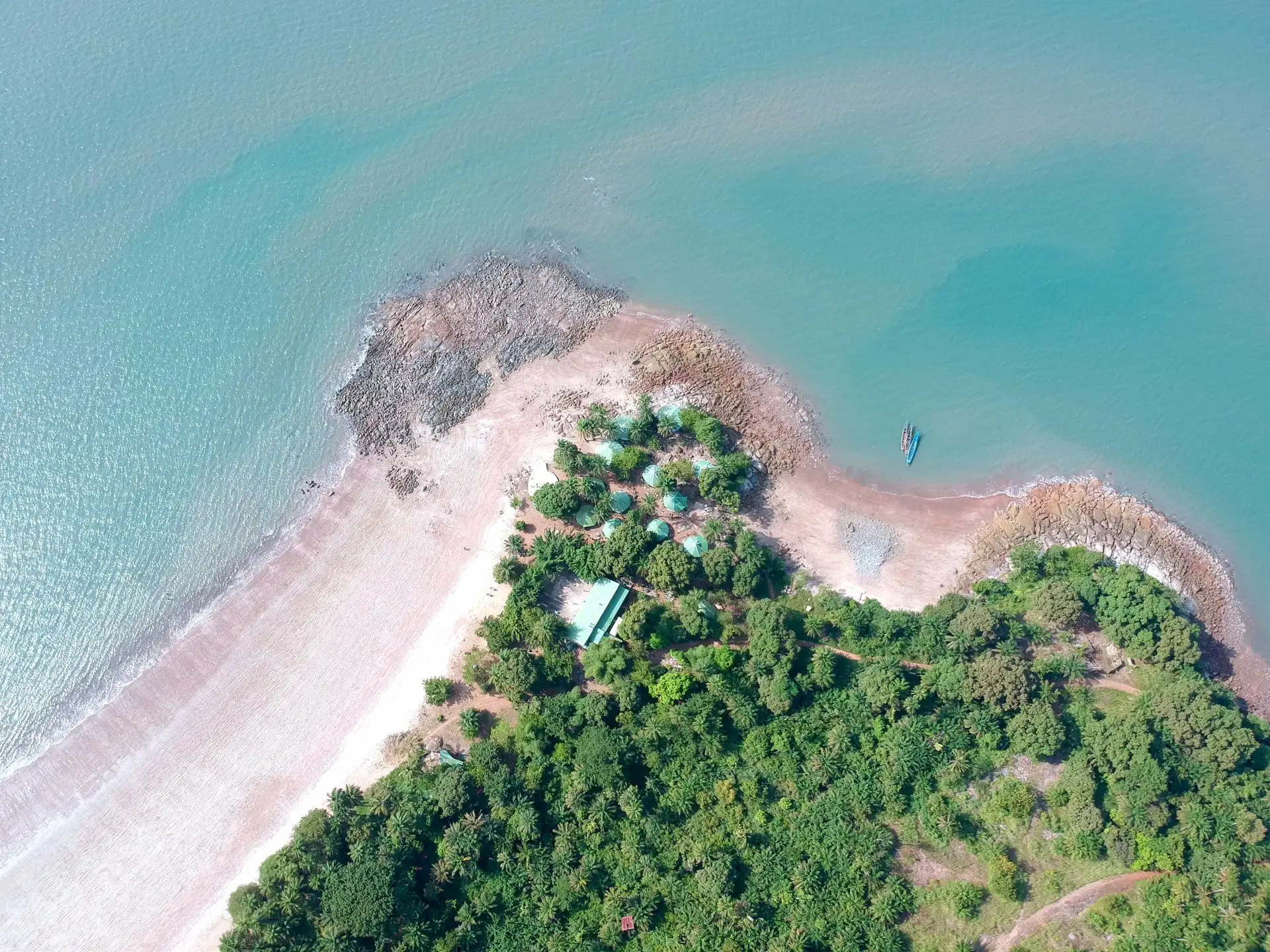
Guinea
West Africa's water tower. The highlands where the Niger, Senegal, and Gambia rivers are born, the music that shaped an entire continent, and a kind of raw travel that rewards patience more than planning.
What You're Actually Getting Into
Guinea is not a country that appears on most travel lists. Fewer than 50,000 international visitors arrive each year, and a good portion of those are business travelers connected to the mining industry, not tourists. There is no well-worn backpacker trail, no Lonely Planet-approved hostel circuit, no Instagram-famous viewpoint with a convenient parking lot. What Guinea has instead is something rarer: landscapes that would be world-famous if they existed in a country with better roads, a music tradition that influenced everything you've heard come out of West Africa, and a kind of unvarnished human warmth that you encounter precisely because so few foreigners pass through.
The Fouta Djallon highlands in the country's center are the headline. This is where three of West Africa's greatest rivers begin: the Niger, the Senegal, and the Gambia all originate in these mountains. The plateau sits between 700 and 1,500 meters, covered in waterfalls, deep canyons, Fulani villages with thatched-roof compounds, and hiking routes that haven't been marked by anyone other than the people who live on them. Kambadaga Falls drops 80 meters in two cascading stages. The so-called Grand Canyon of Guinea near Doucki stretches over 70 kilometers. These are not minor landscapes.
But the infrastructure to reach them is genuinely rough. Roads outside Conakry deteriorate from patchy tarmac to rutted laterite within an hour. Bush taxis are the primary transport and they leave when full, not on schedule. Power outages happen daily. Water shortages happen weekly. The political situation is complicated and ongoing. This is a country that requires flexibility, tolerance for discomfort, and a genuine interest in the place beyond its scenery.
If that sounds like something you're up for, Guinea will give you something most countries can't: the feeling of being genuinely somewhere that almost nobody you know has been.
Guinea at a Glance
A History Worth Knowing
Before it was a French colony, before the borders were drawn, this region was home to some of West Africa's most powerful empires. The Mandinka people of Upper Guinea were part of the Mali Empire, which at its height in the 14th century controlled more gold than almost anywhere on earth. The Fulani of the Fouta Djallon highlands established an Islamic theocracy in the 1720s that lasted over a century and a half, building mosques, schools, and trade routes that still echo in the region's architecture and culture today.
France colonized Guinea in the late 19th century, absorbing it into French West Africa. The colonial period brought forced labor, extraction of resources, and the kind of structural inequality that post-independence governments inherited and, in Guinea's case, deepened. What makes Guinea's colonial exit remarkable is how it happened.
In 1958, Charles de Gaulle offered France's African colonies a choice: join a French community with limited autonomy, or leave entirely. Guinea was the only colony to say no. Ahmed Sekou Toure, the labor leader turned politician, told de Gaulle that Guinea preferred freedom in poverty to riches in slavery. The French response was immediate and vindictive. They withdrew overnight, taking equipment, infrastructure plans, and even telephone cables with them. They reportedly destroyed what they couldn't take.
Sekou Toure became Guinea's first president. What followed was 26 years of authoritarian rule, political purges, a notorious prison camp at Camp Boiro where thousands died, and international isolation. When Toure died in 1984, the military took over under Lansana Conte, who held power for another 24 years until his death in 2008. A brief period of violent military rule under Moussa Dadis Camara included the 2009 stadium massacre in Conakry, where security forces killed over 150 civilian protesters.
Guinea's first genuinely democratic election came in 2010, bringing Alpha Conde to power. But Conde's later attempt to change the constitution and extend his rule provoked a military coup in September 2021 by Colonel Mamady Doumbouya. Despite promises to return to civilian rule, Doumbouya ran in and won a contested presidential election in December 2025. This is the political context you're stepping into. It matters, and it's worth understanding before you go.
Upper Guinea forms part of the Mali Empire under Sundiata Keita. Gold and trade routes flourish.
Fulani establish an Islamic theocracy in the highlands. Lasts over 150 years.
France establishes French Guinea. Forced labor and resource extraction follow.
Guinea becomes the first French African colony to say no to de Gaulle. France retaliates immediately.
Authoritarian rule. Camp Boiro political prison. International isolation.
Alpha Conde wins Guinea's first competitive multiparty election.
Coup by Doumbouya. Contested 2025 election. The country's democratic future remains uncertain.
Top Destinations
Guinea divides naturally into four geographic regions: Maritime Guinea along the coast, Middle Guinea (the Fouta Djallon), Upper Guinea in the northeast savanna, and Forest Guinea in the southeast. Most travelers concentrate on Conakry and the Fouta Djallon, with the Iles de Los as a coastal escape. The southeast, including Mount Nimba, rewards those with more time and tolerance for seriously rough roads.
Conakry
Conakry sprawls along a narrow peninsula into the Atlantic, a city of two million that feels like a dense, sun-beaten village in some neighborhoods and a traffic-choked metropolis in others. The Grand Mosque is one of the largest in sub-Saharan Africa. Marche Madina is sensory overload in every direction. The National Museum is modest but worth an hour for its mask collection. Conakry's real draw is its nightlife: this is a city where live music still defines the social calendar, where clubs like MLS draw crowds that dance until the power cuts out. Give it two days. One for orientation and culture, one for markets and evening music.
Fouta Djallon
The reason most adventure travelers come to Guinea. The Fouta Djallon is a highland plateau between 700 and 1,500 meters, laced with waterfalls, deep valleys, and traditional Fulani villages connected by footpaths that haven't changed in centuries. Base yourself in Labe, the regional capital, or the smaller towns of Dalaba (the highest town in Guinea), Pita, or Doucki. The Kambadaga Falls near Pita are an 80-meter double cascade. The Grand Canyon of Guinea near Doucki is a 70-kilometer rift valley that genuinely earns the name. Budget five to seven days. You need a local guide for most hikes. Hassan Bah in Doucki is well-known among the small community of travelers who make it here.
Iles de Los
Three islands off the Conakry peninsula: Kassa, Roume, and Tamara. Locals take boats over on weekends to swim and eat grilled fish on the beach. The pace drops immediately. Kassa is the most accessible and has basic facilities. Tamara is quieter and less developed. These are not resort islands. They're fishing villages with good sand and warm Atlantic water. A day trip from Conakry by motorboat takes about 30 minutes.
Mount Nimba
A UNESCO World Heritage Site shared with Cote d'Ivoire and Liberia. Mount Nimba rises to 1,752 meters and harbors species found nowhere else on earth, including viviparous toads that give birth to live young instead of laying eggs. Getting here requires commitment: Forest Guinea's roads are the country's worst. But the biodiversity is extraordinary, and the mountain's grasslands and forests feel genuinely remote.
Dalaba
The highest town in Guinea, sitting at about 1,200 meters with noticeably cooler air than the coast. The Chutes de Ditinn nearby are the tallest falls in the country at 80 meters. The town itself has a colonial-era feel, with old villas scattered among mango trees. It was once a hill station for French administrators escaping Conakry's heat. The market is small, the pace is slow, and the surrounding trails are excellent.
Upper Niger National Park
In the northeast of Guinea, where the savanna begins. This is where the Niger River, West Africa's lifeblood, starts its 4,180-kilometer journey to the sea. Wildlife includes hippos, chimpanzees, and diverse birdlife. Access is difficult and facilities are minimal, but for wildlife enthusiasts willing to rough it, this is Guinea at its most untouched.
Culture & Etiquette
Guinea is a predominantly Muslim country (roughly 85%) with a culture built around hospitality, community, and respect for elders. The warmth of Guinean people toward strangers is not performative. It comes from a deep social ethic of welcoming guests. You will be invited into homes, offered food, and helped by people who have no reason to help you other than the fact that you're there. This generosity deserves to be met with respect for local norms, even when they feel unfamiliar.
Guinea has more than two dozen ethnic groups. The three largest are the Fulani (Peul), concentrated in the Fouta Djallon; the Malinke (Mandinka), in Upper Guinea; and the Susu, along the coast and in Conakry. Each has distinct traditions, languages, and customs. Learning even a few words of greeting in the local language of wherever you are makes a visible difference in how people receive you.
Greetings in Guinea are long, detailed, and genuinely important. Ask about health, family, work. Rushing through or skipping greetings is considered rude. In Pular: "Tana alaa?" (Is there no trouble?). In Susu: "Tanante?" Learn these.
For eating, giving, receiving, and handshakes. The left hand is considered unclean. This applies everywhere in the country without exception.
Guinea is relaxed by regional standards, but covering shoulders and knees is respectful, especially in rural areas and around mosques. Women are not required to cover their heads but may choose to in conservative areas.
Refusing tea or food in someone's home is a genuine social misstep. Guinean mint tea (attaya) is served in three rounds and the process is part of the hospitality. Sit, talk, drink all three.
Always. Without exception. Many people are happy to be photographed once asked. Some are not. Photographing military, police, or government buildings is prohibited and will cause you serious problems.
Guinea's political situation is sensitive. People have strong opinions but expressing them publicly, especially about the current government, carries real risk. Don't initiate political conversations with strangers.
During the fasting month, eating, drinking, or smoking in public during daylight hours is deeply disrespectful. Restaurants may still serve foreigners, but be discreet.
Use your chin or an open hand to indicate direction. Pointing directly at someone is considered aggressive.
Sitting with the soles of your shoes or feet pointed at someone is considered disrespectful. Be conscious of how you sit, especially on the floor.
Things move at their own pace in Guinea. Buses leave when full. Meetings start when people arrive. Fighting this will exhaust you. Adapting to it will teach you something.
Music Culture
Guinea's contribution to African music is enormous. The Bembeya Jazz National, Les Amazones de Guinee, and Mory Kante all came from here. Sekou Toure's government, whatever its other failures, invested heavily in national music ensembles. The result was a golden era of Manding jazz and orchestral music in the 1960s and 70s that influenced musicians across the continent. Conakry's live music scene is still thriving. Ask around for where bands are playing on any given night.
Islamic Traditions
Guinea practices a generally moderate form of Islam. The call to prayer punctuates the day. Friday is the main prayer day and many businesses close at midday. During Ramadan, the rhythm of the entire country shifts. If you're invited to a mosque, remove your shoes, dress appropriately, and follow the lead of whoever invited you.
Hospitality Code
In rural Guinea especially, guests are sacred. You will be offered the best seat, the best food, the most comfortable sleeping arrangement. Reciprocate by bringing a small gift: sugar, tea, kola nuts, or fresh bread are always appropriate. Do not offer money to a host family unless they are running a formal guesthouse.
Clothing & Appearance
Guineans take great pride in their appearance. The boubou, a flowing robe worn by both men and women, is everyday wear in much of the country. You'll see immaculately dressed people everywhere regardless of economic circumstances. Showing up to someone's home disheveled or in torn clothing communicates disrespect, even if you've been on a muddy trail all day. Make an effort where you can.
Food & Drink
Guinean food is built around rice and sauces. That might sound simple, and the base ingredients are, but the sauces are where everything happens. Peanut sauce, cassava leaf sauce, sweet potato leaf sauce, okra sauce, tomato sauce with smoked fish. Each region has its own variations, its own balance of palm oil, chili, and slow-cooked protein. The food is hearty, filling, and deeply satisfying once you adjust your expectations away from variety-per-meal and toward depth-per-dish.
Street food is where most travelers eat, and it's where the best value lives. Small cook shops (gargottes) near markets serve lunch from around 11am to 2pm. You sit on a bench, eat from a communal bowl or a metal plate, and pay between 10,000 and 25,000 GNF ($1.15 to $2.90). The food is always fresh because it's cooked that morning and sold by afternoon.
Mafe Tiga (Peanut Sauce)
Probably Guinea's most widely eaten sauce. Unsweetened peanut butter cooked down with tomatoes, onions, chili, and meat or fish into a thick, rich stew served over rice. Every household makes it differently. Every household thinks theirs is the best. They're all pretty good. This is West African comfort food at its most fundamental.
Poulet Yassa
Chicken marinated in lemon, mustard, and onions, then grilled or braised. Originally Senegalese but considered Guinea's unofficial national dish. The amount of caramelized onions in a good yassa borders on absurd. Served over rice with a side of fiery chili sauce that you can add or ignore depending on your pain threshold.
Sauce Feuille
The leaf sauces. Cassava leaf sauce with palm oil and smoked fish is the most common, but sweet potato leaf sauce (maffi hakko) is equally good and harder to find outside Guinea. The leaves are pounded or blended into a thick, dark green sauce that looks intimidating and tastes like the best thing you didn't know you needed.
Tori (Fufu)
Guinea's version of fufu, made from pounded cassava or plantain into a smooth, stretchy dough. Eaten with sauce by tearing off a piece and dipping. Unlike Ghanaian fufu, Guinean tori can be quite soft, almost pourable. Topped with okra sauce, it's a standard everyday meal across the country.
Attaya (Mint Tea)
Not a drink. A ceremony. Three rounds of green tea brewed with fresh mint and an alarming amount of sugar, poured back and forth between small glasses until it foams. The first round is bitter like death, the second is mild like life, the third is sweet like love. Or so the saying goes. Refusing attaya when offered is genuinely bad form.
Bissap
Hibiscus tea, served cold and sweet. Bright red, tart, refreshing, and available everywhere. Guinea's heat makes this more of a necessity than a preference. It's rich in vitamin C and tastes better than anything else you'll find to drink when the temperature hits 35 degrees.
When to Go
Guinea has two seasons: wet and dry. The dry season from November to April is when most travelers visit, and for good reason. Roads are passable, hiking trails are accessible, and you're not fighting daily downpours that can dump 300mm on Conakry in a single day during the peak of the wet season. November is the sweet spot: the rains have just stopped, the landscape is still green, and the waterfalls in the Fouta Djallon are flowing at full volume.
Early Dry
Nov - JanThe ideal window. Rains have ended, everything is green, waterfalls are full, roads are drying out. Temperatures in the Fouta Djallon are comfortable for hiking. Conakry is hot but not unbearable.
Late Dry
Feb - AprRoads are at their best. Landscape becomes drier and dustier as the season progresses. Waterfalls lose volume by March. Temperatures climb, especially in the lowlands. Still perfectly viable for travel.
Rainy Season
May - OctGuinea is one of the wettest countries in West Africa. Conakry can receive over 4,000mm of rain annually, most of it between June and September. Roads wash out. Some highland trails become impassable. Some hotels in the Fouta Djallon close. That said, the waterfalls are spectacular and the landscape is at its most dramatic. Travel is possible with flexibility and a high tolerance for delays.
Trip Planning
Ten days to two weeks is reasonable for a first visit covering Conakry and the Fouta Djallon. Less than a week and you'll spend most of your time on roads. More than two weeks opens up Mount Nimba and Upper Guinea, but requires genuine comfort with improvisation. Guinea does not reward rigid itineraries. Build in buffer days. Something will be delayed, rerouted, or simply different from what you planned.
Conakry
Arrive, recover, orient. Visit the Grand Mosque, browse Marche Madina, see the National Museum. Arrange onward transport to the Fouta Djallon. On your second evening, find live music. Ask your hotel for recommendations.
Fouta Djallon
Bush taxi or arranged transport to Labe (8-12 hours depending on road conditions). Base yourself in Labe or Dalaba. Day hikes to Kambadaga Falls, Chutes de Ditinn, and surrounding Fulani villages. Arrange a guide locally.
Return to Conakry
Allow a full day for the return journey. If time permits, stop at the Soumba waterfalls near Dubreka on the way back to the coast.
Conakry & Iles de Los
Two days in the capital: mosque, museum, markets, music. Day three: boat to Kassa Island for beach and grilled fish. Return to Conakry in the afternoon.
Dalaba
Travel to Dalaba via Mamou. Visit Chutes de Ditinn. Walk the old colonial quarter. Enjoy the cooler altitude after Conakry's heat.
Pita & Doucki
Move to Pita for Kambadaga Falls. Continue to Doucki for the Grand Canyon hikes with a local guide. Overnight in village guesthouses. This is the trip's highlight.
Labe & Surroundings
Labe is the Fouta Djallon's largest town and a natural resting point. Explore the area's waterfalls and morning markets. Try Hotel Tata for solar-powered comfort.
Return to Conakry
Allow two days for the return, with potential stops along the way. Depart from Conakry International Airport.
Conakry & Coast
Full exploration of the capital. Day trip to Iles de Los. Visit the Soumba waterfalls near Dubreka. If possible, arrange a visit to Camp Boiro with a knowledgeable guide.
Fouta Djallon Circuit
Dalaba, Pita, Doucki, and Labe over a full week. Multi-day hikes with a guide through the Grand Canyon and surrounding villages. Nights in basic guesthouses and village homes. This is the core of Guinea travel.
Mali-Yemberem & High Peaks
If road conditions allow, push to Mali-Yemberem on the Senegalese border, the highest town in the Fouta Djallon at 1,400 meters. The Massif du Tamgue offers some of the most dramatic highland scenery in West Africa.
Forest Guinea & Mount Nimba
For the committed traveler. Head southeast through Kankan to Nzerekore and Mount Nimba. Roads are rough and distances long. What you get in return is genuine wilderness, unique biodiversity, and the satisfaction of having seen something almost no other visitor has. Return to Conakry by air from Nzerekore if available, or by road (two very long days).
Vaccinations
Yellow fever vaccination is mandatory and checked on arrival. Also strongly recommended: Hepatitis A and B, Typhoid, Meningitis, and Rabies. Malaria prophylaxis is essential for the entire country year-round. Start your course before departure.
Full vaccine info →Connectivity
Buy a local SIM card at Conakry airport from Orange or MTN. Data coverage is decent in Conakry and along main roads but drops to nothing in rural Fouta Djallon and Forest Guinea. Download offline maps before leaving the capital.
Power & Plugs
Guinea uses 220V with Type C and Type K plugs (European two-pin). Power outages are frequent and sometimes last hours. Bring a portable power bank. Hotels with generators charge more but provide more reliable electricity.
Language
French is the official language. English is virtually nonexistent outside a handful of international hotels. Learn basic French greetings and travel phrases. In the Fouta Djallon, Pular is the dominant language. A French-Pular phrasebook or translation app is useful.
Travel Insurance
Non-negotiable. Guinea's medical infrastructure is limited and what exists is expensive for foreigners. Medical evacuation to Dakar or Europe costs tens of thousands. World Nomads and Battleface cover high-risk destinations including Guinea.
Medication
Bring everything you'll need. Pharmacies in Conakry stock basics but availability is unreliable and counterfeit medication is a known issue. Pack a complete medical kit including antimalarials, rehydration salts, antibiotics (with a doctor's prescription), and any prescription medications you take regularly.
Transport in Guinea
Let's be direct: Guinea's transport infrastructure is among the most challenging in West Africa. The paved road network is limited. Outside main corridors, roads deteriorate to laterite tracks that become rivers during rainy season. There is no railway for passengers. There is no domestic airline operating regularly. Getting from A to B in Guinea is slow, uncomfortable, and unpredictable. It is also, sometimes, spectacular: the road from Mamou up into the Fouta Djallon climbs through some of the most dramatic highland scenery in the region.
The primary mode of intercity transport is the bush taxi (sept-places or minibuses). They depart from dedicated gares routieres (stations) in each town, and they leave when every seat is full. This can mean waiting one hour or five. There is no schedule. Patience is not optional.
Bush Taxi (Sept-Place)
15,000-80,000 GNF/routePeugeot 504 station wagons or minivans that are Guinea's intercity backbone. Seven passengers (hence the name) crammed into a vehicle designed for five. Conakry to Labe takes 8-12 hours and costs around 150,000 GNF. Depart early. Sit by the window if you value your sanity.
Moto-Taxi
5,000-20,000 GNF/tripMotorcycle taxis are everywhere, especially for short distances and in towns where cars can't easily navigate. Agree on the price before you get on. Hold on. Helmets are rare but worth insisting on where available.
City Taxi
5,000-30,000 GNF/tripShared taxis in Conakry follow fixed routes. You can also hire one privately ("depot") for more control over your destination. Yellow taxis in Conakry are shared; negotiate clearly whether you're taking a shared ride or a private charter.
Flights
VariableAhmed Sekou Toure International Airport in Conakry is the main entry point. International carriers include Air France, Brussels Airlines, and regional carriers. Domestic flights are unreliable. Don't count on them for internal travel.
Private 4x4 Hire
$80-150/day + fuelThe most comfortable option for the Fouta Djallon. Hire a 4x4 with driver through your hotel or a local tour operator. Essential for the roads to Mount Nimba and Forest Guinea. Budget extra for fuel and the driver's meals and accommodation.
Boats
20,000-50,000 GNFMotorboats connect Conakry's Boulbinet port to the Iles de Los. The crossing takes 20-45 minutes. Boats are basic. Life jackets may or may not be present. Go on a calm day.
Accommodation in Guinea
Accommodation is Guinea's biggest frustration for travelers. Prices in Conakry are shockingly high for what you get: basic hotel rooms with inconsistent electricity and water can cost $60-100/night because the market serves diplomats and business travelers, not tourists. Outside Conakry, options thin out dramatically but prices drop. In the Fouta Djallon, you'll find basic guesthouses, a handful of hotels with solar power, and the option of staying in village homes with local families.
Conakry Hotels
$50-200/nightRange from basic to comfortable. Hotel Noom and Kaloum Hotel at the top end offer reliable power, hot water, and international standards. Mid-range options exist but inspect the room before paying. Booking.com has limited but real listings. Walk-in rates are sometimes cheaper.
Highland Guesthouses
$10-40/nightIn Labe, Dalaba, and Pita, small guesthouses offer basic rooms with bucket showers and shared toilets. Hotel Tata in Labe has solar power and is the closest thing to comfortable. In Doucki, Hassan Bah's family guesthouse offers traditional huts with meals included.
Village Homestays
$5-15/nightThe most authentic and cheapest option. In rural Fouta Djallon, families may host travelers in spare rooms or traditional huts. Meals are usually included. Bring a small gift: sugar, tea, kola nuts, or bread. Arrange through local guides.
Camping
Free-$5/nightWild camping is possible in the Fouta Djallon and Forest Guinea, but always ask permission from the nearest village chief. Bring your own tent and sleeping gear. No formal campsites exist.
Budget Planning
Guinea is cheaper than most people expect for food and transport, and more expensive than anyone expects for accommodation. Street food meals cost $1-3. A bush taxi across the country costs under $20. But a mediocre hotel room in Conakry starts at $50 and a comfortable one at $100+. The Guinean Franc (GNF) is a weak currency, so exchange rates work in your favor, but ATMs are scarce and unreliable. Bring euros or US dollars in cash and exchange at banks or licensed money changers in Conakry.
- Village homestays or basic guesthouses
- Street food and gargotte meals
- Bush taxis for transport
- Free sights: markets, mosques, landscapes
- Local SIM for data
- Decent hotel in Conakry, guesthouses elsewhere
- Mix of restaurants and street food
- Occasional private taxi
- Guided day hikes
- Iles de Los boat trip
- Best available hotels
- Private 4x4 with driver
- Restaurant meals and cold drinks
- Full guide service for Fouta Djallon
- Generator-powered accommodation
Quick Reference Prices
Visa & Entry
Most nationalities require a visa to enter Guinea. The good news is that Guinea offers an e-visa system through its official immigration website (paf.gov.gn). The e-visa allows stays of up to 90 days and can be applied for online before departure. US and Canadian citizens who obtain an e-visa may be granted validity of up to 5 years. ECOWAS nationals are exempt from visa requirements.
A yellow fever vaccination certificate is mandatory for all travelers and is checked on arrival. This is not optional. Without it, you will be turned back or vaccinated at the airport under less-than-ideal conditions.
Apply online at paf.gov.gn before departure. Processing times vary. Apply at least two weeks before travel. Cost is approximately $80 USD for most nationalities.
Family Travel & Pets
Guinea is not a standard family destination. The limited medical infrastructure, challenging road conditions, frequent power and water outages, and political instability make it a difficult choice for families with young children. This is not a country where you can wing it with a stroller and a backup plan. Every logistical decision requires more thought than it would in a more developed destination.
That said, experienced traveling families who are comfortable with basic conditions, who have traveled in similar environments before, and who are genuinely interested in exposing their children to a radically different culture can find Guinea rewarding. Guineans are warm and welcoming toward children. The landscapes are extraordinary. The cultural immersion is total.
Healthcare Reality
Medical facilities outside Conakry are extremely limited. Pack a comprehensive medical kit. Know where the nearest quality hospital is (Conakry, or potentially Dakar, Senegal for serious issues). Travel insurance with medical evacuation coverage is essential.
Transport with Kids
Bush taxis are not suitable for young children. Hire a private 4x4 with a driver. This allows you to control pace, stops, and conditions. Car seats do not exist locally; bring your own if your child needs one.
Food for Kids
Guinean food is mild enough for most children. Rice with peanut sauce, fried plantains, grilled chicken, and fresh fruit are widely available and generally acceptable to young eaters. Bring snacks and oral rehydration salts.
Water & Hygiene
Tap water is not safe to drink. Bottled water is available in Conakry and larger towns but carry extra supplies when traveling to rural areas. Water purification tablets or a SteriPen are good backup.
Traveling with Pets
Bringing pets to Guinea is possible but logistically complex. You'll need a veterinary health certificate, proof of rabies vaccination, and an import permit from Guinea's Ministry of Livestock. Pet-friendly accommodation is essentially nonexistent outside of private arrangements. The infrastructure for pet travel (carriers on public transport, veterinary clinics in rural areas) does not exist in any meaningful way. Unless you're relocating for an extended period, bringing a pet to Guinea is not practical for tourism.
Safety in Guinea
Guinea requires honest assessment. This is not a country where you can walk around obliviously with your phone out and expect nothing to happen. The US, UK, and Australia all advise exercising increased caution. Crime, political instability, and limited emergency services are real factors. That said, the overwhelming experience of most travelers who visit Guinea is positive: people are welcoming, violent crime against tourists is rare, and the main risks are manageable with basic awareness and preparation.
The most important safety factor is timing. Guinea's political situation can deteriorate quickly around elections, protests, and government announcements. Monitor advisories before and during your trip.
Political Instability
Guinea experienced a military coup in 2021 and a contested election in December 2025. Protests can erupt with little warning. Curfews and movement restrictions have been imposed at short notice. Avoid all protests and large gatherings. Monitor local news daily.
Crime
Petty crime, including bag snatching and pickpocketing, is common in Conakry's markets and crowded areas. Armed robbery occurs, particularly after dark. Do not walk alone at night. Keep valuables hidden. Use reputable taxis arranged through your hotel.
Road Safety
Roads are poor, drivers are aggressive, and vehicles are poorly maintained. Night driving is dangerous due to unlit roads, livestock, and checkpoints. Avoid road travel after dark. Always wear a seatbelt where available.
Border Regions
Areas near the borders with Mali, Sierra Leone, and Liberia carry elevated risk from armed robbery and cross-border instability. Check current advisories for specific border regions before planning travel to these areas.
Health Risks
Malaria is endemic year-round. Take prophylaxis. Cholera outbreaks occur during rainy season. Healthcare is limited. A well-stocked medical kit and evacuation insurance are both essential.
People
The vast majority of Guineans are genuinely welcoming and helpful to visitors. Hospitality is a deeply held value. Outside of specific crime and political risks, day-to-day interactions are overwhelmingly positive. A few words of French or local language go a long way toward building connection and trust.
Emergency Information
Embassies & Consulates in Conakry
Most embassies are located in the Kaloum and Ratoma districts of Conakry.
Book Your Guinea Trip
Everything in one place. These are services worth actually using.
It Stays With You
Guinea is not an easy country to travel in, and it's not trying to be. The roads will test you, the power will cut out, and your plans will change at least three times before lunch. But somewhere between the third round of attaya with a family in the Fouta Djallon and the moment you first see Kambadaga Falls crashing into the canyon below, you'll understand why the people who come here keep talking about it years later.
There's a Pular proverb that translates roughly as: "A guest who stays one night sees the compound; a guest who stays three nights sees the heart." Guinea asks for the three nights. Give them. What you find there won't be what you expected, and it won't be easy to explain when you get home. That's usually a sign you went somewhere that mattered.