
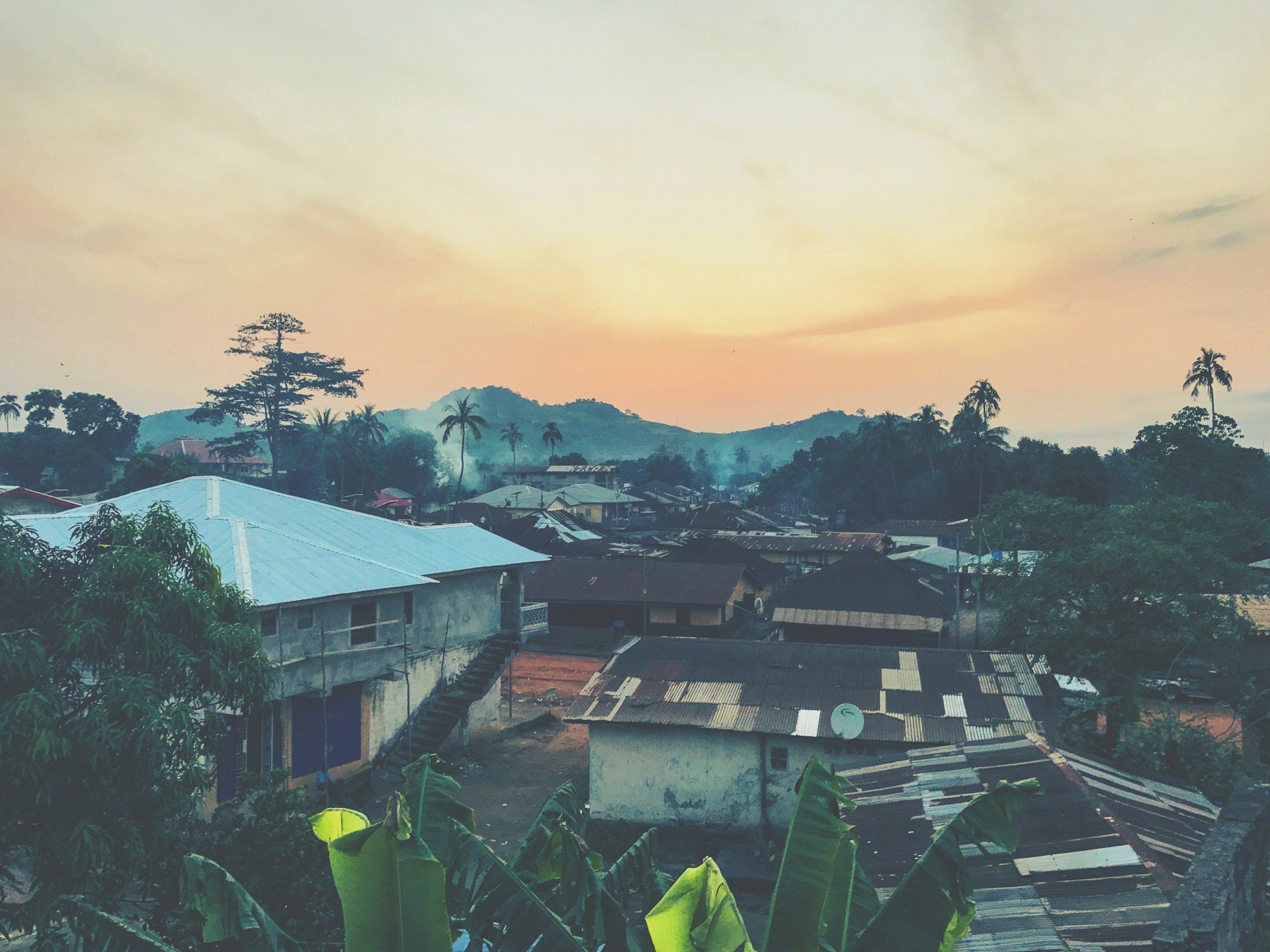
Sierra Leone Travel Scams
A "fixer" in the Lungi airport car park quotes you USD 80 for a crossing that should cost USD 40. A street money changer hands back a fold of old, no-longer-valid Leones in your change. A child on a rural road waves down your taxi for a small "toll" that no law requires. Sierra Leone is one of West Africa's most rewarding destinations, with beaches that rival anywhere on the continent. It also asks more of a visitor than most countries. This page names the traps, gives real prices, and tells you what to do instead.
Sierra Leone Scam Overview 2026
Sierra Leone receives a small but growing number of international visitors drawn by some of West Africa's best beaches, Tacugama's chimpanzee sanctuary, and a deep, complicated history. Because tourist infrastructure is still developing, almost every visitor passes through the same handful of pinch points: Lungi International Airport, the river crossing to Freetown, the Lumley Beach and Aberdeen strip, and the central markets. These pinch points are exactly where opportunistic overcharging and petty theft concentrate.
Sierra Leone's traveler risks fall into four categories. The first is opportunistic overcharging at transport choke points, particularly the Lungi-to-Freetown crossing. The second is petty theft and pickpocketing in crowded markets, nightlife areas, and on the ferry. The third is longer-running fraud aimed specifically at foreigners: advance-fee schemes, fake mining or gem investment deals, and online romance scams that sometimes escalate to in-person danger. The fourth is road and personal safety risk that is not a "scam" in the traditional sense but matters more here than in most countries: poor road conditions, unofficial checkpoints, and the practical reality that police and medical response outside Freetown is limited. All four are covered here with specific locations, prices, and what to do.
Armed robbery and assault occur, including against foreigners, and are more frequent than in most of Western Europe. Risk rises sharply after dark and outside Freetown.
The Lungi airport crossing, taxis, and okadas (motorbike taxis) are where almost every visitor encounters inflated pricing. Predictable and avoidable with the right information.
Concentrated at the Lungi ferry crossing, central markets, and the Lumley Beach and Aberdeen nightlife strip. Lower risk in quieter provincial towns.
Online romance scams and fake diamond, gold, or mining investment deals specifically target foreigners, sometimes for very large sums. Slow-moving but serious.
Sierra Leone Safety at a Glance
Freetown Scams
Freetown is built across steep, hilly terrain on a peninsula, with most visitors staying in the Aberdeen or Lumley Beach areas near the ocean. The city concentrates the largest share of both genuine tourist infrastructure and opportunistic crime in the country. The water taxi terminals, the central markets, and the Lumley Beach nightlife strip are the three zones requiring the most active awareness.
👷 Market and Ferry-Point Pickpocketing
Pickpocketing of wallets, phones, and passports is reported most often at the ferry and water taxi crossing points, in the crowded central markets, and in the bars, restaurants, and clubs around Lumley Beach and Aberdeen. Thieves often work in pairs: one person distracts you by asking questions, begging, bumping into you, or offering to sell something, while an accomplice removes a phone from a back pocket or a bag left unzipped.
Keep your phone in a front pocket or zipped bag, never on a bar table or in a back pocket. Carry only the cash you need for the day and leave the rest, along with your passport, in your hotel safe. Be especially alert when someone approaches you unexpectedly in a crowd or queue, and watch for a second person rather than just the one talking to you.
🏃 Fake Tour Guides and Inflated Guiding Fees
Individuals approach visitors near hotels, markets, and tourist sites claiming to be official guides. There is no formal national guide licensing system enforced at street level, so "official" is rarely verifiable. Some genuinely know the area well and charge fairly. Others quote a high fee, lead you somewhere you didn't ask to go, or simply demand payment after walking alongside you uninvited for several minutes.
Agree on a price and the exact scope of the tour before you start walking anywhere. A firm but polite "No thank you, I don't need a guide" while continuing to walk works in most cases. For genuine experiences, book through your hotel, a registered tour operator, or a platform like GetYourGuide, where pricing is set in advance and reviewed.
🚍 Okada (Motorbike Taxi) Overcharging and Safety Risk
Okadas are the cheapest and most common way to get around Freetown, but there is no metering system, so prices for unfamiliar foreigners are quoted on the spot and often run two to three times the local rate. Several embassies advise against using okadas or poda-poda minibuses at all because of road safety, not just price: many riders weave between lanes, drive against traffic, and carry no spare helmet for a passenger.
Agree on the price before getting on, and expect to negotiate down from the first number offered. For anything beyond a very short, familiar hop, a registered taxi or a car arranged through your hotel is both safer and only modestly more expensive. If you do take an okada, ask for a helmet.
Lungi Airport & Transport Scams
Lungi International Airport sits across the Sierra Leone River from Freetown, which means every single arriving visitor has to deal with the same crossing decision before they have even left the airport grounds. This single fact creates the most consistent and highest-value scam opportunity in the country, and it is worth understanding in detail before you land.
✈️ Lungi Airport Touts and Crossing Overcharging
You exit arrivals into a noisy, crowded car park where touts, unofficial porters, and freelance fixers compete for your attention. Some offer to "help" carry your bags to the official ticket window and then demand a tip far beyond what's reasonable. Others claim the official water taxi companies are full or closed and steer you toward a private boat or a road taxi at two to three times the fair price. A separate version targets travelers who choose the road route via Port Loko: drivers quote a flat fare and then add "extra" charges mid-journey once you are committed.
Book your water taxi transfer online before you fly, or walk directly to the marked Sea Coach Express or Sea Bird Express ticket windows just outside arrivals rather than dealing with anyone who approaches you first. Decline porter help with a clear "I'm fine, thank you" if you don't want it, and if you accept help, agree on a tip amount before bags are touched. If your hotel offers airport pickup, take it: the cost difference is usually small next to the stress it removes.
🚧 Unofficial Roadblocks and Checkpoint Money Requests
Official checkpoints staffed by uniformed national police exist throughout Sierra Leone and are a normal part of road travel. Separately, children and informal road-repair crews sometimes set up unofficial roadblocks on rural roads, especially near beach towns on weekends, asking travelers for small change to "let you pass." These have no legal standing, but local drivers often pay a small amount simply to keep moving, since arguing can cause delays.
At a genuine police checkpoint, stay calm, keep your hands visible, and hand over only what is asked for if it's a routine document check; never hand over your passport or wallet itself, just the requested ID page or copy. At an informal roadblock, a small amount of change (a few NLe) is the pragmatic local approach and is what most Sierra Leoneans do. If a driver or guide is with you, let them handle the interaction; they know the going rate.
🚌 Poda-Poda and Shared Taxi Overcrowding
Poda-podas (shared minibuses) and shared taxis are the cheapest way to travel between towns but are frequently overcrowded, poorly maintained, and driven aggressively. This is not a scam targeting foreigners specifically, but unfamiliar visitors are sometimes charged a higher seat price than locals on the same vehicle, and vehicle and driving standards vary enormously.
Ask a local or your hotel what the fair seat price is for your route before boarding. For longer intercity trips, a private hire vehicle with a known driver, arranged through your hotel or a tour operator, costs more but is significantly safer and removes the pricing guesswork entirely. Avoid night travel outside Freetown; several embassies prohibit it for their own staff.
Booking an airport transfer or a vetted day tour through GetYourGuide before you fly means a driver is waiting with your name on a sign, at a fixed price agreed in advance. It is the simplest way to avoid the Lungi car park negotiation altogether.
Beaches & Provincial Towns
The beaches west of Freetown, Tokeh, River No. 2, Lakka, and others, are the main reason many visitors come to Sierra Leone, alongside the Tacugama Chimpanzee Sanctuary and historic Bunce Island. Provincial towns like Bo, Makeni, and Kenema see far fewer tourists and correspondingly less of a developed scam economy, but road conditions and limited emergency services are bigger practical concerns the further you travel from Freetown.
🏖 Beach "Security Fee" and Beach Vendor Pressure
Some beaches have informal "caretakers" who ask visitors for a small access or security fee that has no official basis, while others have genuine community-run access charges that fund real upkeep. Vendors selling drinks, snacks, or souvenirs can be persistent, and a small minority will quote a price, sell the item, and then claim a higher price was agreed once the transaction is done.
Ask your hotel or driver in advance whether the specific beach you're visiting has a legitimate community fee, and roughly what it should be. Agree on a price out loud, in front of the vendor, before you accept any item or service. A polite, firm decline works for unwanted vendor attention; you don't owe anyone an explanation.
🔥 Overpriced "Cultural" Performances and Photo Fees
In some villages along provincial routes, a spontaneous-looking drumming or dance display is staged for passing tour vehicles, followed by a request for payment well above what is reasonable. Similarly, asking to photograph local people, particularly children, can result in a demand for payment after the photo is taken rather than before.
Always ask before photographing anyone, and agree on whether a small payment is expected before you take the photo, not after. If a performance is arranged through your guide or driver, ask them to confirm a fair price with the organizers in advance.
Money and Business Scams
Sierra Leone is largely a cash economy. The New Leone (NLe) replaced the old Leone in a 2022 redenomination, and most prices for tourists are still informally quoted in both NLe and US dollars. This currency transition, combined with limited card acceptance and unreliable ATMs, creates specific money-related risks that are worth understanding before you arrive.
💵 Street Currency Exchange and Old Banknote Tricks
Unofficial street money changers sometimes mix old, no-longer-valid pre-2022 Leone notes or genuinely counterfeit notes into the change they hand back, especially to visitors who are unfamiliar with the current New Leone notes. Because the exchange happens quickly and in cash, it's easy to walk away before noticing.
Exchange money at a licensed bank or a registered bureau de change in Freetown rather than with street changers. Know what current New Leone notes look like before you arrive. Count every note before you walk away from any exchange, and don't be embarrassed to do it slowly; it is completely normal practice here.
💎 Fake Diamond, Gold, and Mining Investment Schemes
Sierra Leone's real diamond and mineral wealth has long attracted a parallel economy of fraudulent investment pitches aimed specifically at foreign visitors and businesspeople. Someone presenting themselves as a registered dealer offers access to diamonds, gold, or a mining concession at an unusually good price, then requires a series of advance payments for documents, taxes, or transport before the deal can close. The deal never actually closes, and recovering the money afterward is extremely difficult.
Treat any unsolicited investment opportunity involving diamonds, gold, or mining rights with serious skepticism, no matter how credible the person seems or how official their documents look. Independently verify any registered dealer or company through Sierra Leone's Ministry of Mines and Mineral Resources before transferring any money, and never wire an "advance fee" to release a deal.
🏦 ATM Reliability and Card Acceptance
This isn't a scam in the traditional sense, but it catches out a lot of visitors: ATMs in Freetown that accept foreign cards are frequently out of order, charge high withdrawal fees, and have limited daily withdrawal caps. Very few establishments outside major hotels accept credit cards, and some that do add a significant surcharge.
Bring enough US dollars in cash to cover most of your trip, in clean, newer bills, since older or damaged dollar notes are sometimes refused. Withdraw cash from bank-branch ATMs during opening hours rather than standalone machines when possible, and have a backup card on a different network in case one is rejected.
A Wise card or Revolut account is a useful backup for the limited card acceptance you will find in Freetown's larger hotels, and instant transaction notifications mean you spot any unauthorized charge immediately. Bring sufficient US dollar cash as your primary means of payment, since Sierra Leone remains a largely cash-based economy.
Market & Shopping Traps
🏭 Tourist Pricing in Markets and Craft Stalls
Most goods in Sierra Leone's markets don't have fixed prices, and bargaining is the normal way of doing business for everyone, local and foreign alike. Foreign visitors are often quoted a starting price two to four times higher than what a local would be quoted for the same wood carving, fabric, or craft item. This is standard market practice rather than fraud, but it means a visitor who doesn't negotiate pays substantially more than necessary.
Expect to negotiate on almost everything in a market setting. Starting at roughly half the first price quoted and working toward the middle is a reasonable approach. If a price genuinely isn't negotiable, the seller will tell you, and you can decide from there. A friendly, unhurried attitude gets better results than an aggressive one.
💍 Counterfeit and Pirated Goods
Counterfeit electronics, clothing, and pirated media are widely available and openly sold in markets. They aren't priced as genuine, so this isn't usually a scam in the sense of deception, but buying them is illegal in many home countries and the quality is, predictably, far below a genuine product.
Buy electronics and branded goods from established shops in Freetown rather than informal stalls, and check your home country's customs rules on counterfeit goods before bringing anything back.
Digital Scams
💖 Online Romance and Advance-Fee Fraud
Romance and advance-fee scams that begin online are a well-documented risk associated with West Africa generally, including Sierra Leone. A typical pattern starts with an unsolicited message or a romantic connection on a dating app or social media, develops over weeks or months, and eventually moves to requests for money, often framed as an emergency, a gift, or travel costs to finally meet in person. A separate but related pattern involves unsolicited business proposals promising a share of a large sum of money in exchange for upfront "fees." Travelers who fly to Sierra Leone specifically to meet someone they only know online have, in documented cases, been targeted for robbery or worse on arrival.
Never send money, gift cards, or cryptocurrency to anyone you have not met in person, regardless of how the relationship developed or how convincing the story is. If a business proposal requires you to pay a fee before receiving a promised sum, it is a scam. If you do plan to meet an online contact in Sierra Leone, meet for the first time in a busy, public, daytime location and tell someone else your plans in advance.
📱 Public WiFi Data Interception
Public WiFi networks, including at hotels and the airport, can be compromised to intercept unencrypted traffic or capture login credentials. Given how unreliable mobile data infrastructure can be outside Freetown, many travelers rely heavily on hotel WiFi, which increases exposure if a network is poorly secured.
Use a local SIM with a data plan from Africell or Orange, both of which have reasonable urban coverage, for anything involving banking or sensitive logins. If you must rely on public WiFi, use a VPN, and avoid logging into financial accounts on shared networks.
An Airalo eSIM gives you local data from the moment you land, away from shared hotel and airport networks. It also removes the need to negotiate a SIM purchase through an airport tout on arrival. Setup takes a few minutes before you travel.
Universal Prevention Guide
The majority of problems visitors run into in Sierra Leone are avoidable with preparation and a calm, unhurried attitude. The following practices address the specific risk profile of the country: overcharging at transport choke points, petty theft in crowded areas, road and nighttime safety, and longer-running fraud aimed at foreigners.
Carry Enough Cash, Carefully Split Up
Bring enough clean US dollar bills to cover most of your trip, since cards are accepted in very few places and ATMs are unreliable. Split your cash and cards between a money belt, your bag, and your hotel safe rather than carrying everything in one place.
Save Emergency Numbers Before You Go
Sierra Leone emergency: 999 (police and ambulance), 112 (works from mobile phones), 019 (fire and police). Save these alongside your travel insurer's emergency line and your hotel's address before you arrive. Response times can be slow, so having the right number ready removes a critical moment of delay.
Avoid Travel After Dark Outside Freetown
Several embassies prohibit their own staff from traveling outside the Freetown peninsula after nightfall, and for good reason: road conditions, lighting, and emergency response all decline sharply outside the capital. Plan provincial travel to arrive well before dusk.
Pre-Arrange Your Lungi Crossing
Book your water taxi or airport transfer before you land rather than negotiating in the arrivals car park. This single step removes the highest-value scam opportunity most visitors will encounter in the entire country.
Be Skeptical of Unsolicited Deals
Any unsolicited investment opportunity, romantic relationship that quickly asks for money, or business proposal promising a large payout after an upfront fee should be treated as a likely scam regardless of how credible it appears. This applies whether you encounter it online before your trip or in person once you arrive.
Sort Health Preparations in Advance
A Yellow Fever vaccination certificate is required for entry, and malaria prophylaxis is strongly recommended nationwide. Never drink tap water; stick to sealed bottled water. Travel insurance with a high medical evacuation limit is essential given Freetown's limited medical facilities.
Solo Women Travelers
Sierra Leone is visited by relatively few solo women travelers compared to more established destinations, which means there is less peer-reported guidance available than for a country like Belgium. The risks that apply are broadly the same as for all tourists, with some additional context worth knowing.
Women traveling alone may experience verbal harassment or persistent unwanted attention, particularly around markets, transport hubs, and nightlife areas. This is generally more about being noticed as a foreigner than gender-specific danger, but it can be tiring over a longer trip. Staying in well-known accommodation areas such as Aberdeen or Hill Station, where security presence is common and other foreign visitors and NGO staff are based, is a reasonable approach. Joining a reputable tour for activities like Tacugama or beach day trips, rather than arranging informal transport alone, adds a layer of safety and reduces exposure to overcharging at the same time.
Public displays of affection and dress should be considered modestly given local norms outside the beach areas. As with anywhere, share your itinerary with someone you trust, avoid isolated areas after dark, and know the address of your accommodation before heading out.
Reporting Scams in Sierra Leone
If you are the victim of a scam or crime in Sierra Leone, reporting it serves two purposes: it creates a record that supports insurance claims and any card disputes, and it contributes to the limited but real channels that exist to track fraud patterns affecting visitors. Be aware that local police resources are limited, especially outside Freetown, and response can be slow.
Step-by-step: What to Do if You're Scammed
Sierra Leone is Worth It. Go Prepared.
Most visitors to Sierra Leone come away talking about the warmth of the people, the beauty of the beaches, and Tacugama's chimpanzees long before they mention any trouble at all. The risks documented here are real and worth taking seriously, but they are also predictable and largely avoidable. A traveler who pre-books the Lungi crossing, exchanges money at a licensed bureau, and stays alert in markets and nightlife areas will navigate Sierra Leone without losing money or worse to any of them.
Sierra Leone rewards a slower, more deliberate kind of travel than a place like Belgium or Thailand. Go with patience, a healthy skepticism toward unsolicited deals, and a willingness to pre-arrange the things that matter, and you'll come away with one of the more genuinely memorable trips West Africa has to offer.