
Mongolia Travel Scams
Mongolia is a genuinely low-crime country, and most of what catches visitors out happens before they even leave Ulaanbaatar. This page covers the real scams, from fake police checks to unlicensed Gobi Desert tours.
Mongolia Scam Overview 2026
Mongolia draws a relatively small number of visitors, under a million a year, to a country the size of Western Europe with one of the lowest population densities on Earth, which shapes its entire risk profile. There's no dense old-town tourist trap circuit because outside Ulaanbaatar there's barely a town at all in the sense most travelers expect. Nearly everyone who visits does so to leave the capital for the Gobi Desert, the central steppe, or Lake Khövsgöl, which shifts most of the real risk toward choosing a reliable tour operator rather than avoiding street-level cons.
Mongolia's tourist-facing issues fall into three categories. The first is petty urban crime and confidence tricks concentrated in Ulaanbaatar, pickpocketing, fake police wallet checks, and taxi overcharging. The second is tour and transport reliability, since a poorly chosen countryside tour operator can leave you with a broken-down vehicle or an altered itinerary far from any easy help. The third is ordinary overcharging and fake goods: cashmere quality, souvenir markup, and currency exchange. All three are covered here with specific locations, prices, and what to do.
Muggings and violent tourist crime are rare, even in Ulaanbaatar. Mongolia's overall crime rate against visitors is low by regional and global standards.
Pickpocketing and fake police wallet checks concentrate around Sukhbaatar Square, the State Department Store, and crowded markets in Ulaanbaatar.
Unlicensed or poorly equipped Gobi Desert and countryside tour operators are the most consequential risk given how remote these trips are.
Card skimming occurs occasionally in Ulaanbaatar but is not widespread. Fake tour booking sites are the main digital risk.
Mongolia Safety at a Glance
Ulaanbaatar Scams
Ulaanbaatar concentrates almost all of Mongolia's tourism infrastructure and, with it, nearly all its reported scams. It's also where every Mongolia trip starts and ends, since the vast majority of visitors fly into Chinggis Khaan International Airport and spend at least a day or two arranging countryside tours before or after heading out.
👮 Fake Police Wallet Check
Someone approaches, sometimes alone and sometimes with an accomplice, flashes what looks like a police badge, and claims to be checking for counterfeit currency or drugs. They ask to inspect your wallet, and in the process either remove cash directly or memorize card details. A variant claims your money needs to be "verified" and temporarily held. Genuine Mongolian police do not perform random wallet checks on tourists on the street.
If someone claiming to be police asks to inspect your wallet, decline and say you'll call 102 to verify their identity. Do not hand over your wallet or go anywhere with them. If you feel pressured, walk into the nearest shop or hotel lobby and call for help.
🏔 Unregistered Tour Agency Deposits
Ulaanbaatar has dozens of tour agencies of wildly varying quality, and street-level or guesthouse-affiliated operators sometimes take a deposit for a Gobi Desert or countryside package, then deliver a vehicle in poor mechanical condition, a driver with limited experience or route knowledge, or a shortened itinerary that skips promised stops. Because these trips run for days through areas with no cell coverage and few other travelers to appeal to, a bad operator is a serious problem, not just an annoyance.
Book through an agency with consistent recent reviews on an independent platform rather than testimonials only on the agency's own site, and ask specifically about the vehicle's age, the driver's experience, and what happens if the vehicle breaks down. Paying a partial deposit with the balance on departure, where the agency allows it, reduces your exposure if something feels off before you leave.
👷 Pickpocketing at Markets & the State Department Store
Narantuul, Ulaanbaatar's sprawling market known locally as the Black Market, and the crowded aisles of the State Department Store both see regular pickpocketing, typically opportunistic rather than organized, taking advantage of dense crowds and distracted shoppers.
Keep bags zipped and worn across the body in crowded market areas, and keep your phone in a front pocket rather than a back pocket or open bag. Carry only the cash you plan to spend.
🚗 Airport & Street Taxi Overcharging
Many vehicles working as taxis in Mongolia are simply private cars accepting passengers informally, a normal and generally safe practice, but the fare is negotiated verbally, which leaves room for a driver to quote a visitor well above the standard rate, especially from the airport.
Agree the fare clearly before getting in, or use a ride-hailing app operating in Ulaanbaatar, which provides an upfront fare with no negotiation. Ask your hotel what a reasonable airport transfer price should be in advance.
🏙️ Gandan Monastery Donation Pressure
Individuals near Mongolia's largest working monastery occasionally offer an unsolicited blessing or explanation and then request a substantial payment, framed as a donation. Genuine donation boxes exist throughout the monastery for anyone who wishes to contribute voluntarily.
Politely decline unsolicited blessings or guiding, or agree a price clearly beforehand if you'd like one. Any donation is voluntary and at whatever amount you choose.
Gobi Desert & Countryside Scams
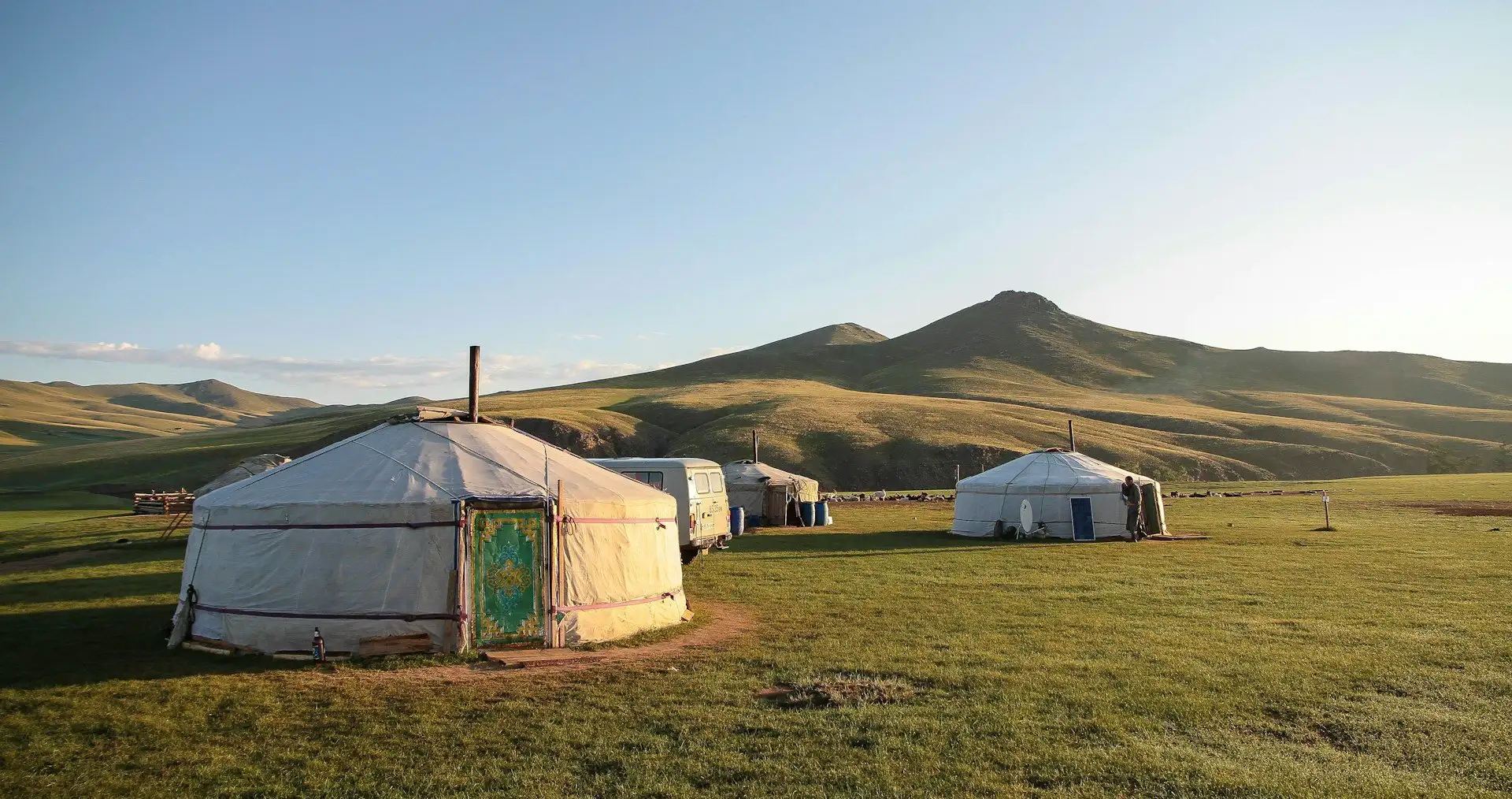
The Gobi Desert, the central steppe, and Lake Khövsgöl are what most people actually come to Mongolia for, and the multi-day 4x4 tour is the standard way to see them. This section matters more than any other on this page, since the country's most consequential problems happen out here, far from easy help.
🚗 Poorly Maintained Tour Vehicles
Some budget tour operators run older Russian-made 4x4 vans with minimal maintenance, which can lead to genuinely dangerous breakdowns in remote areas with no cell signal and no nearby town. This is more a safety issue than a deliberate scam, but cutting corners on vehicle maintenance is how the cheapest operators keep prices down, and it's the single factor most likely to derail a trip badly.
Ask to see the vehicle before booking if possible, or at minimum ask its age and when it was last serviced. A slightly higher price for a well-maintained vehicle and an experienced driver is worth paying given how remote these routes are. Carry a satellite communicator or rent one if your itinerary goes deep into areas with no signal for multiple days.
🏘️ Altered Itinerary Mid-Trip
A small number of drivers or agencies alter the promised itinerary once a trip is underway, skipping a paid-for stop, cutting a day short, or substituting a closer, less impressive site for one that requires more driving, calculating that a client several days into a remote trip has little practical way to object or seek a refund.
Get your itinerary in writing before departure, with specific named stops and approximate timing, and raise any deviation immediately and calmly with the driver or guide rather than waiting until you're back in Ulaanbaatar. Booking through an agency with a physical office and consistent reviews makes a post-trip complaint far more likely to be taken seriously.
🐎 Overpriced Camel & Horse Trekking Add-Ons
Camel rides in the Gobi and horse treks on the steppe are often sold as an add-on once you've already arrived at a ger camp, with the price quoted on the spot rather than agreed in advance, sometimes well above what the same activity costs when arranged through your tour agency ahead of time.
Ask your tour agency to quote and, ideally, include camel or horse activities in your package price before departure, rather than negotiating on arrival at a ger camp with no other option nearby.
🏙️ Naadam Festival Ticket Resale Markup
Mongolia's biggest festival draws a surge of visitors each July, and informal resellers outside the National Sports Stadium sometimes sell tickets significantly above the official price, occasionally for seats that don't exist or a date that's already sold out.
Buy Naadam tickets through your hotel, a registered tour agency, or the official box office rather than a street reseller, and book well in advance since demand is genuinely high during the festival.
Transport Scams & Traps
🚌 Trans-Mongolian Train Station Touts
Travelers arriving or departing on the Trans-Mongolian or Trans-Siberian rail routes are sometimes approached by touts offering to "help" buy tickets or find a taxi, for a fee that adds nothing to what the traveler could do directly at the counter.
Buy tickets directly at the station counter or through an official online booking platform, and politely decline unsolicited help from anyone approaching you in the station.
🚗 Self-Drive Rental Damage Disputes
Self-driving is uncommon in Mongolia given the lack of paved roads and signage outside the capital, but for the small number who do rent a vehicle, Mongolia's rough terrain means damage disputes at return follow a similar pattern to other self-drive destinations.
Photograph the vehicle thoroughly before departure, and strongly consider hiring a driver rather than self-driving given how difficult off-road navigation is without local experience.
Food & Drink Traps & What Things Should Cost
Mongolian food, khuushuur, buuz, and hearty mutton-based dishes, is straightforward and inexpensive outside a handful of Ulaanbaatar's international restaurants. Restaurant-specific scams here are minor compared to the tour and street-level issues above.
What Things Actually Cost in Mongolia 2026
🍸 Unlabeled Homemade Airag & Vodka
Homemade airag (fermented mare's milk) and vodka sold informally along countryside routes vary enormously in quality and production standards, since they're unregulated in the way commercial products are.
Try airag at a ger camp as part of a genuine cultural experience, which is generally safe and a normal part of a countryside visit, but be cautious about unlabeled homemade spirits from an unfamiliar informal seller.
Use a Wise card or Revolut for spending in Ulaanbaatar at a fair exchange rate with instant transaction notifications. Card acceptance drops to nearly nothing once you leave the capital, so carry sufficient Mongolian tögrög cash for your entire countryside tour before departure.
Shopping Traps
🦡 Blended Cashmere Sold as Pure
Mongolia is one of the world's largest cashmere producers, and much of what's sold is genuine, but some tourist-facing shops and market stalls sell cashmere blended with wool or synthetic fiber at prices implying pure, high-grade cashmere. A burn test performed with confidence by the seller isn't a reliable way to verify this.
Buy from an established, well-known Mongolian cashmere brand with a proper shopfront and clear fiber-content labeling, like Gobi Cashmere or Goyo, rather than an unbranded market stall for any significant purchase. A genuine pure cashmere scarf typically runs USD 40-80; a much lower price for something claimed to be pure cashmere is worth questioning.
🎉 Tourist Strip Souvenir Markup
Shops immediately around Sukhbaatar Square price felt crafts, small carvings, and Genghis Khan-themed souvenirs at a premium over similar items a few streets away or at Narantuul market.
Compare prices at Narantuul market or shops a short walk from the main square before buying, and expect polite negotiation to be normal at market stalls.
Digital Scams
🌐 Fake Tour Agency Websites
Professional-looking tour agency websites, sometimes cloning photos and itineraries from genuine registered operators, collect deposits for Gobi Desert or countryside packages that are either poorly delivered or, in rarer cases, don't materialize at all once you arrive in Ulaanbaatar.
Look for independent reviews on a third-party platform rather than testimonials only on the agency's own site, and verify the agency has a real physical office in Ulaanbaatar before paying a full deposit. Pay by credit card rather than direct bank transfer where possible, for dispute protection.
💳 ATM Card Skimming
Card skimming occurs occasionally at standalone ATMs in Ulaanbaatar, though it's less widespread than in more heavily touristed destinations.
Use ATMs inside bank branches where possible, and cover the keypad with your other hand when entering your PIN.
Universal Prevention Guide
Most tourist problems in Mongolia are avoidable with a small amount of preparation, and one decision matters more here than almost anywhere else on this site: choosing a reliable tour operator before you leave Ulaanbaatar.
Vet Your Tour Operator Carefully
Check independent reviews, ask about vehicle age and driver experience, and get your itinerary in writing before paying a deposit. This single decision matters more than any other for a Mongolia trip.
Carry Enough Cash Before Leaving Ulaanbaatar
Card acceptance drops to nearly nothing outside the capital. Withdraw sufficient Mongolian tögrög for your entire countryside trip before departure.
Consider a Satellite Communicator for Remote Routes
If your itinerary spends multiple days without cell signal, a rented satellite communicator provides a way to call for help that a phone alone cannot.
Never Hand Over Your Wallet to "Police"
Real Mongolian police do not perform random wallet checks on tourists. If stopped, offer to call 102 to verify identity rather than complying with a wallet inspection request.
Save Emergency Numbers Before You Go
Mongolia police: 102. Ambulance: 103. Fire: 101. Save these alongside your tour agency's Ulaanbaatar office number and your travel insurer's emergency line before heading into the countryside.
Buy Genuine Cashmere From a Known Brand
For any significant cashmere purchase, choose an established Mongolian brand with a proper shopfront and clear labeling rather than an unbranded market stall.
Booking experiences through GetYourGuide means licensed, reviewed operators for Gobi Desert expeditions, Ulaanbaatar city tours, and Naadam festival experiences. All operators are reviewed, all prices are transparent, and you have consumer protection if something goes wrong, a meaningful advantage in a country where a bad tour choice is hard to fix mid-trip.
Solo Women Travelers
Mongolia is a reasonably safe country for solo women travelers, and it's a genuinely popular solo destination given how organized the multi-day tour system is for meeting other travelers. The specific risks that apply overlap with the scams above, with some additional context for countryside travel.
Solo women joining a group Gobi or countryside tour are very common, and reputable agencies are well used to solo travelers of any gender. Ulaanbaatar's nightlife is generally manageable but, as with most capital cities, quieter streets are best avoided alone late at night; arrange a taxi rather than walking back to accommodation. On multi-day tours, sharing your itinerary and check-in schedule with someone at home is worthwhile given how limited connectivity is once you're in the Gobi or on the steppe.
Reporting Scams in Mongolia
If you are the victim of a scam or crime in Mongolia, reporting it creates a record that supports insurance claims and card disputes, and contributes to police awareness of active patterns, particularly useful for the fake police scam given how organized it can be.
Step-by-step: What to Do if You're Scammed
Mongolia is Worth It. Pick the Right Tour.
Most visitors who spend a little time vetting a Gobi Desert or countryside tour operator come home with nothing worse than dust in their bags and a phone full of steppe photos. The scams documented here are real but narrow, and a traveler who checks their tour agency's reviews, declines a stranger's wallet check, and buys cashmere from a proper shop will navigate Mongolia without losing money to any of them.
Mongolia offers a kind of open space and hospitality that's genuinely rare anywhere else on earth. Go, choose your operator well, and spend your money on things that deserve it.