
South Korea Travel Scams
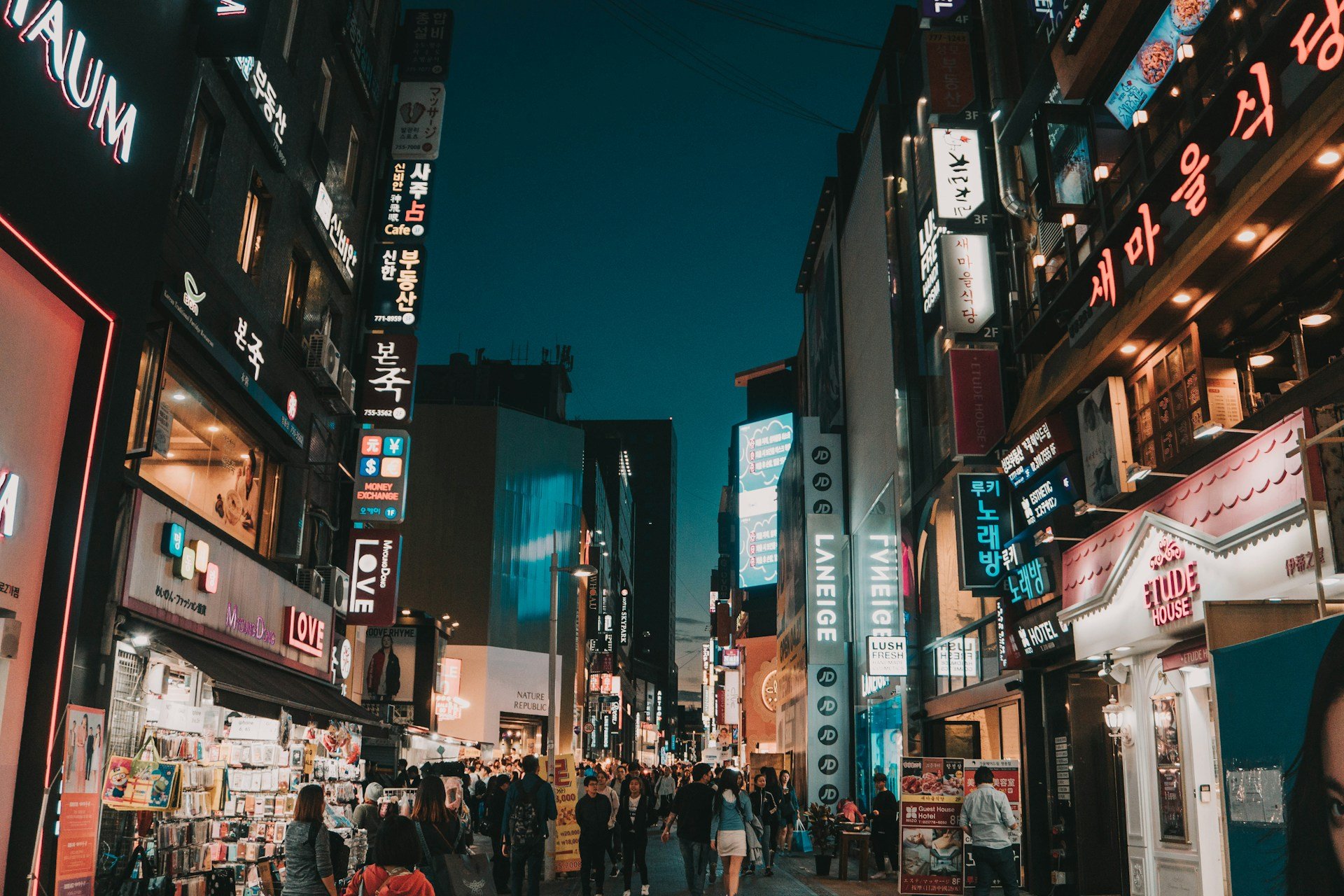
A taxi near Hongdae at 2am refuses the meter and quotes three times the metered rate. A Myeongdong street stall sells what looks like Sulwhasoo serum at half the department store price — and it is half the product. An Itaewon stranger recommends a bar and the bill includes rounds you didn't order. South Korea is one of Asia's safest countries. Its tourist traps are low-intensity, specific, and easily mapped.
South Korea Scam Overview 2026
Near Hongdae, Itaewon, and Gangnam late at night, some drivers refuse the meter. Kakao T eliminates this entirely — use it for all journeys.
Counterfeit premium Korean skincare sold on Myeongdong street stalls and unmarked shops. Buy from official brand stores only.
Itaewon bar invitations from strangers lead to inflated bills. Less aggressive than comparable scams elsewhere but reported consistently.
Pre-existing damage claimed as new on Jeju Island rental returns. Standard photo documentation before driving resolves this completely.
South Korea Safety at a Glance
Seoul Scams
🍅 Fake and Diluted Cosmetics in Myeongdong
Korean skincare is one of the world's most in-demand beauty categories and Myeongdong is its global showcase. Official brand stores — Innisfree, The Face Shop, Laneige, Etude House — are legitimate. The risk is specific: street stalls and some unlicensed shops sell counterfeit or heavily diluted versions of premium brands (Sulwhasoo, SK-II, History of Whoo, AmorePacific). The packaging looks authentic; the product is not. Some items are sold in unmarked packaging described as "samples" at prices below official retail — these are often diluted or expired stock. The health risk from counterfeit skincare is real, not just a financial one.
Buy all cosmetics, especially premium Korean skincare, from official brand stores (identified by the brand's own signage and decor), department stores (Lotte, Shinsegae, Hyundai), or duty-free shops at the airport. Never buy premium brand skincare from street stalls or unmarked shops regardless of the price. If a Sulwhasoo First Care Activating Serum costs half the official price outside an official store, it is not genuine.
🍾 Itaewon and Hongdae Bar Bill Overcharging
Less aggressive than the Istanbul or Bangkok version but documented. Near Itaewon and occasionally near Hongdae, a friendly stranger recommends a specific bar and accompanies you. Bills arrive with rounds not ordered, a "table service" fee not mentioned, or compulsory food items. Some venues target solo foreign male tourists specifically. The amounts are typically KRW 50,000-200,000 above what was consumed — uncomfortable but not dangerous.
Go to bars found through reviews rather than recommendations from strangers. Check that any table minimum or service charge is displayed before sitting. Itemize the bill before paying. If a bill includes items you didn't order, dispute calmly — Korean customer service is generally responsive and management will usually correct genuine errors.
🏭 Insadong and Namdaemun Tourist-Area Overpricing
Insadong's tourist-facing craft and souvenir shops charge significant premiums over what the same items cost at local markets or online Korean platforms. "Handmade" celadon pottery and traditional crafts may be mass-produced replicas. At Namdaemun Market, the wholesale pricing that makes it famous applies mainly to locals buying in quantity — tourist-facing retail stalls charge closer to department store prices. Dongdaemun's fashion market is legitimate but some stalls misrepresent fabric quality.
For genuine Korean crafts: the Korea Craft and Design Foundation shops (KCDF Gallery) in Insadong sell certified authentic craft products at fair prices with maker information. For market shopping: bargaining is acceptable at traditional markets but not at modern fixed-price shops. Namdaemun is best for specific categories (eyewear, children's clothes, accessories) where the wholesale advantage still reaches retail.
◫ Fortune Teller "Curse Removal" Pressure
Traditional fortune tellers (saju / palmistry) are a genuine Korean cultural tradition and mostly legitimate. The scam version involves a fortune teller who gives a reading and then says you have a curse or severe bad luck that requires an expensive "removal ritual" costing KRW 100,000-500,000. The curse is always fabricated and the removal ritual achieves nothing. Legitimate saju readings cost KRW 10,000-30,000 for a basic reading.
A fortune teller who says you have a curse that requires immediate expensive action is running a scam. Agree the price for a reading before it begins (KRW 10,000-30,000 is fair) and walk away from any curse-removal offer regardless of how convincingly delivered.
Busan Scams
Busan is South Korea's second city and has a significantly lower tourist scam density than Seoul. The Jagalchi fish market area has some specific tourist-facing pricing issues, and Haeundae Beach sees occasional vendor pressure. Otherwise, Busan is straightforward.
🏽 Jagalchi Fish Market Seafood Overcharging
Jagalchi is Busan's famous seafood market and genuinely worth visiting. The tourist trap: vendors at the outdoor stalls on the ground floor quote prices per unit (per crab, per fish) without stating the total, and the final bill reflects quantities larger than the tourist intended to buy. The preparation fee (cutting, cooking) is sometimes not disclosed upfront and adds KRW 10,000-20,000 to the final cost. Tourist-facing vendors near the main entrance charge more than vendors further inside.
Ask for the total price for the specific quantity you want before any fish is handled. Confirm whether a preparation fee applies and how much it is. Vendors further inside the market and on upper floors are typically priced more honestly than those at the main tourist entrance. The upstairs restaurant section of the market has set menus with transparent pricing — often the simplest option for a first visit.
🏖 Haeundae Beach Sunbed and Equipment Charges
Haeundae is Korea's most famous beach and gets extremely crowded in summer (July-August). Sunbed and parasol operators charge KRW 10,000-20,000 per item per day — this is legitimate but the price is not always posted. Some vendors place equipment near tourists on the public beach and claim it was "reserved for them" or demand payment for items the tourist didn't realize were for rent.
Confirm the price before using any sunbed or parasol. Korean beaches are public — you can place your own towel anywhere on the beach without payment. Only the equipment provided by operators requires a fee.
Jeju Island Scams
🚢 Rental Car Damage Claims
Jeju requires a car or scooter for most visitors since the island's main sights are spread across its volcanic landscape. The rental damage scam follows the same pattern as Greece and Thailand: pre-existing scratches or dents claimed as new on return, with demands of KRW 100,000-500,000. Some budget operators at the airport offer prices below the major rental brands then recoup costs through damage claims. Insurance sold at the counter often has exclusions for the type of damage being claimed.
Photograph and video the entire vehicle at the rental counter before driving away. Email yourself the photos immediately. Read insurance exclusions before signing. Reputable Jeju rental operators include Lotte Rental Car, SK Rent-a-Car, and AJ Rent-a-Car — major brands have clearer dispute resolution processes than small independent operators. Jeju's bus network (intercity buses 100/200 series) now covers most major tourist routes for KRW 1,200-2,000 per journey and is a genuine car-free alternative.
🎕 Haenyeo "Experience" Overpricing
Jeju's haenyeo (female free-divers) are a UNESCO-recognised cultural tradition and a genuine highlight of the island. Paid "haenyeo experience" shows range from authentic encounters with working divers to brief staged demonstrations at tourist venues. Some operators charge KRW 10,000-20,000 for a show that lasts under 15 minutes and involves divers performing for cameras rather than actually working.
The best haenyeo encounters are free: visit the Haenyeo Museum in Gujwa-eup, or simply walk the coastal paths near Seongsan Ilchulbong early morning when working haenyeo are genuinely active. The Haenyeo Experience Centre at Udo Island offers a legitimate program. For paid shows, check the duration and what is actually demonstrated before buying tickets.
Transport Scams
✈️ Incheon Airport Taxi Overcharging
Incheon Airport is 50km from central Seoul. Regular metered taxi to Seoul city center: KRW 65,000-90,000 depending on destination and traffic. Deluxe (black) taxi: KRW 90,000-120,000. Unlicensed drivers inside the terminal approach arrivals and quote KRW 150,000-200,000 flat rates. The AREX Express train is faster (43 minutes to Seoul Station) and costs KRW 9,500 — the clear best option for most travelers.
Take the AREX Express train (KRW 9,500 to Seoul Station, 43 minutes) — it is faster than any road option in traffic. If you need a taxi, use the official metered taxi rank outside arrivals, or book through Kakao T before landing. Never accept a flat-rate offer from anyone inside the terminal.
🚘 Late-Night City Taxi Meter Refusal
After midnight near Seoul's nightlife districts, some taxi drivers refuse to use the meter and quote flat rates. Seoul taxis apply a 20% night surcharge (midnight to 4am) on top of the meter — this is legitimate. Some drivers exploit tourist unfamiliarity with this surcharge to justify quoting flat rates significantly above even the night-rate metered fare. Taxis can also legally refuse trips under 3km during peak hours at driver discretion, leading to inflated alternative quotes.
Use Kakao T for all late-night journeys — it shows the full fare including the night surcharge before booking. If using a street taxi, the 20% night surcharge is legitimate and the meter should still run. Any driver quoting a flat rate without running the meter can be reported to 1330 (Korea Tourism Hotline). Seoul's subway runs until around 1am on weekends — often the better option for nightlife areas.
An Airalo eSIM for South Korea activates before you board. Korea coverage (SK Telecom, KT, LG U+) is outstanding — some of the world's fastest mobile networks. Kakao T, Naver Maps, and offline translation all work from the moment you land. Kakao T in particular is essential before exiting Incheon Airport.
Restaurant Traps & What Things Should Cost
What Things Actually Cost in South Korea 2026
🍽 Myeongdong and Tourist-Area Restaurant Premiums
Restaurants on Myeongdong's main pedestrian street charge tourist premiums of 50-150% above the same food two streets away. The "tourist bibimbap" at a Myeongdong restaurant with English signage and photo menus costs KRW 18,000-25,000; the same dish at a local restaurant near a residential neighborhood costs KRW 8,000-12,000. Some tourist-area restaurants add a 10% service charge not on the menu.
Walk one or two streets off any major tourist pedestrian area. University neighborhoods (Hongdae, Sinchon, Anam, Hyehwa) have excellent food at local prices. Check the menu for service charges before ordering. Korean convenience stores (GS25, CU) sell genuinely good prepared food at honest prices — kimbap, ramen, triangle rice balls — that often outperforms tourist-area restaurants on value.
Shopping Traps
📷 Electronics and "Duty Free" Price Myths
Korea is the home of Samsung and LG, which generates an assumption of cheap electronics. In reality, consumer electronics prices in Korea are close to or the same as international prices for most products, and some items (Apple products) are more expensive than in Europe. Yongsan Electronics Market's individual stall operators sometimes quote tourist prices significantly above what the major chain stores charge for identical products. Some small operators swap the product at payment — the item in the box is a different model or specification than what was agreed.
Buy electronics from official brand stores or established chains (Hi-Mart, E-Mart Electro, Best Buy Korea). The large department stores in Gangnam and Myeongdong carry official stock with warranties. Check that the box is sealed before paying. For Samsung products specifically: the Samsung D'light Experience Center in Gangnam has a connected store with official pricing.
🎁 Gwangjang Market "Free Sample" Escalation
Gwangjang Market is one of Seoul's best food experiences. Some vendors offer aggressive free samples of bindaetteok (mung bean pancakes) or mandu (dumplings) and then apply significant social pressure to buy. This is relatively mild but can be uncomfortable for tourists unfamiliar with Korean market culture.
"Gwaenchanayo" (it's okay / no thank you) said politely is sufficient. You are not obligated to buy after a free sample. Gwangjang is genuinely excellent — the bindaetteok and mayak gimbap are worth buying properly. The easiest approach: identify what you want to eat, sit at a stall, and order it directly rather than accepting samples from competing vendors.
Digital Scams
🌐 Fake K-Pop and Concert Ticket Resellers
K-pop concert tickets (BTS, BLACKPINK, aespa, etc.) sell out within minutes on official platforms and the secondary market is flooded with fake listings. Social media sellers on Instagram and X claim to have genuine tickets for sold-out shows at 2-5x face value. Payment is requested via bank transfer or cryptocurrency; the ticket either doesn't arrive, isn't valid, or is a photocopy. Fake "fan meeting" tickets and counterfeit artist merchandise follow the same pattern.
Buy K-pop concert tickets only from official platforms: Melon Ticket, Interpark, Yes24, or the artist's official fan club. Never buy via social media transfer from unknown individuals. For secondary market purchases, use platforms with buyer protection (StubHub Korea has a limited presence; be cautious). Genuine Korean resale platforms require real-name verification, which reduces but doesn't eliminate fraud.
🔢 ATM Dynamic Currency Conversion
Korean ATMs at tourist sites and some banks offer DCC — conversion to your home currency at a rate 3-6% worse than the interbank rate. The DCC option is sometimes displayed more prominently than the "pay in KRW" option. Card skimming is very low frequency in South Korea, which has strong banking security standards, but standalone tourist-area ATMs carry slightly more risk than bank branch machines.
Always choose to pay in KRW. Use ATMs at major Korean banks (Shinhan, KB Kookmin, Woori, Hana) or at 7-Eleven and GS25 convenience stores — these are widely available and reliable. Use Wise or Revolut for best rates and fraud notifications.
Universal Prevention Guide
Kakao T for Every Taxi
South Korea's dominant ride-hailing app shows the full fare including night surcharge before booking. Download it before landing. It eliminates every meter dispute and flat-rate overcharge.
Official Stores for Cosmetics
Buy all Korean skincare from official brand stores or department stores. Never from street stalls in Myeongdong, regardless of the price. Counterfeit premium skincare carries genuine health risks, not just financial ones.
Photograph Jeju Rental Cars
Before driving any Jeju rental car: video the entire vehicle and email yourself the footage. This is complete protection against damage claims. Use a major brand rental company rather than the cheapest independent operator.
AREX from Incheon
The AREX Express train from Incheon Airport to Seoul Station costs KRW 9,500 and takes 43 minutes. It is faster than any taxi in traffic and eliminates airport transport overcharging entirely. Get a T-money card for seamless onward metro travel.
Bars Found Independently
Use Naver Map reviews or Korean food/nightlife blogs to find bars. Anywhere recommended by a stranger who approached you near Itaewon or Hongdae warrants caution. Itemize the bill before paying anywhere new.
1330 for Any Tourist Issue
Korea Tourism Organization's helpline (1330) operates 24/7 in English, Japanese, and Chinese. They handle taxi complaints, tourist scam reports, and general visitor assistance. Save this number — it is one of Asia's most responsive tourist support lines.
GetYourGuide lists reviewed operators for DMZ tours with licensed guides, Seoul street food walks, Jeju day tours with experienced drivers, and Korean cooking classes. Transparent pricing and consumer protection — the price you see includes everything.
Reporting Scams in South Korea
What to Do if You're Scammed
South Korea Is One of Asia's Great Destinations. The Traps Are Minor.
Kakao T for taxis. Official stores for cosmetics. Photo the Jeju rental car. AREX from Incheon. Those four habits cover every significant risk on this page. South Korea delivers extraordinary food, a genuinely world-class public transport network, and some of Asia's most compelling cities. The 1330 Tourism Hotline has your back for anything that slips through.