
Madagascar Travel Scams
A driver at Ivato Airport quotes EUR 60 for a EUR 15 journey into Tana. A roadside sign points to a "lemur sanctuary" where a wild-caught animal is placed on tourists for photographs and a donation that goes nowhere near conservation. A taxi-brousse ticket seller outside the gare routière quotes double the posted price because you look like you don't know better. Madagascar is one of the planet's most extraordinary places. It rewards preparation more than almost any other destination.
Madagascar Scam Overview 2026
Unregistered roadside "sanctuaries" keep wild-caught lemurs in poor conditions and collect tourist donations that benefit no conservation purpose. MNP-registered operations only.
Tourist prices for identical seats on intercity bush taxis are 2-4x local prices. Buy tickets at official gare routière windows, not from approach touts outside.
MNP regulations require licensed guides for all national parks. Pre-gate approach touts are unlicensed and will be turned away at the park entrance. Licensed guides charge transparent rates at park offices.
ATMs are essentially absent outside Antananarivo and Nosy Be. Running low on ariary in the national park circuit creates vulnerability to overcharging. Carry sufficient MGA cash before any RN7 journey.
Madagascar Safety at a Glance
Antananarivo Scams
Antananarivo (universally called Tana) is Madagascar's capital and the entry point for almost all visitors. The city climbs a series of dramatic hilltops with rice paddies in the valleys between — it is one of Africa's most visually distinctive capitals. The tourist areas (Isoraka, Tsaralalana, the upper town around the Rova palace) are safe during daylight hours. The lower town (Analakely, Petite Vitesse area) requires more awareness after dark.
✈️ Ivato Airport Taxi Overcharging
Ivato Airport is 12km from central Antananarivo. Unofficial taxi touts inside the terminal approach travelers and quote EUR 40-60 for journeys costing MGA 50,000-80,000 (approximately EUR 10-15) with an honest driver. Quoting in euros rather than ariary obscures the overcharge and targets travelers who haven't yet obtained local currency. Some drivers agree to a price and then add a highway toll or luggage fee at the destination that was never mentioned. The airport has no Uber or Yandex equivalent — Madagascar has no mainstream ride-hailing app with consistent coverage.
Pre-arrange your airport transfer through your hotel before landing — virtually all Tana hotels offer this and the price is agreed in advance. The official taxi desk inside the arrivals hall has posted rates in MGA to zones within Antananarivo — use this desk rather than accepting approaches from individuals in the arrivals hall. Any price quoted in euros for a domestic ariary transaction is a red flag. A fair rate to the Isoraka/upper town hotel district: MGA 50,000-80,000.
🐘 Fake Lemur Sanctuary "Donations"
Signs along major tourist routes point to "lemur reserves," "lemur sanctuaries," and "conservation centres." Some are legitimate MNP-registered operations doing genuine rehabilitation work. Many are informal enclosures where wild-caught or semi-wild lemurs are kept in inadequate conditions as tourist attractions. Visitors pay to enter (EUR 5-20), have lemurs placed on their shoulders for photographs, and are pressured for "donations to conservation" that go to the operator with no accountability. Beyond the financial fraud, this practice directly harms lemur welfare and incentivizes continued wild capture of protected species.
Ask to see the MNP registration certificate before entering any lemur facility. Legitimate operations: Lemur's Park (22km from Tana on the RN1, registered rehabilitation centre), Vakona Forest Lodge and Lemur Island at Andasibe (IUCN-connected, verifiable), and the Duke Lemur Center's partnered facilities. Indicators of a legitimate operation: fixed enclosures rather than animals on ropes or chains, animals that do not approach tourists unless trained to do so, no photos with lemurs sitting on tourists, and staff who can produce registration documentation. Any facility where wild animals are routinely handled by paying tourists is not operating to conservation standards regardless of what the signage says.
👷 Tana Centre Pickpocketing
Antananarivo's lower town markets — Analakely covered market and the surrounding streets — have the highest pickpocket density in Madagascar. The crowds on Zoma (traditional Friday market, though now operating throughout the week in various forms) create classic distraction-and-lift conditions. Tourists who are visibly unfamiliar with the area and carrying camera bags or visible backpacks are the primary targets. Phone snatching from visible pockets is also reported in the Analakely area.
Visit Analakely with your hotel's recommended local guide rather than independently — this is both safer and produces a better market experience. Bag at the front in all crowded market conditions. Phone in an inside pocket. Leave cameras at the hotel unless you have a local guide who knows the area. The upper town around Isoraka and the Rova is significantly safer and more manageable independently.
👨🕚 Tana "Tour Guide" Approaches
Self-appointed guides in Antananarivo's tourist hotel areas approach visitors offering city tours, market guides, and transport arrangements. Some are genuinely helpful individuals providing fair services; others earn commission from specific shops, restaurants, and guesthouses that pay for tourist referrals. Tours that include visits to specific craft shops, "local" restaurants, or overnight stays are almost always commission-routing exercises. Some guides offer to arrange RN7 circuit transport at prices that include significant personal commissions from specific drivers and lodges.
For Tana city orientation: ask your hotel to recommend a guide they trust — hotels are accountable for recommendations in ways that street approaches are not. For the RN7 circuit and national park arrangements: book through established Antananarivo tour operators with office addresses and verifiable reviews — Cortez Expeditions, Boogie Pilgrim Madagascar, and Mad Chameleon are consistently recommended. Never arrange multi-day circuits through individuals who approached you on the street.
National Park Scams
Madagascar's national parks — Ranomafana, Isalo, Andasibe-Mantadia, Tsingy de Bemaraha, and the others — are the reason most tourists visit the country. The park system is managed by Madagascar National Parks (MNP) and entry fees, guide requirements, and pricing are all officially set. The main risks are at the park gate approaches, not inside the parks themselves.
👨🕚 Unlicensed Pre-Gate Guide Approaches
Individuals position themselves on the road approaching national park entrances and offer guiding services at below-official rates. They claim to know the park better than the official guides, or claim the official guides are "all busy." At the gate, they are turned away because they have no MNP accreditation — at which point tourists discover they have no guide for their paid entry and must buy one at the gate anyway, having already paid the pre-gate individual. Some pre-gate guides claim to be official MNP guides and produce unofficial-looking paperwork that doesn't hold up at the entrance.
Go directly to the MNP office at the park entrance and arrange your guide there. Licensed MNP guides carry official accreditation cards issued by Madagascar National Parks — ask to see this card before agreeing to any guide. Guide fees are posted at the MNP office and are non-negotiable official rates. For the most popular parks (Ranomafana, Andasibe), pre-arrange your guide through a Tana operator — this guarantees a licensed guide, a confirmed rate, and allows matching your interests (birds, mammals, reptiles) to a specialist.
🏛 Inflated Park Entry Fees
Park entry tickets for Madagascar National Parks have official fixed prices in MGA, differentiated between foreign adults, foreign students, and Malagasy nationals. These are paid at the official MNP ticket window at the park entrance. Individuals outside the gate — sometimes including taxi-brousse drivers who have stopped "to help" — claim to sell park tickets at the correct price but add an unofficial commission. Some claim that the ticket office is closed and they can process payment on the MNP's behalf. The ticket office is not closed during park opening hours.
Reference prices for 2026: Ranomafana NP: MGA 55,000 per adult foreign visitor per day. Isalo NP: MGA 55,000. Andasibe-Mantadia: MGA 55,000. Tsingy de Bemaraha: MGA 90,000. These are government-set prices that change periodically — verify at parcs-madagascar.com before traveling.
Pay park entry only at the official MNP ticket window inside the park entrance. The window issues an official printed receipt with the park name, date, visitor category, and amount paid. Never pay a park fee to an individual outside the gate or through a driver before you reach the park. Check current official prices at parcs-madagascar.com before any park visit.
🐘 Roadside Wildlife Disturbance for Tips
Individuals along the RN7 and park approach roads catch chameleons, geckos, or other reptiles and approach tourist vehicles with them, placing them on the vehicle or tourist for a photograph and demanding MGA 5,000-20,000. Beyond the financial issue, handling and repeated disturbance of wild reptiles is harmful to the animals and illegal under Madagascar's wildlife protection laws. Some individuals keep chameleons in pockets and release them near passing tourist vehicles as a recurring "chance encounter."
Do not pay for roadside wildlife encounters. The correct response to someone approaching a vehicle with a wild animal is to keep windows up and decline firmly. Inside national parks with a licensed guide, genuine wildlife encounters are far more rewarding, ethical, and frequent than anything offered on the roadside. Reporting persistent roadside wildlife handlers to MNP rangers is encouraged.
Nosy Be Scams
Nosy Be is Madagascar's main beach tourism destination — a volcanic island off the northwest coast with excellent diving, clear water, and a well-established resort infrastructure. Its scam profile is lower-stakes than Antananarivo but persistent: beach vendor pressure, boat trip overcharging, and the specific issue of unregistered excursion operators for the surrounding island groups.
🚣 Unregistered Boat Excursion Operators
Nosy Be's surrounding island groups — Nosy Komba, Nosy Tanikely (a protected marine reserve), and Nosy Iranja — are reached by boat and form the core of Nosy Be's excursion economy. Registered operators with licensed vessels and safety equipment charge EUR 30-80 per person for full-day island excursions. Unregistered operators on the beach quote EUR 15-25 for the same destinations using uninsured boats without adequate life jackets. Nosy Tanikely is a marine protected area with a mandatory park entry fee (approximately MGA 20,000) — some cheap operators claim this is included when it isn't, leaving tourists to pay at the reserve entrance or be turned away.
Book boat excursions through your hotel or a registered Nosy Be operator — Sava Marine, Spirit of the Sea, and established dive centres (Tropical Diving, La Mer) all operate licensed vessels with verified safety equipment. Ask specifically whether the vessel has a marine licence and whether life jackets are available for all passengers. Nosy Tanikely park entry fee should be itemized separately — an operator who includes it in a suspiciously low total price either isn't going there or will charge you separately at the entrance.
🏖 Beach Vendor Pressure
Nosy Be's beach areas have persistent vendors selling sarongs, vanilla, crafts, massages, and boat trips. Prices are quoted 3-6x what the same items cost in Hell-Ville's market or at reputable shops. Vendors who begin services (massages, hair braiding) before prices are agreed are common. Some approach with a product and begin attaching or demonstrating it, creating a possession dynamic before a price is agreed. Evening approaches on the beach after dark are more persistent and sometimes more aggressive than daytime encounters.
Agree all prices before any service begins. For vanilla (Nosy Be is in the Sava vanilla-growing region): fair vanilla bean prices are MGA 30,000-80,000 per 100g for genuine cured beans — beach prices are typically 3-4x this. The Hell-Ville market has honest vanilla at honest prices. "Tsy misy, misaotra" (I don't have any, thank you) in Malagasy ends most beach approaches more effectively than English refusals.
✈️ Nosy Be Airport Transfer Overcharging
Nosy Be's Fascene Airport has the same taxi tout approach as Ivato, at a smaller scale. Drivers quote EUR 20-40 for hotel transfers that cost EUR 8-15 booked through accommodation. Most Nosy Be resorts and guesthouses include or offer airport transfers at honest prices — the easiest prevention is simply pre-booking.
Pre-book hotel transfer before landing at NOS. If taking a taxi independently: the airport has a posted rate card for major destinations on Nosy Be. A fair rate to Ambatoloaka (the main tourist beach, 12km): MGA 30,000-50,000. To Hell-Ville town: MGA 20,000-35,000. Agree the price before loading luggage.
Currency Traps & Cash Gaps
💵 Unfavourable Hotel and Lodge Currency Exchange
Many Madagascar hotels and lodges quote prices in euros and exchange euros to ariary at below-market rates when settling bills in MGA. A EUR/MGA rate that should be 5,000:1 is sometimes offered at 4,200:1 by tourist accommodation, representing a 16% loss on every transaction. Some lodges price in euros and only accept euros, eliminating the exchange question but meaning tourists who have correctly obtained MGA at honest rates pay more than those who simply brought euros. For a two-week RN7 circuit, the difference can be EUR 100-200.
Check the current MGA/EUR rate at xe.com before any accommodation payment. For euro-denominated lodges: paying in euros is often the cleaner option than converting ariary at an unfavourable lodge rate. BFV-SG and Bank of Africa (BOA) in Antananarivo offer the most competitive exchange rates. Withdraw MGA at BFV-SG or BOA ATMs before leaving Tana — these are the most reliable machines with the best rates.
💵 Old Ariary / Franc Confusion
Madagascar replaced the Malagasy franc (FMG) with the ariary (MGA) in 2005, at a rate of 5 francs to 1 ariary. Some older Malagasy people, particularly in rural areas, still quote prices in francs. A price of "cinq mille" (five thousand) may mean 5,000 francs (= MGA 1,000) or 5,000 ariary, depending on context. Tourists who assume franc prices are ariary prices overpay by a factor of five. Some informal market vendors exploit this confusion deliberately with tourists unfamiliar with the dual pricing culture.
When a price is quoted verbally: confirm "ariary?" explicitly before agreeing. In Antananarivo and tourist infrastructure, ariary is standard. In rural markets and with older vendors, franc pricing still occurs. A reference point: a simple local meal should cost MGA 3,000-10,000 (= FMG 15,000-50,000). If a quoted meal price in what you think is ariary is implausibly low, it may be in francs. Your guide is the clearest interpreter of this in ambiguous situations.
Transport Scams
🚕 Taxi-Brousse Overcharging
Taxi-brousse (shared bush taxis — usually Peugeot 504 estate cars or minibuses carrying 7-12 passengers) are Madagascar's main intercity transport on the RN7 and all major routes. Tourist prices for seats are routinely quoted 2-4x local prices. Approach touts outside gare routières claim the bus is full and offer a "private" seat at inflated prices. Some drivers add luggage fees (MGA 2,000-5,000 per bag) that locals don't pay. Prices vary significantly by route and vehicle type — a guide or trusted local source is the most reliable way to know the correct fare.
Buy taxi-brousse tickets inside the official gare routière at the posted ticket window, not from individuals outside the building. Tana's main gare routière for the RN7 south is at Fasan'ny Karana. Reference prices: Tana to Antsirabe (3 hours, 170km) MGA 10,000-15,000. Tana to Fianarantsoa (8 hours, 400km) MGA 25,000-40,000. Fianarantsoa to Ranomafana (1.5 hours) MGA 7,000-12,000. For the full RN7 circuit, most operators strongly recommend hiring a private car and driver rather than taxi-brousse — the time savings and reduced stress for a 2-week circuit justify the cost (approximately EUR 400-600 for a full circuit with a reliable driver).
🚗 Private Car Driver Commission Routing
Hiring a private driver for the RN7 circuit is the best way to travel Madagascar outside cities. The issue: some drivers earn commission from specific hotels, guesthouses, and restaurants along the route and steer tourists toward commission-paying establishments rather than the best options. A driver who "recommends" only one guesthouse in each town, claims others are full, or takes unexplained detours to specific shops is routing for commission. Driver quality varies enormously — a genuinely excellent Madagascar driver is invaluable; a commission-routing driver costs you money and misses experiences.
Arrange your RN7 driver through a reputable Tana tour operator rather than from the street or from a tout. Cortez Expeditions, Boogie Pilgrim, and Mad Chameleon all have vetted drivers with established records. Ask your operator explicitly: "Does this driver earn commission from any accommodation?" A good operator will be transparent about this. Book your own accommodation independently before departure so the driver's recommendations don't control your options.
An Airalo eSIM for Madagascar activates before you board. Coverage (Telma, Airtel Madagascar, Orange Madagascar) is good in Antananarivo, Nosy Be, and along the RN7 to Fianarantsoa. Coverage drops in remote areas — but having data in cities means you can communicate with your operator and pre-arranged contacts from the moment you land at Ivato.
What Things Should Cost in Madagascar
What Things Actually Cost in Madagascar 2026
A Wise card or Revolut gives real-rate MGA withdrawal at BFV-SG and BOA ATMs in Antananarivo. Withdraw generously before leaving Tana for the RN7 — ATMs disappear south of the capital. For Nosy Be: BOA and BFV-SG have ATMs in Hell-Ville. Euros are widely accepted at Nosy Be tourist businesses at varying rates — check xe.com and negotiate in ariary where possible.
Shopping Notes
🏭 Zebu Horn and Wildlife Product Warnings
Madagascar's craft markets sell some extraordinary items: hand-painted silk, woven raffia, carved zebu horn, and semi-precious stone jewellery. The traps: some "zebu horn" items are made from other animal materials (tortoiseshell, protected wildlife bone) and are illegal to export. Stuffed chameleons and other preserved wildlife items, sold openly in some tourist markets, are protected species under CITES and illegal to export to most countries regardless of any documentation provided in Madagascar. "Fossils" sold in tourist areas are sometimes genuine (legal with documentation) and sometimes replicas — the documentation quality varies enormously.
Do not purchase any item made from wildlife other than zebu (domestic cattle). Tortoiseshell, chameleon, gecko, or other reptile/wildlife items are CITES protected — import into EU, UK, US, Australia, and most countries is illegal regardless of Malagasy paperwork. For fossils: purchase only from established dealers with proper CITES export documentation — the Croc Farm shop near Tana and established Tana galleries have legitimate fossil inventories. Genuine carved zebu horn, raffia baskets, and silk items are all excellent purchases with no export complications.
💰 Craft Market Bargaining
Craft market tourist prices in Madagascar are quoted 3-6x local prices. Bargaining is standard, conducted respectfully, and expected. Tana's Marché Artisanal de la Digue (near the Hilton) has a wide range of quality crafts at negotiated prices. Opening quotes are high; final prices after negotiation are fair.
Start at 30-40% of quoted price for craft items. Reference prices: hand-painted silk scarf MGA 20,000-50,000, carved zebu horn bowl MGA 15,000-40,000, woven raffia bag MGA 10,000-25,000, semi-precious stone pendant MGA 5,000-20,000. The Marché Artisanal de la Digue in Tana is Madagascar's best craft market for quality and variety. "Mora mora" (slowly, slowly) is the Malagasy phrase for patient negotiation — it is received with warmth.
Universal Prevention Guide
MNP Registration Before Any Lemur Facility
Ask to see the MNP registration certificate before entering any lemur or wildlife facility. Legitimate operations have verifiable registration. Any facility where wild animals are handled by tourists for photographs is almost certainly unregistered regardless of signage. Lemur's Park (RN1) and Vakona Forest Lodge at Andasibe are the two most reliably legitimate near Tana.
Gare Routière Tickets Only
Buy taxi-brousse tickets at the posted window inside the official gare routière. Never buy from individuals outside the station. Tana to Fianarantsoa: MGA 25,000-40,000. For a full RN7 circuit: a private driver arranged through a reputable Tana operator (EUR 400-600) is better value than accumulating taxi-brousse overcharges over two weeks.
MNP Gate for Park Guides and Tickets
All national park guides and entry tickets are arranged and paid at the official MNP office at the park gate. Pre-gate individuals are unlicensed. Licensed guides carry MNP accreditation cards — ask to see it. Park fees are official and posted at parcs-madagascar.com.
Carry Sufficient MGA Before Leaving Tana
ATMs are essentially absent on the RN7 south of Tana. Carry MGA 50,000-80,000 per day of RN7 travel as a buffer beyond expected spend. BFV-SG and BOA ATMs in Antananarivo are the most reliable withdrawal points. Withdraw before any multi-day park circuit.
Pre-Book Hotel Transfers from Both Airports
Pre-arrange transfers from Ivato (TNR) and Fascene (NOS) through your accommodation before landing. Both airports have approach tout problems. Hotel transfers are agreed in advance at honest prices and eliminate all airport taxi negotiation.
Licensed Operators for Nosy Be Boat Trips
Book island excursions from Nosy Be through your hotel or established dive/tour operators. Unlicensed beach boats to Nosy Tanikely and Nosy Komba lack safety equipment. Nosy Tanikely marine reserve entry fee should be itemized separately. Life jackets for all passengers: non-negotiable on any open-water boat.
GetYourGuide lists reviewed operators for Antananarivo city tours with licensed local guides, Andasibe-Mantadia night walks for nocturnal lemurs with MNP-accredited naturalists, Nosy Be full-day snorkelling excursions with licensed vessels, and Isalo National Park canyon hikes with certified guides. Transparent pricing, MNP-registered operations.
Reporting Scams in Madagascar
What to Do if You're Scammed
Madagascar Is Unlike Anywhere Else on Earth. Go Knowing This.
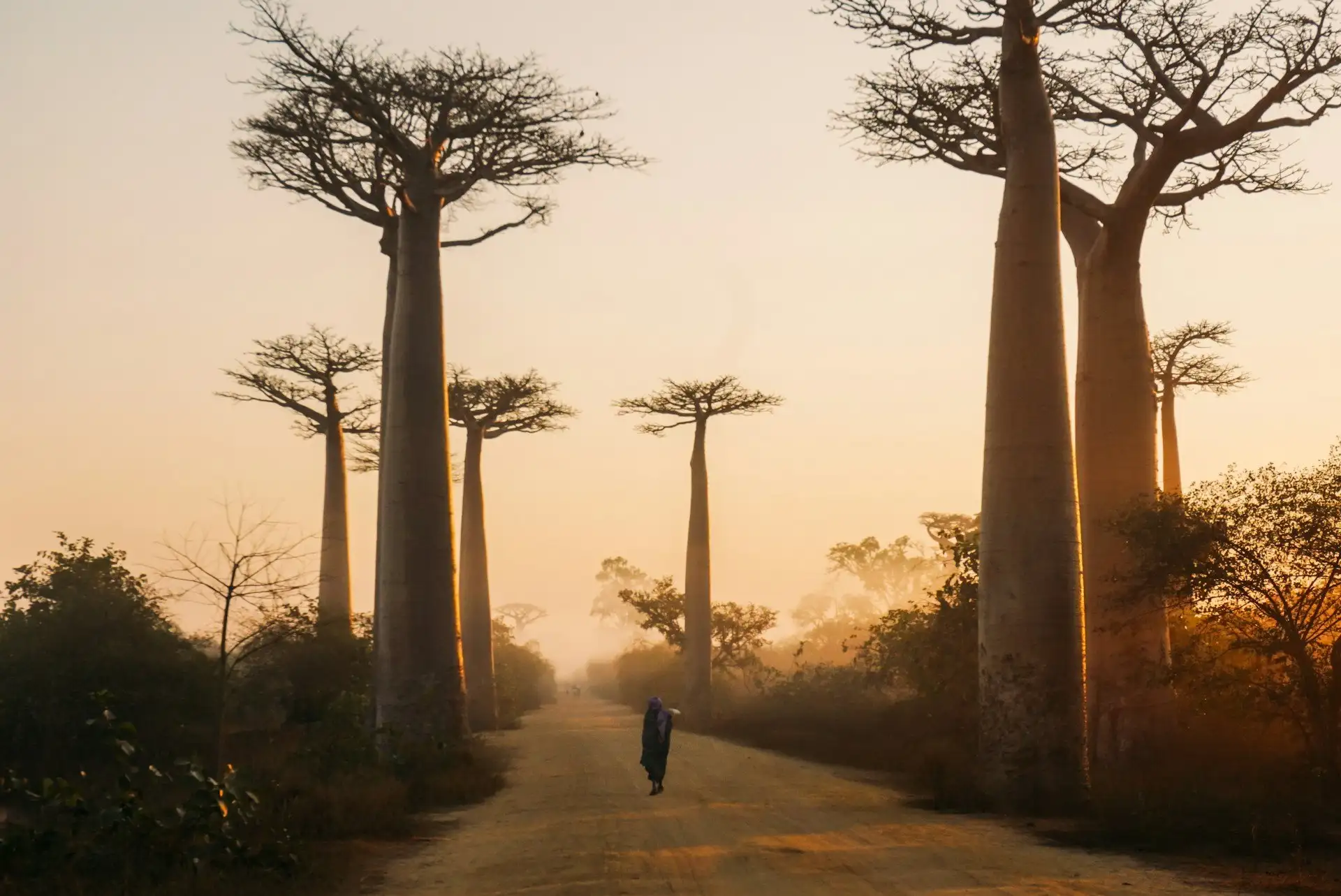
MNP registration before any lemur facility. Official gare routière for taxi-brousse tickets. MNP gate for park guides and entry fees. MGA cash buffer before leaving Tana for the RN7. Pre-booked hotel transfers from both airports. Licensed operators for Nosy Be boat trips. Six habits that cover every documented trap in this guide. The indri calls through the dawn forest at Andasibe. The baobab alley at sunset near Morondava. The ring-tailed lemurs sunbathing at Isalo. The coral gardens at Nosy Tanikely. Madagascar delivers experiences that exist nowhere else on earth and rewards every hour of preparation to visit it properly.