
Atlas Guide Logo
Atlas Guide

Explore the World

The Cliffs of Moher rising from the Atlantic in morning mist, County Clare, Ireland
Very Low Crime Risk · Expensive · Genuine Is Always One Street Away
🇮🇪

Travel Scams
in Ireland

Ireland is one of the safest countries in Europe and one of the most expensive. Nobody's going to steal your wallet in Connemara. What Ireland will do is charge you €8 for a pint in Temple Bar, €30 for a leprechaun snow globe, and €45 for a "traditional Irish breakfast" that a locals' café on the next street serves for €12. The scam profile is almost entirely about knowing where the tourist trap zone ends and the actual country begins.

🟢 Crime Risk: Very Low
🏛️ Capital: Dublin
💱 Currency: Euro (EUR) / GBP (NI)
🗣️ Language: English, Irish
📅 Updated: Apr 2026
🍺
The Tourist Zone vs The Actual Country — One Street Makes the Difference
The single most useful thing to understand about Ireland is that the version sold to tourists and the version Irishpeople actually inhabit are separated by about 200 metres at any given point. Temple Bar versus Stoneybatter in Dublin. The Blarney Castle gift shop versus the Cork English Market. The Cliffs of Moher visitor centre café versus the pub in Doolin. In every case, the tourist version is fine and expensive; the actual version is better and cheaper. Ireland rewards the visitor who walks one street further than the tour group and asks a local where they'd eat. The answer is always honest and usually specific to the day of the week.
The Bigger Picture

What You're Actually Dealing With

💶
Ireland Is Expensive — Budget Accordingly
Ireland is consistently among the most expensive countries in the EU. A pint of Guinness in a Dublin pub costs €6.50-8.50. A main course at a mid-range Dublin restaurant runs €18-28. A hotel room in Dublin in summer costs €150-250 per night for anything decent. Outside Dublin prices drop, but not dramatically. Visitors who arrive expecting budget European travel get an unpleasant shock. Budget at least €100-150 per person per day in Dublin excluding accommodation, and €80-120 outside it. This is not a scam -- it's a cost of living reality in one of Europe's wealthiest economies.
🚗
Getting Around
Dublin has good public transport (Dart rail, Luas tram, Dublin Bus) and both Uber and Free Now operate in the city. Outside Dublin, a rental car is essentially required to see anything properly -- Irish Bus (Bus Éireann) connects major towns but rural Ireland is inaccessible without a car. Driving is on the left. Roads in Connemara, the Burren, and the Wild Atlantic Way coast are sometimes very narrow with grass growing in the middle. Passing places are marked and both drivers stop and one reverses. The countryside makes the driving entirely worthwhile.
☁️
The Weather
Ireland's weather is famously unpredictable. It rains frequently, sometimes heavily, in every month. It can be 20°C and sunny on a March Tuesday and 10°C with horizontal rain on a June Saturday. Bring layers and a genuinely waterproof jacket regardless of what the forecast says. The upside: Irish landscapes in rain are a specific and extraordinary thing -- clouds rolling fast over the Connemara mountains, the Cliffs of Moher in Atlantic mist, grey stone walls wet and bright in soft light. This is the landscape that produced the literature. You understand Beckett better after a Galway afternoon in November.
📅
When to Go
May and June are the best months -- longest days, lowest rain probability (relative to the rest of the year), manageable tourist crowds. July and August are peak season with highest prices and most visitors. September is genuinely good: lower prices, the light turns golden, and the crowds thin. March brings St Patrick's Day (March 17) which transforms Dublin completely -- enormous crowds, extraordinary atmosphere, booked solid six months ahead. December is quiet and atmospheric. There is genuinely no wrong time to visit Ireland, only different versions of the weather.
Know the Playbook

The Scams That Actually Catch People

Ireland's scam catalogue is short and mostly financial. The country is genuinely safe and the risks here are about tourist pricing and a handful of specific tricks rather than anything dangerous.

🚕
Taxi Overcharging in Dublin
Dublin Airport · Temple Bar taxi rank · late-night city centre pickups
Most Common Financial Issue

Dublin taxis are metered and the National Transport Authority sets the rates. Despite this, airport-to-city overcharging is documented -- primarily through the addition of charges that aren't legitimate (luggage supplements that don't apply, inflated initial tariffs) or simply running a tampered meter. Late-night weekend taxi overcharging near Temple Bar takes a different form: drivers quote inflated flat rates to clearly intoxicated passengers who don't check whether the meter is running.

How to handle it
  • Use Free Now or Uber for Dublin taxis. Both show the price estimate before confirmation and both are regulated. The Dublin Airport to city centre should run €25-35 by app depending on traffic.
  • The Dublin Aircoach (€10 one-way to O'Connell Street) and Dublin Airport Express (€7 to the city centre) are the best-value airport connections if your accommodation is on their route.
  • If using a street taxi, confirm the meter is running from the start and check it matches the NTA tariff card (available on the NTA website) at journey's end.
🏚️
Fake and Fraudulent Accommodation
Online booking platforms · social media rental ads · tourist season in rural areas
Growing Problem

Ireland has a genuine accommodation shortage, particularly in Dublin and during summer in the west of Ireland (Galway, Clare, Kerry), and this has created fertile ground for fraudulent accommodation listings. Fake Airbnb-style listings take payment and don't exist. Properties are listed at realistic prices, often with stolen photographs from legitimate listings, and the money vanishes. This is more prevalent in Ireland than in many European destinations because the shortage makes unusually affordable listings seem plausible.

How to handle it
  • Book through the platform's own payment system rather than being redirected to bank transfer or third-party payment. If a host insists on payment outside the platform, the listing is almost certainly fraudulent.
  • Reverse image search the listing's photos before booking. Stolen photographs from other websites are the most common giveaway.
  • For rural Ireland in July and August, book accommodation months in advance. Listings that are available last-minute at suspiciously good prices during peak season warrant more scrutiny than usual.
🍺
Temple Bar and Tourist Pub Overcharging
Temple Bar district · O'Connell Street · Grafton Street tourist pubs
Medium Risk — Pricing Not Fraud

Temple Bar pubs charge €7.50-9 per pint of Guinness and serve it in a tourist atmosphere of forced "traditional" performances and shamrock paraphernalia. This isn't fraud -- the prices are on the menu -- but visitors who don't know better spend three times what they'd pay in a locals' pub two streets away for an experience that is specifically designed for tourists rather than reflecting anything real about Irish pub culture. Some pubs in the area also add a "music cover charge" that appears only at payment time.

How to handle it
  • Ask anyone in Dublin for a local pub recommendation and go there instead of Temple Bar. Mulligan's on Poolbeg Street, Kehoe's on South Anne Street, and Doheny & Nesbitt on Baggot Street are the calibration points -- €6.20-6.80 per pint and no performances.
  • If you do visit a Temple Bar pub, check whether there's a music cover charge before sitting down and before ordering.
  • The best session music (spontaneous, participatory, genuinely traditional) in Dublin is not in Temple Bar. It's at JJ Smyth's on Aungier Street on Thursdays, at The Cobblestone in Smithfield on weekends, and at a dozen other venues where it happens because the musicians want to play, not because tourists are watching.
🌐
Fake Tour Booking Websites
Online searches for popular tours — Cliffs of Moher, Ring of Kerry, Aran Islands
Medium Risk

Ireland's most popular tours -- day trips to the Cliffs of Moher, Ring of Kerry, Giant's Causeway -- have spawned a number of fraudulent booking websites that appear in search results, take payment, and deliver nothing. These are particularly active around peak season searches. The genuine operators (Paddywagon Tours, Go-Ireland, CIE Tours) have proper websites and established booking systems. Unofficial sites sometimes appear with near-identical names.

How to handle it
  • Book directly from the tour operator's official website or through Viator/GetYourGuide which have fraud protection. Check that the URL is exactly right before entering payment details.
  • Google the company name independently before booking through any website that appears in a search result -- look for the company's independent reviews rather than just the site's own testimonials.
  • If the price is significantly below comparable operators, it warrants extra verification before payment.
☘️
Tourist Tat and "Authentic Irish" Merchandise
Grafton Street gift shops · Killarney town centre · airport departure hall
Low Risk — Value Issue

The "authentic Irish craft" industry has a complicated relationship with authenticity. Crystal branded as Waterford Crystal is sometimes not made in Waterford -- much of Waterford Crystal production moved to Eastern Europe and various brands use the Waterford name with varying degrees of geographic connection. Aran sweaters sold in tourist shops at Grafton Street prices may be mass-produced overseas rather than hand-knitted on the islands. Irish linen is sometimes printed-design rather than genuine woven linen. None of this is strictly fraudulent but it doesn't deliver what "authentic" implies.

How to handle it
  • For genuine Aran knitwear, buy from Carraig Donn or Avoca Handweavers -- both source from Irish producers and can verify origin. Or, obviously, buy from a shop on the Aran Islands themselves.
  • The Kilkenny Design Centre in Dublin and the National Craft Gallery in Kilkenny both sell genuinely Irish-made crafts with provenance information.
  • The Cork English Market is the single best place in Ireland to buy genuine Irish food products -- cheese, smoked fish, charcuterie -- at prices that reflect local production rather than tourist markup.
🎒
Pickpocketing in Dublin
Grafton Street · O'Connell Street · Luas tram Red Line · tourist queues
Low Risk

Dublin's pickpocketing rate is low by European capital standards but not zero. Grafton Street's pedestrian section during busy shopping periods and the Luas Red Line tram (which connects less affluent areas through the city centre) have higher incidence than the rest of the city. Tourist queues at Trinity College and the Guinness Storehouse are occasionally targeted. The risk is modest and standard European city awareness is sufficient.

How to handle it
  • Front pockets or a crossbody bag on Grafton Street and on the Luas Red Line.
  • Keep phones in pockets in tourist queues rather than holding them out.
  • The Luas Green Line (south Dublin suburbs) has essentially no pickpocketing issue; the Red Line has more because of the areas it traverses.
Where to Go

The Destinations — Honest Takes

Ireland is small enough that the whole island is theoretically driveable in a long weekend. Don't. It needs more time than it looks like it needs. The best parts are slow.

Dublin Very Low Risk

Dublin is a city of 1.4 million that has changed enormously since the Celtic Tiger years and feels simultaneously younger, more international, more expensive, and more confident than the city of twenty years ago. Trinity College's Book of Kells (queue times up to 2 hours in summer; book online to avoid this -- the book itself, illuminated by Irish monks around 800 AD, is genuinely extraordinary even through glass) and the Long Room library above it (which is the room the Jedi Archives in Star Wars was modelled on, for whatever that's worth, and which is unmistakably one of the finest library rooms in the world) are the primary cultural anchor. The National Museum of Ireland on Kildare Street is free and has the Bog Bodies, Viking artefacts, and the Tara Brooch all in one building. Georgian Dublin around Merrion Square and Fitzwilliam Square is the most coherent example of 18th-century urban planning in the British Isles outside Bath, and it's entirely free to walk through. Howth Head, 20 minutes by DART from Connolly Station, has cliff walks and a fishing harbour with seafood restaurants that serve considerably better fish than anything in Temple Bar.

  • Book Trinity College's Book of Kells online in advance -- skip-the-queue is worth the small premium in summer
  • Mulligan's on Poolbeg Street pours the best Guinness in Dublin by common consensus of people who've spent time studying the question
  • The DART coastal train from Connolly to Howth (€4 each way) is the best-value scenic journey in Ireland
  • Stoneybatter, Rathmines, and Ranelagh are the neighbourhoods where Dublin people actually eat and drink -- better food, lower prices, no tourist menus
The Wild Atlantic Way and West Coast Very Low Risk

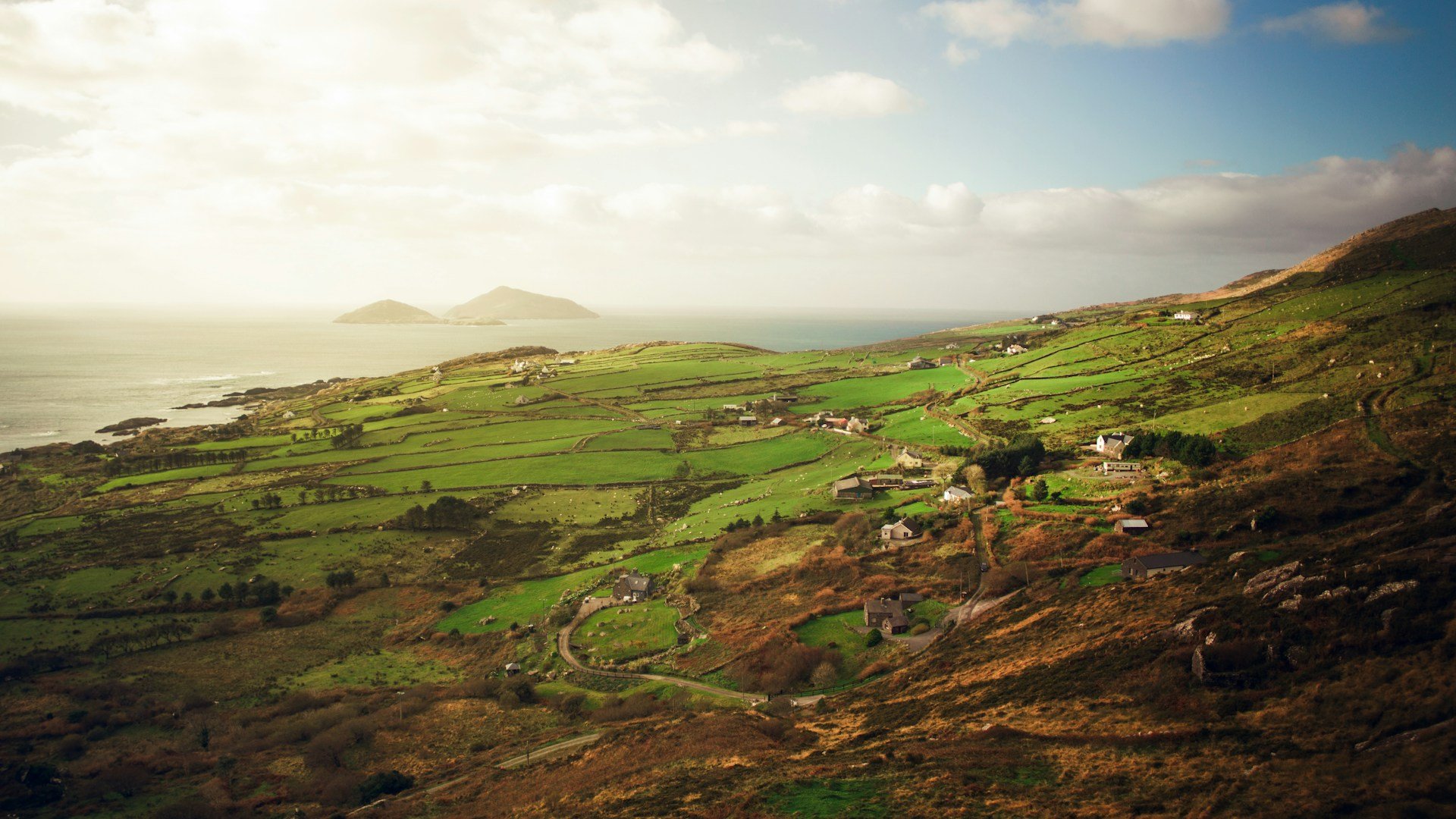
The Wild Atlantic Way is a 2,500km coastal route from Donegal in the northwest to Cork in the south, and it is the Ireland that the postcard photographs are trying to represent -- cliffs, stone walls, Connemara bogs, the Aran Islands, the Burren's limestone pavement with wildflowers growing from the cracks in May. The Cliffs of Moher (214 metres above the Atlantic at their highest point, genuinely among the most dramatic coastal landscapes in Europe) require arriving early to avoid the tour bus surge between 11am and 3pm. The Aran Islands -- Inis Mór, Inis Meáin, Inis Oírr -- are reached by ferry from Ros a'Mhíl or Doolin or by small plane from Connemara Airport and reward at least one night's stay. Dún Aonghasa on the clifftop of Inis Mór, a Bronze Age stone fort with its back wall missing because the cliff fell away 300 metres to the sea, is the most specific place in Ireland.

  • Cliffs of Moher: arrive before 10am or after 4pm in summer, bring a waterproof jacket, and walk south along the cliff path toward Hag's Head for the views that the visitor centre car park doesn't give you
  • Doolin has the most natural traditional music sessions in Clare -- the pubs (McGann's, McDermott's, Gus O'Connor's) have sessions most nights in summer and the musicians are genuinely playing, not performing
  • Inis Mór is best explored by rented bicycle (€10-15 per day from the harbour) -- the island's roads are narrow enough that a car feels wrong and bikes are how islanders actually travel
  • Connemara between Clifden and Westport requires a full day to drive properly -- don't rush the bog road section above Kylemore Abbey
Cork and the South Very Low Risk

Cork is Ireland's second city and considers itself its first in everything that matters -- an opinion held with the affectionate exasperation of a city that has been second-billing to Dublin for centuries and knows it's better at food. The English Market on Grand Parade, a covered Victorian market in continuous operation since 1788, is the best single food market in Ireland: tripe and drisheen (a blood sausage specific to Cork), fresh fish from that morning's catch, farmhouse cheeses, local charcuterie, and a balcony café where Queen Elizabeth II had lunch in 2011 during her historic state visit and the Cork commentary on the occasion was characteristically dry. Kinsale, 25km south, is a beautifully preserved port town that has become Ireland's food capital -- restaurants on every street, a food festival in October, and Good Things Café on Main Street serving Kerry lamb and Castletownbere crab at prices that remind you this is not Dublin.

  • The English Market is free to walk around and is best between 9am and noon when it's fully stocked -- the balcony café serves one of the better lunches in Cork city at reasonable prices
  • Cork's pub culture (the Long Valley on Winthrop Street, the Franciscan Well Brewery on North Mall) is less tourist-facing than Dublin and correspondingly more genuine
  • Blarney Castle draws enormous tourist volumes for the Blarney Stone -- if you're going, the castle and grounds are worth seeing regardless, but the Stone itself involves lying on your back over a parapet while a castle employee holds your legs and thousands of people photograph you, which is an experience you can assess for yourself
  • The Beara Peninsula southwest of Kenmare has better scenery than the Ring of Kerry with a fraction of the touring coaches
Galway Very Low Risk

Galway is the city that Ireland uses as shorthand for everything it thinks is best about itself -- traditional music, the Irish language, the Atlantic coast, an irreverent intellectual culture, and a pub scene that produces more accidental conversations with strangers than anywhere else in the country. The pedestrianised Latin Quarter and Shop Street area have buskers, market stalls, and a concentration of pubs with sessions most evenings. Salthill promenade on the bay west of the city is where Galwegians walk, swim in the Atlantic regardless of temperature, and kick the wall (a local tradition involving kicking a specific stone wall at the end of the promenade -- the origin is unclear and the practitioners are serious about it). The Galway Oyster Festival in September is one of the best food festivals in Europe: three days of oysters from the Galway Bay beds, stout, and music that the county genuinely delivers rather than performs.

  • Galway's best sessions are at Tigh Coili on Mainguard Street and Monroe's Tavern on Dominick Street -- both have music most nights and both pull a genuine mix of locals and visitors
  • The Saturday morning Galway Market in Eyre Square has the best street food in Connacht -- crepes, Asian food, artisan cheese, fresh fish from the Atlantic coast vendors
  • The bus from Galway to Clifden (Bus 923, daily) covers the Connemara landscape without a car -- a good option for a day trip if you're based in Galway city
  • Galway accommodation in July and August is expensive and books out fast -- the Galway Arts Festival (third week of July) and Galway Races (late July) cause complete saturation
Kerry and the Southwest Very Low Risk

Kerry has the Ring of Kerry (a 179km coastal drive that is genuinely beautiful and traversed by enough touring coaches in summer to make individual travel feel like a procession), the Dingle Peninsula (more compact, less touristed, and arguably better -- Slea Head Drive at the tip has views of the Blasket Islands and the most Atlantic sky you'll see this side of the Faroes), and Killarney National Park (the lakes below the MacGillycuddy's Reeks mountains, jaunting car rides on the Gap of Dunloe track, and a Victorian mountain landscape that is objectively extraordinary). Kenmare is the right base for the southwest -- better restaurants than Killarney town, less coach traffic, proper market on Wednesdays and Fridays.

  • Drive the Ring of Kerry anticlockwise (the direction coaches go is clockwise) to avoid being behind convoy traffic on the narrow sections
  • Dingle Peninsula's Slea Head Drive is the better alternative to the Ring of Kerry -- drive it from Dingle town westward in the morning before tour groups arrive
  • Killarney's jaunting cars (horse-drawn traps) charge fixed government rates -- agree the price per person before getting in and confirm what the tour covers
  • Kenmare's farmers market on Wednesdays is the best place to buy Kerry farmhouse cheese, including the extraordinary Milleens washed-rind that has been produced on the Beara Peninsula since the 1970s
Northern Ireland Very Low Risk

Northern Ireland is part of the United Kingdom (using pound sterling rather than euros), separated from the Republic by an open border with no customs checks since the Good Friday Agreement. Belfast has transformed since the Troubles -- the Titanic Belfast museum on Queen's Island (built on the actual slipway where the ship was constructed, and one of the finest maritime museums in Europe) is the anchor, but the Cathedral Quarter's pub culture, the Botanic Gardens, and the mural trails in West Belfast give the city genuine depth. The Giant's Causeway (40,000 interlocking basalt columns formed by a volcanic eruption 60 million years ago, the product of geological process so geometrically regular it looked supernatural to every culture that saw it) is 90 minutes north of Belfast on the Antrim coast. Drive the Antrim Coast Road back to Belfast via the Dark Hedges (the beech trees planted in the 1700s that became a Game of Thrones location) and Carrick-a-Rede rope bridge.

  • Currency switches at the border -- pound sterling in Northern Ireland, euros in the Republic. Most shops near the border accept both but the exchange rate varies
  • Titanic Belfast requires at least 2.5 hours to do properly; book tickets online to skip the queue in summer
  • The Giant's Causeway has a National Trust visitor centre with a car park fee (£13) -- you can park in the town of Bushmills (2km walk) for free if the fee is a concern
  • Belfast's Cathedral Quarter pub culture (The Duke of York, The Crown Liquor Saloon on Great Victoria Street, The Dirty Onion) is significantly less tourist-pricing than Dublin's Temple Bar equivalent
🎵
Locals Know: The Session
A session (seisiún in Irish) is traditional Irish music played by musicians gathered in a pub -- not performed at an audience, but played together for the pleasure of playing. The distinction matters enormously. In a genuine session, the musicians face each other rather than an audience, the repertoire is decided between them in the moment, and the music is participatory -- anyone who plays a relevant instrument is welcome to join. The audience listens, or doesn't. Conversations happen. The music continues. Sessions happen spontaneously, particularly in the west of Ireland and in pubs with a serious music culture. You can find them by asking a local pub where the music is tonight, by checking the session listings at thesession.org (a website that documents sessions by location and day), or by simply sitting in a pub with music on the walls and waiting. The difference between a session and a performance is audible within two minutes: a session sounds like music that needs to happen, a performance sounds like music that needs to be seen. Temple Bar's music is the second kind. Doolin's is the first. The west of Ireland is full of the first kind if you know where to look, and even if you don't, asking the right question gets you there faster than any map.
🌊
Cliff Path Safety
Ireland's cliff walks -- the Cliffs of Moher, Slieve League in Donegal (higher than Moher and less visited), the Dingle cliffs at Slea Head, the Antrim Coast -- have in some cases suffered visitor deaths from people going too close to unfenced edges in wet or windy conditions. The Atlantic west-facing cliffs can have updrafts and sudden gusts that are disorienting near edges. The formal paths are safe; going off them toward the cliff edge in anything other than perfect calm conditions is not. Ireland's weather can change fast enough that conditions at the cliff top when you leave the car park can be different from conditions when you reach the edge. Stay on marked paths. Don't approach unfenced cliff edges in wind or rain.
The Short Version

Before You Go — The Checklist

  • Use Free Now or Uber for Dublin taxis. The Dublin Aircoach (€10) and Airport Express (€7) are the best-value airport connections to the city centre.
  • Book accommodation only through platforms with payment protection. If a host redirects you to bank transfer, it's fraudulent. Check listing photos with reverse image search.
  • Temple Bar is worth walking through. It is not worth drinking in at those prices. Ask any local for a pub recommendation instead.
  • Book Trinity College's Book of Kells online in advance to skip the summer queues.
  • Budget at least €100-150 per person per day in Dublin excluding accommodation. Ireland is genuinely one of Europe's most expensive countries.
  • Bring a waterproof jacket regardless of the forecast. Bring it in July. Bring it in every month. It will be used.
  • Stay on marked cliff paths. Ireland's west coast cliffs have no guardrails in many sections and Atlantic gusts are unpredictable.
🍲
One Honest Opinion on Eating in Ireland
Irish food has been unfairly maligned for so long that the improvement of the last twenty years hasn't fully registered internationally. The honest picture: Ireland now has genuinely excellent food if you know where to look, and the raw ingredients -- Atlantic seafood, Kerry lamb, farmhouse cheese, beef from grass-fed cattle, soda bread still made by people who remember when there was no other kind -- are among the finest in Europe. The problem is that tourist-facing restaurants serve a compromised version of this at high prices, while the good stuff is at the farmers markets, the good local restaurants, and the food counters of the Cork English Market. Wild Atlantic salmon from a fish and chip shop in Dingle. Chowder with Galway Bay oysters at a harborside café in Clarinbridge during the September festival. A full Irish breakfast (rashers of back bacon, sausages, black and white pudding, fried egg, grilled tomato, brown bread) at a local café in any town in the country for €10-12 rather than €24 at a hotel. Guinness, which genuinely tastes different in Ireland than anywhere else -- the water, the freshness of the keg, the temperature at which it's poured -- from a pub where the barman knows your face by the second visit. The food that Ireland is actually good at is extraordinary. The food it sells to tourists is merely fine. The question is always which version you're eating.
Trusted tools for Ireland

Book Smart — Ireland Rewards Knowing the System

🏨
Booking.com
Hotels in Ireland
Dublin hotels book out fast for summer and St Patrick's Day -- plan 3-4 months ahead for peak dates. Staying in Rathmines, Ranelagh, or Stoneybatter rather than the city centre gives better value and a more genuine neighbourhood feel. In the west, book rural guesthouses and B&Bs early for July and August -- demand outstrips supply consistently.
🍀
GetYourGuide
Ireland Tours
Vetted operators for Dublin walking tours, Cliffs of Moher day trips from Galway, Giant's Causeway from Belfast, Ring of Kerry coach tours, Aran Islands ferry and day trips, and whiskey distillery visits. Booking through established operators with recent reviews avoids the fake tour website problem entirely.
✈️
Aviasales
Flights to Ireland
Dublin Airport (DUB) has direct transatlantic connections to New York, Boston, Chicago, and Toronto, plus extensive European coverage. Ryanair and Aer Lingus serve both Dublin and Cork (ORK) from most European cities. Belfast International (BFS) and George Best Belfast City (BHD) serve Northern Ireland. Shannon (SNN) is useful for the west of Ireland if you're heading straight to Clare or Galway.
🚗
GetRentacar.com
Car Hire in Ireland
Essential for rural Ireland. Driving is on the left on roads that range from good dual carriageway to extremely narrow single-track lanes in Connemara and Kerry. Read your rental insurance carefully -- Irish roads can catch out drivers unused to the width. Book well in advance for summer as rental car availability tightens. An automatic gearbox is available but costs more.
If Things Go Wrong

Emergency Numbers

🚨
Emergency (Republic)
999 / 112
Police (Garda), ambulance, and fire — both numbers work throughout Ireland
🚨
Emergency (Northern Ireland)
999 / 112
Police (PSNI), ambulance, and fire — same numbers as the Republic
🚔
Garda Non-Emergency
1800 666 111
Garda Confidential Line — for reporting non-urgent crimes including scams and fraud
🏥
EU Health Card (EHIC)
EU citizens: use EHIC
EU citizens with a valid EHIC card receive free or reduced-cost healthcare at public hospitals in the Republic of Ireland
🇺🇸
US Embassy Dublin
+353 1 668 8777
42 Elgin Road, Ballsbridge, Dublin 4 — emergency after-hours: +353 1 668 8777
🇦🇺
Australian Embassy Dublin
+353 1 664 5300
Fitzwilliam House, Wilton Terrace, Dublin 2
Common Questions

Ireland — FAQ

The question answers itself faster than you'd think. A genuine Irish pub has some or all of the following: locals who clearly know the bar staff, a lack of shamrock-heavy decoration, prices written on a board in chalk rather than a laminated tourist menu, no one standing outside trying to get you in, no midday "traditional Irish session" performance specifically timed for tour groups, and Guinness that costs €6.20-6.80 rather than €8.50. The single fastest test: look at who's drinking there. If the majority are tourists, it's a tourist pub. If the majority are locals, you're in the right place. Dublin's best locals' pubs are well-documented if you look slightly off the beaten path: Kehoe's on South Anne Street, The Long Hall on South Great George's Street, Doheny and Nesbitt on Baggot Street, The Palace Bar on Fleet Street (Temple Bar area but a genuine old-style pub), Mulligan's on Poolbeg Street. Outside Dublin, in virtually any town or village in rural Ireland, walk into whichever pub looks oldest and least signposted and you'll be fine. Ireland has an extraordinary density of genuine pubs relative to its population, and the tourist zones are genuinely the exception rather than the rule.
Worth it, genuinely -- but the timing and approach matter enormously. The Cliffs of Moher run 14km along the County Clare Atlantic coast and rise to 214 metres at their highest. On a clear day with the Atlantic light coming from the west, they're among the most dramatic coastal landscapes in Europe and deserve every word spent on them. The problem is the visitor numbers in peak season (July and August) which can reach 2,500 people per hour at the main visitor centre, making the primary viewpoints feel like a queue rather than a landscape. The solutions: arrive before 9am or after 5pm when the tour coaches have cleared. Walk south from the visitor centre along the cliff path toward Hag's Head -- most visitors turn back at the main tower, and the views from further south, with fewer people and the coast curving ahead of you, are better than anything from the main viewpoint. Come in May, September, or October when the light is different and the crowds are a fraction of summer. On a stormy day when waves are breaking at the cliff base and spray comes over the edge and you can hear the Atlantic from 200 metres above it -- that's when the Cliffs of Moher become something that justifies every superlative.
More similarly than you'd expect from the political history and less similarly than the shared island geography suggests. Practically: Northern Ireland uses pound sterling (you'll need to exchange or use a card that charges no fees), drives on the left (same), has a different mobile network (your phone should switch automatically but check roaming charges if you're outside the EU), and operates under UK law and regulations. The border between Northern Ireland and the Republic is completely open -- no customs, no passport checks, nothing visible to mark it except a change in road sign colour (blue to green) and the speed limit units switching between miles per hour (NI) and kilometres per hour (Republic). Most visitors crossing the border barely notice they've done it. The cultural difference is more noticeable in Belfast -- its history, its mural culture, its relationship with its own identity -- than in the countryside along the border, where communities on both sides have more in common with each other than with their respective capitals. Northern Ireland's landscapes (the Antrim coast, the Mountains of Mourne, the Fermanagh lakelands) are among the most beautiful on the island and substantially less visited than the equivalent Republic landscapes. This is the argument for going.
It depends entirely on what you want from the experience. The St Patrick's Festival in Dublin runs for several days around March 17 and includes street performances, outdoor concerts, and the main parade on the day itself -- which is a genuine, large-scale parade with floats, marching bands, and enormous crowds on O'Connell Street and the surrounding areas. The city is packed: accommodation books out six months ahead at significantly elevated prices, pubs are at capacity from noon, and the streets in the Temple Bar and city centre areas are shoulder-to-shoulder by mid-afternoon. It's loud, convivial, and unmistakably Irish in the specifically modern way that Ireland has constructed its international identity. What it's not is quiet or intimate or connected to the rural, traditional culture that most people associate with Ireland. The tradeoff is clear: if you want the experience of Dublin at full celebration capacity, March 17 is extraordinary. If you want the Ireland of Connemara bogs and Doolin sessions and the Cliffs of Moher at dawn, March 17 in Dublin is not that Ireland and neither place is wrong about what it is.