
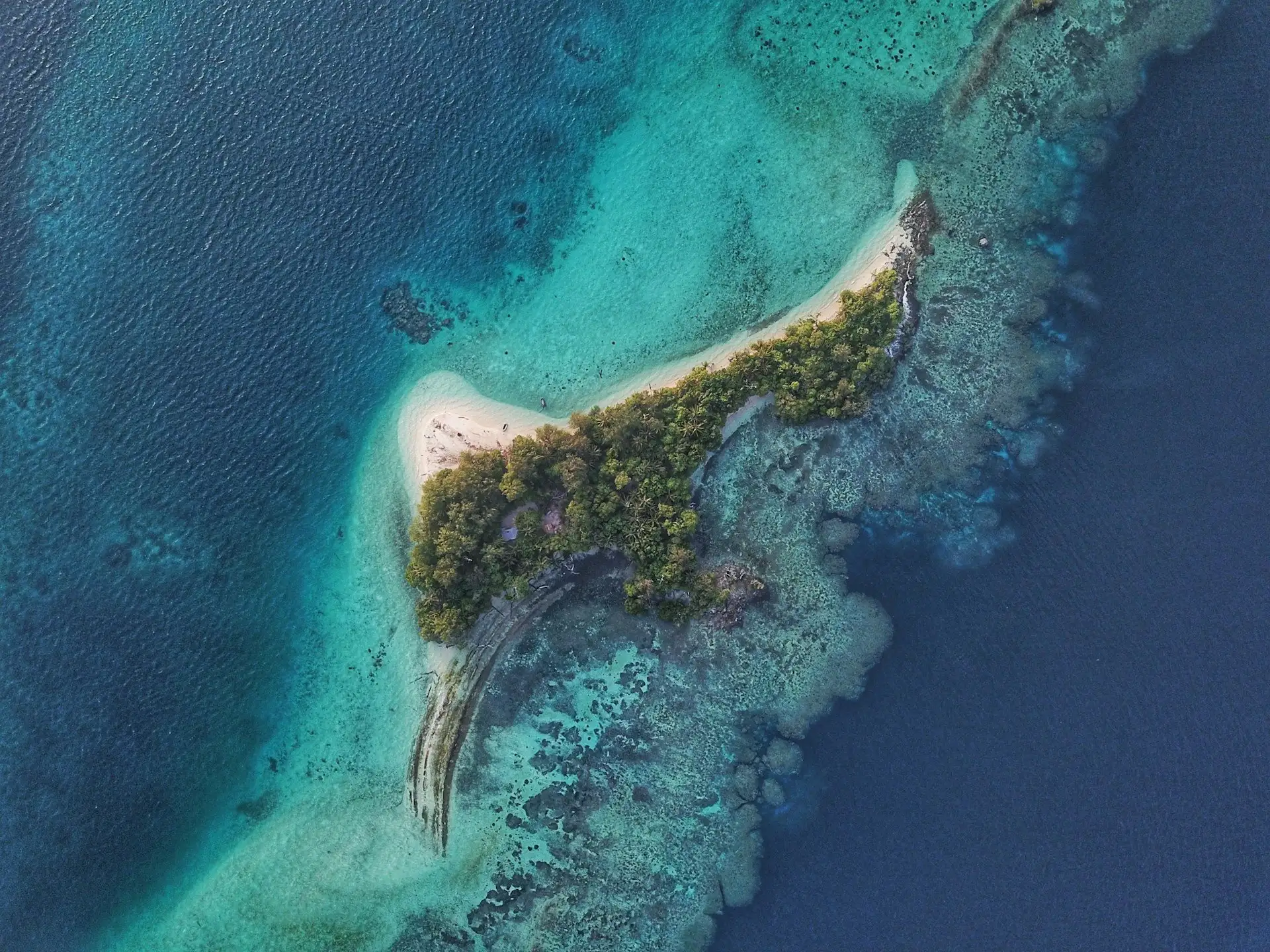
Solomon Islands
The seafloor between Guadalcanal and Savo Island holds more sunken warships than almost anywhere on earth. The lagoon at Marovo is one of the great dive destinations of the world. In the Langa Langa Lagoon off Malaita, communities live on artificial islands they built by hand from coral, stone by stone, over generations. The skull shrines along the coast are still tended. The Pacific most visitors never find.
What You're Actually Getting Into
The Solomon Islands are an archipelago of roughly 900 islands and atolls stretching 1,500 kilometers across the southwest Pacific, southeast of Papua New Guinea and north of Vanuatu. The main islands — Guadalcanal, Malaita, New Georgia, Santa Isabel, Choiseul, Makira, and Malaupaina — are forested, mountainous, and largely unconnected by roads. The capital Honiara sits on Guadalcanal's north coast near Henderson International Airport, which is where almost everyone arrives and where most people are glad to move on from quickly to the outer islands.
The Solomon Islands receive around 25,000 to 30,000 tourists per year — less than the daily visitor count of many Pacific resort destinations. The reason is not that the country lacks things to see. It's that the things it has require some effort to reach and the infrastructure for comfortable independent travel is limited. The reward for that effort is a Pacific that feels genuinely unmediated: diving that most of the world's divers haven't found, cultural practices that function rather than perform, WWII history written directly into the landscape, and communities that receive visitors as a genuine rarity rather than as a revenue stream.
The WWII story is inescapable. The campaign for Guadalcanal — fought between August 1942 and February 1943 — was one of the most strategically significant and physically brutal of the Pacific War. The fighting consumed the energies of both Japan and the United States at a critical moment, and the outcome shifted the war's momentum permanently. The physical evidence is everywhere: rusting tanks on the beach at Bonegi, the bones of ships on the seafloor of Iron Bottom Sound, the American military cemetery at Skyline Ridge, the Japanese war memorials maintained by successive generations of Japanese veterans and their descendants who still come to pay respects. The Solomons take WWII history seriously, not as a tourist product but as a lived part of their national identity.
Marovo Lagoon in the Western Province is the country's premier marine destination and one of the great dive lagoons of the world. The double barrier reef enclosing approximately 700 square kilometers of sheltered water produces dive conditions — visibility, coral health, fish density, access to both pelagic and reef species — that are extraordinary by any standard, and that almost no one outside the serious diving community has heard of. Liveaboards and a handful of dedicated dive lodges operate here. The wood carving tradition of the Marovo communities is among the finest in the Pacific.
Malaita is the island that arrests visitors who venture beyond the WWII circuit and the dive lodges. The Langa Langa Lagoon on Malaita's west coast contains dozens of artificial islands built from coral stone by communities who chose to live on the water rather than the land, partly for strategic reasons in an era of inter-island warfare, partly because the lagoon provided what the jungle could not. The communities still live there, connected to the main island by short canoe journeys. Traditional shell money is still manufactured and used in social exchange. Skull shrines along the coast and on small island sanctuaries still house the remains of important ancestors and historical enemies, maintained as spiritual sites by communities that have not abandoned the ancestor veneration practices that predate Christian contact by millennia.
Solomon Islands at a Glance
A History Worth Knowing
The Solomon Islands have been continuously settled for approximately 30,000 years, among the earliest human settlements in the Pacific. The initial settlers were the Melanesian ancestors of the majority of today's population. Austronesian-speaking peoples arrived later, around 4,000 years ago, and their descendants are the Polynesians of the outer islands — the Tikopia, Anuta, Rennell, and Bellona island communities who maintain distinct cultures and languages from the Melanesian majority.
Spanish explorer Álvaro de Mendaña became the first European to sight the islands in 1568, naming them after the biblical King Solomon in the hope of persuading patrons that he had found a land of legendary wealth. He had not found gold, but he had found some of the most biologically and culturally rich islands in the Pacific. Mendaña returned in 1595 for a disastrous attempt at colonization — massacres of islanders, internal Spanish conflict, and death from disease and violence — that established the pattern of traumatic European contact that would characterize the following centuries.
The 19th century brought blackbirding — the forced or fraudulent labor recruitment of Pacific islanders for plantation work in Queensland and Fiji that was functionally indistinguishable from slavery. Thousands of Solomon Islanders were taken. The practice was formally suppressed by 1904 but the demographic and social consequences persisted for generations. British colonial administration was established in 1893, bringing a degree of external order but also the systematic undermining of traditional authority structures and kastom governance.
The Pacific War transformed the Solomon Islands in six months. The Japanese occupation of Guadalcanal in 1942, and particularly the construction of the airstrip (Henderson Field, now the site of Honiara's international airport) that both sides recognized as the strategic key to the Pacific, triggered the campaign that became the war's turning point. The naval battle series in Iron Bottom Sound — the Battle of Savo Island, the Battle of Cape Esperance, the Naval Battle of Guadalcanal — cost Japan and the United States a combined total of dozens of ships and tens of thousands of lives. On land, the fighting through Guadalcanal's jungle lasted six months and produced casualty rates that shocked even veterans of European combat. American forces under General Alexander Vandegrift and Japanese forces under a series of commanders fought across terrain so difficult that supply lines collapsed and disease killed more men than combat. The Japanese evacuated the island in February 1943 — one of the few organized retreats of the Pacific War — and the momentum never returned to them.
The Solomon Islands gained independence from Britain on July 7, 1978. The post-independence period was marked by chronic underdevelopment and, between 1998 and 2003, a period of serious ethnic tension and low-level civil conflict — known locally as "the Tensions" — between Guadalcanal people and Malaitan migrants in Honiara that produced thousands of displaced persons and significant economic disruption. The Regional Assistance Mission to Solomon Islands (RAMSI), an Australian-led multinational force, restored order after 2003 and remained until 2017. The country has been politically stable, if economically fragile, since then.
In 2022, the Solomon Islands signed a security agreement with China, which triggered significant concern from Australia, New Zealand, and the United States about Chinese strategic presence in the Pacific. The agreement's scope and implications remain a subject of active diplomatic negotiation and regional anxiety. It does not directly affect visitor access or safety, but it is the political context that shapes the Solomons' international relationships.
Melanesian ancestors settle the Solomon Islands. Among the earliest human settlements in the Pacific outside the Australian continent.
Spanish explorer Álvaro de Mendaña first European to sight the islands, naming them after King Solomon. Returns in 1595 for a disastrous colonization attempt.
Thousands of Solomon Islanders taken by force or fraud for plantation labor in Queensland and Fiji. A period of devastating demographic loss and cultural disruption.
Britain establishes the British Solomon Islands Protectorate, beginning formal colonial administration that lasts until independence in 1978.
Six months of land, sea, and air combat over Henderson Field airstrip. Iron Bottom Sound fills with warships. The campaign's outcome shifts the Pacific War's momentum permanently toward the Allies.
Solomon Islands achieves independence on July 7, 1978. Independence Day remains the national holiday and is celebrated with cultural events across the archipelago.
Ethnic conflict between Guadalcanal people and Malaitan migrants produces thousands of displaced persons and near-collapse of government services. RAMSI restores order after 2003.
Solomon Islands signs a security agreement with China, triggering regional concern. The agreement shapes current Pacific geopolitics without directly affecting visitor access.
The Solomon Islands' Destinations
The Solomon Islands spread across 1,500 kilometers and most of them are connected only by small aircraft and intermittent boat services. Most visitors organize their trip around two or three main destinations: Guadalcanal for the WWII history and as the entry point, the Western Province for Marovo Lagoon diving, and Malaita for kastom culture. Adding more requires more time and more flexibility about what happens when domestic schedules don't align.
Guadalcanal — Iron Bottom Sound & Land Sites
The fighting for Guadalcanal left the island covered in physical evidence that 80 years of jungle growth has only partially obscured. The most accessible land sites are the two Bonegi Beach wrecks — Japanese freighters Hirokawa Maru and Kinugawa Maru, rusting in the shallows just off the beach 10 kilometers west of Honiara, accessible for snorkeling directly from shore and for scuba in 5 to 30 meters. The tanks at Poha River junction, half-buried by vegetation, are visible from the road. The American military cemetery at Skyline Ridge above Honiara holds 48 graves. The Vilu War Museum, 30 kilometers from Honiara at the end of a rough road, has Japanese aircraft, American aircraft, coastal artillery, and other heavy equipment collected from across the island — rough and unofficial, maintained by a local family, and one of the most genuine WWII outdoor museums in the Pacific. Iron Bottom Sound itself requires a dive boat — the wrecks of Japanese destroyers and American destroyers sit in 30 to 50 meters of water between Guadalcanal's north coast, Savo Island, and the Florida Islands. The American destroyer USS Aaron Ward, the Japanese destroyer Kinugawa, and several transport vessels are regularly dived from Honiara operators.
Marovo Lagoon
In the Western Province, 90 minutes by domestic flight from Honiara, Marovo Lagoon is the world's largest saltwater lagoon enclosed within a double barrier reef. The outer reef produces wall dives with grey reef sharks, eagle rays, and schooling hammerheads in season. The inner lagoon has pristine coral gardens, giant clams, and bommies so encrusted with soft coral that they photograph in every direction. The WWII wrecks within the lagoon — several Japanese transport vessels and aircraft — are in 10 to 30 meters, accessible to Open Water certified divers. The Solomon Islands Dive Expeditions (SIDE) liveaboard and a handful of dedicated dive lodges including Uepi Island Resort and Zipolo Habu Resort are the best operations. The communities around Marovo are known throughout the Pacific for their wood carving — specifically the intricately carved ebony panels depicting traditional kastom motifs that are among the finest examples of contemporary Pacific decorative art.
Malaita — Langa Langa Lagoon & Skull Shrines
Malaita is the Solomon Islands' most populous island and the one least changed by tourism. The Langa Langa Lagoon on its western coast is home to communities that built their settlements on artificial islands constructed from coral stone and rubble, accumulated over generations to create platforms above the lagoon's surface. The communities — now accessible by short canoe or motorboat from Auki, the provincial capital — still manufacture the shell money (tafuliae) that functions as the primary medium of ceremonial exchange in Malaitan kastom. The process of making tafuliae — grinding conus and nassa shells into discs, polishing them, and stringing them in specific denominations — is a skilled practice requiring months for a significant string. The skull shrines of Langa Langa, on small coral islets accessible from the lagoon, house the skulls of important ancestors and historical enemies, maintained as spiritual sites with specific access protocols. Visiting requires permission arranged through a guide or the Auki guesthouse network. The relationship between Malaita's kastom traditions and Christianity — both deeply embedded in the same communities simultaneously — is one of the most interesting social dynamics in Melanesia and worth some reading before you arrive.
New Georgia — Munda & Roviana Lagoon
New Georgia Island and its surrounding lagoon were heavily contested in 1943 during the New Georgia Campaign, and the physical relics are abundant. Munda's airstrip, built by the Japanese and taken by the Americans after weeks of fighting, is now the main Western Province airport. The Roviana Lagoon, sheltered behind New Georgia's coast, has similar diving conditions to Marovo — WWII wrecks, healthy reef, and minimal other divers — with the addition of genuine historical sites including former headhunting strongholds of the Roviana people that are accessible with a local guide. The skull islands of Roviana Lagoon are among the most atmospheric historical sites in the Solomons, small coral islets where the skulls of slaves and enemies taken in 19th-century raids are still housed.
Rennell Island
Rennell Island in the far south of the Solomons archipelago is the world's largest raised coral atoll and contains Lake Tegano, the largest lake in the Pacific Islands and a UNESCO World Heritage Site. The lake, which contains saltwater despite being 180 meters above sea level (a relic of its former status as a Pacific lagoon before tectonic uplift), is home to endemic fish, sea snakes, and bird species found nowhere else on earth. Access is by infrequent domestic flight from Honiara. The island has minimal tourist infrastructure. This is genuine wilderness travel requiring self-sufficiency and realistic expectations about what "accommodation" means in the context of a remote outer island in the Solomons.
Honiara
Honiara is a small, chaotic, and energetic capital built on the site of the American WWII military base on Guadalcanal's north coast. The National Museum on Mendana Avenue has a reasonable collection of traditional material culture from across the archipelago. The Honiara Central Market is the best place to see daily life — produce, fish, betel nut, and traditional handicrafts sold from concrete stalls by vendors from every island group. The Point Cruz Yacht Club is the most reliable bar and meeting point in the city. Honiara was damaged during the ethnic tensions of 1998–2003 and was again affected by riots in November 2021. It is generally functional and safe in daylight in the areas visitors use, with standard urban Pacific precautions applying after dark.
Tikopia & Polynesian Outliers
Tikopia, Anuta, and Fatutaka in the far eastern Solomons are Polynesian outlier islands — small communities maintaining distinct Polynesian language and culture entirely surrounded by a Melanesian country. Tikopia in particular has been extensively documented by anthropologist Raymond Firth from his 1920s fieldwork onward, and the community has maintained traditional social structures, exchange systems, and ritual life with remarkable integrity. Access is genuinely difficult — irregular supply ship from Honiara, taking 3–4 days at sea. Not for itinerary-dependent travelers. Absolutely compelling for anyone with the flexibility and serious cultural interest to make the journey.
Florida Islands & Russell Islands
The Florida Islands north of Guadalcanal — Nggela Sule and Nggela Pile — were significant in the WWII campaign and contain several accessible wreck sites. The beaches of the Floridas are among the best on Guadalcanal's orbit. The Russell Islands west of Guadalcanal were used as an American staging base in 1943 and have coral reef diving that is largely unknown outside specialist Solomon Islands dive operators. Both island groups are accessible by day trip or overnight from Honiara on chartered speedboat.
Culture & Etiquette
The Solomon Islands have approximately 70 distinct local languages and an equivalent number of distinct kastom traditions. Pijin — Solomon Islands Pijin, a creole language distinct from PNG's Tok Pisin — serves as the national lingua franca and is widely spoken. English is an official language and is used in government and education. In practice, your interactions in outer island communities will move through multiple layers: English or Pijin with your guide, who translates into the local language for community interactions.
Kastom is the operative word for traditional law and practice across the Solomons, and it differs significantly from island to island. What is kastom in Malaita is not necessarily kastom in Guadalcanal or the Western Province. The constant is that kastom governs access to land, participation in ceremonies, and the terms of exchange with communities. Your guide navigates this. You follow their lead.
Access to skull shrines, artificial island communities, and ceremonial sites in the Solomons is governed by kastom protocols. Your guide is not optional — they are the mechanism through which permission is sought and granted, and through which your presence is interpreted to the community as legitimate. Turning up independently at a skull shrine without a guide is disrespectful and potentially unsafe in a social rather than physical sense.
Access fees to traditional sites, skull shrines, and community areas are kastom fees that flow to the landowners and custodians of the sites. They are not tourism levies. They represent the community's acknowledgment that access to their cultural heritage has a value that visitors must reciprocate. Pay the amount requested, and if the experience was worthwhile, tip the guide specifically.
Shoulders and knees covered in all community and village contexts. Women in skirts or long shorts. Men in shorts are generally fine but long trousers are more appropriate in formal kastom contexts. Swimwear is for the dive boat and the resort beach only.
"Halo" (hello), "tenkyu tumas" (thank you very much), "baebae" (later/goodbye), "nao" (now). Pijin is accessible to English speakers — many words are directly derived from English with specific pronunciations. Any Pijin gets a warm response in outer island communities where visitors are rare.
Many of the WWII sites in the Solomons are effectively war graves — particularly Iron Bottom Sound and the battlefield sites on Guadalcanal where remains were never recovered. Dive the wrecks with the same gravity you'd bring to a cemetery. Do not remove artifacts. Japanese veterans and their descendants regularly visit these sites and maintain memorials. Their presence reflects a relationship with this history that deserves acknowledgment.
Skull shrines are active spiritual sites, not historical curiosities. The protocol for visiting one requires specific permission from the kastom custodians, usually arranged through your guide. Photography may be permitted, prohibited entirely, or permitted only of specific aspects. Follow the custodian's guidance precisely. Taking photographs you weren't given permission for at a skull shrine is one of the most serious cultural breaches a visitor can commit in the Solomons.
Solomon Islands law prohibits removal of WWII artifacts. Beyond legality, this is a matter of respect — the wrecks in Iron Bottom Sound are war graves for the crews of both nationalities. They are also increasingly protected as heritage sites. The practice of taking "souvenirs" from WWII sites has diminished the historical record at every site where it has occurred.
Honiara has experienced episodes of civil unrest and has an active petty crime problem after dark in some areas, particularly around the market and waterfront. Walk with purpose in groups in the evening, use organized transport between hotel and restaurant, and follow current advice from your hotel about which areas to avoid at specific times.
Guadalcanal kastom, Malaitan kastom, and Western Province kastom are distinct in significant ways. What is appropriate behavior in one island group may be inappropriate in another. Your guide knows this. If you're moving between island groups, brief each new guide on your previous experience and ask specifically what is different here.
The agreement with China is a live political issue in the Solomons. Locals have a range of views on it and those views are deeply felt. As a visitor, this is not a topic to enter with strong opinions. Listen if it comes up and reserve your own position.
Shell Money
Tafuliae — Malaitan shell money — consists of strings of small discs ground from specific shell species, polished to a consistent size, and strung in denominations that are recognized across Malaita. It is used primarily in bride price negotiations, compensation payments, and other ceremonial exchanges where the use of cash would be inappropriate. The manufacturing process is preserved by specialist families in the Langa Langa Lagoon communities and can be observed by visitors who make arrangements through the Auki guesthouse network.
Marovo Wood Carving
The wood carving tradition of the Marovo Lagoon communities is among the finest in the Pacific. Carvers work primarily in ebony wood, producing panels, bowls, canoe prows, and decorative pieces that draw on traditional kastom motifs — sharks, frigate birds, crocodiles, and human figures in traditional narrative scenes. The work is genuinely collectible and international art dealers have purchased directly from Marovo carvers. Buy directly from the carver at their workshop rather than from a Honiara souvenir shop. The difference in price, quality, and the proportion that reaches the artist is significant.
Shark Callers
In parts of Malaita and some other islands, traditional shark-calling practices — using specific chants and rattle sounds to attract sharks to a canoe, where they are then captured by hand — have been practiced for centuries as part of ceremonial and practical fishing. The practice is rare but not extinct. It exists within a specific kastom context of relationship between certain clans and shark species that is part of the ancestral narrative of those communities. It is not a tourist show and should not be approached as one.
Christianity & Kastom
Most Solomon Islanders are Christian — Anglican, Catholic, South Sea Evangelical Church, and United Church are the main denominations — and Christianity is thoroughly integrated into daily life. Sunday observance, church attendance, and the social centrality of the church community coexist with active kastom practices in most communities. The relationship between the two is not a contradiction — it's a synthesis that has been negotiated over 150 years of contact and is still being worked out. Respecting both simultaneously, rather than treating kastom as pre-Christian survivals that Christianity should have replaced, is the appropriate visitor posture.
Food & Drink
Solomon Islands food in commercial contexts is functional rather than inspiring — Chinese restaurants are the standard option in Honiara and provincial capitals, serving a Pacific Chinese hybrid of fried rice, noodles, and whatever fresh protein arrived that day. The genuinely good food is what communities prepare for themselves: fresh fish cooked in coconut cream, taro and sweet potato from garden plots, leafy greens (called "island cabbage") cooked simply, and the occasional feast-level preparation for celebrations. Eating at a guesthouse or with a community beats any restaurant in the country.
Fresh Fish in Coconut Cream
The standard preparation across the Solomons: reef fish or tuna simmered in fresh coconut cream with leafy greens and taro. Every guesthouse cook has their version. It's rich, simple, and exactly what you want after a dive or a long boat journey. The quality of the fish, pulled from the water the same day, makes the dish. Order it wherever it appears on a menu.
Coconut Crab
The coconut crab (Birgus latro) — the world's largest land-living arthropod — is found across the outer islands and is considered a delicacy. It is roasted or boiled and the meat has a coconut-inflected sweetness from its diet. Population pressure from hunting has reduced numbers on the main islands. On outer islands where community management protects populations, an encounter with a live coconut crab is as remarkable as eating one. If you eat it, eat it where it was caught.
Taro & Root Vegetables
Taro, sweet potato, yam, and cassava form the staple carbohydrate across the archipelago. Cooked in the ground oven (earth oven / lovo) for community meals or boiled in coconut cream for daily eating. The varieties of taro cultivated across the Solomons' different island communities represent a significant body of agricultural knowledge maintained through village gardens.
Honiara Restaurants
Honiara's restaurant scene is thin. The Heritage Park Hotel and Mendana Hotel have the most reliable dining rooms serving Western and Pacific food. Lime Lounge near the Point Cruz Yacht Club is the most pleasant casual option. The Honiara Hotel restaurant is serviceable. For good cheap food, the Chinese restaurants along Mendana Avenue and around the market area are functional. Budget SBD 80–150 for a restaurant meal.
Betel Nut (Buai)
The Solomons, like PNG and much of Melanesia, has an active betel nut culture. The red-stained teeth and pavements of Honiara are the visible evidence. If offered buai as part of a social interaction, accepting gracefully is appropriate. The red staining of teeth, mouth, and pavement is extensive — plan accordingly for white clothing.
Solomon Blu Beer
Solomon Blu is the locally brewed lager and appears on every bar menu in the country. Cold, reliable, and the default social drink. The Point Cruz Yacht Club in Honiara has the best bar setting. Outer island guesthouses and dive lodges typically have beer available from a cold box. Spirits and wine are imported and expensive. Budget on beer.
When to Go
The Solomon Islands have a wet season from November through April and a drier season from May through October. The distinction matters primarily for inter-island boat travel and for diving visibility, both of which are better in the dry season. The islands sit in the cyclone belt and cyclones are possible November through April, though the Solomons are less frequently and severely affected than Vanuatu or Fiji. The best diving conditions are May through October.
Dry Season
May – OctBest diving visibility in Iron Bottom Sound and Marovo Lagoon. Calmer sea conditions for inter-island boat travel. Lower humidity and slightly cooler temperatures. The most comfortable period for the physical demands of outer island travel. Independence Day celebrations (July 7) are worth timing a visit around.
Wet Season
Nov – AprMore rainfall, higher humidity, and occasional rough sea conditions affecting inter-island transport. Diving is still possible and often productive — the plankton blooms attract larger pelagics. Cyclone risk is real but infrequent. Travel insurance covering trip interruption is essential in this period. Visitor numbers drop significantly.
Trip Planning
Solomon Islands trip planning centers on the domestic flight schedule, which is operated almost exclusively by Solomon Airlines and changes frequently. The key routes — Honiara to Auki (Malaita), Honiara to Munda (Western Province, via New Georgia), and Honiara to Gizo (Western Province) — run once or twice daily when operating and fill quickly. Domestic bookings should be made as soon as international flights are confirmed. The Marovo Lagoon is reached by domestic flight to Seghe airstrip, which operates infrequently — confirm current schedule directly with Solomon Airlines. Some Marovo lodges arrange speedboat transfer from Munda instead.
Honiara & Guadalcanal
Arrive Honiara. Day one: National Museum, Central Market (be there by 7am for the full experience), Point Cruz Yacht Club evening. Day two: Guadalcanal WWII sites by rental car — Bonegi Beach wreck snorkeling, Vilu War Museum, Skyline Ridge American cemetery. Return to Honiara for the night.
Iron Bottom Sound Diving
Full day dive trip with Guadalcanal-based dive operator. Two tanks on Iron Bottom Sound wrecks — USS Aaron Ward or Japanese destroyer depending on current operator program. Debrief dinner at Heritage Park Hotel.
Marovo Lagoon
Fly Honiara to Munda (45 min), transfer by speedboat to Marovo Lagoon lodge (1 hour). Four days of diving: outer reef walls, lagoon bommies, WWII wrecks within the lagoon. One afternoon visiting Marovo wood carving communities by boat — buy directly from carvers. Return to Honiara day seven for departure or overnight before early flight.
Honiara & Guadalcanal
Three days on Guadalcanal: Honiara market, National Museum, Iron Bottom Sound diving (two separate days covering different wreck sites), Vilu War Museum, Florida Islands day trip by speedboat for beach and snorkeling. Extended Guadalcanal coverage including the American military cemetery and WWII land sites with a local WWII guide who knows the battlefields personally.
Malaita — Auki & Langa Langa
Fly Honiara to Auki (30 min). Check into Auki Lodge. Day four: Langa Langa Lagoon artificial islands by canoe — community visit, shell money demonstration, briefing from guide on kastom protocols. Day five: skull shrine visit (arranged by guide with kastom permission), Fauabu waterfall hike in the afternoon. Days six and seven: outer Malaita village stays arranged through the guesthouse — community homestay with a specific kastom-focused program.
Marovo Lagoon & Western Province
Return to Honiara, fly to Munda. Transfer to Marovo Lagoon lodge. Six days of diving — thorough coverage of the outer reef and lagoon dive sites. One full day not diving: Marovo village carving tour by boat, traditional cooking demonstration at the lodge community, evening kastom storytelling session arranged by the lodge. Fly back from Munda to Honiara on day thirteen.
Honiara & Departure
Final morning at the fish market (4:30–6am if timing allows). Transfer to Henderson Airport. Depart.
Guadalcanal & Iron Bottom Sound
Extended Guadalcanal program: four days covering Iron Bottom Sound wrecks (dedicated dive day for the deeper USS Aaron Ward site), Vilu War Museum full day, Florida Islands overnight (speedboat, one night, beach and snorkeling), and the Skyline Ridge cemetery at dawn when the light comes across the Sound.
Malaita Deep Dive
Five days on Malaita for genuine depth of engagement: Auki base, Langa Langa Lagoon artificial islands, shell money workshop observation, two skull shrine visits with different guide-arranged kastom protocols, village overnight at a Kwaio community in the interior for visitors specifically interested in the most intact kastom traditions in Malaita (requires specialist arrangement — the Auki Lodge team can advise on current access). Return to Auki, fly Honiara.
Western Province — Marovo & New Georgia
Fly Honiara to Munda. Days ten and eleven: Roviana Lagoon kastom sites and skull islands with local guide from Munda. Days twelve through sixteen: Marovo Lagoon liveaboard or lodge program — thorough outer reef and lagoon coverage, dedicated wreck days, wood carving community visits, evening programs at lodge.
Rennell Island & Return
If the domestic schedule allows (confirm months ahead): fly Honiara to Rennell (Lake Tegano area). Three days of genuinely remote island time — Lake Tegano UNESCO site, endemic birds, community visit on the raised atoll. Return Honiara. Final fish market morning. Depart.
Malaria
Malaria is present throughout the Solomon Islands, including in Honiara. It is a real risk and not to be dismissed. Begin antimalarial prophylaxis before departure (timing depends on drug — consult a travel medicine clinic). Use DEET repellent consistently, especially at dawn and dusk. Sleep under a net where provided. Both falciparum and vivax malaria are present, with falciparum being more severe. Do not skip prophylaxis.
Full vaccine info →Dive Certification
Open Water covers most lagoon and inner Sound dives. Advanced Open Water is recommended for the deeper Iron Bottom Sound wrecks (30–50m) and outer reef walls. Bring your certification card, logbook, and dive computer. The nearest functional decompression chamber is in Honiara at the National Referral Hospital — confirm operational status with your dive operator on arrival.
Connectivity
Our Telekom and bmobile are the two main carriers. Coverage in Honiara is reasonable. Provincial capitals have basic coverage. Outer islands and Marovo Lagoon have very limited to no coverage. Download offline maps for all islands before departure. A satellite communicator is valuable for remote island travel.
Get eSIM →Cash
The Solomon Islands Dollar is the currency. ATMs are available in Honiara (ANZ and Bank South Pacific branches). There are no reliable ATMs in provincial capitals or outer islands. Withdraw significant cash in Honiara before any inter-island travel. Most transactions in outer communities are cash-only and SBD-only.
Domestic Flight Reality
Solomon Airlines domestic schedules change without consistent notice. Flights cancel, routes change seasonally, and aircraft availability limits options. Book domestic legs as early as possible, confirm the week before departure, and build full buffer days around any domestic connection feeding into an international departure. Missing a domestic flight in the Solomons is not solvable quickly.
Travel Insurance
Comprehensive travel insurance covering medical evacuation (to Australia or New Zealand), trip cancellation, and dive coverage is essential. The National Referral Hospital in Honiara handles primary care but serious cases require evacuation. Save your insurer's emergency number before departure — it is the first call in any medical emergency.
Transport in the Solomon Islands
Inter-island transport in the Solomons is the defining logistical challenge of any trip. Solomon Airlines domestic flights are the primary tool. Between and around the outer islands, motorized longboats and speedboats operated by guesthouses, dive operators, and independent charterers are the standard. Road travel is limited to the main islands where roads exist — which is primarily Guadalcanal around Honiara and brief stretches on New Georgia and Malaita.
Solomon Airlines — International
VariableSolomon Airlines and Fiji Airways connect Honiara (Henderson International) with Brisbane, Sydney, Nadi, Port Vila, and several Pacific destinations. Most European visitors connect through Brisbane. The flight from Brisbane to Honiara takes about 3.5 hours.
Solomon Airlines — Domestic
SBD 500–1,200 per flightHoniara to Auki (Malaita), Munda (New Georgia/Western Province), Gizo (Western Province), Seghe (Marovo area), and more. Small Twin Otter and ATR aircraft. Schedules change and cancel — confirm all domestic legs within 48 hours of travel. Book directly through Solomon Airlines.
Charter Speedboats
SBD 800–3,000/dayThe primary transport between dive lodges, islands, and communities within a given lagoon system. Your lodge or guesthouse arranges all speedboat transport for its guests. Independent charters for day trips from Honiara to the Florida Islands or Savo Island are arranged through the Point Cruz Yacht Club area operators.
Cargo & Passenger Ships
SBD 200–800 per passageMV Fair Glory and similar vessels operated by National Shipping run irregular inter-island routes connecting Honiara with provincial capitals and outer islands. Schedules are unpredictable and the journey is slow but authentic. For specific outer islands like Tikopia and Rennell, cargo ships are sometimes the only option. Confirm schedules directly with the shipping company in Honiara.
Taxis & Mini-buses
SBD 10–50 per tripAvailable in Honiara. Mini-buses (wantoks buses) run fixed routes around the capital for SBD 1–3. Taxis for specific destinations — Vilu War Museum, Bonegi Beach, Henderson Airport — should be arranged through your hotel with an agreed price. Do not hail taxis on the street in Honiara; use hotel-arranged transport.
Car Rental
SBD 400–700/dayAvailable in Honiara through Budget and local operators. Drive on the left. Road conditions on Guadalcanal outside central Honiara are rough and potholes are significant. The Vilu War Museum road specifically requires slow careful driving. Do not attempt to drive to the Weather Coast on Guadalcanal's southern side without 4WD and local knowledge — the road is severely degraded.
Accommodation in the Solomon Islands
Accommodation in the Solomons divides clearly by location. Honiara has the widest range, from the Heritage Park and Mendana hotels at the top end through guesthouses at the budget end. Outer island accommodation is either a dedicated dive lodge (Marovo, Malaita, Gizo area) or a community guesthouse that is basic by any international standard but genuine in its community connection. The dive lodges are where you stay for comfort; the community guesthouses are where you stay for the experience.
Heritage Park Hotel (Honiara)
SBD 1,200–1,800/nightThe best hotel in Honiara with a pool, reliable restaurant, and the most consistent service standard in the capital. Used by government contractors, NGO staff, and visiting officials. The location in a secure compound with harbor views makes it the most comfortable base in a city that benefits from being in a managed compound. Book directly for best rates.
Uepi Island Resort (Marovo)
SBD 1,500–2,500/nightThe benchmark dive resort in Marovo Lagoon, on a small island in the middle of the lagoon with reef directly off the jetty. Comfortable bungalow accommodation, consistently excellent diving operation, good food, and genuine community relationships with the surrounding Marovo villages. Fly to Munda and transfer by speedboat.
Zipolo Habu Resort (Marovo)
SBD 800–1,500/nightA smaller, more personal Marovo Lagoon operation run by a family with deep community roots in the Western Province. Less expensive than Uepi, more community-integrated, and with good diving from the house reef. The owner's knowledge of Marovo kastom and community relationships is exceptional.
Community Guesthouses
SBD 200–500/nightIn Auki (Malaita), provincial capitals, and some outer island communities, basic guesthouses offer clean rooms, shared facilities, and access to local knowledge that no resort can match. Auki Lodge on Malaita is the most reliable outer island guesthouse and the best base for Langa Langa Lagoon and kastom site visits. Confirm current availability by phone or email before travel — these operations are small and sometimes closed.
Budget Planning
The Solomon Islands sit at a mid-range cost level relative to the Pacific — more expensive than Samoa, considerably less than Palau or the Maldives. The dive lodge packages in Marovo are the main budget item for dive-focused visitors. Honiara hotels and restaurants at the top end approach Australian prices for food and accommodation. At the community guesthouse level, the Solomons is genuinely affordable. The main expense variable is the domestic flight costs, which are significant for multi-island itineraries.
- Community guesthouses in Auki or Munda area
- Local restaurant and market food
- Land-based WWII sites by rental car
- Shore snorkeling at Bonegi Beach
- Kastom fees for community visits
- Heritage Park Hotel or Mendana (Honiara)
- Dive day trips from Honiara operators
- Domestic flights between islands
- Zipolo Habu or similar Marovo lodge
- Guided kastom and WWII tours
- Uepi Island Resort full package
- SIDE liveaboard program
- Private boat charters for outer island access
- Multiple island domestic flights
- Specialist kastom and WWII guide programs
Quick Reference Prices
Visa & Entry
Most nationalities receive a free visitor's permit on arrival at Henderson International Airport for stays of up to 90 days. This includes citizens of Australia, New Zealand, UK, USA, Canada, and EU member states. You need a valid passport, a return or onward ticket, and evidence of accommodation. Some nationalities require an advance visa through a Solomon Islands diplomatic post — check the Solomon Islands Immigration Division website for current requirements before booking.
Free of charge. Valid passport, return ticket, and accommodation evidence required. Extendable at the Solomon Islands Immigration Division in Honiara. Check current requirements for your specific nationality.
Safety in the Solomon Islands
The Solomon Islands are generally safe for visitors who apply sensible Pacific island travel protocols. The most significant risk is malaria — far more visitors are affected by malaria than by crime. Urban Honiara requires more care than the outer islands. The WWII sites contain unexploded ordnance that is still occasionally encountered. Maritime travel in the wet season on rough seas in small boats carries inherent risk. None of this prevents a safe trip with appropriate preparation.
Malaria
The primary health risk in the Solomons. Present throughout the country including in Honiara. Begin prophylaxis before arrival, use repellent consistently, and sleep under nets. Symptoms — fever, chills, headache — typically appear 7–30 days after infection. Seek medical attention immediately if these symptoms develop during or after travel.
Honiara After Dark
Honiara has experienced periodic civil unrest and has a petty crime problem after dark in market and waterfront areas. Walk with purpose in groups in the evening, use hotel-arranged transport, and follow current advice from your accommodation about specific areas to avoid. The Point Cruz Yacht Club area and the hotel district are generally safer than the central market area after dark.
Unexploded Ordnance
WWII unexploded ordnance remains present across Guadalcanal, New Georgia, and several other islands. Do not pick up, move, or handle any metal object that you cannot positively identify as safe. Stay on known paths at land-based WWII sites. Report any ordnance finds to your guide or local authorities. This is ongoing — ordnance is still found regularly during construction and farming.
Maritime Safety
Inter-island travel by speedboat and longboat in wet season or rough weather carries risk. Small boats crossing open ocean passages between islands can be dangerous in swell conditions. Always wear a life jacket regardless of local practice. Never travel by open boat in conditions that local operators describe as rough. Confirm with your lodge or guesthouse that planned boat travel is safe before departing.
Dive Safety
The decompression chamber at Honiara's National Referral Hospital is present but has historically had unreliable operational status. Confirm it is operational with your dive operator on arrival. DAN (Divers Alert Network) at +1-919-684-9111 coordinates dive medical emergencies and evacuation. Conservative dive profiles, staying within no-decompression limits, and not diving beyond your certification level are the primary risk management tools available to you.
Kastom Land Disputes
Land ownership disputes between clans are a feature of life across the Solomons and occasionally affect access to specific sites. Your guide will know current situations. Do not attempt to access any kastom site or community without prior arrangement — what appears to be a straightforward visit may cross into contested territory that requires specific negotiation.
Emergency Information
Embassies & Consular Assistance
Several countries maintain high commissions in Honiara. Others cover the Solomons from Canberra, Port Moresby, or Suva.
Book Your Solomon Islands Trip
Everything in one place. These are services worth actually using.
Iumi Wanfala
Iumi wanfala — we are one people — is a phrase from Solomon Islands Pijin that carries specific political weight in a country that fought its way through ethnic tensions in the late 1990s and is still working out what it means to be a nation of 70 languages and 900 islands. It is aspirational rather than descriptive. It is the thing the Solomons is trying to become rather than what it already is, which is perhaps why it sounds like something worth working toward.
The Solomon Islands don't meet travelers halfway. The domestic schedule is unreliable. Honiara is demanding. The outer islands require a level of self-sufficiency and flexibility that comfortable travel rarely produces. What the Solomons offers in exchange is the kind of access to genuine places — Iron Bottom Sound, the skull shrines of Langa Langa, the carvers of Marovo, the fish market at 4:30am — that becomes rarer in direct proportion to how easy a country is to visit. The Solomons are not easy. That is precisely what makes them extraordinary.