
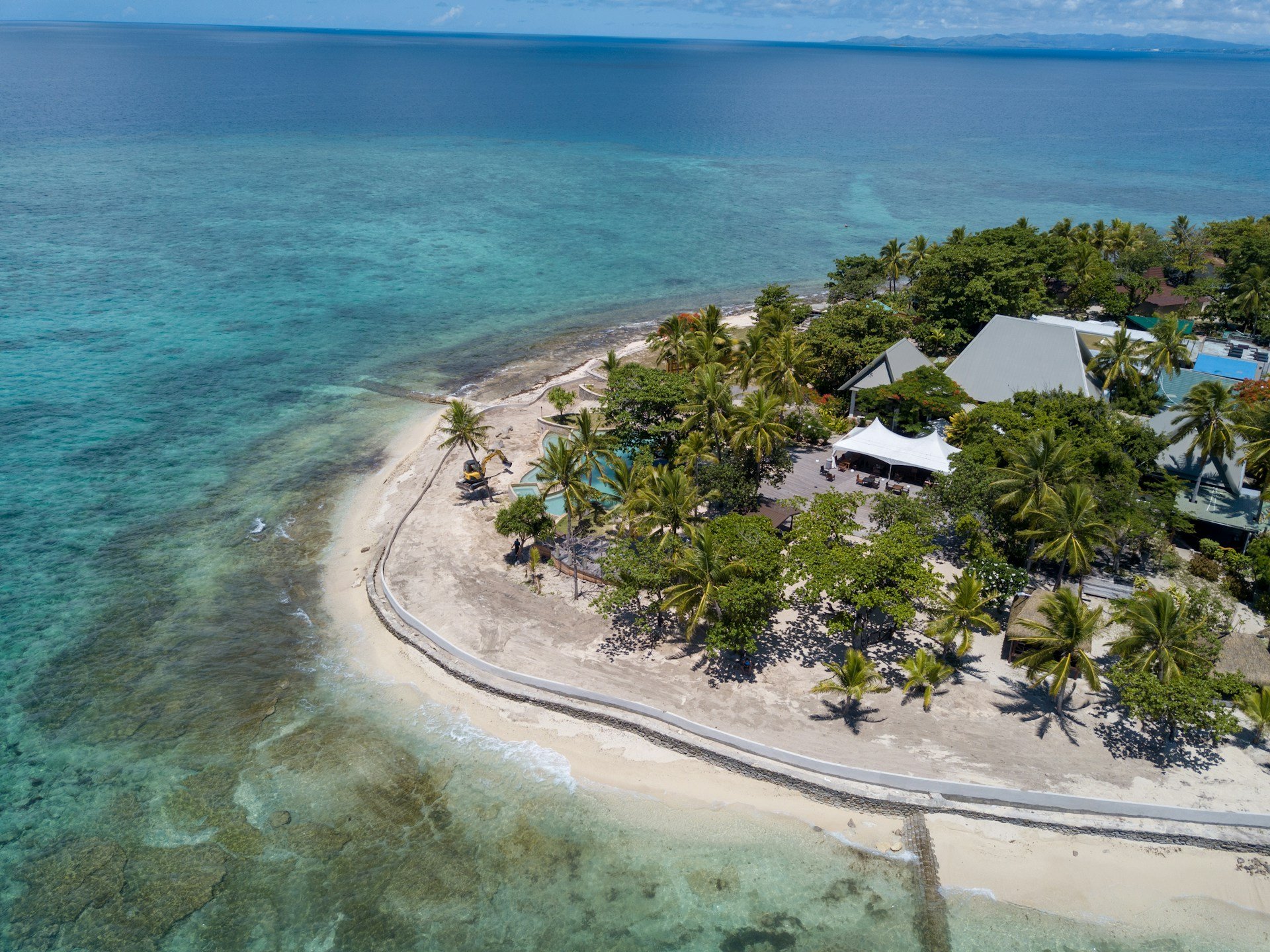
Kiribati
Pronounced Kiribas. Thirty-three atolls spread across more than four thousand kilometres of the central Pacific, crossing the equator and the International Date Line simultaneously. Its capital squeezes sixty thousand people onto a strip of land averaging two metres above sea level. Its outer islands are among the least visited places on earth. It is the first nation where people will stand on the day the sun rises and watch whether the ocean comes. That day has not arrived. The people are still here.
What You're Actually Getting Into
Kiribati (pronounced Kiribas) receives fewer than ten thousand visitors a year to its main island group. The country spans more ocean territory than any other Pacific island nation — 3.5 million square kilometres of exclusive economic zone — while its total land area is only 811 square kilometres, much of it barely above sea level. The logistics of getting here from anywhere are genuine. The rewards of getting here are specific rather than broad: this is not a destination for beach holidays or reef snorkelling in the sense that Fiji and French Polynesia are. It is a destination for people who want to understand something about the Pacific — and about the earth's current trajectory — that no other destination teaches as directly.
South Tarawa, the capital atoll, is genuinely unlike any other place in the Pacific. Approximately 60,000 people live on a narrow strip of land between 200 and 800 metres wide and about 30 kilometres long — a population density comparable to parts of urban Tokyo, but on a coral atoll averaging two metres above sea level with no high ground, no rivers, no piped municipal water in most areas, and no sewerage system. The sanitation crisis on South Tarawa is real and documented: the groundwater lens is contaminated across large areas, open defecation on the beach at low tide is common practice in some areas, and the overcrowding is the direct result of internal migration from the outer islands where services are even more limited. This is not what the tourism brochure says. It is what is there.
Beyond South Tarawa — on the outer Gilbert Islands, on the Phoenix Islands (a UNESCO World Heritage marine protected area largely closed to visitors), and on the Line Islands including Kiritimati (Christmas Island) — Kiribati is something else entirely. The outer Gilbert Islands are traditional, slow, and genuinely hospitable in a way that depends on the maneaba (meeting house) culture rather than tourist infrastructure. Kiritimati has the finest bonefish flats in the world and a fishing lodge culture that draws dedicated anglers from across the hemisphere. The Phoenix Islands are among the most pristine marine ecosystems remaining on earth and are almost completely inaccessible to independent travellers.
The climate change context is not background information for Kiribati — it is the central fact of the country's present and future. The Kiribati government has purchased 6,000 acres of land in Fiji (the Natoavatu Estate on Vanua Levu) as a precautionary measure against the possibility that South Tarawa and the lower-lying atolls become uninhabitable within this century. Former President Anote Tong spent more than a decade on international stages speaking about Kiribati's situation with a calm precision that the world's climate negotiators found more eloquent than any scientific report. His successor maintained a different approach — focusing on adaptation rather than migration — but the fundamental geography of the situation has not changed. The average height above sea level has not increased. The ocean has continued to rise.
Visiting Kiribati is an act of witnessing. You will not have the luxury holiday of Bora Bora or the adventure infrastructure of Fiji. You will have the specific experience of being in a place where the stakes of climate change are not abstract — they are the ground you stand on, and the ground is only two metres above the water that is rising to claim it.
Kiribati at a Glance
A History Worth Knowing
The Gilbert Islands — now the central and most populated part of Kiribati — were settled by Micronesian and Polynesian peoples approximately 3,000 years ago. The oral traditions of the I-Kiribati people trace the origin of the islands to the god Nareau, who sat on a great clam shell in the primordial darkness and separated sky from earth. The settlement history from archaeological evidence suggests waves of migration, with Fijian and Tongan influences visible in the later population. The society that developed was governed through the maneaba system — the community meeting house where decisions were made by te roro, a process of discussion toward consensus that continues to be the primary political technology of I-Kiribati governance at the village level today.
European contact began with Spanish explorers in the 16th century and intensified in the early 19th century with British and American whalers and traders. The British established a protectorate over the Gilbert and Ellice Islands in 1892, formalised as a colony in 1916. The Ellice Islands (now Tuvalu) separated from the Gilberts in 1975 following a referendum in which the Polynesian Ellice Islanders voted to separate from the Micronesian Gilbertese. The separation reflected genuine ethnic and cultural distinction and was achieved peacefully — a rarity in Pacific colonial history.
The Pacific War came to the Gilbert Islands with the Japanese occupation of Tarawa in December 1941. The Battle of Tarawa in November 1943 — specifically the battle for Betio islet, the site of the Japanese command headquarters and the main defensive fortifications — was one of the most concentrated and lethal engagements of the Pacific campaign. American Marines assaulted a fortified position held by approximately 4,800 Japanese defenders. The reef at Betio proved too shallow for the landing craft at low tide, forcing Marines to wade hundreds of metres through withering fire. In 76 hours, approximately 1,009 American Marines and 30 sailors were killed and 2,101 wounded. The Japanese garrison was almost entirely destroyed — fewer than 17 Japanese soldiers and 129 Korean labourers survived. The battlefield photographs from Tarawa, published in Life magazine in 1943, were among the first images of American combat dead released to the US public and produced significant political shock. The lessons learned at Tarawa about amphibious assault, naval gunfire support, and underwater demolition teams directly shaped the subsequent Pacific island-hopping campaign. The battlefield is still there on Betio: Japanese gun emplacements, tank wrecks, bunkers, and the rusting hulks of landing craft in the lagoon.
The Gilbert Islands gained independence as Kiribati on July 12, 1979 — the same year as Saint Lucia and Saint Vincent and the Grenadines, in a year of significant Pacific and Caribbean decolonisation. The new nation included the Phoenix Islands and the Line Islands (including Kiritimati), creating the extraordinary geographic scatter of 33 atolls across 3.5 million square kilometres of ocean. In 1994, Kiribati moved the International Date Line east of its territory — a purely commercial decision intended to ensure that all of Kiribati was on the same side of the line and that the Line Islands' claim to be the first inhabited place on earth to experience each new day was valid. The Phoenix Islands were designated a fully protected marine area in 2006 and inscribed as a UNESCO World Heritage Site in 2010 — an act of conservation that required Kiribati to forgo the fishing license revenues that would otherwise have funded public services. It was a remarkable decision for one of the world's poorest nations.
Former President Anote Tong, who served from 2003 to 2016, became the most internationally prominent voice on climate change from a frontline Pacific nation. His combination of moral authority — he was describing the future of his own country and his own people, not an abstract global scenario — and intellectual precision was distinctive in international climate negotiations. He bought land in Fiji not because he believed evacuation was inevitable but because, as he explained, a parent buys insurance not because they expect their house to burn but because they cannot afford the risk of not being prepared. The current government of President Taneti Maamau has emphasised adaptation and resilience rather than migration — the construction of seawalls, the reclamation of land, the management of freshwater resources — but the basic geography remains unchanged. The land is two metres above the sea. The sea is rising.
Micronesian and Polynesian peoples settle the Gilbert Islands. The maneaba social system develops. The te roro consensus process becomes the primary governance technology.
Britain establishes a protectorate over the Gilbert and Ellice Islands. Formal colony declared in 1916. Colonial administration centres on Tarawa.
Japan occupies the Gilbert Islands shortly after Pearl Harbor. Tarawa becomes a fortified Japanese base. British and Australian civilians on Tarawa are interned or killed.
American Marines assault Betio islet. In 76 hours, approximately 5,700 people die on a piece of land smaller than Central Park. The lessons shape the rest of the Pacific War. The battlefield remains.
The Polynesian Ellice Islands vote to separate from the Micronesian Gilberts. They become Tuvalu in 1978. The separation is peaceful and reflects genuine cultural distinction.
July 12. The new nation includes 33 atolls across 3.5 million km² of ocean. The same year: Saint Lucia, Saint Vincent and the Grenadines, and several other nations gain independence.
Kiribati relocates the date line east of its territory to ensure all atolls share the same calendar day. The Line Islands become the first inhabited land to greet each new day — commercially useful and symbolically significant.
The PIPA is established (2006) and inscribed as a UNESCO World Heritage Site (2010). Kiribati foregoes fishing license revenues to protect 408,000 km² of pristine ocean. One of the most significant conservation acts by a small nation in history.
President Tong announces the purchase of the Natoavatu Estate on Vanua Levu, Fiji — 6,000 acres as a precautionary measure against the possibility that South Tarawa becomes uninhabitable.
Top Destinations
Kiribati's destinations are geographically scattered across more than 4,000 kilometres of the central Pacific and are reached by a combination of Air Kiribati inter-island flights, inter-island vessels (slow, infrequent, and not designed for tourists), and the single international connection through Fiji (Fiji Airways) and through Nauru and Marshall Islands via Air Marshall Islands and other Pacific carriers. The practical itinerary for most visitors concentrates on South Tarawa and either Kiritimati or one outer Gilbert island. Doing all three requires significant time and patience.
South Tarawa & Betio Battlefield
South Tarawa is where the government is, where the international airport (Bonriki) is, and where 60,000 people live on a strip of land barely wider than a runway in many places. It is simultaneously the most overcrowded and the most genuinely engaging Pacific capital — the maneaba at Ambo, the fish market at Bairiki, the causeway connecting the islets where minibuses and motorbikes create the most improbable traffic jam in the Pacific. Betio, the westernmost islet on South Tarawa, is the primary battlefield site from the 1943 battle. Japanese coastal gun emplacements (including the enormous 8-inch guns brought from Singapore after its fall) point seaward on the lagoon side. The tank wreck visible at low tide on the reef flat. The concrete bunkers still intact under the coconut palms. The Harry Hill memorial and the small museum adjacent are the entry points for visitors who need context for what they're looking at. This is not managed heritage tourism. It is a real battlefield where the ground is still disturbed.
Kiritimati (Christmas Island)
The world's largest atoll by land area — 388 square kilometres of land with a lagoon of 324 square kilometres — sitting 4,000 kilometres northeast of South Tarawa in the northern Line Islands. The bonefish flats at Kiritimati are described by anglers who have fished globally as the finest in the world: underpressured for decades, the flats hold bonefish in densities that produce double-digit days as standard, with permit and milkfish adding variety that no other destination matches. The Captain Cook Hotel has been the base for dedicated anglers for thirty years. The island also hosted British and American atmospheric nuclear weapons tests in 1957–1962, the legacy of which — in the health of British service veterans and I-Kiribati islanders exposed to fallout — remains contested and incompletely addressed.
Phoenix Islands Protected Area
The Phoenix Islands Protected Area (PIPA) covers 408,250 square kilometres of the central Pacific — the world's largest UNESCO World Heritage marine protected area. The eight uninhabited Phoenix Islands at its centre (Kanton, Orona, Rawaki, Manra, Birnie, McKean, Nikumaroro, Enderbury) rise from some of the deepest ocean in the Pacific. Access requires a government permit and is granted almost exclusively to accredited scientific research expeditions. Nikumaroro, in the southern part of the group, is the island where some researchers believe Amelia Earhart died following her disappearance in 1937 — a claim unproven but not disproven by the fragmentary evidence so far examined. The few scientists who have dived in the PIPA describe reef systems that have not been significantly disturbed by human activity and that show what the Pacific's reefs looked like before fishing and warming.
Outer Gilbert Islands
The 16 atolls of the Gilbert group beyond South Tarawa — Abemama, Butaritari, Maiana, Marakei, Abaiang, Tarawa (North), Maiana, Abemama, Kuria, Aranuka, Nonouti, Tabiteuea, Beru, Nikunau, Onotoa, Tamana, Arorae — are the traditional Kiribati that the overcrowded capital has moved away from. Abemama is the most accessible outer island and was the base for Robert Louis Stevenson, who lived there for several months in 1889 and wrote about it in "In the South Seas." Each outer island has its own maneaba, its own genealogical histories, and its own specific character — the southernmost atolls are the most traditional, the least visited, and the most practically challenging to reach.
Tarawa Lagoon
The Tarawa lagoon holds the wrecks of the Pacific War alongside a healthy reef that has had minimal diving pressure for decades. The Heian Maru (a Japanese supply ship), Sherman tanks, LVT amphibious tractors, and various landing craft debris are distributed across the lagoon floor at depths of 5–30 metres. The reef edge of the lagoon at Buota and Ambo has some of the best undisturbed coral in the Gilbert group. Tarawa has no commercial dive operator as of 2026 — diving requires advance planning with a liveaboard operator willing to make the Tarawa call or bringing your own equipment and finding a local guide. This logistical barrier means the wrecks are genuinely undived relative to their significance.
Caroline Island (Millennium Island)
The southernmost island of the Line Islands, Caroline Island was renamed Millennium Island in 1999 when it received particular attention as the first land on earth to welcome the year 2000 — a consequence of Kiribati's 1994 date line adjustment. Reaching it requires a charter or occasional expedition vessel from Kiritimati. The island is uninhabited, pristine, and has no facilities whatsoever. The reef around Caroline is among the most intact in Kiribati. It is the kind of place where a serious ocean naturalist or diver could spend a week without seeing another vessel. It is not, in any conventional sense, a tourist destination. It is one of the last places on earth that is genuinely untouched and the distance from everything else maintains it.
The Seawall Communities
Across South Tarawa, the seawalls built to protect low-lying land from the ocean are the most visible infrastructure of climate adaptation. Walking the south coast of South Tarawa — the ocean side rather than the lagoon side — from Betio east toward Bairiki shows the combination of seawall engineering, sand bag barriers, mangrove rehabilitation projects, and reclamation work that constitutes Kiribati's physical response to sea level rise. The contrast between the lagoon side (calm, turquoise, the postcard image) and the ocean side (grey Pacific swells breaking on the seawall, flooding the road during king tides) is the most direct way to understand what the country is managing. This is not a tourist site. It is the country's ongoing negotiation with its geography.
Butaritari (Makin) Island
Butaritari, the northernmost and greenest of the Gilbert Islands, receives slightly more rainfall than the southern atolls and has a different vegetation character — taller trees, more fresh fruit, a relative abundance that the drier southern atolls lack. The Japanese occupied Butaritari (known to them and in some historical accounts as Makin) in 1941, and the Makin Raid of August 1942 — a US Marine Raiders assault — was the first American offensive land action of the Pacific War. The island has a small guesthouse, air service twice a week from Tarawa, and a community character typical of the outer Gilberts: unhurried, maneaba-centred, genuinely welcoming to visitors who make the effort to get there.
Culture & Etiquette
I-Kiribati culture is centred on the maneaba — the communal meeting house that is the social, political, and ceremonial heart of every village and community. The maneaba is an open-sided structure built on a raised platform, traditionally from pandanus thatch and mangrove poles, with a size proportional to the community's significance. The sitting positions within the maneaba are encoded by lineage and status — there is a specific place for every family group, and sitting in the wrong place is a social statement of significant consequence. Visitors are allocated guest positions, which are typically at the front nearest the entrance, and are expected to sit cross-legged (or at least to avoid pointing their feet at others, as the feet are considered the lowest part of the body).
The te roro — the process of community discussion toward consensus — is the I-Kiribati political technology. Decisions are not voted upon; they are discussed until agreement emerges or is sufficiently close to proceeding. The process can be lengthy. The maneaba does not operate on a schedule that respects the visitor's departure time. If you are invited to attend a community meeting in the maneaba, you attend for as long as the maneaba requires and you leave when it is appropriate to leave, not when your calendar says you should. This is not inconvenience. It is the governance system of a society that has lived on atolls where the size of the land means that community relationships are not optional.
"Kiribas" not "Kiribati." "Kirisimas" not "Kiritimati." "Taetae ni Kiribati" for the language. Learning this before arrival is the minimum investment that distinguishes you as a visitor who cares from one who doesn't. Every I-Kiribati person you speak to will notice and appreciate it without saying so explicitly.
I-Kiribati hospitality centres on the sharing of food. Refusing food offered by a host in a village context is a significant social slight. Accepting it — even a small amount if you cannot eat more — is the correct response. The food on the outer islands is typically fresh fish, breadfruit, taro, and coconut in various preparations, none of which is dangerous to the health of visitors with normal constitutions.
I-Kiribati society is conservative in dress. Women should cover shoulders and wear skirts or trousers below the knee in any village or town context. Men in shorts and a t-shirt are acceptable but not in formal contexts. Swimwear should be restricted to the beach and the lagoon. The rule is simple: what you would wear to a respectful occasion in a conservative community is what you wear in I-Kiribati public spaces.
The battlefield at Betio is not a theme park or a heritage attraction with a gift shop. It is a place where approximately 1,000 Americans and nearly 5,000 Japanese died in three days in 1943. The Japanese gun emplacements, the tank wrecks, the concrete bunkers — these are on and among the homes of people who live there now. Treat the site with the same seriousness you would bring to any battlefield where people died recently enough for their grandchildren to be alive.
I-Kiribati people are aware — in many cases acutely aware — that their country is on the front line of a global crisis caused primarily by the industrialisation of countries far richer than Kiribati. Asking an I-Kiribati person about sea level rise, about what they think about the future, about the PIPA and what it means to them — these conversations are welcome rather than intrusive. The situation is discussed openly and with the specific gravity it deserves.
In I-Kiribati culture, land is deeply tied to family identity and lineage. The right to use specific land is genealogical and communally recognised. Entering land that is clearly family land or agricultural land without asking is inappropriate. This applies particularly on the outer islands where most land is directly connected to specific families. Ask the village unimwane (elder) for guidance on where it is appropriate to go.
The feet are the socially lowest part of the body in I-Kiribati culture. Pointing your feet directly at another person, particularly a senior person, is considered disrespectful. This applies most directly in maneaba contexts where sitting positions and body orientation are socially significant. Cross-legged sitting is the safe default.
Particularly children. The outer island communities are small enough that a photograph taken without permission will be known about by the entire village within hours. Ask, in Gilbertese if possible ("Ko a riai n te taibora?" — "Is it okay to take a photograph?"), and accept refusals without argument.
The overcrowding and sanitation challenges on South Tarawa are the result of economic migration from the outer islands, colonial infrastructure decisions, and underfunded public services. They are not a curiosity for visitor documentation. If you photograph the conditions on South Tarawa, do so with the same ethical framework you would apply to photographing poverty anywhere in the world.
Kiribati is one of the most logistically challenging destinations in the Pacific. Flights cancel or change schedule without notice. Inter-island vessels operate on community supply schedules, not tourist schedules. The outer islands have no hotels — accommodation is in community guesthouses or homestays that may or may not have running water. Planning with significant flexibility built in is not optional. Planning without flexibility will produce frustration that is entirely of your own making.
The Maneaba
The maneaba is the physical and social centre of I-Kiribati community life. Every village has one. The structure is traditionally open-sided — built to allow the trade wind to pass through — with specific sitting areas (boti) allocated to different family lineages. The roof thatch is made from pandanus leaves, the posts from mangrove or te kiaiai wood. A major maneaba can seat several hundred people. The maneaba is where births are announced, deaths mourned, disputes mediated, marriages arranged, community decisions made, and visitors received. It is not a museum piece or a tourist cultural site. It is in active use every day. The Ambo maneaba on South Tarawa is the national maneaba — where the I-Kiribati parliament meets in traditional session alongside its formal legislative function.
Te Kaimatoa Dance
I-Kiribati traditional dance (mwaie) is performed seated, with complex hand, arm, and head movements that tell stories, record history, and mark significant occasions. The te kaimatoa is the most formal of the dance forms — performed only in the maneaba, by people of appropriate status, for specific ceremonial purposes. The te bino is the more accessible dance form, performed standing and involving the whole body. Visitors who attend a community celebration on the outer islands may see both forms performed in sequence. The dances are not performed for tourist consumption in the way that hula or ori Tahiti are packaged for visitors in Hawaii and French Polynesia.
Toddy & Te Kabubu
Toddy — karewe in Gilbertese — is the sap collected from the cut stem of the coconut flower bud. It is sweet, slightly fermented, and is both a significant food source (providing vitamin C that would otherwise be absent from the traditional atoll diet) and a social drink. Fresh toddy, collected in the morning, is drunk immediately for its sweetness; fermented toddy, left for several days, is alcoholic and stronger than it appears. Te kabubu is a traditional fermented coconut toddy drink that is the social equivalent of kava in Fiji or yaqona in the broader Pacific — consumed in communal contexts, offered to visitors as a gesture of welcome, and declined at potential social cost.
Te Roro — Consensus Governance
Te roro is the I-Kiribati process of community decision-making through extended discussion until consensus emerges. No vote is taken. No motion is carried. The discussion continues — sometimes for hours, sometimes across multiple maneaba sessions — until the community reaches a position that all members can accept, or until the weight of agreement is sufficient to proceed. Dissenting voices are heard and incorporated rather than overridden. The process is slow by comparison with parliamentary voting but produces decisions with broad community ownership. This governance technology, refined over three thousand years on atolls where community cohesion is existential, is the functional mechanism of I-Kiribati village life today.
Food & Drink
I-Kiribati food is honest and limited. The atoll environment produces a narrow range of fresh ingredients: coconut in every form (young coconut for drinking water, mature coconut for cream, dried coconut for copra), pandanus fruit (eaten raw or cooked and pounded into a paste), breadfruit (boiled, baked, or fermented — te keibwi, fermented breadfruit preserved in a pit, is the traditional storage food), and taro where the freshwater lens is sufficient to support it. Protein comes almost entirely from the sea: fish (tuna and reef fish), crabs, octopus, and bivalves. The formal restaurant infrastructure on South Tarawa is limited — several small hotels have dining rooms and there are a handful of basic restaurants in Betio and Bairiki. The outer islands have no restaurants. Food on the outer islands is what your host provides.
The food situation for visitors is one of the genuine logistical challenges of Kiribati travel. Bring a supply of high-calorie, shelf-stable food for any outer island travel. The outer islands are not places where you will go hungry — community hospitality prevents that — but you should not arrive expecting variety or reliability of food provision.
Fresh Tuna
Kiribati sits in the middle of the world's most productive tuna fishing grounds. The yellowfin and skipjack tuna that other countries pay premium prices for swim in the waters that Kiribati licenses to the foreign fleets. At the Bairiki fish market, caught the previous night, a whole yellowfin costs $5–15 AUD. The local preparation is simple: grilled over coconut husk charcoal, eaten with boiled taro or rice. Tuna sashimi is not a traditional preparation but it exists in the basic restaurants of Betio and Bairiki for visitors who ask for it. Nothing you will eat in Kiribati will be fresher than the fish.
Coconut in Every Form
The coconut palm is the foundation of I-Kiribati nutrition and economy. Young green coconuts — drunk for the water, which is safe and nutritious — are available everywhere for $0.50–1 AUD from vendors along the South Tarawa road. Mature coconut cream is the cooking fat and sauce base of most meals. Copra (dried coconut meat) is the primary export commodity and the economic foundation of many outer island communities. The toddy collected from the coconut flower is sweet, nutritious, and mildly alcoholic in its fermented form. Kiribati runs on coconut in a way that no other country on earth quite matches.
Breadfruit
Breadfruit (te mai in Gilbertese) is a large, starchy fruit that when cooked has a texture similar to fresh bread or potato. It is boiled, baked in the embers of a fire, or deep-fried in coconut oil. Te keibwi — breadfruit fermented for months in an earth pit — is the traditional long-term food storage of the atolls, providing a calorie reserve for periods of drought or storm. The fermented version has a strong smell and a sour, dense texture that requires acclimatisation. The fresh version, boiled and served with coconut cream and fresh tuna, is one of the genuinely excellent meals available in Kiribati at zero cost to any visitor who is at a traditional community meal.
Crab & Reef Food
Coconut crabs (te kumimaro) — the largest land invertebrate on earth, capable of climbing palm trees and opening coconuts with their claws — live on the outer islands where they have not been hunted to local extinction. They are considered a delicacy and are eaten boiled or grilled. Their meat has a rich flavour from the coconut diet. On the uninhabited Phoenix Islands, coconut crab populations are among the largest remaining on earth. On the inhabited atolls, hunting pressure has reduced them significantly. Reef fish, octopus, and various molluscs complete the available protein sources on the outer islands.
Toddy (Karewe)
Toddy — the sap of the coconut flower bud — is collected twice daily by skilled climbers who cut the bud stem and tie a container beneath it. Fresh morning toddy is sweet, low-alcohol, and one of the finest natural drinks in the Pacific. Fermented toddy, left for two to three days, is moderately alcoholic. Very old toddy becomes vinegar. The practice of toddy-cutting is skilled work — the same tree can be tapped for years if the cuts are made correctly. Toddy provides vitamin C in a diet where fresh vegetables are scarce, making it a genuine nutritional cornerstone of traditional atoll life as well as a social drink.
Imported Food & Beer
Everything not produced locally in Kiribati is imported — primarily from Australia, Fiji, and New Zealand — at significant markup due to shipping costs and import duties. Australian lager (Victoria Bitter, Carlton) is available at the South Tarawa hotels and at a handful of bars in Betio. The markup over Australian retail prices is substantial. Fiji Water and other bottled water are available in Betio supermarkets. A word of specific advice: do not drink unboiled tap water anywhere on South Tarawa. The groundwater lens is contaminated across most of the urban area. Buy bottled water or use the hotel's filtered supply.
When to Go
Kiribati has a tropical climate with year-round heat and humidity. The northern islands (Kiritimati, Butaritari) are generally wetter year-round. The southern Gilberts are drier and more subject to drought. The most comfortable period is May to October, when humidity is slightly lower and the trade winds provide relief from the heat. There is no true dry season in the way that Fiji or French Polynesia have — rain falls year-round on most islands. The specific risk is cyclone season from November to April, though Kiribati is less frequently affected by severe cyclones than the island groups to its south and west.
Trade Wind Season
May – OctThe most comfortable period for travel in Kiribati. Trade winds from the east and southeast cool the temperature to manageable levels (28–32°C rather than 32–36°C). Humidity is slightly lower. The bonefishing at Kiritimati is excellent year-round but the lower humidity and clearer conditions of May to October make it the preferred season for most visiting anglers. Diving visibility in the Tarawa lagoon is at its clearest.
Shoulder Period
Apr, NovThe transitional months between seasons. Still hot and more humid than the trade wind period. Travel is entirely functional. The outer island supply vessels run on their own schedules regardless of season, so outer island travel is equally challenging to plan at any time of year.
Cyclone Season & King Tides
Nov – MarThe wet season brings higher humidity and increased rainfall. Cyclone risk is real, if lower than in Fiji or Vanuatu. The king tides (perigean spring tides) that occur several times a year are most significant in November to January — these are the tidal events that flood the lower-lying parts of South Tarawa and demonstrate most directly what sea level rise means in practice. If you want to understand the climate situation viscerally, a king tide event is the most direct experience available. It is also genuinely disruptive to the community.
Trip Planning
Kiribati is one of the most logistically demanding destinations in the Pacific. There is one international gateway — Bonriki International Airport on South Tarawa — served by Fiji Airways from Suva (approximately 4 times weekly) and by other Pacific carriers. From South Tarawa, Air Kiribati serves the outer islands on schedules that require flexibility rather than fixed planning. The outer islands have no tourist infrastructure in the conventional sense — accommodation is in community guesthouses or arranged homestays.
Kiritimati (Christmas Island) has its own limited air service connection via Fiji — Fiji Airways operates occasional direct service between Nadi and Kiritimati in addition to the South Tarawa connection. The Captain Cook Hotel at Kiritimati books fishing packages through specialist fishing tour operators who handle the logistics end-to-end. For the bonefishing, this is the recommended approach — the logistics are simplified and the fishing guides are expert.
For any outer island Gilbert travel beyond South Tarawa, the practical approach is to allow 7–14 days beyond your planned outer island time as buffer for flight cancellations, weather delays, and the general variability of remote Pacific logistics. Leaving a return flight seat uncancelled until you are on Tarawa and certain of your departure date is standard practice among experienced outer island travellers.
South Tarawa
Arrive at Bonriki. Day one: orient, check into hotel, the Bairiki fish market at 5:30am if the flight arrives the previous evening. The Betio battlefield in the afternoon — the coastal gun emplacements, the tank wreck at low tide, the small museum. Day two: the South Tarawa road, west to east — the entire urban atoll by minibus, with stops at the main causeways, the Te Umanibong cultural centre at Bikenibeu, and the Bairiki market again. Day three: the National Parliament building (open to respectful visitors on non-sitting days), a community maneaba visit if arranged through the hotel, and the ocean side seawall walk from Betio.
Outer Island (Abemama or Butaritari)
Fly Air Kiribati to Abemama (45 min, typically 2–3 times weekly) or Butaritari. Four days: the outer island pace — community guesthouse meals, early morning fishing with local fishermen if arranged, the Robert Louis Stevenson connection on Abemama (the site of his house is marked), the community maneaba, toddy cutting demonstration if your host can arrange it. Return to Tarawa and depart.
South Tarawa Deep
Four days: the Betio battlefield comprehensively (arrange a local guide who can point out the specific positions — the Red Beach landing point, the Burns Philp pier where the Marines were most exposed, the Japanese command post). The Tarawa lagoon snorkel or dive if you have your own equipment. The Te Umanibong cultural centre for the traditional objects and cultural displays. The Ambo maneaba if it is open for community business. The Betio market and the I-Matang store for supplies for the outer island journey.
Outer Gilbert Island(s)
Six days across one or two outer islands (Abemama and Nonouti, or Butaritari and Marakei). The community homestay experience. Early morning fishing by outrigger canoe. The maneaba cultural events if timing aligns. The outer island is what makes Kiribati specific — the distance from everything, the quiet, the genuine community hospitality, the night sky without light pollution. The return to Tarawa, which now reads entirely differently than it did on arrival.
Kiritimati (Christmas Island)
Fly to Kiritimati via Fiji (schedule permitting) or accept that Kiritimati and South Tarawa are two separate trips. If Kiritimati works: four days of bonefishing with Captain Cook Hotel guides. The world's finest bonefish flats. A day trip by vehicle around the atoll's road circuit (the island is large enough to have interior roads). The London, Poland, and Banana villages — the island's improbably named communities. Return via Fiji.
South Tarawa Full Engagement
Five days: the battlefield, the cultural centre, the maneaba, the fish market, the seawall ocean-side walk, the parliament, and the community Saturday lunch if timing works. Arrange a guided conversation with a local climate change researcher or NGO worker — several international organisations have offices on Tarawa and the people working there can provide context for the country's situation that no guidebook replicates.
Two Outer Islands
Seven days across two outer islands — Abemama for the Stevenson connection and the traditional central Gilbert character, and one of the less visited southern islands (Nonouti, Beru, or Tamana) for the most traditional experience available in the Gilbert group. The southern islands are the least visited, the most traditional, and the most difficult to reach. The reward is proportional.
Return Transit Tarawa
Buffer days for the outer island return to Tarawa. Flight schedules from outer islands are unreliable. These days are the buffer that experienced Kiribati travellers always build in. They may also be used productively — the Tarawa lagoon wreck dive if you have arranged equipment, a second visit to the battlefield at a different tide, a conversation with the Kiribati government's MELAD office (Ministry of Environment) about the climate adaptation programme.
Kiritimati
Seven days at Christmas Island. The Captain Cook Hotel fishing package — five days of guided bonefishing on the famous flats. A day for the island circuit drive. A day for the seabird colony at the north end of the island (frigatebirds, boobies, and tropicbirds nest on the uninhabited North Kiritimati). Return via Fiji.
Getting There
Fiji Airways flies Suva (SUV) to Tarawa (TRW) approximately 4 times weekly, and occasionally operates Nadi (NAN) to Kiritimati (CXI). Other connections via Nauru (from Brisbane) and Marshall Islands are possible but infrequent. There are no direct connections from North America, Europe, or Asia. Plan your routing through Fiji as the primary hub, allowing at least one day in Fiji before and after Kiribati flights.
Currency
Kiribati uses the Australian Dollar (AUD). There are no currency exchange facilities outside Tarawa. ATMs exist at the ANZ and Westpac branches in Betio and Bairiki on Tarawa. No ATMs on the outer islands or Kiritimati (the Captain Cook Hotel handles Kiritimati transaction needs for fishing guests). Bring sufficient AUD cash from Fiji or Australia before departing Tarawa for any outer island.
Water Safety
Do not drink unboiled tap water on South Tarawa. The groundwater lens is contaminated across most of the urban area by the combination of population density and inadequate sanitation. Drink only bottled water (available in Betio supermarkets) or water from your hotel's filtered supply. On the outer islands, rainwater catchment systems provide cleaner water than the South Tarawa groundwater, but boiling or tablet treatment is still recommended for visitors without acclimatised gut flora.
Connectivity
Telecom Kiribati (TKL) provides mobile coverage on South Tarawa, Kiritimati, and some outer islands. Coverage is very limited or absent on the more remote outer islands. Satellite internet (expensive and slow) is available at some hotels and guesthouses. Do not rely on digital navigation or communication on outer islands — download offline maps and carry a paper list of contacts. The outer islands operate without internet in most daily activities.
Health
Recommended vaccinations: Hepatitis A, Typhoid, and routine vaccines. The risk of typhoid from contaminated water is real on South Tarawa. Dengue fever is present. Ciguatera fish poisoning from reef fish is a possibility on the outer islands — ask locally before eating large reef fish species. Malaria is not present in Kiribati. The main hospital is Tungaru Central Hospital on Tarawa — basic by international standards. Serious medical cases require evacuation to Fiji or Australia. Travel insurance with medical evacuation cover is essential.
Full vaccine info →Insurance
Medical evacuation cover is not optional for Kiribati. The distance from any tertiary medical facility and the logistical challenges of emergency evacuation from an outer island mean that travel insurance with specific medical evacuation coverage is as important as the plane ticket. DAN diving insurance is strongly recommended if you plan to dive the Tarawa lagoon.
Transport in Kiribati
Transport in Kiribati is one of its defining challenges. On South Tarawa, minibuses run the length of the atoll road from Betio to Bonriki continuously during daylight hours at a flat fare of $0.50 AUD per journey — an excellent value and genuinely the primary transport for residents. Taxis exist (shared, not metered) and can be arranged through hotels. Between islands, the options are Air Kiribati (small aircraft, unreliable schedules, limited seats) or the inter-island ships (supply vessels on community schedules that are not designed for tourist convenience).
International: Fiji Airways
Suva (SUV) — Tarawa (TRW)Fiji Airways is the primary international connection to South Tarawa — approximately 4 flights per week from Nausori Airport in Suva (not Nadi — note the correct Fiji airport). The flight takes approximately 4 hours. Fiji Airways also operates occasional Nadi–Kiritimati flights. There are no direct connections from Australia, New Zealand, Europe, the US, or Asia to Tarawa without connecting through Fiji.
Air Kiribati (Inter-Island)
$80–200 AUD per sectorAir Kiribati operates a fleet of small aircraft (ATR-42 and smaller) between Tarawa and the outer islands. Schedules are published but frequently change due to aircraft availability and weather. Book as far ahead as possible but hold confirmed return tickets loosely. The outer island airstrips are grass or unpaved coral — weather cancellations are common and taken seriously by the pilots, which is the correct approach.
Inter-Island Vessels
$20–60 AUD per islandSupply ships serve the outer islands on schedules determined by community supply needs rather than tourist demand. The vessels are basic — deck passage with your own provisions, or occasional basic cabin berths. Voyages range from 12 hours to several days depending on the destination. The vessels depart from Betio wharf. This is the authentic transport of Kiribati and is used by outer island residents returning home. It requires flexibility measured in days, not hours.
South Tarawa Minibus
$0.50 AUD flat fareThe minibuses running the length of South Tarawa from Betio to Bonriki are the primary transport system for residents. Flag one down on the main road, pay $0.50 AUD to the driver, get off where you want. They run from dawn to around 10pm. This is how Tarawa moves and is entirely appropriate for visitor use — standing on the road waving at an approaching minibus is the correct technique.
Car & Motorbike Hire
$50–100 AUD/dayAvailable on South Tarawa through hotel arrangements or at the Otintai and Bairiki hotels. Drive on the left. The South Tarawa road runs the full length of the atoll and car hire is useful for the battlefield tour and the Te Umanibong cultural centre visit. No car hire on the outer islands.
Outrigger Canoe & Lagoon Transport
Negotiated locallyOn the outer islands, the outrigger canoe is the primary short-distance water transport — for fishing, for travel between small islets within an atoll, and for some cross-lagoon journeys. Motorised dinghies exist on larger islands. Arranging water transport on the outer islands is done through your host or the village elder. Prices are negotiated and should be fair to both parties.
Accommodation
Kiribati has the most limited accommodation infrastructure of any independent Pacific nation except Tuvalu. On South Tarawa, the Otintai Hotel in Bikenibeu is the main international-standard accommodation — air-conditioned rooms, a restaurant, a bar. The Bairiki Inn and the Captain Cook Hotel in Betio are more basic options. On the outer islands, accommodation is in community guesthouses (te amwarake) with very basic facilities — usually a room with a mattress, shared bucket-shower facilities, and meals prepared by the family. On Kiritimati, the Captain Cook Hotel (in the fishing town of London, not to be confused with the Betio hotel of the same name) is the dedicated fishing lodge.
Otintai Hotel, Tarawa
$80–150 AUD/nightThe best hotel on South Tarawa — air conditioning, hot water, an on-site restaurant and bar, and a staff that have been dealing with international visitors long enough to be practically helpful with local logistics. The beach at Bikenibeu adjacent to the hotel is the cleanest and most swimmable on South Tarawa. Book in advance — the hotel is small and fills with NGO workers and government consultants who make up the majority of Tarawa's international visitor base.
Captain Cook Hotel, Kiritimati
$150–250 AUD/nightThe fishing base at Kiritimati — basic by Pacific resort standards but the only dedicated accommodation for the world-class bonefishing the island offers. The hotel arranges fishing guides, transport to the flats, and all logistics for visiting anglers. Book through specialist bonefishing tour operators rather than directly — the packages include guide services that cannot be arranged independently with the same reliability.
Community Guesthouse (Outer Islands)
$20–50 AUD/nightThe outer island accommodation reality: a room, usually with a fan (where power exists), a shared bucket shower or outdoor bathing area, a pit latrine or basic toilet, and meals of local food included. The price is minimal. The experience is complete. The community guesthouses are operated by local families who have hosted visitors before and understand the basic requirements of the transaction. Courtesy, appreciation, and departure in the spirit of the generosity received are the only visitor obligations beyond the nominal fee.
Homestay
Gift-based / $10–30 AUDOn the outer islands, staying with a local family rather than a formal guesthouse is the deepest immersion available. This is arranged through personal introduction — your Air Kiribati seatmate who is returning home, the village elder who agrees to house a visitor, the contact provided by an NGO worker on Tarawa. Appropriate gifts (imported food, practical items the community cannot easily obtain) are more appropriate than cash in the initial context, though a payment at departure is appropriate and expected.
Budget Planning
Kiribati is not cheap despite being one of the world's least-developed nations. Everything imported costs significantly more than its Australian or Fijian retail price due to shipping costs and limited supply. The accommodation options are limited and the few hotels that exist charge rates reflecting their near-monopoly position. The primary significant cost is getting there — the routing through Fiji adds substantially to the total journey cost from most international origins. Once in Kiribati, daily expenditure can be modest — the minibus is $0.50 AUD, the fish market is $3–10 AUD per meal, the outer island guesthouses are $20–50 AUD — but the initial investment in flights and logistics is not small.
- Bairiki Inn or budget guesthouse
- Fish market and local food
- Minibus transport ($0.50/journey)
- Outer island community guesthouse
- Self-catering with market purchases
- Otintai Hotel with breakfast
- Hotel restaurant for dinner
- Guided battlefield tour
- Air Kiribati outer island
- Bottled water and supplies
- Captain Cook Hotel fishing package
- Professional guide per day
- Boat transport to flats
- Meals included in package
- Fly fishing gear if renting locally
Quick Reference Prices (AUD)
Visa & Entry
Citizens of the United States, United Kingdom, Australia, New Zealand, Canada, and most other Western nations receive a visa on arrival at Bonriki International Airport for stays of up to 30 days, extendable to 3 months. You need a valid passport, a return or onward ticket, and evidence of sufficient funds. The entry process is straightforward — Kiribati receives few enough international visitors that immigration is not a high-pressure experience.
Visiting the Phoenix Islands Protected Area requires a special permit from the Kiribati government — this is granted almost exclusively to scientific research expeditions and is a multi-week application process. Do not plan a PIPA visit without this permit.
Most Western passport holders receive visa on arrival at Bonriki International Airport. Return ticket required. Extension possible at the Immigration Office in Betio.
Family Travel & Pets
Kiribati is not a straightforward family destination. The limited accommodation, the water safety concerns, the heat, and the logistical variability of inter-island transport all create challenges for families with young children. That said, I-Kiribati society is deeply child-centred — children in the community are everyone's responsibility and visiting children are welcomed with genuine warmth that makes the cultural experience particularly accessible for families whose children can manage the basic discomforts of budget Pacific travel. Families with teenagers who are interested in history (the Betio battlefield), environmental issues (the climate change frontline), or fishing (Kiritimati) will find specific and memorable experiences that no other Pacific destination provides.
Betio Battlefield for Teenagers
The Battle of Tarawa was the kind of event — 76 hours, 5,700 deaths, a piece of land smaller than Central Park — that history books describe in numbers but that a physical visit makes dimensional. The Japanese gun emplacements are still there. The tank wrecks are visible at low tide. The fortifications where the Japanese garrison died almost to a man can be walked. For teenagers old enough to engage with the gravity of mass death in combat, the Betio battlefield is one of the most directly instructive historical sites in the Pacific.
Climate Change Education
For families who want their children to understand climate change in a context beyond the abstract, visiting Kiribati is the most direct available education. The seawall walk, the king tide flooding, the conversations with I-Kiribati people about their plans and their fears — these produce a comprehension of the stakes that no classroom lecture or documentary replicates. Children who visit Kiribati understand climate change differently afterward. That is not a small thing.
Kiritimati Bonefishing
For families where the adults are serious fly fishers, Kiritimati is the destination. The bonefish density on the Christmas Island flats is such that catching multiple bonefish in a day is standard even for intermediate-level casters. Children who can cast a fly line (generally 12+ with good supervision and practice) can participate in guide-led sessions on the more accessible flats. The Captain Cook Hotel's guides are experienced in working with less expert anglers.
Outer Island Community Life
Visiting an outer Gilbert island with children produces a specific cross-cultural exchange — I-Kiribati children are curious about visitor children, speak some English (the school curriculum is English-medium from grade 3), and will attempt communication and play with visiting children in the way that adults often cannot replicate. The experience of a non-screen evening on an outer island — community gathering, storytelling, star visibility without light pollution — is the kind of family memory that survives for decades.
Lagoon Snorkelling
The South Tarawa lagoon, away from the more urbanised islets, has healthy coral and reef fish populations. Snorkelling off the beach at Bikenibeu (near the Otintai Hotel) with a mask and fins reveals the lagoon ecosystem without the logistical complexity of diving. The water is warm and clear. The coral cover is good relative to other Pacific lagoons that have had more human pressure. Children who can swim confidently in a calm lagoon can participate independently from age 6–7 with appropriate supervision.
Night Sky Viewing
South Tarawa has enough settlement to produce light pollution. The outer islands have almost none. On any clear night on a remote Gilbert island, the Milky Way is fully visible horizon to horizon — the specific brightness of an equatorial night sky without light pollution, which most children and adults from urban or suburban environments have never experienced. This is not a packaged activity. It is a consequence of being somewhere that does not have enough electricity to obscure the stars. It is one of the finest things Kiribati provides and it costs nothing.
Traveling with Pets
Bringing pets to Kiribati is not practically possible for short visits. The biosecurity requirements include a microchip, current rabies vaccination, an import permit from the Kiribati Ministry of Natural Resources, and a health certificate from an accredited veterinarian. All animals are subject to quarantine on arrival. The quarantine facilities on Tarawa are basic. The outer islands have no quarantine infrastructure.
Beyond the bureaucratic requirements, the logistics of inter-island travel with animals in Kiribati's small aircraft and supply vessels are prohibitive. Leave pets at home.
Safety
Kiribati is generally safe. Violent crime against visitors is extremely rare. The primary safety concerns are environmental and health-related rather than social: the water safety issues on South Tarawa, the heat and sun at the equator, the ocean and lagoon conditions, and the medical evacuation reality if something goes seriously wrong in a remote location. The social environment — on the outer islands in particular — is among the most genuinely safe in the Pacific.
Outer Islands
The outer Gilbert islands are among the safest places in the Pacific for visitors. Community accountability in small atoll communities means that the presence of a visitor is known to every household within hours of arrival. Crime is essentially absent. The hospitality is genuine. The primary risks are environmental rather than human.
South Tarawa Urban Areas
South Tarawa's overcrowding and poverty create conditions where petty theft and alcohol-related incidents occur more frequently than in rural Kiribati or the outer islands. Don't display valuable items openly, take the hotel's advice on areas to avoid after dark in Betio, and use the hotel transport rather than walking in unfamiliar areas at night.
Water Safety
Do not drink unboiled or unfiltered tap water on South Tarawa. This is not a travel advisory precaution — it is a genuine public health risk. The groundwater contamination on South Tarawa from inadequate sanitation infrastructure is documented and real. Typhoid cases occur. Use only bottled water or hotel-filtered water for drinking and tooth brushing.
Ocean & Lagoon
The lagoon near Betio has significant small boat traffic and some contamination from the densely populated urban area — swim at Bikenibeu near the Otintai rather than at Betio. The ocean side has strong currents and surf that are not safe for casual swimming. On the outer islands, the lagoon is generally safe for swimming; the ocean passes have strong tidal currents.
Medical Emergencies
Tungaru Central Hospital in Tarawa is the main medical facility — it provides basic care but not specialist treatment. Any serious medical emergency requires evacuation to Suva or Brisbane. Travel insurance with specific medical evacuation cover for remote Pacific locations is essential. The outer islands have aid posts but no hospital capability. Factor this into any activity decisions in remote locations.
Sun & Heat
Kiribati sits on the equator — UV index is extreme year-round. In the heat of the equatorial day (10am–3pm), the combination of direct sun and reflective ocean creates exposure conditions that produce rapid sunburn and heat exhaustion in visitors unacclimatised to tropical sun. Use SPF 50+ sunscreen, cover up during the middle of the day, drink water continuously, and schedule strenuous outdoor activities for early morning or late afternoon.
Emergency Information
Your Embassy
Most countries do not have embassies in Kiribati. Consular assistance is provided through embassies in Fiji (Suva), which handle Kiribati matters for most nationalities.
Book Your Kiribati Trip
Everything in one place. Route through Fiji. Build in flexibility. Don't drink the tap water.
Te Rongo
There is a word in Gilbertese — te rongo — that means both news and something older than news: the specific quality of information that carries weight because it comes from a person who was present when something happened. Te rongo is not the information itself. It is the legitimacy of the witness. The story you can tell because you were there.
The I-Kiribati people have been carrying te rongo about climate change for thirty years. They have been present while the king tides came higher. Present while the freshwater lens grew more saline. Present while the storm surges carried further across the atoll. Present while the government bought land in Fiji — not because they have given up, but because the intelligence of people who live two metres above a rising sea tells them that preparation is not surrender. Former President Tong carried this te rongo to every international climate conference he attended and he spoke about it with the specific authority of the person who is there, whose children will be there, whose grandchildren might not be.
You can go to Kiribati and carry some of that te rongo back with you. Not the full weight of it — you will leave and the people will stay — but enough to speak with the authority of the person who has been present in a place where the stakes of the world's largest collective action failure are measured in metres of elevation above sea level, and metres of ocean rising toward it. That is what this destination offers that no other destination can: the specific authority of witness. Go. Be present. Remember what you saw. Carry it home.