
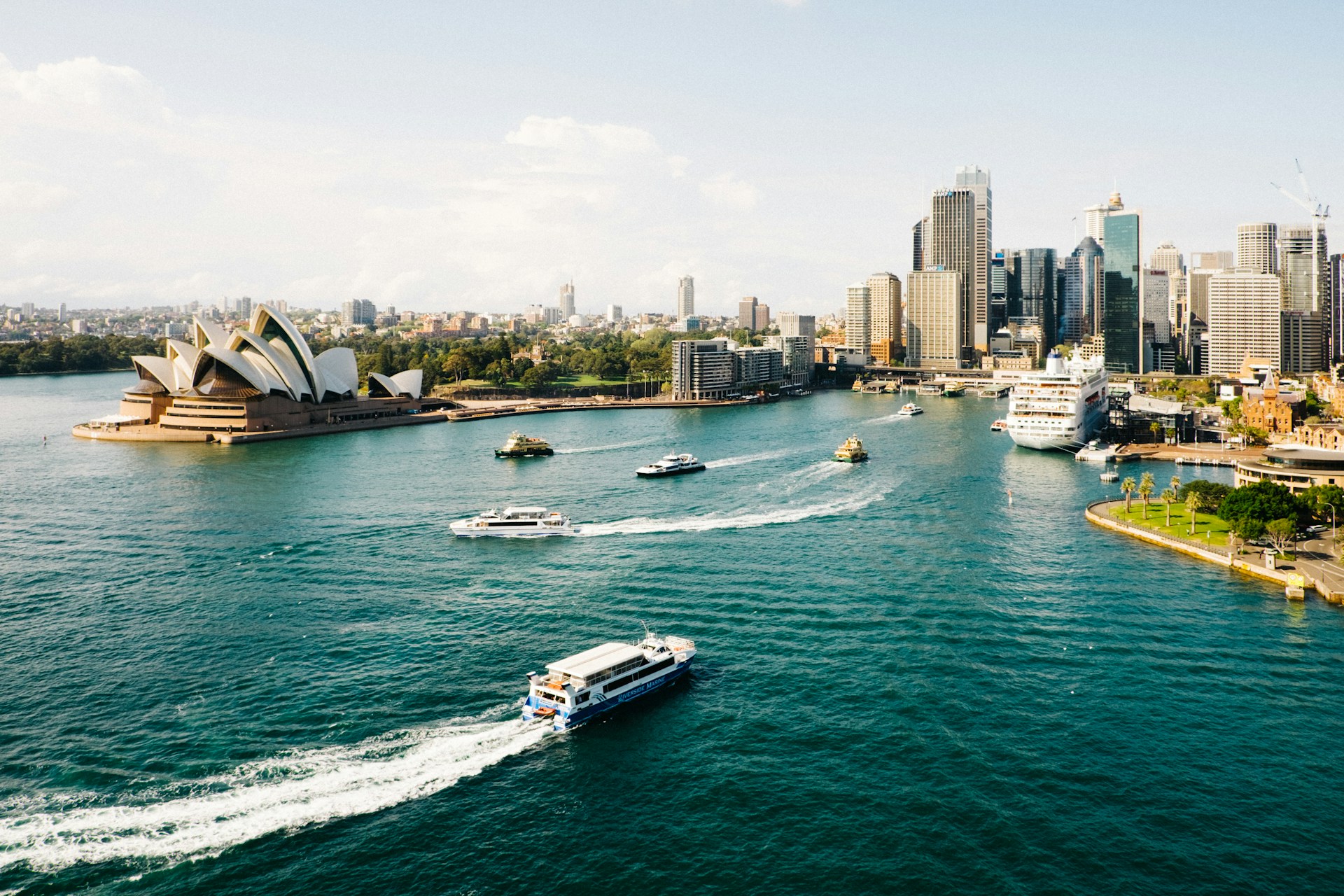
A harbour that does half the city's work for it
Sydney did not have to try particularly hard to become one of the world's most recognisable cities: it had a genuinely spectacular natural harbour, built a white-sailed concert hall and a steel arch bridge on either side of it, and let the postcards write themselves. What that origin story undersells is how much of ordinary Sydney life still runs on the water, commuter ferries that double as harbour cruises, beaches inside the city limits rather than a drive away, and a public swimming culture (the Bondi Icebergs pool cut into the rocks above the surf is the famous example) that most cities with a coastline never quite manage.
The trade-off is cost and scale. Sydney is one of the more expensive cities in the Asia-Pacific region, closer to London or Vancouver than to Southeast Asia, and it sprawls: the beaches, the inner-city food scene and the harbour sights are not all a short walk from each other the way a compact European capital might be. Budget for buses and ferries as part of the sightseeing, not an afterthought, and the city opens up fast.
The honest complications
Sydney's geography, spread around a harbour with dozens of inlets and headlands, means that "close on the map" often isn't close in travel time; Bondi to Manly, both technically coastal Sydney, takes over an hour by public transport. Accommodation and restaurant prices have risen noticeably since 2020, and a genuinely cheap Sydney trip requires real effort: hostel dorms, self-catering, and picking free activities like the coastal walks over paid attractions. The sun is also stronger than it looks on a mild day; Australia's skin cancer rates are among the world's highest, and an overcast Sydney afternoon can still burn exposed skin faster than visitors from cooler climates expect.
A spread-out harbour city, four areas that matter
Sydney rewards picking a base and committing to it rather than trying to stay central to everything, since "everything" is genuinely spread across a large harbour city. The choice comes down to whether you'd rather wake up near the Opera House, near the best restaurants, or near the beach.
The Rocks & Circular Quay
Sydney's oldest quarter, all sandstone lanes and colonial-era pubs, sits directly beneath the Harbour Bridge and a few minutes' walk from Circular Quay, the ferry terminal hub and the Opera House forecourt. Staying here means walking to the two sights most visitors came for, plus the weekend Rocks Markets, though the area quiets down considerably once the dinner crowds thin out.
Surry Hills
Sydney's densest concentration of hatted restaurants, natural wine bars and independent cafes, in a grid of Victorian terrace houses a short bus or walk south of the CBD. Surry Hills suits travellers who prioritise dining and a genuine local, non-touristy feel over being steps from the postcard view, and it's an easy 10 to 15 minutes from the harbour by bus or on foot.
Bondi
Sydney's most famous beach and the start of the Bondi to Coogee coastal walk, with its own dense strip of cafes, the Bondi Icebergs ocean pool, and a permanent surf and gym culture. It's a bus ride or a ferry-plus-bus from the centre rather than a walk, which makes it better suited to travellers building a beach-focused stay than to a first visit trying to see the harbour sights on foot each day.
Darling Harbour
A purpose-built waterfront precinct a short walk or light rail ride from the CBD, with the Sea Life Aquarium, the Wildlife Zoo, waterfront restaurants and playgrounds. The most practical base for families, with flatter walking distances and attractions built specifically for kids.
From harbour-view towers to a Rocks hostel bunk
Sydney's hotel scene spans genuine five-star harbour views down to one of the best-located hostels in the country, with prices across every bracket running higher than most Asia-Pacific cities but broadly in line with other major Western harbour cities.
At the top, Four Seasons Hotel Sydney occupies an elevated CBD position overlooking the Opera House and Circular Quay, with 531 rooms, a rooftop pool and multiple restaurants, while Shangri-La Sydney pairs panoramic harbour, Opera House and Bridge views with premium facilities and fine dining, both from roughly $400+ a night.
In the boutique bracket, Capella Sydney occupies a beautifully restored heritage building in the Sandstone Precinct near Circular Quay, understated and design-led rather than flashy, while The Australian Heritage Hotel in the quiet, historic Millers Point pocket above the Rocks offers a rooftop bar with genuine harbour views at notably lower rates than waterfront towers, in the $150-250 range.
For a beach-focused stay, QT Bondi is an art-filled boutique hotel five minutes' walk from the surf, and Adina Apartment Hotel Bondi Beach on Hall Street offers apartment-style rooms with kitchens, a pool and gym, useful for cutting the cost of eating out.
At the budget end, Sydney Harbour YHA in The Rocks is the pick most repeat backpackers mention first: the only hostel actually inside The Rocks, with a rooftop terrace facing the Harbour Bridge, dorm beds from around $45 and private rooms from about $140.
Wood-fire in Surry Hills, fine dining under the sails
Sydney eats well across every price point, and the best of it clusters in Surry Hills, where the density of hatted restaurants and natural wine bars rivals any single neighbourhood in the country, and Newtown, where King Street's cheap, excellent multicultural eating is the antidote to CBD tourist-menu prices.
Wood-fire & contemporary Australian
Firedoor, chef Lennox Hastie's wood-fire-only kitchen, cooks everything, vegetables included, over open flame with no gas or electric backup, and remains one of the country's most talked-about restaurants for it. Arthur, reimagined by chef-owner Tristan Rosier with a commitment to 100% Australian ingredients, and Nomad, built around Mediterranean small plates and natural wine, are two more Surry Hills anchors worth booking ahead for.
Fine dining at the Opera House
Bennelong, chef Peter Gilmore's fine-dining room inside the Opera House's smaller shell, remains open for dinner Monday to Saturday and weekend lunch, and is the way to actually eat inside the building rather than just photograph it. Book well ahead, especially for a harbour-view table.
Cheap eats on King Street
Newtown's King Street is Sydney's biggest concentration of cheap, excellent eating: Thai Pothong and Chat Thai for Thai food, plus a dense run of Vietnamese and Korean fried chicken spots that make it one of the best-value strips in the city for a casual dinner.
Coffee
A flat white is the default order across the city's dense independent cafe scene; Surry Hills and the Newtown/Erskineville strip have the highest concentration of well-regarded roasters, and ordering drip coffee at a hotel breakfast buffet instead is a genuinely missed opportunity here.
The harbour, the bridge, and a 6-kilometre coastal walk that costs nothing
Sydney's essential sights are genuinely spread across the harbour and the eastern beaches, but the biggest single free activity, the Bondi to Coogee walk, does more to explain why people love this city than any paid attraction.
Sydney Opera House
Jørn Utzon's white-shelled performance hall is worth going inside, not just photographing from Circular Quay: the official guided walking tour runs about an hour and costs $48 for adults ($28 for children 5-15, $124 for a family of four), covering the concert hall, the joan Sutherland Theatre and the building's construction history. Book ahead in peak season.
Sydney Harbour Bridge & BridgeClimb
The steel arch across the harbour can be walked for free via the pedestrian pathway, or climbed to the summit through the official BridgeClimb tour, the only legal way to reach the top: prices range from around $209 for the shorter Sampler climb up to $429 for a dawn summit climb, with the standard day climb from about $299. Book directly through BridgeClimb rather than a resale site.
Bondi to Coogee coastal walk
A six-kilometre clifftop path from Bondi Beach past Tamarama, Bronte, Clovelly and Gordons Bay to Coogee, taking two to three hours at an easy pace with swimming stops along the way. Highlights include the Bondi Icebergs ocean pool carved into the rocks above the surf and Aboriginal rock carvings at Mark's Park, and the walk is free start to finish, arguably the best single thing to do in the city that costs nothing.
Taronga Zoo & the harbour ferries
Taronga Zoo, reached by a scenic ferry from Circular Quay, costs $51-55 for adult general entry (the ferry-and-zoo combo ticket runs around $85) and pairs Australian and international wildlife with harbour views from the enclosures themselves. The regular Manly ferry from Circular Quay, about 30 minutes each way for roughly $8-11, is one of the best-value harbour views in the city even without a reason to disembark.
Two, three or four days, planned neighbourhood by neighbourhood
Two days covers the harbour essentials; three to four days adds a proper beach day and the Blue Mountains without feeling rushed.
- Day 1
The Rocks & the harbour. Circular Quay, the Opera House tour, a Harbour Bridge walk, dinner in The Rocks or a short bus to Surry Hills.
- Day 2
Bondi to Coogee. The full coastal walk, a swim at Bondi or Bronte, then the ferry to Manly for a sunset harbour view back toward the city.
- Days 1-2
The two-day route above.
- Day 3
Darling Harbour & Surry Hills. The Sea Life Aquarium or Wildlife Zoo in the morning, then an afternoon and dinner in Surry Hills' restaurant strip.
- Days 1-3
The three-day route above, at a slightly gentler pace.
- Day 4
Blue Mountains. A train or organised day trip out to Katoomba: the Three Sisters at Echo Point and Scenic World's cable cars and railway, back in Sydney by evening.
Ferries, trains and a genuinely useful Opal card
Sydney Kingsford Smith Airport (SYD) sits about 8km south of the centre. The Airport Link train reaches Central or Circular Quay in 15-20 minutes, but the airport stations charge a private station access fee on top of the fare, pushing a single adult trip to roughly $19.94. The cheaper route is bus 420 to Mascot Station, then a regular train into the city, a combined fare of around $7 instead.
Once in the city, the Opal card (tap-and-go contactless cards and phones also work directly) covers trains, buses and the harbour ferries under one fare system, with a daily cap that makes unlimited same-day travel affordable. The ferries in particular double as sightseeing: the Manly and Taronga Zoo routes from Circular Quay are genuinely scenic, not just functional. Central Sydney between The Rocks, the CBD and Darling Harbour is walkable; Bondi, Coogee and Manly require a bus or ferry.
Best time to visit
September to November and March to May bring mild temperatures (18-25°C) and thinner crowds than the December-February summer, when the city is at its most crowded and expensive, especially around Bondi and the harbour foreshore on New Year's Eve. Winter (June-August) is mild by global standards, around 8-17°C, with lower prices and fewer tourists, though beach swimming drops off.
One of the pricier cities in the Asia-Pacific region
Sydney is noticeably more expensive than most Asia-Pacific cities and comparable to London or Vancouver. The main cost trap is eating every meal in tourist-facing Circular Quay or Darling Harbour restaurants instead of the short bus ride to Surry Hills or Newtown for the same quality at a lower price.
- Hostel dorm bed $35-50
- Self-catered or cheap King St meals $10-20
- Opal card daily cap for transport
- Free: Bondi to Coogee walk, beaches, Bridge walk
- 3-4 star hotel or apartment $150-300
- Restaurant dinners $30-50/person
- Opera House tour, Taronga Zoo, ferries
- Occasional taxis/rideshare
- Four Seasons or Shangri-La, $400+
- Bennelong or other fine dining
- BridgeClimb dawn or twilight climb
- Private Blue Mountains day tour
Safe by global city standards, with the usual nightlife caveats
Sydney is safe for tourists. Violent crime against visitors is rare, central areas are fine to walk at night with normal urban awareness, and the city consistently rates among the safer major destinations globally. The practical risks are ocean conditions, sun exposure and, in specific nightlife pockets, drink-related crime, not violent crime against tourists generally.
The area that actually warrants extra caution is Kings Cross, historically Sydney's red-light and late-night strip: bar and nightclub overcharging scams, pickpocketing in crowds, and drink spiking have all been documented there. Keep drinks in sight at all times, use licensed venues, and take a rideshare or taxi rather than walking alone late at night in the area. Elsewhere, the main precautions are ocean-related: swim only between the red and yellow patrol flags at beaches like Bondi and Coogee, since rip currents catch even strong swimmers unfamiliar with Australian surf conditions.
Emergency numbers match the rest of Australia: 000 (Triple Zero) for police, fire and ambulance, and 112 works from any mobile phone including without a local SIM. The US Consulate General in Sydney can be reached at +61-2-9373-9200.
The Blue Mountains, Sydney's escarpment escape
Sydney's position makes one strong day trip genuinely easy to add without a rental car; further-flung highlights like the Hunter Valley wine region work as a day trip too but reward an overnight more.
Blue Mountains & Katoomba
The Blue Mountains, named for the blue haze eucalyptus oil gives the escarpment from a distance, rise west of Sydney and centre on the town of Katoomba. The Three Sisters rock formation is the classic view from Echo Point, and Scenic World below runs a cableway, a railway (the steepest in the world) and a skyway across the Jamison Valley, with an unlimited-ride day pass from around $46-62. Organised day tours from Sydney, often bundling Scenic World, a wildlife park stop and lunch, run from about $89 for a basic tour up to $259 for an all-inclusive package with hotel pickup. The train from Central Station to Katoomba is the cheaper self-guided option, about two hours each way.
Sydney FAQ
Is Sydney safe for tourists?
Yes. Violent crime against visitors is rare and central Sydney is fine to walk at night with normal urban awareness. Drink spiking and bar scams in the Kings Cross nightlife strip are the main practical risk, not violent crime.
How many days do I need in Sydney?
Three to four full days covers the city well: the Opera House and Harbour Bridge area, a beach day around Bondi to Coogee, Darling Harbour, and a day trip to the Blue Mountains. Two days works if you skip the Blue Mountains.
How much does Sydney cost per day?
Budget travellers manage on AUD 80-130 a day with hostel dorms and self-catering; mid-range runs AUD 200-320. Sydney is one of the more expensive cities in the Asia-Pacific region.
When is the best time to visit Sydney?
September to November and March to May for mild temperatures and thinner crowds. December to February is Australian summer, warm and busy with peak beach season and higher prices.
What is the best area to stay in Sydney?
The Rocks or Circular Quay for first-timers who want to walk to the Opera House and Harbour Bridge; Surry Hills for the best food and bar scene; Bondi for a beach-focused stay a short bus or ferry-plus-bus ride from the centre.
How do I get from Sydney Airport to the city centre?
The Airport Link train reaches Central or Circular Quay in about 15-20 minutes but carries a station access fee, making a single adult fare roughly $19.94. Taking bus 420 to Mascot Station then a regular train saves money, for a combined fare of around $7.
Can I climb the Sydney Harbour Bridge?
Yes, through the official BridgeClimb tour, which costs from roughly AUD 209 for the shortest option up to AUD 429 for a dawn climb. It requires booking ahead and is not something you can do independently for safety and legal reasons.
Is the Bondi to Coogee walk worth doing?
Yes, it's one of Sydney's best free activities: a 6-kilometre clifftop path from Bondi Beach past Tamarama, Bronte, Clovelly and Gordons Bay to Coogee, taking 2-3 hours at an easy pace with beach and swimming stops along the way.
Is the Blue Mountains day trip worth it from Sydney?
Yes, for most first-time visitors. The Three Sisters rock formation, Scenic World's cable cars and railway, and eucalyptus-blue escarpment views are about 90 minutes to 2 hours from central Sydney by train or organised tour.
What is the best area for families in Sydney?
Darling Harbour, which is built around family-friendly attractions, waterfront dining, playgrounds and easy transport, with Taronga Zoo a short ferry ride away across the harbour.
What Stays With You
Sydney doesn't need to convince anyone of anything, the harbour does the work on its own, and the city has arranged its whole self around getting people onto or beside that water as often as possible. The ferry that's really just a commute with a free Opera House view, the six kilometres of clifftop path between two beaches that costs nothing, the ocean pool cut into the rocks where locals swim laps with the Pacific breaking a few metres away: none of it is staged for visitors, it's just how the city actually lives.
Take the ferry somewhere you don't strictly need to go, walk more of the coast than the itinerary calls for, and let the harbour set the pace instead of a checklist.