
Guatemala
You hike through the night to reach a ridge where Fuego erupts on the horizon while Acatenango smokes beneath your feet. Twelve hours later you're eating tamales in a colonial square that hasn't changed since 1773. Guatemala does this to people.
What You're Actually Getting Into
Guatemala is the most geographically intense country in Central America. Thirty-seven volcanoes, including several that are actively erupting at any given moment. The deepest lake in the Americas, ringed by three volcanoes and twelve Maya villages. A jungle so thick in the northern Petén region that it hid cities of two hundred thousand people from European eyes for three centuries. A colonial capital that was destroyed by earthquake in 1773 and simply left to beautiful ruin as the government moved elsewhere. These are not selling points compiled from a brochure. These are the literal facts on the ground.
Guatemala is also a country with genuine complexity that a responsible guide has to address honestly. It has significant poverty, infrastructure that varies enormously between tourist routes and everything else, safety challenges particularly in Guatemala City and on some rural roads, and a history of civil war and political violence whose effects are still visible in the social fabric. None of this makes Guatemala less worth visiting. All of it makes it more important to visit with awareness.
The traveler profile that gets the most from Guatemala: people with genuine curiosity about Maya civilization (not just the ruins but the living culture, which is everywhere), hikers who want volcanoes that actually erupt, travelers who appreciate that a Q25 chicken bus ride through the highlands with three chickens on the seat next to them is more interesting than a $200 shuttle, and anyone who has eaten food made with ingredients that were grown and picked within five kilometers of the kitchen. Guatemala is one of the best food countries in Central America and almost no one talks about it in those terms.
Two weeks is the minimum for Guatemala to make sense. The country is not large but the terrain is dramatic and the distances between major destinations are deceptive. Antigua to Flores by road is eight hours on a good day. Build in extra time for everything. The altitude in the highlands (Antigua sits at 1,500 meters, Chichicastenango at 2,070 meters) affects energy levels on the first day if you've flown in from sea level. Drink water and move slowly on arrival. You will feel it.
Guatemala at a Glance
A History Worth Knowing
Guatemala's history is long, extraordinarily rich, and in its 20th-century chapter, extremely dark. Understanding all three layers makes the country more meaningful to visit.
The Maya civilization in what is now Guatemala reached its Classic Period peak between 250 and 900 CE. The great city of Tikal in the northern jungle had a population estimated at 90,000 to 120,000 at its height, with temple complexes, astronomical observatories, causeways, and a sophisticated political economy. The Maya were not one civilization but a network of competing city-states — Tikal, Calakmul, Copán, Palenque, and dozens of others — that traded, fought, and eventually declined for reasons still debated by archaeologists. The collapse of the Classic Maya cities in the 9th century is one of history's great unsolved puzzles.
The Postclassic Period brought the rise of the highland kingdoms: the K'iche', Kaqchikel, Tz'utujil, and other Maya peoples who built their capitals in the mountain valleys that still bear their cultural imprint. The K'iche' capital of Q'umarkaj (Utatlán) near Santa Cruz del Quiché was the most powerful. Spanish conquistador Pedro de Alvarado arrived in 1524, allied with the Kaqchikel against the K'iche', destroyed Q'umarkaj, and then turned on his Kaqchikel allies once the K'iche' were defeated. The conquest was brutal and the Maya population was devastated by disease and violence. The encomienda system that followed essentially enslaved the surviving indigenous population.
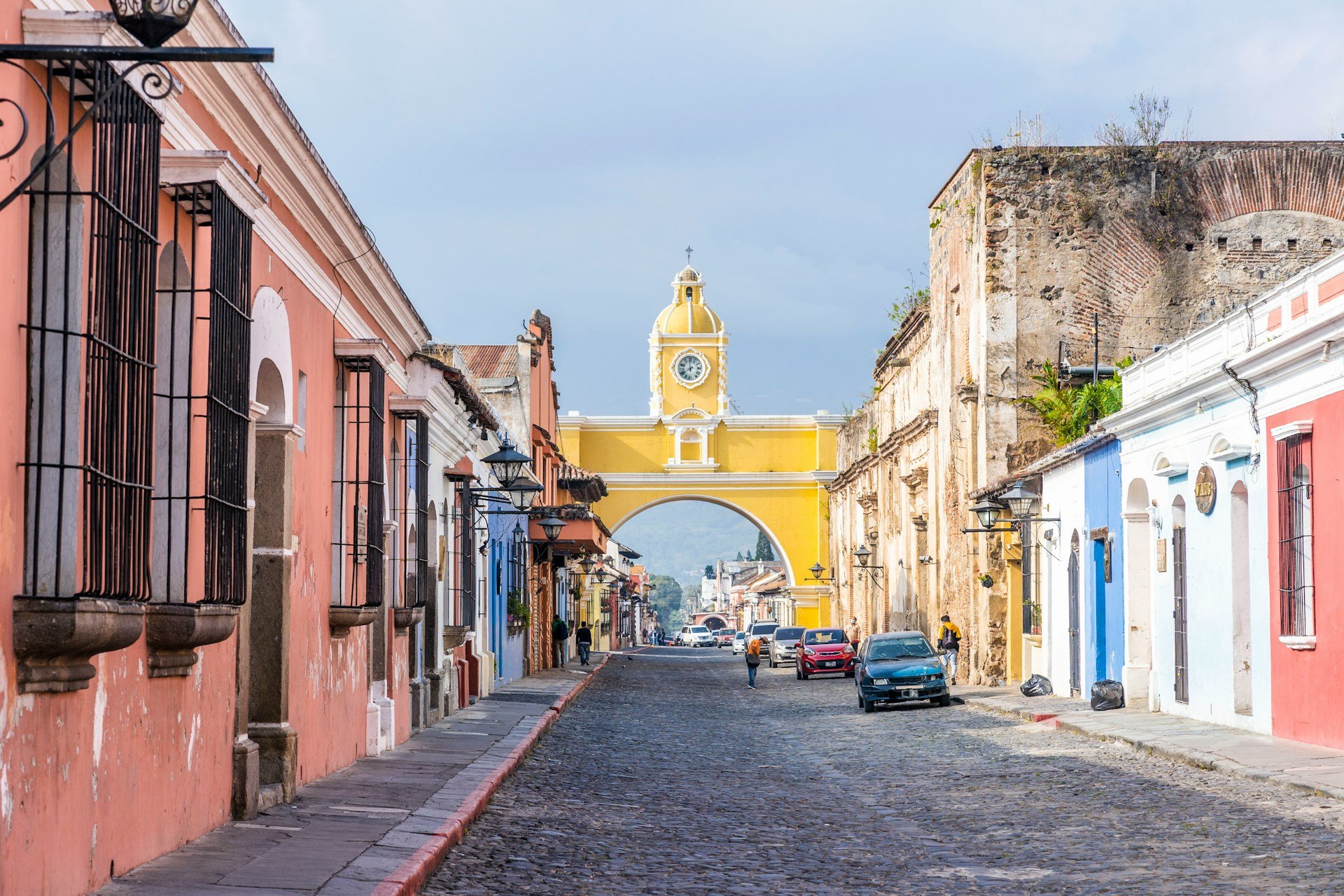
Colonial Guatemala was administered from Antigua (originally called Santiago de los Caballeros de Guatemala), which served as the capital of the entire Captaincy General of Guatemala, encompassing most of Central America. The earthquake of 1773 destroyed much of the city. The colonial authorities argued for rebuilding versus relocating for years before eventually moving the capital to the present Guatemala City site in 1776. Antigua was largely abandoned, which is precisely why it looks the way it does today: frozen in 18th-century time.
Independence in 1821 brought political instability rather than immediate relief for indigenous and mestizo populations. The 20th century produced Guatemala's most traumatic chapter. In 1954, a CIA-backed coup overthrew the democratically elected President Jacobo Árbenz, whose land reform program had threatened United Fruit Company interests. The coup ended a decade of democratic governance and set in motion a series of military governments that led to a civil war lasting from 1960 to 1996. The 36-year conflict killed an estimated 200,000 people, the vast majority Maya civilians. The Guatemalan Truth Commission's 1999 report documented massacres in over 600 villages and classified 83% of victims as Mayan. It attributed 93% of human rights violations to government security forces.
The Peace Accords of 1996 ended the armed conflict. Guatemala has been a democracy since, imperfect and challenged, but functioning. Anti-corruption prosecutor Bernardo Arévalo was elected president in 2023 in an election that was contested by established political interests, his inauguration delayed by legal challenges, but ultimately completed in January 2024. The country's political struggle to address its past and build democratic institutions is ongoing and worth paying attention to.
What this history means for your visit: the Maya communities you encounter in the highlands are not living in some pristine pre-colonial state. They have survived five centuries of colonialism, forced labor, land theft, cultural suppression, and genocide. The resilience of Maya culture, language, and identity in the face of all of this is one of the most significant facts about Guatemala, and it makes the markets, textiles, ceremonies, and daily life you'll encounter far more meaningful than they would otherwise be.
Tikal and other great cities reach their peak. Population of Tikal estimated at 90,000–120,000.
The great lowland cities are abandoned. The causes — drought, war, political collapse — remain debated.
Pedro de Alvarado destroys the K'iche' capital. The Maya population is decimated by disease and violence over the following century.
The capital is destroyed. The decision to abandon rather than rebuild leaves Antigua as a perfectly preserved colonial ruin.
Guatemala declares independence from Spain. Political instability follows for over a century.
Operation PBSUCCESS overthrows President Árbenz. A decade of democratic reform is ended. The conditions for civil war are established.
36 years of conflict. 200,000 dead, 83% Maya civilians. The Truth Commission attributes 93% of violations to government forces.
The armed conflict officially ends. Democratic governance resumes, imperfect but present.
Top Destinations
Guatemala's major destinations are spread across three very different geographic zones: the highland Maya world centered on Antigua, Atitlán, and Chichicastenango; the jungle lowlands of the Petén with Tikal at the center; and the less-visited but rewarding stretches in between, including the cloud forests of Alta Verapaz and the Caribbean coast. Most itineraries run a version of the highland-to-Petén route, with Antigua as the entry point.
Antigua Guatemala
The most beautifully preserved colonial city in Central America and the logical base for any Guatemala trip. The cobblestone streets, the ruined churches left open to the sky after 1773, the Spanish school industry, the volcano views from the Cerro de la Cruz overlook, and the food scene that has grown quietly into something genuinely excellent over the last decade. The Parque Central on a Sunday afternoon when the marimba plays and the food stalls are out is the most pleasant few hours you can spend in Guatemala without breaking a sweat. Allow at least four days. The Semana Santa processions in Holy Week transform the entire city into something you will spend years trying to describe.
Acatenango Overnight Hike
This is the single most discussed experience in Guatemala and the reputation is earned. An overnight hike from the village of La Soledad, departing around noon, gains 1,500 meters in elevation over roughly 8 kilometers to camp at 3,700 meters. The next morning, a further push to Acatenango's summit at 3,976 meters. Throughout the night and at dawn, Fuego volcano — an hour's walk away and fully active — erupts on a schedule of roughly every 20 minutes: a red glow, a boom felt through the ground, and a column of ash and fire visible across the entire central highlands. Most people do this with guided overnight tours from Antigua. Go in dry season for the views. It gets below freezing at camp. Bring more layers than you think you need.
Lake Atitlán
Ringed by three volcanoes and twelve villages, each with its own Maya language community and distinct textile tradition, Atitlán is one of the most visually dramatic bodies of water in the Americas. Panajachel is the main transport hub (and the most tourist-developed). San Juan La Laguna is quieter and known for its natural dye textile cooperatives. San Pedro La Laguna has the party hostel energy. Santiago Atitlán has the Maximón cult figure (a wooden effigy of a syncretic Maya-Catholic folk saint who receives offerings of cigarettes and rum at his shrine). Each village is worth a day. Take lancha boats between them rather than the lakeside road.
Chichicastenango
The largest indigenous market in Central America, running every Thursday and Sunday in a highland town at 2,070 meters. The market starts at the steps of the Santo Tomás church, where Maya religious ceremonies using incense copal are performed on the steps simultaneously with Catholic mass inside, and spreads through the entire town center in a density of color, smell, and transaction that takes most visitors an hour to absorb before they can actually navigate it. Textiles, produce, flowers, ritual objects, and live animals. Arrive before 9am. The best things are gone by noon.
Tikal
The greatest Maya site in the lowlands and one of the most impressive archaeological sites in the Americas, full stop. Temple IV, the tallest pre-Columbian structure in the Americas at 65 meters, rises above the jungle canopy. The sunrise tour positions you at its summit as the fog lifts from the trees below and howler monkeys produce their distinctly unsettling morning announcement. The site is enormous — 16 square kilometers of mapped structures — and genuinely humbling in scale. Stay overnight in Flores or at the hotels within the park gates to do the sunrise properly. Day trips from Guatemala City are technically possible but wrong.
Semuc Champey
A natural limestone bridge in the jungle of Alta Verapaz, with a series of turquoise-to-emerald pools cascading through the rock while the Cahabón River disappears into caverns beneath. The approach involves a 3–4 hour bus journey from Cobán along roads that deteriorate in proportion to how beautiful the destination becomes. The effort is proportionate to the reward. A guided tubing trip through the underground Kan'bá caves beneath the bridge is among the stranger and more wonderful things you can do in Central America.
Flores & Lake Petén Itzá
A small town on an island in a lake in the northern jungle, connected to the mainland by a single causeway. Flores is the base for Tikal and its own significant attraction: a compact colonial town with painted buildings and excellent sunset views across the water. The surrounding area has Yaxhá (where an episode of Survivor was filmed, less famously where sunrise among unmissable ruins is entirely achievable without a crowd), El Mirador (an 8-day jungle trek to the largest Maya pyramid by volume in the world), and the Uaxactún ruins further north.
Río Dulce & Livingston
The Río Dulce canyon cuts through jungle and limestone cliffs from Lake Izabal to the Caribbean coast. The boat journey from Río Dulce town to the Afro-Caribbean community of Livingston takes about an hour through the gorge, past hot spring waterfalls cascading directly into the river and through a jungle that arrives at the sea in an explosion of green. Livingston is a Garifuna community with its own language, food tradition, and music (punta rock), and feels nothing like the rest of Guatemala. The Gulf of Honduras fishing is excellent.
Culture & Etiquette
Guatemala has a cultural complexity that reflects its population: roughly 40% Maya (divided into 22 distinct linguistic groups with their own cultural practices and identities), 41% Ladino (mixed Maya-Spanish heritage and cultural background), and smaller Garifuna and Xinca populations. These communities have distinct etiquettes and the rules for interaction with Maya communities in particular require genuine respect.
The key thing to understand: you are visiting communities that have been subjected to sustained cultural suppression for five centuries and that maintain their traditions as an act of active identity preservation, not for tourism purposes. The Maya women in Chichicastenango wearing traditional huipiles embroidered with symbols specific to their village are not in costume. They are dressed in their own culture. This is a distinction that matters enormously in how you interact.
Particularly in Maya communities, indigenous markets, and ceremonial contexts. Many Maya people decline to be photographed for religious reasons. A declined request is not a personal insult. The act of asking matters regardless of the answer.
The churches and ceremonial sites in the highlands are active places of worship. Cover shoulders and knees when entering. At the Santo Tomás church in Chichicastenango, be especially aware: ceremonies are often happening on the steps. Observe from a distance unless invited closer.
English is spoken in Antigua's tourist zone and by guides at major sites. Everywhere else: Spanish is essential. A week at one of Antigua's many Spanish schools dramatically improves your ability to engage with the country outside the tourist bubble. Classes cost $150–200 USD for a full week of 4-hour daily lessons with accommodation included at some schools.
For volcano hikes especially. Armed robberies on Pacaya and other accessible volcanoes have occurred when hikers went without guides. The safety situation has improved with INGUAT-registered guide systems but independent hiking on volcano trails remains inadvisable.
Purchasing textiles, crafts, and food directly from weaving cooperatives, artisan collectives, and community-run markets rather than from middlemen ensures the income reaches producers. Ask your accommodation or tour operator which cooperatives they work with.
The specific huipil and corte designs worn by Maya women identify the wearer's community of origin and carry cultural meaning. Foreign visitors wearing them as fashion items is widely considered disrespectful. Admire them, buy them as textiles, learn about their symbolism. Don't wear them.
Maya ceremonial life continues alongside and sometimes within Catholic church settings. Copal burning, candlelit shrines at crossroads, and community ceremonies are not performances. If you encounter one, observe respectfully from outside. Do not photograph without explicit permission.
In many highland communities, Spanish is the second or third language after K'iche', Kaqchikel, Tz'utujil, or another Maya language. Adjust your pace and assumptions accordingly. Basic courtesies in the local Maya language, if you can find them, are received with genuine pleasure.
Not safe in Guatemala. Stick to bottled or filtered water everywhere. Ice in tourist restaurants is usually filtered. Ice at rural roadside stalls is not. When in doubt: no ice.
Guatemala's roads have genuine security risks after dark, particularly on highways and mountain routes outside urban areas. Night buses exist and many travelers use them, but they carry higher risk than day travel. If you must travel at night, use reputable shuttle services rather than public buses.
Textile Tradition
Maya textile weaving is one of the most sophisticated craft traditions in the Americas. Each village has distinct colors and patterns specific to its community. Backstrap loom weaving is done by women and can take weeks for a single huipil. The Museo Ixchel del Traje Indígena in Guatemala City and the Nim Po't market in Antigua are the best places to understand the tradition before you buy. Buying direct from weavers rather than market intermediaries pays the artist rather than the middleman.
Marimba
Guatemala's national instrument. The marimba — a wooden xylophone with resonating tubes — produces a sound that is the audio architecture of Guatemalan culture. It plays at everything: church festivals, market days, family celebrations, and Sunday afternoon park concerts. The marimba orchestras in Antigua's Parque Central on weekend evenings are free and genuinely good. The instrument may have African or pre-Columbian origins; the debate continues, but the sound is distinctly Guatemalan.
Semana Santa
Antigua's Holy Week processions are among the most extraordinary religious events in the Americas. For the week before Easter, the streets are covered in alfombras (carpets) made from colored sawdust, flowers, and pine needles, laid by neighborhood groups overnight before being walked over by the processions. The camarines (floats) carrying religious figures weigh up to seven tons and are carried by cuadrillas of bearers in purple robes. Book accommodation 3–4 months in advance. This is not exaggeration.
Corn Culture
In Maya cosmology, humans were created from corn. This is not metaphor. It is the foundational origin narrative that shapes how corn is grown, prepared, and understood. The Popol Vuh, the K'iche' Maya creation account written down in the 16th century from an older oral tradition, describes the creation of humanity from white and yellow maize. The tortillas made by hand from freshly ground nixtamal (lime-treated corn) that appear on every table in Guatemala are not simply food. They are the substrate of culture.
Food & Drink
Guatemalan food doesn't get the international recognition it deserves. The cooking is built on corn, beans, and chili — the Maya triumvirate — elaborated over three millennia into a cuisine that produces extraordinary variety from a narrow base. The highland cooking is different from the Petén lowland cooking, which is different again from the coastal Garifuna food of Livingston. And the coffee, which comes from the Huehuetenango highlands and the volcanic slopes around Antigua and Atitlán, is among the finest in the world. You will not miss the coffee here.
Pepián
Guatemala's national dish. A rich, dark sauce made from toasted pumpkin seeds, sesame, dried chili, tomato, tomatillo, and spices, served over chicken or turkey with rice and tortillas. The texture is thick and the flavor is deep, smoky, and slightly sweet. Pre-Columbian in origin and essentially unchanged. Every comedor makes it; every family has its own recipe. Eating a good pepián in the highlands is one of the formative food experiences of Central America.
Tamales
The Saturday morning food. Guatemalan tamales are steamed in banana leaf rather than corn husk, with a masa (corn dough) made from nixtamal rather than masa harina. The stuffing is chicken or pork in recado (a tomato-based sauce), with an olive and a dried prune in the classic version. Vendors set up from 6am on Saturday and Sunday. The pink tamal colorado is the most traditional; the black tamal negro uses chili negro for a darker, smokier flavor. Buy them hot and eat them immediately.
Kaq'ik
A turkey soup from the Cobán Alta Verapaz region, made with a red achiote-chili broth, mint, and toasted spices. The turkey is cooked long and slow until falling from the bone. Kaq'ik is the ceremonial food of the Q'eqchi' Maya people and appears at community celebrations and in the better restaurants around Cobán and the Verapaz region. Outside that area it's rare, which is a reason to go to Cobán specifically.
Plátanos & Rellenitos
Rellenitos are sweet fried plantain cakes filled with black bean paste and dusted with sugar. They cost Q3–5 from street carts throughout the country and are extraordinary in their simplicity. The plantain cultivation in Guatemala produces both cooking plantains (plátano verde, treated as a vegetable) and sweet ripe plantains (maduros), which appear fried as a side dish at virtually every meal. Both are better here than anywhere.
Guatemalan Coffee
Guatemala produces some of the world's finest single-origin coffee. The Huehuetenango highlands produce a bright, complex cup with fruit notes. Antigua coffee from the volcanic slopes around the city has a chocolate-and-spice profile from the mineral-rich volcanic soil. San Marcos, the highest coffee-growing region in the country, produces a floral, light-bodied cup. The specialty coffee infrastructure in Antigua has grown significantly: Cafe No Se on 1a Avenida Sur, Fernando's Kaffee, and several others roast and brew seriously. Buy whole beans to take home from the roasters in Antigua or directly from farms around Atitlán.
Ron Zacapa & Chicha
Zacapa rum, made in the lowlands east of Guatemala City and aged in the warehouse called "House Above the Clouds" at 2,300 meters, is one of the world's most awarded rums. The 23-year solera expression is exceptional. Available in Guatemala at a fraction of export prices. Chicha is the traditional fermented corn drink with pre-Columbian roots that appears at local festivals, made by family or community production and not generally sold commercially. If offered chicha at a community event, accept it politely.
When to Go
November to April is the dry season across most of Guatemala and the best time for volcano hikes, where summit views depend on clear skies. December through February gives the clearest conditions for Acatenango and the best visibility at Tikal. Semana Santa in Antigua (the week before Easter, usually late March or early April) is one of the great cultural events of the Americas and worth building a trip around, but accommodation books out months ahead.
Dry Season
Nov – AprThe optimal window for volcano hikes and jungle exploration. November to February has the clearest skies. The highlands can be cold at altitude — Antigua at 1,500m is genuinely cool in December and January evenings, Acatenango camp drops below freezing. Semana Santa in late March or April is spectacular but crowded.
Shoulder Wet
May, OctThe start and end of the wet season. Afternoon rains bring the highland landscapes to vivid green. Fewer tourists, lower prices. The rains typically fall in the afternoon and evenings, leaving mornings clear. Volcano hikes are less reliable for summit views but still feasible in morning windows.
Wet Season Core
Jun – SepHeavy afternoon rains across the highlands. Landslide risk on mountain roads, particularly in August and September. Volcano summit views are rarely clear. The Petén jungle is extremely humid and insect-heavy. Tikal can be muddy and some trails difficult. The landscape is intensely beautiful but the logistics are harder.
Trip Planning
Two weeks is the minimum meaningful Guatemala trip. Less than ten days and you'll have to choose between Tikal and Atitlán rather than doing both. Three weeks gives you the core circuit plus Semuc Champey and the Río Dulce. Four weeks or more opens up the Cuchumatanes highlands, Quetzaltenango (Xela), the Ixil Triangle communities, and the far western border region.
Antigua is the correct entry point for almost all Guatemala trips. The airport is in Guatemala City (GUA), 45 minutes by shuttle from Antigua. Most travelers transit Guatemala City as briefly as possible, which is reasonable. Guatemala City has significant crime risk outside Zones 10 and 14 and is not a destination that rewards extended stay for most visitors. Antigua is safer, more beautiful, and a much better acclimatization point at altitude.
Antigua
Arrive into Guatemala City, shuttle to Antigua (45 min). Three days: acclimate to altitude on day one with a slow walk to Cerro de la Cruz. Day two: explore the ruined churches and the Parque Central. Day three: the Chichicastenango market if it's Thursday or Sunday (3 hours by chicken bus), otherwise a cooking class or coffee farm visit near Antigua. Every evening: the 5a Avenida Norte for dinner choices.
Acatenango Overnight
Depart around noon for the hike. Camp at 3,700m. Watch Fuego erupt through the night. Summit at dawn. Return to Antigua by afternoon. Spend the rest of day four recovering, eating, and writing in your journal about what you just did.
Lake Atitlán
Shuttle from Antigua to Panajachel (2.5 hours). Lancha to San Juan La Laguna for the textile cooperatives. San Pedro for a night if you're social. Santiago Atitlán for the Maximón. Final afternoon at a lakeside cafe watching the light change on the three volcanoes. Return to Guatemala City for your flight.
Antigua & Volcano
Four days gives you Antigua properly, the Acatenango overnight hike, the Chichicastenango market (run Tuesday, Thursday, Sunday in the wider area), and a coffee farm tour. Consider a day at the Pacaya volcano (active, accessible, less challenging than Acatenango) as a warm-up.
Lake Atitlán
Three days at Atitlán. Spend nights in different villages rather than just Panajachel. San Marcos La Laguna for the new-age retreat energy and a lake swim. San Juan for the weavers. Santa Cruz for the cliff-side views.
Flores & Tikal
Fly Antigua/Guatemala City to Flores (1 hour) or brave the 8-hour bus. Three nights in Flores: a sunrise tour at Tikal on the first morning, an afternoon exploring Tikal's lesser-visited complexes, and a day trip to Yaxhá for the experience without the crowds.
Return & Río Dulce (Optional)
Fly back to Guatemala City, or route through Río Dulce and the canyon boat to Livingston for two nights before flying from Guatemala City. The Garifuna food at Buga Mama restaurant in Livingston is worth the logistics.
Antigua & Highlands West
Five days including Antigua, Acatenango, Chichicastenango, and an extension to Quetzaltenango (Xela), Guatemala's second city at 2,335m. Xela is less touristy than Antigua and gives access to the hot springs at Fuentes Georginas, the indigenous market at San Francisco el Alto (Friday), and the Cuchumatanes range beyond.
Lake Atitlán & Ixil Triangle
Full Atitlán circuit, then north into the Ixil Triangle: Nebaj, Chajul, and Cotzal, the Q'anjob'al and Ixil Maya communities in the Cuchumatanes where the civil war's impact was most severe and the cultural resilience is most evident. Hiking in the mountains around Nebaj is exceptional and rarely crowded.
Cobán & Semuc Champey
Four days in Alta Verapaz. Cobán for the kaq'ik. The Orchid Garden at CECAP. The 3–4 hour road to Semuc Champey for two nights — the pools, the Kan'bá cave tubing underground, and the jungle. This section requires the most logistical tolerance and delivers proportionately.
Flores & Tikal
Fly to Flores or bus via Cobán and Modesto Méndez. Three nights: Tikal sunrise, Yaxhá, and an afternoon at the El Remate viewpoint on Lake Petén Itzá.
Río Dulce & Livingston
Bus or shuttle south to Río Dulce. The canyon boat to Livingston. Two nights of Garifuna music, coconut fish soup, and absolutely no one from the Antigua tourist circuit. Return to Guatemala City for the flight.
Vaccinations
No mandatory vaccinations. Recommended: Hepatitis A, Hepatitis B, Typhoid, and routine vaccines up to date. Malaria prophylaxis is recommended for stays in the lowland Petén region, particularly areas below 1,500m. Check current CDC or WHO recommendations for your specific itinerary before departure.
Full vaccine info →Connectivity
Claro and Tigo are the main providers. Good coverage in Antigua, Atitlán (town centers), Guatemala City, and Flores. Limited or nonexistent in rural highlands, remote jungle, and mountain areas. Download offline maps (Maps.me or Google Maps offline) before heading into the Petén or the Cuchumatanes.
Get a Guatemala eSIM →Altitude
Antigua at 1,500m, Chichicastenango at 2,070m, Xela at 2,335m. Altitude effects are real: headaches, fatigue, and breathlessness on the first day are common for visitors arriving from sea level. Spend your first day in Antigua slowly, drink water constantly, avoid alcohol, and don't plan the Acatenango hike for day one of your trip. Acclimatize for at least 48 hours first.
Language
Spanish is essential outside Antigua's tourist zone. Antigua has excellent Spanish schools for all levels — a week of study (typically 4 hours daily, one-on-one with a teacher) costs $150–200 including homestay option. Even basic Spanish transforms your ability to navigate the chicken bus network, market interactions, and community encounters in the highlands.
Travel Insurance
Essential. Cover should include: medical evacuation (facilities outside Guatemala City are limited), adventure activities if hiking volcanoes, and theft. Pickpocketing and phone theft are the most common incidents. Medical evacuation to the US from Guatemala typically costs $30,000+ uninsured.
Cash
The Guatemalan Quetzal (GTQ) is the practical currency throughout. US dollars are accepted at some tourist businesses but the rate is often unfavorable. ATMs (Cajeros) are widely available in Antigua, Guatemala City, and Panajachel. In remote areas (Semuc Champey, rural Petén, Ixil Triangle), cash is the only option. Withdraw sufficient funds before leaving urban centers.
Transport in Guatemala
Guatemala's transport runs on a spectrum from excellent value and immersive (the chicken bus network) to overpriced and comfortable (tourist shuttles) to fast but costly (domestic flights). The choice between them depends on your budget, time, and tolerance for chaos.
The chicken bus — a retired American school bus bought, repainted in color combinations that would alarm an art school, and outfitted with a Jesus dashboard shrine and music so loud the frame vibrates — is the backbone of local transport. They run everywhere, cost almost nothing, and are as safe as the road they're on. The driver's assistant (the ayudante) hangs from the door, calls destinations to potential passengers from 100 meters away, and collects fares mid-journey. It is genuinely one of the great transport experiences in Central America. It is also hot, crowded, and slow.
Chicken Bus
Q5–25 per tripThe local public bus network using retired US school buses. Connects all major towns and villages for almost nothing. Crowded, colorful, and authentic. Safe in daylight on main routes. Not recommended for long-distance travel after dark. Buy your ticket from the ayudante mid-journey.
Tourist Shuttle
$10–35 per routeAir-conditioned minibuses running fixed routes between major tourist destinations. Antigua–Panajachel, Panajachel–Flores, Antigua–Semuc Champey. More expensive than chicken buses, faster, and significantly more comfortable. Book through your guesthouse or at the central travel agencies on Antigua's 5a Avenida.
Domestic Flights
$80–150 USDTAG Airlines and Aerovias connect Guatemala City with Flores (Tikal access). The flight takes 50 minutes versus 8–10 hours by road. At this price, on an 8-day trip, the math generally favors flying. Book in advance; the small aircraft fill quickly in high season.
Lancha Boats (Atitlán)
Q25–50 per hopThe only practical way to move between Lake Atitlán's villages. Small motorized boats run scheduled routes from Panajachel, San Pedro, Santiago, and other docks. Purchase tickets at the dock. The lake can be rough in the afternoon (the xocomil wind typically arrives after 1pm). Cross before noon when possible.
Río Dulce Boat
Q150–200 ppThe boat through the Río Dulce canyon to Livingston is one of Guatemala's great journeys. Shared lanchas run morning departures from Río Dulce town. The 1-hour journey passes through limestone gorges, hot spring waterfalls, and a bird sanctuary before opening into the Bay of Amatique.
Car Rental
$40–70 USD/dayUseful for remote highland areas and the Pacific coast. Not recommended for Guatemala City driving (aggressive and confusing). Insurance is essential; road conditions vary dramatically. An international driving permit is required. 4WD vehicles are strongly recommended for mountain routes in the wet season.
Accommodation in Guatemala
Guatemala's accommodation is well-developed on the main tourist circuit and genuinely sparse off it. Antigua has the widest range from budget hostels to boutique colonial hotels, and sets the standard for the country. Atitlán's village accommodation varies significantly by village: Panajachel is most developed, San Pedro and San Marcos have the best budget hostels, and Santa Cruz has small mid-range guesthouses with spectacular views. Flores is compact with decent budget-to-mid-range options. Semuc Champey has basic guesthouses near the park entrance that are the only practical option given the distance from Cobán.
Colonial Boutique (Antigua)
$80–250/nightAntigua has exceptional boutique hotels in converted colonial buildings: internal courtyards with fountains, bougainvillea-covered walls, volcano views from rooftop terraces. Casa Santo Domingo (built within the ruins of a monastery) and Palacio de Doña Beatriz are the most striking. Book months ahead for Semana Santa.
Guesthouse / Hospedaje
$15–50/nightSmall family-run guesthouses throughout the country. Often include breakfast. The quality in Antigua is generally good; in smaller highland towns it ranges from basic to comfortable. The guesthouses in Semuc Champey are basic by any measure but sit in extraordinary jungle with warm Cahabón river swimming outside.
Hostel
$8–20/dormGuatemala has a well-developed backpacker hostel circuit. The Monkey Bar in Antigua, The Iguana Hostel in San Pedro La Laguna, and Las Orquideas in Flores are reliable options with social atmosphere, tour booking, and good local information. Dorm beds from $8 are available in all major towns.
Eco-Lodge
$40–120/nightLake Atitlán has a strong eco-lodge circuit, particularly on the quieter western shore. Lomas de Tzununa and Casa del Mundo on the cliffs above the lake are among the most spectacular accommodations in the country. Access is by lancha only, which filters the clientele naturally.
Budget Planning
Guatemala is one of the best-value destinations in the Americas. A traveler using chicken buses, eating at local comedores, and staying in budget guesthouses can get through a day on $20–30 USD. At the mid-range level, with shuttles, decent hotels, and restaurant dining, $60–100 per day is comfortable. The main costs that break budgets are guided tours (Acatenango overnight is $30–60 depending on operator), domestic flights to Flores ($80–150), and activities.
- Hostel dorm or basic guesthouse
- Comedores (local canteens) for meals
- Chicken buses for all transport
- Self-guided market visits and ruins
- Q5 coffee at local comedores
- Good guesthouse or small hotel
- Mix of local restaurants and tourist cafes
- Tourist shuttles between major towns
- Guided Acatenango hike, Tikal tours
- Chichicastenango market textile purchases
- Colonial boutique hotel in Antigua
- Fine dining at Antigua's best restaurants
- Domestic flights to Flores
- Private guide services at Tikal
- Full Maya textile collection
Quick Reference Prices
Visa & Entry
Citizens of the United States, Canada, the United Kingdom, all EU member states, Australia, New Zealand, and most other Western nations enter Guatemala visa-free for tourist stays. The standard allowance is 90 days. Guatemala is part of the Central America-4 (CA-4) agreement with El Salvador, Honduras, and Nicaragua, which means the 90-day allowance is shared across all four countries. If you have recently visited any of those countries, count those days against your Guatemala allowance.
Extensions beyond 90 days can be applied for at the Dirección General de Migración in Guatemala City, but approvals are not guaranteed. Many long-term travelers do a brief "border run" to Mexico or Belize to reset the CA-4 clock, which is technically fine but should not be assumed as an automatic right.
Most Western passport holders enter without a visa. The 90-day allowance is shared with El Salvador, Honduras, and Nicaragua. Count all CA-4 days from your most recent entry into any of the four countries.
Family Travel & Pets
Guatemala with children rewards families with curious, active kids over 8 years old who can handle some physical activity and variable infrastructure. The Chichicastenango market, the Tikal temple complex, the lancha boats on Atitlán, and the animal life at the jungle ruins are all immediately compelling for children with any interest in history, wildlife, or simply the spectacle of being somewhere completely different from home.
The challenges are real: altitude effects on young children (Antigua at 1,500m, Chichicastenango at 2,070m), food hygiene requiring careful management for young stomachs, long road journeys on poor-quality roads, and safety considerations that require more active parental management than comparable trips to Europe or the Caribbean. None of these are insurmountable. They require more preparation.
Tikal for Kids
Tikal is one of the most effective history experiences for children in the Americas because it is physically immersive: you can climb the temples (some of them), hear the howler monkeys, see toucans and coatis, and stand on top of structures that were built 1,500 years ago and have trees growing through them. The wildlife alone justifies the visit for children 6 and up.
Chichicastenango Market
The scale, color, and sensory intensity of the Thursday/Sunday market is genuinely overwhelming for children in the best possible way. The copal incense, the colors, the animals, and the Maya ceremony on the church steps produce immediate reactions. Keep track of young children in the crowd; it genuinely dense. Early morning is more manageable.
Lancha Boats on Atitlán
Short lake crossings in small motorized boats are a genuine adventure for children. The three volcanoes visible from the lake, the villages landing from the water, and the transition from town to town by boat rather than road give the lake a fairy-tale geography that resonates with younger travelers.
Coffee Farm Tour
Coffee farm tours near Antigua (La Hermosa, Filadelfia) explain where coffee comes from in entirely concrete terms: you pick the cherry, see the pulping, watch the drying, and roast the bean. For children accustomed to coffee as a dispensed brown liquid, the revelation that it grows as a red fruit in a tropical forest tends to be genuinely surprising.
Wildlife
The Petén jungle around Tikal and the birding at Lake Atitlán produce wildlife encounters that are accessible without specialist knowledge. Howler monkeys, spider monkeys, keel-billed toucans, oscillated turkeys, coatis, and tapir tracks are all real possibilities. The Biotopo Cerro Cahuí near El Remate on Petén Itzá Lake is a protected wildlife reserve with well-maintained trails and excellent monkey sightings.
Pacaya Volcano (Approachable)
Acatenango is too demanding for most children. Pacaya, south of Guatemala City, is an active stratovolcano with a shorter, more accessible hike to the active lava field area. Children 10 and above with reasonable fitness can complete the guided Pacaya hike (2–3 hours). The experience of walking near active lava flows is extraordinary at any age.
Traveling with Pets
Bringing pets to Guatemala requires a health certificate issued by an accredited veterinarian within 10 days of travel, proof of current vaccination against rabies (administered at least 30 days before entry), a veterinary examination record, and authorization from Guatemala's MAGA (Ministerio de Agricultura, Ganadería y Alimentación). All documentation must be authenticated by a Guatemalan consulate in your country of origin.
In practical terms, Guatemala is not a pet-friendly tourist destination. Most guesthouses and hotels do not accept animals. The highland altitude and heat at lower elevations create stress for many domestic animals. The road travel involved in a Guatemala itinerary is long and difficult for animals. The paperwork burden for a short tourist visit far exceeds the practical benefit. Leave pets at home.
Safety in Guatemala
Guatemala's safety situation is nuanced and requires honest assessment without either dismissal or scaremongering. The country has genuine security challenges, particularly in Guatemala City, on certain rural roads, and in areas away from the established tourist circuit. At the same time, hundreds of thousands of tourists visit Guatemala annually, the main destinations are broadly safe with appropriate precautions, and the country rewards visitors who are aware rather than paranoid.
The most important safety decisions you'll make: where you stay in Guatemala City (use Zones 10 or 14 if you must be there overnight), whether you use reputable guides for volcano hikes (armed robberies have occurred on unsecured volcano trails), and whether you travel by road at night (avoid this where possible).
Antigua
The safest tourist destination in the country. The city has a functioning POLITUR tourist police presence, well-lit streets, and a long history of hosting international travelers. Standard urban awareness applies at night. Don't walk alone on unlit routes after midnight.
Lake Atitlán & Tikal
Broadly safe in village centers and tourist areas. Atitlán villages have had isolated incidents; travel by lancha rather than remote roads between villages. Tikal within the park is very safe. The road from Flores to Tikal in daylight is fine.
Guatemala City
Significant crime risk outside Zones 10 and 14. Zones 1 (historic center), 3, 6, 18, and 21 have high violent crime rates. Transit through the city rather than staying. If you must stay, use Zone 10 (Zona Viva) hotels. Use registered taxis or Uber, never street hails.
Volcano Hikes
Always use INGUAT-registered guides for volcano hikes. Armed robberies have occurred on Pacaya, Santa María, and other volcanoes when hikers went unaccompanied. This is not theoretical risk. Book through reputable Antigua operators and confirm your guide is registered.
Night Road Travel
Highway robbery has occurred on intercity roads at night. Use daytime buses where possible. If traveling by night shuttle, use reputable operators. The Antigua–Panajachel, Panajachel–Flores, and Guatemala City–Antigua routes are higher risk at night than day.
Petty Theft
Pickpocketing in markets (Chichicastenango is the most reported location), bag grabs in busy streets, and phone theft are the most common incidents for tourists. Use a money belt for passports and main cash, keep phones in pockets, and use a small crossbody bag rather than a backpack in crowded markets.
Emergency Information
Your Embassy in Guatemala City
Most embassies are in Zone 10 (Zona Viva) of Guatemala City.
Book Your Guatemala Trip
Everything in one place. Guatemala rewards preparation.
The Country That Refuses to Be Simplified
Guatemala will not let you leave with a tidy summary. The history is too long and too painful. The geography is too varied. The culture is too layered. You arrive expecting a Central American adventure and find something that keeps changing scale on you: the volcano that erupts in the middle distance while you eat breakfast in a colonial courtyard, the market woman whose huipil identifies her village more precisely than any GPS coordinate could, the 1,500-year-old temple that emerges from jungle so thick it hid the city for three centuries.
The K'iche' Maya word for the quetzal bird, from which the currency takes its name, is q'uq'. The quetzal was the symbol of freedom in pre-Columbian Maya culture because it dies in captivity. You cannot cage it, and it knows this. It can only be encountered briefly, in the cloud forest, on its own terms. Guatemala is something like this: it can be visited but not contained, experienced but not fully explained. That is not a flaw. That is exactly what makes it worth going.