
A capital most visitors used to skip, and shouldn't anymore
For most of the last three decades, San Salvador's reputation kept even curious travelers moving straight through to the coast or the volcanoes. That reputation was earned during the gang years, and it lagged the city's actual security transformation by several years the way reputations always do. What's here now is a functional, increasingly confident Latin American capital: a restored colonial Centro Histórico, a genuinely excellent restaurant scene concentrated in Zona Rosa and Escalón, and El Boquerón, a volcanic crater park inside the city's own limits that most capitals would kill for.
What San Salvador has going for it is convenience as much as sights. It's the country's only major international airport, its road network reaches every other region of El Salvador within two hours, and it's cheap even by Central American standards: a proper sit-down dinner with a drink rarely tops fifteen dollars outside the fanciest Zona Rosa addresses. For a first stop before the volcanoes and the coast, or a base for day trips across the country, it earns more time than its old reputation as a pass-through suggests.
The honest complications
San Salvador is not a polished, tourist-optimized capital. Sidewalks are inconsistent, traffic is heavy and not always predictable, and outside Zona Rosa, Escalón and the Centro Histórico's main plazas, English drops off fast. The heavy, visible police and military presence that has made the country safer can also feel unfamiliar to first-time visitors, checkpoints and ID checks are routine here, not a sign of an active incident. None of this makes the city unsafe to visit; it does mean San Salvador rewards a plan and a base in the right neighborhood more than it rewards wandering without one.
A sprawling capital, three areas that matter
San Salvador is much more spread out than Suchitoto or the surf towns, and almost all visitor time concentrates in two adjacent west-side neighborhoods plus the historic downtown core, connected by a short Uber ride rather than a walk.
Zona Rosa (Colonia San Benito)
San Salvador's densest concentration of restaurants, cocktail bars and hotels, centered on Boulevard del Hipódromo, and the neighborhood most visitors end up basing themselves in. Sidewalk tables fill from around 8pm on weekends, and it's generally considered the safest, most walkable part of the city after dark, though "walkable after dark" still means a short walk between known points, not an open-ended stroll.
Colonia Escalón
A few kilometers west of Zona Rosa, Escalón is quieter and more residential, with its own strong run of international and elevated Salvadoran restaurants that locals bring family to for birthdays and anniversaries. A reasonable alternative base if Zona Rosa's nightlife noise isn't what you want outside your window.
Centro Histórico
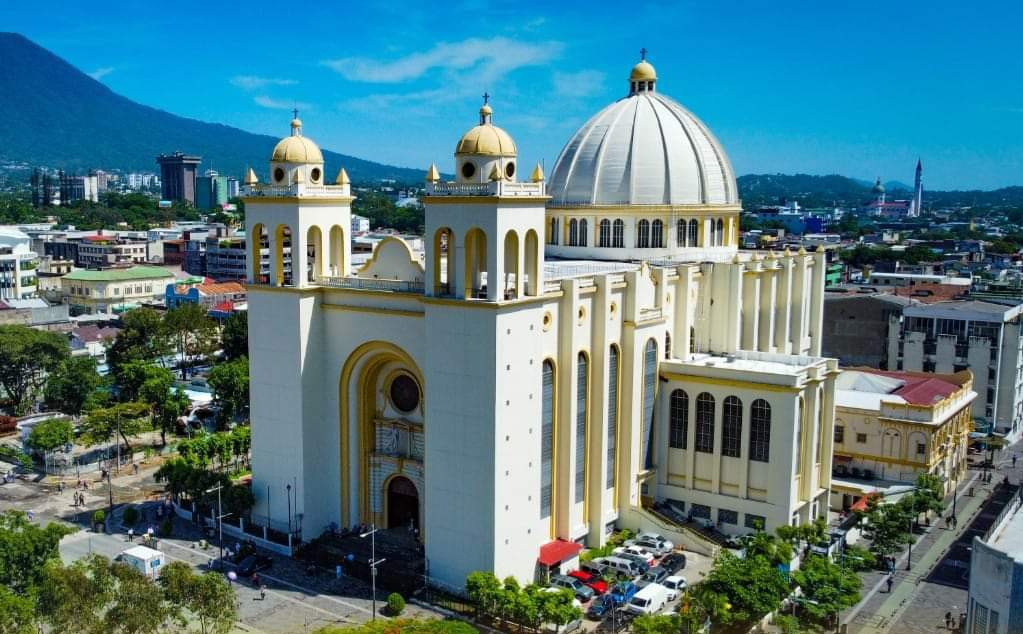
The traditional heart of the city: Plaza Barrios, the Metropolitan Cathedral, the National Palace and the Teatro Nacional, along with the busy, crowded market streets around them. Worth a focused morning or afternoon for the sights and the atmosphere, but it thins out and is not where visitors stay overnight; combine it with a taxi or Uber back to Zona Rosa or Escalón for the evening.
From a five-star Zona Rosa tower to a $12 hostel bed
San Salvador's hotel scene is concentrated almost entirely in Zona Rosa and Escalón, and prices stay low by regional capital standards across every bracket.
At the top, Sheraton Presidente San Salvador is the city's established five-star address in Zona Rosa, with an outdoor pool, a spa offering hot-stone massages, two restaurants and 225 rooms, from around $150 a night.
In the boutique bracket, Casa Lúmina Hotel Boutique & Spa and Terra Bella Hotel Boutique both sit in the Zona Rosa area and offer a smaller-scale, personal alternative to the international chains, typically in the $70-110 range.
At the budget end, hostels cluster in and around Escalón and Zona Rosa's edges, with dorm beds generally running $12-20 and private rooms $30-45; book ahead in peak dry-season weeks (December to March) when the better-reviewed budget spots fill up with a mix of backpackers arriving before or after the surf coast.
Pupusas for a dollar, fine dining for fifteen
San Salvador eats extremely well for the price. Zona Rosa and Escalón hold the fine-dining end, while the best pupusas in the city are, as everywhere in El Salvador, at the stall with the longest local queue, not the restaurant with the English menu.
Pupusas
Every neighborhood has its own trusted pupusería; ask your hotel for the closest one rather than seeking out a specific address. El Zócalo is a reliable, visitor-friendly option for pupusas, tamales and ceviche if you'd rather have a menu than point at a stall.
Zona Rosa dining
Restaurante El Xolo runs a chef-driven menu built around Salvadoran ingredients and is the pick for a special dinner. Cadejo Brewing Company, a craft brewery with gourmet burgers and wood-fired pizza, is the more relaxed, lively option in the same district.
Escalón dining
Punto 105 runs an Italian, Asian and Salvadoran fusion menu, with seafood risotto, beef carpaccio and sushi rolls among the highlights, in a quieter Escalón setting than Zona Rosa's weekend crowds.
A crater inside the city limits, and a colonial plaza worth the morning
San Salvador's sights split into a focused half-day downtown and a separate half-day up the volcano; between them they cover the city well.
Plaza Barrios and the Centro Histórico
The Metropolitan Cathedral, with its twin bell towers, anchors Plaza Barrios, alongside the ornate National Palace and its grand staircases and the Teatro Nacional. The area is at its best, and busiest, on weekday mornings; it thins out and is not somewhere to linger after dark.
El Boquerón National Park
Sitting atop San Salvador Volcano about a 30-40 minute drive from the center, El Boquerón's crater measures roughly 5 kilometers across and 558 meters deep. Trails circle the rim with miradores looking back over the city and, on clear days, out to the Pacific; the interpretive center covers the park's geology, and a "Rainbow Slide" down part of the crater wall is a genuinely fun, low-effort add-on. Easy enough for most fitness levels and a fraction of the effort of the Santa Ana volcano hike.
Museo Nacional de Antropología & MARTE
The Museo Nacional de Antropología Dr. David J. Guzmán, next to Zona Rosa in Colonia San Benito, covers El Salvador's pre-Columbian Pipil and Maya history, useful context before or after visiting Tazumal or Joya de Cerén. MARTE, the Museum of Art of El Salvador, covers Salvadoran art from the colonial era through contemporary work; entry runs about $5.
Puerta del Diablo
A rock formation and viewpoint above the town of Panchimalco, about 45 minutes south of the center, where a split between two boulders on El Chulo hill opens onto a wide panorama over the valley. A popular half-day trip, often combined with El Boquerón and the Centro Histórico into a single guided day tour.
One, two or three days, planned neighborhood by neighborhood
One focused day covers San Salvador's essentials; two days lets you add the museums and slow down. A third day is really the start of a day trip, Santa Ana volcano or Suchitoto, covered below.
- Morning
Centro Histórico. Plaza Barrios, the Metropolitan Cathedral and the National Palace.
- Midday
El Boquerón. Uber or taxi up to the crater park, an hour or two on the rim trails.
- Afternoon
Zona Rosa. Check into the hotel, walk the boulevard, coffee.
- Evening
Dinner at El Xolo or Cadejo Brewing, then a drink in Zona Rosa.
- Day 1
The one-day route: Centro Histórico, El Boquerón, Zona Rosa dinner.
- Day 2 morning
Museo Nacional de Antropología and MARTE. Both in the San Benito area, an easy morning on foot from Zona Rosa.
- Day 2 afternoon
Puerta del Diablo. A half-day trip to Panchimalco for the viewpoint.
- Day 2 evening
Punto 105 in Escalón, or an evening at La Gran Vía.
- Days 1-2
The two-day route above, at a gentler pace.
- Day 3
Santa Ana volcano or Suchitoto. Pick one as a long day trip (see Day Trips below), back in San Salvador by evening.
Spread out, Uber-friendly, and not really a walking city
El Salvador International Airport (SAL), also called Comalapa, sits about 45 kilometers, roughly 45 minutes by road, southeast of the city. Uber operates from the airport and costs $16-22 into Zona Rosa or Escalón; official taxis from the stand outside Arrivals cost around $35 and don't use meters, so agree the fare before getting in, ideally in cash since card acceptance in taxis is unreliable.
Unlike Tirana or many compact European capitals, San Salvador is not really a walking city between neighborhoods: distances are longer, sidewalks are inconsistent, and Uber is cheap enough ($3-6 for most in-city rides) that it's the default way to move around, especially after dark. Within Zona Rosa itself, and within the Centro Histórico by day, walking is fine and normal. City buses cover the wider metro area cheaply (around $0.25-0.35) but aren't clearly signed for visitors and aren't recommended after dark.
Best time to visit
December through March is the dry season and the most comfortable stretch: clear skies for day trips and generally warm, dry days in the high 20s to low 30s Celsius. May through October brings a reliable afternoon downpour most days, though mornings are usually clear enough for sightseeing and El Boquerón or the museums; it's also the quieter, cheaper season for hotels.
One of the cheapest capital cities in the Americas
San Salvador is dollarized, so there's no exchange rate to think about, and it's noticeably cheaper than any North American or Western European capital and on par with, or below, most Central American ones. The main cost trap is the same as everywhere: eating at the handful of tourist-facing restaurants right on the Zona Rosa main strip instead of walking a block into Escalón.
- Hostel dorm bed $12-20
- Pupusas and market meals $3-6
- Uber for short in-city hops
- Free sights: Plaza Barrios, cathedral exterior
- Boutique hotel $70-110
- Restaurant dinners $12-30/person
- Uber for the El Boquerón/Puerta del Diablo loop
- Museum entries (MARTE ~$5)
- Sheraton Presidente $150+
- Fine dining at El Xolo
- Private day-trip drivers
- Airport taxis over Uber for convenience
Safe in the tourist zones, with the country's usual caveats
San Salvador benefits from the same national security transformation covered in the full El Salvador country guide: the murder rate collapse since 2022 and the resulting Level 1 US State Department rating apply here as much as anywhere. In the capital specifically, Zona Rosa and Escalón are the safest, most tourist-comfortable districts, with a visible security presence and normal urban awareness getting most visitors through without incident.
The three things that actually catch visitors: pickpocketing, concentrated in Centro Histórico market crowds and on city buses, so keep bags closed and in front of you; street taxis quoting inflated, unmetered fares, avoidable by using Uber; and walking alone after dark, which is worth avoiding even in Zona Rosa, not because it's especially dangerous but because it's an easy, free precaution in any city this size. ID checks at checkpoints around the city and on roads out of it are routine under the state of exception; carry your passport or a clear copy.
Emergency numbers match the rest of El Salvador: 911 for police, fire and ambulance, and POLITUR, the tourist police, at +503 2511-8302 for visitor-specific assistance.
Santa Ana volcano, Suchitoto, or the surf coast
San Salvador's central position makes it a workable base for day trips in every direction, though each of the following also works, and arguably works better, as an overnight stop on a longer circuit.
Santa Ana Volcano & Joya de Cerén
El Salvador's tallest volcano and its turquoise crater lake sit about 1.5 to 2 hours west of the city, most efficiently visited on a guided day tour (from about $80) that also handles the mandatory park guide. Joya de Cerén, the country's only UNESCO site, is closer, roughly 30-40 minutes from San Salvador, and pairs naturally with a Santa Ana day if you start early.
Suchitoto
El Salvador's best-preserved colonial town and Lake Suchitlán are about an hour north by car or organized tour. A comfortable day trip, though the town's quiet evenings make a strong case for staying the night if your schedule allows it.
El Tunco & the surf coast
The closest of the three, El Tunco and El Zonte are reachable by tourist shuttle ($10-20), Uber ($30-50) or the 102A public bus (~$2.25) in under an hour, making a beach day or a surf lesson an easy add-on to a San Salvador stay without needing to relocate.
San Salvador FAQ
Is San Salvador safe for tourists?
Yes, as of 2026, El Salvador overall is rated Level 1 by the US State Department, its lowest advisory tier. In San Salvador specifically, Zona Rosa and Escalón are the safest, most walkable tourist areas; avoid walking alone after dark anywhere in the city and use Uber instead.
How many days do I need in San Salvador?
One full day covers the essentials: the Centro Histórico in the morning, El Boquerón or Puerta del Diablo in the afternoon, dinner in Zona Rosa. Two days lets you add MARTE, the Museo Nacional de Antropología and a slower pace.
How much does San Salvador cost per day?
Budget travelers manage on $30-45 a day with hostel beds and pupusa meals; mid-range runs $60-100. San Salvador is one of the cheapest capital cities in the Americas to visit.
When is the best time to visit San Salvador?
December through March: the dry season, with clear skies for day trips to El Boquerón and beyond. May through October brings reliable afternoon rain, though mornings are usually clear enough for sightseeing.
What is Zona Rosa?
San Salvador's upscale dining and nightlife district, centered on Colonia San Benito, with the city's densest concentration of restaurants, bars and hotels, and generally considered the safest, most walkable part of the capital for visitors.
Is Uber available in San Salvador?
Yes, Uber operates reliably across San Salvador and out to the airport and surf coast, and is the recommended way to get around, especially after dark, since street taxis don't use meters.
How do I get from the airport to the city center?
El Salvador International Airport (SAL) sits about 45km southeast of the city, roughly 45 minutes by road. Uber costs $16-22; official taxis from the Arrivals stand cost around $35 and require agreeing the fare before getting in, since they don't use meters.
What is the best area to stay in San Salvador?
Zona Rosa or Colonia Escalón for first-timers: central, walkable, close to the best restaurants, and generally the safest parts of the city after dark.
Can I day-trip to Santa Ana volcano or Suchitoto from San Salvador?
Yes, both work as long but doable day trips. Santa Ana volcano is about 1.5-2 hours each way with a guided hike on top; Suchitoto is about an hour each way. Both are more relaxed with an overnight if your schedule allows it.
Is San Salvador good for a first stop in El Salvador?
Yes. It's the main airport gateway, has the country's best restaurant and hotel selection, and sits within day-trip range of El Boquerón, Puerta del Diablo, Joya de Cerén, Santa Ana volcano and Suchitoto, making it a practical base for the first few days of a trip.
What Stays With You
San Salvador doesn't have Antigua's postcard prettiness or Suchitoto's stillness, and it isn't trying to. What it has is a functioning, increasingly self-assured capital that survived its worst decades and is still figuring out how to present itself to visitors who now actually show up. The crater at El Boquerón twenty minutes from downtown, the cathedral on Plaza Barrios with almost nobody else there on a Tuesday morning, a plate of pupusas that costs less than the tip on a mediocre meal back home: none of it is polished, and most of it is genuinely good.
Spend your first or last night in Zona Rosa with a plate of pupusas and a cold beer, and understand why a growing number of visitors are starting their El Salvador trip here on purpose, not just because the plane landed here.