
A capital that never got around to polishing itself, and is better for it
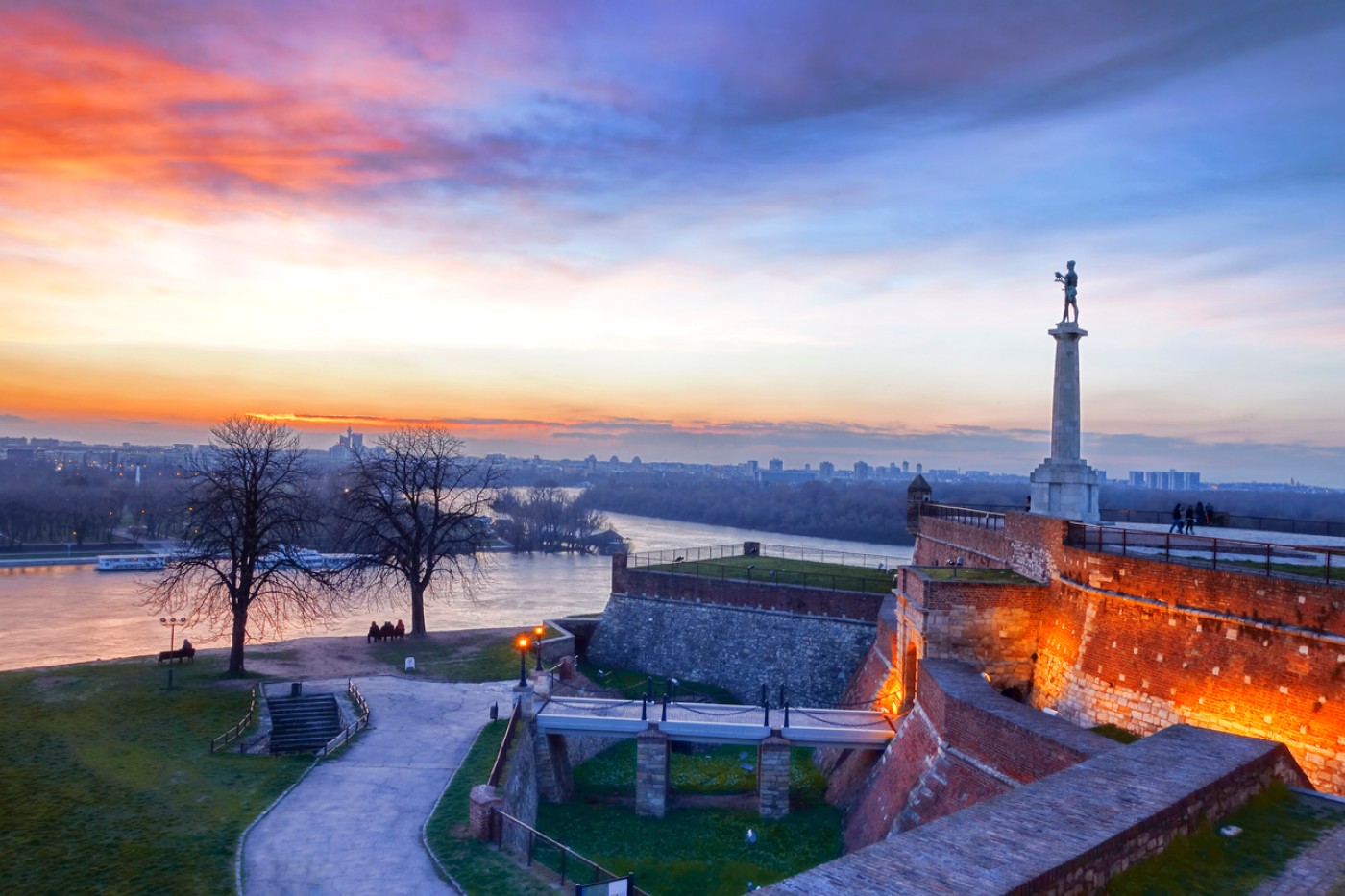
Belgrade sits where the Sava meets the Danube, a position so strategically valuable that the city has been besieged an estimated 40-plus times across its history and rebuilt after nearly all of them. That history is visible rather than curated: Habsburg facades sit next to Brutalist blocks sit next to ruins from the 1999 NATO bombing, deliberately left standing. It shouldn't work as a coherent cityscape, and somehow it does, helped along by a genuinely warm, unhurried kafana culture and a nightlife scene built on splavovi, floating clubs and restaurants moored along both rivers.
What's changed in the last decade is that Belgrade's affordability and its late-night reputation have both gotten louder online, without the city itself changing its character to match. English is common among people under 40, the tourist infrastructure has caught up, and a full kafana dinner with rakija still costs a fraction of the same evening in Vienna, two hours away by plane.
The honest complications
Belgrade is not conventionally pretty in the way Prague or Budapest is: Brutalist Novi Beograd and patches of unrenovated post-industrial streetscape sit right alongside the postcard views from Kalemegdan, and the city doesn't apologize for either. Taxi overcharging is a real, low-level annoyance, especially around the airport and nightlife districts, solved entirely by using an app instead of hailing on the street. Cyrillic-only signage on some older buildings and government offices can slow down navigation. And Kosovo and the 1990s remain live, sensitive topics that can surface in casual conversation; it's a city that carries recent history openly, which is part of what makes it interesting and part of what a visitor should be prepared for.
Two rivers, six neighbourhoods that matter
Belgrade's neighbourhoods split along the Sava and Danube and along how central versus residential you want to be. Where you base yourself comes down to how much nightlife noise you can sleep through and how far you're willing to walk.
Stari Grad
The historic core holds Kalemegdan Fortress, Knez Mihailova pedestrian street, Republic Square and the walk to Skadarlija. It's the easiest neighbourhood for a first visit: everything worth seeing on a short trip is a 10 to 20 minute walk away, and it stays lively without being as loud at night as Savamala.
Dorćol
Belgrade's oldest surviving district, on the Danube side of Stari Grad, has become the city's best concentration of independent cafes, bars and restaurants, with a quieter, more residential feel than the old town proper once you're a few streets back from the main strips.
Savamala
South of Kalemegdan along the Sava, Savamala went from a semi-derelict industrial district to Belgrade's creative and nightlife hub inside a decade: converted warehouses, art spaces, and the launch point for many of the city's splavovi. Expect noise into the early morning if you stay here.
Vračar
Southeast of Slavija Square, Vračar is Belgrade's most established residential district, home to the Temple of Saint Sava and Kalenić Market, a genuine working produce market that's also a good spot for homemade rakija. Quieter, greener, and a short tram or walk from the center.
Zemun
A formerly separate Habsburg-era town absorbed into greater Belgrade, Zemun keeps its own identity: cobbled streets, Gardoš Tower overlooking the Danube, and a waterfront row of fish restaurants that locals treat as a destination in their own right.
Novi Beograd
Across the Sava, Novi Beograd is Yugoslav-era Brutalist planning turned modern business district, with large international hotels and the most direct access to Ada Ciganlija. Less atmosphere, more convenience.
From a Habsburg-era grand hotel to a floating hostel on the Danube
Belgrade's hotel scene runs from historic grand hotels to boutique conversions to a genuinely inventive hostel scene, and prices across every tier undercut equivalent Western European capitals by a wide margin.
At the top, Square Nine Hotel Belgrade, part of The Leading Hotels of the World, sits in the historic center with two restaurants, a spa and pool, and consistently ranks among the city's best-reviewed properties, from around €200 a night.
In the historic bracket, Hotel Moskva on Terazije Square has anchored Belgrade's hospitality scene since 1908, famous for its Moskva schnitt cake and traditional cafe, close to Knez Mihailova and Republic Square, from around €90 a night. For a livelier, design-forward stay right on Knez Mihailova, Mama Shelter Belgrade pairs a rooftop terrace with panoramic skyline views and a menu of Serbian and pan-Mediterranean dishes, from around €80 a night.
At the budget end, the Danube-moored San Art Floating Hostel is one of the more memorable cheap stays in the Balkans, and Balkan Soul Hostel in Stari Grad is well regarded for its social atmosphere and daily activities, both from around €18-20 a night for a dorm bed.
Kajmak, ćevapi and a rakija toast before anything else
Belgrade eats meat-forward, dairy-rich and unhurried. The best meals are often in kafanas, part restaurant, part social institution, where a full dinner with rakija and live folk music costs a fraction of a comparable night in any Western European capital.
Ćevapi & Pljeskavica
Grilled minced-meat rolls and Serbia's answer to the burger, both served with somun flatbread, raw onion, kajmak and ajvar. Ćevap kod Dekija, near Skadarlija in the Old Town, is a reliably good, affordable address for the classic version.
Kafana dinner
Srpska Kafana is a local favorite for traditional dishes, ćevapčići, grilled chicken and Serbian bean soup, with kajmak often cited as among the best in the city. In Skadarlija itself, Dva Jelena, one of the street's oldest kafanas, pairs traditional Serbian cooking with live folk music most evenings; go for the atmosphere as much as the menu.
Upscale Serbian
Zavičaj, close to the Knez Mihailova pedestrian street, reworks Serbian culinary heritage with seasonal ingredients and a more contemporary presentation, a good choice for a dressier night without leaving the local repertoire behind.
Rakija & wine
Rakija, usually plum (šljivovica), opens and closes most kafana meals. Serbian wine from Vojvodina's Fruška Gora and Sremski Karlovci region is underrated and inexpensive; ask any kafana for a house red before reaching for an import.
A city built around two rivers and a lot of open-air history
Belgrade rewards slow mornings and late nights more than a checklist of paid attractions; several of its best experiences, the fortress park, the miradouro-style river views, are free. A few things do benefit from planning ahead, and this chapter walks through the city roughly the way a good three days would.
Kalemegdan and the old town
Start at Kalemegdan Fortress, the walled park at the confluence of the Sava and Danube that has anchored Belgrade since Celtic and Roman times. It's free to enter, and the ramparts hold the Military Museum, covering 25 centuries of conflict from medieval Serbian armor to Cold War-era tanks displayed in the open air. From the fortress, walk down Knez Mihailova, the pedestrian spine of the old town, to Republic Square, then continue into Skadarlija, the cobblestone bohemian quarter, best experienced in the evening when the kafanas fill up and street musicians work the crowd.
Tesla, Tito and the 20th century
The Nikola Tesla Museum holds the inventor's original devices, papers and even his ashes, with interactive and 3D-modeled exhibits explaining his work in a way that engages visitors with no engineering background. Across town, the Museum of Yugoslavia, including the House of Flowers where Josip Broz Tito is buried, traces the rise and fall of socialist Yugoslavia through gifts sent by world leaders and the ceremonial batons from the annual Youth Day relay. The neo-Byzantine Temple of Saint Sava, one of the largest Orthodox churches in the world and still an active construction project since 1936, anchors Vračar and is worth visiting for the scale of the interior mosaics alone.
The rivers, day and night
Ada Ciganlija, a river peninsula on the Sava reshaped into what locals call "Belgrade's Sea," has an artificial lake, pebble beaches and miles of running and cycling paths, the city's best warm-weather escape without leaving town. After dark, the splavovi, floating clubs and restaurants moored along the Sava and Danube, are Belgrade's signature nightlife experience, ranging from relaxed dinner barges to dance clubs that run until sunrise; ask locally for the current best options, as splavovi rotate in and out of fashion faster than land-based venues.
Zemun's waterfront
A short bus or taxi ride from the center, Zemun keeps its own Habsburg-era character: climb Gardoš Tower for a Danube view, then walk the waterfront promenade lined with fish restaurants that Belgraders themselves treat as a destination dinner, not just a tourist stop.
One, two or three days, planned street by street
Three full days covers Belgrade properly, including a splav evening; even one well-planned day delivers the essentials. These routes are walkable in the center and sequenced to end each day somewhere worth being at sunset.
- Morning
Kalemegdan Fortress. The ramparts, the Military Museum, and the view over the Sava-Danube confluence before the day heats up.
- Midday
Knez Mihailova to Republic Square. Walk the pedestrian spine, then ćevapi at Ćevap kod Dekija near Skadarlija.
- Afternoon
Skadarlija. Wander the cobblestones, then the Nikola Tesla Museum if there's time before it closes.
- Evening
Kafana dinner at Dva Jelena. Live folk music, rakija, and a proper introduction to Belgrade after dark.
- Day 1
The one-day route: Kalemegdan, Knez Mihailova, Skadarlija, kafana dinner.
- Day 2 morning
Vračar. The Temple of Saint Sava, then Kalenić Market for burek and fresh kajmak.
- Day 2 afternoon
Museum of Yugoslavia. The House of Flowers and Tito's Cold War-era gifts, then a walk through Dorćol's cafes.
- Day 2 evening
A splav on the Sava. Dinner or drinks on a floating barge, Belgrade's defining nightlife experience.
- Days 1-2
The two-day route above, at a gentler pace, adding Zemun's waterfront and Gardoš Tower.
- Day 3, option A
Novi Sad day trip. Train from Belgrade Centre to Petrovaradin Fortress and Freedom Square, back by evening. One of the Balkans' easiest, most worthwhile day trips.
- Day 3, option B
Ada Ciganlija. A full day at "Belgrade's Sea": the lake, the beaches, and the running paths, then a slower final dinner in Savamala.
Walkable at the center, app-based taxis for everywhere else
Belgrade's historic center is compact enough to walk, but the city sprawls well beyond it. From Nikola Tesla Airport (BEG), city buses 72, 600 and 607 run to the center for free; the A1 express minibus costs about 400 RSD. Official taxi vouchers from the airport cost around 3,500 RSD (roughly €30), and private transfers start around €35.
Within the city, use CarGo or Yandex Go rather than hailing taxis on the street, where overcharging is the most common tourist-facing scam; app rides typically cost €2-6 for central trips. Public buses and trams cover the wider city well and are inexpensive, though route information in English can be patchy; the app-based ride options are more reliable for visitors who don't read Cyrillic transit signage.
Best time to visit and the EXIT festival effect
Belgrade has a continental climate: hot summers, cold winters. April to June and September to October are the sweet spots, mild and manageable. July brings heat and coincides with Novi Sad's EXIT festival, which pulls a wave of visitors through Belgrade en route; book ahead if traveling that week even if you're not attending. Winter is quiet and cold, good for museum-heavy trips without crowds.
One of Europe's best-value capital cities
Belgrade is significantly cheaper than Vienna, Budapest or Zagreb. The hostel and kafana scene is excellent at the budget end, and even the mid-range stretches further than it would in most European capitals.
- Hostel dorm €15-20
- Kafanas and bakeries €10-18
- Free city buses from the airport, local buses in town
- Free Kalemegdan plus one paid museum
- 3-star hotel or boutique stay €50-90
- Restaurant meals with rakija €25-40
- App-based taxis around the city
- A splav evening, one museum, one day trip
- Square Nine Hotel or equivalent €200+
- Fine dining at Zavičaj or similar
- Private guided tours
- Splav VIP tables
One of Eastern Europe's safer capitals, with two things to know
Belgrade rates 7.9/10 on our safety scale. Violent crime against tourists is rare, and the city center including Stari Grad, Dorćol and Savamala is comfortable to walk at night with normal urban awareness. Belgrade is reasonably good for solo female travellers too: harassment is uncommon in central areas, and the busy splav and kafana scene makes meeting other travellers easy.
The two things that actually catch visitors: taxi overcharging, concentrated around the airport and nightlife districts, avoided entirely by using CarGo or Yandex Go instead of street taxis; and pickpocketing in crowded spots like Skadarlija in the evening and on public transport, so keep bags closed and in front of you. Emergency number is the EU-standard 112 from any phone, or 192 for police directly.
Novi Sad alone justifies a fourth day in Belgrade
Belgrade's position on the Danube and Sava makes it a strong base for northern Serbia. Three trips are worth a day each, all reachable by train or a short drive from Belgrade Centre station.
Novi Sad
Serbia's second city and the site of the EXIT music festival every July, centered on Petrovaradin Fortress across the Danube and Freedom Square in the old town. Over 30 trains run daily from Belgrade Centre, making this the easiest, most rewarding day trip from the capital.
Smederevo Fortress
One of the largest lowland medieval fortresses in Europe, built in the 1420s on the Danube east of Belgrade. Less crowded than Kalemegdan and a straightforward half-day trip.
Fruška Gora & Sremski Karlovci
The wooded hills outside Novi Sad hold 16 working Serbian Orthodox monasteries scattered through vineyards, and the small Baroque town of Sremski Karlovci is Serbia's historic wine capital, worth a tasting stop on the way back to Belgrade.
Belgrade FAQ
Is Belgrade safe for tourists?
Belgrade is one of the safer capitals in Eastern Europe. Violent crime against tourists is rare; the main concerns are taxi overcharging and pickpocketing in crowded spots like Skadarlija in the evening. Standard city awareness is all you need.
How many days do I need in Belgrade?
Three full days covers the city well: one for Kalemegdan and the old town, one for Vračar and the Museum of Yugoslavia, one for Ada Ciganlija and a splav evening. A fourth day fits the Novi Sad day trip and is worth adding.
How much does Belgrade cost per day?
Budget travelers manage on €30-45 a day with hostels and kafana meals; mid-range runs €70-110. Belgrade is significantly cheaper than Vienna, Budapest or Zagreb.
When is the best time to visit Belgrade?
April-June and September-October: mild weather, manageable crowds, lower prices. July is hot and coincides with the EXIT festival crowd heading to nearby Novi Sad, worth planning around either way.
Is Belgrade worth visiting?
Yes, especially for travelers who want a capital city that hasn't been fully smoothed over for tourism. The history is layered and visible, the kafana and splav nightlife is genuinely distinctive, and prices remain well below most European capitals.
How do I get from Belgrade airport to the center?
City buses 72, 600 and 607 run to the center for free. The A1 express minibus costs about 400 RSD. Official taxi vouchers run about 3,500 RSD (roughly €30), and private transfers start around €35.
What is the best area to stay in Belgrade?
Stari Grad and Dorćol for first-timers: central, walkable, and close to Kalemegdan and Skadarlija. Savamala for nightlife. Vračar for a quieter, more residential stay near the Temple of Saint Sava.
Do I need to speak Serbian in Belgrade?
No. English is widely spoken among people under 40 in hotels, restaurants and tourist areas. A few words, hvala (thank you), dobar dan (good day), are appreciated and go a long way.
What are splavovi and are they worth it?
Splavovi are floating river clubs and restaurants moored along the Sava and Danube, ranging from relaxed dinner barges to late-night dance clubs. They're genuinely part of what makes Belgrade nightlife distinctive and worth at least one evening.
What Stays With You
Belgrade doesn't perform history for visitors, it just keeps living around it. The unrepaired ruins on Kneza Miloša, the kafana that's been serving the same three families for generations, the splav that fills up regardless of the season: none of it was staged, which is why it sticks. The city has been knocked down more times than almost any capital in Europe and never once stopped throwing dinner parties on its rivers.
Go up to Kalemegdan on your last evening, watch the Sava meet the Danube as the light goes gold, and understand why Belgraders never felt the need to smooth the edges off.