
What You're Actually Getting Into
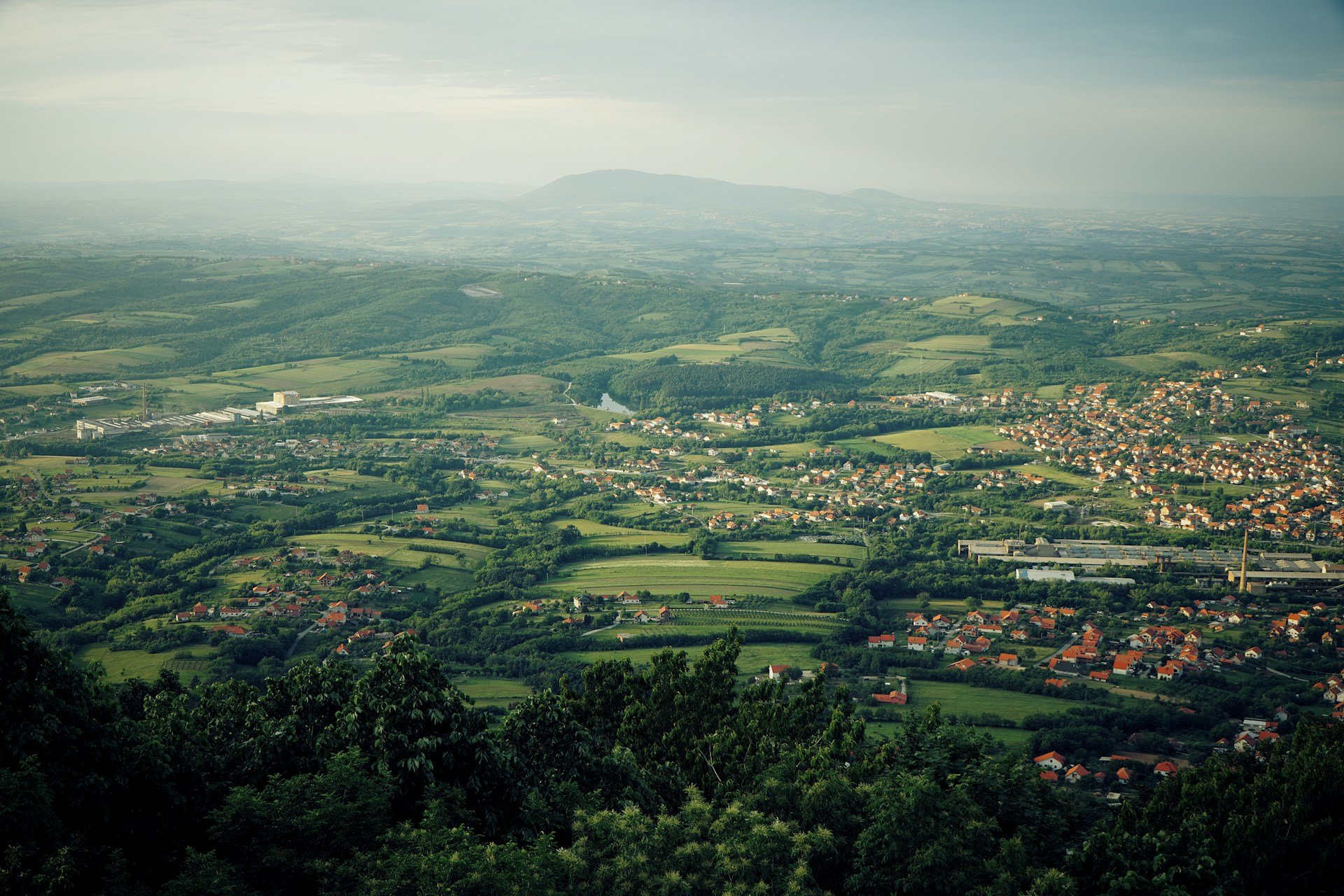
Serbia sits at the geographic middle of the Balkans, which for most of its history has meant being fought over by whoever controlled the Danube. Ottoman armies, Habsburg armies, two world wars and the 1990s breakup of Yugoslavia all passed through, and Belgrade has been razed and rebuilt more times than almost any European capital. What's left is a city that doesn't perform nostalgia for visitors: it just carries on, loudly, with a kafana culture, a river-club nightlife scene, and a hospitality tradition, the slava, that predates the country's borders by centuries.
Serbia is also still one of Europe's cheapest countries to visit properly. It sits outside both the EU and the eurozone, prices are set in dinar, and the tourist markup that has crept into Zagreb or Dubrovnik hasn't caught up here. A full meal with a glass of local wine costs 8 to 12 euros in Belgrade and less outside it. A hostel bed runs 15 to 20 euros a night.
The honest complications
Serbia's EU accession has been a candidacy since 2012 without a firm finish line, and the country's relationship with the rest of the region, and with the unresolved status of Kosovo in particular, is a live political topic that locals may bring up unprompted; it's worth listening rather than volunteering an opinion. The ruins of former government buildings hit during the 1999 NATO bombing still stand, deliberately unrepaired, on Kneza Miloša street near the city center, a visible reminder that this is recent history rather than distant. Outside Belgrade and Novi Sad, English thins out and public transport schedules get less reliable, so a short list of Serbian phrases and some flexibility go a long way. None of this makes Serbia a hard place to visit, it makes it a place that hasn't finished deciding how to present itself to outsiders, which is a large part of why it still feels genuinely discovered.
A History Worth Knowing
Serbia's medieval kingdom under the Nemanjić dynasty peaked in the 13th and 14th centuries, then lost its independence at the Battle of Kosovo in 1389, a defeat that became the founding myth of modern Serbian national identity. Roughly four centuries of Ottoman rule followed, interrupted by Habsburg incursions in the north that shaped Vojvodina's different, Central European character. Independence returned in stages through the 19th century, followed by two world wars, four decades of Tito's socialist Yugoslavia, the violent breakup of that federation in the 1990s, and a 2000 popular uprising that ended Slobodan Milošević's rule.
- 1389
Battle of Kosovo. The medieval Serbian army is defeated by the Ottomans; the battle becomes the central myth of Serbian national identity for the six centuries that follow.
- 1459–1878
Ottoman rule. Roughly four centuries under Ottoman control, with Habsburg occupations of the north during the Great Turkish War (1683-1699) laying the groundwork for Vojvodina's separate cultural identity.
- 1878
Independence recognized. The Congress of Berlin formally recognizes Serbian independence after decades of uprisings and partial autonomy.
- 1918
Kingdom of Serbs, Croats and Slovenes. Formed after WWI from the merger of Serbia with former Habsburg South Slav territories; renamed Yugoslavia in 1929.
- 1945–1980
Tito's Yugoslavia. A socialist federation of six republics, non-aligned in the Cold War, holding together diverse nations under Josip Broz Tito until his death in 1980.
- 1991–1999
Yugoslavia breaks up. Wars accompany the secession of Slovenia, Croatia, Bosnia and Herzegovina and later Kosovo; NATO bombs Serbia in 1999 over the Kosovo conflict.
- 2000–present
Democratic transition. Milošević is ousted in October 2000; Serbia becomes an EU candidate country in 2012, with accession talks still ongoing.
Read the full history: Nemanjić Serbia, Ottoman centuries and Yugoslavia's breakup
The medieval Nemanjić dynasty (roughly 1166 to 1371) built the monasteries, Studenica, Sopoćani, Gračanica among them, that today anchor Serbian Orthodox identity and appear on UNESCO's World Heritage list. Stefan Dušan crowned himself emperor in 1346, ruling briefly over the largest Serbian state in history before it fragmented in the decades before the Ottoman conquest.
The Battle of Kosovo in 1389, where Prince Lazar's army was defeated by Ottoman forces, is remembered less as a strict military turning point (Ottoman control took another 70 years to fully consolidate) than as a cultural one: a founding story of sacrifice and loss that shaped Serbian poetry, church liturgy and national identity through the centuries of Ottoman rule that followed.
Vojvodina, the northern region including Novi Sad, developed differently: repeated Habsburg control from the late 17th century onward left it with Baroque architecture, a large Hungarian and other minority population, and a visibly Central European feel that still distinguishes it from Belgrade and the south.
The 20th century was brutal even by regional standards: Serbia lost an estimated quarter of its population in WWI, and WWII brought occupation, civil conflict between royalist Chetniks and communist Partisans, and the Ustaše genocide against Serbs, Jews and Roma in the fascist-aligned Independent State of Croatia. Tito's Partisans won the postwar struggle for power and built a socialist federation that, while authoritarian, avoided the tighter Soviet orbit of its neighbors and allowed more freedom of movement and consumer life than most of the Eastern Bloc.
The wars of Yugoslavia's breakup in the 1990s, in Croatia, Bosnia and Herzegovina and Kosovo, involved Serbian forces and Milošević's government in ways that remain the subject of war crimes tribunals, contested historical memory across the region, and genuine grief on multiple sides. The 1999 NATO bombing campaign, aimed at ending the Kosovo conflict, killed an estimated two thousand people and damaged infrastructure across the country; some bombed government buildings on Kneza Miloša street in Belgrade remain deliberately unrepaired as a memorial. Kosovo's 2008 declaration of independence is recognized by many countries but not by Serbia, and the topic remains politically live.
Top Destinations
Serbia divides naturally into four travel zones: the capital and central Šumadija, Vojvodina's flat Habsburg-flavored plains in the north, the mountains and river gorges of the west and southwest, and the historic south around Niš. The country is compact enough to cross by train or car in a day, so the constraint is time in each place, not distance between them.
Belgrade, unpolished and proud of it
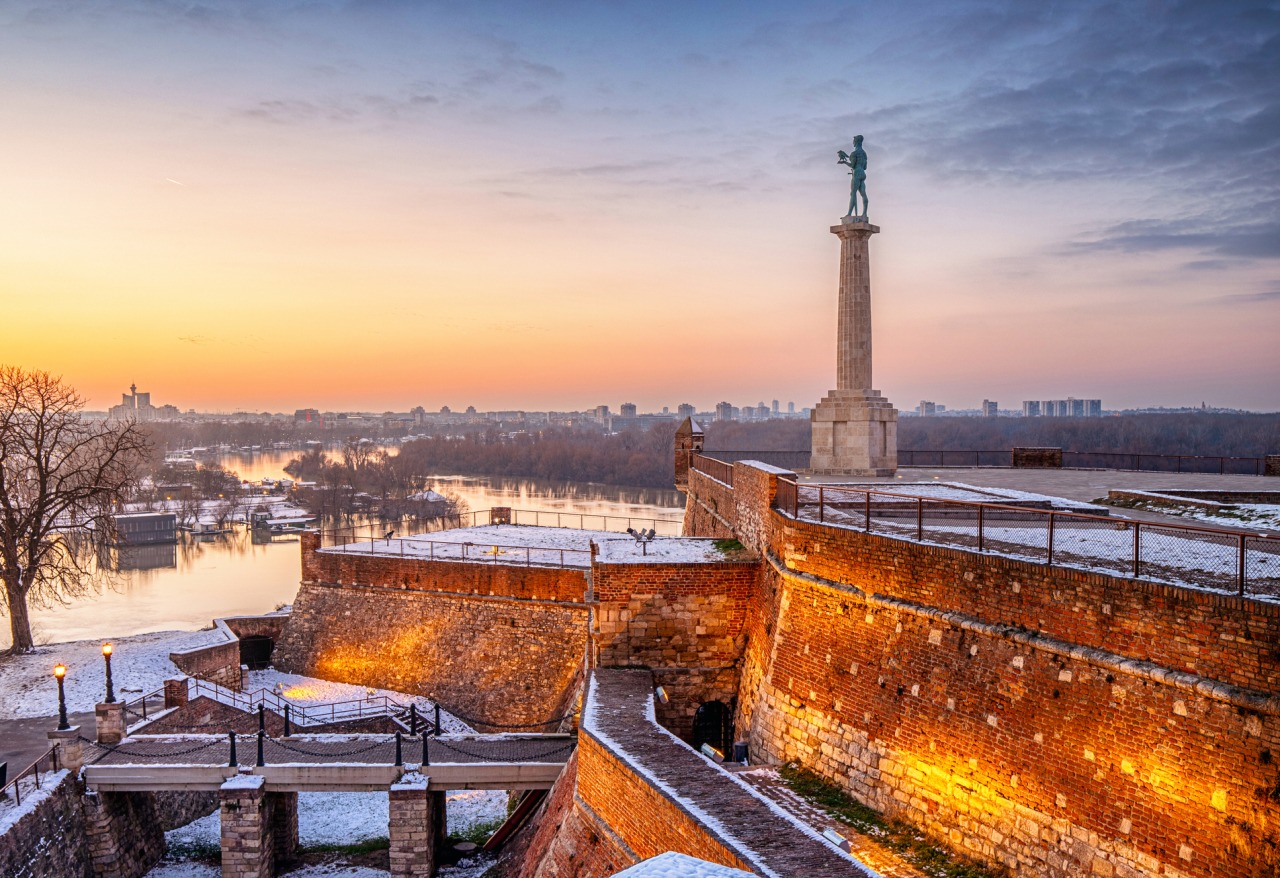
Belgrade is Serbia's capital and the reason most people come. Full coverage, neighborhoods, hotels, restaurants, itineraries, lives on our dedicated Belgrade city guide. In brief: Kalemegdan Fortress at the confluence of the Sava and Danube, the bohemian cobblestones of Skadarlija, the Museum of Yugoslavia and Tito's House of Flowers, and a splavovi river-club scene that runs until sunrise. Budget three days minimum.
Novi Sad, the Habsburg city on the Danube
Serbia's second city feels like a different country from Belgrade: Baroque facades, a laid-back pace and Petrovaradin Fortress looming over the river, best known internationally as the site of the EXIT music festival every July. Freedom Square (Trg Slobode) is the social heart of the old town, ringed by the neo-Gothic Catholic Church of the Name of Mary and the City Hall. Trains run more than 30 times a day from Belgrade Centre station (about an hour), making Novi Sad an easy day trip or an overnight if the festival calendar lines up.
Fruška Gora and Sremski Karlovci
The wooded hills of Fruška Gora National Park, just outside Novi Sad, hold 16 surviving Serbian Orthodox monasteries, working communities rather than museum pieces, scattered through vineyards and orchards. Sremski Karlovci, a small Baroque town at the foot of the hills, is Serbia's historic wine capital and a good stop for a tasting on the way back to Belgrade.
Zlatibor, Tara and the Šargan Eight
Western Serbia is mountain country: Zlatibor is the best-known resort, a plateau of meadows and pine forest with skiing in winter and hiking in summer, plus an open-air museum of old wooden houses at nearby Sirogojno. Tara National Park, further west along the Drina river canyon, has some of the country's best hiking and the postcard-famous Kućica na Drini, the tiny house perched on a rock mid-river near Bajina Bašta. The Šargan Eight is a narrow-gauge heritage railway built in 1925 whose figure-eight route loops through 22 tunnels; it runs near Drvengrad, the wooden ethno-village built by film director Emir Kusturica, now a cultural venue that hosts the annual Küstendorf film festival each January.
Niš, the third city
Serbia's third-largest city sits on the main road south to Greece and Bulgaria and has been fought over since Roman times: it was the birthplace of the emperor Constantine. Its most striking site, Ćele Kula ("Skull Tower"), is a 19th-century Ottoman monument built from the skulls of defeated Serbian rebels, a genuinely unsettling piece of history displayed with minimal sanitizing. Niš Fortress, an Ottoman-era complex in the city center, hosts concerts and a summer festival inside its walls.
Đavolja Varoš, Devil's Town
Around 27 kilometers from the town of Kuršumlija in the southeast, 202 sandstone and volcanic-ash rock formations, some over 10 meters tall, rise from an eroded hillside. Local legend attributes them to a wedding party turned to stone by the devil; geologists attribute them to differential erosion around resistant caprocks. Either way, it's one of Europe's stranger natural sights and rarely crowded.
Hidden gems beyond the main circuit
The zones above cover a first or second trip well. With extra days, these reward the detour.
Studenica Monastery
The largest and wealthiest of Serbia's medieval monasteries, founded around 1190, with UNESCO-listed frescoes and a working community of monks. Remote enough that most visitors arrive by car.
Sićevo Gorge
A dramatic canyon carved by the Nišava river near Niš, popular with rock climbers and hikers, and largely unknown outside Serbia's own outdoor community.
Subotica
A town near the Hungarian border with some of the finest Art Nouveau architecture in the Balkans, including a City Hall that rivals anything in Budapest, and almost no international tourists.
Culture & Etiquette
Serbian hospitality centers on the slava, the celebration of a family's patron saint, an Orthodox Christian tradition unique to Serbia in its universality: nearly every family, regardless of how religious they are day to day, keeps one. Being invited to a slava as a guest is a genuine honor. Outside that specific tradition, Serbian hospitality still runs generous by Western European standards: guests are fed first and refusing food repeatedly reads as awkward rather than polite.
Do
- Accept a toast. Rakija appears at the start of most meals and social occasions; a small sip in response to "živeli" (cheers, literally "long may you live") is the expected response, even if you don't finish the glass.
- Learn a little Cyrillic. Serbian is written in both Cyrillic and Latin script; official signage, government buildings and older menus often use only Cyrillic. Recognizing a dozen letters makes navigation much easier.
- Dress modestly for Orthodox monasteries and churches. Cover shoulders and knees; women may be asked to cover their heads at some sites.
- Learn a few Serbian words. Hvala (thank you), Dobar dan (good day), Da (yes), Ne (no). Effort is noticed and appreciated.
- Carry cash (dinar). Cards work in most Belgrade and Novi Sad businesses, but kafanas, markets and smaller towns often expect cash.
Don't
- Volunteer opinions on Kosovo or the 1990s wars. These remain sensitive, contested topics with real personal weight for many Serbians. Listen if it comes up; don't raise it yourself.
- Assume every Serbian shares the same view of recent history. Opinions on the 1990s, NATO and the government vary widely by generation and individual, more than outside stereotypes suggest.
- Skip the toast at a slava or family gathering. Declining hospitality outright, rather than politely pacing yourself, can read as a genuine social misstep.
- Expect every payment to be by card. Especially outside Belgrade and Novi Sad, always carry dinar as a backup.
- Photograph military or government buildings without checking first; some sensitivity remains around security infrastructure.
Deeper culture: the slava, kafana culture and Serbian Orthodoxy
The slava. Each Serbian family inherits a patron saint's feast day from their ancestors, marked with a blessed bread (slavski kolač), boiled wheat (koljivo) and an open house that welcomes visitors, including strangers, for food, drink and conversation. UNESCO recognized it as intangible cultural heritage in 2014.
Kafana culture. The kafana, part tavern, part social institution, is where Belgrade actually happens: live folk music (starogradska), long dinners, and a drinking culture built around company rather than getting drunk quickly. Skadarlija street in Belgrade is the touristic version; neighborhood kafanas with no English menu are the real thing.
Serbian Orthodoxy. The Serbian Orthodox Church has been central to national identity since the medieval Nemanjić dynasty, and its monasteries, Studenica, Sopoćani, Visoki Dečani among them, hold some of the finest medieval fresco painting in Europe. Religious observance is a spectrum: churches are full at Easter and for slava, less so on an ordinary Sunday.
Food & Drink
Serbian food is grill-heavy, dairy-rich and built around sharing: meat by weight, bread to mop up the rest, and rakija to start and finish. It shares DNA with the wider Balkan and Ottoman-influenced region but has its own signature dishes and a real regional split, spicier in the south, richer and more Central European in Vojvodina.
Ćevapi & Pljeskavica €4-8
Grilled minced-meat rolls (ćevapi) and a spiced patty (pljeskavica), Serbia's answer to the burger, both served with somun flatbread, raw onion, kajmak and ajvar. Leskovačka pljeskavica, from the southern city of Leskovac, is the famously spicy version.
Kajmak & Ajvar
Kajmak is a clotted dairy cream, closer to a savory butter than a cheese, spread thick on bread or grilled meat. Ajvar is a roasted red pepper and eggplant relish, made at home by the jarful every autumn across the region.
Rakija €1-3
Fruit brandy, usually plum (šljivovica), and the backbone of Serbian hospitality: offered as a welcome, a toast and a digestif, often home-distilled and considerably stronger than commercial versions.
Burek & Gibanica ~€1-2
Burek is a flaky filo pastry filled with minced meat, cheese or spinach, Serbia's default breakfast, sold at every pekara. Gibanica is a layered cheese-and-egg pie, similar in spirit but distinctly Serbian.
Sarma & Karađorđeva Šnicla
Sarma, cabbage rolls stuffed with minced meat and rice, is winter comfort food, usually slow-cooked for hours. Karađorđeva šnicla, a breaded and rolled veal or pork cutlet stuffed with kajmak, is Belgrade's answer to a schnitzel and named for the founder of modern Serbia.
Serbian Wine €8-15/bottle
Vojvodina's Fruška Gora and Sremski Karlovci produce Serbia's best-known wines, including bermet, a historic spiced fortified wine once served on the Titanic's first-class menu. Underrated and inexpensive compared to Western European equivalents.
When to Go & Itineraries
April to June and September to October are the sweet spots: mild temperatures, manageable crowds and mid prices. July is hot and coincides with the EXIT festival crowd in Novi Sad, worth planning around either to attend or to avoid. Winter suits Zlatibor's ski season and quiet, uncrowded city sightseeing in Belgrade, though some rural sites and mountain roads are harder to reach.
All four seasons compared, with temperatures
| Season | Verdict | Temps | Prices & crowds |
|---|---|---|---|
| Apr-Jun & Sep-Oct | Best | 15-25°C | Mid prices, manageable crowds |
| Jul-Aug | Good (hot) | 25-35°C, Belgrade can spike higher | EXIT festival crowds in Novi Sad in July; otherwise quieter than peak Western Europe |
| Mar | Good | 10-18°C | Low prices, few tourists |
| Nov-Feb | Quiet, or ski season | -2-8°C, colder in the mountains | Lowest city prices; Zlatibor ski season runs Dec-Mar |
Belgrade and Novi Sad share a continental climate with hot summers and cold winters; Zlatibor and the western mountains run several degrees cooler year-round.
Itineraries
A week covers Belgrade properly with a Novi Sad day trip. Two weeks adds the western mountains and the south; three weeks lets the pace slow down considerably.
- Days 1–4
Belgrade. Kalemegdan, Skadarlija, the Museum of Yugoslavia, Temple of Saint Sava, a splav dinner, and a full day at Ada Ciganlija.
- Day 5
Novi Sad day trip. Train from Belgrade Centre (about an hour), Petrovaradin Fortress, Freedom Square, back by evening.
- Days 6–7
Smederevo or Sremski Karlovci. A slower half-day trip depending on interest, then a final Belgrade evening.
- Days 1–4
Belgrade, as above.
- Days 5–6
Novi Sad & Fruška Gora. Overnight in Novi Sad, a day exploring the monasteries and Sremski Karlovci wine tasting.
- Days 7–9
Western mountains. Drive to Zlatibor, the Šargan Eight railway, Drvengrad, and the Kućica na Drini near Bajina Bašta.
- Days 10–12
Niš & Đavolja Varoš. Ćele Kula, Niš Fortress, a side trip to Devil's Town.
- Days 13–14
Return to Belgrade. A slower final stretch, Ada Ciganlija and Zemun for the fish restaurants along the Danube.
- Days 1–5
Belgrade extended. Add Smederevo Fortress and slower time in Zemun and Vračar.
- Days 6–8
Vojvodina extended. Novi Sad, Fruška Gora's monasteries at a proper pace, Subotica's Art Nouveau architecture near the Hungarian border.
- Days 9–13
Western Serbia extended. Zlatibor, Tara National Park hiking, the Šargan Eight and Drvengrad, Studenica Monastery en route south.
- Days 14–17
The south. Niš, Sićevo Gorge, Đavolja Varoš, with time to spare for the Nišava valley.
- Days 18–21
Back to Belgrade, unhurried. Whatever got skipped the first time, plus a proper final splav night.
Getting there & around
Belgrade Nikola Tesla Airport (BEG) is the main international gateway, with Air Serbia, Wizz Air and other European carriers connecting most major hubs (about 2 hours from Vienna, 1.5 from Rome). Trains and buses cover the country reasonably well between major cities, Belgrade to Novi Sad runs over 30 times a day and takes about an hour, but a rental car (from about €25-35/day) is the most practical way to reach the western mountains and smaller monasteries, where public transport thins out fast.
All transport options with prices: trains, buses, car rental
| Option | Price | Notes |
|---|---|---|
| Belgrade–Novi Sad train | ~€3-4 | Over 30 daily departures, about 1 hour. |
| Intercity buses | €5-15/route | Frequent and reliable between main cities; the main hub is Belgrade's central bus station (BAS). |
| Rental car | €25-35/day | Needed for Zlatibor, Tara National Park, Drvengrad and rural monasteries; standard EU/international license accepted. |
| Airport transfer (BEG to center) | Free–€35 | City buses 72, 600 and 607 are free; the A1 minibus costs about 400 RSD; official taxi vouchers run about 3,500 RSD (~€30). |
Practical prep: buy a Serbian SIM at the airport or an eSIM before landing; coverage is reliable even in the mountains. Cash (dinar) is expected outside Belgrade and Novi Sad, so keep a low-fee card for ATM withdrawals. GetTransfer offers fixed-price airport pickups from BEG.
Where to stay
Belgrade
Full neighborhood-by-neighborhood breakdown and specific hotel picks on our Belgrade city guide. Stari Grad and Dorćol are the best first-time bases.
Novi Sad
Smaller and cheaper than Belgrade; stay near Freedom Square or across the river in Petrovaradin for fortress views, especially worthwhile outside the July EXIT rush when prices spike.
Zlatibor
Ski-season prices in winter, cheaper and quieter in shoulder months. Look for pansions (family-run guesthouses) over larger resort hotels for a better value-to-atmosphere ratio.
Niš
Central hotels near the fortress and pedestrian zone put you within walking distance of Ćele Kula and the old town, at some of the lowest prices in the country.
Budget Planning
Serbia remains one of Europe's best-value countries. It sits outside the eurozone, prices are set in dinar, and even Belgrade, by far the most expensive city in the country, undercuts most EU capitals by a wide margin.
- Hostel dorm €12-20
- Bakery and kafana meals €3-8
- Trains and buses between cities
- Free sites: Kalemegdan, miradouros, monasteries
- 3-star hotel or boutique guesthouse
- Restaurant dinners €10-20/person
- Rental car €25-35/day
- Novi Sad or Zlatibor day trips
- Best available Belgrade hotels
- Fine dining and Serbian wine tastings
- Private tours and guides
- Splav VIP tables and river cruises
Quick reference prices: coffee, meals, transport
| Burek from a pekara | ~€1-2 |
| Coffee (espresso) | ~€1.50-2 |
| Ćevapi or pljeskavica plate | €4-8 |
| Kafana dinner with drinks | €10-18 |
| Rakija (local, a shot) | €1-3 |
| Belgrade–Novi Sad train | ~€3-4 |
| Hostel dorm bed | €12-20/night |
| 3-star Belgrade hotel | €50-90/night |
| Museum of Yugoslavia entry | ~€5 |
Prices reflect August 2026 research and drift over time. Treat them as a planning baseline, not a quote.
Visa & Entry
Serbia allows visa-free entry for up to 90 days within any rolling 180-day period for citizens of the US, EU, UK, Australia, Canada, New Zealand and roughly 95 other countries. Rules do change; the Serbian Ministry of Foreign Affairs is the authoritative source.
✓ Valid passport
Valid for at least 90 days beyond your planned departure date from Serbia.
✓ Police registration
Required within 24 hours of arrival at each address. Hotels and hostels handle this automatically; private stays (Airbnb, friends) require registering in person at the nearest police station.
✓ Accommodation address
Have your first night's booking confirmation handy at the border; it speeds up the registration process.
✓ Not Schengen
Time in Serbia does not count toward your Schengen 90-day allowance, useful for longer European trips.
| Serbia | Bosnia and Herzegovina | |
|---|---|---|
| Daily budget | €30-45, marginally cheaper on average | €25-40, similarly affordable |
| Capital feel | Belgrade: big, loud, riverside nightlife | Sarajevo: compact, East-meets-West old town |
| Landscape | Plains and rolling hills, mountains in the west | Steep mountains almost everywhere, dramatic gorges |
| History on display | Medieval monasteries, 1999 NATO bombing ruins | Ottoman old towns, visible 1990s siege history |
| Schengen | No, doesn't touch your 90 days | No, same advantage |
Safety, Solo Women & Family
Serbia is safe for tourists. Violent crime against visitors is rare, Belgrade rates as one of the safer capitals in Eastern Europe, and central neighborhoods stay comfortable to walk at night with normal urban awareness. The main risks are petty theft and taxi overcharging, not violent crime.
Taxi overcharging
Unlicensed or unmetered taxis, especially around the airport and Belgrade's nightlife districts, sometimes quote inflated fares. Use CarGo or Yandex Go rather than hailing on the street.
Pickpocketing
Occurs in crowded spots: Skadarlija in the evening, busy markets and the EXIT festival crowds in Novi Sad. Keep phones and wallets secured in dense areas.
Splavovi nights
River-club nights run late and involve drinking; keep an eye on drinks, arrange transport home in advance, and treat the riverside paths back to the center with the same caution as any nightlife district after dark.
Two more things worth knowing: political sensitivity and rural driving
Political and historical topics. Kosovo's status and the legacy of the 1990s wars remain genuinely sensitive; this is not a tourist safety risk, but raising the topics casually can land poorly. Listen if locals bring it up rather than initiating.
Rural and mountain driving. Roads in the western mountains around Zlatibor and Tara National Park are winding with limited lighting; drive defensively and avoid unnecessary night driving on unfamiliar mountain routes.
Solo women travelers
Serbia rates reasonably well for solo women, especially in Belgrade and Novi Sad, where street harassment is uncommon and central areas stay busy and well-lit at night. Practically: use ride-hailing apps (CarGo, Yandex Go) instead of unmarked taxis, keep a charged phone on splav nights, and dress as you would in any major European city, there's no specific modesty expectation outside religious sites. Full detail on our Solo Woman Explorer pages.
Emergency numbers
Embassies in Belgrade
112 is the general emergency number and connects to all services with English-speaking operators. In Belgrade, most embassies cluster around Senjak and Dedinje, southwest of the center.
- USA
- +381-11-706-4000
- UK
- +381-11-3060-900
For other nationalities, check your government's travel advisory page for the current Belgrade embassy contact; numbers change more often than guidebooks update.
Family travel & pets
Serbia works well for families: Ada Ciganlija's lake beach and parks in Belgrade give kids room to run, the Nikola Tesla Museum's interactive exhibits land well with older children, and Zlatibor's meadows and open-air museum suit a slower-paced family trip.
Pet travel and family logistics
Pets: EU pet passport holders can enter with dogs, cats and ferrets given valid rabies vaccination and microchipping. Non-EU visitors need a veterinary health certificate issued shortly before travel and current rabies vaccination; check current requirements with the Serbian Veterinary Directorate before travel, as rules are updated periodically.
Family logistics: Belgrade's sidewalks and older buildings are not consistently stroller-friendly outside the main pedestrian zones; a carrier is a practical backup. Restaurants and kafanas are generally welcoming to children, including in the evening.
Serbia FAQ
Is Serbia safe to visit?
Yes. Violent crime against tourists is rare and Belgrade rates as one of the safer capital cities in Eastern Europe. The main risks are petty theft in crowded spots and taxi overcharging, not violent crime.
Do I need a visa for Serbia?
Citizens of the US, EU, UK, Australia, Canada and around 95 other countries can enter visa-free for up to 90 days within any rolling 180-day period. Serbia is not in Schengen, so time there doesn't count against a Schengen 90-day allowance.
How much does Serbia cost per day?
Budget travelers manage on €30-45 a day, mid-range on €70-110. Serbia is outside the eurozone, so prices are set in dinar and haven't caught up to Western European tourist markups.
When is the best time to visit Serbia?
April-June and September-October: warm days, manageable crowds and mid prices. July and August are hot in Belgrade and busy for the EXIT festival in Novi Sad; winter suits Zlatibor's ski season and quiet city sightseeing.
How many days do you need in Serbia?
A week covers Belgrade properly with a day trip to Novi Sad. Two weeks adds Niš, the monasteries of Fruška Gora, and the western mountains around Zlatibor and the Šargan Eight railway.
Is Serbia in the European Union?
No. Serbia has been an EU candidate country since 2012 with accession negotiations ongoing, but it isn't a member yet and it isn't in the Schengen Area either.
What language is spoken in Serbia?
Serbian, written in both Cyrillic and Latin script interchangeably. English is common among younger people in Belgrade and Novi Sad, less so in rural areas.
Is Serbia safe for solo female travelers?
Generally yes, especially in Belgrade and Novi Sad, where street harassment is uncommon and central neighborhoods stay busy and well lit at night. Use ride-hailing apps rather than hailing taxis on the street.
Is Serbia cheaper than Western Europe?
Noticeably. Serbia sits outside the eurozone and the EU, and a backpacker budget of €30-45 a day covers a hostel bed, meals and local transport, well below equivalent costs in Italy, France or Germany.
Do people speak English in Serbia?
Widely in Belgrade and Novi Sad, especially among people under 40. It thins out in smaller towns and rural areas, where a few Serbian phrases go a long way.
What Stays With You
Serbia doesn't ask you to admire it, and that's most of the reason it works. Belgrade rebuilt itself after every century did its worst to the place, and it still finds room for a splav on a summer night, a kafana table that stays full until 2am, and a fortress view over two rivers that costs nothing to watch. Novi Sad's Baroque quiet, the wooden village a filmmaker built in the mountains, a rock formation two centuries of stories haven't fully explained: none of it feels arranged for visitors, because it isn't.
Go with a few Serbian words, an appetite for grilled meat and rakija, and no strong opinions about the 1990s. Everything else takes care of itself.