
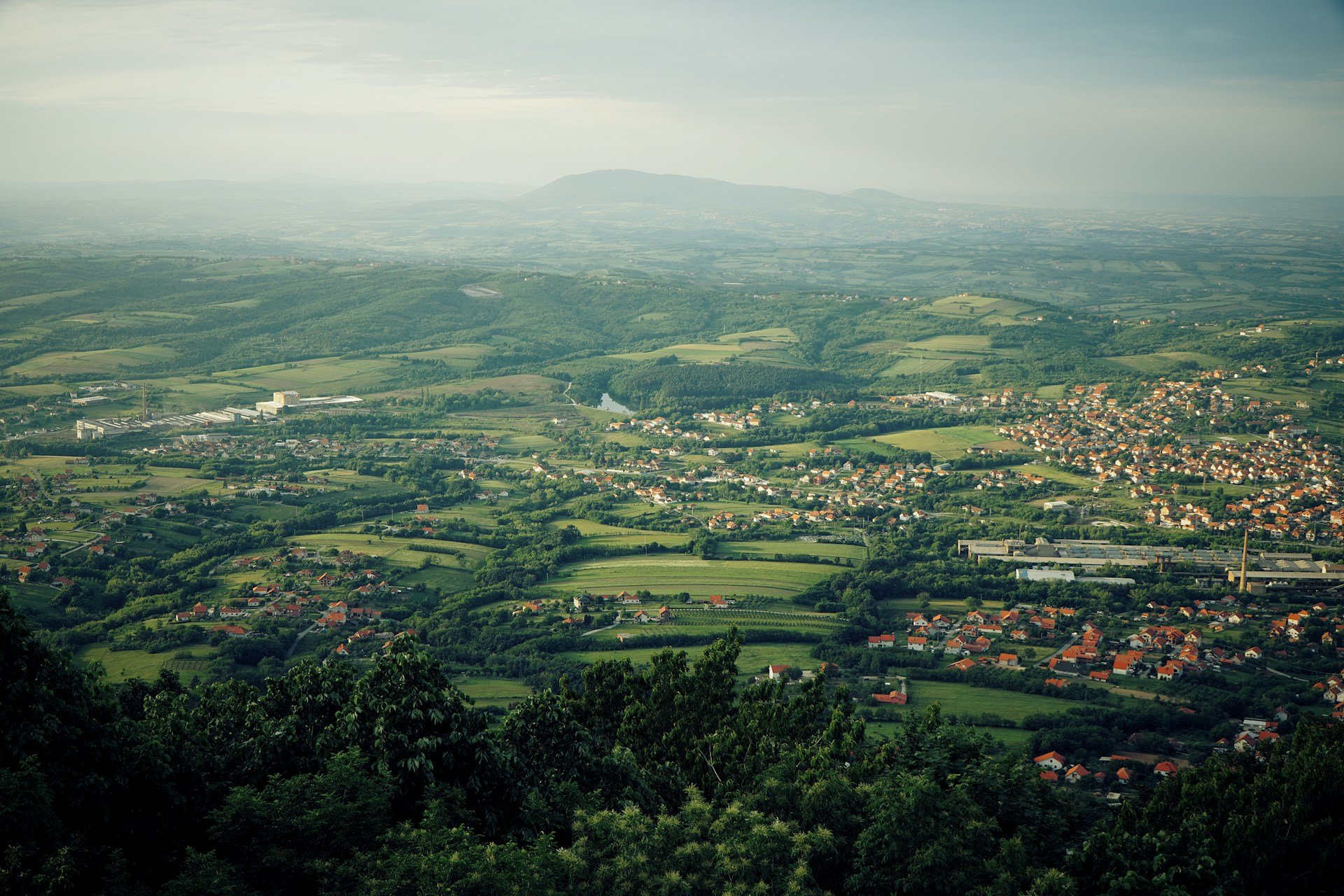
Serbia
A fortress at the meeting of two rivers, a nightlife scene that runs until the following afternoon, monasteries older than most European universities, and hospitality so intense it can be difficult to leave a table. The food will ruin you for cheap food elsewhere. The rakija is stronger than you think.
What You're Actually Getting Into
Serbia sits at the crossroads where Central Europe, the Balkans, and the old Ottoman world have been meeting and colliding for two thousand years. The country carries that history in its landscape and its character in ways that are more visible here than in most of Europe: the Ottoman quarter of Belgrade sat immediately below the Habsburg one for centuries, and the tension and exchange between those two orientations produced something that is distinctly neither. The Cyrillic script on shop signs, the coffee served in a džezva, the Orthodox monasteries with their medieval frescoes, the socialist-era apartment blocks, and the contemporary art galleries all coexist without obvious resolution, and this layering is what makes Serbia feel unlike anywhere else in Europe.
Belgrade is the country's overwhelming gravitational center and one of the genuinely interesting capital cities in Europe. It has a fortress above the confluence of two great rivers, a nightlife culture that is consistently ranked among the world's best, a food scene whose quality-to-price ratio is almost offensive, and a quality of daily urban life that has come a long way from the isolated years of the 1990s without losing the directness and energy that that period produced. Newcomers typically spend longer than they planned.
Beyond Belgrade, the country rewards the rental car that most visitors never bother with. The Fruška Gora hills in Vojvodina hold over a dozen active Orthodox monasteries founded in the 15th and 16th centuries. The Djerdap Gorge on the Romanian border is the deepest river gorge in Europe and contains one of the greatest Iron Age archaeological sites in the world. Tara National Park and the Uvac canyon in western Serbia have a landscape that belongs to a different country in visitors' mental geography entirely. Serbia is not a one-city destination for anyone who spends more than three days.
The currency is the Serbian dinar (RSD), not the euro. Serbia is a EU candidate country that has not adopted the euro. Cards work in Belgrade and Novi Sad with increasing reliability; carry cash everywhere else.
Serbia at a Glance
A History Worth Knowing
The site of modern Belgrade has been continuously inhabited and strategically contested for over two thousand years, which is not a metaphor — Kalemegdan Fortress has been built, destroyed, rebuilt, and rebuilt again through Celtic, Roman, Byzantine, Bulgarian, Hungarian, Ottoman, and Serbian occupation, leaving visible layers from each period in its current form. Standing at the confluence of the Sava and the Danube on the fortress walls, you are at a geographic chokepoint that every power moving east-west or north-south across Europe has had to pass through or control. This explains more about Serbian history than any single fact.
The medieval Serbian state reached its peak under Stefan Dušan, who declared himself Emperor of the Serbs and Greeks in 1346 and briefly ruled a territory stretching from the Danube to the Aegean. The monasteries of Studenica, Mileševa, Sopoćani, and Đurđevi Stupovi were founded in this period and contain some of the finest medieval frescoes in Europe. The Battle of Kosovo in 1389, where the Serbian Prince Lazar fought the Ottoman army of Sultan Murad I and both leaders were killed, became the defining myth of Serbian identity: a defeat that is understood as a moral victory, a sacrifice that consecrated the nation's relationship with its land. The Kosovo epic poetry cycle, transmitted orally for centuries and written down in the 18th and 19th centuries, gave Serbian Romanticism its foundational texts.
Five centuries of Ottoman rule followed, during which Serbia was a province of the empire governed from Constantinople. The First Serbian Uprising of 1804 under Karađorđe and the Second Uprising of 1815 under Miloš Obrenović gradually established Serbian autonomy, then full independence recognized at the Congress of Berlin in 1878. The rivalry between the Karađorđević and Obrenović dynasties, punctuated by assassinations and coups, shaped 19th-century Serbian politics with a violence that set the tone for the 20th century.
WWI was triggered by the assassination of Archduke Franz Ferdinand in Sarajevo on June 28, 1914 — a date that corresponds to the anniversary of the Battle of Kosovo, a coincidence that was not coincidental for Gavrilo Princip, the assassin. Serbia lost approximately 16% of its entire population in WWI, the highest proportional loss of any country in the conflict. The Kingdom of Serbs, Croats, and Slovenes, later Yugoslavia, emerged from the wreckage of the Austro-Hungarian Empire. Yugoslavia under Tito's communist government managed the Cold War as a genuinely independent non-aligned state, breaking with Stalin in 1948 at considerable courage and developing its own path of market socialism and relative openness that made it the most livable of the communist states.
Yugoslavia's dissolution in the 1990s brought wars in Slovenia, Croatia, Bosnia, and Kosovo that killed over 130,000 people and produced the worst atrocities in Europe since WWII. The Srebrenica massacre of July 1995, in which Bosnian Serb forces under Ratko Mladić killed approximately 8,000 Bosnian Muslim men and boys, was ruled genocide by the International Criminal Tribunal for the former Yugoslavia. NATO bombing of Serbia in 1999 and Kosovo's subsequent declaration of independence in 2008, which Serbia does not recognize, continue to shape Serbian politics and its relationship with the EU and NATO. This history is recent, contested, and genuinely sensitive in Serbia. Engaging with it honestly and without presumption is both correct and generally welcomed by Serbs who want their complexity understood.
The Scordisci Celts settle at the Sava-Danube confluence. Roman Singidunum follows. The site of Belgrade is continuously occupied from this point.
Stefan Dušan declares himself Emperor of the Serbs and Greeks. The great monastery-building period produces frescoes still visible today.
Prince Lazar versus Sultan Murad I. Both die. The Ottomans win militarily. Serbs win mythologically. The wound never entirely closes.
Karađorđe leads the First Uprising. Miloš Obrenović leads the Second. Serbian autonomy is established; independence follows in 1878.
Gavrilo Princip shoots Franz Ferdinand in Sarajevo on the anniversary of the Battle of Kosovo. Serbia loses 16% of its population in the war that follows.
Yugoslavia breaks with the Soviet Union. A uniquely independent communist state develops, the most open in the Eastern bloc.
Wars in Croatia, Bosnia, Kosovo. Over 130,000 killed. Srebrenica massacre ruled genocide. NATO bombing of Serbia in 1999. Milošević dies at The Hague in 2006.
Serbia pursues EU membership while maintaining complex relationships with Russia, China, and the Kosovo question. Belgrade is one of the fastest-developing cities in Southeast Europe.
Top Destinations
Serbia is roughly the size of South Carolina, landlocked, and divided by the Danube and Sava rivers. The north (Vojvodina) is flat agricultural land, more Central European in character, with Novi Sad as its cultural center. The center and south are hilly to mountainous, more traditionally Balkan, with the monasteries and the national parks. A car for at least part of any trip longer than four days is the honest recommendation.
Belgrade
Belgrade has been destroyed and rebuilt forty times according to legend, which given its strategic position at the confluence of the Sava and Danube is not hard to believe. The Kalemegdan Fortress is free to enter and contains Roman walls, Byzantine towers, Ottoman mosques converted to museums, and the best sunset view in the country. Below the fortress, the Bohemian quarter of Skadarlija is lined with kafanas (traditional Serbian inns) where live folk music begins around 9pm. The Savamala district on the Sava waterfront is the contemporary culture and nightlife district. The splavovi, floating clubs on pontoons moored to the riverbanks, are where Belgrade's legendary nightlife happens. Give Belgrade three to four days and you'll still feel you've barely started.
Novi Sad
Serbia's second city sits on the Danube beneath the Petrovaradin Fortress, a Habsburg-built fortification of remarkable scale that took 88 years to complete and whose underground tunnels run for 16 kilometres. The old town, with its pedestrian Dunavska street and the tree-lined Zmaj Jovina, has a Central European elegance that surprises visitors expecting something more typically Balkan. In July, the Petrovaradin battlements become the stage for EXIT festival, one of Europe's best music festivals. The rest of the year, Novi Sad is a university city with a strong cafe culture and a more relaxed pace than Belgrade. Allow two to three days.
Fruška Gora Monasteries
The Fruška Gora ridge north of Novi Sad holds seventeen active Orthodox monasteries, founded mostly in the 15th and 16th centuries by Serbian nobles who retreated here as the Ottomans advanced. The frescoes at Krušedol, the 16th-century church at Novo Hopovo, and the treasury at Grgeteg monastery contain medieval Serbian religious art of the highest quality, largely unvisited by foreign tourists. The ridge itself is a national park with hiking trails, wine cellars, and village restaurants. A car is needed; organized tours from Novi Sad exist but miss the between-monastery roads where the atmosphere is best.
Djerdap Gorge (Iron Gates)
The Danube cuts through the Carpathian and Balkans mountains at Djerdap, producing the deepest and longest river gorge in Europe: 100 kilometres long and up to 93 metres deep. The Lepenski Vir archaeological site on the Serbian bank contains the remains of a sophisticated Mesolithic settlement dating to 7,000 BCE, making it one of the oldest complex cultures in Europe. The giant carved rock face of Decebalus, the last king of Dacia, commissioned by a Romanian millionaire and completed in 2004 at 55 metres high, is visible from the Serbian shore. The gorge requires a car; the drive along the Serbian bank from Golubac Castle to the dam is one of the best road trips in Serbia.
Tara National Park
In western Serbia, Tara is a densely forested mountain plateau rising above the Drina River gorge, with views into Bosnia and Herzegovina across the water. The park contains the Pančić's spruce, a conifer species found only here and in a few other Balkan locations. The Drina House, a small wooden cabin built on a rock in the middle of the Drina River near Bajina Bašta, is the most photographed image in Serbia after Kalemegdan. The hiking is excellent; the village of Mitrovac inside the park has basic accommodation. Best visited with a car from Belgrade (three hours).
Uvac Canyon
In the mountains of western Serbia, the Uvac River has carved a series of meanders so extreme that the path of the river doubles back on itself eleven times in one section, visible from the viewpoints above as a series of nested loops. The canyon is also one of the few breeding grounds in Serbia for the griffon vulture, with over 100 pairs nesting in the cliff faces. A boat trip from the village of Kokin Brod takes you through the canyon at water level, where the cliffs rise 200 metres on either side. Genuinely extraordinary and almost entirely unvisited by foreign tourists.
Zlatibor
A mountain plateau in western Serbia at around 1,000 metres elevation, Zlatibor is where Serbia goes on holiday. In summer the meadows and pine forest offer hiking and cycling. In winter the ski slopes are modest but functional and significantly cheaper than anything in the Alps. The old village core of Zlatibor town has traditional wooden architecture. The Sirogojno open-air museum preserves an entire 19th-century Serbian village. The Šargan Eight narrow-gauge railway, a UNESCO-listed rack railway that climbs 300 metres through 22 tunnels and over numerous bridges, departs from Mokra Gora nearby and is one of the most scenic train rides in the Balkans.
Studenica Monastery
Founded by Stefan Nemanja in 1190 and the mausoleum of the Nemanjić dynasty, Studenica is the most important medieval monument in Serbia and a UNESCO World Heritage site. The marble Church of the Virgin contains frescoes from 1208 that are among the finest examples of Byzantine-Serbian art anywhere. The monastery is still active, the monks maintain the buildings and the grounds, and the combination of the landscape, the architecture, and the quality of the art inside makes it worth the three-hour drive from Belgrade. Go on a weekday. It is usually quiet enough that you can sit in the church for twenty minutes alone with the frescoes.
Culture & Etiquette
Serbian hospitality is not a phrase. It is a measurable phenomenon that will fill your table, extend your visit by several hours, and produce food you did not order and drinks you will not refuse. The concept of inat — a specifically Serbian form of stubbornness, defiance, or spite in the face of adversity — is the cultural counterpart to this warmth: the two things are related. A people who have been invaded, occupied, and bombed into developing a constitutionally oppositional stance toward the world have also developed an intense commitment to the pleasures available within that world, which begins with hospitality and ends nowhere in particular.
Serbian directness is genuine and not unfriendly. A Serbian who tells you that your suggestion is wrong, that you should eat more, that you are going the wrong way, is not being rude. They are being honest in a culture that considers performance-pleasantness slightly disrespectful. Engaging directly in return is more welcome than diplomatic hedging.
Being offered rakija, coffee, or food in a Serbian home or at a casual social encounter is not optional hospitality. It is mandatory. Refusing politely is accepted. Refusing multiple times becomes a small social confrontation. Accept the first offer and negotiate from there.
The Serbian toast means "long life" and is said with eye contact before the first drink and at each subsequent pour. Missing the toast is noticeable. Making it confidently is disproportionately appreciated and often leads to more rakija.
Serbian is written in both Cyrillic and Latin scripts, but Cyrillic dominates in official contexts, on street signs, and in older restaurants. Two hours of Cyrillic learning opens up menus, maps, and street navigation dramatically. It is phonetically simple once the letter shapes are learned.
Serbs are aware that international coverage of the 1990s wars was not favorable to Serbia and they have strong feelings about the nuances. Listening carefully, asking questions rather than asserting positions, and acknowledging complexity without demanding resolution is the correct approach.
The traditional Serbian inn, with its live folk music, communal tables, grilled meat, and hours-long sitting culture, is the social institution that most defines Serbian hospitality. Going to one — specifically in Skadarlija in Belgrade or on the Fruška Gora on a Sunday — and staying for more than one round is the correct experience. It cannot be rushed.
Serbs have a distinct national identity, history, and cultural tradition that they are clear about. Treating the region as generically "the Balkans" in conversation misses the specificity that Serbs, like all people, want acknowledged. Croatia and Serbia are neighbors with a complex history; treating them as equivalent does not go unnoticed.
Serbian homemade šljivovica (plum brandy) can exceed 50% ABV. The commercial versions are milder. Both are stronger than they taste when offered at room temperature in a warm kitchen. The standard offer of "just a small one" is calibrated in Serbian centilitres, not Western ones.
Djokovic is a figure of intense national pride in Serbia, but his profile internationally includes controversies that Serbs are well aware of. He is not a simple topic. Mentioning him will produce a strong opinion in almost any Serbian, which is fine; just be prepared for a real conversation rather than casual agreement.
Active Orthodox monasteries require covered shoulders and knees. Many provide coverings at the entrance but not all. A scarf or light layer in your bag covers the requirement. Entering a Serbian monastery in shorts is considered disrespectful and will be corrected by whoever is nearest.
Exchange rates at Belgrade Nikola Tesla Airport are significantly worse than at exchange offices (menjačnica) in the city. Change only enough at the airport for the taxi, then exchange the rest at a city-center exchange office which will give notably better rates.
Turbo-Folk
Turbo-folk is the dominant popular music of Serbia: traditional Serbian folk music synthesized with pop production, often maximalist in aesthetic and associated with the specific cultural mood of the 1990s. It is simultaneously the music of weddings, kafanas, and taxi drivers, and the subject of considerable embarrassment among the Serbian urban intelligentsia. Neither the embarrassment nor the enthusiasm tells you the full story. Hearing it pour out of a kafana at midnight while you're eating pljeskavica is an authentic and unrepeatable cultural experience regardless of your aesthetic position on the genre.
Nikola Tesla
Tesla was born in 1856 in the village of Smiljan in what is now Croatia, to Serbian parents, and grew up identifying as Serbian. Both Serbia and Croatia claim him. The Nikola Tesla Museum in Belgrade, housed in a 1927 building that contains his ashes, is one of the better science museums in the Balkans and one of the few places in the world where you can watch a Tesla coil demonstration while learning the actual history of AC current and radio transmission. Entry is RSD 600 (around €5). Worth two hours of anyone's time.
Belgrade's Cultural Scene
Belgrade has a genuinely active contemporary arts, music, and theatre scene that is disproportionate to the city's size and income level. The Rex Cultural Centre, the Mixer House, and the numerous small gallery and performance spaces of Savamala host a consistently interesting program. The Serbian National Theatre in Belgrade and the Serbian National Theatre in Novi Sad both produce opera, ballet, and drama at a standard that surprises visitors who haven't thought of the region as a classical arts destination. Ticket prices are a fraction of Western European equivalents.
Football & Sport
Serbian football passion is intense, tribally organized around the Red Star Belgrade vs. Partizan derby (the "Eternal Derby," considered one of Europe's most ferocious), and something worth attending with appropriate awareness of the atmosphere. Red Star's stadium (the Marakanа) holds 52,000. Tennis follows Djokovic with a devotion that makes match days in Belgrade worth experiencing. The FKK (naturist) culture along the Sava and Danube beaches is also genuinely Serbian, though this requires no ticket.
Food & Drink
Serbian food is one of the most under-appreciated cuisines in Europe. It sits at the intersection of Ottoman grilling tradition, Austro-Hungarian pastry and dairy culture, and the specific livestock-raising traditions of the Serbian highlands, and produces a result that is simultaneously hearty, technically accomplished, and extraordinary value. The grilled meats are the most famous element: ćevapi, pljeskavica, and mešano meso from the charcoal grill are the Serbian contribution to the canon of European street food, and done properly they are exceptional. But the food extends considerably beyond the grill: the slow-cooked stews, the stuffed peppers and cabbage leaves, the dairy products of the mountain regions, and the baked goods are all worth equal attention.
Serbian cheese, particularly kajmak (a clotted cream-adjacent dairy product with nothing like it in Western Europe), and the various regional white cheeses are the components that differentiate Serbian grilling from its Turkish or Greek equivalents. A proper pljeskavica stuffed with kajmak is not a thing you can accurately describe to someone who hasn't had one.
Ćevapi & Pljeskavica
Ćevapi are small skinless sausages of mixed minced beef and pork, grilled over charcoal, served in a fresh lepinja flatbread with raw onion, ajvar (roasted pepper relish), and kajmak. Pljeskavica is a large spiced meat patty — the Serbian answer to the burger, served in the same way and at its best when stuffed with kajmak or sir (white cheese). Both are sold from ćevabdžinica grills throughout the country for RSD 200–350 per portion (€2–3.50). At a good grill they are extraordinary. At a bad grill they are still better than most things at the same price in Western Europe.
Kajmak
Kajmak is a clotted cream product made by skimming the top layer from simmered milk and allowing it to age. Fresh kajmak is mild and spreadable; aged kajmak is firmer, saltier, and more complex. It appears as a condiment with grilled meat, stuffed inside pljeskavica, spread on bread, melted over gibanica (cheese pastry), and eaten at breakfast with honey. There is nothing in Western European cuisine that corresponds to it. It is one of the things about Serbian food that stays with people after the trip.
Punjene Paprike
Stuffed peppers: green or red peppers filled with a mixture of minced pork, rice, and spices, slow-cooked in a tomato sauce. The Serbian version is typically prepared in large quantities and improves over multiple reheating cycles, which is why the version at a home table or a small local restaurant is invariably better than the one at a tourist-facing kitchen. Order them at any Serbian kafana where you see them on a chalkboard special.
Gibanica & Burek
Gibanica is a Serbian phyllo pastry layered with white cheese and eggs, baked until golden, and cut into squares. It is the universal Serbian breakfast pastry and the standard pekara (bakery) staple. Burek is the Turkish-origin version, more often in a spiral form with meat or cheese filling. Both are available from any pekara from 6am onward for RSD 80–120 (€0.80–1.20) a slice. This is the correct Serbian breakfast eaten standing at the pekara counter with a glass of yogurt (kiselo mleko) poured over the top.
Pasulj & Čorba
Pasulj is Serbian bean stew, made with white beans, smoked meat (pork ribs or sausage), and paprika, slow-cooked until the beans are falling apart and the broth is thick. It is the national comfort food. Čorba is the generic Serbian word for a soupy stew or thick soup; čorba od povrća (vegetable), čorba od telećine (veal), and riblja čorba (fish, particularly in the Danube and Drina regions) are the most common. At RSD 300–500 for a bowl (€3–5) at a local restaurant, these are both the cheapest and the most sustaining meals available.
Šljivovica & Serbian Wine
Šljivovica (plum brandy) is the Serbian national spirit, distilled from fermented plums in a tradition that is both deeply functional and genuinely artisanal at the household level. Commercial versions are reliable and consistent; homemade versions vary from extraordinary to incapacitating. Served before meals, between courses, and after. Serbian wine, particularly from the Župa valley in central Serbia and the Fruška Gora region, is improving rapidly and significantly underpriced internationally. Prokupac, the indigenous red grape variety, produces earthy, medium-bodied wines that pair correctly with grilled meat and cost RSD 600–1,200 (€6–12) in a restaurant.
When to Go
Honest answer: May or September. Both offer warm weather, outdoor café culture, and the specific quality of Serbian daylight that does particularly good things to the Kalemegdan walls and the Fruška Gora vineyards. July brings the EXIT festival to Novi Sad, which is genuinely one of Europe's best music events and worth planning around. August in Belgrade is hot and slightly reduced — much of the city's population escapes to the mountains or the coast. October offers the wine harvest and the autumn forest colors.
Late Spring
May – JunWarm evenings, outdoor terraces open, the Fruška Gora in bloom. Belgrade is at full energy before the summer heat. Kalemegdan park is at its most beautiful. Slightly below peak tourist numbers.
Early Autumn
Sep – OctWine harvest in Župa and Fruška Gora. Tara forest colors. Belgrade outdoor culture extends into October. Autumn fog in the monastery valleys of central Serbia is extraordinary. Quieter than July.
Summer
Jul – AugEXIT festival Novi Sad in July is worth the trip alone. Belgrade splavovi at peak. Hot (Belgrade regularly exceeds 35°C in July and August). Mountains are cooler and excellent for hiking. The August city quietness has a certain appeal.
Winter
Dec – FebBelgrade's kafanas reach peak warmth and live music intensity in winter. Zlatibor and Kopaonik skiing. Christmas and Orthodox New Year (January 7) celebrations with unusual parallel festivities. Very affordable. Cold but not deterrent.
Trip Planning
Five to seven days covers Belgrade and Novi Sad well, with a day trip to the Fruška Gora monasteries. Ten days adds either western Serbia (Tara, Uvac, Zlatibor) or eastern Serbia (Djerdap, Golubac, Lepenski Vir). Two weeks allows both. The train between Belgrade and Novi Sad is reliable and affordable. Everything else requires either a bus (slow but cheap) or a rental car (liberating for rural areas). Serbia is not Schengen, so days here don't count against your Schengen 90-day limit — an important practical point for extended Balkan trips.
Belgrade
Day one: Kalemegdan at 4pm for the sunset. Walk down to Skadarlija for dinner at a kafana (Tri Šešira or Dva Jelena, ignore the tourist-facing ones on the main cobbles). Day two: Republic Square, Nikola Tesla Museum, Savamala afternoon. Splav nightlife if you have the energy. Day three: Zemun by bus (25 minutes), Gardoš tower, the best ćevapi in Belgrade (Žar), boat to Ada Ciganlija island for the beach. Belgrade does not need more than this to feel understood.
Novi Sad
Train from Belgrade (90 minutes, RSD 800). Day four: Petrovaradin Fortress and the underground tunnels. Old town streets, evening on Dunavska. Day five: rent a car or join a tour for the Fruška Gora monasteries. Krušedol in the morning, Novo Hopovo by midday, wine tasting at a Fruška Gora winery in the afternoon. Return to Belgrade by evening train or overnight in Novi Sad.
Belgrade
Three full days: Kalemegdan, Tesla Museum, Savamala, Skadarlija, Zemun. Add a morning at the Nikola Tesla Airport flea market (Buvljak) if visiting on a Saturday or Sunday — one of the better flea markets in the Balkans and entirely off the tourist circuit.
Novi Sad & Fruška Gora
Train to Novi Sad. Petrovaradin Fortress. Fruška Gora monasteries by rental car: spend a full day on the ridge, visit four to five monasteries, eat lunch at a village restaurant with wild mushrooms and homemade wine, arrive back at Novi Sad for the evening.
Western Serbia: Zlatibor & Tara
Bus or drive from Belgrade to Zlatibor (4 hours). Day six: arrive, walk the plateau. Day seven: drive to Tara National Park (45 minutes from Zlatibor), walk to the Drina House viewpoint, hike along the Drina Gorge. Day eight: Šargan Eight narrow-gauge railway at Mokra Gora (30 minutes from Zlatibor), afternoon back toward Belgrade.
Studenica & Return
Drive from Zlatibor or Belgrade south to Studenica Monastery (3.5 hours from Belgrade). Morning in the monastery: sit with the 1208 frescoes in the Church of the Virgin for as long as you can. Drive back to Belgrade via Čačak. Fly home from Belgrade Nikola Tesla Airport.
Belgrade
Three days. Add an afternoon at the Museum of Yugoslav History (the mausoleum of Tito, the collection of relay batons from the Day of Youth celebrations, a genuinely moving account of Yugoslavia's unique Cold War position) and an evening walking the Sava embankment below Kalemegdan at dusk.
Eastern Serbia: Djerdap & Viminacium
Rent a car from Belgrade. Drive east along the Danube to Golubac Castle (2 hours), then through the Djerdap Gorge. Stop at Lepenski Vir archaeological site. Overnight in Donji Milanovac on the gorge. Day six: continue to the Iron Gate dam and viewpoint. Viminacium Roman legionary fortress and necropolis near Kostolac on the return. Back to Belgrade overnight.
Novi Sad & Fruška Gora
Three days: Petrovaradin, old town, Fruška Gora monastery circuit. Overnight at a monastery guesthouse if available — several Fruška Gora monasteries offer simple accommodation for a donation.
Western Serbia Circuit
Drive from Novi Sad south through the Šumadija hills to Topola (Karađorđe's mausoleum church at Oplenac has the most elaborate mosaic interior in the Balkans), then west to Zlatibor, Tara, Uvac canyon, Studenica monastery, and back to Belgrade. This five-day circuit covers Serbia's mountain and monastery heartland and requires a car, patience for village roads, and a willingness to stop whenever something looks interesting. The journey is the point.
Vaccinations
No mandatory vaccinations required. Tick-borne encephalitis vaccine recommended for hiking in forested areas from spring to autumn. Routine vaccines up to date. Healthcare quality is adequate in Belgrade and major cities; variable in rural areas.
Full vaccine info →Connectivity
EU roaming does not apply — Serbia is not an EU member. Buy a Serbian SIM (A1, Telekom Srbija, Yettel) at the airport or any phone shop for €5–8 including a reasonable data package. Coverage is good in cities and along main roads; patchy in the Djerdap gorge and remote mountain areas.
Currency (RSD, not €)
Exchange at menjačnica (exchange offices) in city centers, not at the airport. Cards accepted at Belgrade hotels, supermarkets, and larger restaurants. Rural Serbia is predominantly cash. Carry RSD 2,000–3,000 (€18–27) when leaving the cities. ATMs are plentiful in Belgrade and Novi Sad.
Car Rental
Essential for western Serbia, the Djerdap Gorge, Fruška Gora, and any monastery circuit. Budget RSD 3,000–5,000 (€27–45) per day. Roads in cities are congested; roads in the mountains are variable. Vignette (motorway tax) available at border crossings and petrol stations. International driving permit required.
Travel Insurance
Healthcare in Belgrade is adequate; rural areas are limited. Travel insurance with medical cover is recommended. EU EHIC cards are not valid in Serbia. Private clinics in Belgrade (Medigroup, Bel Medic) offer English-language service for non-emergencies.
Language
Serbian uses both Cyrillic and Latin scripts. Younger people in Belgrade and Novi Sad speak good English. Outside cities, English is less reliable. Basic Cyrillic reading (learnable in two hours) opens menus, street signs, and maps significantly. Hvala (thank you) and molim (please) go a long way.
Transport in Serbia
Serbia's transport infrastructure is improving but uneven. The Belgrade–Novi Sad high-speed railway (110 minutes, opened 2022) is genuinely good. Most other train routes are slow and the network is limited. Buses cover what trains don't, reliably and cheaply, though schedules require planning. A rental car transforms the experience of visiting anywhere outside the two main cities. Belgrade has improving public transport; the Savamala–Kalemegdan walk is entirely on foot and all the better for it.
Belgrade–Novi Sad Train
RSD 700–900High-speed rail (Soko train) covers the 80km in 35 minutes. Regular departures throughout the day. Comfortable, affordable, and the obvious choice for the Novi Sad visit. Book at serbiarail.rs or at the station.
Intercity Bus
RSD 500–1,500Buses from Belgrade's main bus station (Lasta and other operators) cover most of Serbia including Zlatibor (4 hours, RSD 1,200), Novi Pazar (4 hours), and the Djerdap area. Check schedules at bas.rs. Generally on time; buy tickets at the station rather than on the bus.
Belgrade Airport
Bus: RSD 300Nikola Tesla Airport is 18km from the city center. Airport bus (A1) runs to Republic Square every 20–30 minutes, takes 30–40 minutes, costs RSD 300. A taxi should cost RSD 1,500–2,500 (€14–23) to the center; use Taxi Pink or Naxis apps rather than hailing unmetered taxis at arrivals.
Taxi & Ride Apps
RSD 70/km + startCar Go, Naxis, and Taxi Pink apps operate in Belgrade and give metered fares. Always use an app or insist on the meter to avoid overcharging. Cross-city Belgrade ride: RSD 500–800 (€5–8). Bolt also operates in Belgrade.
Rental Car
RSD 3,000–5,000/dayEssential for rural Serbia. Local companies at Belgrade airport offer competitive rates. Vignette for motorways is available at entry points. Mountain roads require attention but are manageable in a standard car. Avoid driving at night in rural areas where deer crossings are unmarked.
Belgrade City Bus
RSD 100/tripGSP Belgrade's bus network covers the city and extends to Zemun and other suburbs. Buy a BusPlus card (RSD 200) and load credit. The bus to Zemun (numbers 15, 84, 704) runs every 10 minutes and is the practical way to reach the old Habsburg town across the Danube.
Fly into Belgrade. Three days in the city using walking, taxi apps, and the Zemun bus. Take the Soko train to Novi Sad for two days. Rent a car at Novi Sad or back in Belgrade for the western Serbia circuit (Zlatibor, Tara, Uvac, Studenica) or the eastern Djerdap circuit. Return the car to Belgrade airport. This structure — trains for the cities, rental car for the countryside — covers Serbia properly without needing to plan bus timetables for routes where schedules are unreliable.
Accommodation in Serbia
Serbian accommodation is excellent value. A good mid-range hotel in Belgrade's center costs RSD 5,000–9,000 per night (€45–80). Hostels are clean, social, and concentrated in the Savamala and Skadarlija areas of Belgrade for RSD 1,500–2,500 per dorm bed. The best stays outside the cities are in seosko turizam — rural tourism guesthouses — where a room with breakfast and a home-cooked dinner costs RSD 3,500–5,000 (€32–45) in the Fruška Gora, Zlatibor, or Tara regions.
Boutique Hotel
RSD 5,000–12,000/nightBelgrade has several excellent boutique hotels in the Savamala, Dorćol, and Vračar neighborhoods. Closer to the actual city than the international chains near the airport. The Hotel Envoy and Envoy New Belgrade are consistently well-reviewed. Novi Sad has smaller boutique options in the old town.
Hostel
RSD 1,500–3,000/nightBelgrade's hostel scene is strong and social. Those in Savamala near the nightlife district are the most convenient for the city's evening culture. Free walking tours typically depart from central hostels daily. Great way to meet the city's international visitor community.
Seosko Turizam (Rural Guesthouse)
RSD 3,000–6,000/nightThe distinctively Serbian rural tourism accommodation: a family farm or village house where the hosts provide homemade breakfast, dinner from the garden and the smokehouse, and introductions to the local landscape. The best experiences in rural Serbia happen at this kind of stay. Book in advance; they fill with Serbian domestic tourists on summer weekends.
Camping
RSD 800–2,000/nightCamp sites exist in Tara, Zlatibor, and along the Drina and Danube rivers. Ada Ciganlija island in Belgrade has camping adjacent to the city beach. Wild camping in national park areas requires following park rules. Camping in Serbia is genuinely affordable and the river and mountain settings are excellent.
Budget Planning
Serbia is among the best-value destinations in Europe. Prices in Belgrade have risen since 2020 but remain dramatically lower than Western or Central European equivalents. A full restaurant dinner for two with a carafe of wine costs RSD 2,500–4,000 (€22–36). A ćevapi meal from a grill costs RSD 300–500 (€3–4.50). A craft beer in a Belgrade bar is RSD 200–350 (€1.80–3.20). The budget that felt tight in Vienna is comfortable here and the one that felt comfortable in Warsaw is generous.
- Hostel dorm (RSD 1,500–2,500)
- Pekara breakfast (RSD 100–150)
- Ćevapi lunch from a grill (RSD 300)
- Kafana dinner with house wine (RSD 800)
- Beer at a splav (RSD 200–300)
- Boutique hotel or good guesthouse
- Sit-down restaurant for all meals
- Train and occasional taxi
- Museum entry (Tesla Museum: RSD 600)
- EXIT festival ticket if applicable
- Best hotels in Belgrade or Novi Sad
- Fine dining and wine pairings
- Car hire for independent rural exploration
- Guided monastery or Djerdap tours
- Rakija tastings and wine cellar visits
Quick Reference Prices
Visa & Entry
Serbia is not a Schengen Area member. This is practically important: days spent in Serbia do not count against your Schengen 90-day allowance. For travelers doing extended Balkan circuits, spending time in Serbia (and also in Bosnia, Kosovo, Albania, and North Macedonia, which are also non-Schengen) effectively provides additional non-Schengen days that don't erode your EU access. Citizens of the US, UK, all EU member states, Canada, Australia, and New Zealand can enter Serbia visa-free for 90 days.
Most Western passport holders enter Serbia visa-free for 90 days. Serbia is not part of the Schengen Area, so days here do not reduce your Schengen allowance. This is useful for extended Balkan itineraries. Verify your specific passport on the Serbian Ministry of Foreign Affairs website.
Family Travel & Pets
Serbia is a warm destination for families. Children are not an inconvenience in Serbian restaurants, parks, or social situations — they are actively welcomed in a way that reflects the centrality of family in Serbian culture. The food is family-style and inclusive. The outdoor landscape is excellent for active families. The cost is low enough that a family trip doesn't require agonizing budget decisions at every restaurant.
Kalemegdan & Military Museum
The Military Museum within Kalemegdan Fortress has an outdoor display of tanks, artillery, and aircraft in the fortress grounds that children find immediately compelling. The fortress itself has walls, towers, and a park with a zoo annex. Free to enter the park; small entry fee for the museum. The outdoor exhibits are accessible to all ages and the fortress geography provides natural adventure territory.
Ada Ciganlija Beach
A river island in the Sava within Belgrade, Ada Ciganlija has four kilometres of sandy beaches, shallow water suitable for children, pedal boats, sports facilities, and good food stalls. Accessible by city bus or bicycle. Popular with Belgrade families on summer weekends. Water quality is monitored regularly. The walk or cycle from the city center is pleasant and the island itself has a relaxed, genuinely local atmosphere.
Uvac Canyon Boat Trip
The Uvac canyon meander boat trip is appropriate for children who can sit in a boat for two hours without difficulty. Seeing the canyon walls from water level, with griffon vultures occasionally visible on the cliff faces, produces the kind of quiet wonder that children absorb without commentary. The boat operators at Kokin Brod are experienced with mixed groups. Summer season only; book in advance as places are limited.
Šargan Eight Railway
The narrow-gauge rack railway from Mokra Gora climbs through 22 tunnels and over numerous bridges on a route so steep it requires a ratchet mechanism. The journey is one hour each way through spectacular mountain and valley scenery. The train runs on a schedule in summer with additional tourist services; check schedules at the Mokra Gora station. Children find the climbing mechanism and the tunnel sequence genuinely exciting.
Belgrade Zoo
The Belgrade Zoo is unusually located — it occupies part of Kalemegdan Fortress itself, with animal enclosures embedded in the old moat and outer walls. Walking through a medieval fortress to see the giraffe enclosure is an unusual juxtaposition that works. The zoo covers about 6 hectares and has over 2,000 animals. Entry is RSD 700 for adults, RSD 500 for children. Open daily year-round.
Food for Families
Serbian food is universally child-accessible: grilled meat, pasta, bread, pancakes (palačinke), and the universal Serbian willingness to make something simple for a child who won't eat the main menu are all present without effort. Palačinke with jam or Nutella from any palačinkara is the Serbian dessert that children request for the rest of their lives. RSD 150–300 per portion.
Traveling with Pets
Serbia accepts pets entering from EU countries with a valid EU pet passport, ISO microchip, and current rabies vaccination. Pets from non-EU countries need an official health certificate issued within 10 days of travel by an authorized vet, plus current rabies vaccination documentation. Check the Serbian Veterinary Directorate for the current requirements, as these change.
On the ground, Serbia is reasonably pet-friendly. Dogs are accepted in many parks and outdoor spaces, on walking paths in national parks, and in outdoor restaurant settings. They are less consistently welcomed in indoor restaurants and some accommodation. Rural guesthouses (seosko turizam) are typically very accommodating of dogs, as working dogs are part of the rural Serbian reality. Always confirm with accommodation when booking.
A specific concern: stray dog populations exist in Serbian cities and rural areas, though the situation has improved since systematic neutering programs began. Keep your own dog on a lead in areas where strays are present. Large stray dogs in rural areas are usually associated with farm livestock and are territorial; give them wide berth on walking trails.
Safety in Serbia
Serbia is a safe destination for tourists. Violent crime targeting visitors is uncommon. The country's reputation from the 1990s wars no longer reflects current reality in Belgrade or tourist areas. The practical risks are petty theft in crowded areas, taxi overcharging at airports, and road safety on rural mountain roads. None of these are serious dangers with basic awareness.
General Safety
Good. Serbia ranks as a safe country for tourists by Balkan and Eastern European standards. Violent crime against visitors is rare. Locals are generally helpful and direct when approached. Belgrade city center late at night is safe by European standards.
Solo Women
Generally safe. Solo women report feeling comfortable in Belgrade and Novi Sad. Some reports of male attention in certain nightlife contexts, but harassment is not systematic. Standard urban nightlife awareness applies. Rural Serbia is generally very safe for solo women travelers.
Taxi Scams
Unregistered taxis at Belgrade airport and outside some nightclubs charge multiples of the correct fare to tourists. Always use app-based taxis (Car Go, Naxis) or agree on the fare before getting in. The airport bus (A1) to the city center is RSD 300 and completely reliable.
Road Safety
Mountain roads in western and eastern Serbia require attention. Night driving in rural areas is riskier due to unmarked animal crossings and poor road surface on secondary routes. The blood alcohol limit is 0.03% (effectively the lowest practical limit). Traffic police checkpoints are regular on main roads.
Nightlife Areas
Belgrade's splav and club district on the Sava river gets very busy in summer and late nights. Petty theft and drink-spiking (as in any major nightlife city) are possible. Keep drinks in sight and use apps for transport home rather than accepting rides from strangers offering transport at the clubs.
Healthcare
Adequate in Belgrade; limited in rural areas. Private clinics in Belgrade (Medigroup, Bel Medic) offer English-language service. EU EHIC cards are not valid in Serbia. Travel insurance with medical cover is necessary for non-EU visitors and recommended for all. Mountain rescue in national parks is provided by Gorska Služba Spasavanja (Mountain Rescue Service).
Emergency Information
Embassies in Belgrade
Most foreign embassies are located in the Dedinje and Senjak neighborhoods of Belgrade.
Book Your Serbia Trip
Everything in one place. These are services worth actually using.
Inat
There is a Serbian word that has no precise English equivalent: inat. It means a kind of stubbornness that persists out of principle rather than practicality, a defiance that continues even when giving up would be the rational choice, a spite that is indistinguishable from determination when seen from the outside. It's in the Kosovo epic poetry where defeat becomes a moral victory. It's in the Belgrade fortress rebuilt forty times. It's in the kafana that stayed open through everything and the pljeskavica that cost the same as it did last year because the owner decided it did.
You'll notice it most in conversations, in the directness that sounds like argument and turns into honesty, in the host who will not allow you to leave until you've eaten one more thing, in the taxi driver who has a strong opinion about your route and is probably right. Serbia is a country that has had reasons to give up many times and has declined each offer. The energy that produces — the intensity of the hospitality, the food, the nightlife, the stubbornness about living well — is the thing that stays with most visitors long after the details of the trip have blurred.