
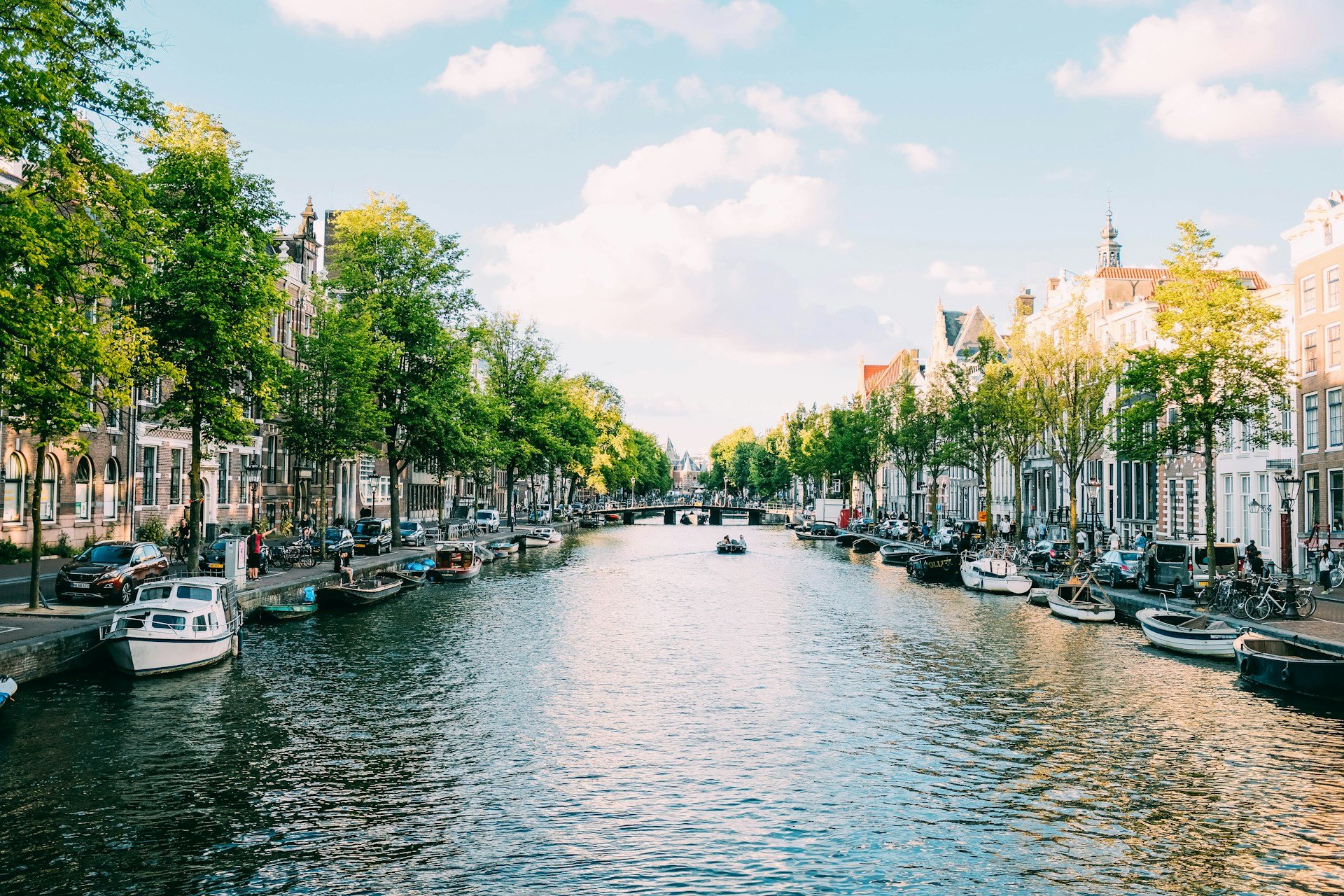
What You're Actually Getting Into
The Netherlands is one of those places that rewards staying longer than you planned. Most visitors come for Amsterdam, spend three days staring at canals and wondering why they feel slightly run over, and leave thinking they've seen the country. They haven't. The country outside Amsterdam is different in every way that matters: quieter, cheaper, more Dutch, and frankly more interesting once you've already ticked the Rijksmuseum.
What makes the Netherlands genuinely remarkable is the infrastructure of daily life. Twenty-three million bicycle trips happen here every day. The train between Amsterdam and Rotterdam takes 40 minutes and runs every 15. Nearly everything you need — a pharmacy, a decent coffee, a warm stroopwafel — is within a five-minute walk wherever you are. The Dutch have engineered a kind of frictionless existence that most countries spend decades trying to approximate.
There's also a directness here that catches people off guard. The Dutch will tell you honestly what they think. This is not rudeness. It's the opposite: a cultural commitment to not wasting your time with pleasantries that mean nothing. Once you understand this, conversations become genuinely useful.
The practical mistake most visitors make: spending all five days in Amsterdam's canal ring without ever getting on a train to Utrecht or Haarlem. Those cities are 30 minutes away, half the price, and twice as livable. Do yourself a favor and use the trains.
Netherlands at a Glance
A History Worth Knowing
The first thing to understand about Dutch history is that much of the country shouldn't exist at all. Around a third of the Netherlands sits below sea level. The land was wrested from marshes, lakes, and the North Sea over centuries through a coordinated program of dykes, windmills, and drainage canals that has no real parallel anywhere on earth. When the Dutch say they built their country, they mean it with a precision most nations can't claim.
This fight against water produced something unexpected: an exceptionally organized, collaborative, pragmatic society. You cannot drain a swamp if you don't cooperate with your neighbors. The Dutch political tradition of coalition-building and compromise, what they call the polder model, is partly an inheritance from centuries of shared hydraulic engineering. The infrastructure created the culture.
The 17th century is the period that defined the Netherlands on the world stage. The Dutch Golden Age was brief, roughly 1580 to 1700, and astonishing in scale. Amsterdam became the world's wealthiest city, the center of global trade, and the financial capital of Europe. The Dutch East India Company (VOC) was the first multinational corporation in history, issuing the world's first shares on the world's first stock exchange, which still stands on Rokin in Amsterdam. Dutch ships controlled spice routes from the East Indies to the Caribbean. Dutch cartographers drew the world.
The culture that Golden Age money funded is what you'll actually spend your museum time with. Rembrandt van Rijn, Johannes Vermeer, Frans Hals, and Jan Steen were all working in this same 50-year window. The Rijksmuseum holds the core of it. The Night Watch alone is worth the trip.
The 18th and 19th centuries saw the Netherlands fade from dominance as British and French power grew, though the Dutch retained their colonial holdings, particularly in Indonesia and Suriname, well into the 20th century. WWII left deep marks: the German occupation from 1940 to 1945, the deportation of 75% of the Dutch Jewish population, and the famine winter of 1944 to 1945 when thousands in the west starved. Anne Frank's house on Prinsengracht is the most visited place in the country for a reason.
Post-war Netherlands rebuilt fast, integrated into Europe, and developed one of the most progressive legal and social frameworks on earth. The Netherlands was the first country to legalize same-sex marriage, in 2001. Its drug policy, which tolerates rather than legalizes cannabis sale through licensed coffeeshops, has been studied globally for 50 years. Whether you agree with these policies or not, understanding that they emerged from a long tradition of pragmatic tolerance rather than permissiveness gives you a much more accurate picture of the country you're visiting.
Systematic dyke-building starts in coastal areas. The Dutch begin engineering their own territory.
Seven provinces break from Spanish Habsburg rule. One of history's earliest republics.
Dutch East India Company: world's first publicly traded multinational. Amsterdam becomes global trade hub.
Rembrandt completes his masterpiece. Dutch Golden Age painting is at its peak.
German occupation. 102,000 Dutch Jews deported and killed. Anne Frank goes into hiding in 1942.
Catastrophic flooding kills 1,800. Triggers the Delta Works, one of the greatest engineering projects in history.
The Netherlands becomes the first country in the world to legally recognize same-sex marriage.
Top Destinations
The Netherlands is compact. You can get from Amsterdam to almost anywhere in the country in under two hours by train. The Randstad, the ring of cities connecting Amsterdam, Utrecht, The Hague, and Rotterdam, is one of the most densely connected urban zones in Europe. Use it. Spending your entire trip in one city when you could see four is a waste of the train network.
Amsterdam
Amsterdam is extraordinary and overrun simultaneously. The canal ring, a UNESCO World Heritage site, is genuinely one of the most beautiful urban environments in Europe. The Jordaan neighborhood, with its brown cafes and independent shops on Haarlemmerdijk, is the Amsterdam that residents actually love. The Red Light District is real and operational and best seen on a weekday afternoon if curiosity drives you, rather than a Friday night when it's all bachelor parties and chaos. Stay three days maximum in Amsterdam itself; you'll see what matters.
Rotterdam
Rotterdam is what happens when a city gets bombed flat in 1940 and decides to rebuild as a laboratory for modern architecture. The Markthal, a giant horseshoe-shaped covered market with a 40-metre-high painted ceiling, is genuinely extraordinary. The cube houses on Blaak are strange in the best possible way. The Fenix Food Factory on the Katendrecht peninsula is where Rotterdam's food scene actually lives. If you are tired of medieval canal cities, Rotterdam is the Netherlands at its most contemporary and self-confident.
Delft
Delft is the Netherlands that everyone pictures before they arrive. Small, beautiful, largely intact, with canals that actually look like Vermeer paintings because Vermeer lived here and painted them. The Royal Delft factory gives tours. The church where William of Orange was assassinated in 1584 still has the bullet hole in the wall. 45 minutes from Amsterdam. Half a day is enough; a full day is pleasant.
The Hague
The Hague is where the Dutch government sits, the International Court of Justice operates, and the best Mondrian collection in the world lives at the Gemeentemuseum. Scheveningen, the beach resort attached to The Hague, is a 20-minute tram ride and genuinely good on a summer day. The city has a gravity and seriousness that Amsterdam lacks. Pair with a half-day in Delft.
Utrecht
Utrecht is Amsterdam with the tourists removed and the prices halved. The Dom Tower is the tallest church tower in the Netherlands and worth the 465 steps. The canal wharves, unique in Europe for their two-level structure with cellars at water level, now house cafes and restaurants where locals actually eat. Utrecht has a large student population and the energy that comes with it. Twenty-five minutes from Amsterdam Centraal. Do not skip this.
Keukenhof
Open only from late March to mid-May, Keukenhof is 32 hectares of flower garden with seven million tulips, daffodils, and hyacinths planted by hand each year. It is as extraordinary as advertised and as crowded as you fear. Go on a weekday and arrive before 10am. Combine with a drive or cycle through the bulb fields between Leiden and Haarlem, which are free, vast, and more viscerally impressive than the garden itself.
Delta Works & Zeeland
The Delta Works, the flood defense system built after the 1953 catastrophe, is one of the seven modern wonders of the world according to the American Society of Civil Engineers. The Watersnoodmuseum tells the story of the flood with genuine emotional weight. Zeeland itself, the province of islands and inlets, is where the Dutch go for beach holidays. Flat, windy, and beautiful in a way that requires patience to appreciate.
Zaanse Schans
Yes, it's touristy. Yes, the working windmills, wooden houses, cheese farms, and clog workshops are all genuine and operational. Zaanse Schans is 20 minutes from Amsterdam Centraal on the Sprinter train and gives you a morning of open-air museum without the full-day commitment. Go early on a weekday and you'll have some windmills to yourself before the tour buses arrive at 10am.
Culture & Etiquette
Dutch directness is the thing most visitors misread first. If a Dutch person tells you they don't like something you've done, or disagrees with something you've said, they are not being rude. They are treating you as an equal capable of handling honest feedback. The Dutch find excessive politeness suspicious and small talk about the weather professionally embarrassing. Once you recalibrate your expectations, interactions become genuinely refreshing.
The cycling culture operates on real rules. Bike lanes are not suggestions. Do not walk in them. Do not cycle on footpaths. Signal your turns. If a Dutch cyclist rings their bell at you, move immediately: it means you are in the wrong place. The Dutch cycle fast, cycle everywhere, and have zero patience for tourists who treat the infrastructure like a novelty.
Saying goedemorgen or a simple "hi" when entering a small shop or elevator is expected. Ignoring it is considered cold, not neutral.
Dutch culture is famously egalitarian about money. Gaan we ieder voor zich betalen? ("Going Dutch") is the default, not an insult. Each person pays precisely their share.
Stay off bike lanes. Look both ways twice before crossing any road. More tourists are hit by cyclists in Amsterdam than by cars. The bikes are silent and fast.
Dutch punctuality is serious. Arriving 15 minutes late to a dinner invitation is not fashionable, it's inconsiderate. 5 minutes early is optimal.
The Netherlands is one of the most cashless societies in Europe. Many cafes and smaller restaurants only take PIN (Dutch debit). Ask before ordering if you're carrying cash.
Holland is just two provinces: North and South Holland. The country is the Netherlands. Using "Holland" for the whole country is roughly as accurate as calling the UK "England." Most Dutch correct this patiently but internally wince.
Coffeeshops sell cannabis. Cafes sell coffee. This distinction is important and has ruined many mornings. A brown cafe (bruine kroeg) is a traditional Dutch pub. Knowing this saves embarrassment.
The consequence is a moving bicycle and a very loud bell. It happens dozens of times a day to tourists in Amsterdam. The locals are not sympathetic.
This is strictly prohibited and enforced. The women working behind the windows have asked repeatedly for this respect. The city has introduced camera restrictions. Follow them.
Tipping is appreciated but not expected in the way it is in the US. Rounding up or leaving a euro or two on a restaurant bill is fine. Leaving 20% will confuse people.
Open Curtains
Dutch homes famously leave their curtains open in the evening. This is deliberate. It comes from a Calvinist tradition of demonstrating you have nothing to hide. Walking along a canal at dusk and seeing lit interiors, bookshelves and dinner tables and cats on windowsills, is one of the genuine pleasures of Dutch city life. Looking is acceptable. Photographing private interiors is not.
The Polder Model
Dutch politics and business operate by consensus. Major decisions, from wage agreements to water policy, are negotiated between government, employers, and unions until everyone can live with the outcome. This produces slow decisions but durable ones. The Dutch word for this is polderen. It is simultaneously the country's greatest strength and, on bad days, its most frustrating quality.
Sinterklaas
The Dutch celebrate Sinterklaas on December 5th, not December 25th, as the main gift-giving occasion. The tradition involves Sinterklaas arriving by steamboat from Spain in mid-November, which is followed by weeks of gift-giving, poems, and chocolate letters. If you're visiting in November or December, the arrival ceremonies in various harbor towns are worth seeing once.
Dairy as Identity
The Netherlands produces about 650 million kilograms of cheese per year and takes the quality seriously in a way that most visitors raised on pre-sliced supermarket Gouda are unprepared for. A proper aged Gouda from a good cheesemonger has the texture of Parmesan and a depth of flavor that bears no resemblance to the orange wax-coated discs you've encountered before. Buy from a specialist like Reypenaer in Amsterdam and try at minimum a 2-year and a 4-year aged side by side.
Food & Drink
Dutch food has a reputation problem it doesn't entirely deserve. Traditional Dutch cooking, stamppot, erwtensoep, haring, rookworst, is hearty, filling, and designed for a cold flat country where you've spent the day working outside. It is not complicated or subtle. It does exactly what it was designed to do. You should eat it at least once.
But the Netherlands is also a country of serious immigrants, and its cities reflect 400 years of colonial and trade history. Indonesian food in the Netherlands is extraordinary and unlike Indonesian food anywhere else in the world because the Dutch-Indonesian community has been cooking here for generations. A rijsttafel, a rice table of 12 to 20 small Indonesian dishes served simultaneously, is the correct celebratory meal in the Netherlands and has been since the colonial era. Find one that isn't aimed at tourists. The difference is significant.
Haring
Raw herring served from street carts, eaten by holding the fish by the tail and lowering it into your mouth, or chopped with onions and pickles in a soft roll. It sounds alarming. It is one of the best things you will eat in the Netherlands and costs €3 to €4 from any good herring cart. Order it from a cart near the harbor, not from a tourist market. The season runs June through August for the freshest Hollandse Nieuwe.
Frites
Dutch frites are thick-cut, twice-fried, served in a paper cone, and eaten with an amount of mayonnaise that is genuinely alarming until you try it. The local version, friet met (frites with), means a full cone covered in mayo. Oorlog (war frites) adds peanut sauce and raw onion on top of the mayo. This sounds like a dare. It is a legitimate meal choice. Vleminckx in Amsterdam has a permanent queue for a reason.
Stroopwafels & Poffertjes
A stroopwafel is two thin waffle layers bonded with caramel syrup. The correct way to eat one is balanced on top of a hot cup of coffee for 30 seconds until the caramel softens. Fresh from a market stall, warm and slightly crispy at the edge, they are exceptional. Poffertjes are small fluffy mini-pancakes served with butter and powdered sugar. Both are available at every market. Neither is optional.
Rijsttafel
A Dutch-Indonesian rice table: white rice accompanied by 12 to 25 small dishes of curries, satays, sambals, tempeh, and vegetables, all served simultaneously so the table becomes a mosaic of small bowls. Budget €25 to €40 per person at a good restaurant. Avoid the cheap tourist versions. Tempo Doeloe on Utrechtsestraat in Amsterdam has been doing this correctly for decades.
Cheese
Gouda is produced in dozens of varieties ranging from young and mild to aged and crystalline. Edam is the round one that the Dutch exported everywhere for centuries specifically because it traveled well and never went off on long sea voyages. At a specialist cheesemonger, ask for a 2-year oud Gouda and taste before you buy. The difference from supermarket cheese is not subtle.
Beer & Jenever
Dutch beer is dominated by Heineken and Amstel at the tourist end, but the craft brewing scene is excellent in Rotterdam and Amsterdam. More interesting: jenever, Dutch gin, the ancestor of all modern gin, served in a small tulip glass filled to the absolute brim. You lean forward and take the first sip without touching the glass. This is tradition, not a dare. Order it in a brown cafe and ask for oud genever, the older, smoother style.
When to Go
Honest answer: late April to May is the obvious choice, but September is the smart one. The tulip fields are gone by September, yes. But Keukenhof costs €23 and requires three weeks of advance planning. September means long golden light, warm enough to cycle without a jacket, practically no tourist queues at the Rijksmuseum, and hotel prices that are 30 to 40% lower than peak spring. If you can be flexible, go in September. If you've always wanted to see the tulip fields, go in late April and accept the crowds as the price of admission.
Spring
Apr – MayTulip season peaks mid-April. Long daylight hours, mild temperatures, and the country looking genuinely beautiful. Book accommodation 2 to 3 months ahead. Keukenhof tickets sell out on popular weekends.
Early Autumn
Sep – OctWarm enough to cycle, golden light for photography, shorter queues everywhere. Harvest festivals and outdoor markets. Amsterdam feels most like itself when the summer hordes have left.
Summer
Jun – AugLongest days, outdoor festivals, terrace culture in full swing. Amsterdam is at absolute maximum capacity in July and August. Rotterdam and Utrecht are more manageable. King's Day on April 27th turns the entire country orange and chaotic in the best way.
Winter
Nov – FebCold, grey, and wet, but Amsterdam's canals in January are quietly beautiful and genuinely uncrowded. Christmas markets are modest but the light installations in the city are impressive. If canals freeze, skating happens, which is one of the great spontaneous events in Dutch life.
Trip Planning
Five to seven days is the ideal length for a first Netherlands trip. Three days in Amsterdam and two or three days split between Rotterdam, Delft, Utrecht, and The Hague covers the essential range. The country is compact enough that you can base yourself in one city and day-trip everywhere, or move cities every night without it feeling exhausting. The trains make this unusually easy.
Amsterdam
Day one: arrive, get an OV-chipkaart transit card from any station, walk the Jordaan. Day two: Rijksmuseum and Van Gogh Museum (pre-booked). Evening in a brown cafe on Prinsengracht. Day three: Anne Frank House (pre-booked, first slot at 9am), cycle out to the Vondelpark, slow afternoon in the Pijp neighborhood for the Albert Cuyp market.
Delft + The Hague
Train from Amsterdam to Delft in 55 minutes. Walk the market square, visit Royal Delft if curious, eat lunch at a canal-side cafe. Afternoon train to The Hague (10 minutes). Gemeentemuseum for Mondrian. Return to Amsterdam or stay overnight in The Hague, which is cheaper.
Utrecht or Rotterdam
Rotterdam for architecture and the Markthal. Utrecht for canals and the Dom Tower. Both are 35 to 40 minutes from Amsterdam Centraal. Pick one depending on your preference for contemporary or historic. Fly home from Schiphol, easily accessed from either city by direct train.
Amsterdam
Full three days. Rijksmuseum, Van Gogh Museum, Anne Frank House all pre-booked. A morning at the Foam photography museum. An evening in Golden Gai, sorry, that's Tokyo — an evening cycling the canal ring at dusk with a rented bike, stopping in a brown cafe when your legs get tired.
Zaanse Schans + Haarlem
Morning at Zaanse Schans for the windmills (arrive before 10am). Afternoon train to Haarlem, a compact and beautiful city with better restaurants than its size suggests. Overnight in Haarlem, which is 20 minutes from Amsterdam and considerably more relaxed.
Keukenhof + Leiden (Spring) or Utrecht
In spring: Keukenhof in the morning, cycle the bulb fields in the afternoon, overnight in Leiden, a university city with a beautiful historic center. Out of spring: two full days in Utrecht for the Dom Tower, Rietveld Schröder House (UNESCO), and the canal wharves.
Rotterdam
Two days in Rotterdam is enough to see the architecture, eat at Fenix Food Factory, and take the metro to Kinderdijk, 30 minutes away, for the most photographically spectacular windmill landscape in the Netherlands.
Delft + The Hague
Half a day in Delft, afternoon and overnight in The Hague. Gemeentemuseum, a walk through the Binnenhof government buildings, and the seafood restaurants near Scheveningen. Train to Schiphol for departure.
Amsterdam Deep Dive
Three days with room to breathe. The Hermitage Amsterdam (now Amstel Museum), the EYE film institute across the IJ ferry, a morning at the Noord market in NDSM wharf, a night at Paradiso for live music. The parts of Amsterdam that residents actually use.
Haarlem + Leiden
Haarlem for the Frans Hals Museum and excellent cheese shops. Leiden for the oldest university in the Netherlands (1575), Rembrandt's birthplace, and a canal system that rivals Amsterdam at a tenth of the tourist density.
Keukenhof + Bulb Fields (April/May)
Worth dedicating two days in spring: Keukenhof one morning, cycling the fields around Lisse and Hillegom the next. The aerial view of the striped tulip fields you see in photos is taken from above: at ground level, cycling through them on a quiet country road is more intimate and more impressive.
Rotterdam + Kinderdijk + Gouda
Two nights in Rotterdam with a day trip to Kinderdijk for 19 operating windmills in a single polder landscape. A morning detour to Gouda on a Thursday for the cheese market. Rotterdam's food scene rewards an extra evening: the Witte de Withstraat strip has the best restaurant density in the Netherlands.
Zeeland + Delta Works
Rent a car for Zeeland. The Delta Works at Neeltje Jans, the Watersnoodmuseum in Ouwerkerk, and the beach towns of Domburg and Veere are best covered by driving the dyke roads. Return to Amsterdam through Dordrecht, the oldest city in Holland, for a final night before flying.
Vaccinations
No mandatory vaccinations required to enter the Netherlands. Routine vaccines up to date is all that's needed for most travelers. The healthcare system is excellent if you need it.
Full vaccine info →OV-Chipkaart
Buy an OV-chipkaart transit card immediately upon arrival at any NS station. Load it with €20. It works on every train, tram, metro, and bus in the country. Tap in and out every time. The card costs €7.50 and is the single most useful item you'll carry.
Cycling
Rent from OV-Fiets at any NS train station for €4.45 per day if you have an OV-chipkaart. Avoid tourist-facing rental shops in Amsterdam city center that charge €15 to €25 per day for worse bikes. Helmet use is not legally required but a good idea in busy cities.
Connectivity
EU roaming means most European travelers pay nothing extra. Non-EU visitors: get a Dutch eSIM or SIM on arrival. Coverage is excellent everywhere including on trains. The 9292 app is the definitive Dutch public transport planner and more accurate than Google Maps for local routes.
Travel Insurance
Dutch healthcare is high quality but not free for non-EU visitors. EU travelers with a valid EHIC are covered for emergency care. Everyone else should have travel insurance with medical cover. World Nomads and AXA both work well here.
Power & Plugs
Type C and F plugs at 230V. US and UK travelers need adapters. Most modern laptops and phone chargers handle European voltage without issue, but check before plugging in older electronics.
Transport in the Netherlands
The Netherlands has arguably the best public transport and cycling infrastructure in Europe. The NS (Dutch Railways) train network connects every city worth visiting with services running every 15 to 30 minutes and tickets that, by European standards, are reasonable. Cycling infrastructure in cities and between towns is so comprehensive that a bicycle genuinely competes with a car for most journeys under 15 kilometers.
The single most important thing you can do when you land at Schiphol: walk directly to the NS ticket machines downstairs from arrivals and buy an OV-chipkaart. Load it with €20. You will use it on every form of public transport in the country for your entire trip. It pays for itself within the first day.
Intercity Trains
€10–20/routeNS Intercity connects all major cities. Amsterdam to Rotterdam: 40 minutes. Amsterdam to Utrecht: 25 minutes. Amsterdam to The Hague: 55 minutes. The ICE connects to Brussels, Paris, and London (via Eurostar).
City Trams & Metro
OV-chipkaartAmsterdam's GVB trams cover the city extensively. Tap your OV-chipkaart on the yellow readers. Rotterdam has both tram and metro. The RET metro is faster for cross-city journeys. All use the same OV-chipkaart system.
Schiphol Airport
€5.50 to AmsterdamAmsterdam Schiphol is directly connected to Amsterdam Centraal by train in 15 minutes. Trains run 24 hours. One of the world's most efficient airport-city connections. Do not take a taxi from Schiphol unless someone else is paying for it.
OV-Fiets Rental
€4.45/dayPublic bike rental available at every NS train station. €4.45 per day with an OV-chipkaart. Exceptional value. The bikes are heavy but functional. Lock them with the rear wheel lock plus an additional chain lock in cities.
Ferries
Free to €15Amsterdam's free GVB ferries across the IJ to Amsterdam Noord run 24/7. Essential for getting to the NDSM wharf area. Waterbus services connect Rotterdam to Kinderdijk and Dordrecht scenically.
Buses
OV-chipkaartRegional buses cover smaller towns and villages not on the rail network. All accept OV-chipkaart. The Connexxion and Arriva networks cover most rural areas you'd want to reach.
Car Rental
€40–80/dayOnly worth it for Zeeland, Gelderland, or rural Friesland. Driving in Amsterdam is genuinely counterproductive: parking costs €8 to €10 per hour in the center and the cycling and pedestrian infrastructure makes it actively slower than a bike.
Taxi & Uber
€3 start + meterUber operates in all major Dutch cities and is generally cheaper than local taxi companies. Bolt is also available. Pre-arrange airport transfers to avoid the unmetered taxi touts at Schiphol arrivals.
NS offers a day ticket for unlimited travel on all Dutch trains, trams, buses, and metro for €37 (off-peak) or €49 (full day). For a day covering Amsterdam, Haarlem, Leiden, and Schiphol, it pays for itself. For a day doing just one or two cities, the regular OV-chipkaart per-journey fare is cheaper. Do the math based on your day.
Accommodation in the Netherlands
Amsterdam accommodation is expensive and the good options sell out early, particularly around King's Day, tulip season, and summer weekends. The honest advice: consider staying in Utrecht, Haarlem, or Leiden and commuting into Amsterdam by train. A €90 hotel in Haarlem covers the same quality as a €160 hotel in Amsterdam, and you're 20 minutes from Centraal on a train that runs every 15 minutes. Many repeat visitors to Amsterdam choose this approach permanently.
If you do stay in Amsterdam, the Jordaan and Oud-West neighborhoods offer the most livable, least touristy experience. Avoid the immediate area around the Leidseplein and Rembrandtplein if you value sleep on weekends.
Canal House Hotel
€150–400/nightAmsterdam's most characterful option. Narrow buildings, steep staircases, and rooms where every beam and floor angle tells you the house is 350 years old. The Jordaan and canal ring have the best examples. Book 2 to 3 months ahead for peak season.
Design Hotels
€120–280/nightRotterdam has the best design hotel scene in the Netherlands. The city's post-war architecture ethos extends to its hotels. Mainport and nhow Rotterdam are good examples. Often better value than equivalent Amsterdam hotels.
Guesthouses & B&Bs
€70–140/nightThe Netherlands has an excellent network of small guesthouses, particularly in Haarlem, Leiden, Delft, and Maastricht. More personal, often family-run, and considerably less impersonal than chain hotels. Good for longer stays.
Hostel
€30–60/nightAmsterdam's hostel scene ranges from excellent (Stayokay Vondelpark, in a former film museum in the park) to chaotic (anything near Rembrandtplein catering to party tourists). Choose carefully. Generator Amsterdam is a reliable mid-tier option in a good location.
Budget Planning
The Netherlands is one of the more expensive Western European destinations, particularly Amsterdam where accommodation and restaurant prices have risen sharply since 2020. The good news: the day-to-day costs of actually being here, supermarkets, street food, public transport, are very manageable. A single strategic decision to stay outside central Amsterdam saves €40 to €80 per night without meaningfully affecting your experience.
- Hostel dorm or budget guesthouse
- Albert Heijn supermarket meals
- OV-chipkaart public transport
- Free parks, markets, and canal walks
- One paid museum every two days
- 3-star hotel or canal house guesthouse
- Mix of cafes, markets, and restaurants
- Train day trips to other cities
- Museum tickets (€15–22 each)
- Occasional bike rental day
- 4-star canal hotel or design hotel
- Full restaurant dining, including rijsttafel
- Guided tours and premium experiences
- Private transfers when convenient
- Splurge on aged Gouda and good jenever
Quick Reference Prices
Visa & Entry
The Netherlands is a full member of the Schengen Area. Citizens of the US, Canada, Australia, New Zealand, the UK, and most other Western countries can visit visa-free for up to 90 days in any 180-day period. The 90-day clock runs across all Schengen countries combined, not just the Netherlands specifically. If you've spent 60 days in France and Spain before arriving, you have 30 days left.
The EU's ETIAS (European Travel Information and Authorisation System) may be operational by the time you travel. This is a pre-travel authorization for non-EU visitors, not a visa, and costs €7. Check the current status before booking.
US, UK, Canada, Australia, New Zealand, and most Western passport holders enter without a visa. Check the full Schengen visa-free list at the Dutch Ministry of Foreign Affairs.
Family Travel & Pets
The Netherlands is exceptionally family-friendly, and the cycling infrastructure is a large part of why. Dutch families cycle everywhere together: parents on cargo bikes with toddlers in front boxes, children cycling independently from age five or six, the whole family navigating the city on two wheels as a natural unit. Renting a cargo bike for a day with young children is an experience that requires zero cycling expertise and produces memories that last decades.
Dutch playgrounds deserve a special mention. They are, by European standards, remarkable: well-designed, imaginative, and built with the assumption that children are capable of moderate risk. Vondelpark in Amsterdam alone has three excellent play areas. Every Dutch town has a proper speeltuin (playground) within easy walking distance.
Efteling
The Efteling theme park in Kaatsheuvel, an hour from Amsterdam by train and bus, is consistently rated one of Europe's best theme parks for younger children. It's fairytale-themed, beautifully designed, and entirely without the corporate grimness of larger international parks. Book online. It sells out on Dutch school holiday weekends.
ARTIS Zoo & Aquarium
Amsterdam's ARTIS zoo, open since 1838, is compact and beautifully maintained. The Micropia museum next door, dedicated entirely to microorganisms, is genuinely fascinating for older children and one of the most unusual museums in Europe. Combined ticket is good value.
Cargo Bike Day
Rent a bakfiets (cargo bike) from MacBike or Rent a Bike Amsterdam for a day. Load your children into the front box. Cycle the Jordaan and the Vondelpark. This is how Amsterdam families actually move and the children will talk about it for months afterward.
Hoge Veluwe National Park
The largest national park in the Netherlands, with free bikes available inside the park gates. Wild boar, deer, and red squirrels roam freely. The Kröller-Müller Museum inside the park has the second-largest Van Gogh collection in the world. Two hours from Amsterdam. Worth a full day.
Cheese Farm Visits
Working cheese farms near Gouda and Alkmaar offer tours for families: see the cheese being made, taste various ages, buy direct from the source. Children find the process either fascinating or deeply uninteresting, but the tasting part is universally popular.
NEMO Science Museum
Amsterdam's NEMO is a large hands-on science museum in a building shaped like a ship's bow, designed by Renzo Piano. Five floors of interactive exhibits. The roof terrace has excellent views over Amsterdam's harbor. One of the better science museums in Europe for 6 to 14 year olds.
Traveling with Pets
The Netherlands is one of the more pet-welcoming countries in Europe. Dogs are accepted in many cafes, restaurants, and even some shops, particularly outside Amsterdam city center. Public transport allows dogs on trains if they travel in a carrier or on a leash and you pay a small day fee. The Dutch are generally dog-positive in a matter-of-fact way: they'll acknowledge your dog without making a scene about it.
EU pet passport holders entering from within the EU face minimal bureaucracy: valid microchip, rabies vaccination, and EU pet passport are the standard requirements. Travelers arriving from outside the EU, or from the UK post-Brexit, face more complex requirements including health certificates and potentially a waiting period after rabies vaccination. Start the paperwork at least three months in advance with your vet.
Pet-friendly accommodation exists throughout the Netherlands, particularly in smaller towns and guesthouses. Most Amsterdam canal house hotels are too narrow and steep-staircased to be practical with larger dogs. Rotterdam and Utrecht guesthouses tend to be more accommodating. Always confirm pet policy at the time of booking.
Safety in the Netherlands
The Netherlands is a very safe destination for travelers. Violent crime against tourists is rare. The country consistently ranks among Europe's safest in the EU crime indices. The practical risks are petty theft and cycling accidents, both of which are entirely avoidable with basic precautions.
Amsterdam city center, particularly Rembrandtplein, Leidseplein, and the Red Light District on weekend nights, has higher concentrations of pickpockets than the rest of the country. This is not a serious danger, but it is worth keeping your phone in a front pocket and not standing at the edge of a crowd with your wallet visible.
General Safety
Very high. The Netherlands ranks among Europe's safest countries. Violent crime against tourists is genuinely rare. Most visitors report feeling safe at all times, including alone at night.
Solo Women
Excellent. The Netherlands' progressive culture and well-lit, active city centers make solo female travel very comfortable. The main caution is the same as any European city: awareness in crowded nightlife areas after midnight.
Pickpockets
Present in Amsterdam's tourist areas. Use a front pocket or crossbody bag in Rembrandtplein, the Red Light District, and on busy trams (particularly the 2 and 12 lines). Keep your phone in your pocket on the Bloemenmarkt.
Cycling Safety
The most common cause of tourist injury in the Netherlands. Do not cycle after multiple drinks. Do not use your phone while cycling. Do not cycle in the dark without lights: it is illegal and genuinely dangerous. Bike theft is common in cities; always double-lock.
Drug-Related Risks
Cannabis is tolerated in licensed coffeeshops but not legal. Do not buy from street dealers: what they sell is unregulated and sometimes dangerous. Magic truffles are legal and sold openly, but the effect is strong and unpredictable for inexperienced users. Know what you're doing before you do it.
Healthcare
Excellent. Dutch hospitals are high quality and well-equipped. EU visitors with an EHIC card receive emergency treatment at local rates. Non-EU visitors need travel insurance. Pharmacies are called apotheek and are well-stocked and staffed by trained pharmacists who speak English.
Emergency Information
Embassies in The Hague
Most foreign embassies are located in The Hague, the seat of government, not in Amsterdam.
Book Your Netherlands Trip
Everything in one place. These are services worth actually using.
You'll Keep Thinking About the Light
The thing people are not prepared for is the light. The Netherlands is flat in every direction and the sky is enormous. The same flatness that made the Golden Age painters extraordinary, because they had to fill that vertical space with something, turns an ordinary evening cycle along a dyke into something you'll struggle to describe when you get home. The sky is half the view here, and it changes every twenty minutes.
There's a Dutch word: gezelligheid. It translates approximately as coziness, warmth, conviviality, a feeling of belonging, but none of those translations quite capture it. It's the atmosphere in a brown cafe at 9pm when the candles are lit and it's raining outside and you've been talking for three hours. That feeling is what the Dutch have engineered into the texture of daily life. When you find it, and you will, you'll understand why people come back.