
What You're Actually Getting Into
Montenegro is 13,812 square kilometers with a population of around 620,000, and a geography so compressed it seems implausible: the Adriatic coast runs 293 kilometers, and immediately behind it the Dinaric Alps rise past 2,500 meters within 25 kilometers of the sea. That is why the drive from Kotor's medieval walls to the skiing at Žabljak takes under two hours, and the view from the top involves snow above and the Adriatic behind. The name means Black Mountain, Crna Gora in Montenegrin, a reference to Mount Lovćen's dark limestone peak rising directly behind the coast.
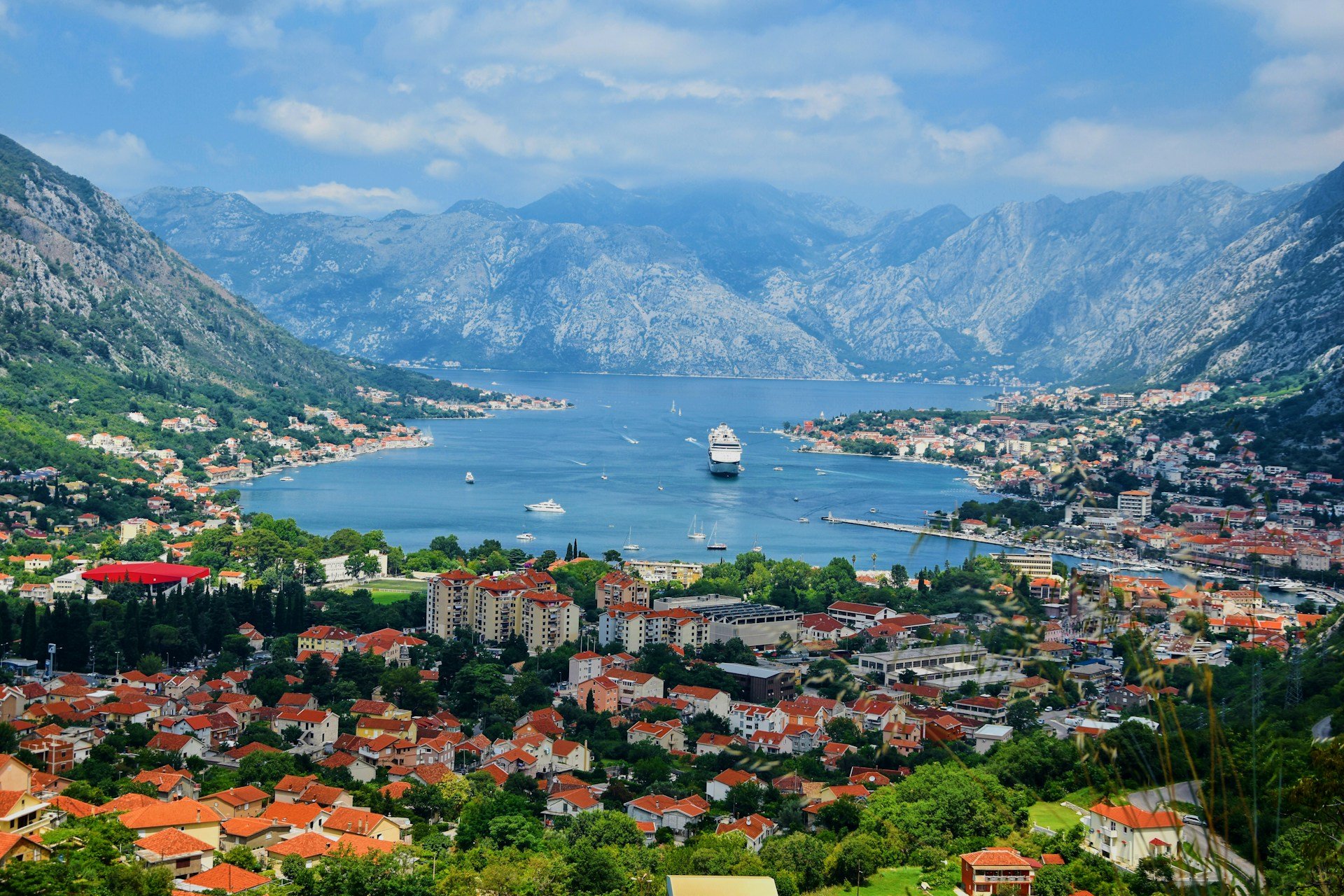
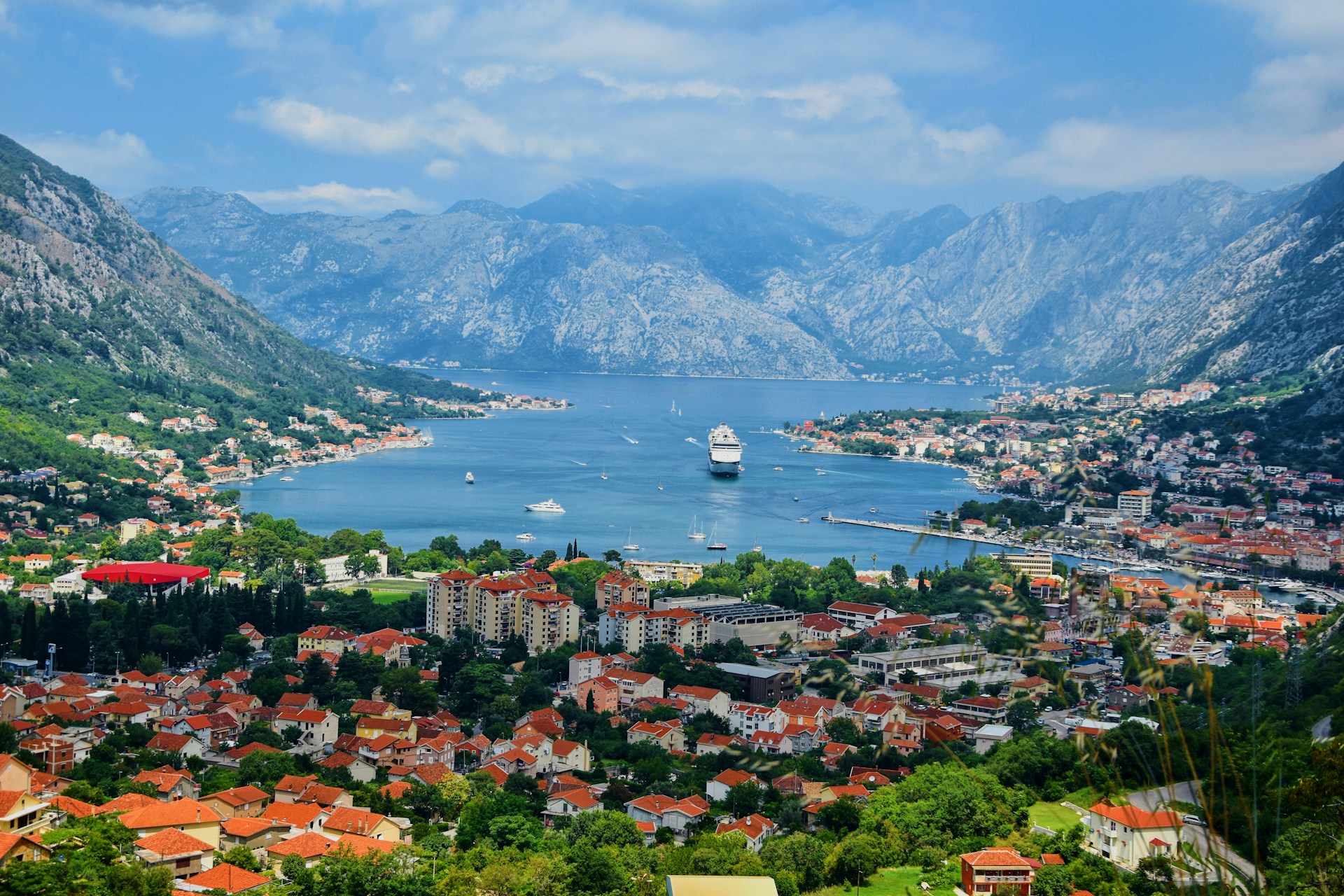
The Bay of Kotor, Boka Kotorska, is the flagship attraction and earns its reputation. Not technically a fjord (formed by river erosion and later sea flooding, rather than glacial action) but it looks exactly like one: a winding inlet cutting 28 kilometers inland between mountains, with the medieval walled city of Kotor at its innermost point, UNESCO-listed since 1979. The interior is the country's real secret: Durmitor National Park in the north holds the Tara Canyon, the deepest gorge in Europe at 1,300 meters, and 18 glacial lakes.
The honest complications
Montenegro uses the Euro despite not being an EU member, adopted unilaterally in 2002, which means EU roaming does not apply and a local SIM or eSIM is worth getting at the airport. The Bay of Kotor receives large cruise ships that release thousands of passengers into the old town between roughly 9am and 5pm, so timing matters more here than in most destinations. Mountain roads are genuinely slow: 60 kilometers in the interior can take 90 minutes, and the country's road accident rate runs above the EU average, particularly on hairpin sections. None of this undercuts the landscape, but arriving with realistic expectations about pace and crowds makes the trip considerably better.
A History Worth Knowing
Medieval Montenegro begins with the Doclean principality around the Zeta valley in the 9th century. What makes the country's history distinct is its sustained resistance to Ottoman domination from the highland interior: while coastal towns fell, first to Venice, later to the Ottomans, the mountain clans held, organizing around a culture that produced Njegoš's epic "The Mountain Wreath" and, eventually, one of the earliest internationally recognized Balkan states.
- 9th century
Principality of Duklja. Medieval Montenegro takes shape as Duklja and Zeta, the territory's first distinct political existence.
- 1420
Venice takes Kotor. The Bay comes under Venetian control for 373 years, permanently shaping the coastal architecture, while the mountain interior continues to resist.
- 1813-1851
Njegoš rules and writes. Prince-Bishop Petar II Petrović-Njegoš modernizes the state and writes "The Mountain Wreath," the defining work of South Slavic literature.
- 1878
International recognition. The Congress of Berlin makes Montenegro one of the first Balkan nations formally recognized as independent.
- 1918-1991
Yugoslav period. Montenegro is incorporated into Yugoslavia; a complex WWII civil conflict, then Tito's socialist development, transform the country's infrastructure.
- 2006
Independence. A referendum on 3 June returns 55.5 percent for independence, just above the required threshold.
- 2017-present
NATO and EU candidacy. Montenegro joins NATO and opens EU accession negotiations, still ongoing.
Read the full history: Njegoš, the Petrović dynasty and independence
The Ottoman expansion after the Battle of Kosovo Polje in 1389 reshaped the entire region. Montenegro's highland culture, organized around clan structures with blood feud as a social enforcement mechanism, developed partly in response to maintaining independence against a much larger empire through guerrilla warfare from mountain terrain. This is the context for Njegoš's "The Mountain Wreath" (Gorski vijenac, 1847), which deals with the clash between Christian and Muslim identities in the Montenegrin highlands.
The Petrović dynasty ruled from around 1696 as prince-bishops, simultaneously spiritual and temporal rulers. Petar II Petrović-Njegoš (1813-1851) was the most significant: a trained poet who corresponded with major literary figures of his era, he is buried on the summit of Mount Lovćen in a mausoleum designed by sculptor Ivan Meštrović, completed in 1974. The approach runs through a tunnel entrance and then 461 steps cut into the mountain, emerging onto a platform where two stone caryatids hold the sarcophagus above the clouds, with the Bay of Kotor visible far below on clear days.
Montenegro achieved formal international recognition at the Congress of Berlin in 1878. Prince Nikola I declared himself King in 1910 and ruled until Montenegro was incorporated into the new Kingdom of Serbs, Croats and Slovenes in 1918. WWII brought Italian, then German occupation of the coast, while the interior produced a complex civil conflict between Partisans and Chetniks. Montenegro declared independence from the State Union of Serbia and Montenegro on 3 June 2006. It joined NATO in 2017 and remains an EU accession candidate, with corruption and rule of law cited as the primary obstacles to membership.
Top Destinations
Montenegro divides naturally into three zones: the Bay of Kotor and coast (warm, Venetian, medieval, accessible), the interior highlands (wild, Orthodox, mountainous, requires a car), and the south coast (beaches, Budva's nightlife, more developed tourism). A complete trip covers all three; a first visit of a week covers the Bay and adds a day at Durmitor or Lake Skadar.
Kotor, the walled city
The best-preserved medieval city on the Adriatic outside Dubrovnik: less polished, less expensive outside peak season, with fortification walls climbing 260 meters up the mountain behind the city to Castle San Giovanni. The wall walk, 1,350 steps and roughly 90 minutes return, is steep and hot in summer but gives a view of the Bay available nowhere else. The Old Town inside the walls is compact, packed with Romanesque and Baroque churches, and the Cathedral of Saint Tryphon (1166 CE) is the most important Romanesque monument on the eastern Adriatic. Restoran Stari Mlini outside the walls near the Skurda stream has served local food since the 1990s without adjusting its pricing for the cruise-ship market. Allow two nights minimum, including a cruise-ship-free morning.
Durmitor National Park and the Tara Canyon
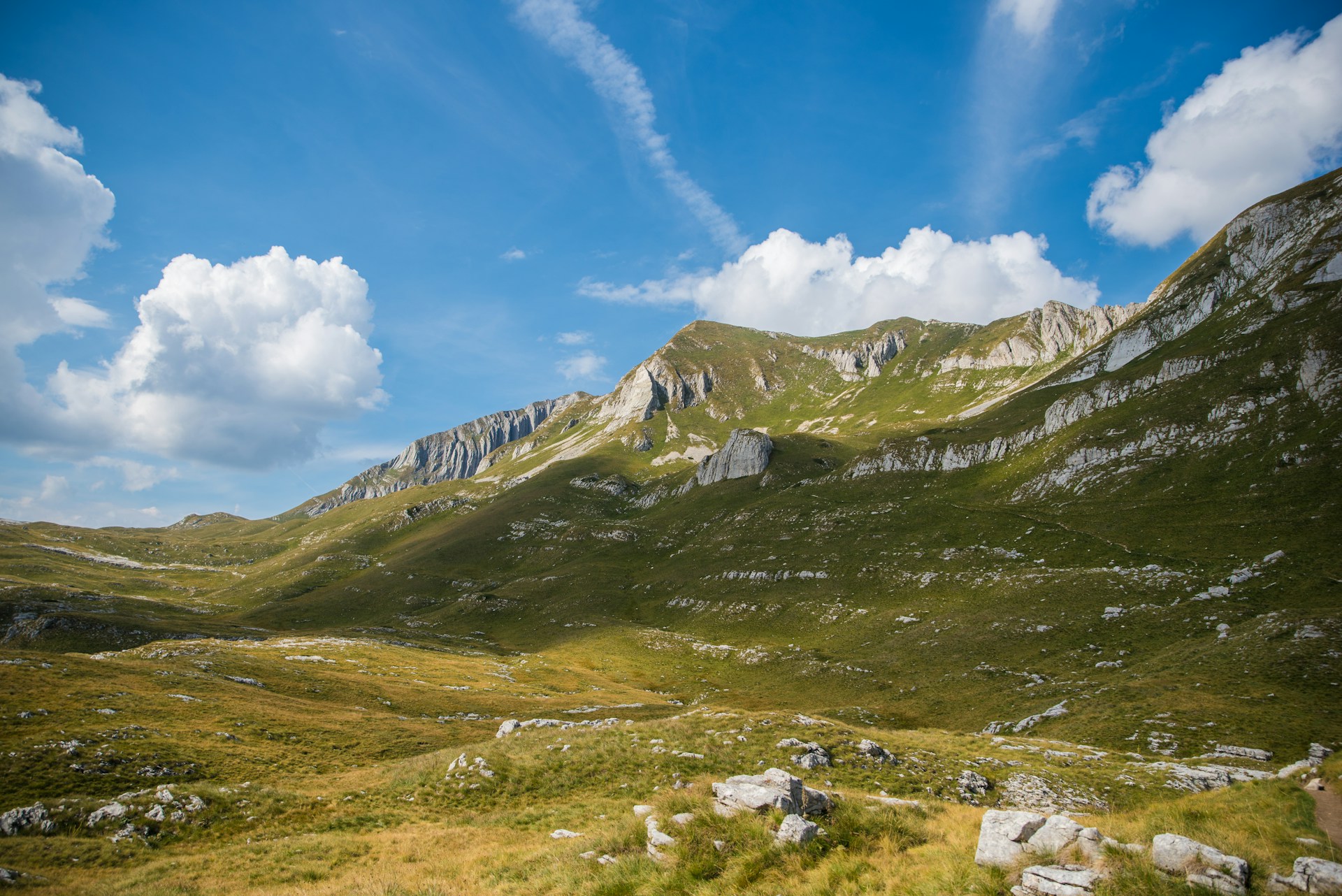
Durmitor, a UNESCO World Heritage Site and biosphere reserve, is Montenegro in complete contrast to the coastal resort. The Tara Canyon cuts 1,300 meters into the limestone at its deepest point, the deepest gorge in Europe, and the Tara River running through it has some of the cleanest water on the continent. Rafting the Tara, bookable through operators in Žabljak such as Tara Tour and Outdoor Montenegro, is the best way to experience the canyon, with one to three day trips available. Žabljak itself, the highest town in the Balkans at 1,450 meters, is the base for summer hiking and winter skiing. Crno Jezero, twin glacial lakes in beech forest a 30 minute walk from Žabljak, is the most accessible of Durmitor's 18 lakes.
Ostrog Monastery
Built into a vertical cliff face above the Zeta valley, literally carved into the rock, Ostrog is the most visited pilgrimage site in the Western Balkans. On the feast days of Saint Vasilije (12 May and 29 June) tens of thousands of pilgrims arrive, some walking the final stretch barefoot. Dress modestly: this is an active religious site, not an attraction.
Lake Skadar National Park
Shared between Montenegro and Albania, Lake Skadar is the largest lake in the Balkans and one of Europe's more important bird sanctuaries, home to pelicans, pygmy cormorants and over 280 recorded species. Several island monasteries, Kom, Beška and Starčevo among them, are reachable by boat from Rijeka Crnojevića and Virpazar on the northern shore. The lake is at its best in spring, when pelicans are nesting and water levels are high, and in autumn. The Plantaže winery nearby, one of the largest single-estate vineyards in Europe, produces Montenegro's best Vranac red.
Cetinje, the old capital
The former royal capital, now a town of 13,000 on the plateau behind Mount Lovćen, is one of the most unexpectedly rich cultural stops in the country. The National Museum occupies the former Royal Palace, including the Billiards Palace with King Nikola's collection of gifts from European monarchies, and the Cetinje Monastery holds what is claimed to be the Hand of Saint John the Baptist. Cetinje sits 40 minutes from Kotor over the Lovćen pass and is consistently overlooked by Bay visitors.
Budva and the beaches
Montenegro's most developed tourist town: a medieval walled old city surrounded by beach-resort infrastructure. The beaches, Mogren, Bečići and the famous Sveti Stefan island-resort, are genuinely good, and summer nightlife is intense. Budva is not the Montenegro that independent travelers typically prioritize, but the beaches in shoulder season (May, June, September) are excellent, and the old city retains Venetian-era walls and churches despite the tourist pressure. Sveti Stefan itself is a private luxury resort, visible from the public beach but inaccessible without a booking costing several hundred euros a night.
The Bar to Belgrade railway
Completed in 1976 after 25 years of construction through the most difficult terrain in the former Yugoslavia, the line passes through 254 tunnels and crosses 254 bridges, including the Mala Rijeka viaduct, 498 meters long and 198 meters above the valley floor. Riding from Bar to Kolašin (2 hours, around €5) gives the essential experience through the Montenegrin section's most dramatic mountain views.
Hidden gems beyond the main circuit
The zones above cover a first or second trip well. With extra days, these rarely make the standard guides but reward the detour.
The Lepetane-Kamenari ferry road
The car ferry across the Bay's narrowest point (€5, five minutes) leads to the Luštica Peninsula, whose villages, Trašte and Bigova among them, have almost no tourists and genuinely good waterfront seafood.
Stari Bar
The ruined medieval Ottoman city above modern Bar, largely unrestored, atmospheric and almost entirely without tourists, a strong contrast to the polished restoration work at Kotor.
Prokletije from Plav
The Accursed Mountains on the Albanian border, accessed from the town of Plav, are the most remote hiking in Montenegro, with trails crossing into Kosovo and Albania for experienced hikers.
Culture & Etiquette
Montenegro's culture divides meaningfully between the coastal strip, historically Venetian, Catholic and urban, and the interior highlands, Orthodox, clan-based and shaped by centuries of independence from outside authority. The highland tradition of gostoprimstvo, hospitality to guests, is one of the most pronounced in the Balkans: an invitation to a home in the interior means coffee, rakija and a meal regardless of whether you said you were hungry.
Do
- Accept hospitality gracefully. The first refusal of coffee or rakija is form, the second is genuine hesitation, the third is final. Accepting is the socially fluent choice.
- Learn "Hvala" and "Dobar dan." Thank you and good day. Montenegrin is mutually intelligible with Serbian, Croatian and Bosnian, and basic greetings produce genuinely warm responses, especially in the interior.
- Cover shoulders and knees at monasteries. Ostrog, Cetinje Monastery and the Lake Skadar island churches are active religious sites. Many provide wraps, but bring your own to be safe.
- Book Tara Canyon rafting ahead. Operators fill up weeks in advance for July and August. The two-day option with an overnight canyon camp is meaningfully better than the one-day version.
- Drive the Bay road at night. With village lights reflecting in the water and mountains silhouetted above, it is one of the most beautiful drives in the Balkans, and largely empty of traffic after 10pm.
Don't
- Use unlicensed taxis from Tivat Airport. Unofficial drivers have charged €50-80 for a journey that should cost €15-18. Use Bolt, the official rank, or a pre-booked transfer.
- Treat Budva as representative of Montenegro. Its crowded, expensive summer season is not what most of the country looks like. The Bay, mountains and lakes are the actual country.
- Underestimate mountain road times. Kotor to Žabljak (150km) takes 2.5 to 3 hours in normal conditions. Don't plan the canyon and the coast for the same afternoon.
- Skip Podgorica entirely. It is not scenic, but the old Ottoman quarter Stara Varoš has a clock tower and bazaar, and the restaurant scene runs well below coastal prices.
- Assume EU roaming applies. It does not; Montenegro is not in the EU. Buy a local SIM or an eSIM before relying on data.
Deeper culture: Njegoš, rakija, and the cats of Kotor
Njegoš and "The Mountain Wreath." A verse drama about the 18th-century confrontation between highland Christian and Islamicized Slavic communities, simultaneously a celebration of Montenegrin identity and a genuinely troubling text about communal violence. English translations exist, and reading it before visiting Cetinje and Lovćen changes how the highland culture reads.
Rakija culture. Grape or plum brandy runs through Balkan hospitality; in Montenegro it is typically grape-based (lozovača) and often home-produced. Accepting the first glass offered is close to a social requirement, and the ritual is both a genuine courtesy and the clearest window into the hospitality culture.
The cats of Kotor. A semi-feral population of thousands, historically protected as companions to the medieval maritime community, sleeping in doorways and on cafe chairs throughout the old town. The Cats of Kotor museum on Trg od Mlijeka documents their history and funds the local sterilization program.
Food & Drink
Montenegrin food divides between the coast (Adriatic fish, olive oil, vegetables, a Mediterranean-Italian tradition from the Venetian period) and the interior (lamb, veal, cheese, smoked meats, the Balkan grill tradition). The dairy from the highlands is extraordinary: njeguški pršut and njeguški sir, smoked ham and hard cheese from the village of Njeguši above the Bay, appear on every menu in the country.
Njeguški Pršut & Sir
Air-dried, cold-smoked ham and hard sheep's-milk cheese from Njeguši village, birthplace of Njegoš, where cold mountain air meets warm Adriatic humidity. Buy at the roadside stalls on the Lovćen pass road to taste them at source.
Adriatic Fish €15-20
Grilled whole fish (brancin, orada, sea bass and gilthead bream) with blitva, Swiss chard in olive oil and garlic, and bread. Bay village konobas in Dobrota and Prčanj serve better and cheaper fish than the tourist restaurants inside Kotor's walls.
Vranac Wine €5-8/bottle
The indigenous dark red grape, bold and tannic, best from the Crmnica district near Lake Skadar. Plantaže, one of Europe's largest single vineyards, produces the standard bottle at €5-8 in shops and €12-18 in restaurants.
Lamb Under Sač Advance order
Jagnjetina ispod sača: lamb slow-cooked for hours under a metal bell covered with embers, producing exceptionally tender, smoky meat. Many restaurants prepare it only when ordered ahead, best at rural konobas around Morinj or Risan.
Kačamak & Cicvara
Mountain staples: kačamak is a thick cornmeal porridge enriched with cheese and potato, cicvara a richer version with cream. Both served at Žabljak restaurants and mountain huts, the correct breakfast before a Durmitor hike.
Burek & Pita €1-2/100g
Filo pastry filled with meat (burek) or spinach and cheese (pita, zeljanica), bought by weight from bakeries. The best version is fresh from the oven, eaten standing at the counter; every town of any size has at least one buregdžija open from 6am.
When to Go & Itineraries
June and September are the best months for the coast: warm sea, manageable crowds, accommodation below peak prices. July and August are hot (up to 35°C on the coast) and intensely crowded at Budva and Kotor's old town. The interior highlands are excellent May through October, with peak hiking in July and August despite the coastal heat, and winter is genuinely rewarding for Kotor and for skiing at Žabljak.
All four seasons compared, with temperatures
| Season | Verdict | Temps | Prices & crowds |
|---|---|---|---|
| Jun & Sep | Best | 20-28°C coast | Moderate prices, comfortable crowds |
| Jul-Aug | Good (hot, packed coast) | 28-38°C coast | Peak prices, quiet mountains as the escape |
| Dec-Feb | Excellent, quiet | 8-15°C coast | Lowest prices, empty Kotor, Žabljak skiing running |
| Mar-May | Good | 12-20°C coast | Low to moderate prices, trails opening in the mountains |
Kotor Bay averages by month: Jan 8°C, Apr 16°C, Jul 28°C, Oct 18°C. Interior highlands (Žabljak, Durmitor) run 10-15°C colder year-round with snow at altitude October to April. Kotor is one of the wettest coastal cities in Europe by annual rainfall.
Itineraries
Seven days covers the Bay of Kotor plus a day each in Durmitor and Lake Skadar. Two weeks adds the south coast, Cetinje, Ostrog and a slower pace through the mountains. A car is the key planning decision: without one you can do Kotor, the Bay and Budva, but Durmitor, Lake Skadar's villages, Cetinje and Ostrog all need a rental or an organized tour.
- Days 1-3
Bay of Kotor. Fly to Tivat, bus to Kotor (€2). Wall walk before 8am, old town, Bay kayaking, a bus to Perast for Our Lady of the Rocks, and a day drive over the Lovćen pass to Cetinje.
- Days 4-5
Durmitor & Tara Canyon. Drive to Žabljak (2.5 hrs). Crno Jezero walk, then either a day of Tara rafting or a drive to the Đurđevića Tara Bridge viewpoint.
- Days 6-7
Lake Skadar & departure. Drive to Rijeka Crnojevića (1 hr from Kotor), a boat tour to the island monasteries, lake fish lunch, then on to Tivat or Podgorica for departure.
- Days 1-4
Bay of Kotor slowly. Two nights in Kotor, Perast and Our Lady of the Rocks, Cetinje and Lovćen, then a day on the inner Bay road out to the Luštica Peninsula via the Lepetane car ferry.
- Days 5-6
Ostrog & Podgorica. The cliff monastery in the morning, then Podgorica's Stara Varoš and the Millennium Bridge, or straight to Virpazar on Lake Skadar for the evening.
- Days 7-9
Durmitor, three days. Crno Jezero and the full Durmitor ring walk, then a two-day Tara rafting trip with an overnight canyon camp.
- Days 10-14
Lake Skadar & south coast. A Skadar boat tour and Plantaže winery tasting, then Budva's old town and beaches, Ulcinj's Ada Bojana beach, and Stari Bar's ruined Ottoman city before returning to Tivat.
- Days 1-9
The 14-day itinerary above, extended. Add Kolašin as a hiking base on the Bar-Belgrade railway, and the Prokletije mountains from Plav for the most remote hiking in the country.
- Days 10-14
Durmitor as a two-day trail. The full ring hike with a mountain hut overnight for the complete alpine experience.
- Days 15-21
Western Balkans extension. Into Bosnia via Nikšić-Foča (3 hrs) for the Tara Canyon's continuation, Sarajevo for three nights, then back via Trebinje to Kotor, or south into Albania from Ulcinj for the Riviera and Gjirokastër.
Getting there & around
Tivat Airport (TIV) is the arrival point for the Bay of Kotor, six kilometers away with a €2 public bus into town; Podgorica Airport (TGD) serves the capital with more year-round connections. Budget carriers (Ryanair, Wizz Air, easyJet) serve both, and summer charters expand the options considerably. A rental car (€30-55/day from Tivat or Podgorica) is essential for Durmitor, Lake Skadar's villages, Cetinje, Ostrog and the canyon, since the bus network only covers the Bay, Budva and Podgorica routes.
All transport options with prices: buses, the mountain railway, ferries
| Option | Price | Notes |
|---|---|---|
| Intercity buses | €3-15 | Kotor-Budva: €4, 45 min, hourly. Kotor-Podgorica: €7, 2 hrs. Podgorica-Žabljak: €8, 3 hrs, 2-3 daily. |
| Bar-Belgrade train | €4-25 | Bar-Podgorica €4 (1 hr); Bar-Kolašin €5 (2 hrs, the dramatic section); Bar-Belgrade overnight €25 (10 hrs). |
| Bay ferry (Lepetane-Kamenari) | €5/car | Crosses the Bay's narrowest point in 5 minutes; passengers ride free. |
| Cross-border buses | €8-20 | Kotor-Dubrovnik €15 (2 hrs); Podgorica-Tirana €15 (4 hrs); Podgorica-Shkodra €8 (1.5 hrs). |
Practical prep: EU roaming does not apply, so buy a local SIM (Telekom Montenegro, T-Mobile or m:tel, €5-10 with data) at the airport, or an Airalo eSIM before departure. Coverage is good on the coast and in towns, variable in Durmitor, and poor inside the canyon itself. Confirm car rental contracts allow Albania, Kosovo or Bosnia crossings before booking if planning a regional circuit. GetTransfer offers fixed-price pickups from Tivat, worth using given the airport's documented taxi overcharging problem.
Where to stay
Kotor Old Town
Apartments and guesthouses in converted Baroque buildings inside the walls, the most atmospheric sleep on the coast, and home to the cats. Old Town House and Palazzo Drusko are reliable options. Book well ahead for July and August.
Bay village B&B
Dobrota, Prčanj and Ljuta have family guesthouses directly on or near the Bay shore, half the Old Town price with breakfast views over the water and a konoba down the road at half the tourist price.
Žabljak mountain hotels
Basic mountain pensions up to the slightly more polished Hotel Durmitor. For the canyon itself, guesthouses in Šćepan Polje at the entrance offer overnight access to the river.
Hostels
Kotor's hostel scene has grown since 2015; Old Town Hostel Kotor and Hostel Marija are the main options in the old city, with Budva offering several party-oriented alternatives.
Budget Planning
Montenegro sits mid-range by Balkans standards, more expensive than Albania, comparable to mid-range Croatia. The Bay of Kotor's tourist-zone prices are a separate tier from the local economy: eating in Bay villages, staying outside the old town walls and buying wine at the winery shop saves 40 to 60 percent against the tourist track.
- Hostel dorm or Bay village B&B
- Burek breakfast from a bakery
- Konoba lunch outside the walls, €10-15
- Bus transport between towns
- Bay village guesthouse or Kotor B&B
- Restaurant meals in Bay villages
- Tara Canyon day rafting, €50-70
- Car rental split between two people
- Kotor Old Town apartment or boutique hotel
- Two-day Tara rafting with canyon camp
- Bay kayaking guided full-day tour
- Lovćen Mausoleum and Lake Skadar boat tour
Quick reference prices: coffee, entry fees, rafting
| Coffee | €1.50-3 |
| Burek (100g) | €1-1.50 |
| Kotor wall entry | €8 |
| Fish meal, Bay village | €15-20 |
| Fish meal, Old Town | €30-45 |
| Vranac bottle, shop | €5-8 |
| Tara Canyon day rafting | €50-70 |
| Hostel dorm | €15-22 |
| Bay village guesthouse | €40-70/night |
Prices reflect July 2026 research and drift over time, especially Bay of Kotor accommodation in peak season. Treat them as a planning baseline, not a quote.
Visa & Entry
Montenegro is not in the EU or Schengen and runs its own independent visa system, despite using the Euro. Citizens of the US, EU, UK, Canada, Australia and New Zealand can enter visa-free for 90 days, and ETIAS does not apply since it is a Schengen-only system. Rules do change; check the current visa-free list for your nationality at the Montenegro Ministry of Foreign Affairs.
✓ Valid passport
Six months validity beyond departure recommended. EU citizens can use national ID cards.
✓ Not Schengen, no ETIAS
Montenegro is outside Schengen. ETIAS does not apply, and time here does not count against a Schengen 90-day allowance.
✓ Local SIM or eSIM
EU roaming does not apply since Montenegro is outside the EU. A local SIM or an Airalo eSIM covers data for the trip.
✓ Euro cash for rural areas
Card payments work at most hotels and restaurants, but cash is needed for buses, bakeries and village konobas outside the tourist track.
| Montenegro | Croatia | |
|---|---|---|
| Daily budget | €35-55 covers a comfortable budget trip | Noticeably pricier, especially the Dalmatian coast in summer |
| Coast | The Bay of Kotor, walled medieval city inside a dramatic inlet | Dubrovnik's walls, the Dalmatian islands, more polish and more crowds |
| Crowds | Cruise ships hit Kotor hard, but the interior is genuinely quiet | Heavier overall, especially Dubrovnik and Split in peak season |
| Mountains | Durmitor and the Tara Canyon, Europe's deepest gorge | Plitvice's lakes, more developed but less rugged |
| Schengen | No, doesn't touch your 90 days | Yes, counts against the Schengen clock |
Safety, Solo Women & Family
Montenegro is safe for tourists visiting the Bay, the mountains and the lakes. Violent crime against visitors is rare, and rural areas and mountain communities are genuinely hospitable. The real practical concerns are pickpocketing in crowded tourist zones, taxi overcharging at Tivat Airport, and mountain road safety, not crime aimed at travelers.
Tivat Airport taxis
Unlicensed drivers charging €50-80 for a journey that should cost €15-18 is a documented, persistent problem. Use Bolt, the official rank, or a pre-booked transfer, and never agree to more than €20.
Mountain road safety
A higher accident rate than the EU average, particularly on hairpin bends. Drive slowly, avoid overtaking on switchbacks, and don't drive unfamiliar mountain roads after dark.
Petty theft
Pickpocketing occurs in Kotor's crowded Old Town and Budva in peak summer, at the level of a typical Mediterranean resort town. Keep phones and wallets secured.
Two more things worth knowing: Budva's nightlife and healthcare
Budva's nightlife has been associated with occasional organized-crime incidents at specific venues that very rarely affect tourists directly. Normal awareness and avoiding flagged flashpoint venues, local knowledge from hostel staff is reliable here, is the practical approach; the old town area is genuinely calmer than the resort strip.
Healthcare is basic outside the main centers. The Clinical Center of Montenegro in Podgorica is the main hospital; travel insurance with medical evacuation is strongly recommended, since serious conditions may require evacuation to Croatia or Serbia.
Solo women travelers
Montenegro rates reasonably well for solo women overall (8.0/10 on our scale), especially in the Bay of Kotor and other coastal towns. The interior highlands carry a more traditional and conservative social character, not a safety statistic so much as a social texture, and late-night Budva calls for the same awareness as any Mediterranean resort nightlife scene. Kotor's old town after midnight on peak summer weekends can get boisterous. Full detail on our Solo Woman Explorer pages.
Emergency numbers
Embassies and mountain emergency protocol
112 is the European standard number and works throughout Montenegro. Most embassies are based in Podgorica; some countries handle Montenegro through their Belgrade or Sarajevo missions.
- USA
- +382-20-410-500
- Germany
- +382-20-441-000
- UK
- +382-20-618-010
- France
- +382-20-655-348
- Italy
- +382-20-234-661
- Netherlands
- +382-20-402-600
- Australia
- via Belgrade, +381-11-330-3400
- Canada
- via Belgrade, +381-11-306-3000
Mountain emergency: the Clinical Center of Montenegro in Podgorica is the main hospital; Žabljak has a health station for mountain incidents. Store your travel insurance's emergency number before any Durmitor hiking, since serious trauma may require evacuation to Croatia or Serbia.
Family travel & pets
Montenegro is a good family destination (8.5/10), especially for children over 8 who can manage some physical engagement: the Kotor wall walk, Bay kayaking and the Lake Skadar boat tour all work well, and the Bay's beaches are gentle enough for younger children. Ada Bojana near Ulcinj, a river-island beach, is one of the finest family beach environments in the country.
Kids on the wall walk, the cats of Kotor, and bringing pets
The Kotor wall walk (1,350 steps) is accessible for children over 8 with reasonable fitness and genuinely memorable for teenagers. Go before 8am in summer; the descent is harder than the ascent on the knees, and the cats of Kotor in the old town below provide entertainment for younger children while adults rest.
Pets: Montenegro follows EU-standard pet documentation in practice. EU-country pets need a microchip, valid rabies vaccination and an EU pet passport; non-EU pets need a third-country health certificate issued within 10 days of travel. Dogs are welcome at most outdoor terraces and Bay village guesthouses with advance notice, though organized Budva beaches often exclude dogs in summer. Bear and wolf territory in Durmitor means dogs should stay leashed on remote trails.
Montenegro FAQ
Is Montenegro safe to visit?
Yes. Violent crime against visitors is rare, main practical concerns are pickpocketing in Kotor's Old Town and Budva in peak summer, taxi overcharging at Tivat Airport, and mountain road safety, not crime against tourists.
Is Montenegro in the European Union?
No. Montenegro is an EU accession candidate with negotiations ongoing, but it isn't a member, and it isn't in the Schengen Area either, despite using the Euro.
Do I need a visa for Montenegro?
Citizens of the US, EU, UK, Canada, Australia and New Zealand can enter visa-free for up to 90 days. Montenegro is not in Schengen, so time there doesn't count against a Schengen 90-day allowance.
When is the best time to visit Montenegro?
June and September: warm sea, manageable crowds and prices below peak. July and August are hot and crowded on the coast, though the interior highlands stay excellent through October.
How many days do you need in Montenegro?
Seven days covers the Bay of Kotor plus a day each in Durmitor and Lake Skadar. Two weeks adds the south coast, Cetinje, Ostrog Monastery and a slower pace through the mountains.
What is the Bay of Kotor?
A winding inlet cutting 28 kilometers inland between limestone mountains, often called Europe's southernmost fjord even though it formed through river erosion and later sea flooding. The medieval walled city of Kotor sits at its innermost point.
Do I need a car in Montenegro?
Yes for most of the country. The Bay of Kotor and Budva are reachable by bus, but Durmitor, Lake Skadar's villages, Cetinje, Ostrog Monastery and the Tara Canyon all require a rental car or an organized tour.
Is Montenegro in Schengen?
No. Montenegro uses the Euro but isn't in the EU or the Schengen Area. Time spent there doesn't count against a Schengen 90-day allowance, useful for longer European trips.
What language is spoken in Montenegro?
Montenegrin, mutually intelligible with Serbian, Croatian and Bosnian. English is common in Kotor, Budva and other tourist areas, less so in the interior highlands.
Is Montenegro safe for solo female travelers?
Reasonably yes, especially in the Bay of Kotor and coastal towns. The interior highlands have a more traditional social character, and late-night Budva calls for the same awareness as any Mediterranean resort nightlife scene.
Is Montenegro good for families with kids?
Yes, especially for children over 8 who can manage the Kotor wall walk, Bay kayaking and the Lake Skadar boat tour. The cats of Kotor are a hit with younger children too.
Is Montenegro cheaper than Croatia?
Generally yes. Montenegro runs €35-55 a day for a budget traveler, noticeably below Croatia's Dalmatian coast, though Montenegro's own Old Town tourist zones can still charge a premium.
What Stays With You
The name itself encodes it: Crna Gora, the black mountain. The Venetians could see Mount Lovćen from the sea and named the whole country after it, and the mountains are genuinely dark, genuinely steep, and genuinely there. The country held its interior against Ottoman expansion for centuries using the specific advantages of that terrain, small groups of fighters who knew every cave and switchback, moving faster than any organized army could manage.
Down in Kotor, the cats own the streets in the quiet hour before the cruise ships arrive, the cathedral from 1166 catches the morning sun, and the Bay turns silver in early light while the mountains above stay black. Njegoš, who wrote the defining epic of this culture, is buried on the summit of the mountain that gave the country its name: 461 steps, a tunnel through the rock, and then open sky.