
Kosovo's capital doesn't perform for visitors, and doesn't need to
Pristina spent decades as an afterthought, then absorbed a huge and rapid postwar population influx with almost no urban planning to match, and the result is a city of concrete apartment blocks, half-finished construction and genuine architectural oddities sitting shoulder to shoulder. It is not, on first glance, beautiful. What it is, unmistakably, is alive: a young population, roughly half the country is under 30, has built one of the most confident café cultures in the Balkans on a pedestrian boulevard that fills up every evening regardless of the weather or the season.
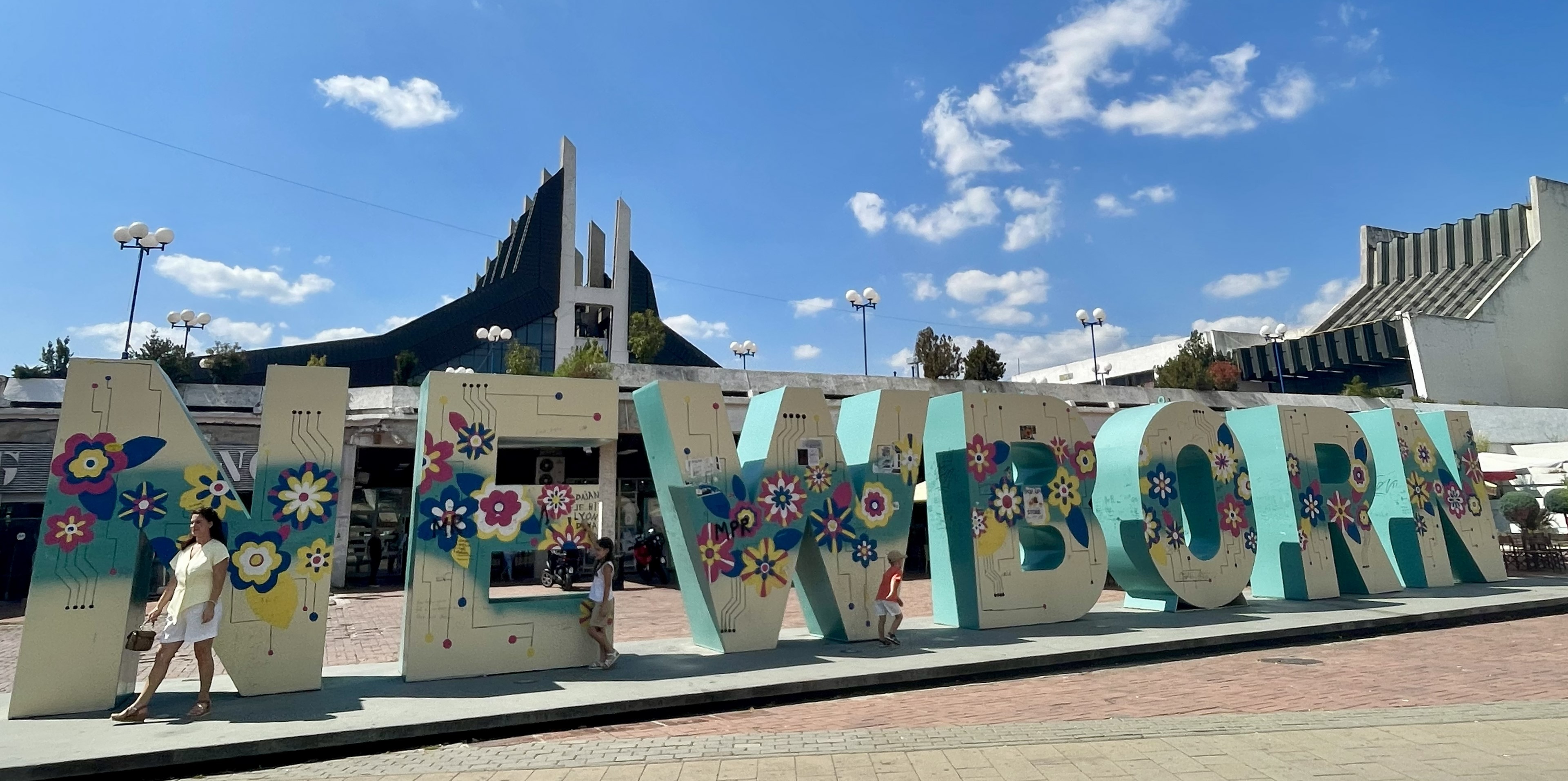
The sights themselves are compact and can be walked in a day: the Newborn Monument repainted annually to mark the independence anniversary, the brutalist National Library with its 99 translucent domes modeled on the traditional felt cap, a statue of Bill Clinton on the boulevard that bears his name. None of it is trying to be Prague or Vienna. What Pristina offers instead is unfiltered access to a country working out its own identity in real time, at prices that make the rest of Europe look absurd.
The honest complications
Pristina's architecture is genuinely divisive, plenty of visitors find the mix of brutalist landmarks and unplanned postwar construction more depressing than charming, and it lacks a single knockout historic quarter to counterbalance that the way Prizren or Gjakova do. Traffic and pavements can be chaotic outside the pedestrian boulevard, English thins out fast once you're off Mother Teresa Boulevard, and the hotel and restaurant scene, while improving quickly, is still smaller and less polished than a capital of a similar size elsewhere in Europe. None of this makes Pristina unpleasant; it makes it a city that rewards curiosity over a checklist.
A small, walkable centre with three areas that matter
Pristina's tourist-relevant footprint is compact: almost everything worth seeing sits within 20 minutes' walk of Mother Teresa Boulevard. Where you base yourself comes down to how much quiet you want at night and how far you're willing to walk for dinner.
City Centre & the Boulevard
The pedestrian Bulevardi Nënë Tereza (Mother Teresa Boulevard) is Pristina's spine: cafes by day, bars by evening, and the setting for the nightly xhiro when much of the city turns out for a slow walk and a macchiato. Skanderbeg Square, the Newborn Monument and the National Library all sit within a few minutes of here. For a first visit, this is the base that puts everything in walking range.
Pejton
A leafy residential pocket just south of the centre, popular with a growing cluster of boutique guesthouses and small hotels. Quieter at night than the boulevard itself but still a 10-15 minute walk to everything, making it the pick for travellers who want to sleep undisturbed.
Dragodan
The hillside embassy district above the centre, reached by the Dragodan steps, has quietly become home to some of Pristina's better restaurants and a calmer, more residential pace once you're past the climb. Worth the walk up for dinner even if you're staying elsewhere.
A small but growing hotel scene, and one of the region's cheapest hostel circuits
Pristina's accommodation options have expanded fast alongside tourism, from a strong backpacker hostel scene to a small but genuine top end. These picks cover the range, and every one of them is a short walk from the boulevard.
At the top, the Swiss Diamond Hotel Prishtina is the city's main five-star address, from around €150 a night, with a central location, spa facilities and the polish that's still rare in Kosovo hospitality. In the centre, Hotel Sirius (from about €70) puts you within walking distance of every sight and is home to Restaurant Hera, known for its wine list and city views from the upper floors.
In the boutique bracket, Plaza Boutique Hotel (from about €55) is a small, attentively run four-star property near the Mother Teresa pedestrian boulevard with consistently high guest ratings, while Grand Boutique Hotel (from about €72) offers a similar central, small-scale feel a few streets over.
At the budget end, Buffalo Backpackers Hostel is the long-running favourite on the backpacker circuit, with free breakfast and organised day trips to Prizren and the Rugova Canyon, and Prishtina Backpackers is the pick for a more social, bar-forward hostel stay. Dorm beds at both run from around €10-15 a night.
The macchiato comes first, everything else follows
Pristina's food scene runs on two tracks: an extraordinary, inexpensive café culture built around the local macchiato, and a small but solid roster of traditional Kosovar restaurants that don't bother chasing tourists because they don't need to. Both are cheap by any Western European measure.
Macchiato culture
Thicker and stronger than the Italian original, capped with foamed milk, and treated as a near-civic institution. Half & Half Café is a local favourite for its macchiatos and relaxed daytime-into-evening atmosphere, while Aurora on Mother Teresa Boulevard runs 24 hours with generous indoor and outdoor seating for people-watching the xhiro.
Qebapa
Small grilled sausages of minced lamb and beef, served with raw onion, kajmak clotted cream and flatbread. Sold from dedicated counters across the centre and the everyday lunch for most of the city.
Traditional Kosovar cooking
Pishat, in the heart of the city, is a reliable first stop for homemade bread baked in a brick oven alongside local specialities and grilled vegetables. Liburnia, open since 1992, is a long-standing favourite for grilled meats and hearty vegetable stews in a warm, unfussy setting. Tiffany is worth booking for its seasonal menu built around Albanian and Kosovar heritage dishes, including flija when it's on the menu, the slow-baked layered specialty usually reserved for celebrations. Shpija e Vjetër covers the everyday classics, kofte and peppers stuffed with cheese and yogurt, at gentler prices.
Vila Germia
One of Pristina's oldest and most established restaurants, set inside Gërmia Park with wide terraces looking out over the forest. A popular choice with locals and expats alike for a slower lunch away from the city centre.
A compact centre, a handful of genuinely strange landmarks
Pristina's sights cluster tightly enough to cover on foot in a single unhurried day. None of them demand advance booking, which frees up the itinerary for the thing the city actually rewards: unplanned time in a cafe.
The boulevard and its monuments
Start at the Newborn Monument, a three-metre sculpture spelling out NEWBORN that has been repainted every year since 2008 to mark a different theme on the independence anniversary, originally bright yellow for hope and a fresh start. A short walk away, the Bill Clinton Statue, an 11-foot bronze on the boulevard that bears his name, marks the American role in the 1999 NATO intervention that Kosovars still credit directly. Skanderbeg Square, with its equestrian statue of the 15th-century Albanian resistance hero, anchors the pedestrian core, and the pedestrian stretch of Mother Teresa Boulevard itself, lined with cafes and small shops trading flowers and secondhand books, is worth walking slowly rather than through.
The National Library and Mother Teresa Cathedral
The National Library of Kosovo, built 1972-81 by Croatian architect Andrija Mutnjaković, is Pristina's most photographed and most argued-about building: 99 translucent acrylic domes, meant to evoke the traditional white felt qeleshe cap, over a brutalist concrete structure often (only half-jokingly) called one of the world's ugliest buildings and, depending who you ask, one of its most interesting. A short walk away, the Mother Teresa Cathedral, consecrated in 2017 after a decade of construction, has a comparatively restrained interior but the best view in the city from its bell tower.
Museums and the old quarter
The Ethnographic Museum, in the restored Emin Gjiku complex of Ottoman-era courtyard houses, is the best window into pre-independence Kosovar life, traditional dress, tools and domestic architecture arranged across several connected buildings. The Kosovo Museum, housed in a former Austro-Hungarian building, covers the archaeology and history of the wider region.
Gërmia Park
Gërmia Park, a large forested park on the city's eastern edge, is where Pristina goes to exhale: hiking trails, picnic spots, and one of the largest outdoor freshwater swimming pool complexes in the Balkans, busy with families through the summer. A short taxi ride from the centre and an easy half-day escape from the concrete.
One day covers it, a third day belongs to Prizren
Pristina's centre is small enough that a single well-planned day delivers everything; a second day is really about slowing down rather than covering more ground.
- Morning
Boulevard & monuments. Coffee and a walk to the Newborn Monument, the Bill Clinton Statue, and Skanderbeg Square.
- Midday
Qebapa lunch, then the National Library's 99 domes and, if time allows, the view from Mother Teresa Cathedral's bell tower.
- Afternoon
The Ethnographic Museum in the Emin Gjiku complex, then a slow wander back through the centre.
- Evening
The xhiro. Dinner at Pishat or Liburnia, then join the evening walk down Mother Teresa Boulevard.
- Day 1
The one-day route: monuments, National Library, Ethnographic Museum, qebapa lunch, evening xhiro.
- Day 2 morning
Gërmia Park. A slow morning of trails or, in summer, the outdoor pool complex.
- Day 2 afternoon
Gračanica Monastery. A short taxi or bus ride to the 14th-century UNESCO-listed monastery, a different register entirely from the capital's brutalism.
- Day 2 evening
Dragodan for dinner. The climb up the Dragodan steps to one of the neighbourhood's quieter, well-regarded restaurants.
- Days 1-2
The two-day route above, at an unhurried pace.
- Day 3
Prizren day trip. About 1.5 hours each way by furgon or rental car: the Old Stone Bridge, Sinan Pasha Mosque, and the climb to the fortress for sunset before heading back.
Small, flat enough to walk, and cheap to move around by taxi
Pristina International Airport "Adem Jashari" (PRN) sits about 18km southwest of the centre. The 1A airport bus runs to the main bus station roughly every three hours for about €4 and takes 30-40 minutes, but it doesn't run late at night, so pre-book a transfer for late arrivals. A taxi to the centre costs about €25-30 and takes 20-30 minutes; pre-booked transfers run a similar price with more certainty.
Inside the city, the centre is compact and walkable, and taxis are cheap and metered, typically €3-8 for most trips, useful for reaching Gërmia Park or the bus station. There's no metro or tram; city buses cover the outskirts but most visitors won't need them for a one-to-two-day visit. For day trips to Prizren, Peja or Gjakova, furgons (shared minibuses) leave from the main bus station frequently on weekdays and cost a few euros each way; a rental car (from about €25-35/day) gives more flexibility for the Rugova Canyon or the monasteries outside town.
Best time to visit and what to expect by season
Pristina has a continental climate. May-June and September-October are the sweet spots: warm days, cool evenings, and the boulevard cafes at their most pleasant. July-August get genuinely hot, often into the low 30s°C, with limited shade in the concrete centre. Winter is cold, sometimes snowy, and quiet, but the cafe culture continues indoors and it's the cheapest time to visit; Brezovica's ski season runs roughly December through March, a feasible day trip in good weather.
One of Europe's cheapest capitals, full stop
Pristina is inexpensive even by regional standards, on par with the rest of Kosovo and noticeably cheaper than capitals in neighbouring Montenegro or Croatia. The main splurge available is the Swiss Diamond at the very top of the market; everything else stays remarkably affordable.
- Hostel dorm €10-15
- Qebapa and cafe meals €10-15
- Walking plus the occasional taxi
- Free monuments plus one museum
- Boutique hotel €55-80
- Restaurant meals with wine €20-35
- Taxis plus a Prizren day trip
- Gërmia Park, museums, cafes
- Swiss Diamond or equivalent €150+
- Dragodan fine dining
- Private driver for day trips
- Full Rugova Canyon via ferrata day
A calm capital, with normal city precautions
Pristina is safe for the standard visit. Violent crime against tourists is rare, the pedestrian boulevard and surrounding centre feel comfortable to walk in the evening, and the city's overall risk profile sits within the same Level 2 (Exercise Increased Caution) tier the US State Department applies to Kosovo as a whole, reflecting general regional terrorism risk rather than anything specific to the capital. Pristina is also a reasonably good base for solo women: cafe culture makes solo dining or coffee unremarkable, and street harassment is uncommon in the centre.
The short, practical list: pickpocketing, at the low level typical of any capital, concentrated around the bus station and crowded market moments rather than the boulevard itself; traffic, since pedestrian crossings aren't always respected outside the pedestrian zone, so cross with care; and late-night taxis, where using a known company or hotel-booked car is a sensible default rather than hailing on the street after dark. Emergency number is the nationwide 112 from any phone.
Kosovo is small enough that Pristina reaches almost all of it
Pristina's central position and Kosovo's small size make it a workable base for the whole country. Four trips are worth a day each, all reachable by furgon minibus or rental car from the main bus station.
Gračanica Monastery
A 14th-century Serbian Orthodox monastery in a Serb enclave village just 5km from the capital, part of Kosovo's UNESCO-listed medieval monuments. An easy half-day that shows a different, older layer of Kosovo's history.
Prizren
Kosovo's most beautiful city: the Old Stone Bridge, the 1615 Sinan Pasha Mosque, and a fortress climb with panoramic views over the old town. Worth a full day, and the trip most visitors add first.
Peja & Rugova Canyon
A dramatic river canyon up to 1,000m deep with the Balkans' first via ferrata routes, plus the 13th-century Patriarchate of Peja at the canyon's mouth. Book a via ferrata slot a day ahead in summer.
Gjakova
The Çarshia e Madhe Old Bazaar, one of the longest in the Balkans, with working artisan workshops and far fewer tourists than Prizren's equivalent streets.
Pristina FAQ
Is Pristina safe for tourists?
Yes. Violent crime against tourists is rare and the centre feels comfortable to walk in the evening. The main concerns are pickpocketing in crowded spots and normal city awareness after dark, the same as most European capitals.
How many days do I need in Pristina?
One full day covers the compact centre: the Newborn Monument, the National Library, Skanderbeg Square and an evening on Mother Teresa Boulevard. Two days adds Gërmia Park and a slower café pace; a third day fits a Prizren or Gračanica day trip.
How much does Pristina cost per day?
Budget travellers manage on €35-50 a day with hostels and qebapa lunches; mid-range runs €60-90. Pristina is one of the cheapest European capitals to visit.
When is the best time to visit Pristina?
May-June and September-October: warm days, cool evenings, thin crowds. July-August gets genuinely hot; winter is cold but atmospheric and cheap, with skiing at Brezovica a day trip away.
Is Pristina worth visiting?
Yes, especially for travellers who want a capital that isn't performing for tourists yet. It lacks Prizren's postcard beauty but has a café culture, a genuinely young energy, and a handful of strange, memorable sights, the Newborn Monument, the domed National Library, found nowhere else.
How do I get from Pristina airport to the centre?
The 1A airport bus runs to the main bus station roughly every three hours for about €4 and takes 30-40 minutes, but doesn't run late at night. A taxi costs about €25-30 and takes 20-30 minutes.
What is the best area to stay in Pristina?
The city centre around Mother Teresa Boulevard for first-timers: walkable to every sight and the best café culture. Pejton for a quieter, still-central residential feel; Dragodan for embassy-area calm and some of the city's best restaurants up the hill.
Do I need to speak Albanian in Pristina?
No. English is widely spoken among younger Kosovars in cafes, hotels and restaurants in the centre. A few words, faleminderit (thank you), go a long way and are genuinely appreciated.
Is Pristina walkable?
Yes. The centre is compact and flat by Balkan standards, and most sights, cafes and hotels sit within a 15-20 minute walk of Mother Teresa Boulevard. Taxis are cheap for Gërmia Park or the bus station.
What is a macchiato in Pristina and why does everyone drink one?
A small, strong espresso topped with a cap of foamed milk, thicker than the Italian version, served everywhere for around €1-1.50. It anchors Pristina's cafe culture and the evening xhiro (stroll) along Mother Teresa Boulevard.
What Stays With You
Pristina doesn't ask you to be impressed, and that's precisely what makes it interesting. There's no old town performing history for a camera, no waterfront staged for a sunset shot. What there is instead: a monument that gets a new coat of paint every year because the country itself is still figuring out what it wants to say, a library that looks like nothing else on earth, and an entire city that steps outside every evening for a coffee it could easily have at home, because doing it together on the boulevard is the point.
Sit on Mother Teresa Boulevard with a macchiato on your last evening and watch the xhiro pass. It's the whole city, in one unhurried hour.