
What You're Actually Getting Into
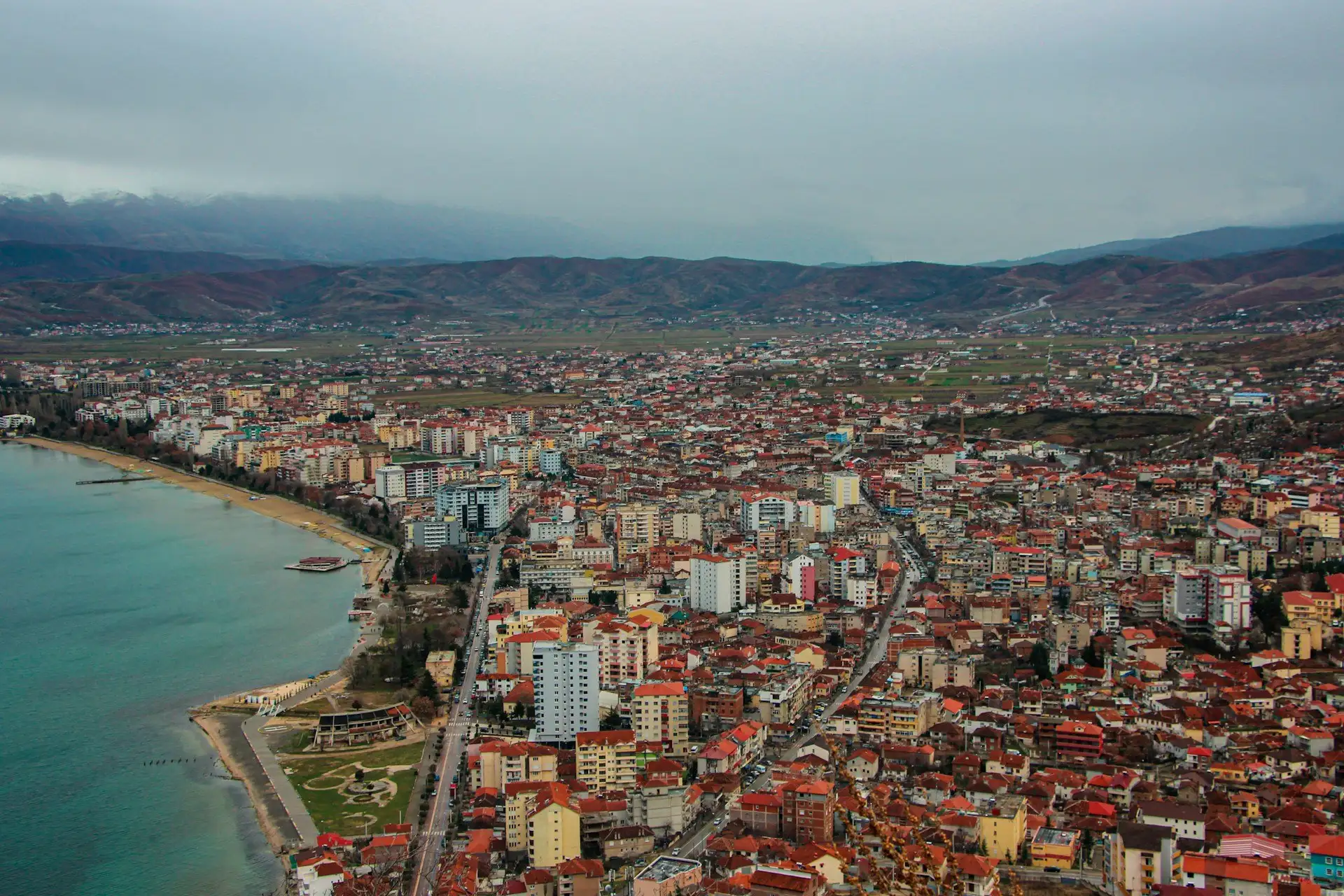
Kosovo declared independence from Serbia on 17 February 2008, making it, on paper, one of the newest countries on earth. On the ground it is nothing of the kind: Prizren's Ottoman old town has stood for centuries, the Gračanica and Peja monasteries date to the 13th and 14th centuries and sit on the UNESCO World Heritage list, and the Dardanian and Illyrian roots claimed by the region go back millennia further still. The country most visitors picture, if they picture anything, is the 1998-99 war and the NATO bombing campaign that ended it. What they find instead is a small, mountainous, extremely cheap country with some of the best café culture in the Balkans and one of the youngest populations in Europe, roughly half under 30.
Kosovo is also barely on the tourist map yet, which cuts both ways. Prizren's stone bridge and the Rugova Canyon's via ferrata routes near Peja are as good as anything in neighboring Albania or Montenegro, without the July crowds. The infrastructure is real but still thin in places: English is common in Pristina cafes and rare in mountain villages, hotel choice is smaller than in bigger countries, and the political status of the country is not settled, five EU members plus Serbia, Russia and China still do not recognize it. None of that affects a standard visit; it affects how the country talks about itself.
The honest complications
Kosovo is not recognized by all of its neighbors or by every EU member state, and the political status of the country is a live, sensitive subject that shapes daily conversation more than a visitor might expect: avoid volunteering strong opinions on Kosovo-Serbia relations unless a local raises it first. A NATO-led peacekeeping force, KFOR, still operates in the country, most visibly in the north; this is a long-running stabilization presence rather than a sign of active danger for tourists on the standard route. North Mitrovica and the area right along the administrative boundary with Serbia carry a specific US State Department caution and are not part of a normal first visit. Outside that pocket, road quality varies (mountain roads to Rugova and Brezovica are narrower and slower than main highways), and Kosovo's tourist infrastructure, while growing fast, is still smaller and less polished than Albania's or Croatia's: book ahead for the handful of standout hotels, don't expect fluent English outside the cities, and bring patience for a country that is still building itself in real time.
A History Worth Knowing
Kosovo's population today is overwhelmingly ethnic Albanian, with Serb communities concentrated in the north around Mitrovica and in enclaves like Gračanica. Ottoman rule lasted from the 14th century until the Balkan Wars of 1912-13 returned the region to Serbia, and it became part of Yugoslavia after the First World War. Decades of rising ethnic tension, autonomy revoked under Slobodan Milošević in 1989, and an escalating insurgency by the Kosovo Liberation Army culminated in the 1998-99 war: NATO's bombing campaign from March to June 1999 ended it, more than a million people had been displaced, and Kosovo came under United Nations administration. The declaration of independence followed on 17 February 2008.
- 14th–20th c.
Ottoman rule. Over four centuries of Ottoman administration leaves the mosques, bazaars and stone-house architecture still visible in Prizren and Gjakova today.
- 1912–1913
Balkan Wars. Ottoman rule ends; Kosovo becomes part of the Kingdom of Serbia, later absorbed into Yugoslavia.
- 1989
Autonomy revoked. Slobodan Milošević strips Kosovo's autonomous status within Yugoslavia, escalating ethnic tension through the 1990s.
- 1998–1999
War. Conflict between Yugoslav forces and the Kosovo Liberation Army culminates in NATO's bombing campaign; UN administration (UNMIK) and NATO's KFOR peacekeeping force follow.
- 2008
Independence. Declared 17 February. Recognized by roughly 110 UN member states; not recognized by Serbia, Russia, China or five EU members.
- 2024–present
Visa liberalization. Kosovo citizens gain visa-free Schengen travel from January 2024; Kosovo itself remains outside the EU and Schengen, and tourism grows from a very low base.
Read the full history: Ottoman Prizren, the KLA, NATO and today's status
The Ottoman centuries left the deepest physical mark on Kosovo's cities. Prizren, once one of the largest Ottoman cities in the Balkans and briefly capital of the League of Prizren (an 1878 Albanian nationalist movement), retains its mosques, hammams and stone bridge largely intact. Gjakova's Old Bazaar, one of the longest in the Balkans, was rebuilt after being burned during the 1999 war, a pattern repeated at religious and cultural sites across the country.
The 1998-99 war followed a decade of rising repression after Milošević revoked Kosovo's autonomy in 1989. Ibrahim Rugova led a peaceful resistance movement through the early 1990s before the Kosovo Liberation Army (KLA) turned to armed insurgency in 1996. Yugoslav and Serb forces responded with a campaign that displaced more than a million ethnic Albanians and killed an estimated 12,000 people before NATO intervened with air strikes from March to June 1999, ending with Yugoslav withdrawal and UN administration under UNMIK, alongside the NATO-led KFOR peacekeeping force that remains in the country today, focused mainly on the north.
Independence and recognition. The 17 February 2008 declaration was followed by recognition from the United States and most EU states, but Serbia has never accepted it, and Russia and China back that position at the UN Security Council, which is why Kosovo is not a UN member. Five EU states, Spain, Greece, Cyprus, Romania and Slovakia, also withhold recognition, largely over their own separatist concerns, which complicates Kosovo's path to EU candidacy even as ordinary travel and visa liberalization move forward.
The Serbian Orthodox heritage. Despite the political rupture, Kosovo holds some of the most important Serbian Orthodox monuments in existence: the Patriarchate of Peja, the Visoki Dečani monastery, the Gračanica monastery and the Church of the Virgin of Ljeviš in Prizren together form the UNESCO World Heritage site "Medieval Monuments in Kosovo," listed as endangered since 2006 and protected today by KFOR troops stationed at the more sensitive sites.
Top Destinations
Kosovo is small enough, 10,887 square kilometers, that nowhere is more than a three-hour drive from anywhere else. The country divides naturally into the capital, the Ottoman south (Prizren and Gjakova), the western mountains around Peja, and a scatter of sites, Serbian Orthodox monasteries, waterfalls, a ski resort, that reward a slower second trip. Four days covers the highlights; a week lets you add all of it without rushing.
Pristina, the café capital
Pristina is not a conventionally beautiful capital, decades of rapid, unplanned construction saw to that, but it is one of the most energetic small capitals in Europe, powered by a café culture built around the cheap, thick, locally beloved macchiato. The pedestrian Bulevardi Nënë Tereza (Mother Teresa Boulevard) is the spine of the city, lined with cafes that turn into bars by evening and busy every night with the xhiro, the traditional evening stroll. The Newborn Monument, repainted every year on the independence day anniversary, and the brutalist National Library, its 99 translucent domes modeled on the felt qeleshe cap, are the two sights every visitor photographs. Skanderbeg Square, the Ethnographic Museum in the restored Emin Gjiku complex, and the Kosovo Museum round out a compact, walkable center. Budget one full day, two if the café culture pulls you in, which it usually does.
Prizren, the Ottoman old town
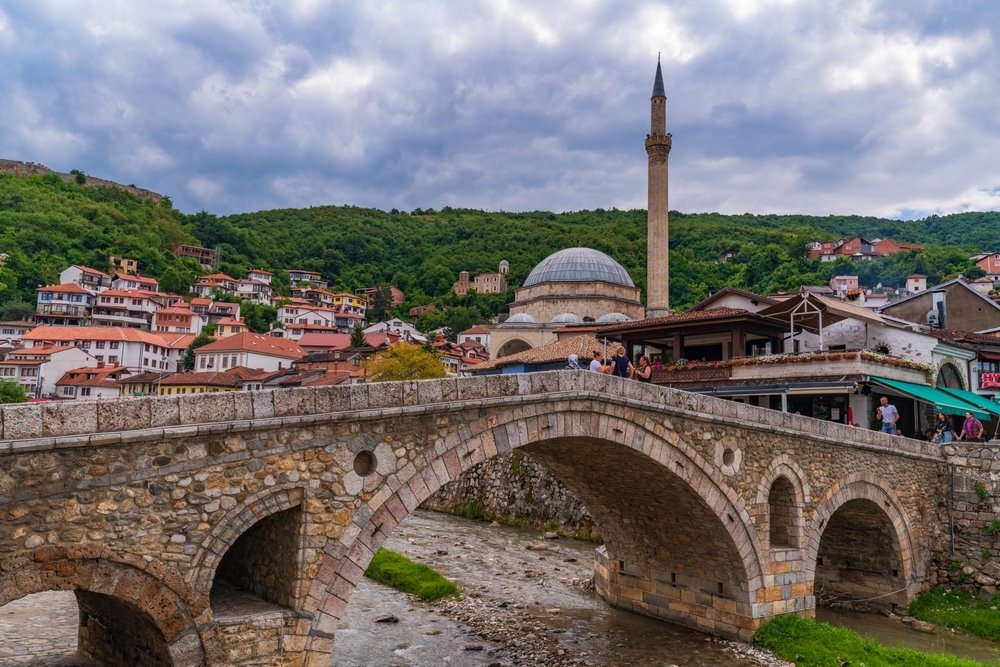
Prizren is the city most people mean when they say Kosovo is beautiful. The Bistrica River cuts through an old town of stone houses and minarets below a hilltop fortress, with the 1615 Sinan Pasha Mosque and its 43-meter minaret as the visual anchor and the 16th-century Old Stone Bridge (Ura e Gurit) as the postcard shot. The climb to Prizren Fortress (Kalaja e Prizrenit) takes about 20 steep minutes and rewards with panoramic views over the red-tiled roofs and the mosques below. Prizren was briefly the seat of the League of Prizren, the 1878 Albanian nationalist movement, and its old bazaar streets still function as a working commercial center rather than a museum piece. Best visited on a weekday morning before day-trippers arrive from Pristina, an hour and a half away.
Peja and the Rugova Canyon
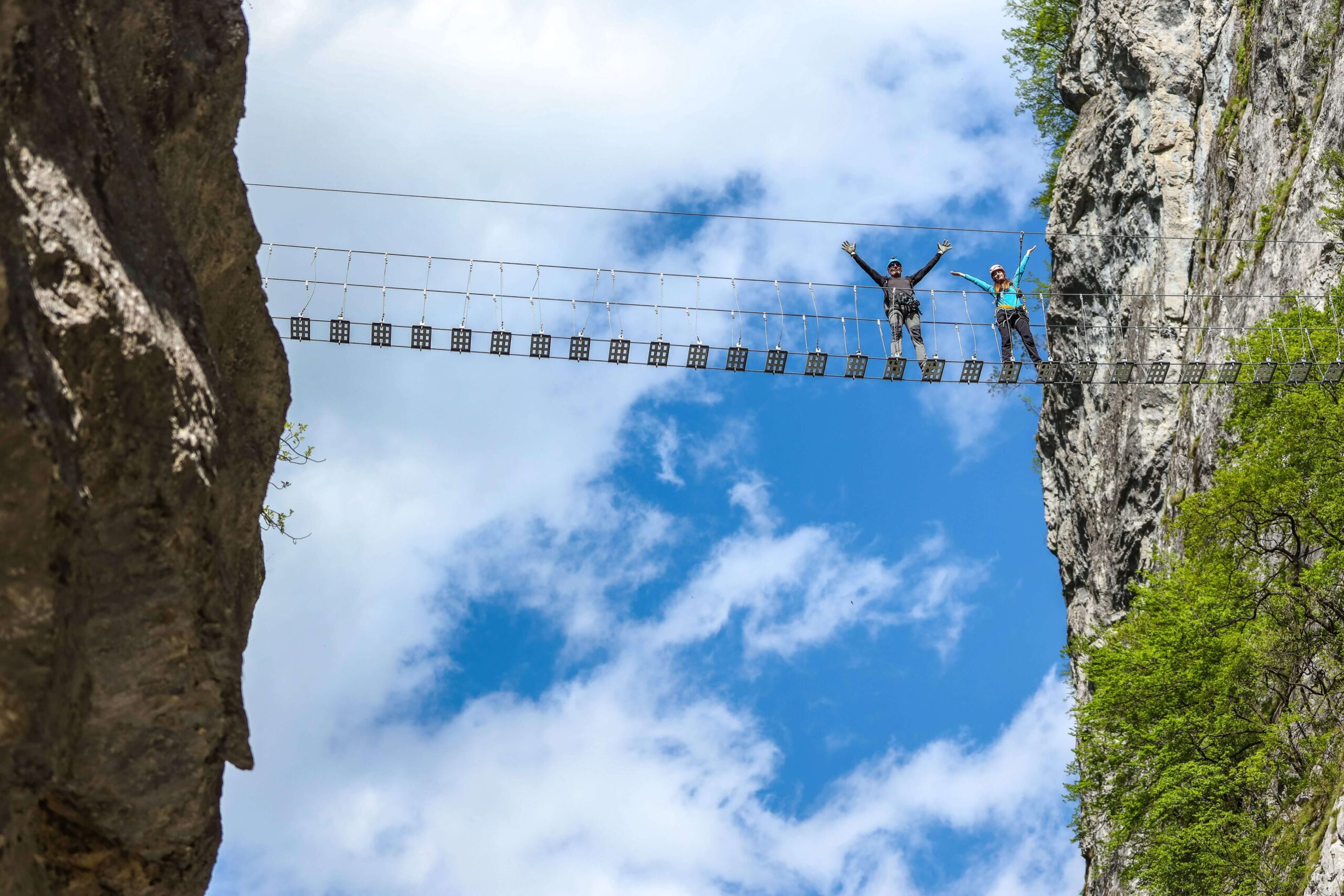
Peja sits at the mouth of the Rugova Canyon, one of Europe's longest and deepest river gorges at roughly 25km long and up to 1,000m deep, cut into the Prokletije mountains near the Montenegro border. The canyon holds the Balkans' first via ferrata routes, MAT (a horizontal traverse above the river) and ARI (mostly vertical), both suitable for reasonably fit beginners with a guide and gear, alongside hiking, mountain biking and canyoning. At the canyon's mouth, the Patriarchate of Peja, the historic seat of the Serbian Orthodox Church dating to the 13th century, is one of the four sites making up Kosovo's UNESCO-listed medieval monuments and is protected by a KFOR checkpoint, expect a passport check to enter. Peja town itself has a smaller Ottoman bazaar than Prizren's and makes a practical, low-key base for a day or two in the mountains.
Gjakova's Old Bazaar
Gjakova's Çarshia e Madhe (Grand Bazaar) is one of the oldest and longest bazaars in the Balkans, a 16th-century Ottoman commercial street lined with artisan workshops still making filigree jewelry and wool carpets by hand. Badly damaged during the 1999 war, it has been carefully reconstructed and today feels considerably less touristed than Prizren's old town, a place locals still shop rather than a set piece for visitors. An hour from Pristina and 40 minutes from Prizren, it fits naturally into a loop through the south.
Beyond the standard route
The zones above cover a first trip well. With extra days, these reward the detour.
Gračanica Monastery
A 14th-century Serbian Orthodox monastery in a Serb enclave village, part of the UNESCO-listed medieval monuments, with frescoes said to depict more than 4,000 faces across seven tiers. An easy, quiet half-day from the capital.
Visoki Dečani Monastery
The largest medieval church in the Balkans, founded in 1327, with an extraordinary collection of Byzantine frescoes. Like Peja's Patriarchate, it sits under KFOR protection; bring a passport for the checkpoint.
Novo Brdo Fortress
A ruined medieval Serbian mining fortress on a hilltop, once one of the wealthiest silver and gold mining towns in the Balkans. Little-visited, atmospheric, and a good stop for anyone interested in the pre-Ottoman period.
Culture & Etiquette
Kosovo Albanian culture shares besa, the hospitality and honor code, with Albania proper: guests are treated with a warmth that can feel disproportionate to a short visit, and accepting coffee or a meal when offered is the polite response. Kosovo is majority Muslim but notably secular in daily practice, alongside Catholic and Serbian Orthodox minorities, and religious identity sits well behind national and family identity for most people. The one subject that requires real care is the country's political status and its relationship with Serbia: it is a live, personal topic for people who lived through 1998-99, not a neutral historical footnote.
Do
- Accept a coffee invitation. Kosovo's café culture is a genuine social institution, not a tourist backdrop; declining repeated invitations can read as cold.
- Dress modestly at religious sites. Cover shoulders and knees at mosques and Orthodox monasteries alike; women should carry a scarf.
- Carry your passport near KFOR-protected sites. The Patriarchate of Peja and Visoki Dečani have checkpoints; ID is required to enter.
- Learn a few Albanian words. Faleminderit (thank you), Mirëdita (good day). In the north and Serb enclaves, Hvala (thank you) and Dobar dan (good day) in Serbian are the equivalent courtesy.
- Carry cash. Kosovo uses the euro, but villages, minibuses and market stalls are cash-first even as Pristina and Prizren go increasingly card-friendly.
Don't
- Volunteer strong opinions on Kosovo-Serbia relations. Let locals set the tone if the subject comes up; it usually will, eventually, on their terms.
- Refer to Kosovo as part of Serbia, or expect a neutral reaction if you do, particularly outside the Serb-majority north.
- Photograph KFOR personnel or checkpoints without asking; treat military installations and border areas with the same caution you would anywhere.
- Assume everyone speaks English. True in central Pristina and Prizren cafes among younger Kosovars; much less so in villages and among older residents.
- Skip travel insurance. Standard European coverage works, but confirm it covers Kosovo specifically, some policies exclude non-EU Balkan states by default.
Deeper culture: besa, the youngest population in Europe, and religious coexistence
Besa. The same hospitality and honor code found across the Albanian-speaking world, rooted in the Kanun customary law tradition: a pledge of protection to a guest that Kosovo Albanians take as seriously as their counterparts in Albania itself.
A young country, literally. Kosovo has one of the youngest median ages in Europe, with roughly half the population under 30, a legacy of high birth rates and a large diaspora that keeps close ties home. It shows in the energy of Pristina's café scene and the confidence with which young Kosovars talk about a country most of them can barely remember not existing.
Religious coexistence. The population is majority Muslim, with Kosovo Catholic and Serbian Orthodox minorities. Religious practice is generally relaxed and secular in daily life, more a marker of community identity than devout observance for most, and mosques, Catholic churches and Orthodox monasteries operate within a few kilometers of each other across the country without friction on the ground.
Food & Drink
Kosovar food sits at the crossroads of Albanian, Serbian, Turkish and broader Balkan traditions: grilled meats, filled pastries, slow-cooked dishes built for hospitality rather than speed, and a coffee culture that borders on civic religion. Meals are cheap even by Balkan standards, and the best of it is unpretentious: market stalls, family-run kebab counters and no-frills restaurants rather than anywhere chasing a tourist crowd.
Flija Special-occasion
Kosovo's signature dish: thin layers of batter and cream baked one at a time under a metal sac (dome lid) covered in hot coals, building up to 30-50 layers over hours. Traditionally reserved for celebrations; some Pristina restaurants now serve it by advance order.
Qebapa €4-7
Small skinless grilled sausages of minced lamb and beef, served with raw onion, kajmak (clotted cream) and pitalka flatbread. The everyday lunch across the country, sold from dedicated qebaptore counters.
Macchiato €1-1.50
Not the Italian version: thicker, stronger, served in a small glass with a cap of foamed milk, and the center of Kosovo's social life. Order it anywhere on Mother Teresa Boulevard and you'll get the real thing.
Byrek ~€1-2
Thin phyllo pastry layered with spinach, cheese, meat or pumpkin, sold by the slice at bakeries across every town. Breakfast for a large share of the country most mornings.
Tavë Kosi
Baked lamb and rice under a creamy yogurt-and-egg crust, shared with Albania as a signature dish and found on most traditional restaurant menus in Pristina and Prizren.
Rahovec Wine €6-12/bottle
Kosovo's main wine region around Rahovec/Orahovac has produced wine since Ottoman and Yugoslav times; reds and whites from local cellars are an underrated pairing with grilled meats.
When to Go & Itineraries
May, June, September and October give the best balance: warm days in the lowland cities, cool and clear conditions for the Rugova Canyon and via ferrata, and thin crowds everywhere. July and August get genuinely hot in Pristina and Prizren, low 30s°C is normal, though the mountains around Peja stay pleasant. Winter brings snow to Brezovica for skiing and a quieter, atmospheric version of the cities, with some mountain roads slower or briefly closed after heavy snow.
All four seasons compared, with temperatures
| Season | Verdict | Temps | Prices & crowds |
|---|---|---|---|
| May-Jun & Sep-Oct | Best | 18-26°C lowlands, 10-18°C mountains | Mid prices, thin crowds |
| Jul-Aug | Good (hot) | 28-34°C Pristina/Prizren | Warm but rarely crowded; mountains stay cooler |
| Mar-Apr | Good | 10-18°C lowlands | Low prices, very few tourists; some mountain snow lingers |
| Nov-Feb | Quiet / skiing | 0-8°C lowlands, snow in mountains | Lowest prices in cities; Brezovica ski season |
Year-round city averages: Pristina 12°C, Prizren 13°C, Peja 11°C. Brezovica sits at altitude and holds ski-season snow from December into March in a typical year.
Itineraries
Kosovo is compact enough that four focused days cover the essentials well. A week adds Gjakova, the monasteries and a slower pace; there is little reason to plan longer than ten days unless combining Kosovo with a wider Balkans trip.
- Day 1
Pristina. Newborn Monument, National Library, Skanderbeg Square, evening xhiro on Mother Teresa Boulevard.
- Day 2
Prizren. Drive or minibus from Pristina (about 1.5 hours). Old Stone Bridge, Sinan Pasha Mosque, the climb to the fortress at golden hour.
- Days 3-4
Peja & Rugova Canyon. Onward to Peja (about 1 hour from Prizren), a via ferrata session or canyon hike, and the Patriarchate of Peja before heading back to Pristina.
- Days 1-2
Pristina, plus Gračanica. Full exploration of the capital and a half-day trip to Gračanica Monastery.
- Days 3-4
Prizren. Two unhurried days in the old town, including the Mirusha Waterfalls en route from Pristina.
- Day 5
Gjakova. A day at the Old Bazaar, less touristed than Prizren's.
- Days 6-7
Peja & Rugova. Via ferrata, the Patriarchate, and Visoki Dečani if time allows, before returning to Pristina for departure.
- Days 1-3
Pristina extended. The capital at a slow pace, Gračanica Monastery, and a day trip to Novo Brdo Fortress.
- Days 4-5
Prizren & Mirusha. The old town, the fortress, and a swimming stop at the Mirusha Waterfalls.
- Day 6
Gjakova. The Old Bazaar and its artisan workshops.
- Days 7-9
Peja & Rugova extended. Two via ferrata routes, the Patriarchate, Visoki Dečani, and (in winter) a day at Brezovica.
- Day 10
Onward. Kosovo's small size makes it an easy add-on to a longer Balkans loop through North Macedonia or Albania.
Getting there & around
Pristina International Airport "Adem Jashari" (PRN), about 18km southwest of the city, is Kosovo's only international airport, with Wizz Air, easyJet and Eurowings among roughly 18 airlines serving 33-plus routes from European hubs as of 2026. A taxi to the center costs about 25-30 euros; the airport bus (line 1A, about €4) runs to the main bus station roughly every three hours and takes 30-40 minutes, though it doesn't run late at night, so pre-book a transfer for late arrivals. Within the country, minibuses (furgons) connect Pristina, Prizren, Peja and Gjakova cheaply and frequently; a rental car (from about €25-35/day) is worth it for the Rugova Canyon and monastery sites that furgons don't reach directly.
Border crossings, driving notes and practical prep
| Option | Price | Notes |
|---|---|---|
| Furgons (minibuses) | €2-6/route | Pristina-Prizren about 1.5 hrs, Pristina-Peja about 1.5 hrs. Frequent on weekdays, thinner on Sundays. |
| Airport bus (1A) | ~€4 | Pristina center to airport, roughly every 3 hours, no late-night service. |
| Taxis (Pristina) | €3-8 in city | Metered in the capital; agree a price up front for intercity trips. |
| Rental car | €25-35/day | Most practical for Rugova Canyon, the monasteries and Mirusha; some rental contracts restrict crossing into Serbia proper. |
Crossing to Serbia: Serbia does not recognize Kosovo's border controls, and travelers who enter Serbia directly from Kosovo have occasionally faced complications entering Serbia afterward from a third country; routing through North Macedonia avoids this if Serbia is also on the itinerary. Confirm current guidance before planning a Kosovo-Serbia land crossing.
Practical prep: a Kosovo SIM or eSIM is cheap and widely available at the airport and in Pristina; download offline maps before heading into the Rugova Canyon or to Visoki Dečani, where signal thins out. An eSIM before landing saves the airport queue.
Where to stay
Pristina hostels
Kosovo's hostel scene is small but solid: dorm beds run from around €10-15, with sociable common areas and organized day trips to Prizren and Rugova a common feature at the better-rated properties.
Pristina boutique hotels
Small, central properties near Mother Teresa Boulevard put you within walking distance of everything and the airport 25 minutes away; expect simpler amenities than equivalent hotels in Western Europe at a fraction of the price.
Prizren & Peja guesthouses
Family-run guesthouses in or near the old towns put you inside walking distance of the fortress climbs and canyon trailheads; book directly where possible, English varies by property.
Brezovica lodges
Ski-season accommodation clusters around the resort base; book ahead for peak winter weekends, as the room count is small relative to demand from regional skiers.
Budget Planning
Kosovo is one of the cheapest countries in Europe to visit, on par with Albania and North Macedonia and noticeably cheaper than neighboring Montenegro or Croatia. The euro, adopted unilaterally outside the Eurozone, makes budgeting simple: no exchange rate to track, and prices that make most of Western Europe look extravagant.
- Hostel dorm €10-15
- Qebapa and byrek meals €4-8
- Furgon minibuses between towns
- Free old towns, fortress climbs and viewpoints
- Boutique hotel or guesthouse
- Restaurant dinners €8-15/person
- Rental car €25-35/day
- Via ferrata session €25-40
- Best available hotels in Pristina
- Fine dining and Rahovec wine pairings
- Private guided tours and drivers
- Brezovica ski package (winter)
Quick reference prices: coffee, minibuses, entry fees
| Macchiato | €1-1.50 |
| Qebapa lunch | €4-7 |
| Restaurant meal (mid) | €8-15 |
| Pristina-Prizren furgon | ~€4 |
| Airport bus (line 1A) | ~€4 |
| Airport taxi | €25-30 |
| Hostel dorm bed | €10-15/night |
| Pristina boutique hotel | €40-80/night |
| Via ferrata (guided) | €25-40 |
Prices reflect August 2026 research and drift over time, especially Pristina accommodation as tourism grows. Treat them as a planning baseline, not a quote.
Visa & Entry
Kosovo has a permissive visa regime for most Western passports: US, EU, UK, Australian, Canadian and New Zealand citizens enter visa-free for up to 90 days with a passport valid at least three months beyond arrival. Entry is by passport at Pristina Airport or at land borders with Albania, North Macedonia and Montenegro. Rules can change; Kosovo's Ministry of Internal Affairs is the authoritative source, not third-party paid "e-visa" sites that rank well in search but charge for something that's typically free for these nationalities.
✓ Valid passport
At least 3 months validity from date of entry. Keep a photocopy separate from the original.
✓ Return/onward ticket
Rarely checked for US/EU/UK arrivals but can be requested at the border.
✓ Accommodation address
Some jurisdictions require registering your address with police or town hall within 3-15 days; hotels typically handle this automatically.
✓ Not Schengen
Time in Kosovo does not count toward your Schengen 90-day allowance, useful for longer European trips.
| Kosovo | North Macedonia | |
|---|---|---|
| Daily budget | €35-50, among Europe's cheapest | Similarly cheap, slightly more developed tourist pricing in Ohrid |
| Signature sight | Prizren's Ottoman old town and stone bridge | Lake Ohrid's UNESCO shoreline and monasteries |
| Crowds | Very thin outside a handful of weekends | Ohrid gets genuinely busy in July-August |
| Adventure travel | Rugova Canyon via ferrata, a Balkans first | Mavrovo National Park hiking and skiing |
| Schengen | No, doesn't touch your 90 days | No, same advantage |
Safety, Solo Women & Family
Kosovo is safe for the standard tourist route. The US State Department rates the country Level 2, Exercise Increased Caution, the same tier as most of Western Europe, citing the general possibility of terrorism across the Balkans rather than any specific threat to visitors. There is a more pointed Level 3, Reconsider Travel, rating specifically for North Mitrovica, Leposavić, Zubin Potok and Zvečan, the areas right along the administrative boundary with Serbia, where ethnic tensions have periodically produced unrest and where a normal first-time visit has no reason to go. Pristina, Prizren, Peja and Gjakova see essentially none of that; violent crime against tourists is rare and a NATO-led peacekeeping force, KFOR, still maintains a visible, reassuring presence at the more sensitive religious sites rather than a sign of active danger.
North Mitrovica & the boundary area
The one part of Kosovo to skip on a standard trip. Ethnic tensions between the Serb-majority north and the rest of the country have periodically flared; check current advisories before any detour there.
Traffic & mountain roads
Road discipline is inconsistent and mountain roads to Rugova and Brezovica are narrow. Drive defensively and avoid unfamiliar mountain roads after dark.
Petty theft
Low by regional standards, with occasional pickpocketing in crowded markets and bus stations. Normal city awareness is sufficient.
Two more things worth knowing: KFOR sites and unexploded ordnance
KFOR-protected sites. The Patriarchate of Peja and Visoki Dečani monastery both sit behind KFOR checkpoints; bring a passport, expect a brief ID check, and treat the soldiers with the same courtesy as any security checkpoint. This is standard, long-running protocol rather than a sign of current danger.
Historical unexploded ordnance. As with other parts of the former Yugoslavia, some rural areas retain unexploded ordnance from the 1998-99 conflict, mostly in remote border zones well off the standard tourist route. Stay on marked trails in the mountains and don't touch unfamiliar metal objects; a background note rather than an active risk on established routes.
Solo women travelers
Kosovo works well for solo women on the standard route. Pristina and Prizren both feel comfortable to walk in the evening, café culture makes solo dining or coffee entirely normal rather than conspicuous, and street harassment is uncommon. Standard precautions apply: use registered taxis after dark rather than hailing on the street, keep a charged phone with offline maps on canyon hikes, and dress modestly at religious sites. The north is the one area where traveling with at least one other person, or skipping it altogether, is the sensible call.
Emergency numbers
Embassies in Pristina and getting help
112 works nationwide and connects to police, fire or medical services, though operators may have limited English; keep your location simple and clear. The US Embassy is at 30 Nazim Hikmet Street in the Dragodan neighborhood of Pristina (+381-38-5959-3000); most other Western embassies cluster in the same area of the capital.
- USA
- +381-38-5959-3000
- UK
- via Pristina embassy
- Germany
- via Pristina embassy
- Italy
- via Pristina embassy
Canyon and mountain emergencies: for incidents in the Rugova Canyon or near Brezovica, call 112 and your guide or accommodation simultaneously; local operators know the terrain and can direct rescuers faster than a first-time visitor's description alone.
Family travel
Kosovo suits families who enjoy a less-polished, more genuine destination over a heavily packaged one. Gërmia Park's outdoor pool complex outside Pristina, one of the largest in the Balkans, is a straightforward hit with kids, the gentler lower trails of the Rugova Canyon work for families without the full via ferrata commitment, and the novelty of visiting a country younger than most parents tends to land well once explained. Hospitality culture extends warmly to children everywhere on the standard route.
Kosovo FAQ
Is Kosovo safe to visit?
Yes, for the vast majority of a normal visit. The US State Department rates Kosovo Level 2 (Exercise Increased Caution), the same tier as most of Western Europe, with a Level 3 caution specifically for North Mitrovica and the far north near the Serbia border. Pristina, Prizren, Peja and the rest of the standard tourist route are calm day to day.
How cheap is Kosovo?
One of the cheapest countries in Europe. Budget travelers manage on €35-50 a day, mid-range on €60-90. A restaurant meal costs 5-10 euros and a macchiato in Pristina costs about 1-1.50 euros.
Do I need a visa for Kosovo?
Citizens of the US, EU, UK, Australia, Canada and New Zealand can enter visa-free for up to 90 days with a passport valid at least three months beyond arrival. Kosovo is not in Schengen, so time there doesn't count against a Schengen 90-day allowance.
When is the best time to visit Kosovo?
May, June, September and October: warm days, cool mountain air, mid prices and thin crowds. July and August are hot in the lowland cities; winter brings snow to Rugova and Brezovica for skiing.
How many days do you need in Kosovo?
Four days covers the essentials: Pristina, Prizren and a day in the Rugova Canyon near Peja. A week adds Gjakova's old bazaar and time to slow down; the whole country is small enough to cross in half a day.
Is Kosovo part of the European Union?
No. Kosovo is not an EU member and remains only a potential candidate, not a formal candidate, partly because five EU states have not recognized its 2008 independence. It's not in the Schengen Area either, though it uses the euro unilaterally.
What currency does Kosovo use?
The euro, adopted unilaterally in 2002 even though Kosovo is not in the EU or the Eurozone. Cards are widely accepted in Pristina and Prizren; carry cash for villages, minibuses and market stalls.
What language is spoken in Kosovo?
Albanian is the majority language everywhere except the Serb-majority north and enclaves like Gračanica, where Serbian is spoken. English is common among younger Kosovars in Pristina and Prizren.
Is Kosovo safe for solo female travelers?
Generally yes. Pristina and Prizren feel comfortable to walk in the evening, café culture makes it easy to sit alone without attention, and street harassment is uncommon. Normal city precautions after dark are still sensible.
Is Kosovo good for families with kids?
Yes, especially for families comfortable with a less-polished, more genuine destination. Gërmia Park's outdoor pools, the Rugova Canyon's gentler trails and the novelty of a country younger than most of its visitors all land well with kids.
Is Kosovo the same as Serbia?
No. Kosovo declared independence from Serbia in 2008 and has its own government, currency policy, passport and border control, though Serbia does not recognize that independence and considers Kosovo part of its own territory.
What Stays With You
Kosovo is the rare country where the paperwork, independence, recognition, borders, is genuinely younger than the place itself. Prizren's stone bridge has watched over the Bistrica for four centuries and doesn't much care what year the country around it was declared. What sticks after a visit is not the politics but the specifics: the fortress view over Prizren's red roofs at golden hour, the coffee that costs less than a euro and takes an hour to drink properly, the canyon walls above Peja that most of Europe has never heard of.
Go while it's still the country almost nobody you know has visited. That won't last forever, and Kosovo knows it.