
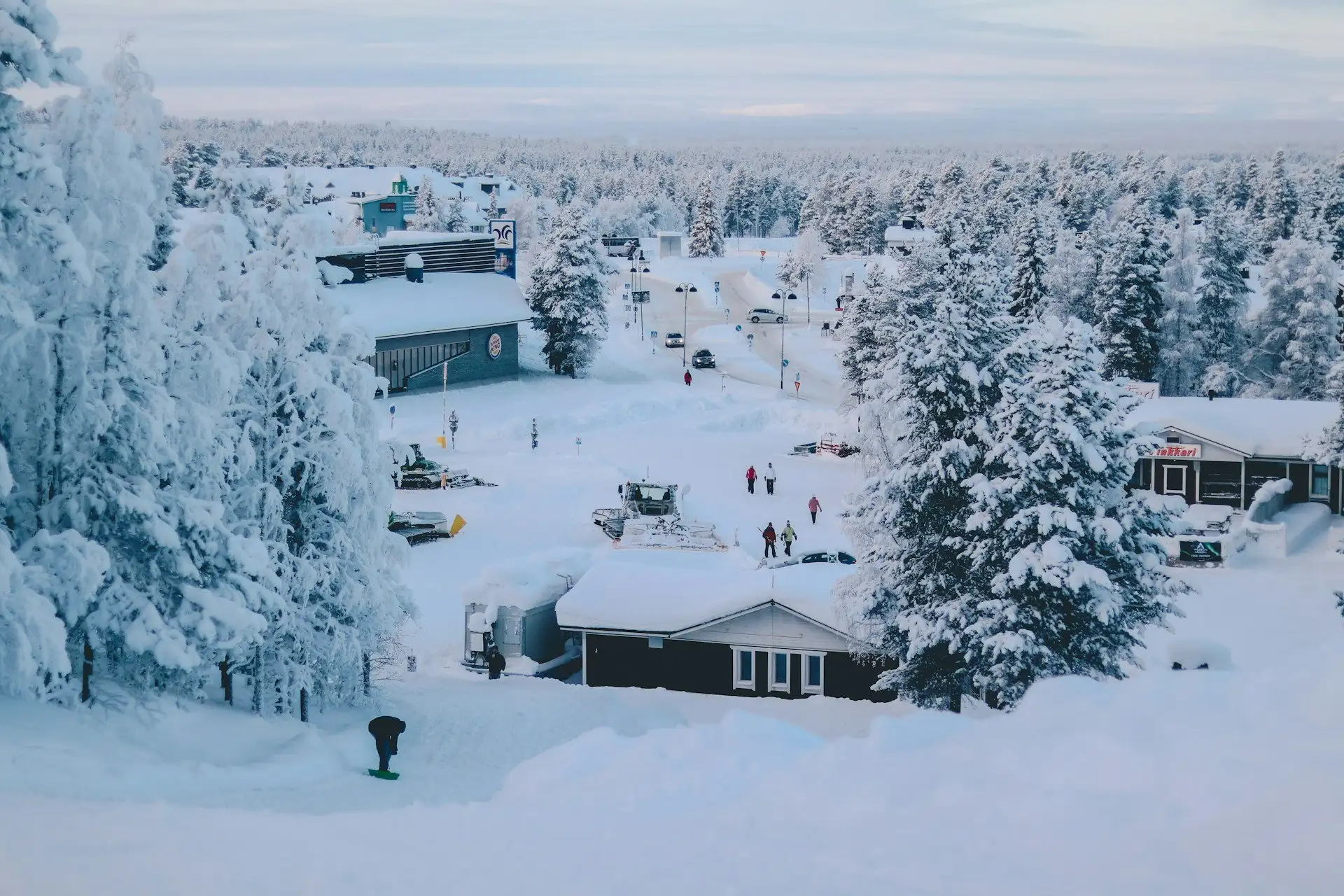
What You're Actually Getting Into
Finland is the country that most visitors underestimate until the moment they arrive, and then spend the rest of the trip wondering why they waited so long. It's simultaneously one of the most designed countries on earth — Alvar Aalto, Marimekko, Iittala, the entire philosophy that a well-made object is a form of ethics — and one of the most genuinely wild. Three quarters of the land is forest. There are 188,000 lakes. In Lapland, north of the Arctic Circle, the sun does not set for 73 consecutive days in summer and does not rise for 51 days in winter. The country is roughly the size of Germany with one fifteenth of the population, and the space you feel in it is real.
Helsinki will catch you off guard. The assumption, held by people who haven't been, is that it's a smaller Stockholm or Copenhagen. It isn't. It has its own register entirely: the Market Square on the harbor selling cloudberries and smoked fish in the morning, the islands of the archipelago reachable by ferry in 15 minutes, the design district where three centuries of Finnish craft thinking is concentrated into six city blocks, the saunas that are not hotel amenities but genuine social institutions. The city is compact, walkable, and in summer lit by long northern evenings that make the harbor look different every hour.
The honest difficulty is the same one that applies to Norway and Sweden: the cost. Finland is an expensive country and some of the experiences that drive people here — glass igloos in Lapland, reindeer safaris, aurora hunting expeditions — come at prices that need deliberate budgeting. The other difficulty is the season split. Finland is a completely different country in winter and summer, and what you should do and where you should go is entirely dependent on when you arrive. A midsummer trip focused on lake swimming and white nights is incompatible with a winter trip to see the northern lights, and you shouldn't try to do both in one visit unless you have three weeks.
The short version: decide which Finland you want. Then go there fully.
Finland at a Glance
A History Worth Knowing
Finland's history is built around the same paradox that defines the country today: a small nation with large neighbors, surviving by being exactly and specifically itself. The Finns are a Finno-Ugric people, linguistically and culturally distinct from the Germanic and Slavic peoples surrounding them, and they have maintained that distinctness with a stubbornness that, looking back at the 20th century, seems almost miraculous.
For 700 years, from the 12th century to 1809, Finland was a province of Sweden. The Swedish period left its marks in the language (Swedish remains a co-official language today), in the Lutheran church, and in the architecture of coastal cities like Turku, which was the capital throughout this era. Sweden lost Finland to Russia in the Finnish War of 1808–09, and Tsar Alexander I made a decision that would prove consequential: rather than absorbing Finland as a Russian province, he established it as an autonomous Grand Duchy with significant self-governance rights. The capital moved from Turku to the newly planned Helsinki, built on a peninsula jutting into the Gulf of Finland, designed to look vaguely like St. Petersburg's younger sibling.
Finnish national consciousness formed during the 19th century through a cultural movement that bears comparison to similar revivals across Europe. The publication of the Kalevala in 1835 — Elias Lönnrot's compilation of Finnish oral folk poetry into a national epic — gave Finland a mythology and a literary tradition in its own language at the same moment that language was being suppressed by the Russian Empire. The composer Jean Sibelius, writing Finlandia in 1899 as an act of explicit political defiance against Russian censorship, turned Finnish national feeling into music that the Russians immediately banned. The nationalists won.
Finland declared independence on December 6, 1917, six weeks after the Russian Revolution removed the Tsar who had been their nominal sovereign. What followed was a brutal civil war between Finnish Reds (socialist) and Whites (conservative), with the Whites, backed by Germany, prevailing by May 1918. The war killed about 37,000 people in a country of three million and left wounds that took generations to fully acknowledge. The memorials and the silences around this period are still present in Finnish culture.
The Winter War of 1939–40 is the episode that most defined Finland's international reputation. The Soviet Union, having signed the Molotov-Ribbentrop Pact, invaded Finland in November 1939 expecting a quick conquest. What it got was 105 days of brutal fighting in temperatures that reached -40°C, against a Finnish army that was outnumbered approximately four to one and armed with tactics, knowledge of the terrain, and a collective determination that the world watched in astonishment. Finland ultimately ceded about 11% of its territory but remained independent. The word for this quality of Finnish character is sisu — the same word borrowed by Estonia, but claimed with particular force here. The term for the tactical guerrilla warfare they employed, with small ski units harassing Soviet columns in deep forest, gave the world the concept of the motti.
Post-war Finland navigated the Cold War through a policy called Finlandization — maintaining formal neutrality while accommodating Soviet interests sufficiently to avoid the fate of the Baltic states. This required real sacrifice and real skill. Finland joined the EU in 1995 but kept its currency until adopting the euro in 2002. After Russia's full-scale invasion of Ukraine in February 2022, Finland abandoned its long-held military non-alignment and joined NATO in April 2023, ending 75 years of deliberate neutrality in a matter of months. The decision had public support above 70%. The national calculation had changed.
What visitors to Finland today find is a country that has processed all of this into something that looks, from the outside, like quiet confidence: a welfare state built on genuine consensus, a design culture that expresses the values of function and honesty through objects, a relationship with nature that is neither romanticism nor recreation but something closer to a primary need.
Finno-Ugric peoples settle the Baltic region as the ice retreats. Distinct culture and language separate from surrounding peoples.
Sweden incorporates Finland. 700 years of Swedish administration follows, leaving language, law, and Lutheran church.
Finland becomes an autonomous Grand Duchy under Tsar Alexander I. Helsinki built as new capital.
Lönnrot's Finnish national epic published. Cultural nationalism surges. Sibelius writes Finlandia in 1899.
Finland declares independence December 6. Civil war follows in 1918. The Whites prevail.
Soviet invasion repelled for 105 days against overwhelming odds. Finland cedes territory but survives independent. Sisu enters the global vocabulary.
Finland joins the EU, maintaining military non-alignment until 2023 when it joins NATO after Russia's invasion of Ukraine.
Ranked first in the World Happiness Report for seven consecutive years. Finns remain characteristically skeptical about this.
Top Destinations
Finland divides cleanly into the capital region, the southwestern archipelago and historic Turku, the lake district running through the country's heart, and Lapland in the north. The north and south are almost different countries in terms of climate, landscape, and what you do there. Plan around the season before planning around the geography.
Helsinki
Helsinki is built on a peninsula and surrounded by over 300 islands, which means the sea is always present and the city has a specific lightness that landlocked capitals don't. Senate Square and the Lutheran Cathedral are the formal center. The Design District between Kamppi and Ullanlinna is six blocks of studios, galleries, and shops that trace 300 years of Finnish design thinking. The Market Square on the harbor sells local produce in the morning — smoked salmon, cloudberry jam, fresh crayfish in season — and the Old Market Hall behind it is the best food market in the Nordic countries. Kallio, the former working-class neighborhood east of the center, is where Helsinki actually goes out. The public sauna at Löyly or Allas Sea Pool are where you go for the experience that defines the country.
Lapland
Lapland is not one place. It's the northern third of Finland, roughly the size of Portugal, containing everything from Rovaniemi — the regional capital and nominal home of Santa Claus, which is both absurd and entirely operational as a tourism industry — to the fell country of Saariselkä and Kilpisjärvi, where the landscape approaches genuinely Arctic. For northern lights: go north of Rovaniemi, ideally to Saariselkä or the Lemmenjoki wilderness area. Stay for four nights minimum and accept that you need a clear night and active solar conditions. For midnight sun: any Lapland destination in June. For fell hiking: Saariselkä and Pallas-Yllästunturi National Park in August and September when the ruska (autumn color) turns the birch trees amber and rust.
Turku
Finland's oldest city and the capital until 1812, on the southwest coast. Turku Castle, built in the 1280s at the mouth of the Aura River, is the largest preserved medieval castle in Scandinavia. The Aura riverbanks have the best concentration of restaurants and bar boats (laivabaarit) in the country — a Finnish summer institution involving a permanently moored vessel converted into a bar where the entire city sits out until midnight in July. The archipelago trail starts here and leads through 52,000 islands by ferry and bridge.
Savonlinna
In the lake district, 336km northeast of Helsinki. The medieval Olavinlinna Castle, built in 1475 on a small rocky island in the lake, hosts the Savonlinna Opera Festival every July — arguably the most dramatically sited opera festival in the world. Outside festival season, the town is quiet and beautiful, a base for lake district cottage culture, canoeing, and the kind of unhurried summer that Finnish people actually live. The smoke sauna at Herttua, 12km from town, is the kind of experience that converts skeptics.
Nuuksio National Park
35km from central Helsinki. Ancient forest, glacially sculpted lakes, and 80km of marked trails starting 40 minutes from the city by public transport. The park has flying squirrels, white-tailed eagles, and a complete absence of the noise and speed of the capital. The Finnish Nature Centre Haltia at the park entrance is a remarkable building — a wave of wood and glass designed by Lahdelma & Mahlamäki — and covers Finland's relationship with its natural landscape in genuinely engaging ways. A half-day from Helsinki. A full day if you want to swim.
Tampere
Finland's second city, 180km north of Helsinki, on a narrow isthmus between two lakes. The former textile factories along the Tammerkoski rapids have been repurposed into museums, restaurants, and the Tampere Market Hall. The city has a distinct working-class culture and is Finland's unofficial capital of heavy metal — a musical tradition here that requires no ironic framing. The Lenin Museum (genuinely, Lenin organized a Bolshevik conference here in 1905) and the Moomin Museum are both in the same city, which tells you something about Tampere's range.
Åland Islands
An autonomous Swedish-speaking archipelago between Finland and Sweden, technically Finnish but governed independently with its own parliament, stamps, and flag. 6,700 islands. Medieval churches from the 12th century. Cycling routes across flat island terrain connected by small ferries. Medieval castle ruins at Kastelholm. The main town Mariehamn has a wooden architecture unique in the Nordic countries. Reachable by overnight ferry from Helsinki or Turku. Completely separate in feel from mainland Finland.
Inari
320km north of Rovaniemi, on the shore of Lake Inari — one of Finland's largest lakes and frozen solid from November through May. The SIIDA museum covers Sámi history and culture with unusual depth and self-determination, having been designed in collaboration with the Sámi community rather than about them. The Sámi parliament building is here. In winter, ice fishing on the frozen lake and snowmobile routes into the wilderness. The light at this latitude in winter — the blue hour that lasts most of the short day — is something photographers come specifically for.
Culture & Etiquette
Finns are the people of whom it is said that an introverted Finn stares at their own shoes while talking to you, while an extroverted Finn stares at yours. This joke, widely circulated and appreciated by Finns themselves, captures something accurate. Finnish communication values substance over form. Silence is not uncomfortable — it is thoughtful. Small talk is not a social lubricant but a social waste. When a Finn says something, they mean it, and they expect the same economy of meaning from you.
This is not aloofness. Finnish people are genuinely warm once a connection has been established, and deeply loyal to those they consider friends. The sauna is where Finnish social warmth is expressed most openly — the steam room equalizes everyone, there is nothing to perform, and conversations there have a candor that wouldn't happen at a dinner table. The Finnish saying is that in the sauna, you behave as you would in church. What this means in practice is that you are quiet, honest, and present.
Löyly, Allas Sea Pool, and Kotiharju (the oldest surviving public sauna in Helsinki, opened 1928) are the reference points. Kotiharju is the least tourist-facing and the most genuinely Finnish. Bring a towel, sit quietly, and let the heat do its work. Löyly on the southern harbor is for the experience; Kotiharju is for the thing itself.
Finns queue with a patience that approaches the monastic. At bus stops, terminals, and any service counter, the queue is sacred. Join the back without comment.
Standard across Finland without exception. Look for the rack at the entrance.
"Hei" (hello), "kiitos" (thank you), "anteeksi" (excuse me / sorry). Finnish is genuinely difficult — it has 15 grammatical cases — but the attempt is appreciated in a way that is slightly different from most countries: Finns are surprised enough by it that it breaks the ice immediately.
Jokamiehenoikeus — the right to roam — allows you to walk, camp, swim, and pick berries on any land in Finland regardless of ownership, as long as you do no harm. This is both law and national philosophy. Use it.
A pause in conversation is not an emergency. Don't rush to fill it. Finns find excessive small talk exhausting and slightly suspicious. Say what you mean when you have something to say.
Finnish public spaces have a baseline noise level significantly below most of Europe. Loud conversations on trains, in restaurants, or in queues are noticed and not appreciated. The Finns have a word, häirikkö, for someone who causes social disruption. Don't be one.
The sauna is explicitly not a place for devices, performance, or documentation. Taking photos in a sauna is a serious breach. The steam will destroy your phone anyway, but the social violation precedes the mechanical one.
Finland has two official languages and Swedish-speaking Finns are a distinct community with their own cultural institutions. Most Finns understand Swedish; most Swedish-speaking Finns understand Finnish. Neither enjoys being addressed in the wrong language by assumption.
Finland's drink-driving laws are among the strictest in Europe (0.5 BAC limit, zero tolerance in practice). The penalties include immediate licence suspension and possible imprisonment. In Lapland in winter, where roads are icy and distances are extreme, this is not a cultural rule but a survival one.
Sauna Culture in Depth
Finland has approximately 3.2 million saunas for 5.5 million people. The traditional smoke sauna (savusauna), which heats slowly over many hours without a chimney and is then ventilated before use, is UNESCO intangible cultural heritage. The protocol: shower before entering, pour water on the stones (kiuas) to create steam (löyly), beat yourself with a birch branch bunch (vihta or vasta) to stimulate circulation, cool down in whatever cold water is available, repeat. No rushing. No phones. No performance.
Design as Philosophy
Finnish design begins with the premise that an object should do its job perfectly and that beauty is a consequence of this rather than an addition to it. Alvar Aalto's furniture. Tapio Wirkkala's glassware. Marimekko's textiles. The Fiskars scissors you probably own. The Hackman kitchen knives. All of these follow the same underlying argument: function is not opposed to beauty, it generates it. The Design Museum in Helsinki's Katajanokka neighborhood is the best survey of this tradition.
The Forest Relationship
Three quarters of Finland is forest and the Finnish relationship with it goes beyond recreation. Forest bathing — walking slowly in woodland without agenda — is not a wellness trend here, it's what people do on weekends. Berry picking (cloudberries, lingonberries, bilberries) and mushroom foraging are near-universal autumn activities. The Finnish word for the spirit of the forest, metsänhenki, is not mythological in current usage — it describes a real quality of attention that the forest demands and rewards.
Coffee & Silence
Finland consumes more coffee per capita than any other country on earth — roughly 12kg per person per year. Coffee breaks (kahvitauko) are legally protected in many workplaces. The coffee is typically light roast, filtered, and drunk without ceremony. The act of sitting with coffee in silence is not antisocial — it is one of the approved Finnish methods of being together without the requirement to perform togetherness.
Food & Drink
Finnish food has undergone the same reappraisal that happened to Scandinavian cooking generally after Noma, and it has responded with confidence. The traditional base — rye bread, game, freshwater fish, root vegetables, foraged berries and mushrooms, dairy — is genuinely excellent when treated with care, and the younger generation of Helsinki chefs is treating it with considerable care. Restaurant Day, a quarterly pop-up food market that started in Helsinki in 2011 and spread to 50 countries, captures something about Finnish food culture: informal, quality-obsessed, not interested in pretension.
The single most important Finnish food experience is not in a restaurant. It's standing at the Old Market Hall in Helsinki with a piece of smoked salmon from Lapin Liha stall, a cardamom bun from the bakery counter beside it, and a coffee from the café at the far end, with no particular place to be and the harbor visible through the windows. This costs about €12 total and is better than most restaurant meals.
Rye Bread (Ruisleipä)
Finnish rye bread is darker, denser, and more intensely flavored than its Estonian or Danish equivalents. The traditional form is a round flat loaf with a hole in the center so it could be hung to dry from the ceiling. Eaten at every meal. The reikäleipä variety — the hole loaf — is served in every hotel breakfast and is the single most reliable Finnish food experience regardless of where you are in the country. Buy a loaf from a market bakery to take on a hike.
Berries & Cloudberries
Finnish forests produce four wild berries of significance: bilberries (like blueberries but smaller and more intense), lingonberries (tart, eaten with everything savory), cloudberries (golden, intensely flavored, found only in arctic bogs, the most expensive and prized), and sea buckthorn on the coast. In season from late July through September, they're sold in markets and foraged by most of the population. Cloudberry jam on vanilla ice cream at any Finnish restaurant is the dessert that converts skeptics.
Fish
Vendace (muikku) from the lake district — small, pan-fried in butter, eaten whole — is the lake district's signature dish and costs about €12 at a market stall in Savonlinna. Smoked salmon from Lapland. Baltic herring (silakka), Finland's most consumed fish, fried in rye flour at the Helsinki Market Square's annual herring market every October. Crayfish parties (rapujuhlat) in August are a national institution: red-clawed crayfish boiled in dill brine, eaten by hand, with schnapps and singing.
Korvapuusti
The Finnish cinnamon roll. Larger than its Swedish counterpart, denser, heavier on the cardamom, topped with pearl sugar. The best are from a small bakery called Kauppahalli 10 in the Helsinki Old Market Hall — a queue develops by 9am on weekends. The correct way to eat one is at a café table with black filtered coffee and no phone. This combination is not optional. It is a complete experience.
Game & Reindeer
Reindeer (poro) appears on menus throughout Finland and particularly in Lapland. Sautéed reindeer (poronkäristys) — thin strips of reindeer meat cooked slowly with butter, served with mashed potato and lingonberry jam — is the signature Lapland dish. Elk, bear, and wild boar feature in restaurant menus and in hunting season are eaten domestically by a significant portion of the rural population. Game is not a tourist novelty here; it is a continuous part of the food supply.
Craft Beer & Salmiakki
Helsinki has a serious craft beer scene anchored by Bryggeri Helsinki in Senate Square and Pub Tram (an actual tram converted into a bar that circles the city). Lonkero — gin mixed with grapefruit soda in a can, invented for the 1952 Helsinki Olympics — is the unofficial national drink of summer and costs €3 from any supermarket. Then there is salmiakki: salty licorice in aggressive forms ranging from mild to genuinely alarming. Salmiakki vodka (Fisherman's Friend level intensity, alcoholic) is a Finnish cultural hazing ritual presented to tourists with barely suppressed delight. Try it once.
When to Go
Finland is not a country you visit at the wrong time of year. It is a country you visit knowing exactly what season you're going for, because it's a fundamentally different experience in each. This is not marketing — it's a practical reality. The northern lights require darkness, which means they require winter. Lake swimming, foraging, and midsummer light require summer. The autumn fell color (ruska) in Lapland peaks in late September and requires being there specifically then. Decide which Finland you want before booking anything.
Midsummer
Jun – JulThe midnight sun in Lapland. White nights in Helsinki. Juhannus (Midsummer, June 21–22) bonfires, lake swimming, and the country migrating to summer cottages. The most alive Finland gets. Book accommodation three to four months out. Lapland hiking trails are fully open from late June.
Winter Lapland
Jan – MarNorthern lights at peak probability. Snowshoeing, cross-country skiing, reindeer and husky safaris. The blue hour — the soft low light during the short polar day — is extraordinary for photography. Temperatures reach -20°C to -30°C. Dress correctly and this is one of the most otherworldly experiences in Europe.
Ruska (Autumn)
Late SepThe Lapland fell country turns amber, rust, and gold from mid-September through early October. The timing is exact — a single week in any given location — and locals track it obsessively. Hiking trails are quiet, the air is crisp, early auroras are possible, and the landscape looks like nothing at any other time of year.
Spring Thaw
Apr – MayThe least rewarding season. The snow is melting, the trails are muddy, the lakes are ice-free but cold, and the mosquitoes in Lapland arrive in late May in numbers that require respect. Fine for Helsinki city visits. Not the time for the natural landscape or any outdoor activities.
Trip Planning
Plan around the season and the specific experience first. A Helsinki plus Lapland trip requires at minimum five to six days — two in Helsinki, three or four nights in Lapland for aurora or summer hiking. A longer trip of ten to fourteen days can add Turku and the archipelago, the lake district, or Tampere. Finland is large enough that the choice between lake district and Lapland is genuinely significant — they're five or more hours apart and require different logistics entirely.
Helsinki
Day one: harbor, Market Square, Old Market Hall breakfast. Design District in the afternoon. Löyly sauna in the evening — the harbor sauna with outdoor pools and a restaurant that does justice to Finnish ingredients. Day two: Finnish National Museum, then Suomenlinna sea fortress by ferry (20 minutes, one of the most unusual UNESCO sites in Europe — a working island community with a 18th-century sea fortress). Day three: Nuuksio National Park — 40 minutes by public transport, a full day of forest and lake swimming.
Lapland
Fly Helsinki to Rovaniemi (1.5 hours, budget €50–120). Pick up a rental car — essential in Lapland. Drive north of Rovaniemi toward Saariselkä. Four nights minimum for aurora hunting in winter or fell hiking in summer. In winter: set aurora alarms, sleep in short cycles. In summer: hike the Urho Kekkonen National Park trails to the Kiilopää fell summit. Eat poronkäristys on the last night before the drive back to Rovaniemi.
Helsinki + Day Trips
Four days: full Helsinki program plus a day trip to Porvoo, Finland's second-oldest town, 50km east — wooden houses painted deep red, the oldest buildings from the 14th century, a very good lunch at Café Runeberginkatu. One evening at Kotiharju sauna, Helsinki's oldest surviving public sauna, on Harjutorinkatu in Kallio for €15 including the birch branch beating.
Turku
Train from Helsinki (2 hours, €20–35). Turku Castle, Old Great Square, the cathedral. An evening on the Aura River bar boats in summer. The Archipelago Trail ferry if you have time to spare.
Lapland: Saariselkä
Fly from Turku or Helsinki to Ivalo airport (closest to Saariselkä). Four days in Urho Kekkonen National Park. In winter: aurora, snowshoeing, reindeer farm. In ruska season: fell hiking in full autumn color. In summer: midnight sun, hiking to the Kiilopää fell, lake swimming at Riekkolampi.
Lake District: Savonlinna
Train or fly from Rovaniemi south to Savonlinna (long day or overnight). Two nights for Olavinlinna Castle, lake canoeing, smoked vendace at the market. In July, the Opera Festival transforms the town. Drive or bus to Tampere for the last two nights — the Moomin Museum alone is worth the detour for families, and the Market Hall is outstanding.
Helsinki in Depth
Five days: every neighborhood, every market, the Design Museum, the Ateneum Art Museum (Finland's national gallery, covering 1750 to 1960 in a handsome 1887 building), a proper evening at a Helsinki restaurant at the level of Ask or Grön. One day to Porvoo and back.
Turku & Archipelago
Train to Turku, two days in the city, then take the Archipelago Trail by rental car and ferry — a 250km loop through 52,000 islands starting from Turku, crossing by small ferries, and ending back on the mainland. One night in a guesthouse on Nagu or Korpo island.
Lake District: Savonlinna & Tampere
Train from Turku to Tampere (2 hours), two nights, then east to Savonlinna (three hours by bus or train). Two nights for the castle, the lake, the opera if in season, the vendace market. Slow down.
Lapland: Rovaniemi to Inari
Fly to Rovaniemi. Rent a car and drive north over nine days: Saariselkä for the national park, Inari for the SIIDA museum and Lake Inari, Kilpisjärvi for the triple border point where Finland, Norway, and Sweden meet. Drive back south through Pallas-Yllästunturi National Park, stopping at the Pallastunturi fell. Return car at Rovaniemi and fly back to Helsinki.
Vaccinations
No mandatory vaccinations required. Tick-borne encephalitis vaccination is recommended for anyone spending time in forests or on archipelago islands, particularly from April through October. TBE is present throughout Finland except in Lapland. Get the vaccination at least two weeks before departure.
Full vaccine info →Lapland Clothing
For winter Lapland (-20 to -35°C), merino base layer, mid-layer fleece, and an insulated outer layer are the minimum. Cover face, hands, and feet completely — frostbite happens faster than you'd expect. Most Lapland resorts rent full snowsuit sets for €20–40/day. If you're staying more than three days, renting is more practical than bringing your own.
Mosquitoes in Lapland
From late May through July, Lapland's mosquitoes are both abundant and aggressive. This is not an exaggeration. DEET-based repellent at 30%+ concentration, a head net for hiking, and long sleeves at dawn and dusk are the practical response. The mosquitoes do not cross the Arctic Circle into open fell terrain as readily — being above the treeline reduces exposure significantly.
Connectivity
EU roaming applies for EU/EEA SIMs. Non-EU visitors: Airalo eSIMs work well in Finland. Coverage is excellent in cities and along main routes; deep in national parks and the far north, coverage becomes patchy. Download offline maps for any hiking itinerary before you leave a town with data.
Get Finland eSIM →Travel Insurance
EU/EEA visitors covered by EHIC/GHIC for emergency healthcare. Non-EU visitors need travel insurance. For Lapland winter activities — snowmobile safaris, backcountry skiing, ice fishing on frozen lakes — check your policy covers adventure activities specifically. Many standard policies exclude snowmobiling by default.
Winter Driving
Winter tires are mandatory in Finland from December 1 through February 28 by law, and in practice from the first snowfall whenever it occurs. All rental cars will have them. Drive at reduced speed on icy roads. Reindeer on roads in Lapland are a genuine and dangerous hazard — they do not move for headlights. Reduce speed significantly at night in reindeer zones.
Transport in Finland
Helsinki's public transport is excellent and fully integrated — trams, metro, buses, commuter rail, and ferries all on one app (HSL) and one ticket. The Helsinki Card covers unlimited travel plus museum entry. Beyond the capital, the intercity rail network connects the main southern cities well. Lapland is the exception: once north of Rovaniemi, public bus routes are infrequent and distances are extreme. A rental car is not optional in Lapland — it is the transport.
Helsinki Public Transport
€3/trip or €9/dayFully integrated trams, metro, buses, and ferries. HSL app handles tickets and routing. Day pass at €9 is good value for a day of museum-hopping. The tram network covers the compact city center well.
Intercity Rail (VR)
€20–60Helsinki to Tampere: 1.5 hours. Helsinki to Turku: 2 hours. Helsinki to Rovaniemi: 9.5 hours overnight. VR trains are comfortable, punctual, and have a dining car. Book at vr.fi at least two weeks ahead for best prices, especially overnight Lapland trains in peak season.
Helsinki Airport (HEL)
€5 by trainConnected to the city center by Ring Rail Line in 30 minutes for €5. Taxis cost €35–45. Finnair and a wide range of European carriers serve Helsinki. Domestic flights to Rovaniemi, Ivalo, Kittilä (Levi ski resort), and Oulu take 1–1.5 hours and are worth the cost compared to a 9-hour train for Lapland.
Domestic Flights
€50–150Finnair and Nordic Regional Airlines (Norra) connect Helsinki to Rovaniemi, Ivalo, Kittilä, Oulu, Vaasa, and Joensuu. Book two months ahead in winter Lapland season (December–March) and during midsummer. The alternative — 9.5 hours overnight train to Rovaniemi — is atmospheric but time-consuming.
Car Rental (Lapland)
€50–90/dayNon-negotiable in Lapland. Essential for the Archipelago Trail. All rental cars come with studded winter tires in winter. Budget for reindeer collision insurance — it is a real risk in northern Finland and standard excess on rental agreements does not always cover wildlife strikes. Check your rental agreement carefully.
Ferries
€3–20Helsinki to Suomenlinna: €3 on the public ferry, runs every 20 minutes. Helsinki to Tallinn (Estonia): 2–2.5 hours on Tallink or Eckerö Line, €30–60 each way. The Helsinki to Stockholm overnight ferry (Silja or Viking Line) takes 17 hours and includes a cabin, dinner, and the experience of a floating Nordic city.
Taxi / Ride-Hailing
€8–25 within HelsinkiBolt and Uber both operate in Helsinki. Traditional taxis are licensed and honest but more expensive than app alternatives. In Lapland, local taxi services are essential at night or in bad weather — get your resort's local taxi number on arrival.
Bicycle (Helsinki)
€5/dayHelsinki's city bike scheme (Helsingin Kaupunkipyörät) operates May through October. 350 stations, €5 for a 24-hour pass. The Baana cycling corridor cuts through the city on a former rail cutting and is genuinely pleasant. Cycling to Nuuksio National Park is possible for fit cyclists — 35km each way.
The 48-hour Helsinki Card (€79) covers unlimited public transport, free entry to 30+ attractions including Suomenlinna, the Design Museum, Ateneum, and the Zoo, plus discounts on tours. For a visitor doing two to three museums per day plus regular transport, it pays for itself on day one. For someone spending most of their time walking, eating, and sitting in saunas, calculate the math against a €9/day transport pass plus individual entry fees.
Accommodation in Finland
Helsinki has a good stock of design hotels and a strong boutique accommodation scene, particularly in the Punavuori and Eira neighborhoods of the Design District. Lapland accommodation splits into two categories: the commercial resort experience (glass igloos, husky lodge packages, Santa Village) which is expensive and makes sense for families or northern lights seekers who want the infrastructure taken care of, and the independent guesthouse and fell cabin option which is cheaper, quieter, and more genuinely Finnish.
Design Hotels (Helsinki)
€120–280/nightHotel F6 in the Design District, Hotel Kämp (Helsinki's grand historic hotel since 1887, appropriately expensive), and Klaus K near Esplanadi Park are the reference points. The Finnish hotel design sensibility — clean materials, considered lighting, objects that earn their place — means mid-range options look better here than comparable price points in most European cities.
Glass Igloo (Lapland)
€300–700/nightThe glass-roofed cabins at Kakslauttanen Arctic Resort and similar properties are the most photographed accommodation in Finland. They are expensive, genuinely spectacular for aurora viewing, and often booked six months ahead for peak season. Worth the splurge for one or two nights if northern lights are the primary goal. The rest of your Lapland stay doesn't need to be this costly.
Wilderness Cabins & Fell Huts
€0–80/nightFinland's national park system maintains a network of free open wilderness huts (autiotupa) for hikers — first come, first served, basic facilities, extraordinary locations. Reservable huts (varausmaja) cost €15–30/night and can be booked through Metsähallitus. Private fell cabins outside national parks rent at €50–120/night and are the best value accommodation in Lapland.
Summer Cottages (Mökki)
€600–2,000/weekThe Finnish summer cottage experience — a lakeside mökki with a sauna, rowing boat, and enough distance from neighbors to actually hear the silence — is the defining Finnish summer activity. Rent through Lomarengas or Nettimökki. The range is enormous: a basic cabin for €600/week or a well-equipped lakeside property for €2,000. Book from January for July and August. The demand is real and it sells out.
Budget Planning
Finland is expensive, broadly similar to Denmark and significantly cheaper than Norway. Helsinki's core city costs are manageable with planning — supermarkets are well-stocked, the Old Market Hall offers excellent value, and the best free activities (Suomenlinna, Nuuksio, waterfront walking) cost nothing. Lapland is where budgets escalate fast. Glass igloos, guided aurora tours, reindeer safaris, and husky experiences are all premium-priced. A Lapland winter trip done entirely through resort packages can reach €500–800/day per couple. A self-drive approach using a rental car, independent guesthouses, and self-catered meals cuts this roughly in half.
- Hostel dorm or budget guesthouse
- Old Market Hall breakfast (€10–12)
- Supermarket lunches and dinners
- Nuuksio and free Helsinki attractions
- Kotiharju public sauna (€15)
- Design hotel or boutique guesthouse
- Restaurant lunch and dinner
- Helsinki Card for transport + museums
- Löyly or Allas Sea Pool sauna (€25–35)
- Domestic flight to Lapland
- Hotel Kämp or equivalent luxury
- Tasting menu at Ask or Grön Helsinki
- Glass igloo in Lapland (1–2 nights)
- Guided aurora and husky experiences
- Archipelago island accommodation
Quick Reference Prices
Visa & Entry
Finland is a full Schengen Area member. Citizens of the US, Canada, Australia, New Zealand, UK, and most Western countries can enter visa-free for up to 90 days in any 180-day period. EU and EEA citizens have unrestricted freedom of movement. The 90-day Schengen allowance covers all Schengen countries combined — track your time carefully if combining Finland with other European trips.
The Russia border: Finland shares a 1,340km border with Russia, the longest EU–Russia land border. All land border crossings between Finland and Russia were closed by Finland in November 2023 and remain closed as of 2026. There is no land crossing between Finland and Russia for tourists. The only way between the two countries is by air.
US, UK, Canadian, Australian, New Zealand, and most Western passport holders qualify. Verify current requirements at the Finnish Immigration Service (migri.fi) before booking.
Family Travel & Pets
Finland is outstanding for family travel in ways that reflect a society that has thought seriously about children. Helsinki has the Moomin Museum in Tampere, multiple interactive science museums, and Linnanmäki amusement park running since 1950. Lapland in winter delivers the Santa Claus experience that genuinely works for young children at an emotional level — the daylight is short, the snow is deep, the reindeer are real — and in summer offers midnight sun, berry-picking, and wilderness experiences that children absorb differently than adults. The safety level is such that Finnish children have freedoms in public space that most Western parents have given up on.
Moomin Museum, Tampere
The only Moomin Museum in the world, in Tampere's Tampere Hall cultural center. Covers the original illustrations of Tove Jansson with the respect they deserve — these are not cartoon merchandise but genuine works of art that happen to be beloved by children. The 3D dioramas constructed by Jansson herself are extraordinary. Two hours for adults; children need more. Allow a full morning.
Lapland in Winter (Families)
The Santa Claus Village at Rovaniemi is genuinely good at what it does. Reindeer sleigh rides, husky safaris for older children, snowshoeing, and the aurora if conditions allow. For families with children under 10, the Santa experience is convincingly done. For older children, the wilderness aspects — snowmobile navigation, ice fishing, night aurora watching — are more engaging than the commercial village.
Suomenlinna Sea Fortress
A 15-minute ferry from Helsinki Market Square to a UNESCO World Heritage sea fortress spread across six islands. Children have been playing on the 18th-century cannon emplacements for generations. The ferry journey itself at €3 on the public boat counts as a small adventure. The Suomenlinna Museum and the submarine Vesikko are open to the public. Bring a picnic and allow a half day.
Berry Picking
In late July through September, Finnish forests and fell landscapes are full of bilberries, lingonberries, and cloudberries. Everyman's Rights mean you can pick anywhere. This activity requires no organization, costs nothing, and engages children with remarkable effectiveness — the combination of foraging, eating directly from the ground, and producing something for dinner activates something fundamental. Even urban Helsinki's Nuuksio park provides a full berry-picking afternoon.
Lake Swimming
Finland's 188,000 lakes are clean enough to drink from in most cases and warm enough to swim in from late June through August (the warmest reach 24°C in July). The lake swimming experience — diving from a wooden dock into still water, surrounded by pine forest, with no other sound — is one of those experiences that children remember for the rest of their lives. Any summer cottage rental delivers this automatically.
Food for Families
Finnish food works for children: rye bread with butter, pancakes (pannukakku) with lingonberry jam, meatballs with mashed potato, berry smoothies, and cinnamon rolls at every café. Reindeer is usually accepted by curious children. Salmiakki (salty licorice) is the wild card — Finnish children love it, non-Finnish children have a 50% success rate on first encounter. It's worth trying once under supervision.
Traveling with Pets
Finland follows EU pet travel rules. Dogs and cats from other EU countries need a microchip, valid rabies vaccination, and EU Pet Passport. Pets from outside the EU require additional documentation — check the Finnish Food Authority (Ruokavirasto) current requirements before booking, as these are updated periodically.
Finland is pet-friendly by Nordic standards. Dogs are welcome in many parks, on hiking trails, and at a growing number of outdoor cafes and terraces. Public transport rules: dogs must be on a lead and in some cases muzzled on city transport. In national parks, dogs must be kept on leads to protect wildlife and reindeer. Summer cottage rentals vary — confirm when booking as many explicitly welcome dogs. Note that in Lapland, reindeer roam freely across roads and hiking areas — a dog that chases reindeer creates a genuine legal and practical problem. Keep dogs on leads at all times north of the Arctic Circle.
The tick-borne encephalitis and Lyme disease risk applies to pets in Finnish forests April through October. Use veterinarian-recommended tick prevention and check your dog after every forest walk.
Safety in Finland
Finland is one of the safest countries on earth. Helsinki is one of the safest capital cities in Europe by any measure. Violent crime affecting tourists is exceptional rather than occasional. The main safety considerations are environmental rather than human: Lapland winter cold, summer mosquitoes, wilderness navigation, and — for drivers — reindeer on roads at night.
Street Safety
Excellent throughout Finland. Petty theft exists in Helsinki tourist areas at a low level. Violent crime against tourists is rare to the point of being statistically unusual. Standard urban awareness is sufficient.
Solo Women
Finland consistently ranks among the world's top five countries for gender equality and solo female safety. Public transport is reliable at all hours. The general social culture makes unwanted attention uncommon.
Extreme Cold (Lapland)
Winter temperatures in Lapland reach -30 to -40°C in extreme cold snaps. Exposed skin can develop frostbite in under 30 minutes at -30°C with wind. Dress in proper layers and cover all extremities. Never underestimate the cold on short outdoor excursions.
Reindeer on Roads
A genuine and underappreciated hazard in Lapland. Reindeer do not respond to headlights or car horns. They appear without warning at night and stand in the road. Reduce speed significantly at night in Lapland throughout the year. Collisions cause serious accidents and significant vehicle damage.
Wilderness Navigation
Finnish national parks have excellent trail marking but wilderness areas between marked routes can be disorienting in poor visibility. Download offline maps via AllTrails or Outdooractive for any hiking itinerary. Weather changes fast in Lapland — bring waterproofs even in summer.
Mosquitoes (Summer Lapland)
Genuinely significant in June and July north of the Arctic Circle. Beyond discomfort, no disease risk from Finnish mosquitoes. DEET 30%+ repellent, long sleeves, and a head net for hiking. Above the treeline on open fells, wind reduces the problem considerably.
Emergency Information
Your Embassy in Helsinki
Most embassies are in the Kaivopuisto and central Helsinki districts.
Book Your Finland Trip
Everything in one place. These are services worth actually using.
You'll Come Back for a Different Season
The specific thing about Finland is that people who visit once almost always come back for the other one. The person who saw the aurora in February comes back in July for the midnight sun and the lake swimming. The person who swam in the lakes in summer comes back in winter to see whether the darkness is as complete as everyone says it is. It is. Both seasons are fully themselves and can't be approximated in the other.
There is a Finnish word, talkoohenkisyys — the spirit of communal work, of doing something together without being asked. It describes the way Finns built their country after the war: collectively, without ceremony, under the assumption that the work needed doing and so you did it. Visiting Finland, you feel this not as a historical fact but as a present quality — in how the national parks are maintained, in how the saunas are kept, in how seriously the country takes the things it has decided to take seriously. It is a country that has earned its happiness by building it, piece by careful piece.