
Sri Lanka's last kingdom is now its calmest big city
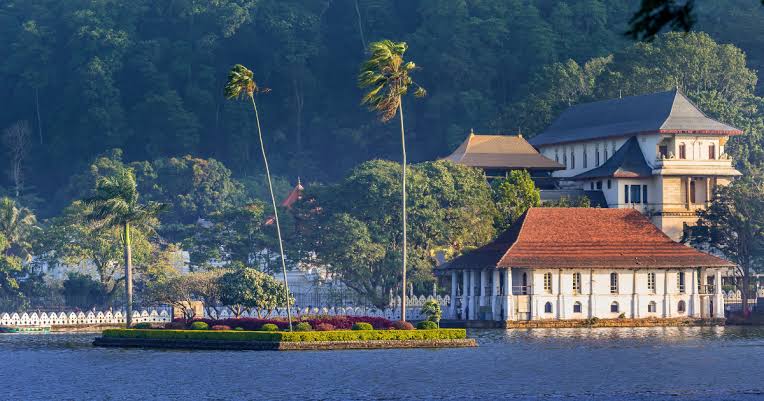
Kandy sits in a bowl of hills at around 500 meters, cool enough that the heat of the lowlands genuinely breaks by the time you arrive. It was the capital of the last independent Sinhalese kingdom, holding out against the Portuguese, the Dutch and finally the British until 1815, and the city still carries itself like the seat of something rather than just another stop on the itinerary. The lake at its center was dug by the final king in 1807; the Temple of the Sacred Tooth Relic on its shore is one of the most important Buddhist pilgrimage sites anywhere, not a museum piece dressed up for visitors.
Functionally, Kandy is the hinge of a Sri Lanka trip: the Cultural Triangle's ancient cities sit within day-trip range to the north, the tea-country hill towns climb away to the southeast, and Pinnawala's elephants and the Peradeniya gardens are both under an hour away. Two or three days here, based centrally, covers the city itself and sets up everything that follows.
The honest complications
Kandy's traffic is genuinely bad for a city its size, narrow colonial-era streets never built for the current volume of tuk-tuks and buses circling the lake. The temple complex draws large crowds, especially around the twice-daily puja ceremonies, and dress-code enforcement is real, so don't arrive in shorts expecting to talk your way in. Gem-shop and "free tour" scams cluster around the lake and the old town more than almost anywhere else in Sri Lanka outside Colombo. And as of this writing, the famous Kandy-Ella scenic train isn't running as a through service after Cyclone Ditwah's late-2025 damage to the hill country line, so don't build an itinerary around it without checking current status first.
A small city built around one lake
Kandy is compact enough that almost everything sits within walking distance of the lake, with a handful of hillside pockets that require transport. Where you base yourself comes down to whether you want to walk to the temple or wake up to a view over the whole valley.
Lakefront & Dalada Veediya
The streets circling Kandy Lake and running off Dalada Veediya hold the temple, the old market, most guesthouses and the bulk of the restaurants. This is the base for a first visit: everything worth an evening walk is within ten to fifteen minutes on foot, and it's the easiest spot to pick up a tuk-tuk for everywhere else.
Kundasale & the eastern hills
The higher ground east of the lake holds Kandy's resort-style hotels, set back from the traffic with views across the valley and toward the hills. Trade a short tuk-tuk ride for quiet and a pool; the temple and old town are still a manageable 15 to 20 minutes away.
Peradeniya
Home to the Royal Botanical Gardens and the University of Peradeniya, this quieter suburb southwest of the lake suits travelers who want to combine a garden visit with a calmer overnight base, at the cost of being slightly further from the old town's restaurants and nightlife, such as it is.
From colonial classics to hillside resorts
Kandy's accommodation runs from simple family guesthouses near the lake to full resort properties on the surrounding hills, with a solid boutique-heritage bracket in between. These picks cover the range and each earns its spot.
At the top of the market, Earl's Regency in Kundasale (from around $110) is Kandy's best-known five-star, 116 rooms designed around local craft and materials, a large pool and gardens, and enough distance from the center for genuine quiet. Theva Residency (from around $80), a smaller 15-room boutique property on elevated ground close to downtown, pairs panoramic valley views with a more intimate, design-forward feel and a genuinely warm staff.
In the heritage bracket, Queen's Hotel (from around $60), directly across from the Temple of the Tooth and trading on more than a century of history, puts you closer to the temple than anywhere else in the city, at the cost of some road noise. Amaya Hills (from around $90), built into the Hantana hillside above the city, adds serious valley views and is a favorite for sunset drinks even among travelers staying elsewhere.
At the value end, family-run guesthouses cluster on the streets just above the lake; expect $20-35 for a clean double room with breakfast and hosts who'll happily arrange a driver for Pinnawala or the Cultural Triangle. Book Kandy accommodation well ahead of the Esala Perahera (18-28 August 2026), when rooms fill and prices climb across every category.
Rice and curry the way it's actually eaten
Kandy's food scene is unpretentious and cheap: the city's best meals are lunch packets and kottu stalls, not restaurants trying to impress a tourist crowd. Most walkable options cluster along Dalada Veediya and the streets circling the lake.
Kandyan Muslim Hotel
Despite the name, a bustling local eatery rather than a hotel, doing kottu roti, biriyani and rice-and-curry that's fresh, fast and consistently good. A reliable, no-frills first stop for understanding what Kandy actually eats on a weekday.
Cafe The Vibe
A relaxed cafe serving generous rice-and-curry plates through the day alongside breakfast and Western options, popular with the backpacker crowd for its portion sizes and easy dine-in or takeaway setup.
Lakefront short eats
The stalls and small shops along the lake road do vadai, samosas and short eats through the afternoon and into the evening, the cheapest and most reliably tasty way to snack your way around the water.
A sacred relic, a colonial garden and a forest behind the temple
Kandy's sights are compact enough to cover on foot with a couple of short rides mixed in. A few need timing around ceremonies or opening hours, and this chapter walks through the city roughly the way a good two or three days would.
The Temple of the Sacred Tooth Relic
Sri Dalada Maligawa houses what Buddhist tradition holds to be one of the Buddha's teeth, making it one of the most important pilgrimage sites in the Buddhist world, not a historical curiosity. The complex is open 5:30am to 8pm with puja worship ceremonies at 5:30-7am, 9:30-11am and 6:30-8pm; entry runs LKR 2,500-3,000 (roughly $8-10) depending on nationality and covers the temple, the Dalada Museum, the World Buddhist Museum and the Royal Elephant Stable on the same grounds. Shoulders and knees must be covered and shoes removed; wraps are available at the entrance. Arrive for a puja ceremony rather than a quiet browse if you want to see the relic chamber opened and understand why the site matters as much as it does.
Kandy Lake & the old town
The lake was created in 1807 on the orders of Sri Wickrama Rajasinha, Kandy's last king, and the walking path around it makes for the city's best free evening: temple bells, monitor lizards along the bank, and views back toward the hills. The old town's market streets around Kandy City Centre and the Kataragama devale (a Hindu-Buddhist shrine complex a short walk from the temple) reward an unhurried wander.
Royal Botanical Gardens, Peradeniya
Roughly 5.5 kilometers from the center, 147 acres and over 4,000 plant species along the Mahaweli River, including an avenue of royal palms, an orchid house and a giant Javan fig tree whose canopy alone shades a small crowd. Give it two to three unhurried hours; a tuk-tuk from the lake costs a few dollars each way.
Udawattakele Forest Reserve
A forest reserve immediately behind the temple, once a royal reserve for Kandyan kings, now a quiet network of walking trails through tropical canopy with a resident troop of purple-faced langurs and prolific birdlife. Twenty minutes of walking from the temple gets you fully into forest; a genuinely easy way to add nature to a temple-and-museum day.
The Esala Perahera
Kandy's ten-night festival honoring the Sacred Tooth Relic, running 18-28 August in 2026: decorated elephants, traditional Kandyan dancers, drummers and fire performers process through the city each night, building from the smaller Kumbal Perahera (18-22 August) to the grand Randoli Perahera (23-27 August) and a closing water-cutting ceremony. If your trip lines up with it, book accommodation and a viewing spot on the route well in advance; if it doesn't, it's worth knowing the dates in case they shift your itinerary.
One, two or three days, planned around the temple's rhythm
Two full days covers Kandy properly; a third adds either the Cultural Triangle or a slower pace through the gardens and forest reserve.
- Morning
Temple of the Tooth. Arrive for the 9:30am puja, then the Dalada Museum and Royal Elephant Stable on the same ticket.
- Midday
Lunch and the lake. A rice-and-curry lunch packet from a nearby kade, then a walk around Kandy Lake.
- Afternoon
Peradeniya gardens. A tuk-tuk out to the Royal Botanical Gardens for two to three hours among the palms and orchids.
- Evening
Old town dinner. Kottu roti at a Dalada Veediya stall, then an early night if the puja crowds tired you out.
- Day 1
The one-day route: Temple of the Tooth, the lake, Peradeniya gardens, dinner in the old town.
- Day 2 morning
Pinnawala Elephant Orphanage. An early departure for the bathing ritual, roughly 90 minutes each way by car.
- Day 2 afternoon
Udawattakele forest walk. An easy loop through the reserve behind the temple, cooler and quieter than the city below.
- Day 2 evening
Sunset from the hills. A drink at a Kundasale or Hantana hillside hotel for the view over the valley.
- Days 1-2
The two-day route above, at a gentler pace, adding a slower morning at the Kataragama devale.
- Day 3, option A
Cultural Triangle day trip. Sigiriya and Dambulla in a single long day by private driver, back to Kandy by evening.
- Day 3, option B
Knuckles Range. A day hike into the cloud forest an hour from Kandy, far less visited than Ella's hills.
Compact enough to walk, with day trips a tuk-tuk away
Kandy's core sits comfortably within walking distance of itself; everywhere beyond the lake and old town needs a tuk-tuk, taxi or private driver. From Bandaranaike International Airport (CMB), a private taxi or driver takes about 2 hours 45 minutes and costs roughly $35-60 for up to four passengers; shared vans run cheaper at around $12-20 per person. Book a driver in advance through your hotel or a transfer service rather than negotiating with touts at arrivals.
Within the city, tuk-tuks are the standard way to reach Peradeniya, Pinnawala or the hillside hotels; agree the fare before getting in, or use the PickMe app for a metered price and to avoid the fare disputes that are Kandy's most common tourist annoyance. The lake and old town core are entirely walkable.
The Colombo-Kandy train, honestly assessed
Cyclone Ditwah damaged the Colombo-Kandy-Ella hill country railway at 223 separate locations in late 2025. As of this writing in August 2026, trains from Colombo still terminate at Rambukkana, roughly an hour short of Kandy, with the most geologically difficult remaining section, between Rambukkana and Kadugannawa, still under active repair. The Nanu Oya-Badulla section further along the line, covering Ella, reopened in June 2026, but the link connecting Kandy to that section has not. Full restoration is projected for late 2026 or early 2027. In practice, this means arriving in and leaving Kandy by road rather than by the scenic train most guides still describe as a given; check the Sri Lanka Railways site or a current local source before building a plan around it.
One of Sri Lanka's better-value bases
Kandy runs noticeably cheaper than the south coast beach towns and about on par with the rest of the hill country. The main cost variable is transport: day trips to Pinnawala or the Cultural Triangle add up fast if you're paying for a private driver each time rather than sharing one across multiple stops.
- Guesthouse room $20-30
- Kades and street food $3-8
- Tuk-tuks and shared transport
- Free lake walk plus one paid site
- Boutique hotel or heritage stay $60-110
- Restaurant meals $8-18
- Half-day private driver for day trips
- Temple entry, Peradeniya, Pinnawala
- Earl's Regency or equivalent
- Full-day private driver-guide
- Cultural Triangle day trip with guide
- Esala Perahera VIP viewing (August)
One of Sri Lanka's calmer cities, with two things to know
Kandy is a relatively low-crime, easygoing city by Sri Lankan standards, and it's a common base for families and solo travelers alike. The two things that actually catch visitors here are tuk-tuk fare disputes, where a driver skips agreeing a price upfront or claims a broken meter, and gem or "free tour" scams that cluster specifically around the lake and old town, where a friendly local offers a walking tour that reliably ends at a gem shop with a hard sell. Agree fares before getting in, use the PickMe app where possible, and politely decline unsolicited tour offers.
The temple crowds during puja times and the Esala Perahera in August are the other practical concern: not a safety issue so much as a crush of people, keep bags secured and valuables close, and expect slow movement rather than danger. Emergency numbers are the national ones: Police 119, Ambulance 110, Fire 111, Tourist Police 1912.
Kandy is the hinge the rest of the country swings on
Kandy's real value is how much sits within a day's reach: elephants, an ancient rock fortress and a mountain range most visitors never hear about are all under two hours away by road.
Pinnawala Elephant Orphanage
Established in 1975, home to the world's largest captive elephant herd, with a daily river bathing ritual around 10am and 2pm that's the highlight for most visitors. Combine it with the Peradeniya gardens on the way back for a full but manageable day.
Sigiriya & Dambulla
The rock fortress and cave temples that anchor Sri Lanka's Cultural Triangle are a genuine but doable long day trip from Kandy by private driver, leaving early to climb Sigiriya before the midday heat and crowds. See our full Sri Lanka country guide for the complete Cultural Triangle breakdown.
Knuckles Mountain Range
A UNESCO-listed range of jagged peaks and cloud forest, far less visited than Ella's hills and better suited to travelers who want a genuine trek with village homestays over a photo-stop hike.
Tea estates toward Hantana
The hills immediately south of Kandy hold working tea estates and small factories offering tours and tastings, a lower-key, closer alternative to a full Nuwara Eliya day trip if time is tight.
Kandy FAQ
Is Kandy safe for tourists?
Yes, Kandy is one of the safer, calmer cities in Sri Lanka. The main issues are tuk-tuk fare disputes and gem or free-tour scams around the lake and temple, not violent crime. Standard city awareness is enough.
How many days do I need in Kandy?
Two full days covers the city itself: one for the Temple of the Tooth, the lake and the old town, one for Peradeniya gardens and Pinnawala. A third day fits the Cultural Triangle or the Knuckles Range and is worth adding if you have it.
How much does Kandy cost per day?
Budget travelers manage on $25-35 a day with guesthouses and rice-and-curry meals; mid-range runs $50-90. Kandy is noticeably cheaper than the south coast beach towns.
Is the Kandy to Ella train running in 2026?
Not as a through service. Cyclone Ditwah damaged the hill country line in late 2025, and as of August 2026 trains from Colombo still terminate at Rambukkana, well short of Kandy. Full restoration is expected by late 2026 or early 2027; check current status before planning around it.
What is the best area to stay in Kandy?
Around the lake and Dalada Veediya for first-timers: central, walkable to the temple and old town restaurants. Kundasale and the hills above the city suit travelers who want a resort setting with views over the valley.
How do I get from Colombo Airport to Kandy?
A private taxi or driver takes about 2 hours 45 minutes and costs roughly $35-60. The direct train option is currently affected by the post-cyclone line disruption; buses and shared vans are the cheaper alternative at $12-20.
When is the Kandy Esala Perahera festival?
The 2026 festival runs 18-28 August, ten nights of elephant, dancer and fire-performer processions honoring the Sacred Tooth Relic. Book Kandy accommodation well ahead if your trip overlaps with it.
Do I need to dress modestly to visit the Temple of the Tooth?
Yes. Shoulders and knees must be covered and shoes removed before entering; wraps are available at the entrance for visitors who arrive underdressed.
Is Kandy walkable?
The lake, temple and old town core are walkable and compact. Peradeniya, Pinnawala and the hillside hotels above the city require a tuk-tuk, taxi or driver.
What Stays With You
Kandy doesn't perform for visitors the way some heritage cities do. The temple ceremonies happen because the relic inside genuinely matters to the people attending them, not because a schedule says so; the lake was dug by a king who needed a lake, not a photo opportunity; and the langurs in Udawattakele forest have never adjusted their routine for anyone's itinerary. Spend an evening walking the water with nowhere particular to be and the city's quieter case for itself, the one underneath the temple and the museums, starts to make sense.
Go for the Sacred Tooth Relic and the gardens, and let the cool hill air and the last king's lake talk you into staying a day longer than planned.