

What You're Actually Getting Into
China is not a destination. It is a continent with a single government. The country covers 9.6 million square kilometers, contains more UNESCO World Heritage Sites than any other nation, and operates on a scale that makes "seeing China" in two weeks about as meaningful as "seeing Europe" in the same time. What you can do in two weeks is see one region well: the Beijing-Xi'an-Shanghai circuit, or the Sichuan-Yunnan southwest, or the Pearl River Delta. Each is a serious journey through a civilizational layer cake that does not have a bottom.
The practical reality has changed significantly in the past decade. The high-speed rail network, now over 45,000 kilometers and still expanding, makes distances between major cities manageable: Beijing to Shanghai takes 4 hours 20 minutes. The food, always exceptional, is compounded by a restaurant culture that has elevated every regional tradition, and these are not tourist versions but the actual food Chinese people eat at prices Chinese people pay. What hasn't changed is the need to prepare for China's internet restrictions: Google, Gmail, WhatsApp, Instagram and YouTube are blocked, and installing a working VPN before you land is genuinely the most important pre-departure task, more important than anything physical you pack.
The honest complications
China is governed by the Chinese Communist Party under Xi Jinping, who has centralized political power to a degree not seen since the Mao era. Topics including Tibet, Xinjiang, Taiwan, the 1989 Tiananmen events and Hong Kong are genuinely sensitive and not casual conversation topics, and they don't reliably work as search terms even through a VPN. This isn't a reason to avoid the country, but it is a reason to arrive informed rather than expecting the open internet experience you're used to elsewhere. The language barrier is also more significant here than in most of East and Southeast Asia, since English penetration outside major tourist sites is still limited.
A History Worth Knowing
Chinese civilization has one of the oldest and most densely documented histories on earth. The foundational concept is the Mandate of Heaven, the idea that the right to rule was granted by heaven to a virtuous dynasty and withdrawn from a corrupt one, developed during the Zhou Dynasty, which also produced Confucius, Laozi's Taoism, and Sun Tzu's Art of War. The ideas Confucius articulated in the 5th century BCE about filial piety and social hierarchy still shape Chinese social behavior in observable ways today.
- 551-479 BCE
Confucius. The foundational thinker of Chinese civilization, whose system of social relationships and governance shapes Chinese society observably today.
- 221 BCE
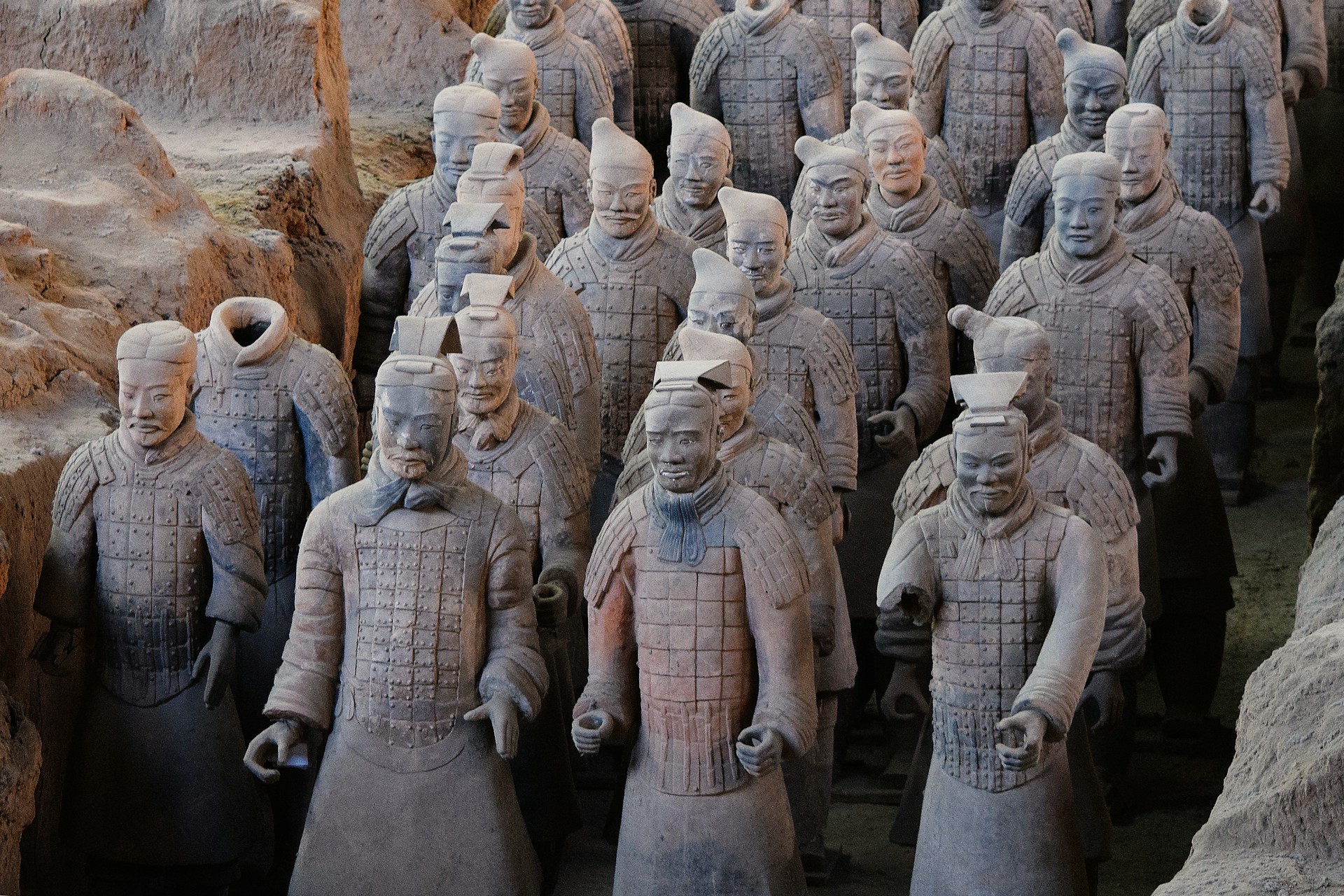
First Emperor unifies China. Qin Shi Huang creates the first unified Chinese empire, standardizes weights and writing, begins the Great Wall, and is buried with 8,000 terracotta warriors at Xi'an.
- 618-907 CE
Tang Dynasty. The cosmopolitan cultural peak of imperial China, the poetry of Du Fu and Li Bai, and the Silk Road at its height.
- 1406-1420
Forbidden City built. The Ming Emperor Yongle constructs 980 buildings across 720,000 square meters, the largest palace complex in the world.
- 1839-1912
Century of humiliation. The Opium Wars, foreign concessions and the collapse of the Qing Dynasty create the historical trauma that drives modern Chinese nationalism.
- 1949
People's Republic founded. Mao Zedong declares the People's Republic on 1 October, and the Communist Party has governed continuously since.
- 1978-today
Reform & rise. Deng Xiaoping's "opening up" policy launches four decades of extraordinary growth into the world's second-largest economy.
Read the full history: the dynasties, the Silk Road, and the Mao era
The Han Dynasty (206 BCE to 220 CE) established the template for Chinese imperial governance that persisted for two thousand years, a centralized state run by an emperor advised by a bureaucracy selected through competitive examinations, and the Silk Road trade routes that carried silk, porcelain and paper to Rome and Central Asia. The Song Dynasty that followed the Tang invented paper money, movable type and gunpowder applications in a burst of innovation that might have produced an industrial revolution five centuries early. The Mongol Yuan Dynasty (1271-1368) is the China Marco Polo visited, and the Ming Dynasty that expelled the Mongols built the Forbidden City and sent Zheng He's treasure fleets across the Indian Ocean before abruptly turning inward.
The Qing Dynasty (1644-1912), established by the Manchu people, was the last imperial dynasty, and its decline at the hands of European imperialism and internal rebellion created the "century of humiliation" narrative running from the Opium Wars of 1839-1860 to the founding of the People's Republic in 1949. The Mao period included the catastrophic Great Leap Forward (1958-1962), whose associated famine killed an estimated 15 to 45 million people, and the Cultural Revolution (1966-1976), which closed universities and destroyed temples and artworks. Mao's death in 1976 led to Deng Xiaoping's reform era, which transformed China into the world's second-largest economy within four decades, while the current leadership under Xi Jinping has since 2012 reversed several elements of the reform era's political liberalization while maintaining the economic model.
Top Destinations
China's sheer size makes destination selection more consequential here than in almost any other country. Most first-time visitors focus on the northern and eastern circuit, Beijing, Xi'an, Shanghai, and miss the extraordinary southwest. If you have three weeks, seriously consider spending one of them in Yunnan or Sichuan.
Beijing, the imperial capital
Beijing has been China's capital, more or less continuously, for 700 years, and the physical record is unparalleled anywhere. The Forbidden City, the 180-hectare palace complex, was home to twenty-four emperors and is still the largest palace complex on earth; spend a full day, not a rushed morning. The Temple of Heaven, where emperors performed the rituals that maintained cosmic order, is surrounded by a park where elderly Beijingers practice tai chi and sing opera at dawn. For the Great Wall, skip Badaling's theme-park crowds: Mutianyu offers a well-restored but calmer section, and Jinshanling gives a genuinely wild two-to-three-hour hike across mountain ridges with almost no one else on it.
Xi'an & the Terracotta Warriors
Xi'an was China's capital for ten dynasties and the eastern terminus of the ancient Silk Road. The Muslim Quarter, built around a 7th-century Great Mosque by Arab and Persian traders who came east and stayed, is the most atmospheric eating district in western China. The Terracotta Warriors, 35 kilometers east at the tomb of the First Emperor, are one of the greatest archaeological discoveries of the 20th century, three vaults holding an estimated 8,000 individually modeled soldiers, discovered by farmers digging a well in 1974. Arrive at opening, hire a licensed guide for the first pit, and give it four hours.
Shanghai, the global city
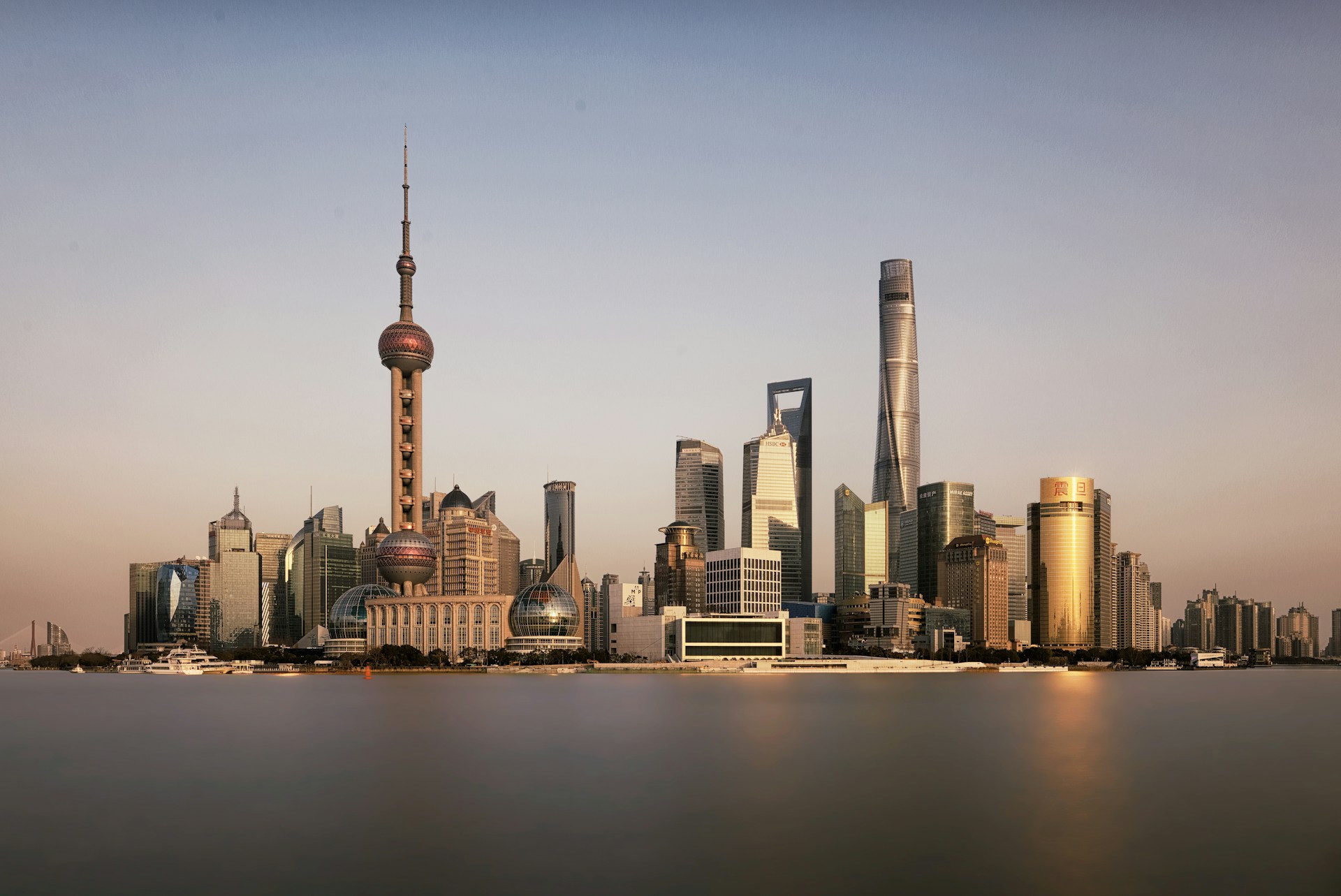
The most cosmopolitan and immediately comprehensible major Chinese city for Western visitors, absorbing foreign influence since the treaty port concessions of the 1840s. The Bund, the former concession waterfront facing the Pudong skyline across the Huangpu River, is one of the great urban panoramas in Asia. The French Concession's plane-tree-lined streets and restored shikumen houses now hold wine bars and design boutiques, and the view from the Shanghai Tower, the second tallest building in the world, at night is worth the ticket.
Chengdu, the spicy capital
Chengdu is the capital of Sichuan Province and the most relaxed major city in China, where residents linger over tea for hours and eat hot pot at midnight with studied calm. The Chengdu Research Base of Giant Panda Breeding, the world's most accessible site for observing pandas, is best visited at 8am before the tour buses arrive and the pandas are most active. The Jinsha Site Museum holds Sanxingdui bronze and jade artifacts that challenge assumptions about ancient China, and the evenings belong to Sichuan hot pot, ideally at a restaurant with no English menu.
Guilin, Yangshuo & Zhangjiajie
The karst limestone peaks rising from the Li River between Guilin and Yangshuo are the landscape on the back of the 20 yuan note: columns of green rock, mist between peaks, river reflections. The 83-kilometer Li River cruise from Guilin to Yangshuo, four hours by boat, remains more beautiful than any photograph manages. Zhangjiajie in Hunan, where sandstone pillars provided the visual reference for Avatar's floating mountains, is a day's travel away and equally extraordinary in a completely different register.
Lijiang & Yunnan Province
Yunnan borders Myanmar, Laos and Vietnam and compresses extraordinary landscape and ethnic diversity into a single province. Lijiang's UNESCO-listed old town at 2,400 meters is best visited before the shops open, before the crowd density makes moving through the lanes difficult. Tiger Leaping Gorge, a two-day hiking trail between the Jade Dragon Snow Mountain and Haba Mountain, is one of the best treks in China.
Huangshan, the Yellow Mountain
Huangshan in Anhui Province shaped the entire tradition of Chinese landscape painting: twisted pines from vertical granite cliffs, seas of clouds filling the valleys. Take a cable car up the afternoon before, stay at a summit hotel (book months ahead for peak season), wake before dawn for the sea of clouds, and descend by the eastern steps. The surrounding Huizhou villages are the best-preserved Ming and Qing merchant architecture in China.
Dunhuang & the Silk Road
Dunhuang, an oasis town at the western edge of the Gobi, was for a thousand years where the northern and southern Silk Roads converged. The Mogao Caves, 492 cave temples carved into a cliff over a thousand years, hold the world's most significant collection of Buddhist mural painting. Dunhuang requires a flight from Beijing or Xi'an and rewards the remoteness completely.
Culture & Etiquette
Chinese social behavior is shaped by a Confucian framework valuing hierarchy, face (mianzi) and the obligations of reciprocal relationship (guanxi), which can seem opaque to visitors from cultures that emphasize individual directness. Causing someone to lose face in public, embarrassing them or refusing hospitality dismissively, creates a social debt that lingers; accepting hospitality graciously and recognizing someone's status generates real goodwill in return.
Do
- Use a few Mandarin phrases. Nǐ hǎo (hello), xièxie (thank you), duìbuqǐ (excuse me) go further than expected where English penetration outside the tourist circuit is limited.
- Accept food and drink when offered. Being offered tea or baijiu by a host is a genuine act of welcome; accepting at least initially is the appropriate response, and leaving your teacup slightly full moderates continuous refilling.
- Set up WeChat Pay or Alipay. Both now accept international bank cards, and mobile payment removes real friction since many vendors prefer or exclusively accept QR code payment.
- Dress modestly at temples. Shoulders covered and no shorts at Buddhist, Taoist and Confucian sites; a light layer in your day bag covers it.
- Book popular sites well ahead. The Forbidden City, Terracotta Warriors, Mogao Caves and Huangshan summit hotels can sell out weeks or months ahead in peak season.
Don't
- Discuss sensitive political topics publicly. Tibet, Xinjiang, Taiwan, 1989, and criticism of the CCP carry real risk in public conversation or social media posts, in any country where the political system differs from your own, discretion is the sensible default.
- Expect Western apps to work. Google Maps, WhatsApp, Instagram and YouTube need a VPN. Apple Maps and Amap's English interface work without one.
- Touch religious artifacts or climb on ancient structures. Prohibited at every major heritage site regardless of what other visitors are doing, and cumulative damage from touching is irreversible.
- Stick chopsticks vertically in rice. It resembles funerary incense and is considered very bad luck; lay them across the bowl instead, and never pass food chopstick to chopstick.
- Assume English menus exist locally. Restaurants where locals actually eat usually don't have them; use a translation app's camera function or point at what nearby tables are eating.
Deeper culture: tea, Chinese New Year, and the Golden Week problem
Tea culture. The gongfu cha ceremony, practiced across the country and especially in Fujian and Guangdong, involves a precise sequence of heating, rinsing and brewing that produces successive infusions from the same leaves. A good teahouse organizes dozens of varieties by region and harvest season; an afternoon in a Chengdu teahouse with Sichuan Mengding Ganlu green tea is a genuinely excellent way to spend a few hours.
Chinese New Year is the world's largest annual human migration, roughly 400 million people traveling home over two weeks. For visitors this means transport booked out months ahead and many businesses closed, alongside fireworks, red lanterns and lion dances that transform every city.
The Golden Week problem: the Spring Festival week and National Day week (1-7 October) generate enormous domestic tourism. The photos of the Great Wall crowded until the ramparts vanish are from Golden Week. Avoid these dates at any famous site, or accept the crowd as part of the experience.
Food & Drink
Chinese food is not a single cuisine. The Eight Great Culinary Traditions are as different from each other as Italian food is from French: Sichuan's numbing heat from huājiāo peppercorn, Cantonese restraint built on exceptionally fresh ingredients, Shanghainese sweetness. The practical advice: eat where Chinese people eat. A handwritten Chinese-only menu with a queue of locals outside almost always beats a restaurant with photos and English translation.
Peking Duck ~¥300
Northern China's signature dish: a duck inflated between skin and flesh, dried 24-48 hours, roasted over fruit wood until the skin shatters at a touch. Served carved tableside in thin pancakes with scallion and sweet bean paste. A ceremonial two-hour meal, not a quick dinner.
Xiaolongbao
Shanghai's soup dumplings: thin-skinned pockets filled with pork and gelatin that melts to broth while steaming. Bite a small hole, let the soup cool slightly, then eat the whole thing before it collapses. The hairy crab version, available only in autumn, is the pinnacle of the form.
Sichuan Hot Pot
A split pot, clear broth on one side, chili-and-peppercorn oil on the other, for dipping thinly sliced meat, vegetables and tofu. The combination of numbing and spicy makes it the most social and physiologically interesting eating experience in China. Do it properly, at a busy local restaurant, for at least two hours.
Regional Noodles ¥15-20
Lanzhou hand-pulled beef noodles, Chongqing xiao mian, Xi'an biangbiang noodles, Wuhan's re gan mian: each an argument about what a noodle should be, and each correct in its own province.
Dim Sum
The Cantonese yum cha tradition: tiered bamboo steamers of har gow, siu mai, cheung fun and char siu bao arriving continuously over chrysanthemum or pu-erh tea. Best in Guangzhou, Hong Kong, or a serious Cantonese restaurant elsewhere, and specific to the morning hours.
Baijiu & Tea
China's national spirit, distilled from sorghum in dozens of regional styles; Moutai is the most prestigious variety, poured at state banquets. Substituting green tea for baijiu at toasts is accepted with a polite explanation.
When to Go & Itineraries
China's climate varies as dramatically as its geography. The single most useful timing rule: avoid the two Golden Week holidays (Spring Festival, and 1-7 October) at any famous site, since the crowds during these periods aren't manageable in the normal sense of the word.
All four seasons compared, with temperatures
| Season | Verdict | Temps (Beijing) | Prices & crowds |
|---|---|---|---|
| Sep-Oct (avoid Oct 1-7) | Best | 10-22°C | Normal pricing, busy outside Golden Week |
| Apr-May | Best | 12-24°C | Normal pricing, moderate crowds |
| Dec-Feb | Good, quiet | -5 to 3°C | Low prices, quiet outside Spring Festival |
| Jun-Aug | Think twice | 28-38°C | Peak prices, most tourists, poor air quality risk |
Shanghai runs about 5°C warmer than Beijing; Yunnan (Kunming) stays a famously mild 10-22°C year-round; Harbin in the north reaches -20°C in January.
Itineraries
Three weeks is the realistic minimum for a meaningful trip. Two weeks is possible but forces a choice between the north and the southwest; trying to do both makes every day a transit day.
- Days 1-4
Beijing. Hutong lanes and the Drum Tower, a full Forbidden City day, Temple of Heaven at dawn and Summer Palace, then Jinshanling Wall for a full-day hike.
- Days 5-7
Xi'an. Terracotta Warriors with a licensed guide, the Muslim Quarter, the Shaanxi History Museum, then night train or HSR to Shanghai.
- Days 8-11
Shanghai. The Bund, Yuyuan Garden, French Concession, a Zhujiajiao water town day trip, and the Shanghai Tower observation deck.
- Days 1-5
Beijing in depth. Mutianyu and Jinshanling both, the National Museum, the 798 Art District, and a neighborhood hutong food tour.
- Days 6-8
Xi'an. High-speed rail from Beijing, the Terracotta Warriors area plus the Hanyangling Mausoleum, and the Muslim Quarter at every meal.
- Days 9-11
Chengdu. The Panda Base at arrival, a teahouse afternoon, Sichuan opera, and a day trip to the Leshan Giant Buddha.
- Days 12-14
Guilin & Yangshuo. The Li River cruise, then cycling through the karst valley the standard tour doesn't reach.
- Days 1-3
Chengdu base. The Panda Base, two evenings of hot pot at different restaurants, a Dujiangyan irrigation system day trip, Sichuan opera.
- Days 4-8
Yunnan: Lijiang & Tiger Leaping Gorge. Two days in Lijiang old town before 9am and after 6pm, then two days hiking the gorge's upper trail.
- Days 9-12
Dali & Bai villages. The Erhai Lake cycle, the Cangshan cable car, and the tie-dye workshops of Zhoucheng village.
- Days 13-21
Shanghai & Huangshan. Three days in Shanghai, then Huangshan for the sunrise sea of clouds, and Hangzhou's West Lake before the flight home.
Getting there & around
China's high-speed rail network is the single most transformative piece of infrastructure for travelers here: over 45,000 kilometers, trains running 300-350 km/h, punctual to the minute, and bookable in English through Trip.com. If the train goes there, take the train; domestic flights are only worth it for routes the HSR doesn't cover (Yunnan, Tibet, Xinjiang) or where the train would exceed eight hours.
All transport options with prices: HSR, flights, metro, Didi
| Option | Price | Notes |
|---|---|---|
| High-speed rail | ¥200-600 | Beijing-Shanghai: ¥553, 4h20. Book through Trip.com or 12306.cn; a week ahead normally, months ahead for Golden Week. Passport required at the gate. |
| Domestic flights | ¥300-800 | For routes the HSR doesn't cover. Tibet flights require the Tibet Tourism Bureau permit in addition to your visa. |
| City metro | ¥2-8/trip | Fast, cheap, English signage in every major city. Avoid peak hours (7:30-9am, 5:30-7pm) on busy lines. |
| Didi (ride-hailing) | ¥15-40/trip | The Chinese Uber equivalent, far more reliable than hailing a taxi. Requires a Chinese phone number, so get a local SIM at the airport first. |
Practical prep: install and test a VPN (ExpressVPN, Astrill or NordVPN) before you land, since most VPN apps can't be downloaded from within China. Buy a Chinese SIM at the airport arrivals hall (¥50-100 for 30 days, passport required) for a local number and data. Set up WeChat Pay or Alipay with an international card before departure; both now support this for foreign visitors. GetTransfer offers fixed-price pickups from Beijing, Shanghai and Chengdu airports.
Where to stay
Luxury hotel
The Aman Summer Palace in Beijing, occupying buildings within the actual Summer Palace grounds, is one of the most extraordinary hotel locations in the world. Huangshan's summit hotels book out months ahead in season for their irreplaceable location above the clouds.
Boutique hutong hotel
A converted historic courtyard residence in Beijing's hutong lanes is the most distinctly Chinese accommodation experience available, small, quiet and architecturally intimate.
Business hotel
Domestic chains (Atour, Citadines, JI Hotel) offer consistently reliable quality at mid-range prices: clean rooms, buffet breakfast, good Wi-Fi, and central locations.
Budget guesthouse
Budget accommodation in major cities has improved significantly; Leo Hostel in Beijing and family guesthouses in Yangshuo and Lijiang provide the most atmospheric budget stays.
Foreign nationals must stay in hotels registered to accept foreigners; most international brands and Booking.com/Agoda listings confirm this, but budget guesthouses in remote areas sometimes can't, so confirm before booking.
Budget Planning
China's cost structure is different from what most visitors expect: cheaper than Japan but more expensive than Southeast Asia, with a significant gap between tourist-facing prices and what Chinese people pay for the same things. Food in particular is extraordinary value: a proper bowl of noodles at a local restaurant costs ¥15-20.
- Budget hostel or guesthouse
- Local noodle shops and street food
- Metro and occasional Didi
- HSR second class tickets
- Business hotel or boutique guesthouse
- Good local restaurants, occasional splurge
- HSR first class on longer routes
- Guided tours for complex sites
- International five-star hotel
- Fine dining, Peking duck, high-end dim sum
- Private driver for heritage site days
- Private guide at major archaeological sites
Quick reference prices: noodles, HSR tickets, entry fees
| Street noodle bowl | ¥15-20 |
| Restaurant meal, mid-range | ¥60-120/person |
| Peking duck dinner, per person | ¥200-350 |
| Metro trip | ¥2-8 |
| Beijing-Shanghai HSR, 2nd class | ¥553 |
| Forbidden City entry | ¥60 |
| Terracotta Warriors entry | ¥120 |
| Budget guesthouse | ¥100-200/night |
| Business hotel | ¥400-800/night |
Prices reflect July 2026 research and drift over time. Treat them as a planning baseline, not a quote.
Visa & Entry
China's visa-free program has expanded rapidly and now covers most of Europe, Australia, New Zealand, Japan, South Korea, and, since 17 February 2026, the UK and Canada, whose ordinary passport holders can enter visa-free for up to 30 days through 31 December 2026. The US remains excluded as of mid-2026: US citizens need a standard L visa, or can use the 240-hour transit exemption if their itinerary connects onward to a third country. Policy keeps evolving, so verify current status for your specific passport at the Chinese Ministry of Foreign Affairs website before booking anything.
✓ Valid passport
At least 6 months validity beyond your intended departure, with at least two blank pages.
✓ Visa or verified visa-free status
Apply at a Chinese embassy or visa service centre at least four weeks ahead if a visa is required, or confirm your nationality's current visa-free status at mfa.gov.cn.
✓ Hotel bookings or invitation letter
Required for visa applications, showing confirmed accommodation for the full stay; Booking.com or Agoda confirmations are accepted.
✓ Register within 24 hours
All visitors must register with local police within 24 hours of arrival; hotels do this automatically at check-in.
| China | Japan | |
|---|---|---|
| Daily budget | ¥250-400 covers a comfortable budget trip | Noticeably pricier for comparable quality |
| Rail travel | The world's largest HSR network, 45,000km and growing | The Shinkansen, older but famously reliable |
| Internet access | VPN required for Google, WhatsApp, most Western apps | Open internet, no VPN needed |
| Historical depth | 5,000 years, Great Wall to the Forbidden City | Deep but more compact, temples to modern Tokyo |
| Visa (UK/Canada/EU) | Visa-free 30 days as of 2026 | Visa-free, longstanding |
Safety, Solo Women & Family
China is one of the physically safest countries in the world for foreign visitors by any crime metric. Violent crime against tourists is essentially nonexistent, and petty theft is uncommon by regional standards. The real considerations are traffic, food and water safety, and the legal and political risks tied to the country's governance system, not personal crime.
Traffic
Pedestrian crossings aren't reliably observed even on green signals, and vehicles turning right on red are a particular hazard. Look both ways, wait for a crowd of locals before crossing, and don't assume the signal gives you priority.
Political sensitivity
Activities unremarkable at home, social media posts critical of the government, participating in protests, can have serious legal consequences here. Exercise the same discretion you would in any country where the political system works differently from your own.
Air quality
Northern cities, especially Beijing, can reach unhealthy AQI levels during winter and early spring stagnation. The AQI China app gives real-time readings; limit outdoor activity above AQI 150.
Solo women and healthcare
Solo women find China one of the safer countries in Asia to travel alone in; sexual harassment is less prevalent in public spaces than in many destinations. Using Didi rather than hailing unregistered taxis alone at night, and avoiding poorly lit areas in smaller cities late in the evening, covers the main precautions.
Healthcare: international hospitals in Beijing (Beijing United Family, +86-10-5927-7000) and Shanghai (Shanghai International Medical Centre, +86-21-6068-5000) provide English-language care at Western standards. Public hospitals are functional but require Mandarin navigation. Travel insurance covering both hospital care and evacuation is essential.
Emergency numbers
Embassies in Beijing and medical emergency protocol
Most major Western embassies sit in Beijing's Chaoyang District embassy quarter, with consulates also in Shanghai, Guangzhou, Chengdu and Shenyang.
- USA (Beijing)
- +86-10-8531-3000
- UK (Beijing)
- +86-10-5192-4000
- Australia (Beijing)
- +86-10-5140-4111
- Canada (Beijing)
- +86-10-5139-4000
- Germany (Beijing)
- +86-10-8532-9000
- France (Beijing)
- +86-10-8531-2000
- Netherlands (Beijing)
- +86-10-8532-0200
- New Zealand (Beijing)
- +86-10-8531-2700
Medical emergencies: save the nearest international hospital's number before leaving each city. For emergencies outside major cities, call your travel insurance emergency line first, since they have faster access to English-speaking medical coordination than the 120 ambulance line, which may route you to a hospital requiring Mandarin navigation.
Family travel & pets
China is a rewarding family destination for children old enough to engage with its scale and history. Chinese culture reveres children, and families often receive a warmth from locals that solo travelers don't experience the same way. The Chengdu panda base is a universal hit at any age, the high-speed trains are an attraction in themselves, and Shanghai's international infrastructure makes it an easier first stop with children than most other Chinese cities.
The Great Wall with kids, food for children, and bringing pets
The Great Wall at Mutianyu is the family-appropriate section: a cable car up, a well-maintained walkable stretch, and a toboggan ride down that children aged five to fifteen consistently rate as a trip highlight. Food for kids is easier than expected: rice with mild stir-fried vegetables, steamed dumplings and noodle soups are available everywhere, though Sichuan and Hunan dishes carry real chili heat even when marked mild.
Pets: bringing pets to China for a tourist visit is bureaucratically complex, requiring an ISO microchip, an endorsed rabies certificate, a health certificate issued within 10 days, and an import permit from Chinese customs obtained before departure, with quarantine inspection at ports of entry. High-speed rail doesn't permit pets in the cabin. The practical recommendation for a tourist visit is to arrange pet care at home rather than bring one along.
China FAQ
Is China safe to visit?
Yes, one of the physically safest countries in the world for tourists. Violent crime against visitors is essentially nonexistent. The real considerations are political sensitivity around certain topics, traffic, and air quality in northern cities, not crime.
Do US citizens need a visa for China?
Yes, as of mid-2026 the US remains excluded from China's unilateral visa-free program. US citizens need a standard tourist (L) visa, or can use the 240-hour transit exemption if their itinerary connects onward to a third country.
Do UK and Canadian citizens need a visa for China?
No. China added UK and Canadian ordinary passport holders to its unilateral 30-day visa-free list on 17 February 2026, following visits from both countries' leaders in January 2026, and this policy runs through the end of 2026.
How many days do you need in China?
Three weeks is the realistic minimum for a meaningful trip. Two weeks is possible but forces a choice between the north (Beijing, Xi'an, Shanghai) and the southwest (Sichuan, Yunnan); trying to cover both makes every day a transit day.
Do I need a VPN in China?
Yes. Google, Gmail, WhatsApp, Instagram, Facebook and YouTube are blocked by the Great Firewall, and most VPN apps can't be downloaded from within China, so installing and testing one before departure is the single most important pre-trip task.
What is the best time to visit China?
Autumn (September to early October, avoiding the October 1-7 Golden Week) and spring (April-May) offer the best weather across most of the country. Summer is hot and crowded, winter is cold in the north but dramatically quieter.
Is the Great Wall worth visiting at Badaling?
Not particularly. Badaling is the most touristed section, easy to reach but crowded. Mutianyu offers a well-restored but calmer alternative, and Jinshanling gives a genuinely wild, largely unrestored two-to-three-hour hike with far fewer people.
How much does a trip to China cost per day?
Budget travelers manage on around ¥250-400 a day (roughly $35-55), mid-range travelers on ¥600-1,200, and food in particular is exceptional value, with a proper bowl of local noodles costing ¥15-20.
Can I use Google Maps in China?
Not without a VPN. Apple Maps works without one, and the local alternatives Baidu Maps and Amap (which has an English interface) are the standard workarounds most visitors use instead.
Do I need a permit to visit Tibet?
Yes. Visiting the Tibet Autonomous Region requires a Tibet Tourism Bureau permit in addition to a standard China visa, arranged through a licensed Tibetan tour operator, and independent travel without a guide is not permitted.
Is China good for families with kids?
Yes. The Chengdu panda base is a universal hit with children of any age, the high-speed trains are an attraction in themselves, and Chinese culture generally treats children with warmth, though the scale and pace of a China trip require realistic planning.
The Country That Runs on Two Clocks
China operates on a single time zone, UTC+8, applied uniformly from the Korean border to the Xinjiang border 5,000 kilometers west, which means that in Kashgar the sun rises at what the clock calls 9am and sets at what the clock calls midnight. The country runs on two clocks simultaneously: official clock time, mandated by Beijing, and solar time, which the far west observes informally in daily life because it fits the actual sun. It's a small thing, and also a precise metaphor for traveling here: one face for the official record, and a more complicated reality that reveals itself to visitors who pay attention.
The most accurate thing you can say about China after a first visit is that it's larger than you thought, not in the geographical sense you already knew, but in the civilizational sense that takes a while to sink in: the depth of the historical record, the range of the landscapes, the quality of the railway, the warmth of individual people within a system that isn't warm in the institutional sense. Bring your VPN, book tickets months early, and arrive willing to have your existing mental model of the country revised by the actual country.