
Tanzania
The Serengeti. The Ngorongoro Crater. The summit of Kilimanjaro above the clouds. And then, two days later, spice markets in a Swahili stone town and the Indian Ocean warm enough to swim in at night. Tanzania doesn't give you one trip. It gives you three.
What You're Actually Getting Into
Tanzania sits in the position of being simultaneously one of the most visited countries in Africa and one of the least understood by the people visiting it. Most people come for the Serengeti and Kilimanjaro, see what they came to see, and leave via Zanzibar having formed an impression of Tanzania as a wildlife-and-beach destination with a charming old town in the middle. That impression is not wrong. It is approximately 20% of what Tanzania actually is.
The Serengeti alone is larger than Switzerland. The Ngorongoro Crater contains the highest density of lion on the continent in a self-enclosed ecosystem that has no equivalent anywhere on earth — 25,000 large animals in a volcanic caldera with walls 600 metres high. Tarangire National Park in the dry season fills with the largest elephant herds you are likely to see in your lifetime. Ruaha and Katavi, in the remote south and west, have almost no tourist infrastructure and produce wildlife encounters that the busy northern circuit never can. Mahale Mountains National Park on the shore of Lake Tanganyika has the world's most researched wild chimpanzee community, accessible only by boat, in a setting of such absurd beauty that photographs of it tend to look like they've been processed.
The comparison with Kenya is unavoidable because the two countries share the same wildlife ecosystem and many visitors choose between them. Tanzania is more expensive for safari — park fees are higher, self-drive is not permitted in the Serengeti, and the quality expectations at the high end are extremely high. What Tanzania delivers for that investment is a higher degree of exclusivity and control than Kenya's Mara (no self-drive vehicles causing traffic jams at predator sightings), and landscapes — the Serengeti's southern plains, the Ngorongoro rim, the Crater floor — that have no equivalent on the Kenyan side of the border.
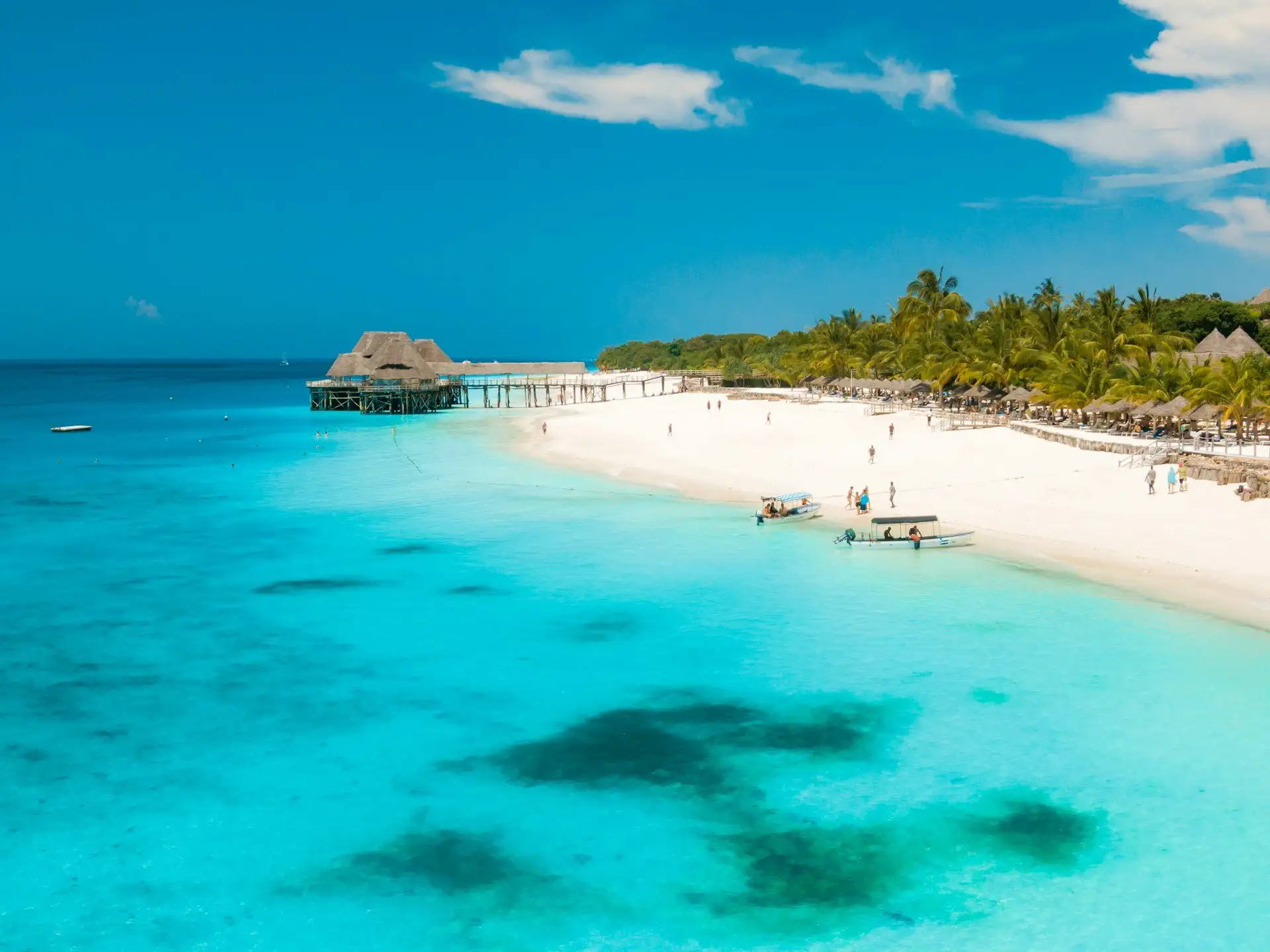
Zanzibar deserves its own sentence: it is one of the world's best three-to-four-night add-ons to any safari. Stone Town's UNESCO-listed alley network, the spice markets, the Indian Ocean reefs, the food — and the particular quality of light in the late afternoon on the western coast — all make for an ending to a Tanzania trip that feels like a second journey rather than an appendix to the first.
Tanzania at a Glance
A History Worth Knowing
The Olduvai Gorge in Tanzania's Rift Valley is one of the most important paleoanthropological sites in the world. Louis and Mary Leakey worked here for decades from the 1930s onwards, discovering fossils of Homo habilis, Homo erectus, and the 3.6-million-year-old Laetoli footprints — the oldest known footprints of an upright-walking human ancestor, preserved in volcanic ash 45km south of the gorge. Tanzania, like Kenya, is not just in the vicinity of the human story. It is, in a meaningful sense, where it began.
Zanzibar's history begins with Arab traders who established a presence on the island from at least the 10th century, using it as a waystation in the Indian Ocean trade network that connected East Africa with the Persian Gulf, India, and China. The Swahili culture that developed along this coast — as on the Kenyan side — was a synthesis of Bantu African and Arab Islamic traditions that produced a distinct architecture, language, and cultural identity. Zanzibar's Stone Town is the physical record of this synthesis, its coral-stone buildings and elaborately carved wooden doors a direct continuation of a tradition that has been operating for over a thousand years.
The Omani Sultan Seyyid Said moved his capital from Muscat to Zanzibar in 1840, recognizing its commercial importance. Under Omani control, Zanzibar became the world's largest clove producer and the hub of the East African slave trade, through which an estimated 50,000 enslaved people passed annually at the trade's peak. The old slave market in Stone Town — now the site of Christ Church Cathedral, built in 1873 by the Anglican Church specifically to mark the abolition of the slave trade — is one of the most historically significant sites in East Africa.
German East Africa — the colonial territory that would become mainland Tanzania — was established in 1885, with the infamous Berlin Conference carving up East Africa among European powers without consulting the people who lived there. The Maji Maji Rebellion of 1905–1907 was the largest and most significant African uprising against German colonial rule: warriors from dozens of different ethnic communities, united by the belief (encouraged by a spiritual leader named Kinjikitile) that a sacred water (maji) would protect them from German bullets. It didn't. German forces killed an estimated 200,000 to 300,000 people in suppressing the rebellion, largely through a scorched-earth policy that created famine. The rebellion failed militarily but demonstrated a capacity for cross-ethnic resistance that would later fuel the independence movement.
After World War I, Britain took control of Tanganyika (mainland Tanzania) as a League of Nations mandate. Julius Nyerere, a schoolteacher who became the dominant figure of Tanzanian nationalism, led the country to independence in 1961. Nyerere's philosophy of Ujamaa — African socialism, communal self-reliance — drove Tanzania's post-independence development policy. The forced villagization program of the 1970s, which moved millions of rural Tanzanians into collective villages, was one of the largest peacetime population movements in African history and was widely seen as a failure economically, even as Nyerere's personal integrity and commitment to pan-African solidarity remained respected. Tanzania and Zanzibar merged in 1964 to form the United Republic of Tanzania — a union whose terms still generate political tension on the islands.
Modern Tanzania has been one of Africa's more politically stable countries, with a multi-party democracy that has functioned without the kind of post-election violence that has periodically destabilized neighbors. President Samia Suluhu Hassan, who assumed office in 2021 following the death of John Magufuli, became the first female head of state in Tanzanian history and has pursued more open engagement with international institutions than her predecessor. Tourism is Tanzania's largest foreign exchange earner and the wildlife conservation system — which encompasses over 38% of Tanzania's land area in national parks, reserves, and conservation areas — is among the most extensive in the world.
Oldest known footprints of an upright-walking human ancestor. Discovered in volcanic ash near Olduvai Gorge.
Arab traders establish Zanzibar and other Indian Ocean trading posts. Swahili culture and language emerge.
Sultan Seyyid Said makes Zanzibar the commercial center of the Indian Ocean. Slave trade and clove production peak.
Berlin Conference. Germany establishes colonial control of mainland Tanzania without African consultation.
Largest East African uprising against colonial rule. German scorched-earth response kills 200,000–300,000.
Tanganyika independent in 1961 under Julius Nyerere. Merges with Zanzibar in 1964 to form Tanzania.
Nyerere announces African socialist policy. Forced villagization follows. Mixed legacy — economic failure, moral integrity.
First female head of state in Tanzanian history. More open international engagement. Tourism remains the largest foreign exchange earner.
Top Destinations
Tanzania divides naturally into the northern circuit (Serengeti, Ngorongoro, Tarangire, Arusha as a base), the southern circuit (Ruaha, Selous/Nyerere), the western parks (Mahale, Katavi, Gombe), and the islands (Zanzibar, Pemba, Mafia). Most first-time visitors do the northern circuit, often combining with a Kilimanjaro trek and Zanzibar. The southern circuit is for returning visitors or those who specifically want an off-the-beaten-track experience. The western parks are for a small group of visitors who understand what they're committing to: long journeys, limited infrastructure, and wildlife encounters that almost nobody else will ever have.
Serengeti National Park
The Serengeti is not a place — it is an ecosystem, and understanding that changes how you plan for it. The Great Migration of 1.5 million wildebeest and 250,000 zebra moves clockwise through the system following the rains: south for calving (December to March in the Ndutu area), north for the Grumeti and Mara river crossings (June to October in the northern Serengeti). There is no season when the Serengeti doesn't have extraordinary wildlife — the southern plains in calving season, when thousands of calves are born within days of each other with predators everywhere, is as spectacular in its way as the river crossings. Self-drive is not permitted; all drives require a licensed guide. Five nights minimum across the Serengeti gives you time to follow the animals rather than just catch a glimpse and leave.
Ngorongoro Conservation Area
The Ngorongoro Crater is the world's largest intact volcanic caldera — 260 square kilometres of floor enclosed by walls rising 600 metres. Inside it lives a self-contained ecosystem of approximately 25,000 large animals that are largely non-migratory because the crater provides everything they need year-round. The lion density here is the highest in Africa. Black rhino — increasingly rare elsewhere — can be found with patience. Elephant bulls visit but the breeding herds mostly stay outside the crater. You descend the rim wall in the morning and must be out by 6pm. What happens between those hours depends on what the animals decide to do, but the probability of extraordinary encounters here is higher than almost anywhere else in Africa.
Mount Kilimanjaro
Africa's highest peak and the world's highest freestanding mountain at 5,895 metres. What makes Kilimanjaro unusual among high peaks is that it requires no technical climbing — no ropes, no crampons, no ice axes — just altitude acclimatization and the ability to put one foot in front of the other. The difficulty is entirely in the thin air. The standard route (Marangu, 5 days) has the lowest summit success rate at around 40%. The longer routes — Lemosho (8 days), Machame (7 days) — have rates closer to 85–90% because the extra days allow better acclimatization. The summit at dawn, watching the shadow of the mountain stretch across the clouds below you and the first sunlight on the glaciers, is among the more significant physical experiences available to a non-technical climber.
Tarangire National Park
In the dry season (July to October), Tarangire's permanent Tarangire River draws animals from a vast surrounding area into a concentration that has to be seen to be understood. Elephant herds of 200 or more are normal. The baobab trees — ancient, enormous, and scattered across the park in numbers found nowhere else in northern Tanzania — give the landscape a distinctively surreal quality. Tarangire is often overshadowed by the Serengeti and Ngorongoro in most itineraries. This is a mistake. Two nights here in the dry season is time well spent.
Zanzibar (Unguja)
Stone Town is the urban heart of Zanzibar — an ancient Swahili-Arab trading city where alleys are too narrow for cars and the buildings have been accumulating for over a thousand years. The elaborately carved wooden doors are a point of competition and pride, each household's entrance announcing the family's wealth and religious identity through specific iconographic programs. The old slave market and the Palace Museum are the historical anchors. Beyond Stone Town, the spice farms and beach resorts of the east and north coast occupy a completely different register — turquoise water, white sand, coconut palms, and the particular smell of cloves that follows you everywhere on the island. Three to four nights is the right amount.
Ruaha & Nyerere National Parks
The southern circuit is where Tanzania's true wilderness lies. Ruaha National Park is Tanzania's largest national park and arguably its best for lion — the prides here are enormous (groups of 20+ lions are documented) and the competition between multiple prides, wild dog packs, and other predators produces a predator-prey dynamic more complex and intense than the more trafficked northern parks. Nyerere (formerly Selous) has boat safaris on the Rufiji River — watching hippos and crocodiles from the water level is a qualitatively different experience from the vehicle. Both require commitment: flying in from Dar es Salaam or Arusha is the only practical access.
Mahale Mountains
Mahale Mountains National Park on the shore of Lake Tanganyika is one of the most remote and beautiful places in Tanzania. The Mahale chimpanzee community has been studied by Japanese researchers since 1965 — these are among the longest-studied wild primates in the world and are completely habituated to human presence. You walk with a guide into the forest until you find them, then spend one hour with a group that ignores you entirely. Lake Tanganyika's crystal water provides snorkelling and swimming when you return to camp. Getting here requires a long overland drive or a domestic flight to Kigoma and a boat south. The remoteness is part of what makes it extraordinary.
Pemba Island
North of Zanzibar, Pemba Island is largely unknown to visitors who don't dive, and among divers it is spoken of in reverent terms. The island's walls — vertical coral drop-offs descending hundreds of metres — have some of the most pristine coral gardens in the Indian Ocean and a population of hammerhead sharks, pelagic fish, and reef life that has benefited from the lack of tourist pressure. Getting here involves a flight from Zanzibar or Dar es Salaam and a boat connection. The accommodation is limited and not luxurious. People come specifically for what is underwater.
Culture & Etiquette
Tanzania has over 120 ethnic groups, making it one of the most ethnically diverse countries in Africa. Unlike Kenya, where ethnic identity has sometimes been politically volatile, Tanzania's post-independence national identity has been more successfully built around Swahili language and culture as a unifying force — a deliberate project of Nyerere's that suppressed ethnic political identities in favor of a common Tanzanian identity. The result is a country where Swahili is genuinely spoken everywhere as a first or second language and where national identity is felt more strongly than ethnic identity in most public contexts.
The Swahili culture of the coast and islands is the most visible for visitors: the Islamic influence in Stone Town's architecture and dress, the slowness of the hospitality rhythm, the importance of greeting properly before getting to any transaction. Pole pole — slowly, slowly — is the Tanzanian philosophy of time, and fighting it is exhausting. Accept that things happen at the pace they happen at, and the country becomes considerably more enjoyable.
"Jambo" (casual hello), "Habari?" (how are you — formal), "Karibu" (welcome). In Tanzania, beginning any transaction without a greeting is considered rude. The greeting is not preamble to the conversation — it is the start of the conversation. Take the time.
Zanzibar is predominantly Muslim. In Stone Town and away from beach resorts, covering shoulders and knees is required for both men and women. Swimwear on the beach is fine; swimwear anywhere else is not. This is one of the more consistently disrespected cultural norms by visitors and the irritation it causes to local residents is real.
Things in Tanzania take longer than they take elsewhere. The internet at the camp is slow. The vehicle is 20 minutes late. The meal takes 40 minutes. Fighting this is both futile and counterproductive to the experience of being somewhere genuinely different. The pace is not a malfunction.
The Maasai communities in the Ngorongoro Conservation Area and the Serengeti-adjacent areas live alongside the wildlife in ways that few other communities in Africa do. Their presence is not a tourist attraction but a land use negotiation that has been ongoing for decades. Ask your guide questions about how this relationship works — it is genuinely interesting and most guides have thoughtful perspectives on it.
Safari guides, camp staff, and porters on Kilimanjaro all depend significantly on tips. For safari guides, $10–15 per person per day is standard. For Kilimanjaro porter teams, the KPAP (Kilimanjaro Porters Assistance Project) publishes current recommended tip amounts — follow their guidelines, which are research-based and ensure equitable distribution.
Maasai people near tourist areas have made a conscious decision to offer cultural performances and photography for payment. This is a legitimate economic arrangement. Don't photograph people who haven't agreed to it, and when they have agreed, honor the payment they've requested rather than walking away.
Most mosques in Stone Town and on the mainland are closed to non-Muslim visitors during prayer times and in many cases entirely. The Old Fort and the Palace Museum are accessible; the mosques generally are not without a specific invitation from a community member.
Safari guiding requires reading landscape, animal behavior, light, and wind simultaneously while managing a vehicle and communicating with other guides by radio. Telling your guide to "go faster" or "find a lion quickly" undermines the process. The best guides produce the best sightings by patience and knowledge, not by speeding between locations.
Tanzania's anti-poaching apparatus is serious. Buying ivory, rhino horn, or tortoiseshell jewelry is a criminal offence that funds the poaching industry responsible for the decline of species you paid significant money to come and see. The transaction has the same moral character regardless of whether the seller frames it as a souvenir.
Acute Mountain Sickness, High Altitude Pulmonary Edema, and High Altitude Cerebral Edema are all real risks on Kilimanjaro and have caused deaths. The standard guidance applies: ascend slowly, hydrate aggressively, know the symptoms, and descend immediately if symptoms of HACE or HAPE appear. Your guide carries supplemental oxygen for emergencies but prevention is better than any treatment.
Spice Culture
Zanzibar is the Spice Island and the name is not metaphor. The island produces cloves, cinnamon, vanilla, nutmeg, cardamom, and black pepper, and the smell of cloves drying in the afternoon sun follows you through Stone Town's alleys. Spice farm tours on the island's interior give you the context for the food you'll eat on the coast throughout your Tanzania trip — the pilau rice spiced with actual local cloves rather than an imported equivalent is one of those small revelations that travel produces.
Tingatinga Art
Tanzania's most distinctive visual art tradition is Tingatinga painting — brightly colored enamel on board, depicting wildlife and village scenes in a style developed by Edward Saidi Tingatinga in Dar es Salaam in the 1960s. It is now produced across Tanzania and in neighboring countries. The quality ranges from tourist-market formula pieces to genuine works of careful observation. The Tingatinga Arts Cooperative in Dar es Salaam and good gallery spaces in Arusha and Stone Town are where you find the latter.
Dhow Sailing
The traditional Swahili sailing vessel, the dhow, has been crossing the Indian Ocean for over a thousand years using the same monsoon wind system that Arab traders relied on. Dhow sailing trips from Stone Town and the island beaches range from sunset excursions to multi-day sailing between the islands. The boats are genuinely ancient in design — outrigger, lateen sail, wooden hull — and sailing on one at sunset off the Zanzibar coast is one of East Africa's more timeless experiences.
Ujamaa Philosophy
Nyerere's concept of Ujamaa — self-reliance and communal solidarity, rooted in pre-colonial African social structures — remains influential in Tanzanian social culture even though its economic application failed. The instinct toward collective responsibility, the discomfort with visible inequality, and the tradition of hospitality as a social obligation rather than a commercial transaction are all traceable to this tradition and distinguish Tanzania from its more economically stratified neighbors.
Food & Drink
Tanzanian food divides cleanly between the mainland and Zanzibar, with two entirely different culinary traditions shaped by different histories. The mainland — ugali, nyama choma, stewed beans, fresh corn on the cob — shares the East African staple tradition with Kenya and is deeply satisfying and extremely cheap at local restaurants. Zanzibar's food is something else: the accumulated flavors of a thousand years of Indian Ocean trade expressed through locally grown spices, Indian curry influence, Arab pilau traditions, and fresh seafood from the surrounding reef. Eating at the Forodhani Gardens night market in Stone Town — one of East Africa's great casual dining experiences — should be on every Tanzania itinerary.
Zanzibar Pilau & Biryani
Rice slow-cooked with the island's own cloves, cardamom, cinnamon, and cumin, with beef, chicken, or goat. The Zanzibar version is heavier with spice than Indian biryani and has a warmth from the island-grown ingredients that packaged spice versions of the dish can't replicate. Available everywhere in Stone Town, best at small restaurants away from the waterfront where the tourist premium disappears and the kitchen is cooking for local customers.
Zanzibar Pizza
The most misleadingly named food in East Africa. Not a pizza — a folded street crepe made from thin dough on a griddle, filled with egg, minced meat, onion, and cheese (or fruit and chocolate for the sweet version), sealed and cooked until the outside is golden. Available at the Forodhani Gardens market from sunset and at certain stalls around Stone Town. Order it fresh from the griddle and eat it while it's hot. It costs the equivalent of $1 USD.
Grilled Seafood
Fresh fish, prawns, octopus, and lobster from the Indian Ocean, grilled simply over charcoal and served with lime and chili. The Forodhani Gardens night market has the most convivial setting: vendors grilling at open fires while the harbor lights reflect on the water. The fishing villages on Zanzibar's east coast have smaller, less crowded equivalents where the fishermen have landed what you're eating that morning. Price per kilo is remarkably low by any international comparison.
Ugali & Mainland Staples
The mainland food tradition — ugali (dense maize porridge), maharagwe (spiced bean stew), nyama choma (roasted goat or beef), sukuma wiki (braised greens) — is identical in spirit to Kenya's and equally satisfying when eaten at the right place. At safari camps, lunch and dinner follow this format loosely with more elaborate presentation. At any small town restaurant (known in Tanzania as a "mama lishe" — mother who feeds), the same food costs a fraction of the price and is often better.
Fresh Fruit Juice & Coconut
Tanzania's highlands and coastal areas produce extraordinary tropical fruit: passion fruit, mango, papaya, pineapple, and watermelon. Fresh-pressed juice from street stalls costs almost nothing. Green coconuts sold on the roadside in coastal areas provide electrolyte-rich water that is genuinely restorative in the heat. Avoid ice in fresh juice at street stalls where tap water origin is unclear — the juice itself is fine, the ice sometimes isn't.
Kilimanjaro & Safari Beers
Kilimanjaro Lager and Safari Beer are the two dominant local brands, both produced in Tanzania and both perfectly calibrated for their purpose: cold, clean, refreshing after a long game drive. Serengeti Premium Lager is the more recently introduced premium option. All three are widely available at safari camps and Zanzibar hotels. The local konyagi spirit (grain-based) is drunk by Tanzanians who want something stronger, but it is an acquired taste that most visitors don't pursue beyond the first glass.
When to Go
Tanzania's weather follows a similar pattern to Kenya's, with two rainy and two dry seasons, but the country's greater size means different regions peak at different times. The northern circuit is best from June to October (dry season, river crossings in northern Serengeti) and January to March (calving season, southern Serengeti, clear Kilimanjaro views). Zanzibar is good year-round with slight preference for the dry season June to October. Kilimanjaro treks are best in the two dry seasons but operate year-round.
Long Dry Season
Jun – OctRiver crossings in the northern Serengeti. Best wildlife visibility throughout the northern circuit. Ngorongoro Crater at its most dramatic with dry golden grass. Kilimanjaro climbing season. Zanzibar beaches at their driest. Peak season — book 6–12 months ahead for the best Serengeti camps.
Calving Season
Jan – MarSouthern Serengeti (Ndutu area) for calving — thousands of wildebeest calves born within weeks, with cheetah, lion, and hyena hunting constantly. Some of the most dramatic predator footage in natural history films comes from this season and this area. Skies clear for Kilimanjaro views. Slightly lower prices than peak.
Short Dry Season
Nov – DecShort rains (October–November) give way to better weather in December. Migration heading south toward calving grounds — the southern Serengeti and Ndutu start filling. Zanzibar is at its calmest. Prices down 20–30%. Christmas week is an exception — prices spike back to peak levels for that specific period.
Long Rains
Apr – MayHeavy rain makes some Serengeti tracks impassable. Thick vegetation reduces visibility. Some camps close for maintenance. Kilimanjaro treks are wetter and colder than usual. Prices at their lowest — up to 50% off at some camps — and the southern circuit parks (Ruaha, Nyerere) actually benefit from the green season with fewer vehicles. The committed budget traveler finds this the best time.
Trip Planning
Twelve to fourteen days is the right length for a first Tanzania trip covering the northern circuit and Zanzibar. Less than ten days means rushing between the major sites without absorbing what makes them extraordinary. Adding Kilimanjaro requires an additional 7–8 days (for the Lemosho or Machame route), making a combined trek-safari-Zanzibar trip a three-week commitment. The southern circuit (Ruaha, Nyerere) is a separate trip entirely — you don't combine it with the north without losing a significant amount of time in transit.
Self-drive is not permitted in the Serengeti or most other Tanzanian national parks. All game drives require a licensed guide and registered vehicle. This is not a bureaucratic inconvenience — it is one of the reasons Tanzania's park experience is consistently better than destinations where vehicles crowd every sighting independently. Your guide's knowledge, patience, and positioning determines what you see. Budget for a guide who has been doing this for years, not for cost savings.
Arusha
Arrive at Kilimanjaro International Airport (JRO). Transfer to Arusha — Tanzania's safari capital. First evening: dinner at a good restaurant in the town center. Day two: Arusha National Park half-day (giraffe, buffalo, Colobus monkeys, Meru mountain behind), afternoon gear check and briefing for safari ahead. Fly to the Serengeti tomorrow.
Serengeti
Five nights in the Serengeti — position depends on the season. January to March: base in the south near Ndutu for calving. June to October: move through central Seronera to the northern Serengeti for river crossings. Year-round: the central Seronera corridor has the highest year-round predator density. Dawn drives, dusk drives, midday slow time at camp. On one evening if your camp has a fly-camp program, sleep in the bush under the stars.
Ngorongoro
Fly or drive from the Serengeti to Ngorongoro. Two nights on the rim. Early morning descent into the Crater on day eight — the crater rim at dawn with the mist lifting off the floor below you before the descent is one of the great moments of the northern circuit. Full day on the crater floor. Day nine: morning Crater drive before the midday heat, afternoon at leisure on the rim. Visit Olduvai Gorge on the drive from Serengeti if time allows.
Zanzibar
Fly to Zanzibar from Arusha or Kilimanjaro. Three nights: Stone Town one night (Forodhani Gardens market, Stone Town walk at dawn), east coast beach for two nights. Spice farm tour one afternoon. Sunset dhow sailing one evening. Fly home from Zanzibar (ZNZ) or back to Arusha/Dar for international connection.
Arusha & Tarangire
Land JRO, one night in Arusha, drive next morning to Tarangire National Park (2 hours). Two nights — the baobab landscape and elephant herds in the dry season are extraordinary and Tarangire is consistently underweighted in itineraries that rush to the Serengeti. Afternoons at the camp watching animals come to the river below.
Serengeti
Six nights — enough time to move between the northern and central Serengeti if in migration season, or to absorb the pace of the southern plains in calving season. A hot air balloon safari on one morning. One full day following a specific pride or cheetah family that your guide has been tracking through radio communication with other guides.
Ngorongoro
Two nights on the rim. Full day in the Crater on day nine — rhino searching in the morning when they're active, lion in the afternoon. Day ten: Olduvai Gorge morning visit, afternoon rim walk or coffee at the Ngorongoro Crater Lodge with the view. Fly to Zanzibar from Arusha on day eleven morning.
Zanzibar
Four nights: two in Stone Town (dawn walk through the alleys, slave market and cathedral, Forodhani Gardens both evenings), two on the east coast or north coast beach. Snorkelling at Mnemba Atoll if staying north — one of the Indian Ocean's better reef experiences and reachable by short boat trip. Fly home from ZNZ.
Pemba Island (Optional Extension)
For divers: fly from Zanzibar to Pemba (25 min). Four days of wall diving in water with the clearest visibility in the Indian Ocean. Limited accommodation, minimal infrastructure, no tourist crowds, hammerhead sharks. This extension requires advance booking of the handful of dive-oriented lodges and is for experienced divers specifically.
Kilimanjaro — Lemosho Route
Eight days on the Lemosho route — Tanzania's best combination of scenery and acclimatization. Days 1–2 through Londorossi Gate rain forest. Days 3–4 across the moorland to Shira Plateau. Day 5 Lava Tower acclimatization climb (4,600m) and descent. Day 6 Barafu Camp. Day 7 summit push midnight start — reach Uhuru Peak at dawn, descend to Mweka Camp. Day 8 descent to Mweka Gate. This is the most demanding part of the trip. The summit day is 14–16 hours. Acclimatization on day 5 is what makes this route work.
Arusha Recovery
Two nights in a good Arusha hotel. Hot shower, a real bed, and a meal that isn't freeze-dried. Your legs will ache. This is correct. The Arusha National Park half-day safari on day ten is gentle and good for re-adjusting to wildlife mode before the Serengeti begins.
Serengeti
Six nights — enough for real depth. Move between two different camps in different parts of the ecosystem if the season warrants it: calving south and river crossings north. Dawn start every day. Balloon safari one morning. Walking safari from a mobile camp if the operator offers it.
Ngorongoro
Two full Crater days — descend each morning, spend the full permitted time on the floor (you must exit by 6pm), return to the rim. Different areas on each day: the Lerai forest for elephant and rhino in the morning, the alkaline lake for flamingo and hippo in the afternoon, the Ngoitokiok spring where the animals concentrate at midday.
Zanzibar
Four nights: one in Stone Town, three on the north coast near Kendwa or Nungwi where the water is calmest and warmest. Spice tour, Forodhani Gardens, snorkelling at Mnemba. Spend the last evening on the west coast for the Zanzibar sunset — one of the more reliable photographic guarantees in Africa.
Dar es Salaam
Fly from Zanzibar to Dar es Salaam for the international connection. One night in Dar gives you time to see the National Museum (excellent Olduvai Gorge fossil collection), the Kariakoo market (one of East Africa's largest and most chaotic), and a dinner at the Sea Cliff Hotel with views over the Indian Ocean before flying home.
Vaccinations & Malaria
Yellow fever vaccination required if arriving from an endemic country. Malaria is present throughout Tanzania including the Serengeti and Zanzibar — antimalarial prophylaxis (Malarone or Doxycycline) strongly recommended for all areas except high-altitude Kilimanjaro (above 2,500m). Hepatitis A, Typhoid, and routine vaccines should be current. Consult a travel health clinic 6–8 weeks before departure.
Full vaccine info →Kilimanjaro Preparation
All Kilimanjaro climbers must use a licensed operator and guide (independent climbing is illegal). Choose a route of at least 7 days — the 5-day Marangu route has a ~40% success rate; the 7–8 day Lemosho or Machame routes achieve 80–90%. Acclimatize by spending time at altitude before climbing if possible. Travel insurance must specifically cover high-altitude trekking and emergency evacuation.
Connectivity
Vodacom Tanzania and Airtel Tanzania are the main networks. Buy a SIM at Julius Nyerere or Kilimanjaro airports on arrival. Data coverage is good in Arusha and Dar es Salaam, variable in the parks and on Zanzibar. An eSIM through Airalo works well for Tanzania. Download offline maps before entering remote areas. Most lodges have WiFi.
Get Tanzania eSIM →Currency & Cash
USD is widely accepted for park fees and safari costs, and many camps price in USD. TZS is needed for local restaurants, markets, and small purchases. ATMs in Arusha and Dar es Salaam are reliable; less so in smaller towns. Carry both USD and TZS. On Zanzibar, USD or TZS both work widely. The Tanzanian shilling fluctuates — check rates before departure.
Travel Insurance
Essential. Must cover emergency evacuation (AMREF Flying Doctors has a Tanzania subscription, worth purchasing). If trekking Kilimanjaro, must specifically cover high-altitude mountaineering and evacuation from altitude. If diving at Pemba, must cover diving emergencies. Medical facilities in Arusha (ELCT Hospital) and Dar es Salaam are adequate; remote areas require evacuation.
Safari & Trek Kit
Safari: binoculars (8x42 or 10x42), neutral colored clothing (khaki/olive), lightweight fleece for cold dawn drives, hat and sunscreen. For Kilimanjaro: serious layering system (base layer, mid-layer, down jacket, waterproof shell), trekking poles strongly recommended, broken-in hiking boots, warm gloves and balaclava for summit night. The summit night is cold regardless of what the forecast says below 3,000m.
Transport in Tanzania
Tanzania's internal transport for tourists follows a similar pattern to Kenya's: light aircraft for inter-park movement, guided safari vehicles for within the parks (self-drive not permitted), and reliable if slow overland options for budget travelers. The key difference from Kenya is that Tanzania's national park roads are generally worse — the Serengeti in the wet season can be genuinely impassable — and the distances between major destinations are longer. Flying within Tanzania is almost always worth the cost.
Bush Flights
$150–450/legCoastal Aviation, Air Excel, Regional Air, and others fly from Arusha/Kilimanjaro to Serengeti airstrips (multiple), Ngorongoro, Ruaha, and Zanzibar. The Serengeti has over 20 bush airstrips — your camp will specify which one. 15–20kg luggage limit in soft bags enforced. Not optional for any serious northern circuit itinerary.
Safari 4x4
Included with lodgePop-top Land Cruisers with experienced guide-drivers. All park drives require this. In Tanzania's private concessions within and adjacent to parks, off-road driving is permitted — this allows following animals across the open plains rather than being confined to the road. The off-road access is one of Tanzania's key advantages over standard Serengeti national park driving.
Private Transfer/Car
$100–200/dayFor Arusha-based movements, to/from airports, and overland segments between parks, private drivers with 4x4 vehicles are bookable through lodges or agencies. For the Arusha to Ngorongoro drive (3 hours) or Ngorongoro to Serengeti (3 hours), a private vehicle allows stops at Olduvai Gorge and the Rift Valley viewpoints.
Ferry (Dar–Zanzibar)
$35–50Fast ferries (90 minutes) connect Dar es Salaam to Stone Town, Zanzibar multiple times daily. Azam Marine and Kilimanjaro Fast Ferries are the most reliable operators. Book in advance for peak season. The crossing can be choppy in rough weather — take seasickness medication if prone. The flight alternative (25 minutes, $80–120) is calmer and faster when it's an option.
Kilimanjaro Transfer
Included with operatorAll Kilimanjaro operators include transport from Moshi or Arusha to the trailhead gate as part of the package. This is not something to arrange independently. Your operator picks you up from your hotel on day one and returns you at trek completion. Moshi is the better base for Kilimanjaro than Arusha — closer to the mountain and with better guesthouse options near the gates.
Zanzibar Dala-Dala & Boda-Boda
$0.50–5Dala-dala (shared minibuses) and boda-boda (motorcycle taxis) are the local transport on Zanzibar. For Stone Town to the east or north coast beaches, a shared dala-dala costs the equivalent of $1–2. Taxis are available for more comfortable transport. For independent beach exploration, hiring a scooter is popular and cheap but requires care on unfamiliar roads.
Hot Air Balloon (Serengeti)
$500–600/personDawn balloon flights over the Serengeti with a bush breakfast landing. Serengeti Balloon Safaris operates daily flights from multiple launch sites across the ecosystem. The Serengeti from the air at sunrise — the scale of it, the herds below, the acacia trees casting long shadows — is not replicable from a vehicle. Book well in advance through your lodge operator.
Dhow & Boat (Coast)
$50–200/dayTraditional dhow trips from Stone Town waterfront, snorkelling boats to Mnemba Atoll (north Zanzibar), dive boats to Pemba, and boat safaris on the Rufiji River (Nyerere National Park). Each serves a completely different purpose but all involve the same Indian Ocean that has been central to this coast for a thousand years.
Accommodation in Tanzania
Tanzania's accommodation ecosystem is dominated by safari camps and lodges on the northern circuit, with Zanzibar providing a well-developed beach and heritage hotel sector. The quality of the safari experience correlates strongly with the quality of the camp — not just the thread count of the linen but the guide-to-vehicle ratio, the proximity to the best game areas, and the freedom of movement (private concession camps have off-road access that public park camps don't). The difference between a $250/night camp and a $600/night camp in the Serengeti is mostly this: the expensive one has fewer guests, better guides, more vehicles, and off-road ability that means following the leopard into the riverine forest rather than watching it disappear from the road.
Tented Safari Camp
$250–2,000+/person/nightThe definitive Tanzania accommodation experience — canvas walls, wooden floors, bush views, twice-daily game drives included. Private concession camps (Asilia, &Beyond, Singita, Nomad) offer off-road access that park camps cannot. The most extraordinary experience in Tanzania at the $600–1,000/person/night level is a private mobile camp that moves to follow the Migration through the season — your camp is wherever the action is.
Ngorongoro Rim Lodge
$400–2,500/person/nightLodges perched on the Ngorongoro Crater rim with views down into the caldera floor 600m below. The Ngorongoro Crater Lodge (&Beyond) is the most architecturally dramatic property in Tanzania — Maasai elder's-hut aesthetic meets extraordinary interior design, with a private butler and butler-drawn hot bath overlooking the crater. AndBeyond and Tanganyika Wilderness Camps are more understated options at the lower end of this range.
Stone Town Guesthouse (Zanzibar)
$80–400/nightStaying inside Stone Town's UNESCO-listed old city is the correct choice for the first one or two nights on Zanzibar. The 236 Hurumzi, Emerson on Hurumzi, and Zanzibar Palace Hotel are the finest options — rooftop terraces, antique Omani furnishings, the sound of the evening call to prayer echoing off the coral walls. Staying in a beach resort outside Stone Town means missing entirely what makes Zanzibar extraordinary.
Zanzibar Beach Resort
$100–600/nightThe north and east coasts of Zanzibar have an established beach resort sector. The north coast (Kendwa, Nungwi) has the calmest water and warmest temperatures year-round. The east coast (Jambiani, Paje) has the kite-surfing scene and a more backpacker-friendly strip. Mnemba Island, northeast of the main island, is a private atoll with one of the Indian Ocean's most exclusive small resorts ($2,000+/night all-inclusive) directly on the reef.
Budget Planning
Tanzania is the most expensive of the East African safari destinations for good reasons. The Serengeti's park fees ($60–80/person/day) and the Ngorongoro Crater Conservation Area fee ($80–100/person/day) are among the highest in Africa. The no-self-drive rule means all game drive costs are embedded in the camp price rather than being optional. Kilimanjaro requires a licensed operator, guide, assistant guides, and a porter team that is legally required to be paid properly. None of this is arbitrary — it funds the conservation infrastructure that makes Tanzania's wildlife the best-managed in Africa. Budget accordingly.
- Budget tented camp
- Group game drives (shared vehicle)
- Overland vs flying where possible
- Kilimanjaro Marangu route (5 days)
- Zanzibar hostel or guesthouse
- Good tented camp (all-inclusive)
- Private or semi-private game drives
- Domestic bush flights
- Kilimanjaro Lemosho/Machame route
- Good Stone Town guesthouse + beach
- Private concession lodge
- Exclusive vehicle and guide
- Off-road access in concession
- Mobile camp following Migration
- Mnemba Island or equivalent Zanzibar
Quick Reference Prices
Visa & Entry
Most visitors to Tanzania require a visa. Citizens of the US, UK, EU countries, Australia, Canada, and New Zealand can obtain a visa on arrival for $50 USD at Julius Nyerere International Airport (Dar es Salaam), Kilimanjaro International Airport, and Zanzibar International Airport, or apply in advance online through the official e-Visa portal at visa.immigration.go.tz. Applying online in advance is recommended — it is the same price as on arrival and significantly faster at immigration.
The visa is valid for 90 days and can be used for multiple entries if you plan to visit both mainland Tanzania and Zanzibar (a separate jurisdiction for some immigration purposes) or cross into Kenya. Note that Zanzibar has its own immigration procedures — your passport will be stamped on arrival even though Zanzibar is part of Tanzania. This is normal.
Apply at visa.immigration.go.tz for fastest processing. Same cost as on arrival. Valid 90 days. Both mainland Tanzania and Zanzibar are covered, though Zanzibar stamps passports separately on arrival.
Family Travel & Pets
Tanzania is an exceptional family destination for children old enough to engage with what they're seeing. The combination of the Serengeti, the Ngorongoro Crater, and Zanzibar covers such a range of extraordinary experiences that it is difficult to imagine a child who doesn't find at least one component transformative. Kilimanjaro is accessible to children — the minimum recommended age for a summit attempt is around 10–12 years, and the lower Kilimanjaro routes to the moorland and Shira Plateau (days 1–3) are achievable by younger children as trekking experiences without the summit commitment.
Safari camps typically have age minimums for game drives (usually 6 years) and for walking safaris (usually 12 years or older depending on the operator). Zanzibar has no age restrictions and its calm beach water and Stone Town's accessible history make it good for any age.
Serengeti Calving Season
January to March's calving season in the southern Serengeti is particularly well-suited to children who can handle the occasionally graphic nature of predation. Thousands of wildebeest calves being born, cheetahs hunting, and lion prides with cubs are all simultaneously present. The drama is immediate and comprehensible at any age that understands what a lion is.
Ngorongoro Crater
The Crater's contained, almost theatrical wildlife concentration means children see significant animals within minutes of descent. The lion prides here are the most accessible on the circuit — multiple prides in a defined area means guides know where to find them. Black rhino sightings are rarer but possible, and rhinos are among the most viscerally impressive animals for children who've seen them only in photographs.
Kilimanjaro Lower Slopes
The Kilimanjaro rain forest (days 1–2 of the Lemosho route) is a genuinely beautiful and achievable family hike for children aged 8+. Colobus monkeys, forest birds, and the transition from forest to moorland all happen in the first two days. Some operators offer tailored family treks that target the Shira Plateau rather than the summit — altitude acclimatization means the first two days are still a meaningful experience without the risk.
Zanzibar Beach & Snorkelling
The Indian Ocean's north coast beaches (Kendwa, Nungwi) have calm, warm water inside the reef that is safe for young swimmers. Snorkelling over reef fish from the surface requires minimal equipment and rewards any child old enough to wear a mask. The dhow trips and the Stone Town walk (especially the spice market and Forodhani Gardens in the evening) work at any age.
Zanzibar Cultural Activities
Stone Town's history — the slave market, the carved doors, the Portuguese Fort now used as a cultural center — is presented in ways that are age-appropriate but substantive for older children and teenagers. The Zanzibar Spice Tour, where guides identify and let you taste dozens of spices growing in the island's interior, is consistently engaging for children who are otherwise not particularly interested in food.
Mahale Chimpanzees (Teens)
Mahale Mountains' chimpanzee trek is one of the most extraordinary wildlife experiences in the world for teenagers who are old enough to walk for two or more hours and stay calm in the presence of habituated wild chimps. The one-hour rule (maximum one hour per group in chimp presence) and the forest setting make this fundamentally different from any zoo or wildlife park experience. Minimum recommended age is 12 years.
Traveling with Pets
Tanzania permits the import of dogs and cats with proper documentation, though the process is more complex than for many countries. Requirements include a Tanzania Veterinary Import Permit from the Director of Veterinary Services (must be obtained before travel), an ISO-standard microchip, a valid rabies vaccination at least 30 days before travel, a health certificate from an accredited vet within 10 days of departure, and a negative rabies antibody titer test if coming from certain countries. The permit application process takes several weeks — start three to four months before travel.
Practically: bringing a pet to Tanzania for a tourist visit is not practical. No national parks or conservation areas permit pets, your pet cannot accompany you on any of the key experiences, and the heat in lowland areas is difficult for dogs. Zanzibar has limited pet-friendly accommodation and a Muslim-majority culture where dogs are not universally welcome. This is a trip for people, not dogs.
Safety in Tanzania
Tanzania is one of the safer East African countries for tourists. Violent crime against foreign visitors is rare, the tourist infrastructure is well-developed, and Tanzanians are consistently described by visitors as warm and helpful. The main risks are the same as in most of East Africa: petty theft in crowded areas, scams targeting tourists in Stone Town and Arusha, and the wildlife risks in the parks that are managed by following your guide's instructions. The northeast border area with Kenya and some coastal areas near Mozambique carry higher risk — these don't intersect with any standard tourist itinerary.
Northern Circuit & Safari Areas
Very safe. The main risks in safari areas are wildlife-related — stay in the vehicle, follow your guide's instructions, use the camp escort at night. Incidents involving tourists following these rules are extremely rare. Security at lodges is generally good.
Zanzibar
Generally safe. Stone Town petty theft (bag snatching, phone theft) occurs at higher rates in the narrow alleys at night — keep valuables secured, walk with purpose after dark, and stick to areas where other people are present. The beach areas are calmer. Solo women should exercise normal awareness in Stone Town's darker alleys after midnight.
Arusha & Dar es Salaam
Urban precautions apply: don't walk with expensive cameras or phones visible, use reputable taxis or Uber Dar es Salaam, be aware of your surroundings at the markets. Arusha's tourist market area can be persistent with offers. Dar es Salaam's city center requires the same awareness as any large African city.
Kilimanjaro Altitude Risks
Altitude sickness is a genuine safety risk on Kilimanjaro. AMS symptoms (headache, nausea, fatigue) are common above 3,000m. HACE and HAPE are rarer but potentially fatal. Know the symptoms. Descend immediately if symptoms worsen rather than sleep it off. Your guide carries supplemental oxygen for emergencies. The best prevention is going slowly and staying hydrated.
Health: Malaria & Water
Malaria prophylaxis strongly recommended for all areas except high-altitude Kilimanjaro. Drink only bottled or filtered water throughout Tanzania including Zanzibar. Food at established lodges and well-reviewed restaurants is generally safe. Street food is often fine when freshly cooked and hot. The risk of stomach issues is real and carrying oral rehydration salts is sensible.
Medical Facilities
Arusha has the best medical facilities on the northern circuit: ELCT Selian Hospital and the Kilimanjaro Christian Medical Centre in nearby Moshi are the most used by tourists and climbers. Dar es Salaam has Aga Khan Hospital. On Zanzibar, the main hospital is in Stone Town and is adequate for basic emergencies. Remote areas require AMREF Flying Doctor evacuation.
Emergency Information
Your Embassy in Dar es Salaam
Most foreign embassies are in Dar es Salaam. Honorary consuls operate in Arusha for some countries. Some countries have representation in Zanzibar.
Book Your Tanzania Trip
Everything in one place. These are services worth actually using.
Three Different Trips in One
What Tanzania does that almost no other destination manages is give you genuinely distinct experiences within a single trip without any of them feeling like an afterthought. The Serengeti is its own world — the scale of it, the light on the plains at dawn, the density of animal life. Ngorongoro is something else entirely: a contained universe that operates according to its own rules inside walls you can see. Kilimanjaro is a physical and altitude experience that has nothing in common with either. And Zanzibar — the spice smell, the carved doors, the warm water — is a different country from all three.
The reason people go back to Tanzania — and they do, at higher rates than almost any other African destination — is that each return reveals something the previous visit didn't have time for. The southern circuit. Mahale. A mobile camp following the Migration properly. The Ngorongoro Crater in the early morning mist before anyone else descends. There is always more Tanzania. That is not a problem. It is the point.