
Somalia
The easternmost country in Africa — home to one of the longest coastlines on the continent, one of the ancient world's most important trading civilizations, one of the Indian Ocean's great medieval ports, and for the last three decades one of the most dangerous places on earth. Somalia proper is not currently accessible to ordinary visitors. Somaliland — the self-declared independent state in the northwest — is a different story, and this page covers both honestly.
What Is Actually Happening
Somalia has been in a state of civil war and armed conflict since 1991, when the collapse of Siad Barre's military dictatorship dissolved the central government. What followed was more than three decades of clan warfare, famine, piracy, international intervention, and an Islamist insurgency by al-Shabaab — an al-Qaeda-affiliated group that at its peak controlled most of south-central Somalia and continues to carry out sophisticated attacks on government targets and civilians throughout the country.
The security situation in 2025–2026 remains grave. Al-Shabaab attempted to assassinate President Hassan Sheikh Mohamud in a roadside bombing on 18 March 2025. On 2 August 2024, al-Shabaab killed more than 50 people in an attack on Lido Beach in Mogadishu — a beach popular with ordinary Mogadishans. On 18 May 2025, a suicide bombing killed 20 people at an army recruitment drive outside a military base in Mogadishu. These are not isolated incidents: al-Shabaab carries out attacks continuously across southern and central Somalia, with particular frequency in Mogadishu.
The group controls significant territory in south and central Somalia, running parallel governance structures — courts, taxation, police — in the areas it controls. The Somali government's military offensive against al-Shabaab, launched in 2022, has had some success in pushing the group from specific territories but has not fundamentally changed the security environment. Al-Shabaab retains the ability to conduct complex attacks inside Mogadishu despite being pushed from the city itself.
Beyond al-Shabaab: violent crime is endemic throughout Somalia, including in the capital. Kidnapping for ransom targets both Somali nationals and foreigners. Piracy remains active off the Puntland coast. Illegal armed checkpoints are common outside Mogadishu. The collapse of state infrastructure means emergency services, law enforcement, and healthcare are either absent or unreliable across most of the country. The US government cannot meaningfully help its citizens anywhere in Somalia — the embassy compound is effectively sealed.
This guide covers Somalia because the country exists, has extraordinary history, culture, and people, and because understanding the reality of Somalia is important — including for the significant Somali diaspora that continues to have ties to the country. It does not recommend visiting Somalia proper under current conditions.
Mogadishu
Multiple al-Shabaab attacks per year including suicide bombings, vehicle bombs, and mortar fire. The government-controlled "Green Zone" near the airport is the only area with any meaningful security infrastructure. Even here, attacks occur. US Embassy staff cannot leave the airport compound. The rare journalist or NGO worker visiting Mogadishu travels in armed convoys and sleeps within fortified compounds.
South-Central Somalia
Al-Shabaab controls significant portions of this territory, particularly rural areas south and west of Mogadishu. The Jubbaland, South West, and Hirshabelle regional states experience ongoing armed clashes between government forces, clan militias, and al-Shabaab. Civilian casualties are regular. Aid organizations operating here do so under extreme security protocols with high rates of kidnapping of foreign workers.
Puntland
Semi-autonomous region in the northeast — historically calmer than south-central Somalia but increasingly unstable. In March 2024 Puntland declared withdrawal from the Somali federation. Puntland coast remains a center for piracy. Al-Shabaab and Islamic State-Somalia (IS-Somalia) have both increased activity here. Not accessible to ordinary visitors.
Somaliland (Western Regions)
The self-declared Republic of Somaliland in the northwest has its own government, security forces, and distinct security environment. The UK rates the western regions (Hargeisa, Berbera, Boorama) at Level 3 — serious but not at the catastrophic level of the rest of Somalia. International visitors do travel here, including tourists, though it requires mandatory armed escorts outside the capital and carries real risks. Covered separately in this page.
Somaliland-Puntland Border (Sanaag/Sool)
Active armed conflict between Somaliland forces and SSC-Khatumo (backed by Puntland) since 2023. Las Anod city and surrounding areas are a war zone. Completely off-limits. This conflict has destabilized the eastern parts of Somaliland and made travel beyond the western corridor much more dangerous.
All Borders
Somalia's borders with Kenya and Ethiopia are porous and affected by al-Shabaab activity. Cross-border attacks occur. Border areas are dangerous regardless of which side you approach from. Maritime travel along Somalia's coast carries piracy risk particularly near Puntland.
A History Worth Knowing
Somalia's history long predates the collapsed state that occupies the news. The Somali peninsula has been continuously inhabited for thousands of years, and from antiquity it was one of the most important commercial civilizations in the Indian Ocean world. Ancient Egyptian records from the 18th Dynasty (c. 1500 BCE) describe expeditions to the land of Punt — a mysterious trading partner that supplied Egypt with myrrh, frankincense, ebony, gold, and exotic animals. Many scholars locate Punt in the Horn of Africa, in the territory that is now Somalia and Ethiopia. If this identification is correct, Somali territory was the source of the incense that burned in the temples of the pharaohs and the spices that perfumed the corridors of ancient power.
Through the medieval period, Mogadishu was one of the great ports of the Indian Ocean world. Founded around the 10th century CE by Arab and Persian merchants, it became the center of the Sultanate of Mogadishu and later the Ajuran Sultanate — a powerful state that controlled much of the Somali coast from the 13th to 17th centuries, with a hydraulic engineering system of wells and cisterns that supported agriculture in the Somali interior. The Moroccan traveler Ibn Battuta visited Mogadishu in 1331 and described it as one of the finest cities he had seen anywhere in the world: prosperous, well-governed, with beautiful mosques, a sophisticated textile industry, and abundant food. The Chinese admiral Zheng He called at Mogadishu during his Indian Ocean voyages in the early 15th century. At its height, medieval Mogadishu was comparable to any city in Africa or the Middle East.
Colonial division came in the 19th century: Britain established a protectorate over the north (British Somaliland, 1884), Italy claimed the south and east (Italian Somaliland, 1889), and France took Djibouti. The western Somali territories of the Ogaden went to Ethiopia. This partition — cutting the Somali-speaking population across five colonial administrative units — created the political grievance of "Greater Somalia" that would drive conflict for the entire post-independence period.
Somalia became independent on 1 July 1960 through the union of British and Italian Somaliland — one of the few decolonizations that involved the voluntary merger of two separate colonial territories into a single state. The union was popular but structurally difficult: two different legal systems, two different administrative languages (English and Italian), two different currencies, two different bureaucratic traditions. The parliamentary government of the early years gave way in October 1969 to a military coup by General Mohamed Siad Barre, who would govern until 1991 — initially as a Marxist-Leninist aligned with the Soviet Union, then (after losing Soviet support following the Ogaden War with Ethiopia in 1977–78) realigned with the United States. The Ogaden War — in which Somalia invaded the Ogaden region of Ethiopia to unite Somali-speaking peoples — ended in humiliating defeat and triggered the political collapse of Siad Barre's regime, as clan-based opposition movements took advantage of his weakness.
In the north, the Somali National Movement — representing the Isaaq clan of what had been British Somaliland — launched a rebellion in 1988. Siad Barre's response was genocidal: the government bombed Hargeisa (the northern capital), killing an estimated 50,000 people and destroying approximately 90% of the city. Half a million people fled to Ethiopia and Djibouti. This massacre is why Somaliland declared independence in 1991 and has refused to rejoin Somalia since.
Siad Barre fell in January 1991. What followed was the collapse of the Somali state — the most complete state failure of the post-Cold War era. Clan-based warlords divided the country and fought each other. A catastrophic famine in 1991–1992 killed somewhere between 240,000 and 500,000 people, driving the US-led UNOSOM humanitarian intervention and then the "Black Hawk Down" disaster of October 1993, when Somali militia shot down two US Black Hawk helicopters in Mogadishu, killing 18 American soldiers and dragging their bodies through the streets — an event that traumatized US foreign policy toward Africa for a generation. The US withdrew. The UN withdrew. The famine was addressed but the political situation was not.
The Islamic Courts Union took control of Mogadishu briefly in 2006, providing a period of relative order and security — Lido Beach opened to the public; cinema screened films again; people walked the streets at night. Ethiopia invaded in December 2006 to dislodge the ICU at US urging, concerned about al-Qaeda links. The invasion destroyed the ICU but created al-Shabaab, which formed from the ICU's militant youth wing and has been conducting an insurgency against the Somali government ever since. Al-Shabaab's brutality — banning music, amputating limbs for theft, executing those accused of spying — eventually lost it the popular support it had briefly held, but it remains the most formidable armed group in East Africa, with 12,000–18,000 fighters and the capacity to carry out complex attacks anywhere in Somalia.
The Federal Government of Somalia was established in 2012 and has maintained international recognition, though its actual authority is contested across much of the country. President Hassan Sheikh Mohamud — re-elected in 2022 — launched a "total war" against al-Shabaab in August 2022 and made significant territorial gains in 2023, but the group remains operational. The country's institutional structure — which distributes power among the federal government and several autonomous regional states — is itself a site of ongoing political conflict, with Puntland declaring withdrawal from the federation in 2024 and Jubbaland doing the same in December 2025.
Ancient Egyptian expeditions trade with the Land of Punt — located by many scholars in the Horn of Africa. Mogadishu's region trades myrrh, frankincense, gold, and spices with Egypt, Phoenicia, Babylon, India, and China. The Laas Geel cave paintings in Somaliland date to approximately 9,000–3,000 BCE — some of the oldest rock art in Africa.
The Sultanate of Mogadishu and the Ajuran Sultanate make the city one of the wealthiest ports in the Indian Ocean. Ibn Battuta visits in 1331 and calls it one of the finest cities he has seen. Zheng He calls in the early 1400s. The Somali coast trades with Arabia, Persia, India, and China.
Britain takes the north (British Somaliland). Italy takes the south (Italian Somaliland). France takes Djibouti. Ethiopia absorbs the Ogaden. The Somali-speaking people are divided across five colonial administrative units — the foundation of the "Greater Somalia" political grievance that drives conflict through the post-independence era.
British and Italian Somaliland unite voluntarily to form the Republic of Somalia. A genuine democratic experiment in the 1960s collapses with Siad Barre's military coup in October 1969, inaugurating more than two decades of single-party military rule.
Somalia invades the Ogaden in 1977 to unite Somali-speaking peoples. Defeats catastrophically. Siad Barre loses Soviet support and pivots to the US. Opposition grows. In 1988, the SNM rebellion in the north triggers genocidal government bombing of Hargeisa — 50,000 killed, 90% of the city destroyed. Siad Barre falls in January 1991; the state collapses.
Somaliland declares independence on 18 May 1991 — unrecognized but effectively self-governing. South Somalia descends into clan warfare and famine: 240,000–500,000 die. US-led humanitarian intervention (UNOSOM) begins.
"Black Hawk Down": two US helicopters shot down during a raid targeting warlord Aidid's lieutenants. 18 American soldiers killed. Somali casualties estimated at 300–1,000. The US withdraws from Somalia in 1994. The political trauma shapes US foreign policy in Africa for a generation.
The Islamic Courts Union takes Mogadishu in 2006, briefly stabilizing it. Ethiopia invades at US urging, December 2006. The ICU's militant youth wing becomes al-Shabaab, launching an insurgency that continues today. The Federal Government of Somalia established 2012. Al-Shabaab attacks continue — a beach massacre August 2024, presidential assassination attempt March 2025.
Somaliland — A Different Situation
Somaliland is not Somalia. This is the essential thing to understand before anything else. On 18 May 1991, the Somali National Movement — which had fought against Siad Barre's regime throughout the 1980s and suffered a government bombing campaign that killed 50,000 of its people — declared independence for the former British Somaliland protectorate. In the 35 years since, Somaliland has built a functioning government, held democratic elections (including peaceful transfers of power), established its own currency (the Somaliland shilling), trained its own security forces, and maintained a level of stability that is extraordinary by the standards of the region.
No UN member state recognizes Somaliland's independence. This creates an extraordinary paradox: a country with more democratic credentials than most of its recognized neighbors, more effective security than the state it supposedly belongs to, and its own functioning institutions — but no embassy, no international phone code, no representation in international organizations. Somaliland must negotiate its own air agreements, its own trade relationships, its own investment deals, without the infrastructure that recognition would provide.
For travelers, Somaliland offers something genuinely rare: a place that is simultaneously unfamiliar and navigable, where the warmth of the people is genuine (they are astonished and delighted that you came), and where the specific experiences available — Laas Geel, Hargeisa, Berbera, the camel markets — are unlike anything else on the continent. It is not without risks; the armed escort requirement outside Hargeisa is real, and the border situation with Puntland makes eastern Somaliland dangerous. But the western corridor from Hargeisa to Berbera is genuinely accessible to determined and prepared visitors.
Laas Geel Cave Paintings
About 55 kilometers northeast of Hargeisa, in a granite outcrop above a river confluence, are some of the oldest and best-preserved cave paintings in Africa — estimated at 9,000–3,000 BCE, showing cattle, people, dogs, and wild animals in extraordinary color clarity. The paintings were unknown to the outside world until 2002, when a French archaeological team working in the area discovered them. The colors — red, orange, white, maroon — are vivid enough to appear recent. The figures are detailed, specific, joyful: cattle with elaborate markings, humans in postures of ceremony and daily life. These are not scratches on rock. They are paintings made by someone who cared about beauty.
Visit requires an armed SPU escort arranged in Hargeisa, plus a small permit fee. The site has a permanent security detail. Getting there on a decent road takes about an hour. Allow at least 2 hours at the caves. Bring water and a hat. The setting — dramatic granite above a dry riverbed, surrounded by thorny acacia — is as striking as the paintings themselves.
Hargeisa
A city of approximately 1.5 million people at 1,300 meters elevation — cooler than the coast, with a distinct highland feel. The MiG jet fighter memorial in the city center commemorates the 1988 government bombing: a preserved MiG aircraft on a plinth in the middle of traffic, a monument to the attack that killed 50,000 people and destroyed 90% of the city. Around it, the city hums with activity. The gold souk is extraordinary — outdoor jewelers trading in volume, mostly Ethiopian and Arab gold. The camel market operates daily. Street currency exchangers operate legally, dealing in huge physical bundles of Somaliland shillings. The city is walkable during daylight hours without an escort. The atmosphere — surprising, warm, curious about visitors — is unlike anything most travelers have encountered.
Berbera
About 160 kilometers north of Hargeisa on the Gulf of Aden, Berbera was the capital of British Somaliland before Hargeisa and remains the region's main port. The old town has extraordinary colonial-era architecture — Ottoman, Persian, British, and Indian layers piled on top of each other, most of it crumbling magnificently. The waterfront has some of the clearest water on the Gulf of Aden. The beaches near Berbera are pristine and almost entirely unvisited. The city gets extremely hot (40°C+ in summer) — visit between October and March. The drive from Hargeisa passes through increasingly dramatic scenery as the road descends from the highlands to the coast.
Boorama (Borama)
Near the Ethiopian border in the west — a university town with Amoud University, founded in 1998 with Somali diaspora support and now one of the region's most significant educational institutions. The town is calm, walkable, and gives a sense of daily Somali highland life without the tourist interaction that Hargeisa (where you will be the subject of significant attention) involves. Also serves as a transit point for those entering or exiting Somaliland by road from Ethiopia.
Visiting Somaliland: Practical Essentials
Visa: Visa on arrival available at Hargeisa Egal International Airport for EU, UK, US, Canadian, Chinese citizens and others — approximately $60 USD. Apply through Somaliland representative offices in London, Washington, or other cities if you prefer to arrange in advance (the London mission is the most reliable for European visitors, ~£30). Note: the Somali central government's eVisa is not recognized in Somaliland.
Armed escorts (SPU): The Somaliland government requires all foreigners to hire a Special Protection Unit guard when traveling outside Hargeisa. Arrange through the Hargeisa tourism office or through your hotel. The going rate is approximately $15–30/day. You cannot waive this requirement without a police commander's letter, which is practically difficult to obtain.
Flights: Ethiopian Airlines from Addis Ababa. Jubba Airways, African Express, and Daallo Airlines from Dubai, Djibouti, Nairobi. No budget airlines. All flights are expensive — budget $150–300+ one-way. Book well ahead and confirm: airlines in this region routinely oversell seats and give them away if you don't confirm close to departure.
Accommodation: Hargeisa has several hotels with reliable (if basic) facilities — the Ambassador Hotel and Maansoor Hotel are the most used by Western visitors. Berbera has a few guesthouses. Outside these two cities, accommodation is very basic to nonexistent.
What not to do: Do not attempt to travel to the Sanaag or Sool regions (active armed conflict). Do not try to cross into Somalia from Somaliland — the border is dangerous in both directions and Somaliland does not recognize the passage as a legitimate crossing. Do not travel at night outside Hargeisa under any circumstances.
Mogadishu — The Current Reality
Mogadishu occupies one of the most beautiful natural settings of any city in Africa: a natural harbor on the Indian Ocean coast, backed by the city's white coral-stone architecture, with clean beaches extending north and south. It was one of the great ports of the medieval world. Ibn Battuta called it one of the finest cities he had ever seen. The Somali poet and journalist Warsan Shire, who grew up partially in Mogadishu, writes about it with the specific grief of someone who loved something that was taken apart.
Today's Mogadishu is simultaneously recovering and actively dangerous. The Hamarweyne and Shangani districts contain extraordinary medieval architecture — old mosques, coral-stone merchant houses, the ruins of a city that was cosmopolitan and prosperous for seven centuries. The Lido Beach area has reopened and functions as a social gathering space for ordinary Mogadishans on weekends. There are restaurants, hotels, a growing private sector, and a genuine energy of rebuilding. Somalia's government reported a 50% increase in tourists between 2023 and 2024, and launched an eVisa system in September 2025 to simplify entry.
But on 2 August 2024, al-Shabaab attacked Lido Beach specifically — the place where Mogadishans go to breathe — and killed more than 50 people. On 18 March 2025, they tried to kill the president on a Mogadishu road. The US Embassy is located at the airport compound and its staff cannot leave it. The small number of Western journalists, NGO workers, and extreme tourists who visit Mogadishu do so with armed security teams, carefully planned movements, and the explicit understanding that a complex attack could happen at any point without warning.
A handful of specialist tour operators — Young Pioneer Tours, Untamed Borders, Lupine Travel — organize small group tours to Mogadishu, typically capped at 10 people, with vetted armed security teams. These operators have run multiple tours without incident. That track record is real. So is the risk. The operators themselves describe Mogadishu as their highest-risk destination. The people who take these tours are typically country-counters, extreme travelers, journalists, or people with personal connections to Somalia. If you are considering visiting, use one of these specialist operators — independent travel to Mogadishu is not viable and is not recommended by anyone with operational knowledge of the situation.
Somalia at a Glance
Culture & Identity
The Somali people are one of the most culturally cohesive ethnic groups in Africa — sharing a common language (Somali, with several dialects), a common religion (Islam, practiced since approximately the 10th century CE), and a common pastoral-nomadic tradition that has shaped Somali social structures, oral literature, and values across the entire Horn of Africa and into the diaspora. Ethnic Somalis live not only in Somalia and Somaliland but also in Ethiopia (Somali Region/Ogaden), Kenya (North Eastern Province), and Djibouti, and the diaspora is spread across Europe, North America, and the Gulf.
Oral Literature
Somalia has one of the richest oral literary traditions in Africa — a culture where poetry is not an elite practice but a social foundation. The Somali poet (or gabay) occupies a social role similar to the griot in West Africa: keeper of history, commentator on current events, shaper of opinion. Somali oral poetry is complex, technically demanding, and highly regarded — the great 19th-century poet Muhammad Abdullah Hassan (the "Mad Mullah" of British colonial records) used poetry as a weapon of political resistance against British occupation. Contemporary Somali poets and writers — including Warsan Shire, whose poem "Home" ("no one puts their children in a boat / unless the water is safer than the land") has become one of the defining texts about the refugee experience — carry this tradition into the diaspora.
Pastoral Nomadism
The majority of rural Somalis are pastoralists or agropastoralists — herders of camels, cattle, sheep, and goats across the Somali highlands and semi-arid lowlands. The camel is central to Somali culture: camels are wealth, camels are gifts for brideprice payments, camels are the subject of an entire genre of oral poetry. The nomadic lifestyle that much of the Somali population has practiced for centuries shapes social values — independence, mobility, resilience, hospitality to strangers in the desert — that remain visible even in urban Somali culture. Somalia is the world's largest exporter of live camels and livestock.
Clan Structure
Somali society is organized around clan lineages — patrilineal descent groups that determine social identity, political alliance, and in the context of the civil war, armed faction affiliation. The major clan families are the Hawiye, Darod, Isaaq, Dir, and Rahanweyn. Within these are sub-clans, sub-sub-clans, and so on to the level of the extended family. Clan membership determines who you can call on for help, who you are expected to protect, and in the worst of the civil war, who was trying to kill you. The Somaliland government was founded by the Isaaq clan. Most analysis of Somali politics requires understanding clan dynamics — the Federal Government's power-sharing arrangements are designed around clan balance.
Somali Food
Somali cuisine is a product of the Indian Ocean trading world — spiced with cardamom, cinnamon, cumin, and cloves that came through the ancient trade networks. Bariis iskukaris is the celebratory rice dish — fragrant with spices, typically served with braised goat or camel meat. Cambulo is an evening bean dish, particularly during Ramadan. Muqmad is dried camel meat, pressed and preserved. The bread culture includes anjero (a spongy fermented flatbread similar to Ethiopian injera) and sabaayad (a flaky pan-fried flatbread). Camel milk — fresh, slightly salty, with a specific richness — is the traditional drink, still widely consumed. In Hargeisa, the camel milk shops open before dawn and sell out by mid-morning.
If You Are Going to Somalia
This section is for people with non-negotiable reasons to visit Somalia — diaspora members visiting family, journalists, aid workers, NGO staff, or the very small number of extreme travelers who have made an informed decision to visit Mogadishu through a specialist operator. It is not a recommendation to visit. It is practical information for those who have already decided.
Security Before Everything
Do not visit Mogadishu without a specialist security arrangement. Use operators who have operational experience in Somalia: Young Pioneer Tours, Untamed Borders, Lupine Travel. All travel must be planned in advance with vetted local partners, armed security teams, and movement confined to approved routes and locations. No improvised decisions. No solo exploration. No walking between venues on foot. The security cost of visiting Mogadishu through these operators is substantial ($1,500–3,500+ for short group tours).
Medical
Medical care in Somalia is essentially nonexistent to the standard a Western visitor would require. Carry all medications you might need, a comprehensive first aid kit, and satellite communication capability. Malaria is endemic; prophylaxis is essential. Confirm your medical evacuation insurance covers Somalia specifically — most standard policies explicitly exclude it. Nairobi is the nearest city with international-standard hospitals.
Vaccine requirements →Money
USD cash is the practical currency. Most Somali shillings in circulation are believed to be counterfeit and USD is preferred for any significant transaction. ATMs in Mogadishu dispense USD. No credit cards. Bring more USD than you think you need — you may not be able to get more. Mobile money (EVC Plus/Hormuud) is widely used by Somalis but not easily accessible to foreigners.
Flights
Turkish Airlines, Ethiopian Airlines, Flydubai, and Somali airlines (Jubba, African Express) serve Mogadishu's Aden Adde Airport. The airport has been attacked multiple times by al-Shabaab including mortar attacks that closed it briefly. The airport has been the target of specific al-Shabaab infiltration attempts. Pre-arrange security from airport to accommodation before you land. Do not take unofficial transport from the airport.
Communication
Hormuud Telecom is the main mobile operator in Mogadishu, with reasonable 4G coverage in the capital. Register your SIM with your passport (legally required). Satellite phones are advisable for anyone traveling outside Mogadishu. Keep your embassy informed of your presence and movements — register through your country's smart traveler enrollment program before departure. Note that no Western embassy can meaningfully assist you if something goes wrong.
Visa
Somalia launched an eVisa system in September 2025 at evisa.immigration.gov.so. The $60 visa fee applies. Note: this visa may not be recognized in Somaliland or Puntland. For Somaliland, apply separately through Somaliland representative offices or on arrival at Hargeisa airport. For diaspora members visiting family: confirm entry requirements have not changed before travel — conditions shift.
For Diaspora Visitors
Many Western-passport holders of Somali origin visit Somalia — for family, for business, for weddings and funerals. The risks they face are real but different from those facing foreigners without Somali connections: the community network provides some protection; the cultural knowledge reduces unpredictability; but the specific risk of dual nationals having passports taken by family members is documented. The US State Department specifically warns about US citizens of Somali descent whose passports are confiscated by family members, leaving them stranded. If visiting family, ensure you maintain control of your travel documents at all times.
For Journalists & Aid Workers
Somalia has been the most dangerous country in the world for journalists in some years. Organizations operating in Somalia have security protocols developed specifically for this environment. If you are entering for professional reasons, operate through your organization's security infrastructure — do not improvise. The Committee to Protect Journalists, Reporters Without Borders, and your organization's security team are the resources here, not a travel guide.
Emergency Contacts
Emergency services in Somalia are effectively nonexistent in most of the country. In Mogadishu, some services exist but are unreliable. There is no national emergency number. In Somaliland, dial 999 for police. In any emergency in Somalia, your first call should be to your pre-arranged security team, then to your organization, then to the nearest functioning embassy — which for most Western nationals is in Nairobi, Kenya, not in Mogadishu or Hargeisa.
Key Emergency Contacts
The Beaches of Mogadishu
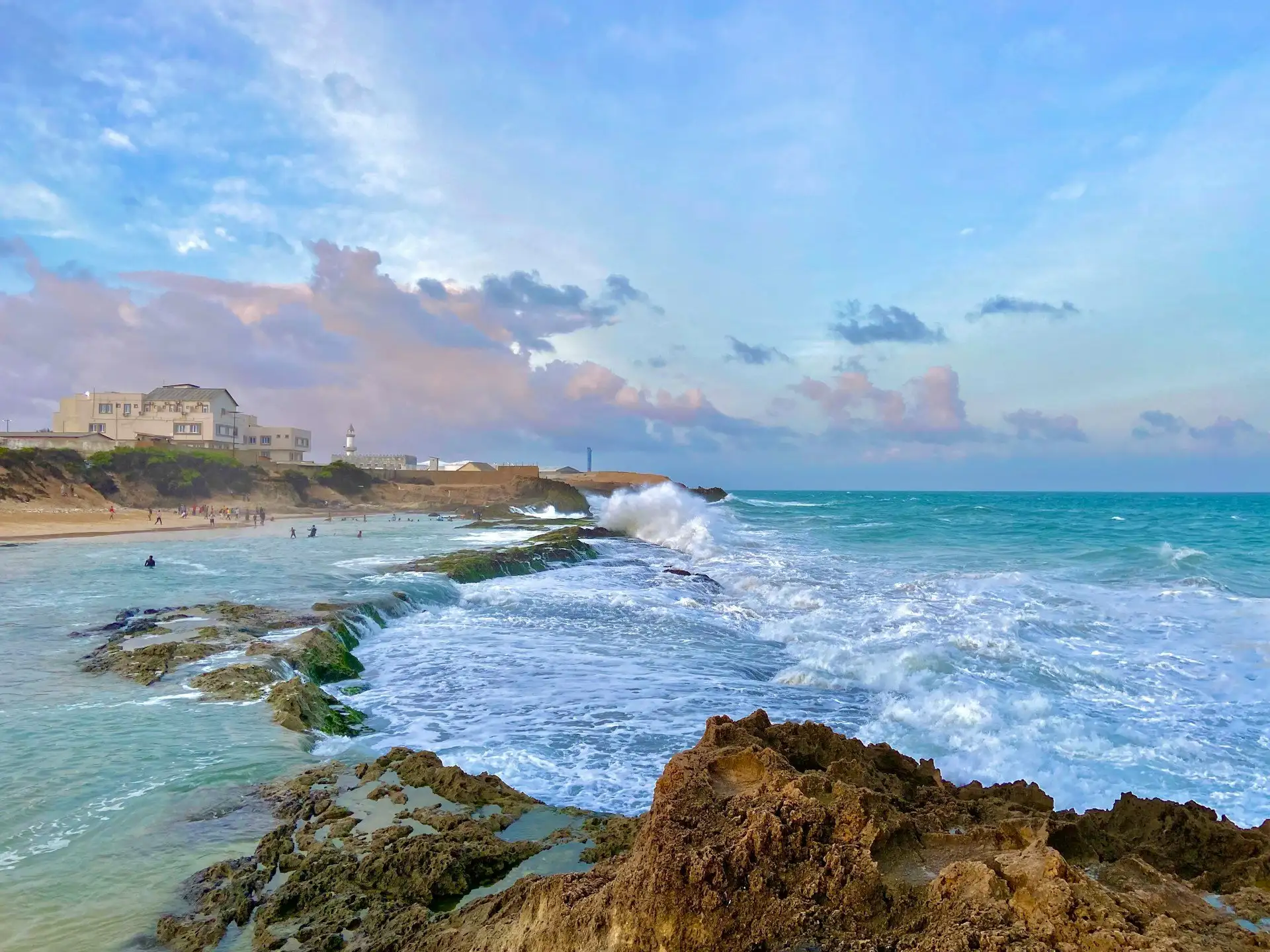
Somalia has the longest coastline in continental Africa — roughly 3,333 kilometers of Indian Ocean shore, running from the Gulf of Aden in the north all the way down to the Kenyan border in the south. Mogadishu sits on the sea. The city has always been a port city, built by Arab and Persian merchants who came for the trade winds, for the safe harbor, for the fresh water and the fertile hinterland. Ibn Battuta, arriving by dhow in 1331, wrote that Mogadishu's merchants came out to meet his ship before it docked, offering their houses for the merchants aboard, which was the custom — a city organized around welcome, around commerce, around the generous hospitality of people who understood that their prosperity depended on strangers feeling safe.
Lido Beach is where Mogadishans have always gone to breathe. In the worst years of the civil war, when the city was divided by clan militias and people could not cross certain streets without risking their lives, Lido Beach was one of the few places that remained accessible to everyone. When the Islamic Courts Union briefly controlled Mogadishu in 2006, they banned the beach initially — then relented, because the people of Mogadishu simply went anyway. In the years of relative calm after al-Shabaab was pushed from the city, Lido Beach reopened fully: families on Fridays, young men playing football in the sand, women in brightly colored dirac dresses, the Indian Ocean doing what the Indian Ocean does.
On 2 August 2024, al-Shabaab sent a suicide bomber and gunmen to Lido Beach and killed more than 50 people who were there to enjoy the sea. This is what the current situation in Somalia means — not as abstraction, not as a geopolitical condition, but as the specific murder of people who were at the beach on a summer afternoon. It means that the longest coastline in Africa, in the city that Ibn Battuta called one of the finest in the world, cannot be used by the people who live there without the possibility of this happening again.
Somalia is not a failed state because its people failed. It is a state that was colonially divided, Cold War-instrumentalized, dictatorially destroyed, and then abandoned by the international community when it became inconvenient. The people who live there — including those now in the Somali diaspora in Minneapolis, London, Stockholm, Toronto — did not choose any of this. They chose to write poetry about it, to build Somaliland out of the rubble of a bombed city, to open camel milk shops at dawn and gold souks in the dust and restaurants on the waterfront, to keep going. That is what irrepressibility looks like. The beaches are still there. The Indian Ocean is still there. The city that Ibn Battuta loved is still there, underneath the rubble and the rebuilding, waiting.