
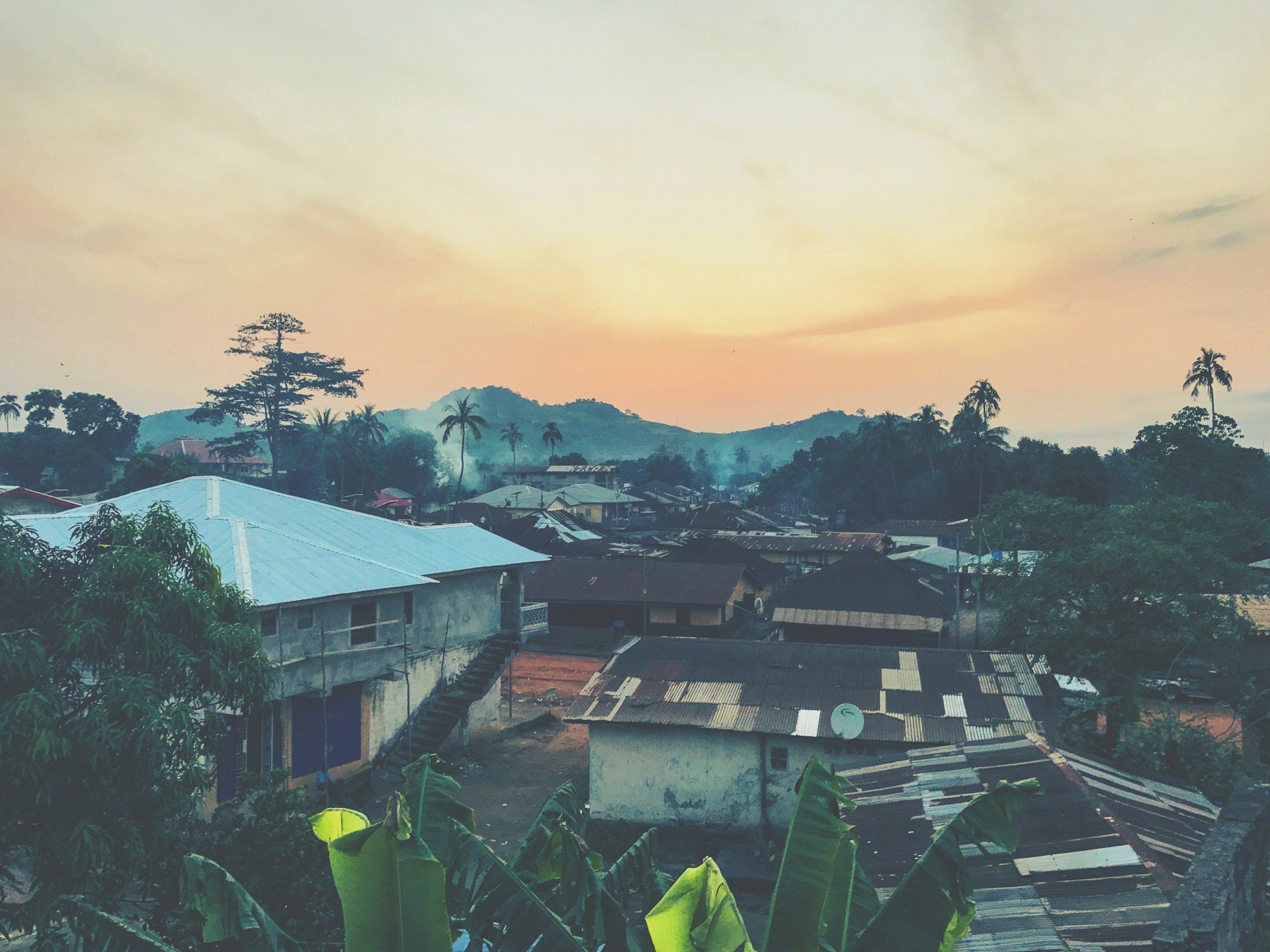
Sierra Leone
A country founded in 1787 as a literal place of freedom for formerly enslaved people — named Freetown, capital of a nation that would later suffer one of West Africa's most brutal civil wars, end it in 2002, and begin again. The beaches of the Freetown Peninsula are extraordinary and almost empty. The history — of Bunce Island where enslaved people departed, of the King's Yard where they arrived free, of the Krio culture born from that reversal — is among the most layered in the Atlantic world. This is not an easy destination. It is a remarkable one.
What You're Actually Getting Into
Sierra Leone is not a polished destination. Infrastructure outside Freetown is limited. Roads are poor and can be impassable in the rainy season. The airport is on the wrong side of a wide estuary, requiring a boat crossing that carries its own complications. Healthcare is inadequate outside the capital. Crime in Freetown is real and the US State Department advises increased caution. None of this should discourage a visitor who approaches with accurate expectations — but it should discourage anyone expecting smooth, resort-style travel.
What Sierra Leone offers in exchange: beaches on the Freetown Peninsula that are genuinely world-class and receive almost no international visitors. Bunce Island — the ruins of one of West Africa's major British slave trading operations — sitting in the Sierra Leone River, accessible by boat, carrying the specific weight of a place where history still has physical form. The Krio culture of Freetown, born from the extraordinary fact that this city was founded as a settlement for the formerly enslaved who came back from Britain, Nova Scotia, Jamaica, and the Americas. The warmth of the population, which most visitors describe as among the most genuine in West Africa. And a sense, throughout the country, of a place in the early stages of recovering and rebuilding — which makes for a more complicated experience than a comfortable one, and a more meaningful one.
The civil war of 1991–2002 is part of the context for visiting Sierra Leone. It ended more than two decades ago and the country has been politically stable since. But the war — with its amputations, child soldiers, blood diamonds, and mass displacement — shaped everything about Sierra Leone that exists today: the infrastructure, the economy, the political culture, the scars that visitors can occasionally see in the faces of older Freetownians. Knowing this history is the right way to visit.
Sierra Leone at a Glance
A History Worth Knowing
Sierra Leone's history is one of the Atlantic world's most extraordinary stories — and it runs in both directions. This is not simply a place from which enslaved people departed. It is also the place to which they returned.
The coastal peoples of the region — Temne, Limba, Mende, Sherbro — had been in contact with Portuguese sailors since the 15th century. The name Serra Lyoa ("Lion Mountains") was given by Portuguese explorer Pedro de Sintra in 1462, for the mountain range surrounding the harbor. European traders came for ivory, timber, and gold initially; the slave trade followed. Bunce Island, a small island in the Sierra Leone River 29 kilometers from what is now Freetown, became one of the most significant British slave trading operations in West Africa. From 1672 to 1808, tens of thousands of enslaved people were held there and shipped across the Atlantic. The specific connection to North America is precise: the firm of Grant, Sargent and Oswald operated Bunce Island in partnership with Henry Laurens, a Charleston rice planter who was also a signatory of the Declaration of Independence. Rice-growing expertise was deliberately sought from Sierra Leone's interior populations — Temne and Mende rice farmers — for the South Carolina and Georgia rice plantations. This is why Gullah-Geechee communities along the American East Coast can trace their ancestry directly to Sierra Leone.
In 1787, British abolitionists — including Granville Sharp and William Wilberforce — established a settlement in Sierra Leone for Black Poor from London: formerly enslaved people living in destitution in Britain. The settlement was called the "Province of Freedom" — an aspiration that immediately collided with the reality that Bunce Island, 29 kilometers away, continued operating as a slave trading post for another 21 years. In 1792, approximately 1,200 Black Loyalists arrived from Nova Scotia — people who had fought for Britain in the American Revolution and been given land in Canada that proved hostile and discriminatory. In 1800, Maroon communities from Jamaica joined them. In 1808, when Britain formally outlawed the slave trade and began using the Royal Navy's West Africa Squadron to enforce the ban, the ships were based in Freetown — and the enslaved people rescued from intercepted slave ships were brought there and freed. Between 1808 and 1864, over 50,000 recaptives from across West Africa were settled in and around Freetown.
From these converging populations — Black British, Nova Scotian, Jamaican Maroon, and recaptives from dozens of West African ethnic groups — emerged a new people: the Krio (Creole). In a single generation, people with no shared language or culture became, through Christian mission schools and commercial enterprise, one of the most educated and economically successful groups in 19th-century West Africa. Fourah Bay College, established in 1827 and affiliated to the University of Durham in 1876, was the first university in sub-Saharan Africa. Krio lawyers, doctors, and professionals worked across the British West African empire. The city they built — Freetown — had colonial architecture, churches, schools, and a distinct culture that blended Victorian-era British customs with African and African-American traditions.
Independence came on 27 April 1961. The post-independence period was marked by the same pattern as much of West Africa: early optimism, then corruption under the single-party APC government of Siaka Stevens (1967–1985), then Momoh's continuation of the same, then in 1991 the beginning of one of West Africa's most brutal civil wars.
The Revolutionary United Front (RUF), led by Foday Sankoh and backed by Liberian warlord Charles Taylor, launched its insurgency from Liberia in March 1991. The stated cause was democratic reform; the actual driver was control of Sierra Leone's diamond fields in the east. The civil war lasted eleven years. Approximately 50,000–75,000 people died. Two million were displaced in a country of 4.5 million. The RUF became notorious for systematic amputations of civilians — a specific terror tactic designed to spread fear rather than build support. Child soldiers were abducted and drugged. Sexual violence was systematic. The diamonds mined with forced labor funded the war on both sides and became the international case study for "blood diamonds" that eventually drove the Kimberley Process international certification scheme. The 2006 film Blood Diamond set in Sierra Leone brought this history to global popular awareness.
The war ended formally on 18 January 2002. A UN-backed Special Court for Sierra Leone prosecuted war crimes; Charles Taylor was convicted in The Hague in 2012 for his role in supporting the RUF. A Truth and Reconciliation Commission reported in 2005, documenting atrocities and recommending reform. Sierra Leone has maintained democratic governance since 2002. The country remains one of the world's poorest (consistently near the bottom of the Human Development Index), struggling with the compound effects of the war's destruction and endemic poverty. The warmth and resilience of the people who have lived through all of this is not a travel cliché — it is an observed fact.
Pedro de Sintra names the mountains Serra Lyoa (Lion Mountains). Portuguese, then Dutch, then British traders establish contact with coastal peoples. The slave trade begins in earnest in the 17th century.
The Royal African Company establishes a slave trading fort on Bunce Island. From the 1750s, the London firm of Grant, Sargent & Oswald ships tens of thousands of Sierra Leoneans — specifically sought for their rice farming knowledge — to South Carolina and Georgia. John Newton, the future author of Amazing Grace, trades at Bunce. Henry Laurens of Charleston is the American business partner.
British abolitionists found a settlement for Black Poor from London. Nova Scotian Black Loyalists arrive 1792; Jamaican Maroons 1800. Freetown is established. In 1808 the British abolish the slave trade and base the Royal Navy's West Africa Squadron here — rescuing and settling over 50,000 "recaptives" over 56 years.
The diverse settler populations merge into the Krio people — a new ethnic group with a distinct Creole language, culture, and remarkable educational achievement. Fourah Bay College (1827) becomes sub-Saharan Africa's first university. Krio professionals spread across British West Africa.
Sierra Leone becomes independent under Prime Minister Milton Margai. Early optimism gives way to increasing corruption under Siaka Stevens's APC single-party rule through the 1970s–80s.
The RUF insurgency begins from Liberia in March 1991. Eleven years of war: 50,000–75,000 deaths, 2 million displaced, systematic amputations, child soldiers, blood diamonds. British military intervention (Operation Palliser) in 2000 turns the tide. The war ends 18 January 2002.
Truth and Reconciliation Commission (2005). Charles Taylor convicted in The Hague (2012). Democratic elections continue. The country remains extremely poor but politically stable. Tourism grows slowly. The Budapest–Freetown rally has used Freetown as its finish line since 2020, committed through 2034.
Top Destinations
Freetown
A city of approximately 1.2 million people on a peninsula with one of the world's finest natural harbors — deep, sheltered, surrounded by mountains. The Cotton Tree, an enormous ancient cotton tree in the center of the city, marks the site where freed slaves from the Nova Scotian settlement gave thanks upon arrival in 1792; it is the founding symbol of Freetown and still stands, visible from much of the city center. The King's Yard Gateway at Connaught Hospital is the arch through which recaptives were processed after rescue by the Royal Navy — a quieter but equally significant site of memory.
The National Museum holds the country's main collection of cultural artifacts including nomali soapstone figurines carved by ancient Kissi peoples and masks from various Sierra Leonean traditions. The Big Market and Waterside Market are the commercial centers. Lumley Beach in the west end is the social beach — loud, lively on weekends, with food sellers and football on the sand. The Tacugama Chimpanzee Sanctuary is 30 minutes from the city center in the Western Area Peninsula National Park.
Bunce Island
A small island in the Sierra Leone River, 29 kilometers upstream from Freetown, now overgrown with jungle — a landscape of ruins being slowly absorbed back into vegetation. The brick walls of the fort still stand in parts; the cannons remain; the layout of the holding compounds is still visible. This was one of the most significant British slave trading operations in West Africa, operational from 1672 to 1808, through which tens of thousands of enslaved people passed on their way to the Americas.
What makes Bunce Island historically specific beyond the general history of the slave trade: the deliberate targeting of Temne and Mende rice farmers from the Sierra Leone interior, whose agricultural expertise was sought for the rice plantations of South Carolina and Georgia. Gullah-Geechee communities — whose language and culture still retain striking similarities to Sierra Leonean Creole — trace their ancestry to these specific deportations. Bunce Island is the site of memory that connects Sierra Leone directly to the African-American South in a way that has no parallel elsewhere. Access by boat from Freetown, typically arranged through tour operators or the Bunce Island Coalition.
Tacugama Chimpanzee Sanctuary
Established in 1995 in the Western Area Peninsula National Park, 30 minutes from Freetown — a rescue and rehabilitation center for orphaned or confiscated chimpanzees. Approximately 100 chimpanzees across different stages of rehabilitation: newly arrived (traumatized, in quarantine), in group socialization, and in the large semi-wild enclosure where they live in family groups. Guided tours walk you through the rehabilitation process, explain the threats to wild chimpanzees (habitat loss and illegal wildlife trade), and bring you close enough to observe the animals through wire without disturbing them. The surrounding national park offers hiking in forest that is genuinely wild — a remarkable contrast with the traffic and noise of Freetown below.
Tiwai Island Wildlife Sanctuary
A 12-square-kilometer island in the Moa River in eastern Sierra Leone, one of West Africa's few remaining areas of intact lowland rainforest. Sierra Leone's first ecotourism enterprise — community-managed, with guides from surrounding villages. Home to a remarkable concentration of primates: chimpanzees, Diana monkeys, red colobus, black-and-white colobus, king colobus, and Campbell's monkey — 11 species total. Also home to approximately 100 rare pygmy hippos, nocturnal and elusive but present in the river channels. 135 bird species. The experience of camping here — in the simple community camp beside the river, listening to the forest at night — is one of Sierra Leone's most distinctive travel experiences. Remote and difficult to reach (4–6 hours from Freetown plus a river crossing); plan carefully and confirm logistics in advance.
Banana Islands
Three small islands — Dublin, Mes-Meheux, and Ricketts — connected by a stone causeway at the southern tip of the Freetown Peninsula. One of the most historically layered places on the Sierra Leone coast: Banana Island has ruins of a 19th-century church and colonial-era architecture from the Krio settlement period, along with connections to slave trade history. Snorkeling and diving around the islands are excellent — clear water, intact coral, reasonable marine life. Accessible by boat from the southern end of the peninsula (Leicester or Whale River). Simple guesthouse accommodation available. A very good day trip or overnight from the peninsula beaches.
Outamba-Kilimi National Park
In the far north, near the Guinea border — Sierra Leone's largest national park covering 1,083 square kilometers of savannah, gallery forest, and wetland. Home to hippopotami (common, not pygmy), elephants, chimpanzees, and diverse birdlife. Tourism infrastructure is minimal; travel requires a 4x4 and advance planning. Outamba is the more visited southern section; Kilimi to the north is wilder and more remote. For serious wildlife visitors willing to manage the logistics of getting there, the park offers an experience of West African savannah and forest that is exceptionally uncrowded.
Beaches of the Freetown Peninsula
The Freetown Peninsula's 42-kilometer Atlantic coastline has some of West Africa's finest beaches — wide, golden, backed by forest, and receiving almost no international visitors. This is genuine wilderness beach rather than resort beach: no sunbeds, no cocktail bars, in most places no facilities at all. What you get instead is space and Atlantic rollers and the feeling that the beach belongs to you and the fishing communities that work it. All of these beaches are accessible by hired car or poda-poda from Freetown, typically 1–3 hours depending on the destination.
River Number Two Beach
At the southern end of the peninsula, about 2.5 hours from Freetown — a wide, horseshoe-shaped lagoon where a river meets the sea, backed by dense forest, with clear water calmer than the open Atlantic beaches to the north. Consistently described as the most beautiful beach on the peninsula. Low-key infrastructure: a community-run facility charges a small entry fee, and a few basic food and drink operations exist. Accommodation in simple beach huts is available and some people stay overnight. This is the reference beach of Sierra Leone — if you only get to one, make it this one.
Bureh Beach
A long, wide stretch of golden sand with Atlantic swell good enough that a small surf scene — mostly expat and NGO workers from Freetown — uses it regularly. The waves are consistent and manageable for intermediate surfers; boards can sometimes be hired locally. Basic accommodation has grown around the beach. The entry fee collected by the local chief is a local institution — pay it without argument. Getting there and back the same day is possible but long; staying overnight is the better approach.
Tokeh Beach
One of the more developed beach destinations on the peninsula — which in Sierra Leone terms means a few guesthouses and restaurants rather than resorts. A wide, pale sand beach with a fishing village at one end and reasonable swimming conditions. More accessible from Freetown than River Number Two and a good option if time is short. A casino and resort development in the area has brought some infrastructure but hasn't fundamentally changed the character of the beach itself.
Lumley Beach (Freetown)
The main beach within Freetown itself — not the wildest or cleanest, but the most social. On weekend afternoons and evenings, Lumley Beach fills with Freetownians: football on the sand, music from beachside bars, food sellers with grilled fish and corn. The Congo Market behind the beach has crafts and curios. This is where you see Freetown at leisure — not a tourist experience but an authentic one. Security: don't walk here alone after dark, as it's one of the areas where petty crime and occasionally worse happens to foreigners after nightfall.
Culture & Identity
Sierra Leone has 18 main ethnic groups — Temne (largest, in the north), Mende (south and east), Limba, Kono, Krio, and others — each with distinct languages and traditions. The Krio (Creole) are the descendants of the returned freed people who founded Freetown, and although they represent only about 2% of the population, their language — Krio — is the national lingua franca spoken by virtually everyone. The culture is a mix: predominantly Muslim in the north, predominantly Christian in the south, with both communities generally practicing alongside traditional West African spiritual beliefs in patterns of genuine syncretism.
Krio — The Language
Krio is an English-based Creole language that developed from the mixture of English, Yoruba, Temne, Mende, and other languages brought together by the diverse founding populations of Freetown. It is simultaneously familiar enough that English speakers can often follow it and distinct enough to be its own language with its own grammar, idioms, and literary tradition. "Ow di bodi?" (How is the body? — How are you?) is the standard greeting. "I dae fine" (I am fine). Krio is also the language spoken by the Gullah-Geechee communities of coastal South Carolina and Georgia, whose ancestors were among those deported from Sierra Leone to the American rice plantations — a living linguistic connection between West Africa and the African-American South that is more than three centuries old.
Poro & Sande Societies
The Poro (men's) and Sande (women's) societies are the traditional governance and initiation structures of the Mende, Temne, and other Sierra Leonean ethnic groups — organizations that regulate community life, educate young people through initiation, and maintain cultural knowledge. The Sande Society is one of the few female-led traditional governance structures in West Africa, with significant cultural and political authority. The Sande Sowei mask — worn by senior women during Sande ceremonies — is among the finest examples of West African art and is represented in major museums worldwide. Traditional masquerade performances are still practiced and can be witnessed at festivals and ceremonies, though they are not public tourist events — approach with respect and ask locally about appropriate conduct if you encounter one.
Diamonds — The Complicated Resource
Sierra Leone sits on some of the world's richest alluvial diamond deposits, primarily in the Kono district in the east. The diamonds have been at the center of the country's economy since their discovery in the 1930s and at the center of the civil war's political economy from 1991 to 2002. The Kimberley Process Certification Scheme — the international system designed to prevent conflict diamond trading — was driven substantially by the Sierra Leone experience. Today, diamonds are still mined and are the country's largest export. The moral complexity of visiting Kono (the mining district) and observing diamond mining operations is considerable; it is worth understanding before you go.
Music & Shwen Shwen
Sierra Leone has a growing contemporary music scene rooted in afrobeats, palm wine music, and the specific traditions of the Krio community. Freetown's nightlife is genuinely lively — the city's bars and clubs run late and the music is good. More notably, Sierra Leonean cuisine has recently gained international recognition: Maria Bradford's London restaurant Shwen Shwen was awarded the Michelin Bib Gourmand in 2026 — the first Sierra Leonean restaurant in the Michelin Guide — bringing attention to a culinary tradition built on rice, cassava, palm oil, fresh Atlantic fish, and the specific flavors of West African spicing. The name of the restaurant translates roughly as "a way of being that is very Sierra Leonean."
Sierra Leonean Food
Sierra Leonean cuisine is built on rice, cassava, and the extraordinary fresh fish of the Atlantic coast, seasoned with palm oil, smoked fish, dried shrimp, and chillis. It is underknown internationally but those who encounter it find it substantial, complex, and deeply satisfying. Eat at local chop houses rather than hotels for the real version.
Cassava Leaf Stew
The national dish: young cassava leaves pounded and cooked with smoked fish, dried shrimp, palm oil, onion, and chilli — a dark green, intensely flavored stew served over rice or fufu. The process of pounding the leaves and the layering of smoked and dried protein gives the stew a depth that no quick version achieves. Every Sierra Leonean family has their version and every chop house has it on the blackboard. This is the dish that Shwen Shwen (Michelin Bib Gourmand 2026) serves in London. Find it at its source, for a fraction of the price, at any chop house in Freetown.
Grilled Fish & Lobster
The Atlantic coast produces excellent fish — barracuda, snapper, grouper, bream — and the peninsula beaches have small restaurants and fish shacks where the day's catch is grilled over charcoal and served with rice, fried plantain, and hot pepper sauce. Lobster, crawfish, and crabs are available at some beach restaurants at prices that would be extraordinary for the quality if you were paying European prices — here they are simply what the fishermen bring in. Beachside grilled fish is one of the most affordable and finest meals available anywhere in Sierra Leone.
Okra Soup
A thick, slightly glutinous soup made with okra, smoked fish, palm oil, and a combination of dried proteins (dried shrimp, dried fish) that give it extraordinary depth. Eaten with fufu (pounded cassava) or rice — you tear off a piece of fufu, shape it in your fingers, and dip it into the soup. The technique of eating with your hands is part of the experience; use the right hand only. Okra soup is the other reference dish of Sierra Leonean cooking alongside cassava leaf, and the two together define the cuisine.
Fula Bread
Fula bread (similar to a French baguette but denser and slightly sweet) is sold fresh throughout the country from roadside sellers carrying it on their heads in large baskets. It is baked overnight, sold warm in the morning, and eaten with margarine, groundnut (peanut) paste, or tea. The culture of street bread-selling is one of the most visible features of daily Sierra Leonean life — the sellers at every street corner and junction from dawn onward. A loaf costs almost nothing and is uniformly good.
Palm Wine & Poyo
Palm wine (poyo in Krio) — tapped from the oil palm or raphia palm, sweet and fizzy when fresh, increasingly alcoholic and sour through the day — is the traditional drink of Sierra Leone's interior communities and available in Freetown at local bars. It is drunk communally from gourds or plastic cups. Fresh coconut water from the abundant coconut palms along the peninsula is the non-alcoholic equivalent. Star Beer (a Nigerian lager also brewed locally) and Club (Ghanaian lager) are the main commercial beers, cold and correct for the climate.
Groundnut Stew
Peanut-based stew (groundnut soup) — a thick, orange-brown sauce made with roasted groundnuts (peanuts), tomatoes, onion, and meat or fish — served over rice. Similar in principle to Senegalese mafé but with its own specific Sierra Leonean character: spicier, sometimes with scotch bonnet chilli, and frequently made with chicken or beef rather than lamb. One of West Africa's great comfort dishes and one that appears at virtually every Sierra Leonean family meal. Available at chop houses throughout Freetown.
When to Go
Nov – Apr
Dry SeasonThe main dry season — the ideal visiting window. Hot but not oppressively so (27–32°C), low humidity relative to the wet season, roads passable, beaches at their most accessible. The harmattan (dry dusty wind from the Sahara) can reduce visibility and cause respiratory irritation in December–February. Wildlife viewing is good — animals concentrate around water sources. This is when the peninsula beaches are most practical and when Tiwai Island is most accessible.
May – Oct
Rainy SeasonHeavy rains from May to November — among the highest rainfall in West Africa (Freetown receives up to 4,000mm per year). Many roads outside Freetown become impassable. Flooding in Freetown is common; the 2017 landslide on the peninsula killed over 1,100 people. The forest is dramatically green and lush; Tiwai Island has the highest water levels and wildlife activity. Not recommended for a first visit or for anyone planning to travel outside Freetown significantly.
Trip Planning
Sierra Leone requires more preparation than most African destinations. The airport situation (Lungi is across the estuary from Freetown — see Transport section), the infrastructure limitations, and the safety context all benefit from advance planning. A week is sufficient for Freetown, the peninsula beaches, Bunce Island, and Tacugama. Adding Tiwai Island requires at minimum 10 days and careful logistics.
Freetown
Day 1: arrive via water taxi from Lungi airport to Aberdeen; settle in. Evening walk around Aberdeen neighborhood. Day 2: Cotton Tree and city center (National Museum, King's Yard Gateway at Connaught Hospital, Big Market). Afternoon at Lumley Beach for the social atmosphere. Chop house dinner in the East End.
Tacugama & Western Area Forest
Morning: Tacugama Chimpanzee Sanctuary (book in advance). Afternoon: hike in the Western Area Peninsula National Park above the sanctuary. Return to Freetown by late afternoon. The forest above the city, looking down at the harbor, is one of the finest urban forest views in West Africa.
Bunce Island
Hire a boat from Freetown for the day — arrange through your hotel or a tour operator. The river trip takes 45 minutes to an hour each way. Allow at least 2 hours at the island to properly walk the ruins. Bring water and food; there are no facilities. Return to Freetown by mid-afternoon. This is the most historically significant day of the trip — read about the specific history in advance.
Peninsula Beaches
Three days on the peninsula coast: hire a car with driver for the full peninsula circuit. Day 5: Tokeh Beach. Day 6: Bureh Beach (surf or walk). Day 7: River Number Two Beach — the best, worth saving for last. Return to Freetown for the night and fly out or start the next leg.
Freetown
Three days in the capital: Cotton Tree, King's Yard, National Museum, Big Market. Tacugama Day 2. Bunce Island Day 3. Evening chop house and Lumley Beach weekend social.
Peninsula Beaches
Three beach days: Tokeh, Bureh, and River Number Two. Banana Islands half-day boat trip from the southern peninsula for snorkeling and colonial ruins. Stay at guesthouses on the peninsula rather than commuting from Freetown — it changes the experience completely.
Tiwai Island
The logistics: hire a 4x4 with driver from Freetown to Potoru (4–6 hours). River crossing by dugout canoe to the island. Community camp accommodation. Two full days of forest walks: early morning primate spotting, afternoon birding, possible evening boat for pygmy hippo search. Return to Freetown Day 10 for departure. Confirm accommodation and guide availability before departure — communication with the island can be inconsistent.
Vaccinations
Yellow fever vaccination mandatory — certificate checked on arrival. Malaria is highly endemic throughout Sierra Leone and year-round; prophylaxis is essential. Also recommended: Hepatitis A, Typhoid, Rabies (if visiting wildlife sanctuaries), Meningitis. Ebola protocols have varied — check current health situation before travel. Mpox (monkeypox) screening is in place at entry.
Full vaccine info →Money
Sierra Leonean Leone (SLL) after the 2022 redenomination (new Leone, NLE, replaced old Leone at 1:1000). USD widely accepted at hotels and larger establishments. ATMs in Freetown accept international cards but are frequently out of order and charge high fees — bring sufficient USD cash. Very limited ATM coverage outside Freetown. Mobile money (Orange Money, Africell Money) is widely used by locals.
Healthcare
Healthcare infrastructure is extremely limited. A few private clinics in Freetown can handle minor issues. Serious illness or injury requires medical evacuation to Europe or South Africa — ensure your travel insurance explicitly and generously covers medical evacuation from West Africa. Carry all medications you might need for the duration of your trip; availability in Sierra Leone is unreliable. Bring a comprehensive first aid kit.
Connectivity
Africell and Orange Sierra Leone are the main carriers. Buy a local SIM at the airport or in Freetown — cheap data and calls. Coverage is reasonable in Freetown and on the peninsula; limited to nonexistent in rural areas. Power outages are frequent throughout the country — bring a power bank. Many hotels and guesthouses have generators but power cuts are the norm. Download offline maps (Maps.me or Google Maps offline) for the peninsula before leaving Freetown.
Road Travel
Do not drive yourself in Sierra Leone. Roads are poor, often unlit, and driving standards are dangerous. Hire a car with a driver (4x4 essential outside Freetown) for all travel beyond the city. Flash Vehicles offers an app-based service in Freetown. For the peninsula and upcountry, arrange through your hotel or a Freetown tour operator. Never travel on highways outside Freetown after dark — this is the advice given to US government employees and it is sound advice for everyone.
The Airport Situation
Lungi International Airport (FNA) is across the Sierra Leone River estuary from Freetown — a wide, unavoidable crossing. Options: water taxi (fastest, most tourist-friendly, 20–30 minutes from Aberdeen pier); government ferry (cheap but slow, poor safety record); road via Port Loko (3 hours, paved, good condition, only practical for daytime travel). If arriving late at night, book accommodation at Lungi rather than crossing in the dark. Always pre-arrange airport transfers.
Transport in Sierra Leone
International Flights
Via Brussels, Casablanca, AccraBrussels Airlines from Brussels (the main European connection), Royal Air Maroc from Casablanca, AWA (Air Côte d'Ivoire and ASKY) via Abidjan and Accra. Few direct options from North America — route via Brussels or West African hubs. Flight availability is limited; book well ahead, especially for peak season (November–January).
Airport Water Taxi
$20–35 one-wayMultiple operators (Sea Coach Express, Seabird) run fast boat services between Lungi Airport and Aberdeen pier in Freetown, timed to coincide with major flights. Takes 20–30 minutes. This is the recommended option for tourists. Book in advance through your hotel; prices and schedules vary. Avoid the government ferry (safety concerns) and avoid the road crossing at night.
Hired Car with Driver
$60–100+/dayThe only practical option for touring outside Freetown. Flash Vehicles (app-based, Uber-like) operates within Freetown and can arrange drivers. For the peninsula beaches and upcountry, arrange through your hotel. Always use a 4x4 for anywhere outside the main Freetown roads. Agree rate in advance. Drivers from Freetown often have the best local knowledge and serve as informal guides.
Poda-Poda (Shared Minibus)
Very cheapShared minibuses that run fixed routes within Freetown and between major towns. Extremely cheap (a few cents), overcrowded, and unpredictable. Used by Sierra Leoneans for daily transport. Practical for budget travelers who are comfortable with basic local transport and willing to accept variable journey times. Not recommended for long-distance upcountry travel without local guidance.
Boat / Pirogue
Arranged locallyEssential for Bunce Island, Banana Islands, and the river crossing to Tiwai Island. Arrange through tour operators in Freetown for Bunce Island (typically a full-day charter). For Banana Islands, hire at the southern peninsula. For Tiwai, the river crossing from Potoru is a short dugout canoe trip organized by the community camp.
Okada (Motorbike Taxi)
Very cheapMotorbike taxis (okadas) are everywhere in Freetown and in provincial towns — cheap and fast through traffic, but with significant accident risk given road conditions and driving standards. Not recommended for tourists unfamiliar with West African traffic. If you do use one, negotiate the price before you get on and insist on a helmet if you can find one.
Accommodation in Sierra Leone
Top-End (Freetown)
$150–300+/nightThe Country Lodge Hotel and Country Lodge Complex are the established top-end options — good facilities, reliable power, air conditioning, and security. Villa Sorriso in Aberdeen is a smaller boutique option with good reviews. The Bintumani Hotel and Radisson Blu (both in the Aberdeen/Lumley area) offer international-standard facilities. For the beach peninsula, the Sierra Lighthouse (Tokeh area) has been a popular option for those wanting to stay near the beaches.
Mid-Range (Freetown)
$60–150/nightA number of guesthouses and smaller hotels in the Aberdeen and Lumley areas. The Mamie Beach Resort on Lumley Beach is popular with the NGO and expat community. Seaview Manor offers good value near the beach. Standards vary significantly — read recent reviews on Booking.com and check for generator (power outages are frequent) and air conditioning as essentials.
Peninsula Beach Guesthouses
$30–80/nightSmall guesthouses and beach camps near Tokeh, Bureh, and River Number Two beaches. Basic comfort but exceptional location — sleeping within walking distance of the beach, eating grilled fish for dinner, waking to an empty beach. Facilities are simple: cold water, limited electricity from generators, basic food. This is the best way to experience the peninsula beaches and is strongly recommended over commuting from Freetown.
Tiwai Island Camp
~$40–60/nightThe community-run camp on Tiwai Island — simple tents or basic huts beside the river, communal meals, no air conditioning, minimal electricity. The experience of waking to the sounds of the rainforest, with chimpanzees calling from the canopy, is completely unlike anything available in more developed parks. Confirm availability and pricing in advance as communication can be inconsistent.
Budget Planning
Sierra Leone is inexpensive for food and local transport but accommodation — particularly at the top end — carries expat-driven pricing that is higher than the general poverty level might suggest. Budget travelers who are comfortable with basic conditions can get by on $50–80/day; mid-range travelers expecting reliable facilities should budget $120–200/day.
- Basic guesthouse or beach camp
- Chop house and street food
- Poda-poda local transport
- Peninsula beaches (free or small fee)
- Water taxi airport crossing
- Mid-range hotel with generator
- Mix of restaurants and chop houses
- Hired car with driver
- Bunce Island boat tour
- Tacugama guided visit
- Country Lodge or top hotel
- Restaurant dining
- Private car and driver throughout
- Organized tour days (Bunce, Banana)
- Medical evacuation insurance
Quick Reference Prices
Visa & Entry
An e-visa is available at visaonline.gov.sl — apply at least 2 weeks before travel. Single-entry tourist visas are the standard option. ECOWAS citizens (West African Community) enter visa-free. Confirm requirements for your specific nationality as they change periodically. The e-visa system has been improved significantly and is now generally reliable.
Safety in Sierra Leone
Sierra Leone is rated Level 2 by the US State Department (Exercise Increased Caution). This is an honest rating — crime in Freetown is real and visitors have been victims of robbery, assault, and burglary. The post-civil war context means that security infrastructure is limited, police resources are stretched, and responses to incidents in most areas outside Freetown are slow to nonexistent. At the same time, the country is not in active conflict and most visits proceed without serious incidents. The key is applying accurate precautions rather than either ignoring the risks or being paralyzed by them.
Freetown Generally
Manageable with standard precautions. Don't display valuables, don't walk alone in unlit areas after dark, use registered taxis or Flash Vehicles rather than unmarked cars, keep car doors locked and windows up in traffic. The Aberdeen and Lumley areas (tourist zone) have more security presence than the East End. Petty theft is the most common threat; armed robbery occurs and is more common than in some West African capitals.
Lumley Beach & Aberdeen After Dark
The US State Department specifically identifies Lumley Beach and the Aberdeen bar and nightclub area as higher-risk zones after dark — places where pickpocketing, robbery, and occasionally worse have targeted foreigners. Go with groups, stay alert, don't walk back alone, and arrange your return transport before you go out.
The Ferry & Airport Crossing
Pickpocketing is specifically documented on the government ferry between Lungi and Kissy. The government ferry also has poor safety maintenance records. Use water taxis instead. On any crossing, keep valuables secure and be alert in crowds particularly on arrival when you may be disoriented and targeted as a new arrival.
Peninsula Beaches
Generally safe in daylight hours at the established beach areas. After dark, walking on any beach alone is not recommended. The fishing communities at each beach are generally welcoming; interact with them naturally and you'll have no problems. Some beaches charge entry fees — pay without argument as this is legitimate community income.
Outside Freetown After Dark
US government employees are prohibited from traveling outside Freetown after dark — this guidance exists because road conditions, lack of lighting, and limited emergency response capability make nighttime travel genuinely risky. Follow this advice. If you're caught out late in provincial areas, stay overnight rather than attempt a night drive.
Malaria
The most serious health risk in Sierra Leone is malaria — endemic, year-round, and present throughout the country including in Freetown. Prophylaxis is essential, not optional. Use DEET repellent every evening. Sleep under treated nets where provided. If you develop fever after returning home, tell your doctor you visited Sierra Leone.
Emergency Information
Key Contacts in Freetown
Book Your Sierra Leone Trip
Everything you need to plan and book your Sierra Leone journey.
Freetown
The name of the capital city carries the whole story. Freetown. A city named for freedom — specifically, for the freedom of people who had been enslaved. In 1787, British abolitionists established a settlement on this peninsula for Black Poor from London: people who had escaped or been freed from slavery and were living in destitution in Britain, sent here to build a "Province of Freedom" under the protection of the Royal Navy. In 1792, 1,200 Black Loyalists arrived from Nova Scotia — people who had fought for Britain in the American Revolution, been promised land in Canada, and found discrimination and near-starvation instead. They called their settlement Freetown. In 1800, Maroons from Jamaica joined them.
And then, from 1808, something happened that had no parallel in the history of the Atlantic slave trade. The British abolished the trade and began intercepting slave ships at sea. The enslaved people rescued from those ships — taken from across West Africa, from dozens of ethnic groups, speaking dozens of languages — were brought to Freetown and set free. Over 50,000 of them between 1808 and 1864. They arrived at the King's Yard, the receiving compound near what is now Connaught Hospital, processed and housed and eventually settled in and around the city. The archway through which they passed is still there, with an inscription above it: "Royal Asylum and Hospital for Africans rescued from slavery by British Valour and Philanthropy."
From these converging populations — British, Nova Scotian, Jamaican, and recaptives from Hausa, Yoruba, Mende, Temne, and many other communities — emerged the Krio: a new people with a new Creole language that blended all of these origins. In a single generation, people who had survived the worst atrocity of the modern world built a community, a culture, and an institution — Fourah Bay College, established 1827, the first university in sub-Saharan Africa. One of the recaptives who passed through the King's Yard as a child, Samuel Ajayi Crowther, became the first Black Anglican bishop.
Freetown. And then, in 1991, the same city that was named for freedom became the site toward which a rebel army was marching — an army that used amputations as a weapon of terror, that forced children to become soldiers, that funded its war with diamonds pulled from the ground by forced labor. The city that was founded as a place where the formerly enslaved could live in freedom endured 11 years of a war whose signature atrocity was cutting off the hands of the people who voted.
The war ended in 2002. The city is rebuilding. The Cotton Tree still stands in the center, the same tree that the Nova Scotian settlers gathered around to give thanks in 1792. The King's Yard Gateway is still there, leading now into a hospital compound. Bunce Island, 29 kilometers upriver, still has its ruined fort, its cannons, its overgrown holding compounds. All of it in the same estuary, within sight of each other: the place where enslaved people departed, the place where they returned free, the city they built. Freetown.
That is the reason to go.