
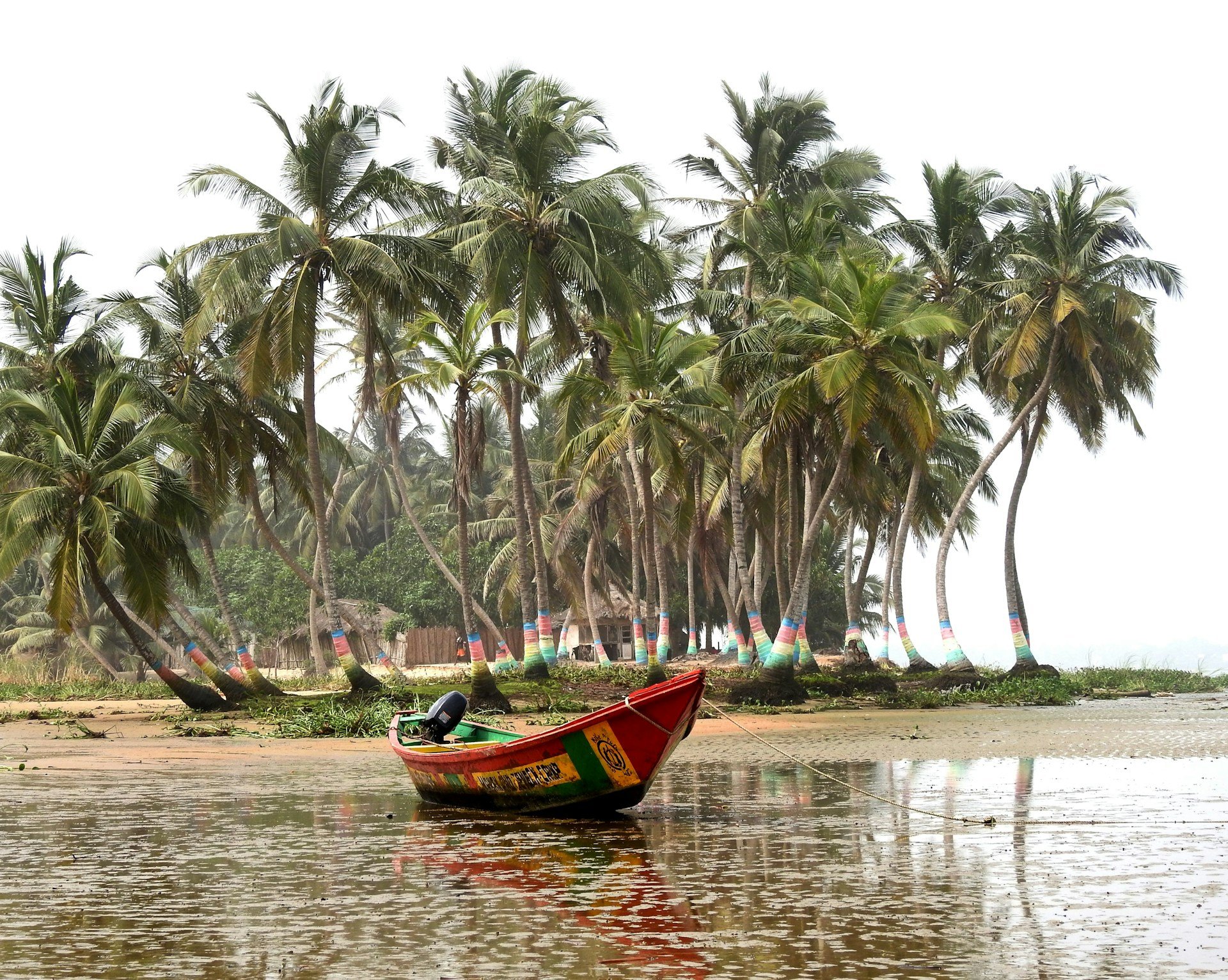
Ghana
The gateway to West Africa — and, for a growing part of the global African diaspora, the gateway home. Slave castles on an Atlantic shoreline that hold centuries of unresolved history. An Ashanti kingdom whose golden stool was never surrendered. The jollof rice debate, settled. And a warmth from strangers that hits you before the bags come off the carousel.
What You're Actually Getting Into
Ghana is the easiest entry point into West Africa and often the best. English is the official language, the democracy is one of Africa's most stable, the people are legendarily welcoming, and the infrastructure — while not Singapore — is functional enough that first-time African travelers don't spend their entire visit problem-solving logistics. It's the kind of country where a stranger stops you on the street not to sell you something but to ask where you're from and whether you need directions.
The country operates on two registers simultaneously. There is the modern Ghana — Accra's rapidly developing neighborhoods, tech startups, rooftop bars, and a diaspora-inflected cultural scene energized by the Year of Return and its successors. And there is the historical Ghana — the slave castles on the Atlantic shore that are among the most significant historical sites in the African diaspora experience, the Ashanti kingdom in Kumasi that resisted British conquest through five wars and was never fully defeated, the kente cloth weavers in Bonwire whose patterns carry meanings accumulated over centuries. Both Ghanas exist simultaneously and neither makes the other irrelevant.
The slave castles at Cape Coast and Elmina deserve specific mention. They are not museums in the conventional sense — the tour that takes you into the dungeons where enslaved people were held, then upstairs to the governor's quarters directly above, then through the Door of No Return to the Atlantic, is one of the more genuinely unsettling and necessary historical experiences available in travel. For visitors of African descent, particularly African Americans whose ancestors may have passed through these doors, the experience can be profoundly emotional. Go anyway. Give it time. It is important.
The practical Ghana: the cedi has been volatile against the dollar and euro (economic challenges in 2022–2023 involved a debt restructuring that affected daily life significantly). Infrastructure outside Accra is uneven. Traffic in Accra, especially at peak hours, is genuinely terrible — a 10km journey can take 90 minutes. The heat and humidity on the coast are real. None of these things diminish what Ghana gives back, which is a warmth, a cultural richness, and a historical weight that most other West African destinations can't match for accessibility.
Ghana at a Glance
A History Worth Knowing
The name Ghana comes from the medieval Ghana Empire, which flourished far to the northwest of present-day Ghana's borders — in what is now southern Mauritania and Mali — between roughly the 6th and 13th centuries. When Kwame Nkrumah chose the name for the newly independent Gold Coast in 1957, he was making a deliberate pan-African statement: that this new nation was heir to one of Africa's great civilizations, regardless of whether the geography precisely matched. The name was aspirational identity more than geographic fact, and it worked.
The territory that became Ghana had its own extraordinary pre-colonial history. The Ashanti (Asante) Kingdom, established in the late 17th century under Osei Tutu I, became one of the most powerful states in West Africa. Its origin myth is both political and spiritual: the Golden Stool — said to have descended from the sky into the lap of Osei Tutu, summoned by the priest Okomfo Anokye — became the seat of the Ashanti nation's soul. It was not a throne to sit upon but a symbol of collective identity, the vessel of the Ashanti people's spirit. The British understood this eventually, which is why their demand in 1900 that it be surrendered to the Governor's foot as a sign of submission produced the Yaa Asantewaa War — the last major war of resistance against colonialism in Ghana, led by the queen mother of Ejisu after the king and chiefs had been exiled. The British never got the Golden Stool. It remains in Kumasi today.
The Gold Coast's other defining history is the slave trade, which ran for approximately 400 years from the mid-15th century. The European powers — Portuguese, Dutch, Swedish, Danish, British — built over 50 forts and castles along a stretch of Atlantic coastline that became known as the Slave Coast. Through these fortifications, an estimated 12 million enslaved Africans were processed for transport across the Middle Passage to the Americas — the largest forced migration in human history. The Cape Coast Castle and Elmina Castle (built by the Portuguese in 1482, the oldest European building in sub-Saharan Africa) are the most significant surviving structures. Walking through the dungeons, knowing the history of what happened there, is not a comfortable experience. It is a necessary one.
British colonization formalized as the Gold Coast in 1874. The country produced gold, cocoa (Ghana became the world's largest cocoa producer under colonial agriculture), and timber for export — wealth that enriched Britain and left the Gold Coast with infrastructure built to serve extraction rather than development. The independence movement was led by Kwame Nkrumah, whose political career was shaped by time in the US (Lincoln University, Pennsylvania) and the UK, where he encountered pan-African intellectuals including W.E.B. Du Bois and C.L.R. James. Ghana became the first sub-Saharan African country to gain independence from colonial rule on March 6, 1957 — a moment that reverberated across the continent and the diaspora as proof that independence was possible.
Nkrumah's post-independence rule moved from visionary pan-Africanism to authoritarianism before a military coup in 1966. Ghana experienced a series of coups and unstable governments until Jerry Rawlings — a flight lieutenant who staged coups in 1979 and 1981 — presided over a transition to democratic rule in 1992. Since then, Ghana has been one of Africa's most stable democracies, with peaceful electoral transfers of power becoming the norm. The country's 2019 Year of Return initiative — marking 400 years since the first enslaved Africans arrived in colonial Virginia and inviting the diaspora home — was a significant moment in how Ghana understands itself in relation to the wider world of African heritage.
Portuguese construct São Jorge da Mina — the oldest European building in sub-Saharan Africa. The trans-Atlantic slave trade from this coast begins in earnest.
Osei Tutu I unites the Ashanti clans. The Golden Stool descends from the sky. One of West Africa's greatest civilizations consolidates at Kumasi.
Britain formalizes colonial control. Five Ashanti-British Wars follow. The Ashanti kingdom resists but is never fully subdued.
Queen mother Yaa Asantewaa leads the last major resistance to colonialism in Ghana when the British demand the Golden Stool. They never get it.
March 6, 1957. Kwame Nkrumah declares "Ghana, your beloved country, is free forever." The first sub-Saharan African country to gain independence. The continent takes note.
Military coup removes Nkrumah while he is abroad. A series of coups and instability follows until democratic elections in 1992.
Ghana establishes a pattern of peaceful electoral transfers of power — rare in the region. One of Africa's most reliable democracies.
Ghana marks 400 years since the first enslaved Africans arrived in colonial Virginia. The diaspora responds in extraordinary numbers. Ghana redefines its relationship with the world.
Top Destinations
Ghana divides naturally into three regions for visitors: the south (Accra, the slave castles, Cape Coast, Kakum National Park), the interior Ashanti region (Kumasi and its surrounding craft villages), and the Volta Region in the east (waterfalls, the Volta Lake, and the mountain scenery near the Togo border). The north has its own distinct Muslim culture and the Mole National Park wildlife reserve, which requires a significant time commitment to reach. Most two-week Ghana trips stay south of Kumasi. The north is for longer visits or returning travelers.
Accra
Accra is a city of intense contradictions doing its best to resolve them, and watching it try is genuinely interesting. The neighborhoods differ from each other almost completely: Osu's Oxford Street has restaurants and nightlife that feel like a regional capital finding its confidence; Jamestown (the old colonial center, now a fishing community) has a grit and vitality that tourist Accra never has; Labadi Beach on a Sunday afternoon is all of Accra in one place — families, friends, music, food, the Atlantic. The W.E.B. Du Bois Memorial Centre (the actual house where Du Bois died in 1963, where he is buried) is a place of profound significance for anyone who knows what his life meant. The National Museum is excellent. Budget two full days for Accra — more if you arrive jet-lagged and need an acclimatization day.
Cape Coast & Elmina
Cape Coast Castle and Elmina Castle are the two most significant slave-trading fortifications on the West African coast and among the most important historical sites in the world for anyone of African heritage. Cape Coast was built by the Swedes in 1653 and expanded by the British; Elmina by the Portuguese in 1482. The guided tours through the dungeons where enslaved people were held in darkness, disease, and terror before the Middle Passage, and through the governor's residence built directly above, are not easy experiences. They are among the most morally important experiences available in travel. Cape Coast town itself is colonial-era architecture and fishing boats and good seafood. Stay at least one night to give the castles the time they deserve.
Kakum National Park
Kakum protects a fragment of what was once continuous West African rainforest and is the only place in Ghana — and one of very few in Africa — with a canopy walkway. Seven wooden and rope bridges suspended 30–40 metres above the forest floor connect seven platforms in the canopy, giving you a bird's-eye view of a forest ecosystem that almost nobody sees from this angle. The forest itself, even from below, is extraordinary — enormous trees, hornbills, forest elephants (rarely seen but present), and the particular quality of light that comes through primary rainforest canopy. An early morning visit has the best bird activity and cooler temperatures.
Kumasi
Ghana's second city is the heart of the Ashanti nation and one of the most culturally rich cities in West Africa. The Ashanti Cultural Centre and the Manhyia Palace Museum explain the kingdom's history, the Golden Stool's significance, and the elaborate court traditions that survived colonization. Kejetia Market — one of the largest markets in West Africa — is a working commercial city in miniature, 10,000 stalls selling everything from funeral cloth to car parts. The surrounding villages specialize in specific crafts: Bonwire for kente weaving, Ntonso for adinkra cloth printing, Ahwiaa for wood carving. Kumasi rewards two to three days of slow engagement more than a rushed day trip.
Volta Region
The eastern Volta Region is Ghana's most scenically dramatic area — rolling hills, the huge Volta Lake created by the Akosombo Dam (one of the world's largest man-made lakes by surface area), and a series of waterfalls in the mountains near the Togo border. Wli Falls, near Hohoe, is the highest waterfall in West Africa at approximately 80 metres — a 45-minute walk through forest leads to the base where you can swim in the pool beneath. The mountain towns of Ho and Hohoe are pleasant bases. The region is calmer and less touristed than the coast and is increasingly popular with visitors wanting a quieter Ghana experience.
Mole National Park
Ghana's largest national park in the Upper West Region is primarily known for the largest concentration of elephants in West Africa — walking safaris bring you within close range of elephants at the waterholes below the lodge. Buffalo, warthog, various antelope species, and over 300 bird species also inhabit the park. The park is remote — 10–12 hours from Accra by road, or a short flight to Tamale then 2 hours by road. The journey through Ghana's Muslim north is itself interesting: the landscape, architecture, and culture shift entirely from the Christian south. Plan for at least two nights at the park itself.
Kumasi Environs — Craft Circuit
Within an hour of Kumasi, a circuit of villages each specializing in a distinct traditional craft gives you direct access to living artisan traditions. Bonwire produces the royal kente cloth — narrow strips woven on small looms that are sewn together into larger garments, with each pattern carrying a specific name and meaning. Ntonso prints adinkra symbols (philosophical proverbs encoded in geometric forms) on cloth using carved calabash stamps and dye from tree bark. Ahwiaa carves wood into ceremonial stools and figures. The villages welcome visitors and most artisans will explain their work without a commercial transaction being required, though buying directly supports the community.
Busua & Beyin
West of Cape Coast, the coast becomes quieter and less developed. Busua is a small beach town that has developed a backpacker and surfer reputation without entirely losing its fishing village character. The waves are consistent and beginner-friendly. Fort Patience and Fort Amsterdam (colonial-era forts at Anomabo and Abandze nearby) add historical context to the coastal landscape. Beyin, near the Ivorian border, has the extraordinary Nzulezo stilt village on Lake Tadane — a community living entirely on a lake, accessible only by dugout canoe, that has been here since the 17th century.
Culture & Etiquette
Ghanaian culture is built around hospitality as a social obligation — the idea that a stranger should be welcomed, fed, and helped is not just a virtue but an expectation. You will experience this as a visitor repeatedly, and the most important thing you can do with it is receive it genuinely rather than treating it as a cultural performance. The warmth is real. The appropriate response is warmth in return.
Ghana has over 100 ethnic groups with distinct cultural practices, but the dominant cultural influences in the south are Akan (of which Ashanti is the largest subgroup), Ga in Accra and the greater Accra region, and Ewe in the Volta Region. The Muslim north has its own distinct culture. What is consistent across most of Ghana is a Christianity-inflected public culture in the south — church is central to social life, gospel music fills minibuses, and the intermingling of Ghanaian traditions with Christian practice produces something distinctly Ghanaian.
"Akwaaba" (welcome in Twi) will be said to you constantly — respond with "Medaase" (thank you) or simply repeat "Akwaaba." In Ga it's "Ome daane" (you are welcome). Any greeting attempt in a local language produces disproportionate warmth. The greeting itself matters more than its accuracy.
Declining food offered by a Ghanaian host is considered impolite. A small portion or a genuine reason (dietary restriction, illness) is acceptable with the right framing. The offer of food is an expression of care, not just hospitality, and responding to it matters.
At chieftaincy palaces, traditional festivals, and funerals — which are significant social events in Ghana that visitors may encounter or be invited to — covering up is expected and respected. Ghanaian funerals are elaborate social occasions with specific dress codes (often red and black, or white); observe rather than participate unless specifically invited.
Particularly in markets and traditional communities. Most Ghanaians are happy to be photographed but asking first is both polite and produces better photographs — people who've agreed to be photographed look different from people being photographed without consent.
At the Arts Centre in Accra and in Kumasi's craft shops, the first quoted price is a negotiating starting point. Start at 50–60% and expect to settle around 70%. The negotiation is expected and is not considered aggressive — walking away is a legitimate tactic and often results in the price you actually want being called after you.
The left hand is considered unclean for eating, passing items, and formal interactions across Ghanaian cultures. Use the right hand consistently for handshakes, passing food, and eating communal dishes. This is consistently true across ethnic and religious groups.
Pointing directly at a person or a sacred object with a single extended finger is considered disrespectful in Akan culture. Use an open hand or gesture with your whole arm if you need to indicate direction. This applies particularly in traditional settings and chieftaincy contexts.
The history of Cape Coast and Elmina is deeply personal for Ghanaians who grew up in the shadow of these structures, for diaspora visitors returning, and for the guides who interpret it daily. Treating the tours as another tourist tick rather than as the profound historical experience they are is noticed and disrespects everyone involved.
Ghanaian politics is competitive, polarized between the NPP and NDC parties, and people have strong opinions. Visitors who don't know the context can inadvertently offend. Listen more than you speak on political topics, and don't assume that because Ghana has a stable democracy the political climate is without tension.
"GMT" in Ghana has been adopted as an acronym for "Ghana Man Time" — a rueful acknowledgment that time management culture operates differently than in Northern Europe or East Asia. Events, vehicles, and meetings run late as a structural norm. Build this into your schedule and resist the stress of things not happening exactly when they were said to happen.
Kente Cloth
Kente is the royal cloth of the Ashanti — woven in narrow strips on a traditional loom in geometric patterns that each carry specific names and meanings. Wearing the wrong kente for the wrong occasion is a cultural statement you're not intending to make. Buying authentic kente directly from the weavers in Bonwire (near Kumasi) rather than from tourist shops in Accra gets you the real thing and puts money directly in the craftsperson's hands. Each strip takes hours to weave; a full cloth days.
Fantasy Coffins
The coffin-making tradition of the Ga people around Accra produces extraordinary sculptural objects — hand-carved and painted coffins in the shape of animals, vehicles, professions, or personal symbols that reflect the life of the deceased. A fisherman might be buried in a fish. A carpenter in a hammer. A beer drinker in a beer bottle. The coffins of the El Wak Studios in Teshie are viewable as working art studios and some pieces are collected internationally as sculpture. This tradition is entirely Ghanaian and has no equivalent anywhere in the world.
Festivals & Funerals
Ghanaian funerals are full-day or multi-day social events — not somber affairs but celebrations of a life, conducted with music, dancing, food, specific dress codes, and a social intensity that makes them the biggest social gatherings in Ghanaian community life. Being invited to a funeral as a visitor is a genuine honor. The major traditional festivals — Homowo (Ga harvest festival, August), Aboakyir (deer-hunting festival at Winneba, May), and Akwasidae (Ashanti royal court gathering at Kumasi, every 40 days) — are all extraordinary public events if your timing allows.
Adinkra Symbols
The Adinkra symbol system — approximately 50 geometric symbols each encoding a philosophical proverb or concept — was developed by the Gyaman people of Ghana and Côte d'Ivoire and adopted widely in Ghanaian visual culture. "Gye Nyame" (the most widely recognized — "except for God") appears on everything from fabric to vehicles. Each symbol has a specific meaning and context: "Sankofa" (the bird looking backward, representing the importance of learning from the past) has been widely adopted in the African diaspora as a symbol of heritage recovery. The symbols are printed on adinkra cloth at Ntonso village and available in every craft market.
Food & Drink
Ghanaian food is emphatically not what you find at "African restaurants" in European or American cities. It is complex, deeply seasoned with its own spice traditions (the scotch bonnet pepper, or "wele" in Twi, is everywhere and uncompromising), built around starchy bases that carry rich soups and stews, and eaten communally with the right hand from a shared pot. It is also extraordinarily cheap at local level — a full meal at a chop bar costs the equivalent of $1–2 and the same meal at a tourist restaurant is $8–15.
The chop bar is the correct place to eat in Ghana. A chop bar is a small local restaurant, usually a few plastic tables under a shade structure or in someone's front room, serving whatever the cook has made that day. You ask what's available, you eat it, you pay almost nothing. The best food in Ghana is not at restaurants with menus. It is at chop bars where someone woke up at 5am to start the soup.
Jollof Rice
Ghana's jollof is cooked in tomato base, seasoned distinctly from Nigerian jollof, and served with chicken or fish, fried plantain (kelewele or ripe plantain), and coleslaw. The Ghana-Nigeria jollof debate is taken with great seriousness by both countries and is beyond the scope of this guide to adjudicate — except to note that Ghana's version, eaten from a styrofoam container at a chop bar, is extraordinary. It is smoky from the bottom of the pot (the "party jollof" effect) and this is the correct version.
Fufu & Soup
Fufu is pounded cassava and plantain (or yam in some regions) — a sticky, stretchy dough that is shaped into a ball and served in a bowl of light soup, palm nut soup, or groundnut (peanut) soup. You eat it by pinching off a small piece, dipping it in the soup, and swallowing without chewing (chewing is considered incorrect and also practically difficult given the texture). The groundnut soup version, with chicken or goat, is one of West Africa's great dishes. The best fufu you will eat is made by someone's grandmother. The second best is at a chop bar.
Waakye
Ghana's signature breakfast and lunch dish: rice cooked with black-eyed peas and dried sorghum leaves that give it a distinctive brown-purple color and slightly earthy flavor. Served with a complex set of accompaniments — gari (dried cassava), fried plantain, boiled egg, fish, stew, shito (a black pepper sauce made with dried fish and shrimp) — from a single waakye seller who sets up at dawn and sells out by noon. Finding a good waakye seller is one of the critical skills of any Ghana stay.
Grilled Tilapia & Seafood
Whole tilapia grilled over charcoal with a pepper sauce and served with banku (fermented corn dough, the Ga alternative to fufu) is one of the finest simple meals in West Africa. Available at any restaurant near the Volta River or the coast. The pepper sauce is specifically important — made from scotch bonnet, tomato, and onion, it is fiercely hot and entirely correct. Grilled lobster, crab, and barracuda are available at coastal restaurants at prices that make the same thing in Europe feel like extortion.
Kelewele & Street Food
Kelewele — ripe plantain cut into cubes, spiced with ginger, chili, and spices, deep-fried until the outside is crisp and the inside is soft and sweet — is Ghana's perfect street food. Sold in the evening from women with large frying pans on charcoal stoves, served in a paper bag, costs almost nothing. Roasted corn and groundnuts (peanuts) from the same street vendors. Chin chin (fried dough snacks). Groundnut soup and rice in a plastic bag, tied at the top, eaten by biting a corner — the original takeaway packaging.
Club Beer & Sobolo
Club Beer is Ghana's flagship lager, brewed since 1931 and drunk cold everywhere. Star Beer and Stone lager are the other main options. Sobolo — a drink made from dried hibiscus flowers (roselle), spiced with ginger and other spices — is West Africa's version of a cold hibiscus tea and is extraordinary: tart, spicy, jewel-red, and sold from large pots by roadside vendors. Pito is a traditional millet beer from the north — acquired taste, locally made, worth trying once. Palm wine, tapped directly from a palm tree and drunk fresh, is sweet and mildly alcoholic and available in the south's villages.
When to Go
Ghana has a tropical climate with two distinct seasons rather than four: the dry season (November to March) and the wet season (April to October), with a brief drier interlude in August. The dry season is the best time to visit — comfortable temperatures, low humidity, and no rain that makes road travel more difficult. The Harmattan wind blows in from the Sahara between December and February, bringing dust that creates hazy skies but also cooler temperatures. For Kakum and the waterfalls in the Volta Region, the vegetation is lushest in and after the rains (September–October), though the trails can be muddy.
Dry Season
Nov – MarThe best overall time to visit. Comfortable temperatures (27–32°C), low humidity, and mostly dry conditions for travel. December and January are peak months — Christmas and New Year celebrations in Accra are excellent, and the diaspora visit numbers peak at this time. The Harmattan in December–February creates hazy but cooler conditions. Book accommodation ahead for December.
Late Dry / Early Rains
Mar – MayMarch and April are transitional — still largely dry with increasing humidity. Vegetation starts greening. Festival season: Akwasidae in Kumasi (Ashanti royal court gathering, every 40 days), Aboakyir deer-hunting festival in Winneba (early May). Fewer tourists than December–January. Good for the craft village circuit.
August Interlude
AugA brief drier period in the middle of the wet season. Homowo (the Ga harvest festival) is celebrated in August in Accra — a significant public festival with traditional food, drumming, and community gathering. Prices lower than peak season. Harmattan humidity from the first rains has cleared but the second rains haven't begun in earnest.
Main Wet Season
Jun – Jul, Sep – OctHeavy tropical rain, high humidity, and some roads becoming difficult. The waterfalls are at maximum flow (spectacular but the paths are slippery). Kakum's canopy walk closes in heavy rain. Prices are lower and tourists are fewer. Manageable for visitors who accept the weather and focus on urban destinations rather than rural travel.
Trip Planning
Ten days to two weeks covers a meaningful Ghana trip well: Accra (2–3 days), the Cape Coast and castles (2 days), Kakum (half day from Cape Coast), and Kumasi (2–3 days) with the craft village circuit. The Volta Region adds another 2–3 days. Mole National Park in the north requires an additional 3–4 days specifically for the journey and the park itself. A comprehensive Ghana trip — south, Kumasi, Volta, and north — is three weeks.
Ghana is generally manageable without a guide for most of the southern circuit, but a local guide transforms the castle experiences and the Kumasi craft village visits in ways that the self-directed version can't match. The context the guides bring to Cape Coast and Elmina is essential — this is not a place to read a placard and move on.
Accra
Day one: arrive Kotoka International, check in, eat waakye for lunch at a spot the hotel recommends, recover. Day two: National Museum in the morning, W.E.B. Du Bois Memorial Centre in the afternoon — the house where he died and is buried, the man whose life connected the African diaspora to the African continent. Evening in Osu. Day three: Jamestown fishing community morning walk, Arts Centre for craft shopping (negotiate), Labadi Beach in the afternoon if timing allows. Drive to Cape Coast in the evening (3 hours) or morning of day four.
Cape Coast & Elmina
Day four: Cape Coast Castle tour in the morning (2 hours with a guide — do not rush). Sit afterward. Eat grilled fish at a restaurant near the castle in the afternoon. Day five: Elmina Castle in the morning (a different experience from Cape Coast — go to both). Kakum National Park in the afternoon — the canopy walk takes 1–2 hours but the drive is 30 minutes each way. Drive to Kumasi in the evening (4 hours) or fly from Accra.
Kumasi
Day six: Manhyia Palace Museum in the morning, Kejetia Market in the afternoon (give it two to three hours — it is enormous and takes time to process). Day seven: craft village circuit — Bonwire for kente weaving, Ntonso for adinkra cloth, Ahwiaa for wood carving. Full day with a guide who knows the villages. Day eight: Kumasi Cultural Centre and the National Cultural Centre, morning at a Kumasi chop bar for the best fufu and groundnut soup of the trip. Bus or fly back to Accra for departure.
Volta Region
If time allows: bus from Accra to Ho (3 hours) or Hohoe. Wli Falls on day nine — 45-minute forest walk to the base, swim in the pool, afternoon in the mountain landscape. Day ten: Afadjato mountain hike (Ghana's highest peak, 885m — accessible without technical skill) or lake village visits on the Volta. Return to Accra for departure.
Accra
Three full days. National Museum, Du Bois Centre, Jamestown, the fantasy coffin workshops at Teshie, Labadi Beach. One evening at a live music venue (Accra has a strong highlife and Afrobeats scene). Visit the Nubuke Foundation or the Artist Alliance Gallery for contemporary Ghanaian art. Eat waakye twice from different sellers to understand the range.
Cape Coast, Elmina & Kakum
Cape Coast Castle on day four — full morning, proper time afterward. Elmina Castle on day five — a morning entirely its own. Kakum canopy walk on day five afternoon or day six morning. Day six: Busua beach for recovery and surfing if inclined, or Fort Amsterdam and Anomabo for more castle history.
Kumasi & Surroundings
Four days in the Ashanti heartland. Manhyia Palace, Kejetia Market, full craft village circuit. One day at Lake Bosomtwe (a sacred lake in a meteorite crater south of Kumasi — no motorized boats permitted, canoes only, extremely beautiful). If an Akwasidae festival falls during your visit, restructure the day to be at the Manhyia Palace for the royal court gathering.
Volta Region
Bus from Kumasi to Ho (3 hours). Four days: Wli Falls, Afadjato hike, Tafi Atome monkey sanctuary (the only place in Ghana where you can walk among wild mona monkeys), Volta Lake boat trip to fishing communities. Return to Accra via the main road for departure.
Accra in Depth
Four days to understand the capital. All museums. Makola Market (Accra's main local market, distinctly different from the tourist arts centre). The Ga Mashie neighborhood for traditional Ga culture. Evening at Champs Bar or a similar venue for live highlife music. One afternoon in La and Teshie for the fantasy coffin workshops and the fishing communities east of the center.
Cape Coast Circuit
Cape Coast Castle, Elmina Castle, Kakum canopy walk, Busua beach. Three days to do this properly rather than rushing. One afternoon at Fort Amsterdam and the coastal forts west of Cape Coast toward Takoradi. Grilled fish every evening at a different spot.
Kumasi & Ashanti Villages
Four days in the Ashanti region. Full Kumasi circuit including Lake Bosomtwe. A day specifically for the surrounding villages — going beyond the standard craft circuit to Ejisu (the site of Yaa Asantewaa's resistance) and Juaben (another royal Ashanti town with its own palace). If Akwasidae coincides: at the palace for the royal gathering.
Volta Region
Three days: Wli Falls, Afadjato, Tafi Atome, Volta Lake. The slow pace of the Volta Region after the intensity of Kumasi is a good gear change for the final week.
Northern Ghana & Mole
The north requires commitment — fly from Accra to Tamale (1 hour) then 2 hours by road to Mole National Park. Three nights at Mole: walking safaris with elephants at the waterhole, sunset from the lodge deck. One day in Tamale for the Northern market and the distinctive Sudanese-style mosque architecture. Visit Larabanga, home to Ghana's oldest mosque (17th century, mud-brick, a stunning building). Return to Accra for final days.
Accra Final Days
Final shopping at the Arts Centre (the negotiation is better now that you understand prices). Dinner at one of Accra's better restaurants. One more waakye breakfast from the best seller you found. Fly home having seen more of Ghana than most visitors see in two trips.
Vaccinations & Malaria
Yellow fever vaccine required for entry to Ghana — carry your vaccination card, as it will be checked on arrival. Malaria is present throughout Ghana including Accra — antimalarial prophylaxis (Malarone or Doxycycline) strongly recommended. Hepatitis A, Typhoid, and routine vaccines current. Consult a travel health clinic 6–8 weeks before departure. Ghana has a specific hepatitis B risk — if staying longer than 4 weeks, the vaccine is recommended.
Full vaccine info →Connectivity
MTN Ghana and Vodafone Ghana are the main mobile networks. Buy a SIM at Kotoka International Airport on arrival — Ghana SIMs are cheap and data bundles are affordable. Coverage in Accra, Cape Coast, and Kumasi is good. Northern Ghana and the Volta Region have variable coverage. An eSIM through Airalo is a good alternative if you prefer not to swap cards. Mobile Money (MoMo) is used for many transactions.
Get Ghana eSIM →Power & Plugs
Ghana uses Type D and G plugs (UK-style three-pin) at 230V. British appliances work directly. North American visitors need an adapter. "Dumsor" — power cuts — have been a feature of Ghanaian life for years (the word is Twi for "off-on"). Most hotels and guesthouses have generators but coverage during cuts is not guaranteed for all sockets. Pack a power bank.
Currency & Cash
The Ghanaian cedi (GHS) has experienced significant devaluation — check the current rate before departure as it affects your budget calculations substantially. Cash is preferred outside Accra and Kumasi. ATMs in Accra and major cities accept international cards; less reliable in smaller towns. Carry sufficient cedi for the entire trip outside the capital. USD cash is accepted at some hotels and tour operators but cedi is the correct currency for all local transactions.
Travel Insurance
Essential. Medical facilities in Accra (Korle Bu Teaching Hospital, 37 Military Hospital, various private clinics) are adequate for most issues. Serious emergencies may require evacuation. Malaria insurance coverage is worth confirming specifically — some policies have malaria exclusions. For Mole National Park, ensure your policy covers wildlife-related incidents (rare but possible).
Heat & Humidity
Accra and the coast are hot (30–34°C) and humid year-round. Light, breathable clothing is essential. Accra traffic means you spend time in hot stationary cars — plan drives with this in mind. Stay hydrated. The Harmattan season (December–February) brings relative relief — lower humidity, hazy but cooler. The interior is hotter and drier than the coast.
Transport in Ghana
Ghana's transport for visitors divides into practical categories: Uber and Bolt for Accra city movement (both work well, GPS-tracked, safer than negotiating with tro-tro or taxis); VIP/STC bus for intercity journeys (comfortable coaches connecting Accra, Cape Coast, Kumasi, Tamale, and Ho); and hired cars for flexibility on the craft village circuit and the north. Driving yourself is possible — roads in the south are generally good — but the traffic in Accra is serious enough that a driver for Accra days is money well spent.
Uber & Bolt
Fixed app rateBoth operate in Accra and are the correct choice for city movement. GPS-tracked, fixed price, no negotiation. Significantly more reliable than yellow taxis for visitors. Available in Kumasi to a lesser extent. For airport arrivals: Uber from Kotoka to Osu or Cantonments takes 20–45 minutes depending on traffic, costs GHS 50–120.
VIP / STC Bus
GHS 50–200/routeVIP Jeoun Transport and STC (State Transport Corporation) operate comfortable air-conditioned coaches between Accra, Cape Coast, Kumasi, Ho, and Tamale. Book at the stations or online for popular routes. Accra to Cape Coast (3 hours), Accra to Kumasi (4–5 hours), Accra to Tamale (12 hours). Most reliable intercity option for visitors.
Tro-Tro (Local Minibus)
GHS 5–30Shared minibuses that cover local routes within and between towns. Extremely cheap, leaves when full, no fixed schedule. Used by the overwhelming majority of Ghanaians for daily transport. For visitors without specific local knowledge, the VIP bus is more practical for intercity travel; tro-tros are interesting for short hops and neighborhood movement.
Domestic Flights
$80–150/routeAfrica World Airlines and Passion Air connect Accra to Kumasi (45 min) and Accra to Tamale (1 hour). Flying to Kumasi rather than taking the bus saves 3–4 hours of road travel. Flying to Tamale makes the Mole National Park detour feasible on shorter trips. Book on the airline websites — reliability is variable, check-in early.
Hired Car & Driver
$60–120/dayThe most flexible option for the craft village circuit around Kumasi and for the Volta Region. A driver who knows the area is worth more than GPS in villages without addresses. Most hotels and guesthouses can arrange a trusted driver. Negotiate the daily rate ahead and clarify what it includes (fuel, waiting time).
Volta Lake Ferry
GHS 10–30Ferries and small boats connect communities along the Volta Lake — a dramatic way to travel between lake towns and to reach communities not accessible by road. The boat from Dzemeni to Adawso is a classic route. Schedules are irregular — ask locally what's running when. The lake itself, enormous and calm, is one of Ghana's most beautiful landscapes.
Okada (Motorbike Taxi)
GHS 5–20Motorbike taxis are ubiquitous for short local trips in smaller towns and for navigating to craft villages not served by road. Helmet provision is inconsistent — carry your own if you plan to use them regularly. Officially banned in Accra city center but widely used elsewhere. Negotiate the fare before mounting.
Shared Taxi
GHS 5–50Yellow taxis take passengers on fixed routes between specific points for a shared fare. Charter taxis (exclusive use) are negotiated directly and cost more. In Accra, Uber is more reliable for visitors; in smaller towns where Uber doesn't operate, shared taxis and okadas are the primary options. Always agree on the price before getting in.
Accommodation in Ghana
Ghana's accommodation ranges from excellent boutique hotels in Accra's Labone and Airport Residential neighborhoods to basic but functional guesthouses in Cape Coast and Kumasi. The gap between Accra's best hotels and the provincial options is significant — Accra is becoming a genuinely good hotel city, with several properties that would hold their own in any African capital. Outside Accra, the focus shifts to comfortable guesthouses that provide what you need (clean room, reliable power, good breakfast) without Accra's polish.
For the Cape Coast castles visit, staying in Cape Coast town rather than commuting from Accra is strongly recommended — the morning light at the castle, arriving before tour groups, is worth it, and the 3-hour drive each way would eat the day.
Accra Boutique Hotel
$80–350/nightAccra's hotel scene has matured significantly. The Kempinski Gold Coast City is the most prominent luxury option. La Palm Royal Beach Hotel has excellent beach access. In the mid-range, Lizbell Airport Hotel and the Alisa Hotel (North Ridge) are reliable. The Labadi Beach Hotel for the pool and beach access. Smaller boutique guesthouses in Labone and Cantonments for local neighborhood feel.
Cape Coast Guesthouse
$40–120/nightCape Coast has several comfortable guesthouses within walking distance of the castle. Oasis Beach Resort is the most popular mid-range option with a pool. The Hans Cottage Botel at nearby Kakum has accommodation on stilts over a crocodile pond (the crocodiles are a genuine feature of the property). For the castle visit, proximity to wake up and arrive at opening time is valuable.
Kumasi Hotel
$50–150/nightKumasi's best options are the Golden Tulip Kumasi City and the Miklin Hotel for business-standard mid-range with pool and reliable power. The Franklins Hotel and City Gate Hotels are good budget-to-mid options. Kumasi City Hotel is functional and well-located for the market and palace. The craft village circuit requires an early start — staying in Kumasi city center saves time over suburban options.
Eco-lodge / Bush Camp
$30–120/nightMole National Park's lodge sits on a cliff above the waterholes where elephants drink — you can watch from the pool. Basic but functional. The Volta Region has several eco-lodges near Wli Falls and the mountain villages that provide comfortable accommodation in forest settings. These properties are simple, host-run, and characterful in ways that hotel chains are not.
Budget Planning
Ghana offers excellent value at the local level — the food, local transport, and small-town accommodation are extremely affordable in dollar or euro terms. The main cost drivers are international flights (Accra is well-connected but not the cheapest African destination to reach), accommodation in Accra (which has priced itself up significantly since the Year of Return), and organized tours for specific experiences. The cedi's weakness against the dollar (check current rates — the exchange rate has been volatile) means that visiting in 2025–2026 is considerably cheaper for Western visitors than it was in 2020.
- Basic guesthouse
- Chop bars and street food
- VIP bus between cities
- Tro-tro for short hops
- Self-guided castle visits
- Good hotel with AC and pool
- Mix of restaurants and chop bars
- Hired car for craft circuit
- Licensed guide for castles
- Domestic flight Accra–Kumasi
- Boutique hotel in Accra
- Private guide and driver throughout
- Restaurant meals and evening outings
- Mole safari lodge
- All domestic flights
Quick Reference Prices
Visa & Entry
ECOWAS (Economic Community of West African States) member state citizens — including Nigerians, Senegalese, Ivorians, and others from the 15 ECOWAS nations — can enter Ghana visa-free. Most other nationalities, including the US, UK, EU countries, Australia, and Canada, require a visa. Ghana offers both an e-Visa (apply online at visa.mfa.gov.gh) and a visa on arrival at Kotoka International Airport. The e-Visa is strongly recommended — cheaper ($60–80 versus $150 for visa on arrival) and significantly faster at immigration.
Apply for the e-Visa at least two weeks before departure. Processing typically takes 5–7 business days. The visa is valid for 30 or 60 days depending on the option chosen. Extendable at the Ghana Immigration Service office in Accra. The most common mistake is not applying early enough — the processing time is sometimes longer than advertised.
Apply at visa.mfa.gov.gh at least 2 weeks before departure. Visa on arrival also available at Kotoka Airport ($150 USD) but slower and more expensive. Yellow fever vaccine certificate required on arrival.
Family Travel & Pets
Ghana is an excellent family destination with honest assessment of what works at which ages. Ghanaians are openly warm toward children — a family traveling with kids receives a level of warmth and inclusion that solo travelers don't always experience. The practical limitations are the heat (genuinely tiring for young children on long days), the food hygiene cautions that require vigilance with young ones, and the castle tours, which have emotionally heavy content that requires parental judgment about the right age for the experience.
For teenagers who can engage with history critically and emotionally, Ghana is extraordinary — the slave castles, the Ashanti kingdom's story of resistance, the Year of Return narrative, and the craft village traditions all produce the kind of education that no classroom provides. The canopy walk at Kakum is universally adored by children old enough to walk suspended bridges confidently (usually 6+).
Kakum Canopy Walk
Seven suspension bridges through the rainforest canopy, 30–40 metres above the forest floor. Universally enjoyed by children who are comfortable with heights and have reasonable walking ability. The forest sounds, the birdlife from canopy level, and the physical sensation of the bridges swaying make this one of Ghana's most memorable experiences for any age. Minimum recommended age is approximately 6 years old and comfortable with heights.
Kente Weaving at Bonwire
Watching traditional kente cloth being woven on hand looms at Bonwire village — where the weavers may be as young as 12, learning the craft that defines their community — is a genuine craft education. Some weavers allow children to try the loom. The village is welcoming to families. Buying kente directly from the weaver who made it, rather than from a tourist shop, is both more interesting and more economically direct.
Mole National Park
The walking safari at Mole National Park — where you approach elephants at the waterhole on foot with an armed ranger — is suitable for children approximately 8 and older who can walk quietly and follow instructions. The lodge deck at sunset with elephants 50 metres below is a genuinely dramatic setting that works for any age. The journey to Mole is long; the experience justifies it.
Fantasy Coffin Workshops
The coffin-making workshops in Teshie near Accra — where artisans hand-carve and paint coffins in the shapes of fish, planes, beer bottles, and animals that reflect the deceased person's life — are genuinely fascinating for children of almost any age. The workshops are working studios, not museums, and the artisans are happy to explain their work. The cultural context (celebrating a life fully rather than mourning its end) is a useful lesson in how different the world's relationship with death can be.
Castle Tours (Teens)
The slave castle tours at Cape Coast and Elmina are appropriate for teenagers who can engage with difficult history critically and emotionally. The age for this is less about years than about readiness — for a teenager who has learned about the slave trade in school, walking through the dungeons is a powerful connection of the abstract to the concrete. For very young children, the emotional weight of the tours is inappropriate and the historical context not yet formed enough to receive it.
Wli Falls
The walk to the base of Wli Falls — 45 minutes through forest, ending at an 80-metre waterfall with a pool you can swim in — works for children old enough to manage a 3km round trip on a forest path. The falls are the highest in West Africa and genuinely spectacular. The swimming pool at the base is safe. The forest walk is easy enough for most children aged 6+. One of the most rewarding half-day activities in the Volta Region.
Traveling with Pets
Ghana permits the import of pets with proper documentation: a valid import permit from the Veterinary Services Directorate (obtained in advance from the Ghanaian embassy or the VSD directly), an ISO microchip, a valid rabies vaccination, a health certificate from an accredited vet within 10 days of travel, and documentation of treatment for internal and external parasites. The permit application process takes several weeks.
Practically: bringing a pet to Ghana for a tourist visit is not advisable. The heat and humidity are challenging for animals not acclimated to tropical conditions. Pet-friendly accommodation outside the Accra hotel sector is essentially non-existent. No national park or forest reserve permits pets. Rabies is present in Ghana. For a holiday trip, leave pets at home; the logistics significantly outweigh any benefit.
Safety in Ghana
Ghana is one of the safer countries in West Africa for tourists. Violent crime against foreigners is uncommon, the democracy is stable, and Ghanaians are consistently hospitable in ways that reduce the ambient stress of travel in less stable environments. The main safety concerns are urban petty crime in Accra and the standard precautions that apply in any large city: don't walk with expensive items visible, use Uber rather than flagging taxis, be aware in crowded markets.
Overall Security
Stable democracy, low violent crime against tourists, well-functioning police and security presence in tourist areas. Ghana is considered the most stable and visitor-friendly country in West Africa. The tourist infrastructure is established and the population is genuinely welcoming.
Petty Theft in Accra
Phone snatching, bag theft, and pickpocketing in crowded markets (Makola Market, Arts Centre) and on beaches are the most common issues. Keep valuables secured, use Uber rather than walking in unfamiliar areas after dark, don't display expensive cameras or phones unnecessarily. Osu and Cantonments neighborhoods are generally calm; the CBD and Makola area require more awareness.
Northern Regions
The Upper West and Upper East regions near the Burkina Faso border have an elevated risk profile due to spillover from the Sahel security situation. This doesn't affect Mole National Park directly but the journey there from Tamale and the border regions require checking current advisories. The situation has been deteriorating slowly since 2022.
Scams
Accra has a range of tourist-targeting scams: the "brother from another country" approach, overcharging at markets, unofficial tour guides at the castles who collect the entrance fee for themselves. Know that the official castle entrance fee is paid at the ticket office, not to an individual. Use official registered guides. Don't engage with unsolicited offers of tours or help from strangers near major tourist sites.
Ocean Swimming
Ghana's Atlantic coastline has dangerous rip currents, particularly at unpatrolled beaches. Labadi Beach has some lifeguard presence at peak times. Several other popular beaches have no lifeguards and the currents are not obvious from the surface. Ask locals about swimming conditions before entering the ocean at any unfamiliar beach. Busua is generally considered safer than most.
Medical Facilities
Accra has the best medical facilities in the country: Korle Bu Teaching Hospital (the largest in Ghana), the 37 Military Hospital, and several private clinics including Nyaho Medical Centre and the American Mission Hospital in Kpando. Outside Accra, medical care is more limited. Travel insurance with medical evacuation coverage is essential for visitors planning to spend time in the north or remote areas.
Emergency Information
Your Embassy in Accra
Most foreign embassies are in the Airport Residential, East Cantonments, and Ridge neighborhoods of Accra.
Book Your Ghana Trip
Everything in one place. These are services worth actually using.
The Welcome Is Real
Ghana is called "the gateway to Africa" so often that the phrase has become travel marketing furniture. But there's a reason the phrase exists. The English language makes the country accessible to visitors who don't speak French or Swahili. The democracy makes the infrastructure function. The history — the slave castles, the Ashanti kingdom, the independence that proved the continent could govern itself — gives the country a weight and meaning that pure beach destinations don't have.
And then there is the welcome. "Akwaaba" — the word you will hear from the moment you exit the arrivals hall — is not a performance. Ghanaians are genuinely pleased when foreigners come, genuinely warm in a way that is specific to a culture that takes hospitality seriously as a value rather than a commercial transaction. The waakye seller who sends you to her cousin's shop for the best kente. The taxi driver who refuses the tip because "you are a guest." The stranger at the castle who, seeing you emerge from the dungeon tour visibly moved, simply nods and doesn't say anything, because there is nothing to say. Ghana gets under your skin. People go back.