
Croatia
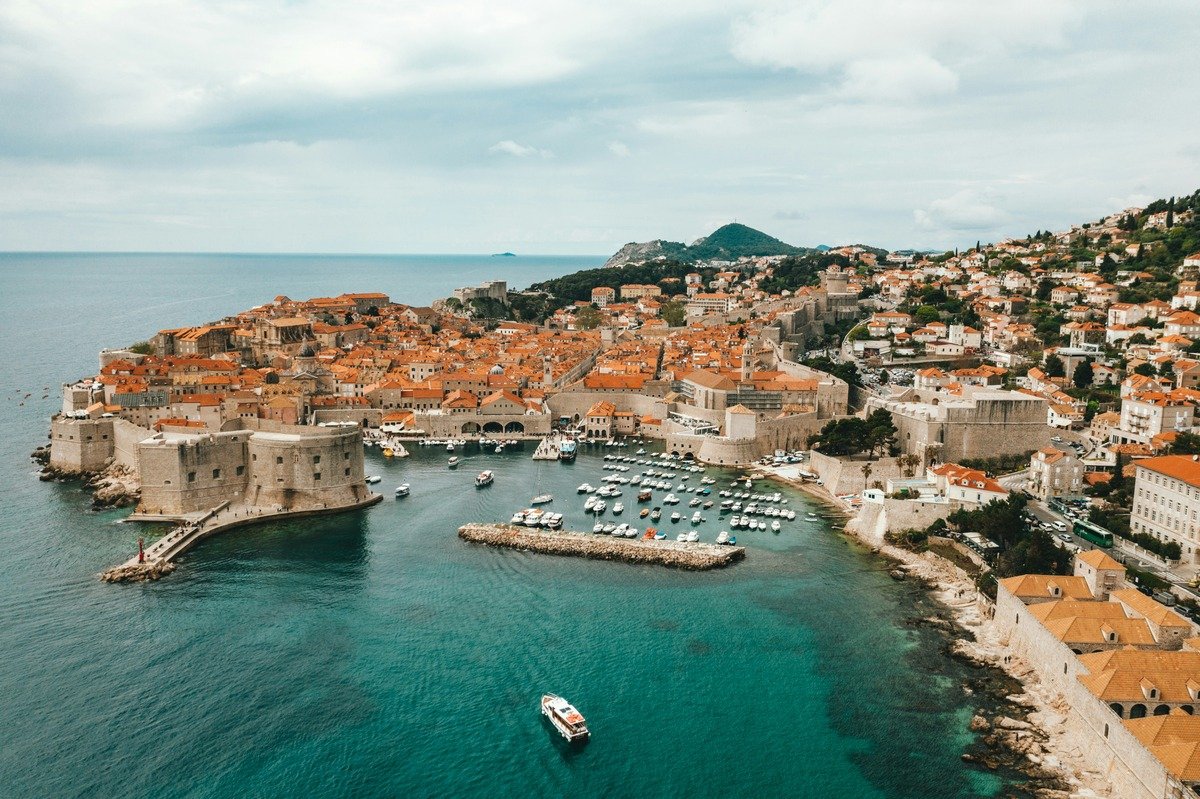
A Roman emperor built his retirement palace on the Adriatic coast. 1,700 years later it became a city. Then people discovered it and now the city walls at dawn are one of the best walks in Europe and the city itself in August is a problem you should plan around.
What You're Actually Getting Into
Croatia has two distinct travel problems that pull in opposite directions. The first is that it is genuinely beautiful — the Adriatic is the right shade of blue, the walled cities are intact and inhabited, the islands are plentiful and varied, the food is excellent, and the country joined both the EU and Schengen in ways that made it logistically simple to visit. The second problem is that everyone knows all of this, and July and August on the Dalmatian coast are a test of how much beauty you can appreciate while also being very hot and surrounded by an enormous number of other people who came to the same conclusion you did.
The solution is timing. Croatia in May is uncrowded, warm enough for swimming in the south, and priced like the Balkans it geographically is rather than the Italian Riviera it sometimes prices itself as. Croatia in September has warm sea and empty catamaran ferries and restaurants that are genuinely pleased to see you. Croatia in August is fine if you've booked everything three months ago, accepted the prices, and have a plan for how to reach the Dubrovnik city walls before 7am.
The country is also significantly larger and more varied than the standard coast-and-islands itinerary suggests. Istria in the northwest is its own travel world — Italian-influenced, truffle-obsessed, vineyard-dense, and considerably less crowded than Dalmatia. The Plitvice Lakes are in the interior, emerald and impossible, and require advance booking regardless of season. Zagreb is a proper Central European capital that rewards two days and gets approximately the attention of a place people drive through on the way to Split.
Croatia adopted the euro in January 2023 and joined Schengen at the same time. Both changes simplified travel logistics considerably. The country is now fully integrated into the European standard for money and borders, which is good for visitors and has also accelerated the price convergence toward Western European levels in tourist areas.
Croatia at a Glance
A History Worth Knowing
Croatia's coastline has been inhabited, traded through, and fought over for so long that the historical density per square kilometer rivals anywhere in the Mediterranean. The Illyrians were here before Rome. The Greeks established colonies on Hvar (Pharos) and Korčula from the 4th century BCE. Rome came, built roads and aqueducts and amphitheatres that are still standing, and in 305 CE Emperor Diocletian — who was Croatian-born, from a village near modern Sinj — retired to the palace he had built on the Adriatic coast near Salona. That palace is the nucleus of what is now Split, and it is the strangest urban phenomenon in Europe: a Roman emperor's retirement complex that became a city, that is still a city, where people cook dinner and sleep and run coffee bars inside walls that went up seventeen centuries ago.
After Rome dissolved, the Croatian tribes arrived in the 7th century as part of the great Slavic migrations. The Croatian Kingdom, established in the 10th century, was one of medieval Europe's more coherent polities, producing a documented tradition of law and governance that scholars of legal history find genuinely significant. The Pacta Conventa of 1102 entered Croatia into a personal union with Hungary that lasted, with various interruptions, for 800 years. The coastal cities — Zadar, Šibenik, Split, Dubrovnik — had a different trajectory, passing between Byzantine, Venetian, and Hungarian influence in combinations that produced the architectural layering visible in any Dalmatian old town.
Dubrovnik's history deserves particular attention because it is genuinely unusual. The Republic of Ragusa, as it was known, was an independent city-state from 1358 to 1808, conducting a sophisticated diplomatic and commercial operation that kept it free from both Ottoman and Venetian domination through a combination of strategic neutrality, careful tribute payments, and diplomatic skill that would embarrass most modern foreign ministries. Ragusan merchants traded with the Ottoman Empire, the Habsburgs, and the Spanish simultaneously. The republic's motto was Non bene pro toto libertas venditur auro — "Freedom is not well sold for all the gold in the world." The city walls, which the republic maintained as its primary physical insurance policy, are what you walk today.
The 20th century was turbulent. Croatia was part of the Kingdom of Yugoslavia after WWI, then a Nazi puppet state (the Independent State of Croatia under the Ustaše, responsible for documented atrocities against Serbs, Jews, and Roma) during WWII, then Socialist Yugoslavia under Tito. Croatian independence in 1991 triggered the Croatian War of Independence, in which Yugoslav People's Army and Serbian paramilitary forces attacked Croatian territory, shelling Dubrovnik and besieging Vukovar in eastern Slavonia. The war formally ended in 1995. Croatia joined NATO in 2009, the EU in 2013, the euro and Schengen in 2023. The country has transformed dramatically in thirty years, and the transition from war damage to luxury yacht harbors in a single generation is a specifically Croatian kind of dissonance that Croats are aware of and visitors mostly aren't.
Roman Emperor Diocletian retires to his purpose-built palace on the Adriatic. The nucleus of what becomes Split.
Tomislav crowned first Croatian king. The medieval Croatian state at its most coherent and independent.
Dubrovnik operates as an independent city-state for 450 years, maintaining freedom through diplomacy while larger powers fight around it.
800 years of personal union and Habsburg rule, with Croatian autonomy fluctuating. Croatian cultural identity preserved through the period.
Nazi puppet Independent State of Croatia established. Documented atrocities against Serbs, Jews, and Roma. Yugoslav Partisans under Tito win.
Independence declared. Dubrovnik shelled. Vukovar besieged and destroyed. War ends 1995. Reconstruction begins.
EU membership 2013. Euro adopted and Schengen joined simultaneously in January 2023. Fully integrated into European mainstream.
Top Destinations
Croatia's geography is unusual: a long, narrow coastal strip from Istria in the northwest to Dubrovnik in the south, with a mountainous interior that most tourists drive through without stopping. The coast is itself divided — Istria has an Italian character, Kvarner is transitional, and Dalmatia is what most people mean when they say "Croatia." The islands run parallel to the coast for its entire length. Zagreb sits inland in the continental north and is genuinely undervisited.
Split
The correct way to understand Split is to stop thinking of Diocletian's Palace as an archaeological site and start thinking of it as the urban core of a city of 170,000 people. The emperor's mausoleum became the Cathedral of Saint Domnius in the 7th century. His temple to Jupiter became a baptistry. His cellar vaults are now a warren of bars and shops. His peristyle courtyard is where people drink coffee. The walls went up in 305 CE and the neighborhood inside them is still a functioning residential neighborhood. This is genuinely the most interesting urban situation in Europe. Walk the walls in the morning, find a konoba in the old town for lunch, take the ferry to Brač or Hvar in the afternoon. Split works as a base more than Dubrovnik does.
Dubrovnik
The city walls are 1,940 meters around the old town and walking them takes about two hours. At 7am in June they are extraordinary — the terracotta rooftops below, the Adriatic to one side, Lokrum island in the distance, and almost no other people. At 11am in August with five cruise ships in the harbor they are an experience in managing your expectations under pressure. Dubrovnik is worth going to. It requires strategic visiting. Stay inside or immediately outside the old town so you have it in the early mornings and late evenings. Plan Plitvice or Mostar as a day trip alternative when the crowds peak. The city itself, understood correctly, is one of the finest preserved medieval urban environments in the world.
Plitvice Lakes
Sixteen lakes connected by waterfalls in a sequence of turquoise, emerald, and jade that looks computer-enhanced and isn't. UNESCO World Heritage Site since 1979. Entry is timed and limited — book online weeks in advance in summer or you will be turned away. The lower lakes are the most dramatic; the upper lakes are quieter and worth doing if you have a full day. Arrive for the first entry slot (7am) for the best light and the fewest people. The park is four hours from Zagreb and two hours from Zadar — plan accordingly.
Hvar
The longest island on the Croatian coast at 68 kilometers, Hvar splits into two very different experiences. Hvar Town on the western tip is glamorous, yacht-heavy, expensive, and genuinely beautiful — the Renaissance loggia, the cathedral, the fortress above the town. The central island — lavender fields, small villages, the inland road through Stari Grad (one of the oldest planned cities in the world, founded by Greeks in 384 BCE) — is where the island reveals its actual character. Stari Grad has a UNESCO listing and a tenth of Hvar Town's prices.
Istria
Croatia's northwestern peninsula has more in common with Tuscany than Dalmatia. Italian is spoken alongside Croatian, the food centers on truffles and prosciutto and Malvazija wine, and the hill towns — Motovun, Grožnjan, Rovinj — sit above agricultural valleys in ways that look more like Umbria than the Adriatic. Rovinj is the most beautiful coastal town in Istria and the most visited; Pula has the best-preserved Roman amphitheatre outside Rome; the interior has the truffles. Istria is consistently underrated relative to Dalmatia and is significantly better value.
Zagreb
Croatia's capital of 800,000 is a proper Central European city with a Viennese-influenced upper town (Gornji Grad), an Austro-Hungarian lower town full of café culture, and a museum scene that genuinely surprises. The Museum of Broken Relationships is exactly what it sounds like — a collection of objects donated by former couples — and is one of the strangest and most affecting small museums in Europe. The Dolac market on a Saturday morning is where Zagreb actually shops. The tramway connects everything within the compact center. Give it two days. It will earn both.
Pelješac Peninsula
A finger of land pointing southwest from the Dalmatian coast, accessible from Dubrovnik by ferry or by the new Pelješac Bridge (opened 2022, bypassing the Bosnia corridor). The peninsula grows Plavac Mali on steep south-facing slopes above the sea, producing reds of genuine depth and complexity. Dingač and Postup are the two DOC zones, both on the southern side of the peninsula where the vines hang almost vertically above the Adriatic. Wine at the Dingač winery costs €10–15 a bottle. Combine with the medieval walled town of Ston, which produces some of Croatia's best oysters from the bay below its walls.
Vis
The most remote of the major inhabited Dalmatian islands — accessible by ferry from Split in 2h15m — was a Yugoslav military base until 1992 and consequently closed to foreign visitors for decades. The island missed the tourist development that hit Hvar and Brač, which is why it still looks like the 1970s in the best possible way: quiet towns, fishing boats, no water parks. The Blue Cave on the nearby islet of Biševo, reached by boat from Komiža, is one of the most extraordinary natural phenomena on the Adriatic. Vis wine — Vugava white, grown on volcanic soils — is unlike anything else from the Dalmatian coast.
Culture & Etiquette
Croatian culture on the coast is Mediterranean in pace and priority: lunch is the main meal, the afternoon is for resting, the evening begins late and runs long, and the concept of rushing is applied selectively. The coffee culture — sitting at a café table for an hour over a single espresso watching the world organize itself — is practiced seriously and is not a concession to tourism. It is how Croats actually use time. If you are waiting for a bill, a waiter, or anything in coastal Croatia, you are probably going to keep waiting until someone has finished their coffee. Adjust expectations accordingly.
The difference between Croatian coastal and inland culture is real and noticeable. Zagreb and Slavonia in the east have a Central European directness that the Dalmatian coast doesn't. The coast is warmer in social temperature and slower in operational tempo. This is not inconsistency — it's the difference between Mediterranean and Central European cultural patterns operating in the same country.
"Dobar dan" (good day) on entering a small shop or local restaurant is normal and noticed. On the coast where Italian influence is strong, "Ciao" is equally common and entirely accepted. Not greeting anyone on entry in a small establishment is mildly odd.
Croatian wine is genuinely excellent and ordering local varieties over imported alternatives is both the correct culinary choice and a minor social grace that locals notice. In Istria: Malvazija white. On Hvar and Brač: Plavac Mali red. On Vis: Vugava white. In Dubrovnik's hinterland: Pošip from Korčula.
Croatian coastal towns have designated swimming areas (often rocky platforms or small beaches). Swimming from the town walls, the Old Town harbors, or near ferry docks is technically illegal and socially frowned upon regardless of how inviting the water looks from the wall.
Good restaurants in Dubrovnik and Hvar Town book out for dinner in July and August. Reserve 24–48 hours ahead for anywhere you specifically want to eat. Walk-ins work everywhere in shoulder season and almost nowhere in peak August.
Traditional konobas (family taverns) often prefer or require cash. Card machines exist but are not universal in smaller establishments. Keep €20–40 available for any meal in a village or island konoba.
Croatian and Serbian are mutually intelligible languages with political and cultural identities their speakers consider distinct. Referring to Croatian as Serbian or suggesting they're the same language is guaranteed to produce a cold response. They are separate languages in official terms and separate identities in every practical sense.
Dubrovnik, Split, and most coastal towns have ordinances against walking through city centers in swimwear. Fines are issued in peak season and are not trivial. Put a sarong or shirt on before walking from the beach to anywhere. The ordinances are enforced unevenly but exist.
Dubrovnik has been the filming location for King's Landing since 2011. Locals have been living with this for well over a decade and the enthusiasm for discussing it is approximately zero. The game of thrones tour boats exist. The locals have strong opinions about them that they express through expressions rather than words.
Splitting bills by card in multiple ways creates genuine problems for some Croatian establishments. Clarify payment method before sitting down if your group is large. "Sve skupa" (all together) or "Odvojeno" (separately) are useful phrases to have ready.
Dubrovnik has essentially no useful parking near the old town and the roads into the city in summer are at a standstill from 8am. A car is useful for the Pelješac wine route, the Neretva valley, and the Bosnian border crossing — not for the city itself. Leave it at the hotel outside town.
Klapa Music
Klapa is a traditional Dalmatian form of a cappella harmony singing, UNESCO-listed as intangible cultural heritage. Male voices in close harmony, typically four to eight singers, performing songs about love, the sea, and longing. You'll hear it in Dalmatian towns in the evenings, sometimes from organized groups, more often from a cluster of men who simply started singing because they felt like it. The Klapa Festival in Omiš (July) is the main formal event but impromptu klapa is the more moving experience.
Čipka Lacemaking
The needle lace of Pag island and the bobbin lace of Lepoglava are both UNESCO-listed Croatian craft traditions. Pag lace is made from local thread using a technique unique to the island, producing geometric patterns that have been made by Pag women for centuries. The lace shops of Pag town sell authentic examples from local makers. A small piece costs €30–80 and is genuinely handmade in a way that the word is rarely applied honestly.
The Necktie's Origin
The necktie — the cravat — is a Croatian invention. Croatian mercenaries serving in France in the 17th century wore a distinctive knotted cloth around the neck that French soldiers called à la croate (in the Croatian style), which became cravate and eventually the necktie. The claim is documented, historically defensible, and a point of considerable Croatian national pride. The Croatian word for necktie is kravata. The connection is on every Croatian tourist brochure and has been for decades. It is also genuinely true.
Football Culture
Croatia's performance at the 2018 World Cup (runners-up) and 2022 World Cup (third place) from a population of under four million is a statistical outlier that Croatians discuss with the pride of people who have beaten the numbers. Dinamo Zagreb vs. Hajduk Split is the most heated domestic rivalry in the region. Watching a Hajduk Split match in Split's Poljud stadium is a cultural experience significantly more intense than the city walls, and tickets cost €10–20.
Food & Drink
Croatian food has two distinct personalities separated by geography. Coastal Croatia is Mediterranean: olive oil, grilled fish, seafood risotto, fresh vegetables, local wine. Continental Croatia is Central European: roast meats, stews, freshwater fish, paprika, heavy sides. Istria is a third thing entirely — Italian in technique and ingredients, with black and white truffles shaved over pasta at prices that would be considered extremely reasonable at any comparable Italian restaurant.
The thing most visitors don't realize: the tourist-facing restaurants in Dubrovnik's old town and on Hvar's main square are charging Italian Riviera prices for food of average quality. The konoba (traditional tavern) one or two streets back, with fishing nets on the ceiling and a daily catch list on a chalkboard, is serving better food at half the price. The difference requires only the willingness to walk past the laminated menu with photographs.
Grilled Fish
The Adriatic is smaller and less polluted than the Mediterranean, and the fish quality shows. Sea bass (brancin), sea bream (orada), John Dory (kovač), and the small blue-backed fish grilled whole — sardines, mackerel, anchovies — are the daily standard. Grilled over charcoal or wood, dressed with olive oil and lemon, with a side of blitva (Swiss chard with garlic and potato) and local wine. This is the best version of simple food available on the Croatian coast.
Peka & Slow-Cooked Meats
Peka is the cooking method that defines Croatian celebratory food: lamb, veal, or octopus placed in a heavy cast-iron bell-shaped lid (peka), buried under glowing embers, and cooked for two to three hours until the meat falls off the bone and the juices reduce into the vegetables. Almost every traditional konoba offers peka but it requires 24 hours' advance ordering. Order it for the second night of anywhere you're staying more than one night. It will be the meal you remember.
Istrian Truffles
The Motovun forest in Istria produces white and black truffles in quantities that make Istrian restaurants significantly cheaper for truffle dishes than anything comparable in Italy or France. White truffle season (September–December) is the main event. A pasta with fresh white truffle shaved at the table costs €20–35 in Motovun, compared to €80–150 in Alba. The same dish at an Istrian farmhouse agritourism costs less still. Plan an Istrian trip for October for the full combination of truffle season and harvest season.
Ston Oysters & Shellfish
The bay of Mali Ston below the medieval walls of Ston on the Pelješac peninsula has been producing oysters for over 2,000 years — the Romans cultivated them here. The current operators grow European flat oysters and mussels in the same bay. A dozen oysters at a Mali Ston konoba costs €12–18 and they arrive minutes from the water. Pair with a local Pošip white or a glass of Pelješac Plavac. This is one of the best meals available in Croatia and almost nobody goes there specifically for it.
Croatian Wine
Three indigenous grapes that grow nowhere else are the basis of Croatian wine identity. Plavac Mali on the Dalmatian coast (particularly Dingač and Postup on Pelješac) produces concentrated, tannic reds. Pošip, a white from Korčula, is crisp and mineral — the natural match for Adriatic fish. Malvazija Istarska in Istria produces aromatic whites with an oxidative richness when producers use traditional techniques. A bottle of serious Croatian wine at a winery costs €10–25. The same bottle at a tourist restaurant in Dubrovnik costs €35–50.
Slavonian & Continental Cuisine
Inland Croatia has a completely different food culture. Slavonia in the east produces Kulen, a heavily paprika-spiced pork sausage that is to Croatian charcuterie what prosciutto is to Italian — PDO-protected and specific to the region. Freshwater fish from the Sava and Drava rivers (catfish, carp, perch) cooked in paprika stew (fiš paprikaš) is the Slavonian national dish. This is food that the Dalmatian coast tourists never eat and that is genuinely excellent.
When to Go
The Croatia timing conversation is the most important planning decision you'll make. The country in May and the country in August are not the same experience. In May the ferry to Hvar has empty seats, the Dubrovnik city walls are walkable at any hour, and accommodation costs 40–60% of August prices. In August you're dealing with Europe's most concentrated summer tourism in some areas. Both experiences are valid. One requires significantly more planning and money.
Late Spring
May – JunThe sea is warm enough to swim in the south from late May. Prices are 30–50% below peak. Dubrovnik's walls are accessible without 7am alarm calls. Plitvice's waterfalls are full from spring snowmelt. Hvar's lavender flowers in June. This is when Croatia rewards the decision to come.
Early Autumn
Sep – OctThe sea is at its warmest (25–27°C in September). Crowds have thinned dramatically after the first week of September. Prices drop. Istrian truffle season begins in late September. October brings wine harvest and the mainland autumn color. The single best month for combining coast, culture, and value.
Peak Summer
Jul – AugPerfectly good if you've booked everything in advance, accepted the prices, and have strategies for the most crowded sites. Dubrovnik limits daily visitors at the city walls — there are now entry caps. August is the single most popular month for domestic and international tourism simultaneously. Everything is more expensive, more crowded, and hotter.
Winter
Nov – MarZagreb in December has one of Central Europe's more atmospheric Christmas markets. Dubrovnik in January is quiet, cold, and genuinely beautiful. The coast is largely closed for tourism but Istrian agritourism and wine routes operate year-round. Inland Croatia functions normally throughout winter.
Trip Planning
Ten to fourteen days covers a strong Croatia itinerary: Zagreb (2 nights), Plitvice (1 night), Split (2–3 nights with island day trips), and Dubrovnik (2–3 nights). Adding Istria requires either starting there or building a separate trip. The island hopping route — Split to Hvar to Vis to Korčula to Dubrovnik by catamaran — is one of the great Adriatic itineraries and takes 7–10 days depending on how long you stay on each island.
Split
Fly directly into Split Airport. Diocletian's Palace on arrival afternoon — walk the perimeter outside, then the Peristyle inside, then find a table in the palace cellar vaults for dinner. Day two: walk Marjan Hill above the city for the panorama, the Meštrović Gallery (Croatia's most important sculptor had his studio here), afternoon ferry to Brač for a swim at Zlatni Rat beach, return to Split for dinner.
Hvar
Catamaran from Split to Hvar Town (1 hour). Day three: the fortress above Hvar Town for the view, the Benedictine convent on the main square, lunch at a konoba in the old town's back streets. Afternoon: water taxi to the Pakleni Islands for swimming. Day four: rent a scooter and drive the length of the island to Stari Grad. The lavender fields in June. The UNESCO-listed plain around Stari Grad. Ferry back to Split the same evening.
Dubrovnik
Bus from Split to Dubrovnik (4.5 hours, departs early morning). Arrive early enough to walk the city walls before lunch. Day six: Srđ Hill cable car for the panorama that explains the siege geography of both the 1991 war and the medieval defenses, Lokrum Island ferry in the afternoon. Day seven: if cruise ships are in, leave the old town during their peak hours (10am–4pm) and explore Cavtat by bus. The city walls again in the evening when the light is different.
Zagreb
Fly into Zagreb. Upper Town (Gornji Grad) on day one: St. Mark's Church with its tiled roof, the Croatian Parliament, the Lotrščak Tower and its noon cannon. Museum of Broken Relationships — the strangest and most moving small museum in Europe. Dolac market on day two if it's Saturday. Tkalčićeva Street for the café culture that defines Zagreb evenings.
Plitvice Lakes
Book the first entry slot (7am). The lower lakes on the morning, the upper lakes in the afternoon if energy allows. Sleep nearby to avoid the dawn drive. The park in early morning light with mist on the water and no crowds is the Croatia experience that photographs do not adequately convey.
Split + Islands
Continue south to Split. Two nights, with one full day on Vis: the ferry in the morning, Blue Cave boat trip from Komiža, Vugava wine at a Vis konoba, return evening ferry. Vis gives the island experience that Hvar Town's party scene has moved away from.
Pelješac + Korčula + Dubrovnik
Drive south from Split. Stop at Ston for the oysters in Mali Ston. Wine tasting at Dingač on the Pelješac peninsula. Korčula island — smaller than Hvar, better-preserved medieval old town, claimed (questionably) as Marco Polo's birthplace. Ferry to Dubrovnik. Three nights, city walls at 7am and again at 8pm.
Dubrovnik Surroundings
Use Dubrovnik as a base for day trips that the one-day visitors miss: Cavtat (charming, quiet, 30 minutes by bus). The Elaphiti Islands by boat. The Neretva delta — an anomalous freshwater wetland ecosystem that's also where Dalmatian mandarin oranges come from. Drive the coastal road north to Makarska via the Biokovo mountain range.
Istria
Fly into Pula. The amphitheatre at dawn before tour groups arrive. Rovinj for two nights — walk the peninsula old town, boat to the Rovinj islands, dinner at a konoba with truffles on everything. Motovun for the truffle market (October) or the film festival (July). The hill town circuit: Grožnjan for the artists' colony, Oprtalj for the frescoed church, Buzet for the truffle capital of Croatia.
Kvarner Coast + Krk Island
Drive south through Kvarner. Opatija — the Habsburg-era resort town that predates the Riviera and is entirely underrated. Krk island for a night — the largest Croatian island, connected by bridge, with the most varied character of any Adriatic island. The town of Krk for the cathedral, Baška for the beach, Vrbnik for the Žlahtina wine.
Zadar + Northern Dalmatia
Zadar is consistently underrated relative to Split and Dubrovnik. The Sea Organ — an architectural installation that uses the Adriatic waves to play music through stone tubes — is the strangest and most beautiful public artwork in Croatia. The Old Town has the best Roman forum remains on the Adriatic coast outside Split. Kornati National Park day trip by boat from Zadar — 89 uninhabited islands in the bluest water on the coast.
Full Island Hop to Dubrovnik
The complete catamaran island route: Split to Hvar (overnight), Hvar to Vis (overnight), Vis to Korčula (overnight), Korčula to Mljet National Park (overnight — salt water lakes inside a national park where you can swim in a lake in the middle of an island in the sea), Mljet to Dubrovnik. This is the definitive Croatia experience and requires 7–8 days minimum to do it properly rather than in transit.
Vaccinations
No mandatory vaccines for Croatia. Routine vaccines up to date. Tick-borne encephalitis (TBE) vaccination recommended for hiking in forested areas — ticks are present in Croatian forests from spring through autumn, particularly in Plitvice and the continental interior.
Full vaccine info →Connectivity
EU roaming rules apply — EU/EEA residents pay no extra. Non-EU visitors: eSIMs from Airalo or local SIMs from A1, HT, or Telemach. Coverage is excellent in cities and along the coast. Islands can have gaps — Vis in particular has limited coverage in the interior. Download offline maps before any island trip.
Get EU eSIM →Ferry Booking
Jadrolinija operates the national ferry network. Car ferries book out in July and August — book weeks in advance if taking a car to the islands. Passenger catamarans (Split to Hvar, Hvar to Vis etc.) run on first-come-first-served in most seasons. The Jadrolinija app handles real-time booking. Take a car to the islands only if you genuinely need it — it's expensive and limiting.
Plitvice Pre-booking
Non-negotiable: book Plitvice Lakes entry online at np-plitvicka-jezera.hr as soon as your dates are confirmed. In summer the park sells out days or weeks in advance. Timed entry at 7am or the last afternoon slot has the fewest visitors. The park's own website is the only booking platform — avoid third-party resellers charging premiums.
Travel Insurance
Good hospitals in Zagreb, Split, and Dubrovnik. EU citizens covered by EHIC/GHIC. Non-EU visitors need travel insurance with medical cover. For sailing, diving, or adventure sports: verify your policy covers maritime activities. Mountain rescue in the Velebit and Biokovo ranges exists but response times vary.
Dubrovnik Cards
The Dubrovnik Card covers city walls entry, transport, and museums for a flat fee. In peak season when wall entry is capped, card-holders sometimes get priority. Calculate whether it covers your planned visits before buying. The wall entry alone (€35 in peak season) is the main cost driver — the card makes sense if you plan multiple museum visits.
Transport in Croatia
Croatia's transport network works well for the main tourist routes and requires patience for everything else. The Jadrolinija ferry network is the backbone of island access. The A1 motorway from Zagreb to Split is excellent. Dubrovnik to Split by road is 230 kilometers and takes 3–4 hours. The coastal route is significantly more scenic and significantly slower. For island hopping, ferries and catamarans are the only option and are generally reliable in season.
Jadrolinija Ferries
€3–15 per crossingThe national ferry company operates car ferries and passenger catamarans between the mainland and islands. Split to Hvar: 1 hour catamaran. Split to Vis: 2h15m. Dubrovnik to Korčula: 3 hours. Book car ferries in advance for peak season — book passengers on catamarans at the port same day in shoulder season.
Intercity Buses
€10–30/routeThe primary intercity connection. Zagreb to Split: 5 hours. Split to Dubrovnik: 4.5 hours (border crossing adds time). Reliable and comfortable. Book on Flixbus or direct with Autobusni Kolodvor Zagreb. Buses are often faster than trains for coastal routes.
Car Rental
€30–70/dayEssential for Plitvice (limited public transport), Pelješac wine route, Istrian hill towns, and Dalmatian hinterland. Not needed for Split or Dubrovnik centers. The A1 motorway toll from Zagreb to Split costs about €15. Vignettes are not required — tolls are paid at booths.
Trains
€15–30/routeLimited coastal coverage — the only significant train route is Zagreb to Split (5.5 hours). No trains to Dubrovnik. Zagreb to Rijeka for the Kvarner coast. The rail network is more useful in continental Croatia than on the coast. HŽ (Croatian Railways) operates the network.
Taxis & Uber
€5–15 around citiesUber and Bolt operate in Zagreb, Split, and Dubrovnik. Traditional taxis are metered. Dubrovnik taxis from the old town to the airport (~25km) cost €35–50 — check before boarding. From Split airport to the old town: €15–20 by meter.
Scooter & Bike Rental
€30–60/dayThe ideal way to explore islands. Hvar has 68km of island — a scooter from Hvar Town to Stari Grad takes 25 minutes and covers the lavender fields. Brač, Korčula, and Vis are all well-suited to scooter exploration. License required (car license covers up to 125cc in most cases). Book at island ports.
Airports
Varies by airportSplit Airport is the main gateway for Dalmatia. Dubrovnik Airport is 20km from the old town (bus or taxi). Zagreb Airport serves the capital and Plitvice access. Zadar Airport gives the best access for northern Dalmatia. Pula Airport for Istria. All well-connected to major European hubs.
Dubrovnik Cable Car
€28 returnRuns from near the Buža Gate to the summit of Srđ Hill (415m). The view from the top is the best in Dubrovnik and shows the city walls, the islands, and the siege geography of both the medieval defense and the 1991–92 bombardment simultaneously. Worth the price. Operate from 9am — go first thing to avoid queues.
Accommodation in Croatia
In Dubrovnik, staying inside the old town walls is an experience — and an expense — unto itself. The same applies to Split's Diocletian's Palace. Both cities have excellent accommodation in the immediate vicinity of the old towns at lower prices. The islands run from basic apartments rented by local families to high-end boutique hotels on Hvar. Istria's agritourism sector — working farms with accommodation, meals, and wine or olive oil tasting — is one of Croatia's most underused accommodation options and among the most pleasurable.
Old Town Rooms
€100–350/nightRooms inside Dubrovnik's old town walls and inside Diocletian's Palace in Split are unique experiences — falling asleep in a building that predates most of European history, waking up when the city is still quiet. Prices reflect the location. Book as early as possible for summer.
Boutique Hotels
€80–220/nightCroatia's boutique hotel scene has matured significantly. Split's Bačvice neighborhood has several good options a 10-minute walk from the palace. Dubrovnik's Lapad peninsula has quieter hotels with sea views at lower prices than the old town. Rovinj in Istria has some of Croatia's best-designed boutique properties.
Private Apartments (Sobe)
€50–140/nightThe traditional Croatian accommodation: private rooms or apartments rented by local families, marked with a "Sobe" (rooms) sign. On the islands these are the most prevalent accommodation type, range from basic to very comfortable, and include a local contact who knows every konoba and swimming spot. Book on Booking.com or directly through island tourism offices.
Agritourism (Istria)
€60–120/nightIstrian agriturismo properties offer accommodation in working farms, vineyards, and olive oil estates. Dinner is typically included and made from the farm's own produce — truffles, prosciutto, Malvazija wine, olive oil. This is the best-value way to experience Istrian food culture and consistently produces the most memorable meals of any Croatian trip.
Budget Planning
Croatia is expensive by Balkan standards and comparable to Western Europe in its most popular tourist areas. Dubrovnik in August is priced like the Italian Riviera because it can be. Split is cheaper. Istria is cheaper than Dalmatia for equivalent quality. The interior is cheap. The sea is free. The main costs are accommodation in coastal areas during summer and dining in tourist-facing restaurants — both of which can be managed with strategy.
- Hostel or basic private room (sobe)
- Supermarket lunches, konoba dinners
- Public ferries and buses
- Free beaches and walking
- Local wine by the glass or carafe
- Boutique hotel or good apartment
- Restaurant meals twice daily
- Ferry connections and excursions
- Plitvice entry, Dubrovnik walls, museums
- Wine tastings and boat tours
- Old town rooms in Split or Dubrovnik
- Best restaurants and peka dinners
- Rental car and boat charters
- Private guides and winery visits
- Hvar Town boutique hotel
Quick Reference Prices
Visa & Entry
Croatia joined the Schengen Area on January 1, 2023. EU and EEA citizens need only a valid national ID. Citizens of the US, UK, Canada, Australia, New Zealand, Japan, and most other Western nations get 90 days visa-free within any 180-day Schengen period. Croatia also adopted the euro simultaneously, making currency simpler than before.
Note the Bosnia corridor on the coast road between Split and Dubrovnik (see transport section). The stretch through Neum requires leaving and re-entering the Schengen Area if using the coastal road rather than the Pelješac Bridge. This doesn't affect your 90-day allowance but requires your passport for the border crossing.
Standard Schengen rules apply since January 2023. EU/EEA citizens need valid ID. Most Western passport holders enter visa-free for 90 days within any 180-day period. Time in Croatia counts against your overall Schengen allowance.
Family Travel & Pets
Croatia is excellent for families. The Adriatic is calm and clear, the rocky beaches produce children who swim like fish within a day, and Croatian culture treats children in restaurants and public spaces with the Mediterranean warmth that makes family travel easier than in more reserved Northern European countries. The practical challenges are the costs in peak season and managing the logistics of island hopping with children and luggage — ferries are manageable but require planning.
Adriatic Swimming
The Croatian Adriatic is the clearest seawater most children from Northern Europe will ever swim in — visibility to 20 meters in some bays. The water is calm, the rocky entry teaches balance and body awareness, and the temperature (25–27°C in August) makes it difficult to get children out. Snorkelling off any rocky point reveals sea urchins, small fish, and occasionally octopus without any equipment beyond a mask.
Plitvice for Kids
The Plitvice Lakes are immediately spectacular for children — the turquoise colors are not explicable by any natural phenomenon they've seen before, the wooden boardwalks over the water create the feeling of walking on a lake, and the waterfalls are continuous throughout the walk. Book the first entry slot and do the lower lakes, which are the most dramatic. Allow the full day and bring snacks — the park has limited food options at prices that reflect the captive audience.
Diocletian's Palace
A Roman emperor's palace turned city is exactly the kind of thing that works on children. The underground cellars — vaulted Roman basement spaces now containing shops and bars — are immediately atmospheric. The explanation that people live, work, and eat breakfast inside walls from 305 CE produces the correct amount of disbelief in most ages. The Peristyle courtyard gives a sense of the palace's scale without requiring any museum endurance.
Island Hopping
The catamaran ferries between mainland and islands are entirely manageable with children — the journey to Hvar takes 1 hour from Split, the views are good, and the ferries are comfortable. Renting a small electric boat or kayak on arrival lets children power their own exploration of coves and bays. Brač is the best island for families with young children: Zlatni Rat beach has sandy areas and calm water more accessible than rocky alternatives.
Octopus Drying
The sight of octopus hung on lines to dry in the sun outside coastal konobas is one of those uniquely Mediterranean details that children find immediately compelling and slightly horrifying. The explanation of why — drying concentrates the flavour and softens the texture before grilling — leads into ordering the octopus peka or grilled octopus with olive oil and capers, which most children find acceptable once they've seen it cooked rather than hanging.
Zagreb for Kids
Zagreb has a good technical museum (Tehnički muzej) with interactive exhibits and a working planetarium that runs shows in Croatian but is visually compelling regardless of language. The cable car (funicular) from the lower town to the upper town is Europe's shortest public funicular at 66 meters and costs €1. Maksimir Park — Zagreb's equivalent of Hyde Park — has a small zoo with a long history and a large network of paths for cycling or scootering.
Traveling with Pets
Croatia is generally pet-friendly. EU Pet Passport with valid microchip and rabies vaccination covers travel from EU Schengen countries without restriction. Non-EU travelers need a veterinary health certificate issued within 10 days of travel, officially endorsed. UK travelers must use the Animal Health Certificate post-Brexit process.
Dogs are permitted on Jadrolinija ferries in a dedicated area — typically on the outer deck. Some catamarans restrict dogs to carriers. Confirm with the operator before booking a specific route. Croatian beaches vary on pet policy — many have designated pet-friendly sections or specific pet beaches. The national parks (Plitvice, Krka) restrict dogs on the main boardwalk routes; confirm current rules before visiting.
Accommodation: most private apartments (sobe) and agriturismo properties accept pets with advance notice. Hotels vary and must be confirmed individually. The Istrian agritourism sector is generally more pet-friendly than urban hotels on the coast.
Safety in Croatia
Croatia is a safe country for travelers. Violent crime against tourists is rare. The main risks are the mundane ones of any popular summer destination: pickpocketing in crowded tourist areas, occasional taxi overcharging, and sunburn from the Mediterranean sun that burns harder than visitors from northern climates expect. The sea presents the standard hazards of swimming — rip currents are rare on the Croatian coast but sea urchins are everywhere on rocky beaches and water shoes are genuinely non-optional.
City Safety
Split, Dubrovnik, Zagreb, and all major coastal towns are safe for tourists including at night. The main tourist zones are well-policed in peak season. Standard urban awareness in crowded market areas applies.
Solo Women
Croatia is comfortable for solo women travelers. English is widely spoken, the tourist infrastructure is mature, and the street harassment baseline is low by southern European standards. The islands are particularly safe and easy to navigate alone.
Sea Urchins
Sea urchins (ježevi) are abundant on rocky Adriatic shores and invisible in shallow water. Standing on one without water shoes produces an unpleasant experience requiring tweezers and patience. Water shoes are the single most important safety item for Croatian coastal travel. Always.
Sun and Heat
The Croatian summer sun is intense. Heat stroke risk is real in July and August, particularly during the peak heat of 12–4pm. Plan outdoor sightseeing for early morning or late afternoon. Dubrovnik's stone surfaces radiate heat — the white limestone of the old town in August at noon is genuinely brutal.
Dubrovnik Crowds
The city walls in August with multiple cruise ships in harbor can reach densities that create genuine safety concerns from pushing and heat. The city management has introduced visitor caps and timed entry systems. Follow the crowd management instructions. This is not a metaphorical caution — several incidents have occurred on hot August days.
Healthcare
Good hospitals in Zagreb, Split (KBC Split), and Dubrovnik. EU citizens covered by EHIC/GHIC. Travel insurance recommended for all non-EU visitors. Sea rescue (MRCC Rijeka) operates the maritime emergency service — 9155 is the maritime distress number on Croatian waters.
Emergency Information
Your Embassy in Zagreb
Most embassies are in the Gornji Grad and Maksimir neighborhoods of Zagreb. Split and Dubrovnik may have honorary consulates for some nationalities.
Book Your Croatia Trip
Everything in one place. These are services worth actually using.
Go When You'll Actually See It
The single most consistent mistake in Croatian travel planning is choosing dates based on price, convenience, or habit rather than the simple logic that the same country in May and in August are different travel experiences measured by every variable that matters. The people who say Croatia is overcrowded went in August. The people who say it's their favorite country in Europe went in May or September.
There is a Croatian concept, fjaka, specific to Dalmatia — an untranslatable word for the pleasurable stupor of doing nothing in the heat, the particular satisfaction of having nowhere to be and no intention of going there. It applies to lying on a warm limestone rock with the Adriatic below, or sitting at a konoba table with a carafe of Pošip while someone in the kitchen deals with the peka. The word describes what Croatia, at its best, does to you. Arrive ready for it. It doesn't happen on a schedule.