
Uruguay's capital doesn't perform for anyone
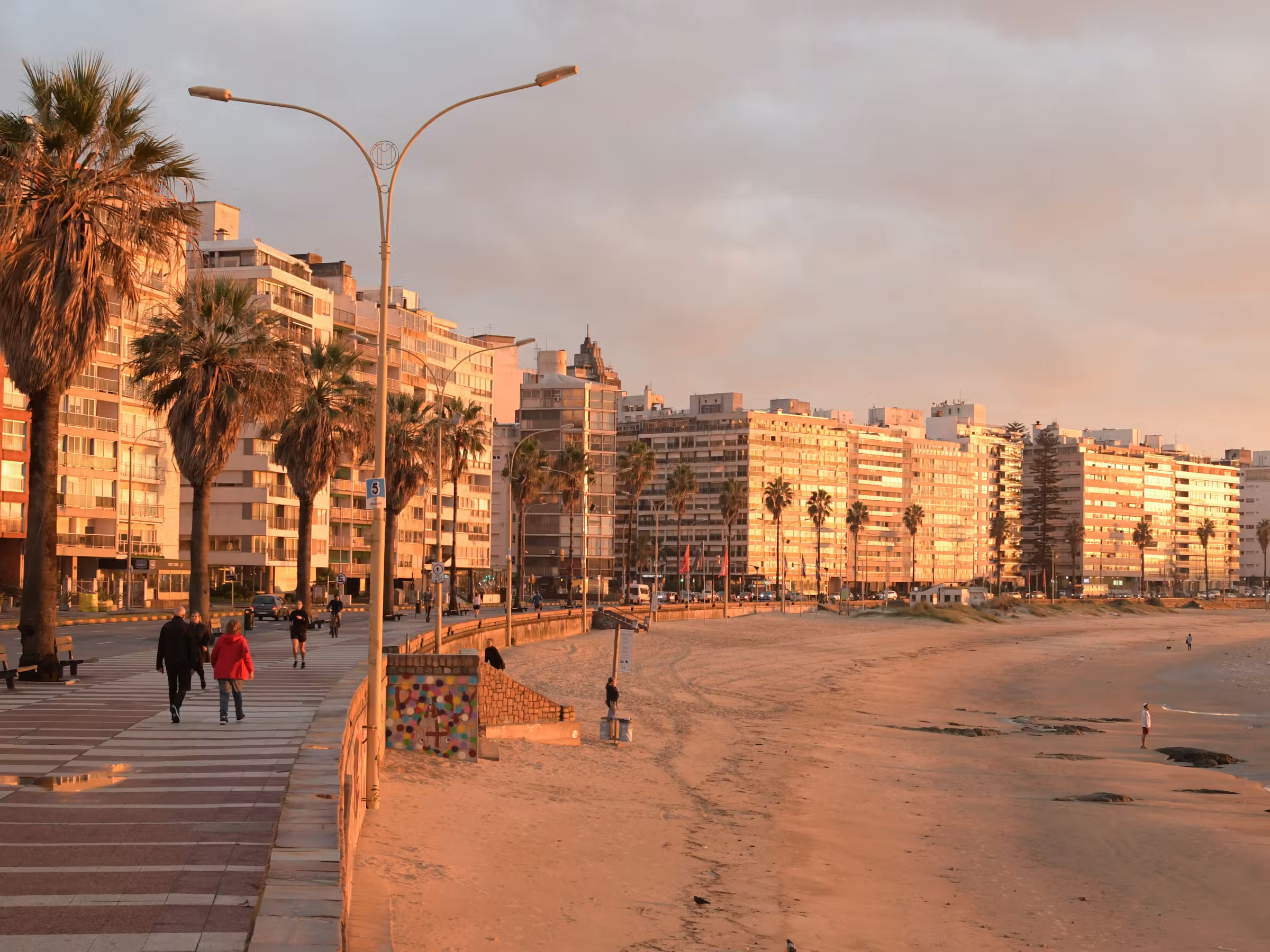
Montevideo sits on a low peninsula where the Río de la Plata widens into what's practically an inland sea, home to 1.3 million of Uruguay's 3.47 million people. It's a working capital first: government offices, port cranes and residential apartment blocks share the skyline with colonial facades and the odd Art Deco tower, and the whole city reads as calmer and less crowded than Buenos Aires just across the water. The Rambla, a promenade running 22 uninterrupted kilometers along the coast, is the closest thing Montevideo has to a single defining feature, and locals use every meter of it daily rather than treating it as a tourist backdrop.
What that means in practice: fewer must-see checklist attractions than a European capital, and more of a slower, lived-in rhythm built around mate on a park bench, asado on a Sunday, and a genuinely walkable historic core. Montevideo isn't trying to be Buenos Aires's flashier or Rio's more spectacular cousin, and comparing it that way misses what it actually does well.
The honest complications
Montevideo is more expensive than most South American capitals, and the gap with Buenos Aires specifically is large enough that many travelers day-trip in rather than staying multiple nights. Ciudad Vieja, the most atmospheric neighborhood by day, empties out and feels noticeably less safe after about 10pm. And outside a handful of headline sights, Montevideo rewards slow wandering more than a tightly packed itinerary; travelers expecting a dense list of world-class landmarks may find the city's appeal takes a day to click into place.
Four neighbourhoods that matter, plus one to know about
Montevideo strings out along the coast rather than clustering around a single center, so where you stay shapes how much time you spend on buses and in taxis.
Ciudad Vieja
The old town, laid out on the peninsula tip, holds Plaza Independencia, Palacio Salvo, Teatro Solís and Mercado del Puerto within easy walking distance of each other. It's the most photogenic base by day and the most rewarding for a first visit, but the streets thin out fast after dark and it's better as a daytime base or a short stay than a full multi-night anchor for a first-timer.
Pocitos
A crescent-shaped beach, leafy residential streets and reliable Rambla access make Pocitos the neighborhood where most visitors and long-term residents actually base themselves. It feels like a calm European seaside suburb transplanted to South America, with good restaurants and a comfortable, walkable feel well into the evening.
Punta Carretas
Next door to Pocitos, Punta Carretas mixes old residential streets with a shopping mall built inside a converted former prison, plus some of the city's better restaurants and hotels. Together with Pocitos, it's the recommended base for first-time visitors who want beaches, safety and restaurants within walking distance.
Carrasco
Montevideo's most exclusive residential district sits near Carrasco International Airport, with grand early-20th-century houses, a long beach, and a slower, more residential pace than the center. Good for travelers who want quiet and easy airport access over walkable nightlife.
From a Belle Époque casino hotel to the city's best hostels
Montevideo's hotel scene runs from grand historic properties in Carrasco to boutique conversions in Ciudad Vieja, with a genuinely good hostel scene at the budget end. These six picks span every budget and each earns its place.
At the top, the Sofitel Montevideo Casino Carrasco & Spa occupies a restored Belle Époque palace directly on Carrasco beach, with a casino, spa and the kind of grand-hotel atmosphere Montevideo has very little else of. In Ciudad Vieja, the Alma Histórica Boutique Hotel (from about $195) turns a heritage building into an intimate stay with each room themed around a different piece of Uruguayan cultural history, while the NH Montevideo Columbia (from about $68) sits in the old quarter with river-facing rooms and a genuinely central location for the price.
Near the beach in Carrasco, Cottage Carrasco (from about $169) is a few minutes' walk from both the sand and the Rambla. At the budget end, El Viajero Montevideo Hostel, set in a colonial-style house with an on-site cafe and bike rental, is consistently the most social pick for solo travelers, and MedioMundo Hostel in the Palermo neighborhood offers an eco-minded, art-filled alternative with a similarly easygoing atmosphere.
Beef, mate and dulce de leche, roughly in that order of seriousness
Montevideo's food culture centers on the parrilla, the wood-fired grill, and the city takes its beef more seriously than almost anywhere else on the continent. The best introduction is loud, crowded and inside a 19th-century market building.
Mercado del Puerto
A wrought-iron 19th-century market hall now packed wall to wall with parrilla counters, best on a weekend afternoon when live music and street performers fill the space around the grills. El Palenque has set the standard for service and quality here for over 60 years, run by descendants of founder Don Emilio Portela, with a grill-side counter for the casual experience or two formal dining rooms for a sit-down meal; beyond the beef, its Spanish heritage shows in the grilled octopus and shellfish.
Chivito
Uruguay's national sandwich, steak piled with mozzarella, ham, tomato, egg, olives and mayonnaise, invented at a Punta del Este restaurant in 1944 and adopted nationwide since. Comically large by design; order it "al plato" if you want it as a knife-and-fork platter instead of a sandwich.
Ciudad Vieja bistros
Jacinto, a cozy bistro tucked into Ciudad Vieja, mixes modern and traditional Uruguayan dishes with a focus on fresh, local ingredients, a good contrast to the market's grill-heavy menus if you want a sit-down dinner with a wine list.
Mate & dulce de leche
Mate is less a menu item than a constant background presence: locals carry gourd and thermos onto the Rambla, into parks and to the beach at Pocitos all day long. Dulce de leche shows up at breakfast on toast or bizcochos and again in desserts throughout the day.
A city best explored along its own waterfront
Montevideo's sights cluster tightly enough in Ciudad Vieja to cover on foot, with the Rambla doing the work of connecting everything else. Nothing here needs weeks of advance booking, which fits the city's generally unhurried pace.
Ciudad Vieja's landmarks
Start at Plaza Independencia, the square dividing Ciudad Vieja from the newer city, dominated by Palacio Salvo, a 120-meter Art Deco tower completed in 1928 by Italian architect Mario Palanti, briefly the tallest building in South America and twin to his Palacio Barolo in Buenos Aires; it now houses the Museum of Tango, a nod to the building's connection with "La Cumparsita," one of the most famous tangos ever composed. A short walk away, Teatro Solís, opened in 1856 and Montevideo's premier performance space for opera, ballet and classical music, is worth a guided tour even if you don't catch a show. From there, the old town's colonial streets lead down to the water and Mercado del Puerto for lunch.
The Rambla
At 22 uninterrupted kilometers, the Rambla is the longest continuous sidewalk in the world and the single best free thing to do in the city: walk, run or cycle any stretch of it, but the Pocitos section in late afternoon, when the beach fills with mate drinkers and the light turns gold over the water, is the one to prioritize if time is short.
Football history
Estadio Centenario, built in 1929 to 1930 to host the first FIFA World Cup final, which Uruguay won 4-2 against Argentina, was declared FIFA's first Historical Monument of World Football in 1983, the only stadium in the world with that designation. Its football museum holds trophies and memorabilia going back to Uruguay's Olympic gold medals in the 1920s, genuinely worthwhile even for visitors who don't follow the sport closely.
Carnival & candombe
If your visit lines up with early February, the Llamadas parade sends candombe drumming comparsas through the Barrio Sur and Palermo neighborhoods over two nights, part of a Carnival season that runs roughly 40 days from mid-January, the longest in the world. Outside Carnival season, candombe rehearsals (llamadas) still happen informally in Barrio Sur on weekend evenings and are worth seeking out if you hear drums.
One, two or three days, planned neighbourhood by neighbourhood
Two to three full days covers Montevideo properly; even a single well-planned day delivers the essentials. Sequence around Mercado del Puerto's lunch-to-mid-afternoon sweet spot and end each day on the Rambla.
- Morning
Ciudad Vieja. Plaza Independencia, Palacio Salvo from the outside, and Teatro Solís before the crowds build.
- Midday
Lunch at Mercado del Puerto. A parrilla plate at El Palenque, ideally on a weekend for the live music.
- Afternoon
The Rambla to Pocitos. Walk or bus down the waterfront toward Pocitos beach.
- Sunset
Pocitos beach. Mate on the sand as the light goes gold. Dinner back in Ciudad Vieja or Punta Carretas.
- Day 1
The one-day route: Plaza Independencia, Palacio Salvo, Teatro Solís, Mercado del Puerto, the Rambla to Pocitos.
- Day 2 morning
Estadio Centenario. The football museum and the stadium that hosted the first World Cup final.
- Day 2 afternoon
Punta Carretas. The converted-prison shopping mall and a wander through the neighborhood's residential streets.
- Day 2 evening
Dinner at Jacinto. A sit-down meal in Ciudad Vieja away from the market crowds.
- Days 1-2
The two-day route above, at a gentler pace.
- Day 3, option A
Wine country. A shuttle out to Bodega Bouza or another Canelones winery, tastings and a long lunch built around Uruguayan beef.
- Day 3, option B
Colonia del Sacramento. A 2.5-hour bus each way for the colonial old town, doable as a long day trip or better as an overnight.
Spread along the coast, best covered by bus and on foot
Montevideo's neighborhoods string out along roughly 20 kilometers of coastline, so while individual areas like Ciudad Vieja and Pocitos are very walkable, moving between them usually means a bus or a taxi. Carrasco International Airport (MVD) sits about 20 minutes from downtown; a taxi from the official rank or a ride-hailing app takes 30 to 45 minutes into the center depending on traffic, and is the most practical option for most arrivals.
CUTCSA buses cover the entire city and metropolitan area with a large fleet, useful once you've worked out the routes, though ride-hailing apps are simpler for visitors on a short trip. Tres Cruces terminal is the hub for nearly all intercity travel: hourly buses to Colonia (2.5 hours, about $15) and Punta del Este (2 hours, about $12) run from here, alongside international connections. A rental car makes sense mainly for wine country and day trips beyond the bus network's convenient range; within the city itself, it's more hassle than it's worth.
Best time to visit and Carnival timing
Montevideo has a mild, four-season climate without extremes. September to November and March to May bring comfortable temperatures and manageable crowds; December to February is warmer and busier, especially around the Carnival season and the Llamadas parade in early February. June to August is cooler and quieter, with occasional rain.
Carnival runs roughly 40 days from mid-January into late February, the longest Carnival season in the world, built as much around candombe drumming as costumed parades. If you want to see the Llamadas parade specifically, plan around early February and book accommodation well ahead.
More expensive than most of South America, still reasonable by global standards
Montevideo runs noticeably pricier than Buenos Aires or most other South American capitals. The hostel scene keeps the budget end workable, and the mid-range is genuinely comfortable without being extravagant.
- Hostel dorm $25-40
- Market meals and chivitos $8-15
- CUTCSA buses and walking
- Free Rambla and beaches
- Boutique hotel or B&B $90-150
- Restaurant meals $12-15/person
- Taxis or ride-hailing for longer hops
- Wine tasting or Estadio Centenario tour
- Sofitel Carrasco or equivalent
- Fine dining and premium tannat
- Private wine country or Colonia transfers
- Estancia add-on stays
One of South America's calmer capitals, with specific areas to know
Montevideo sits under the same US State Department Level 2, Exercise Increased Caution rating as the rest of Uruguay. Violent crime against tourists specifically is uncommon, and neighborhoods like Pocitos, Punta Carretas and Carrasco feel comfortable well into the evening. The picture changes in a few specific places worth knowing about rather than a citywide risk.
Montevideo's Casavalle and Cerro neighborhoods see higher crime rates and hold essentially no tourist interest, so avoiding them isn't a real sacrifice. Ciudad Vieja, the most appealing neighborhood by day, empties out and gets noticeably less safe after about 10pm, so treat it as a daytime destination or take a taxi back after dark. Pickpocketing is the most realistic everyday concern, concentrated around Tres Cruces terminal, Mercado del Puerto on busy weekends, and other crowded tourist spots, so keep bags closed and in front of you. Emergency number is the national 911, with dedicated lines for police (109), fire (104) and ambulance (105).
Wine country and a colonial old town, both within reach
Montevideo's position makes it a workable base for two very different day trips: a colonial river town and a wine region built around a grape barely grown anywhere else.
Colonia del Sacramento
Uruguay's oldest town, founded by Portuguese settlers in 1680, with a UNESCO-listed Barrio Histórico small enough to cover on foot in an afternoon: the Puerta de la Ciudadela gate, the ruins of the Convent of San Francisco Xavier, and the mid-1800s El Faro lighthouse, climbable for about 25 pesos and worth it for the view. Buses run hourly from Tres Cruces terminal; it also works as a stop en route to or from Buenos Aires via the connecting ferry.
Wine country
Canelones, Uruguay's first wine region, has more than 80 vineyards within an hour of the capital, most built around tannat, the French grape that has found an arguably better expression here than at home. Bodega Bouza, a 70-hectare estate in Melilla founded in 2000, runs shuttles directly from Montevideo for tastings and a lunch built around Uruguay's beef, making it doable as a half-day trip without a rental car.
Punta del Este
Uruguay's resort coast, with La Mano sculpture on Playa Brava and Carlos Páez Vilaró's whitewashed Casapueblo compound nearby. Better as an overnight than a rushed day trip given the 4-hour round-trip bus time, but doable in season if you leave early.
Montevideo FAQ
Is Montevideo safe for tourists?
Montevideo is one of South America's safer capitals, US State Department Level 2. Violent crime against tourists is uncommon; the main concerns are pickpocketing in busy areas and staying alert in Ciudad Vieja after dark.
How many days do I need in Montevideo?
Two to three full days covers the city well: one for Ciudad Vieja and the Rambla, one for Mercado del Puerto and the museums, and a third for Pocitos, Punta Carretas and a wine country or Colonia day trip.
How much does Montevideo cost per day?
Budget travellers manage on $50-70 a day with hostels and market meals; mid-range runs $110-170. Montevideo is more expensive than most other South American capitals.
When is the best time to visit Montevideo?
September to November and March to May for mild, comfortable weather without summer crowds. December to February is warmer but busier and pricier, especially around Carnival in January and February.
What is the best area to stay in Montevideo?
Pocitos and Punta Carretas for most first-timers: safe, beachfront, walkable and well-connected. Ciudad Vieja is more atmospheric by day but quieter and less safe-feeling at night. Carrasco suits travelers who want quiet and proximity to the airport.
How do I get from Montevideo airport to the centre?
Carrasco International Airport is about 20 minutes from downtown. A taxi from the official rank or a ride-hailing app takes 30-45 minutes depending on traffic and is the most practical option for most arrivals.
Do I need to speak Spanish in Montevideo?
No, but it helps. English is common in hotels and tourist-facing restaurants, less so on buses and in markets. A few basic phrases go a long way, and Uruguayan Spanish uses vos rather than tu.
Is Montevideo walkable?
Yes, especially the Rambla and Ciudad Vieja, both flat and pedestrian-friendly. Getting between neighbourhoods like Carrasco and Ciudad Vieja is better done by bus or taxi, since the city is spread out along the coast.
What is the Mercado del Puerto?
A 19th-century iron market building in Ciudad Vieja now filled with parrilla steakhouses, most famously El Palenque. Weekend afternoons bring live music and a genuinely festive atmosphere alongside the grills.
What Stays With You
Montevideo doesn't stage anything for the camera. The Rambla at sunset belongs to the people who walk it every evening of their lives, not to visitors passing through, and that's precisely why it works. The smoke rising off the grills at Mercado del Puerto, the mate circle on a Pocitos park bench, the quiet confidence of a country that legalized same-sex marriage and marijuana within a few years of each other and moved on without fuss: none of it was built for tourism, which is why all of it feels genuine when you find it.
Walk the Rambla to Pocitos on your last evening, watch the light go gold over the water the way it has for a century, and understand why Montevideo has never felt the need to raise its voice.