
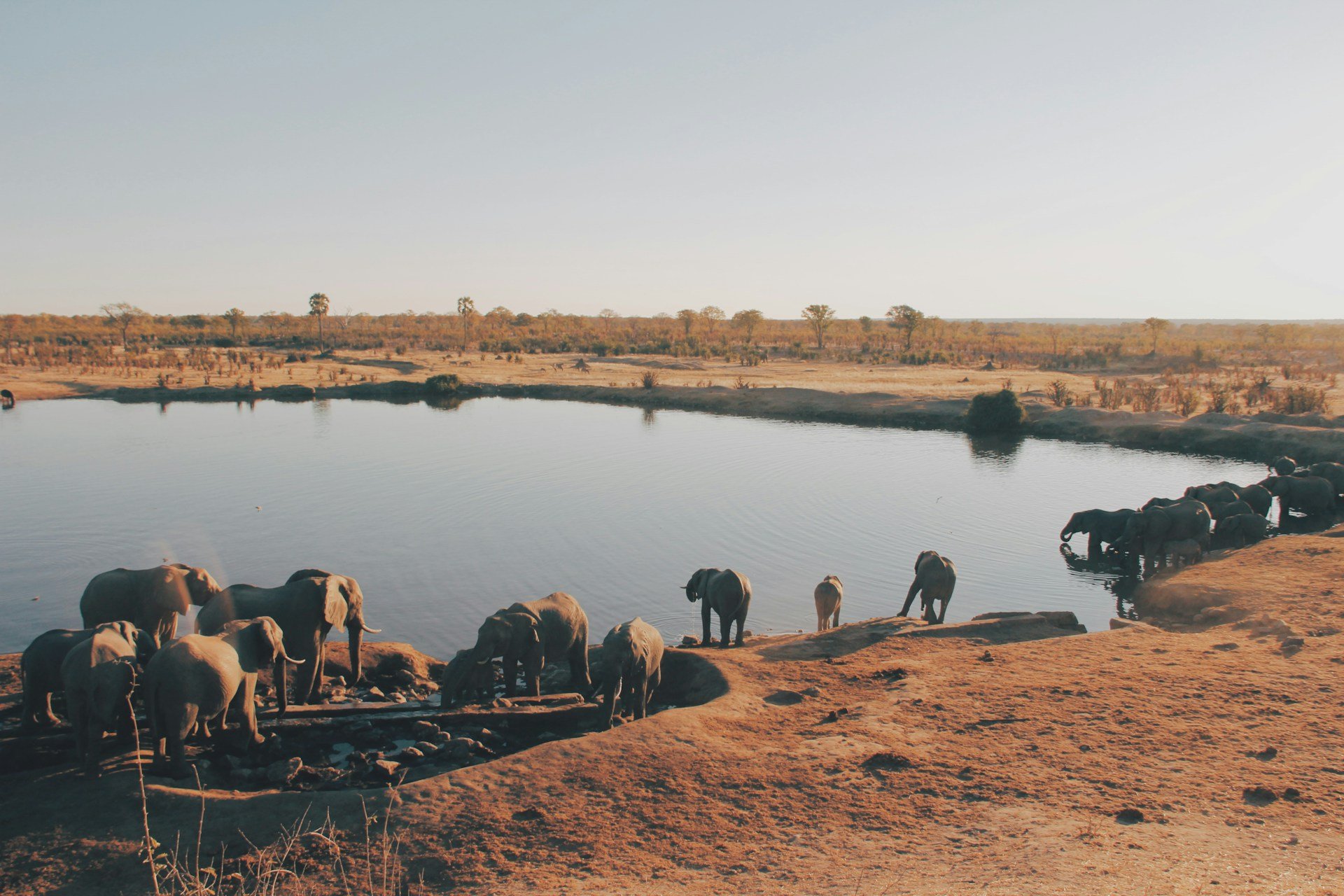
Zimbabwe Travel Scams
A stranger near the Victoria Falls gate claims to sell official entry tickets at a discount. A man with a laminated ID card calls himself your "licensed guide." A taxi driver at Robert Gabriel Mugabe International Airport quotes USD 80 for a USD 25 ride. A roadside police officer invents a traffic violation and wants cash. Zimbabwe is a remarkable destination experiencing a tourism boom. It also has well-documented, avoidable tourist traps. This page covers every one.
Zimbabwe Scam Overview 2026
Zimbabwe received an estimated 2.5 million international visitors in 2024 according to the Zimbabwe Tourism Authority, a number climbing sharply as the country rehabilitates its tourism infrastructure after years of economic instability. The tourist circuit concentrates heavily around Victoria Falls (the main entry point for most visitors), Hwange National Park, Great Zimbabwe near Masvingo, and to a lesser extent Harare and the Eastern Highlands. This concentration means scam patterns are predictable and location-specific.
Zimbabwe's tourist scams fall into three categories. The first is outright fraud: fake guides, counterfeit tickets, street currency scams, and police bribe demands. The second is opportunistic overcharging: taxis at airports and border crossings, informal craft vendors near tourist sites, and unofficial operators offering safari add-ons. The third is petty theft: bag-snatching and pickpocketing in Harare's downtown and at bus stations. The country's economic history means USD cash is king and handling it visibly creates risk. All three categories are covered here with specific locations, current prices, and what to do.
One Zimbabwe-specific note worth understanding: the country has two parallel currencies in active use. The Zimbabwe Gold (ZiG), the official currency introduced in 2024, trades alongside the US Dollar. Most tourist transactions are quoted and settled in USD. The duality creates room for confusion that some operators exploit deliberately. The currency section of this page covers this in detail.
Violent crime against tourists is rare on the established circuit. Downtown Harare at night and isolated roads are the exceptions. Victoria Falls town is very safe.
Fake guides, currency fraud, and taxi overcharging are frequent and specifically target tourists. More aggressive than comparable scams in Western Europe.
Concentrated in Harare's central business district, Mbare market, and intercity bus stations. Lower risk at Victoria Falls and in safari areas.
Police bribe demands on roads are a documented risk, especially when driving. Tourists on foot are less targeted. Knowing your rights significantly reduces exposure.
Zimbabwe Safety at a Glance
Victoria Falls Scams
Victoria Falls is Zimbabwe's most visited tourist destination and the entry point for the vast majority of international visitors to the country. The falls themselves are administered by the Zimbabwe Parks and Wildlife Management Authority (ZimParks). A permanent Tourism Police presence in Victoria Falls town makes it substantially safer than Harare for tourists. The scam ecosystem here is almost entirely economic rather than violent: unofficial guides, overpriced activities, fake ticket sellers, and aggressive craft vendors. All are avoidable.
🌎 Fake and Unlicensed Tour Guides
Individuals approach visitors near the Victoria Falls main gate or in town claiming to be licensed guides. They may carry laminated ID cards that look official, wear branded shirts, or use terminology that sounds professional. They offer to take you into the falls or show you viewpoints for a fee quoted upfront, typically USD 20-50. Once inside, the "guide" provides poor or inaccurate commentary, cuts the tour short, then demands additional payment or becomes aggressive about tips. In some cases, they are simply escorting you to a craft market where sellers pay them commission for bringing tourists in.
A related variant: children and young men near the falls gate offer to "hold your spot" in the ticket queue or to buy your ticket for you, then return with a ticket at an inflated price or demand a handling fee.
Do not accept guide services from anyone who approaches you near the falls gate. Book guides through your hotel or a registered tour operator before you arrive. The Rainforest Walk inside the national park is well-signed and perfectly navigable without a guide. The entry fee covers all viewpoints. A self-guided walk takes 1-2 hours. If you want a guide's expertise, the investment is worth it when booked through verified channels.
🎫 Fake or Discounted Entry Ticket Sellers
Individuals on the road between Victoria Falls town and the park gate approach tourists on foot or stop vehicles offering to sell entry tickets at a "discounted" rate, typically USD 20-25 for what is officially a USD 30 ticket. The tickets are either stolen, counterfeit, or legitimate tickets already used on a previous day that are hoped to pass inspection. Counterfeit tickets are occasionally sophisticated enough to look convincing at a glance. The gate staff are trained to identify them. A visitor arriving with a fake ticket must buy a valid one at the full price with no refund on the fake.
Buy your entry ticket only at the official ZimParks booth at the main gate entrance. There is no legitimate reason to buy tickets anywhere else. A "discount" means the ticket is not valid. Online pre-purchase is available through the official ZimParks website and recommended during peak season to avoid queuing.
🇩🇰 Zambia Border Crossing Confusion
The Victoria Falls Bridge connects Zimbabwe and Zambia and many visitors cross to see the falls from both sides. The border crossing has a small informal economy of "helpers" who offer to guide you through immigration. They know the process well and their assistance is unnecessary. They expect payment of USD 5-20 at the end for a service you didn't need and didn't explicitly agree to pay for. Some are persistent and aggressive when not paid. A separate issue: visitors with single-entry Zimbabwean visas sometimes cross thinking they can return, but forfeit their visa on exit and must pay again on re-entry (USD 30-50) unless they hold the KAZA Univisa specifically.
Decline all "helper" offers at the bridge. The immigration process is straightforward: queue, show passport, get stamped. If you plan to cross the bridge to the Zambian side, purchase the KAZA Univisa (USD 50) rather than a single-entry Zimbabwe visa. It explicitly allows re-entry and covers both sides. Ask your accommodation or a registered operator to brief you on current border crossing procedures before you go.
🌊 Activity Overpricing and Hidden Costs
Victoria Falls is activity-tourism central: bungee jumping, white-water rafting on the Zambezi, helicopter "Flight of Angels," sunset cruises, game drives. Prices vary significantly between operators and informal sellers who approach tourists near hotels charge more than reputable booking offices. A common tactic is quoting a price that does not include the national park entry fee, fuel levy, or "conservation fee," which are added at payment and can add USD 20-40 to the quoted price. Some informal operators also book you onto third-party operators with no consumer protection if the activity is cancelled or unsafe.
Book all activities through established operators with physical offices: Shearwater Adventures, Wild Horizons, Zambezi Boat Cruise Company, and Safari Par Excellence are the main licensed operators at Victoria Falls. Your hotel's activities desk books through the same channels. Ask explicitly: "Is this the total price including all fees?" before paying. Get a written receipt specifying what is included. Do not book from individuals who approach you on the street.
🏭 Craft Market Aggressive Selling and Pricing
The Victoria Falls Craft Village and roadside stalls outside the park gate are staffed by persistent vendors who employ several pressure tactics. The most common: a vendor gifts you a small carving or trinket, places it in your hands, then insists you now owe them money for it. A second tactic: a price quoted in USD is switched to ZiG at an unfavorable conversion rate at the payment moment. A third: an item quoted at a headline price is revealed to be a "set" and the full set is USD 40-60 more than the individual item quoted. Prices for identical items can vary by 300-400% between the first quote and a realistic offer, which means first-quote payment always overpays significantly.
Do not accept any item placed in your hands: hand it back immediately and firmly. Agree on a price in USD before any transaction. Bargaining is entirely normal and expected at craft markets; a first quote of USD 30 for a carved animal might settle at USD 8-12 after negotiation. Never feel obligated to buy because you have touched, held, or admired something. If the approach feels aggressive, simply walk away without engaging.
Harare Scams
Harare is Zimbabwe's capital and business hub but not its tourism center. Most visitors pass through rather than staying. The city has specific risk zones: the central business district (CBD) particularly around Julius Nyerere Way and First Street, the Mbare market area, and the road between Robert Gabriel Mugabe International Airport and the city center. The northern suburbs of Borrowdale, Avondale, and Mount Pleasant are significantly safer and contain most of the reputable hotels and restaurants used by visitors.
🚗 Robert Gabriel Mugabe Airport Taxi Overcharging
Harare's airport is approximately 12 km southeast of the city center. Unlicensed taxi drivers work the arrivals hall aggressively, identifying first-time visitors with large bags. They quote fares of USD 60-100 to the city center or to hotels in the northern suburbs. The legitimate rate for the same journey is USD 20-30 depending on destination. Some drivers agree to a price and then add charges mid-journey: a "fuel surcharge," a toll that doesn't exist, or an extra fee for luggage. Others take significantly longer routes.
A secondary risk on this route: the State Department specifically notes that criminals target vehicles on the road between the airport and the city center, particularly after dark. Smash-and-grab incidents and carjackings on this stretch have been reported. Arriving after dark increases both risk categories.
Arrange airport pickup through your hotel in advance. This is by far the safest and simplest option. Most Harare hotels that serve international guests offer airport transfers. If you must use a taxi at the airport, use only the official metered taxi rank outside the arrivals hall and confirm the fare on the meter before departure. Agree the full price including all charges before entering the vehicle. Avoid the airport route entirely after dark if possible by booking a midday or early afternoon arrival.
👴 Police Bribe Demands (Road Stops)
Roadside police stops are common on Zimbabwean roads. Officers may invent minor traffic violations, claim documentation is insufficient, or assert that your vehicle has a defect that requires an on-the-spot fine. The "fine" is never official and no receipt is issued. They rely on tourists wanting to avoid bureaucratic delays and not knowing what the actual rules are. Transparency International Zimbabwe has reported that police demand bribes averaging USD 50 for routine traffic stops. Paying a bribe frequently invites a demand for more rather than resolving the situation.
This primarily affects people driving rental vehicles. Tourists in hotel taxis or registered operator vehicles are less targeted because local drivers know how to handle these stops. The risk is highest on roads between cities and near the Beitbridge border crossing with South Africa.
All genuine Zimbabwean police officers are required to identify themselves with a metal badge showing their force number and must issue an official police ticket for any fine. Ask for both. Say clearly: "I would like an official ticket for this fine." Genuine violations have a documented process. If the officer cannot produce a ticket, the demand is a bribe and you are within your rights to politely decline and ask to proceed. Do not pay cash into an officer's hand for any reason. If you feel unsafe, remain calm and consider requesting to be taken to the nearest police station to pay the fine officially.
👷 CBD Pickpocketing and Bag Snatching
Harare's CBD during business hours is busy with commuters, hawkers, and street commerce. Pickpockets work the dense crowds around bus terminals, market areas, and pedestrian shopping streets. Copacabana Bus Terminal in the CBD and the Mbare market area (Harare's largest traditional market) have consistent reports of bag snatching and phone theft. The Irish Embassy specifically notes that jewelry, handbags, and passports are targeted near reception desks when checking in and out of hotels. The airport itself has had reported baggage thefts from arrivals luggage.
Most tourist itineraries in Harare do not require visiting the CBD on foot. Use your hotel transport for the National Gallery, shopping centers like Sam Levy's Village in Borrowdale, or the Harare Gardens. If you do visit the CBD, travel light, use a crossbody bag with a zip, keep your phone out of sight, and leave your passport in the hotel safe (carry a certified copy). Never visit Mbare market alone; if it is on your itinerary, go with a trusted guide arranged by your hotel.
🔔 The "Friend" or "Helpful Stranger" Setup
A well-dressed, English-speaking person strikes up a friendly conversation near your hotel, introduces themselves as a local professional, and offers to show you around the city or take you to a specific shop, restaurant, or market. They are warm, knowledgeable, and seem genuinely helpful. The endpoint is always a shop where they receive commission for bringing you in, an overpriced restaurant where they get a kickback, or an extended interaction that concludes with a request for money, phone credit, or a "loan" for an implausible emergency. This is a long game played with genuine social skill. The friendliness is real. The destination is not what it seems.
Be genuinely friendly with locals; Zimbabweans are famously hospitable and most interactions are completely genuine. The red flag is an unsolicited approach specifically near tourist infrastructure combined with an offer to take you somewhere. Your hotel concierge is a better guide for recommendations. If you are interested in visiting local markets or neighborhoods, ask your hotel to arrange a trusted local guide rather than accepting spontaneous offers.
Hwange, Great Zimbabwe & Safari Area Scams
Hwange National Park is Zimbabwe's largest game reserve and a significant draw for wildlife visitors. Great Zimbabwe near Masvingo is the largest ancient stone structure south of the Sahara. Mana Pools in the Zambezi Valley is a UNESCO World Heritage site known for walking safaris. These destinations are generally safer than urban Zimbabwe from petty crime but have their own specific operator and guide scam patterns.
🐦 Unlicensed Safari Operators
Zimbabwe has a robust licensed professional guide system run through the Zimbabwe Professional Hunters and Guides Association (ZPHGA). Unlicensed operators undercut legitimate camps and operators with cheaper safari packages, especially found through informal channels, social media, and word-of-mouth at backpacker hostels. The risks are multiple: vehicles in poor mechanical condition without proper bush breakdown cover, guides who are not licensed and cannot legally take you on foot safaris, no liability insurance, no radio contact with park authorities, and no route filing with park management in case something goes wrong in remote areas.
In Zimbabwe's wilderness areas, these are not abstract concerns. Mana Pools walking safaris operate in genuinely dangerous terrain alongside lion, elephant, buffalo, and hippo. A properly licensed Professional Guide (PG) carries a firearm and is trained in wildlife emergencies. An unlicensed person is not.
Book all safari activities through operators that are members of the Zimbabwe Council for Tourism (ZCT) or the African Travel and Tourism Association (ATTA). Ask specifically: "Is our guide a Zimbabwe Professionally Licensed Guide?" Reputable operators include Wilderness Safaris, African Bush Camps, Imvelo Safari Lodges, and Vundu Camp. For budget travelers, Backpackers Bazaar in Victoria Falls acts as a reliable booking agent for legitimate budget operators. The price difference between a legitimate and an informal operator is real. So is the risk difference.
🕮 Great Zimbabwe Unofficial Site Guides
Great Zimbabwe is managed by the National Museums and Monuments of Zimbabwe (NMMZ) and has official, licensed site guides available at the entrance. Unofficial guides operate outside the entrance gate and along the access road, approaching visitors with offers to guide them through the ruins for a self-quoted fee. They may claim the site guides are "too expensive" or "not available today." The official site guides are not too expensive (included in the entry fee or available at a transparent fixed rate) and are virtually always available during opening hours. The unofficial guides' knowledge is unreliable and they have no accountability to NMMZ.
Enter through the official NMMZ gate and ask at the reception desk about official guide availability. Entry fee as of 2026 is USD 15 for international adults. An NMMZ-trained guide adds significant value to the visit: Great Zimbabwe has complex archaeological layers that benefit from expert interpretation. Decline all approaches before the official gate.
Transport Scams & Traps
🚌 Combi (Minibus) Overcharging of Foreigners
Combis are Zimbabwe's main public transport: converted minibuses that run set routes at set fares used daily by the local population. For tourists, they present both a safety concern (overcrowding, poor maintenance, and reckless driving are documented) and a pricing concern. Drivers and touts regularly quote foreigners fares 3-5 times higher than the standard local fare, knowing most visitors have no reference point. A standard intra-city combi fare in Harare is USD 0.50-1.00. Tourists are often quoted USD 3-5 for the same route.
Australian government travel advice and most major travel advisories recommend tourists avoid combis entirely due to safety concerns beyond pricing. In Harare, use registered taxis booked through your accommodation. In Victoria Falls, walking or hotel-arranged transfers cover most tourist needs. If you choose to use combis, ask your hotel staff what the correct local fare is for your specific route before traveling, and pay exactly that amount.
🚲 Victoria Falls Airport Informal Transfers
Victoria Falls International Airport is small and manageable. The town center is 20-25 minutes from the airport. Informal drivers outside the official taxi rank quote USD 40-60 for this short transfer. The official licensed rate is USD 15-20. Unlike Harare, the Victoria Falls airport environment is safer and the scam here is purely about pricing rather than safety. Some drivers also approach visitors who have pre-booked a hotel transfer and claim their hotel "sent" them, to intercept the booking and charge the full rate again.
Pre-book your airport transfer through your hotel or lodge. If you did, your driver will have a sign with your name. Do not accept approaches from anyone without your name on a board. If you need an ad-hoc taxi, use the official rank outside arrivals and confirm USD 15-20 is the correct fare before entering the vehicle. Your hotel can also confirm the fair rate in advance.
⛽️ Fuel and Road Hazard Issues for Self-Drive Visitors
This is not a scam but a practical hazard that catches self-drive tourists. Zimbabwe's road infrastructure has significant potholes, some deep enough to destroy tires and damage suspension. Unreliable fuel availability between towns means running low on remote roads is a real risk. Unofficial "helpers" who appear at breakdowns on remote roads sometimes charge extortionate amounts for assistance or remove vehicle parts under the guise of helping. Power cuts affect fuel pumps in smaller towns, meaning stations that appear operational may not be able to pump fuel.
For self-drive: keep your tank above half at all times and fill up in major centers. Drive slowly on unfamiliar roads; the potholes are not visible at speed. Use a reputable rental company that provides breakdown assistance and roadside support. Do not drive after dark on intercity roads. Share your route and expected arrival times with your accommodation at each end of a long drive. In case of breakdown, stay with your vehicle and call your rental company or accommodation for assistance rather than accepting help from strangers.
Currency Scams & What Things Should Cost
Zimbabwe's currency situation is unusual and exploited specifically by scammers. The country has experienced catastrophic inflation historically (the 100 trillion Zimbabwe dollar note from 2008 is now a collector's item) and still uses two currencies in parallel: the Zimbabwe Gold (ZiG), introduced in April 2024 as the official currency, and the US Dollar, which remains widely accepted in the tourism sector and is often preferred. Most tourist transactions are in USD. The dual-currency system creates deliberate confusion that fraudsters exploit.
💵 Street Currency Exchange Fraud
Street currency exchange is illegal in Zimbabwe. Individuals approach tourists near banks, hotels, and markets offering to exchange USD at a better rate than official bureaux de change. The scam operates in multiple variants. In the most common version, you agree a rate, hand over USD, receive a bundle of ZiG notes, and the dealer leaves quickly. Counting the bundle reveals fewer notes than agreed or notes interspersed with lower denominations or outdated ZiG notes that are no longer valid. In a second variant, the notes are real but the conversion rate is significantly worse than the claimed rate once you calculate it, usually because the dealer deliberately confused USD and ZiG denomination amounts. A third variant uses sleight of hand to switch real notes for counterfeits after you have inspected them.
There is no legal recourse for money lost in a street exchange because the transaction itself is illegal.
Never exchange currency on the street under any circumstances. Use licensed bureaux de change (cambios) or bank branches. In practice, most tourist transactions in Zimbabwe can be done in USD without any currency exchange at all: Victoria Falls entry, hotels, licensed tour operators, and restaurants in tourist areas all accept USD directly. Bring sufficient small-denomination USD notes (USD 1, 5, and 10 bills) as change is frequently unavailable and vendors may round up significantly if you pay with a large bill.
📅 Currency Switching at Payment
A price is agreed in USD. At the moment of payment, the vendor claims they need ZiG and will convert at their own rate, which is significantly less favorable than the official rate. Alternatively, a price quoted as "30" without specifying currency is charged in USD when it was mentally framed as ZiG by the buyer. A variant common at craft markets: change is given in ZiG at an unfavorable rate when you pay USD, effectively capturing an additional margin on the change.
Always agree the price in USD explicitly, saying "that is USD X, correct?" before any transaction. Have exact change in USD where possible to avoid the change-in-ZiG problem. If change must be given in ZiG, check the current official rate (the Reserve Bank of Zimbabwe posts the official USD/ZiG rate daily) before accepting the calculation. Carrying small-denomination USD bills is the single most effective way to avoid currency manipulation at the payment stage.
💰 ATM Availability and Card Acceptance
This is a practical gap rather than a scam, but it causes tourists to make vulnerable cash-carrying decisions. ATM availability is limited outside Harare and Victoria Falls town. Some machines accept international cards; many do not or are frequently out of service. Banks limit withdrawals to USD 100 per day for foreign account holders in some cases. Credit card acceptance is limited to upmarket hotels, lodges, and established restaurants. This reality pushes tourists to carry significant USD cash, which increases their attractiveness as theft targets and creates pressure to use street exchange when cash runs low.
Arrive in Zimbabwe with significantly more USD cash than you expect to need, in small denominations. Use a Wise or Revolut card for reliable ATM access at Barclays and Standard Chartered in Harare and Victoria Falls (both have functional international ATMs). Reputable lodges and established operators accept card payments for major bookings, reducing the need for large cash carry. Budget a cash buffer and do not rely on ATM access for day-to-day spending outside main centers.
What Things Actually Cost in Zimbabwe 2026 (USD)
Use a Wise card or Revolut to access USD from Barclays and Standard Chartered ATMs in Harare and Victoria Falls. Both send instant notifications for every transaction. Load USD before departure and use at the ATMs that accept international cards. This reduces how much physical cash you need to carry, which directly reduces your exposure to currency scams and theft.
Shopping Traps
🦎 Stone Sculpture Quality Misrepresentation
Zimbabwe has a genuine world-class stone sculpture tradition, centered around the Tengenenge sculpture community north of Harare and artists connected to the National Gallery of Zimbabwe. Authentic Zimbabwean stone sculpture (typically in serpentine, lepidolite, or opal stone) commands significant prices internationally and is a legitimate high-value souvenir. Craft market vendors frequently sell resin or plaster casts painted to resemble stone sculptures at prices approaching those of genuine pieces. A 30cm cast resin piece sold for USD 40-60 may look similar to a USD 200-400 genuine serpentine carving of the same size. The weight and surface texture are the giveaways.
Genuine stone sculpture is cold to the touch and significantly heavier than a resin cast of the same size. Hold the piece: it should feel dense and cool even in warm ambient temperatures. For authenticated work, buy directly from the National Gallery of Zimbabwe in Harare, from Chapungu Sculpture Park, or from the Tengenenge Art Community if you are in the area. These venues certify authenticity. For craft market purchases, resin carvings at USD 5-15 are what they are and reasonable as decorative items; the problem is paying USD 50 for one thinking it is stone.
🍃 Gift of an Item Followed by Payment Demand
A small carved trinket, beaded bracelet, or woven item is pressed into your hands and presented as a "gift" or "friendship token." The moment you hold it or it is placed on your wrist, the vendor declares you now owe them money for it. This operates identically to the friendship bracelet scam in Europe but is particularly prevalent at African tourist sites where gift-giving has cultural resonance that scammers exploit deliberately.
Do not accept anything offered by a stranger at a tourist site. If something is placed in your hands or on your wrist before you can respond, hand it back immediately and firmly. You have no legal or moral obligation to pay for something you did not ask for and did not keep. A clear "no thank you" while continuing to walk is sufficient. Do not feel obligated to engage with the reasoning for why you should pay.
Digital Scams
🌐 Fake Safari and Lodge Booking Sites
The Zimbabwe safari market has a significant online scam layer: websites that mimic legitimate lodges, offer suspiciously low prices for famous properties, collect deposits (or full payment) and either disappear entirely or produce no actual booking on arrival. Zimbabwe's high-profile lodges (Singita Pamushana, &Beyond Matetsi, Linkwasha Camp) are specifically cloned or referenced in fraudulent listings because their reputations make the price seem plausible and the promise attractive. A "deal" on a USD 800-per-night lodge at USD 200 per night is not a deal. It is a fraud.
Book Zimbabwe lodges and safaris through established international operators (Wilderness Safaris, &Beyond, Abercrombie & Kent, Audley Travel) or directly through the lodge's official website verified through the Zimbabwe Council for Tourism directory. Use a credit card for all deposits: credit card fraud protection allows you to dispute bookings for services not delivered. For accommodation, Booking.com and Expedia listings for Zimbabwe are generally reliable for verified properties. Treat any price significantly below the lodge's own published rate as a red flag.
📱 Connectivity Gaps and SIM Card Overcharging
Mobile coverage in Zimbabwe outside major centers is patchy. Econet Wireless is the dominant and most reliable provider. Informal SIM card sellers at the airport and near tourist sites charge significantly more for SIM cards than official Econet retail outlets. Connectivity is also simply unreliable in safari areas and national parks, which creates a genuine communication gap for emergencies. Some tour operators exploit the connectivity gap by discouraging guests from bringing working phones, removing an important safety tool.
An Airalo eSIM for Zimbabwe or a Southern Africa regional eSIM activates before you arrive and uses local networks without the airport markup or SIM card hassle. For genuine bush connectivity, WhatsApp calling over lodge WiFi is usually available at main camps. Always keep your accommodation's satellite phone number (most remote Zimbabwe lodges have satellite or HF radio) saved separately from your phone in case of battery failure.
An Airalo eSIM for Zimbabwe or a Southern Africa regional data eSIM gives you Econet network coverage from arrival without airport SIM card sellers or roaming charges. Essential for navigation on self-drive routes, emergency contacts, and keeping your itinerary accessible offline. Setup takes 5 minutes before you travel.
Universal Prevention Guide
The majority of tourist problems in Zimbabwe are avoidable with preparation. The following practices address the specific risk profile of Zimbabwe: economic fraud concentrated at entry points and tourist sites, cash-related risks from the dual-currency system, and safety gaps in remote safari areas.
Bring Small-Denomination USD Cash
This is the single most practical preparation for Zimbabwe. Bring more USD 1, 5, and 10 bills than you think you will need. Change is often unavailable and vendors round up. Having exact change removes the currency switching risk at every transaction, reduces your need to use ATMs, and prevents overpayment at markets and transport points.
Save Emergency Numbers Before You Go
Zimbabwe emergency: 999 (medical), 995 (police), 994 (ambulance). Private ambulance services in Harare: MARS (Medical Air Rescue Service) +263 4 302 141 is faster and better equipped than government ambulance. Save your accommodation's direct number, your lodge's satellite or HF radio contact, and your travel insurer's 24-hour emergency line before departure.
Book Guides and Tours Through Vetted Channels Only
Every guide, activity, and safari operator should be bookable through your hotel's activities desk or through an operator with verifiable ZCT membership. Approaching any activity vendor who contacts you first is the consistent entry point for scams in Zimbabwe. The safest rule: if someone came to you, don't book through them. You go to them.
Understand the Dual Currency Situation
Know before you arrive: USD is your primary currency for all tourist transactions. ZiG is the official national currency but not required for your trip. Never exchange on the street. Know the current official ZiG/USD rate before accepting change in ZiG. Have exact USD where possible to avoid the change calculation entirely.
Keep Passport Copies, Not Originals, on Your Person
Carry a certified copy of your passport while your original stays in the hotel safe. If stopped by police, a copy is sufficient for identification in most situations. Losing your original passport in Zimbabwe requires a police report, a visit to your embassy in Harare, and a new visa. Carry the address and emergency number of your embassy separately from your phone.
Travel Insurance With Medical Evacuation is Essential
Zimbabwe's public hospitals lack basic drugs and equipment. Private clinics in Harare (Avenues Clinic, Trauma Centre) and Victoria Falls provide adequate care but require upfront payment or proof of insurance. Remote safari areas may require medical evacuation to Johannesburg for serious incidents. A policy without medical evacuation coverage is inadequate for Zimbabwe. This is not optional.
Booking experiences through GetYourGuide means verified, licensed operators for Victoria Falls tours, Zambezi cruises, wildlife experiences, and guided city tours. All operators are vetted, all prices are transparent, and you have consumer protection if something goes wrong. This is a direct replacement for booking from informal vendors at the site.
Solo Women Travelers
Zimbabwe is manageable for solo women travelers, particularly on the established tourist circuit. Victoria Falls town is safe enough for solo women to walk the main tourist areas during daylight hours. Harassment is generally verbal and manageable. The main risks are the same economic scams that affect all tourists, with a few additional practical points.
Avoid walking alone after 21:00 in any part of Harare, including the upscale northern suburbs. Victoria Falls town is safer after dark but ask your accommodation to arrange a taxi rather than walking if your destination is more than 5 minutes away. Combis (minibuses) carry reports of harassment from solo women travelers in Harare; registered taxis are significantly safer.
On safari, lodges and camps are secure and solo women travelers are common and well-catered for. Walking safaris are conducted in guided groups with armed professional guides. The wildlife risk is managed by the guide; follow their instructions and be particularly aware that remote camps have no mobile phone coverage for emergency calls to outside.
Drink spiking risk at bars and restaurants exists in Harare at a similar level to other African capitals. In the Avondale and Borrowdale bar and restaurant areas used by tourists and expats, stick to drinks you have watched poured and do not leave drinks unattended.
Reporting Scams in Zimbabwe
If you are the victim of a scam or crime in Zimbabwe, reporting it creates the documentation trail needed for insurance claims and card disputes. The Zimbabwe Republic Police process for tourist crime reports is functional, if sometimes slow. In Victoria Falls specifically, the Tourism Police office is a useful first point of contact and is staffed with officers trained for tourist interactions.
Step-by-step: What to Do if You're Scammed
Zimbabwe is Worth Every Effort. Go Prepared.
Zimbabwe is not an easy destination in the way that Belgium or France are easy. The infrastructure gaps, the currency complexity, and the specific scam patterns require preparation that most Western European destinations don't. Visitors who prepare properly find a country of extraordinary natural drama, genuinely warm people, and a tourist circuit that still feels unspoiled compared to neighboring South Africa or Kenya.
The scams documented here are real and predictable. A visitor who knows to buy tickets only at the ZimParks gate, to only exchange currency at a bank, to decline all guide offers near tourist sites, and to pre-arrange all transport will navigate Zimbabwe without losing money to any of them. Go, see Victoria Falls from the Zimbabwean side, do the Zambezi sunset cruise, look for elephants in Hwange at dusk. Spend your money on things that deserve it.