
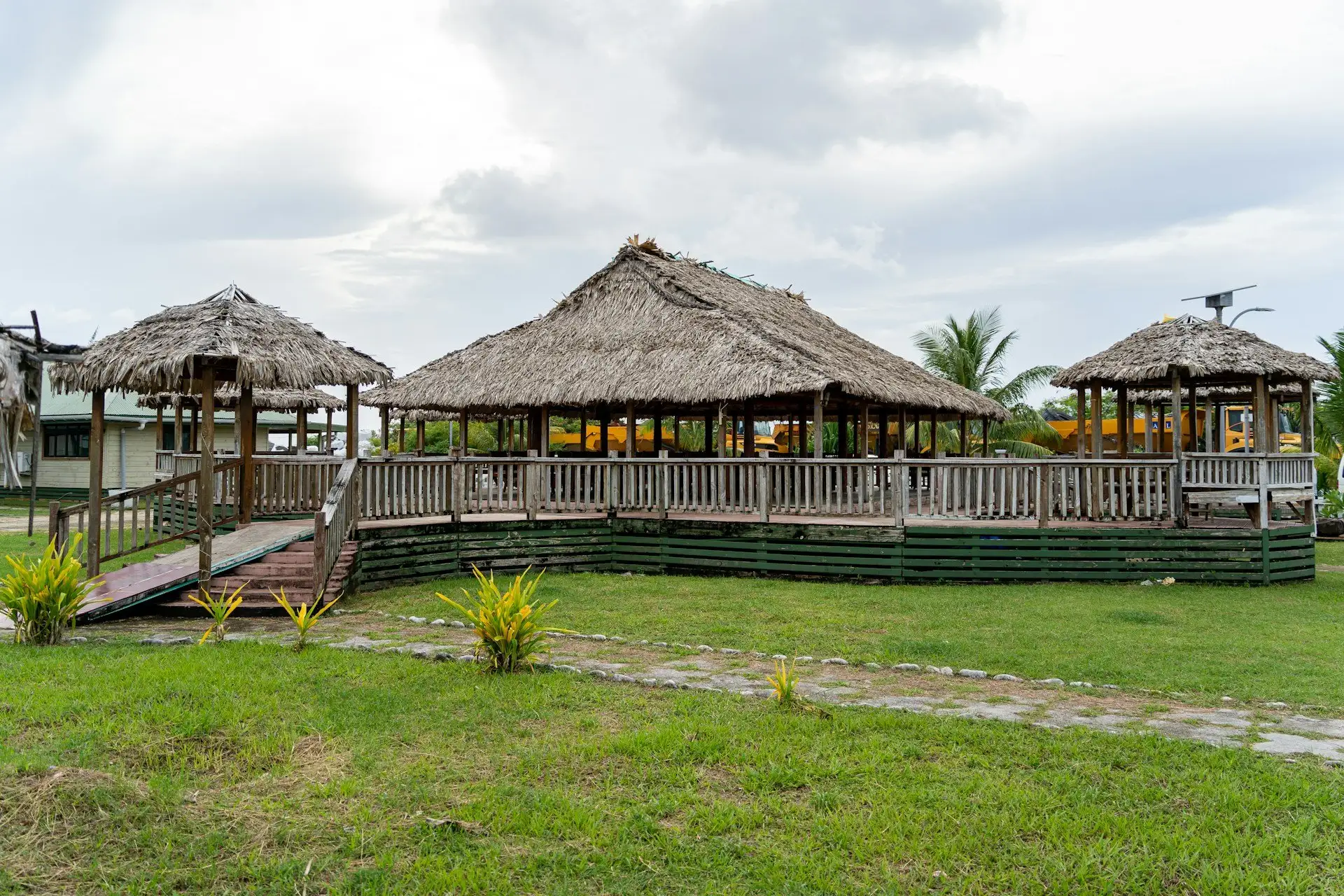
Tuvalu Travel Scams
Tuvalu is the fourth-smallest country on earth, home to around 11,000 people on nine coral atolls in the middle of the Pacific. There are no ATMs. There is one road. The twice-weekly flight from Fiji is the only commercial air link to the outside world. Violent crime is practically nonexistent. Traditional tourist scams, pickpockets, and fake ticket touts have no place here. What does exist: accommodation that costs more than it should for what it is, boat trips priced for visitors who don't know local rates, imported goods at eye-watering freight markups, and a booking ecosystem so thin and informal that misleading listings are easy to produce and hard to verify. This page tells you what Tuvalu actually costs and where the genuine friction points are for first-time visitors.
Tuvalu Scam Overview 2026
Tuvalu sits roughly equidistant between Hawaii and Australia, so remote that its nearest neighbours are Kiribati to the north and Fiji to the south. The country consists of three reef islands and six true atolls, with a combined land area of about 26 square kilometres, making it the fourth-smallest country in the world by area. The capital, Funafuti, sits on a narrow strip of land barely 20 metres wide in places, with the Pacific Ocean on one side and the Funafuti Lagoon on the other.
Approximately 2,000 foreign visitors per year make Tuvalu one of the least-visited countries on earth. Most are diplomats, development workers, researchers, and a small but growing cohort of deliberate "country collectors" ticking off one of the Pacific's most remote and rarely seen nations. The tourism infrastructure reflects this: two accommodation options in Funafuti of any scale, a handful of family guesthouses, one functioning restaurant of note, and an informal transport system centred on motorbikes and small boats.
In this context, "scams" take a very specific form. There is no organised tourist fraud, no pickpocket network, no fake permit industry. What exists is the normal pricing gap between what a well-connected local pays for a boat trip to the outer lagoon islets and what a newly arrived visitor without local contacts is quoted. There is the accommodation listing that was accurate two years ago and is no longer quite what it describes. There is the imported beer that costs AUD 9 not because anyone is gouging you but because it was freighted across 3,000 kilometres of ocean. Understanding these dynamics is what this guide is for.
Violent crime against tourists is essentially unheard of in Tuvalu. The small population and tight-knit community structure make anonymity impossible. This is one of the safest countries on earth for personal security.
Pickpocketing and petty theft are rare. Leave valuables in your guesthouse out of ordinary courtesy rather than genuine concern. Lost items are frequently returned.
Boat charters, guesthouse pricing, and guided tours have significant visitor-local price gaps that are bridged only with local knowledge. Not criminal, but real and avoidable.
No ATMs. Limited card acceptance. Irregular ferry schedules. Unreliable internet. Accommodation that may not match its online description. These are the most likely sources of visitor frustration.
Tuvalu at a Glance
Essential Context for Visiting Tuvalu
Tuvalu requires a level of pre-trip planning that most tourist destinations do not. The limited infrastructure is not a deterrent for the right traveler; it is part of what makes the country so extraordinary. But arriving without specific preparation for the cash situation, accommodation confirmation, and schedule flexibility creates friction that is entirely avoidable.
💳 No ATMs. No Cards. Bring All Your Cash.
There are no ATMs in Tuvalu. Credit and debit cards are not accepted at any guesthouse, restaurant, or shop outside the Vaiaku Lagi Hotel and certain government offices. The Development Bank of Tuvalu in Funafuti can exchange some foreign currencies (primarily USD and AUD) and cash traveller's cheques, but this service has limited hours, requires patience, and cannot be relied upon as your primary cash source. Visitors who arrive with insufficient AUD cash have found themselves genuinely unable to pay for accommodation or food until the next flight out.
How much to bring: a week in Funafuti at a budget guesthouse with simple meals and one or two boat trips costs approximately AUD 700-1,200. A week at the Vaiaku Lagi Hotel with meals at the hotel restaurant costs approximately AUD 1,400-2,000. Add AUD 200-300 as a buffer for unexpected costs, souvenirs, or schedule delays. Bring Australian Dollars in a mix of denominations; very large notes (AUD 100) can be difficult to change in small shops.
Withdraw or obtain all the AUD cash you need before leaving Fiji (or wherever your transit point is). Suva and Nadi have ATMs at every bank and at the airport. Do not leave Fiji without your full Tuvalu cash budget in hand. Keep cash in two separate locations on your person and in your luggage. Consider AUD traveller's cheques as a backup reserve (the Development Bank can cash these), though they are increasingly hard to obtain and should not be your primary plan.
✈️ Two Flights Per Week. Plan Your Schedule Around Them.
Fiji Airways operates the sole commercial air link to Tuvalu, with two flights per week between Suva (Nausori Airport) and Funafuti International Airport. As of 2026 these operate on Wednesdays and Saturdays, but the schedule is subject to change and has historically been adjusted with minimal notice. A missed connection in Suva, a weather-related cancellation, or an aircraft maintenance issue can strand you in Funafuti for three to four extra days beyond your planned stay. This is not a scam. It is an infrastructure reality with significant financial implications if your travel insurance does not cover consequential delays and rebooking costs.
Book Fiji Airways tickets well in advance; the small aircraft fills quickly around Tuvaluan public holidays and government meeting periods. Buy travel insurance that explicitly covers trip interruption and additional accommodation costs from flight disruption. Build at least one buffer day into your Fiji transit on both ends of the trip. Confirm your flight is operating 48 hours before departure. Have sufficient extra AUD cash to cover two to three extra nights in Funafuti if a schedule disruption occurs.
🌏 Everything Is Expensive Because Everything Is Imported
Tuvalu imports virtually everything it consumes. Fresh water is collected from rain. Almost all food other than fish and coconuts arrives by ship from Fiji or Australia. The freight cost of supplying 11,000 people on atolls in the middle of the Pacific is built into the price of every can of tinned food, every bottle of soft drink, every imported beer, every toiletry. A bottle of shampoo costs AUD 12-18. A small tin of corned beef costs AUD 4-6. A bottle of water costs AUD 2-4. These are not tourist markups. They are the real cost of living on one of the world's most remote inhabited places.
The same logic applies to accommodation. The Vaiaku Lagi Hotel costs AUD 150-200 per night not because it is luxury accommodation (it is a comfortable but basic property) but because maintaining any hospitality operation on Funafuti requires importing staff training, equipment, linen, and most food by air or sea freight across thousands of kilometres.
Recalibrate your price expectations before arriving. Tuvalu's prices are high relative to its development level and relative to what the same goods and services cost in Australia or Fiji. They are not high relative to the actual cost of delivering them. Bringing some non-perishable food from Fiji (crackers, nuts, dried fruit, instant coffee) as a supplement to local eating is sensible and commonly done by long-stay visitors. Fresh fish bought directly from Tuvaluan fishermen at the waterfront is genuinely excellent and one of the best-value food experiences on the island.
🏈 Climate Change and Tuvalu's Future
Tuvalu is one of the countries most directly threatened by rising sea levels. The highest point on Funafuti is approximately 3 metres above sea level. King tides, storm surges, and seasonal flooding are regular occurrences and are worsening. In 2023, Tuvalu and Australia signed a landmark agreement giving Tuvaluans the right to relocate to Australia as climate-displaced persons. The Tuvalu government's policy since 2024 is a dual strategy of continued habitation and managed relocation. This context matters for visitors for practical reasons: parts of Funafuti and some outer atolls flood regularly, accommodation near the ocean edge can be affected by king tides, and the infrastructure investment in a country with this trajectory has been limited.
Check the tidal calendar for your travel dates. King tide periods (typically November-February) bring the highest risk of flooding to low-lying parts of Funafuti. Ask your guesthouse specifically about flooding risk for the area your accommodation is in. This is not alarmism: it is relevant practical information for choosing where to stay and what to expect underfoot. Visiting Tuvalu with an awareness of and genuine respect for the climate situation the Tuvaluan people face is both practically useful and, frankly, the right posture for a visitor to one of the world's most climate-vulnerable nations.
Funafuti: What to Know
Funafuti is Tuvalu's capital and the atoll where virtually all visitors spend their time. The main settlement, Vaiaku, sits on a strip of land roughly 500 metres wide and 2 kilometres long. The airport runway bisects the atoll; when a flight lands, locals gather at the airstrip fence the way people elsewhere gather at a central square. The entire village is visible from the runway. The lagoon, one of the largest in the Pacific relative to the atoll that surrounds it, stretches 25 kilometres to the west. The outer Pacific lies 50 metres to the east.
In this context, the tourist "traps" of Funafuti are few but worth knowing. The pricing gap on boat trips to the outer lagoon islets is the most consistently reported visitor frustration. A small number of individuals at the airport approach newly arrived visitors with accommodation and transport offers that are above-market for what is delivered. And the single functioning restaurant of note, the Vaiaku Lagi Hotel dining room, charges prices appropriate for its operating costs but surprising to visitors expecting developing-world pricing.
⛵ Boat Charter Overcharging to Lagoon Islets
Visiting the uninhabited islets (motus) of the Funafuti Conservation Area, particularly the picturesque outer islets like Funamanu and Tepuka, is the primary tourist activity in Tuvalu. It requires chartering a small motorboat, and there is no fixed pricing system. Visitors who arrive without local contacts or prior knowledge are quoted AUD 100-200 for a return trip that a locally connected visitor or a guest whose guesthouse host arranges transport pays AUD 40-80 for. The boat owners are not running a scam in the criminal sense; they are simply testing what the market will bear from a visitor who has no price reference. Paying AUD 150 for this trip when AUD 60 is reasonable is the most common financial friction point for Funafuti visitors.
Ask your guesthouse host to arrange boat transport on your behalf rather than negotiating directly at the waterfront. Hosts typically have trusted contacts and will not refer you to someone who will dramatically overcharge. If you arrange a boat yourself, AUD 50-80 for a half-day trip is the negotiating anchor. Respond to any quote above AUD 100 with a counter of AUD 50-60 and the conversation will proceed from there. Be friendly and patient: the boat owners are not adversaries. They are local families for whom tourism income is genuinely important and who will respond well to a visitor who is warm and not rushed.
🚘 Airport Approach Overcharging
Funafuti's airport is genuinely tiny: the arrivals area is a single room open to the outside, and the entire community often comes to watch flight arrivals. A handful of individuals regularly meet incoming flights and offer accommodation and transport at prices above what a pre-arranged guesthouse booking costs. The accommodation they offer may exist and be adequate but is priced for the desperation of a visitor without a booking rather than at the going guesthouse rate. Given that the airport is 400 metres from the main village and walking to your pre-booked guesthouse with a bag takes under ten minutes, the transport offer is especially unnecessary.
Book accommodation before arriving in Tuvalu, confirm it by email within the week before your flight, and have your guesthouse host's phone number saved. The walk from the airport to any Funafuti guesthouse is short and the path is obvious. Decline all unsolicited offers at the airport with a friendly "I have a booking, thank you" and walk directly to your accommodation. In a village this small, your host will often be at the airport to meet you anyway.
🌊 Souvenir Pricing at the Airport and Hotel Gift Area
Tuvalu's most popular souvenir is its collectible postage stamps, issued by the Philatelic Bureau and featuring the vivid Pacific imagery for which Tuvaluan stamps have been internationally prized by collectors for decades. At the airport departure area, stamps are sold at face value or small premium. The Philatelic Bureau in Funafuti village sells the full current range at official prices. Some visitors are told by airport vendors that certain stamp sets are "limited" or "special edition" at prices above the Philatelic Bureau rate. This is worth being aware of, though the amounts involved are modest. The stamps themselves are genuine and valuable; the markup is the only issue.
Visit the Tuvalu Philatelic Bureau directly in Funafuti village for stamps at official prices. The Bureau has first-day covers, current and some back-issue sets, and knowledgeable staff. Buying here supports the Tuvaluan government revenue directly. For handicrafts (woven pandanus mats, fans, baskets), buying directly from the maker in Funafuti village is always preferable to buying from a middleman at the airport, and prices from makers are lower and more honest.
🍺 Hotel Bar Pricing vs Local Drinking Spots
The Vaiaku Lagi Hotel bar charges AUD 8-12 for a beer. This is a significant markup over what the same beer costs at local small shops (AUD 4-7) and is not unusual for a hotel bar environment. It is not a scam; it is hotel bar pricing. What catches some visitors is the assumption that "the only hotel" means competitive local pricing, when in fact the hotel's operating cost structure requires prices at the upper end of what the market supports. The local small shops (there are several in the village) sell cold drinks at significantly lower prices and are part of the normal Funafuti social scene.
Buy drinks and non-perishable snacks from local shops at local prices for everyday consumption. Use the hotel bar when the atmosphere is what you are paying for, which on some evenings is genuinely worth it: it is the social hub of visiting dignitaries, aid workers, and the occasional delighted tourist, and the conversations are often remarkable. Know what you are paying for in each context.
Outer Islands: What to Know
Tuvalu's eight outer islands (Nanumea, Nanumaga, Niutao, Nui, Vaitupu, Nukufetau, Nukulaelae, and tiny Niulakita) are accessible by the government supply and passenger vessel Manu Folau, which makes irregular circuits of the islands. The outer islands are where a significant proportion of Tuvalu's population lives and where traditional Tuvaluan culture is most intact. They are also almost completely off the tourist circuit, have no formal tourist infrastructure, and require a level of self-sufficiency and cultural sensitivity that not all visitors are prepared for.
⛈ The Manu Folau Schedule Is Not a Schedule
The Manu Folau (Tuvalu's government supply vessel) makes circuits of the outer islands roughly every two to four weeks, carrying cargo, passengers, and fuel. The schedule is published in approximate terms but changes regularly based on cargo requirements, weather, mechanical issues, and government priorities. Visitors who book outer island visits based on a stated schedule and plan their return flight around it have been stranded on outer islands for 7-14 days beyond their planned departure when the vessel was delayed. This is not fraud. It is the normal operating reality of supply logistics to remote Pacific communities. But for a visitor with a flight to catch, it has the same financial and logistical impact.
Treat any published Manu Folau schedule as aspirational rather than contractual. Build significant buffer days (5-7 at minimum) between your planned outer island return to Funafuti and your outbound flight. Contact the Tuvalu Shipping Corporation before your visit to get the most current schedule. Check whether the vessel is mechanically operational: it has had extended maintenance periods in the past. Do not book an outer island trip unless your travel insurance covers extended delay and you have sufficient extra cash for additional nights in Tuvalu. Consider whether the certainty of Funafuti plus the Funafuti Conservation Area lagoon islets meets your needs without the outer island risk.
🏠 Outer Island Guesthouse Expectations
Outer island accommodation consists of simple community guesthouses operated by island councils, home stays with local families, and in some cases sleeping in the community maneapa (meeting house). These are described in some online sources as "guesthouses" with implications of facilities they do not have: private rooms, reliable electricity, running water, and western sanitation. The reality is typically a room in a concrete block building with a fan, shared outdoor facilities, and meals provided by the host family at times that suit the host family. This is not misrepresentation in a dishonest sense; it is a genuine cultural accommodation experience. The issue arises when visitor expectations, set by optimistic online descriptions, do not match the basic reality.
Communicate with the island council or guesthouse contact (the Tuvalu Tourism Office in Funafuti can facilitate introductions) before travelling. Ask specific questions: Is there a private room or shared sleeping? Is there a flush toilet? Is electricity available and for what hours? What meals are provided and are there alternatives? Going in with accurate expectations transforms what might be a frustrating experience into an extraordinary one. Outer island hospitality, when you understand what it involves, is one of the most genuine cultural experiences available anywhere in the Pacific.
Transport in Tuvalu
Transport in Tuvalu is informal, minimal, and for most purposes entirely walkable. Funafuti's main settlement is compact enough that virtually every destination of interest is within a 15-minute walk. The main road runs the length of the islet; the airport runway is the widest open space on the island. Motorbikes are the primary vehicle for locals. Bicycles are available to borrow through some guesthouses. The lagoon is the highway for inter-islet travel.
🏍 Motorbike Rental Overcharging
A small number of Funafuti residents rent motorbikes to visitors on an informal, unregulated basis. Prices quoted to tourists are occasionally above the informal going rate. The amounts are not large (AUD 20-40 per day is reasonable; some visitors are quoted AUD 50-70), and the motorbike rental market is so small and informal that comparing prices is a matter of asking at your guesthouse what a fair rate is. The road also runs only a few kilometres in each direction from the village centre before looping back, which limits the utility of a motorbike beyond the novelty of having one.
Ask your guesthouse host what a fair motorbike rental rate is before approaching any independent rental. AUD 20-35 per day is a reasonable benchmark. Most of Funafuti is genuinely better experienced on foot or by bicycle at a relaxed pace. Borrowing a bicycle through your guesthouse, where available, is both cheaper and more appropriate to the scale of the island.
✈️ Fiji Transit Scams and Layover Planning
Most visitors to Tuvalu transit through Fiji, usually Suva, as Tuvalu-bound flights depart from Suva's Nausori Airport rather than Nadi (Fiji's main international hub). Nausori is a small domestic-style airport with limited facilities. Visitors arriving in Nadi from overseas and needing to connect to Nousori for the Tuvalu flight sometimes fall prey to Nadi taxi overcharging (the Nadi-Nausori transfer is approximately 2-2.5 hours and should cost FJD 80-120 by private taxi; touts outside Nadi airport quote FJD 200-300), and to hotel booking confusion around the layover. This is a Fiji-specific issue but it affects Tuvalu-bound travellers specifically.
Book a Suva-based hotel for your Tuvalu transit layover and use a taxi booked through your hotel for the Nausori connection. Pre-book your Tuvalu-Fiji return ticket with Fiji Airways at the same time as your outbound to ensure seat availability. The Fiji scam guide at /resources/scams/fiji covers Fiji-specific transport fraud in full.
Accommodation Traps
🏠 Outdated and Misleading Online Listings
Tuvalu's accommodation market is so small (fewer than a dozen options on the entire island) and so informal that online listings are frequently out of date. Guesthouses listed on booking platforms have in several documented cases: closed permanently without removing their listing, changed ownership and quality significantly without updating their profile, listed prices that no longer reflect current rates (in either direction), and described facilities (air conditioning, private bathroom, WiFi) that are no longer functional or were never accurately described. A visitor who books and pays in advance for an accommodation that no longer exists or is significantly different from its description has very limited recourse because the booking platforms' standard dispute processes are designed for higher-volume markets.
This is not in most cases deliberate fraud. It is the result of informal operators in a very small market who do not maintain their digital presence consistently. The effect on the visitor is the same.
Contact every accommodation option directly by email before making any payment. Confirm availability for your specific dates. Ask specifically about the current state of the facilities: air conditioning (does it work?), WiFi (available and functional?), private or shared bathroom, meals included. Do not pay in full in advance to any guesthouse you have not personally verified is currently operating. The Tuvalu Tourism Office (reachable through the government website tuvalu.tv or through the Tuvalu Ministry of Home Affairs) can provide a current list of operating accommodations and direct contact details.
🔋 WiFi and Connectivity Claims
Tuvalu's internet connectivity is provided via a single VSAT (satellite) connection that serves the entire country. Total bandwidth is limited by standards that would be considered inadequate even in a rural European village. Multiple guesthouses list WiFi as an amenity. In practice, WiFi in Tuvalu means: intermittent connection, very slow speeds (sufficient for text-based messaging, not for video or large uploads), and frequent outages. The Vaiaku Lagi Hotel has the most reliable connection on the island, which is still slow by any international benchmark. Visitors who arrive expecting functional working-from-Tuvalu internet connectivity will be disappointed.
Plan to be largely offline in Tuvalu. This is not a bug; for most visitors it is one of the pleasures of being somewhere genuinely remote. For essential communications, the Digicel Tuvalu network provides 3G mobile data at very limited speeds; a local SIM is available from the Digicel shop in Funafuti for a small cost. An Airalo eSIM for the Pacific region may provide some connectivity. Do not plan any trip to Tuvalu around the assumption of reliable internet access.
What Things Actually Cost in Tuvalu 2026
The most useful thing this page can do for a Tuvalu visitor is document what things actually cost, because the near-total absence of online pricing information means that most visitors arrive with no price anchor whatsoever. Everything below is in Australian Dollars (AUD), Tuvalu's currency.
Tuvalu Prices 2026
Withdraw all your AUD before leaving Fiji. A Wise card is useful for withdrawing AUD at competitive rates from Fiji ATMs before your Tuvalu flight. In Tuvalu itself, Wise and all other cards have no ATM to use: the card is irrelevant once you land. Budget carefully in Fiji and withdraw your full Tuvalu cash allocation plus a buffer before boarding.
Digital Considerations
🌐 Pre-Trip Online Booking Fraud
The extreme rarity of Tuvalu as a destination makes it a target for a specific kind of pre-trip fraud: fake travel agent websites and "exclusive Tuvalu tour" offerings that appear in search results for people planning one of the world's most unusual trips. These sites collect upfront payments for supposedly curated Tuvalu experiences and either vanish or deliver nothing resembling what was described. The combination of limited verifiable information online and the high cost-of-visit creates a vulnerability that dishonest operators exploit. There is no tour operator industry in Tuvalu itself of any scale; there are no "Tuvalu tour packages" in any meaningful sense. Anyone selling one from outside the country deserves very careful scrutiny.
Book your Fiji Airways flights directly through fijiairways.com. Book accommodation by contacting Tuvalu guesthouses directly (the Tuvalu Tourism Office can provide current contact details). There is no legitimate tour operator infrastructure in Tuvalu to book through a third party. Any website offering comprehensive Tuvalu tour packages for a single upfront payment should be treated with extreme scepticism. The Tuvalu Tourism Office website (tuvalu.tv) is the most reliable source of current, accurate information about what can be arranged and how.
📱 Connectivity and Data Expectations
Visitors who purchase a Digicel Tuvalu SIM expecting smartphone-era connectivity are routinely disappointed. The Digicel network provides 2G and limited 3G service. Data speeds are slow enough to make video calls and streaming essentially impossible. WhatsApp voice messages and text-based messaging generally work with patience. Any data-heavy activity (GPS-dependent navigation apps, downloading maps, uploading photos) should be done before arriving in Tuvalu or accepted as unavailable.
Download offline maps of Tuvalu (Google Maps and Maps.me both have offline options) before arriving. Save all addresses and contacts offline. Do not plan communications that depend on reliable data. A Digicel SIM is worth buying for the ability to make local calls and send texts, but not for data. Embrace the disconnection as part of what makes Tuvalu genuinely unlike anywhere else you have been.
An Airalo eSIM with a Pacific regional plan may provide marginal connectivity in Tuvalu through the Digicel network. More practically, download everything you might need (maps, guides, contacts, entertainment) before leaving Fiji. A local Digicel SIM from the shop in Funafuti village provides the best available local voice and text service for a very low cost.
Preparation Guide for Tuvalu
Visiting Tuvalu successfully is almost entirely about preparation rather than vigilance. The country is safe. The people are genuinely hospitable. The experience, for those who arrive ready for it, is one of the most extraordinary available anywhere. The friction points are almost all logistical and are resolved before you land.
Bring All Your Cash From Fiji
No ATMs. No cards. All cash in Australian Dollars before you board. A week's budget: AUD 700-1,200 at a guesthouse, AUD 1,400-2,000 at the hotel. Add AUD 300 buffer for delays or unexpected costs. Carry cash in two separate locations. Small denominations (AUD 5, AUD 10, AUD 20) are useful for everyday purchases from local shops.
Confirm Accommodation Before You Land
Contact your guesthouse by email within the week before your flight and confirm they are expecting you. Have the host's phone number saved. Funafuti's accommodation market is small enough that situations change without online listings updating. A confirmed booking with a named host removes all airport arrival uncertainty in one step.
Arrange Boat Trips Through Your Guesthouse
Ask your host to connect you with a boat owner for lagoon islet trips. This single step ensures a fair rate (AUD 50-80 half-day) rather than the tourist-quoted rate (AUD 100-200) and typically produces a better boat and operator than you would find independently at the waterfront. Your guesthouse relationship is the most valuable asset you have in Tuvalu.
Build Flight Buffer Days Into Your Itinerary
Two flights per week to the outside world. One weather event, one maintenance issue, or one schedule change can add 3-4 days to your stay. Build at least one buffer day on your departure side. Have AUD for those extra nights. Ensure your travel insurance covers trip interruption from schedule disruption. This single preparation prevents what is the most common and most stressful visitor experience in Tuvalu.
Download Everything Offline Before You Leave Fiji
Offline Google Maps for Tuvalu. Your accommodation contact details, the Tuvalu Tourism Office number, the Fiji Airways reservation number. Entertainment for the evenings (Tuvalu's nightlife is quiet by most standards). A currency converter for AUD that works without internet. Screenshots of this guide. Arriving in Tuvalu digitally prepared is arriving well prepared.
Travel With Cultural Respect
Tuvalu is a deeply communal, church-going, and culturally conservative Pacific nation. Dress modestly when not at the beach (covered shoulders and below-knee clothing when walking through the village). Ask before photographing people. Sunday is the day of rest and church attendance; plan your activities around the community's rhythm rather than expecting services to be available. The warmth of Tuvaluan hospitality is one of the country's greatest gifts to its visitors; meeting it with equivalent respect ensures the experience is what it should be.
For the Fiji portion of your Tuvalu trip, tours around Suva, day trips to the Mamanuca Islands during your transit, and activities in the Coral Coast are all available through GetYourGuide with vetted operators, transparent pricing, and consumer protection. Most Tuvalu visitors spend 2-4 days in Fiji on either end of their trip; making the most of that time is well worth planning.
Solo Women Travelers
Tuvalu is an excellent destination for solo women travelers. The safety situation is as benign as anywhere in the world: the community is small, interconnected, and deeply aware of any stranger's presence, which makes both crime and harassment extremely unlikely. The main considerations are cultural rather than safety-related.
Tuvaluan society is conservative and church-centred. Modest dress in the village is expected and respected. Solo women visiting guesthouses run by families will be treated as guests of the family, which comes with both warmth and a degree of social observation. This is not threatening; it is the communal Pacific way of relating to visitors and is generally experienced by solo women travellers as welcoming rather than intrusive.
Swimming and snorkelling in the lagoon is perfectly safe and is a major activity for all visitors. Beach dress (swimwear) is appropriate at the beach and lagoon; walking through the village in a swimsuit is not. The short distance between beach and guesthouse makes covering up for the walk a simple matter.
Reporting Issues in Tuvalu
Tuvalu's police force and government are small but functional and take the welfare of visitors seriously. The country is so small that most issues can be resolved through direct conversation with the relevant person, facilitated by your guesthouse host if needed. Formal reporting mechanisms exist for more serious matters.
Step-by-step: If Something Goes Wrong
Note: No country maintains a resident embassy in Tuvalu. All diplomatic missions are accredited from Fiji and handle Tuvalu matters from Suva.
There Are Almost No Scams Here. Go Anyway.
Most scam guides exist to protect visitors from a hostile tourist economy. This one exists to tell you that Tuvalu is not that. The friction points are logistical, not criminal. The pricing gaps are real but modest. The boat charter that costs AUD 150 when it should cost AUD 60 is the most dramatic financial injustice available to you on these islands, which tells you something profound about the place. Tuvalu is not set up to take your money. It is set up, insofar as it is set up for tourists at all, to welcome you with the kind of unhurried, genuine hospitality that feels increasingly rare on a planet of overtouristed destinations.
Bring your cash. Confirm your accommodation. Build your buffer days. Download your offline maps. Then let a country of 11,000 people on 26 square kilometres of coral show you what the Pacific looked like before anyone thought to build a resort on it.