
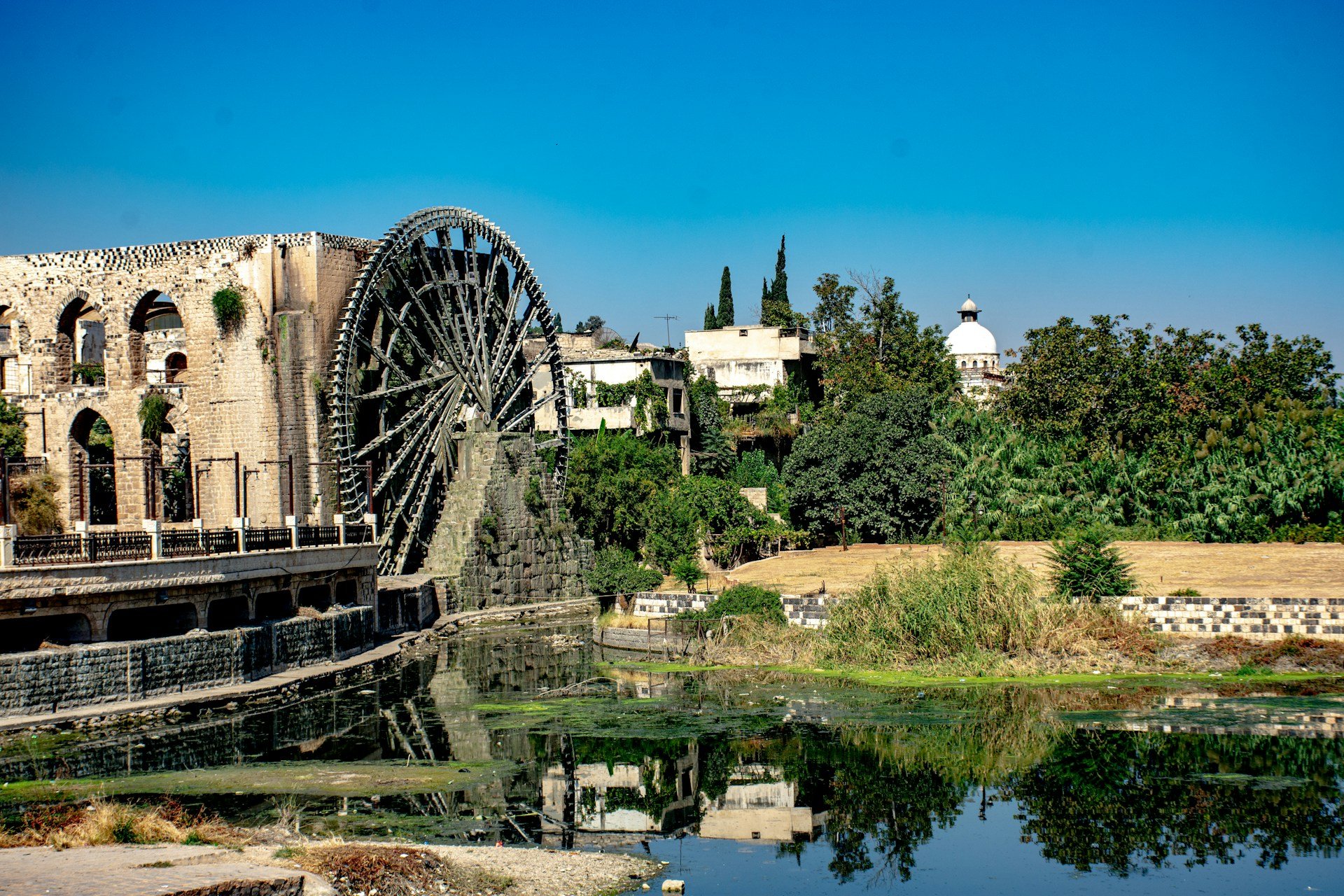
Syria Travel Scams
Before any scam, there is a bigger question: every major government still says don't go. Read the security section first. If you're traveling anyway, here's the financial fraud to know about.
The Security Situation in Syria, 2026
Syria's situation changed fundamentally in December 2024, when the Assad regime, which had ruled for over 50 years and overseen a 14-year civil war causing more than 500,000 deaths, fell to a coalition led by Hayat Tahrir al-Sham (HTS). A transitional government has since simplified entry for many nationalities, with tourist visas reportedly available on arrival at Damascus airport and at land crossings from Lebanon and Jordan for the first time in over a decade, a notable change from the heavily restricted pre-2025 system.
That change in entry process has not been matched by a change in the underlying security assessment from any major Western government. As of 2026, Israeli military strikes have continued inside Syria, including in Damascus, sometimes without warning. A conditional ceasefire between the US and Iran, first announced in April 2026, has stabilized some commercial flight schedules into Damascus, but it is explicitly described by every source covering it as fragile, conditional, and not a peace agreement. The European Aviation Safety Agency recommends against flying in Syrian airspace at any altitude, a recommendation that has been extended through October 2026. Unexploded ordnance contaminates large parts of the country, particularly formerly contested areas. The northeast remains under separate administration with ongoing clashes between government forces and the Syrian Democratic Forces, and border crossings in that region have closed without notice.
A small number of specialist tour operators run organized group trips to Damascus, Aleppo, and other western Syrian sites, and describe central Damascus specifically as relatively stable for managed, daylight travel with professional logistics. This is a genuinely different claim from what government advisories say, and the gap between the two is real and worth sitting with rather than resolving in either direction for you. If you are reading this page because you are seriously considering a trip, the responsible next steps are: read your own government's current advisory in full, register your trip with your government's traveler safety program before departure, obtain travel insurance that explicitly covers travel against government advice and includes medical evacuation (standard policies typically exclude both), and have an exit plan that does not depend on commercial flights continuing to operate, since airports and airlines have suspended operations without notice multiple times in 2026 alone.
Israeli strikes have continued into 2026, including in Damascus. The US-Iran ceasefire is explicitly conditional and could end without warning.
Foreign nationals, especially journalists, remain at elevated risk of kidnapping. Arbitrary detention is a documented risk, particularly around visa or paperwork irregularities.
Damascus airport has suspended operations multiple times in 2026. EASA recommends against flying in Syrian airspace through October 2026. Land borders have closed without notice.
Currency exchange fraud and fake visa agents are real, documented risks, covered below, but are minor relative to the security context.
Visa & Entry Fraud
Syria's visa process has changed significantly and repeatedly since the change of government, which has created genuine confusion, and a market for people exploiting that confusion.
📄 Fraudulent "Guaranteed Visa" Agents
Because pre-2025 Syria required a visa arranged in advance through a licensed tour operator, and because the rules have changed multiple times since, a number of third-party websites and individuals continue advertising "guaranteed Syria visa" services for fees well above any official cost, sometimes for a visa-on-arrival process that no longer requires this kind of intermediary for many nationalities at all. Some collect payment and deliver nothing; others simply charge a large markup for a document you could now obtain yourself on arrival.
Verify current visa requirements for your specific nationality directly with a Syrian diplomatic mission or an established, verifiable tour operator within days of travel, not from a blog post or forum thread that may be months out of date in a system that has changed this much this fast. Be skeptical of any agent charging a large fee for a "guarantee," since no agent can guarantee entry; that decision rests with border officials on the day.
✇️ Tour Operators Downplaying Risk
Not financial fraud in the narrow sense, but worth flagging here: some tour operators market Syria trips with language that significantly understates the gap between their own marketing and what every government advisory says. This matters financially too, since travel insurance bought on the assumption a trip is routine and low-risk may not actually cover the trip at all once a claim is examined.
Read your own government's advisory directly rather than relying on an operator's characterization of it. Buy travel insurance that explicitly states it covers travel to a country under a "do not travel" advisory, in writing, before you rely on it.
Currency Exchange Fraud
Syria's banking system is effectively cut off from international networks. No foreign-issued debit or credit card works inside the country. Every visitor operates entirely in cash, and Syria's Central Bank has been rolling out a redenominated currency through 2026, removing zeros from existing notes, a process that creates exactly the kind of confusion currency fraud depends on.
💵 Street Exchange Short-Changing & Counterfeit Notes
Informal street currency exchangers, common across much of the region, are a significant fraud risk in Syria specifically because of the redenomination underway: a changer can exploit confusion about old versus new notes and their relative value to short-change a visitor who isn't tracking the conversion carefully. Counterfeit Syrian Pound notes have also been reported. Separately, exchangers frequently reject or apply a much worse rate to torn, old, or marked US dollar bills, which catches out visitors who didn't know to bring clean notes.
Exchange money only at licensed currency exchange offices in major cities like Damascus, never with an individual on the street. Bring clean, undamaged, newer-series US dollar bills; older or marked notes are routinely rejected or down-rated. Count everything carefully at the counter before walking away, and ask the exchanger to clarify whether quoted amounts are in old or new denomination terms given the ongoing currency transition.
💳 No Card Access: Plan Every Dollar in Advance
International cards do not function in Syria at all. Running short of cash mid-trip is not a minor inconvenience here, it is a genuine logistical problem with very few solutions once you're in the country, particularly outside Damascus.
Carry the full amount of cash you expect to need for your entire trip in USD or EUR, plus a meaningful buffer in case departure dates extend, which has happened repeatedly in 2026 due to flight suspensions. Pre-arrange hotel and major expense payments where an operator allows it, reducing how much cash you need to carry and exchange in-country.
Damascus: Practical Notes
🚗 Taxi Overcharging
As in much of the region, unmetered taxis quote foreign visitors well above the rate a local would pay, particularly at the airport where the dynamic of a tired arriving passenger with no local price reference is most pronounced.
If traveling with an organized tour, airport pickup should be arranged in advance as part of the package; confirm this before arrival. If arranging your own transport, ask your hotel or guesthouse for a fair price estimate before negotiating with any driver.
🏭 Souk Price Inflation
The standard regional pattern: textiles, spices, and crafts quoted at multiples of fair value to visitors who don't negotiate, in markets that, security situation aside, remain genuinely remarkable and historic.
Negotiate as you would anywhere in the region; a guide, where you have one, can help calibrate a fair price.
Digital Considerations
🛡️ VPN Use and Internet Restrictions
Internet access in Syria has restrictions, and a VPN is recommended on all devices, though regulations around bringing devices like satellite phones into the country are strict and require government approval. Hotel WiFi speeds are often very slow and drop with the power cuts that remain common.
Install a reputable VPN before arrival. Do not bring satellite communication devices without first confirming the current approval requirements. Download offline maps and any documents you need before you lose reliable connectivity.
🌐 Fake Booking Sites for Damascus Hotels
As Syria's small tourism sector reopens, fraudulent booking sites for Damascus hotels have appeared, taking payment for rooms that don't exist or aren't affiliated with the listed property.
Confirm any Damascus hotel booking directly with the property by phone or email before paying, and avoid prepaying large amounts to any unfamiliar booking platform.
Reporting Issues & Getting Help in Syria
Practical steps
Read the Advisory, Then Decide
The scams on this page are real but minor next to the question every visitor has to answer first. Syria's history, architecture, and people deserve better than a decade of war, and a future where tourism returns safely is one worth hoping for. That future isn't confirmed yet. If you go, go with your eyes open, your government notified, and an exit plan that doesn't depend on anything staying the same.