
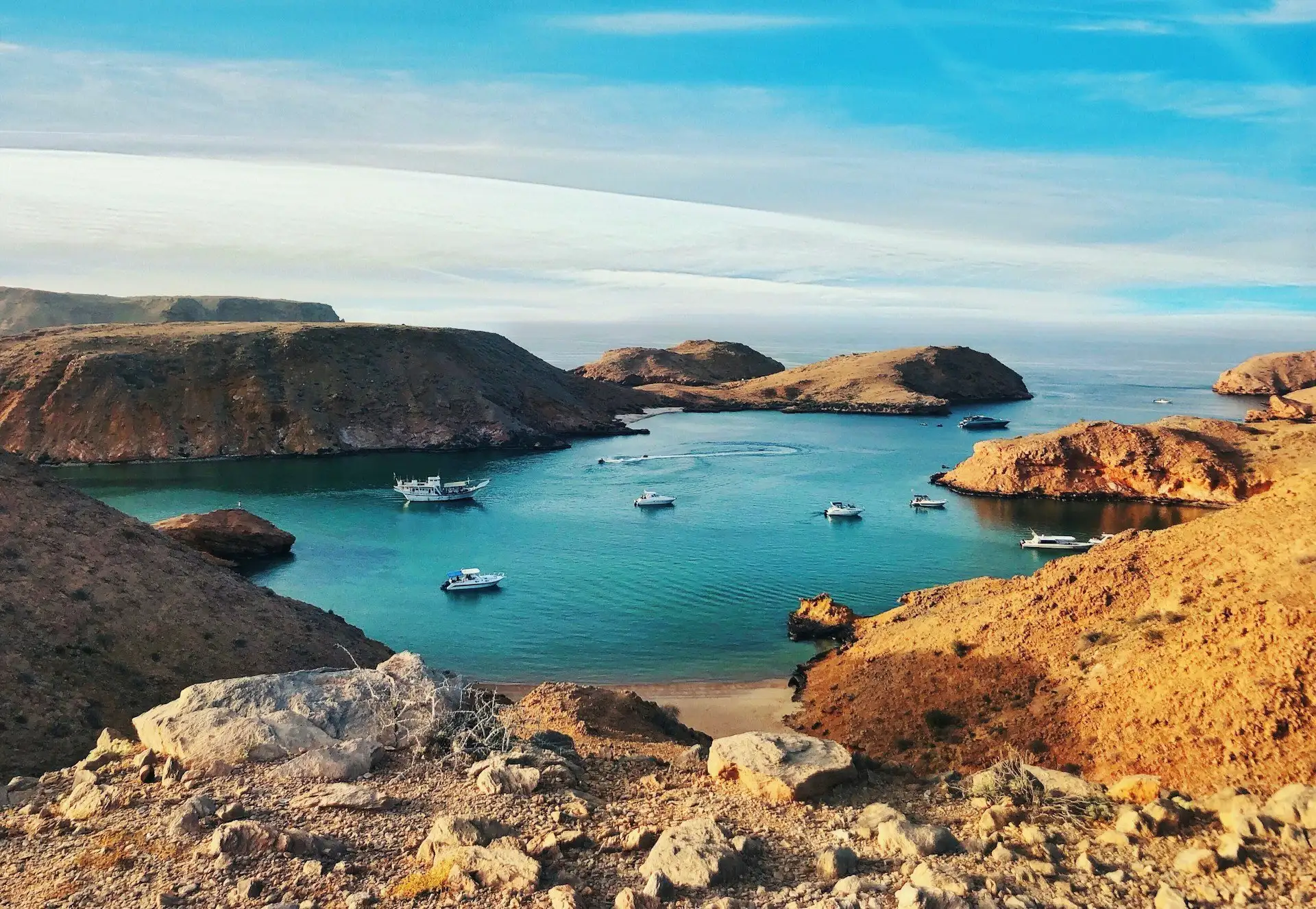
Oman Travel Scams
Oman has minimal street crime and genuinely low scam risk. This page covers taxi overcharging, fake antiques, and unlicensed guides, plus current regional risk context worth checking before you book.
Oman Scam Overview 2026
Most visitors split their time between Muscat, with its forts, souqs, and the striking Sultan Qaboos Grand Mosque, and the south around Salalah, known for the lush Khareef monsoon season that transforms Dhofar into green hills each summer. The handful of scams documented here concentrate at exactly these tourist hotspots, simply because that's where the density of foreign visitors makes the small amount of opportunistic pricing worth a vendor's effort.
Oman's tourist scams fall into three categories. The first is transport overcharging, almost entirely tied to unmetered street taxis in smaller towns or visitors who don't know the going Muscat rate. The second is souq-related: fake antiques sold as genuine, and unauthorized guides near major sites charging for unofficial tours. The third is a mix of ATM skimming and the same online romance and advance-fee fraud documented by the US State Department for the wider region. All three are minor and easy to sidestep.
Minimal street crime, and violent crime against tourists is rare. Oman's strict legal code is a real deterrent.
The most commonly reported tourist issue, mainly in unmetered taxis outside Muscat. Easily avoided with Otaxi, Uber, or Careem.
Modern replicas of khanjars, silver boxes, and pottery sold as genuine antiques in tourist-facing souq stalls.
Rare overall, but documented in crowded spots like Muttrah Souq and around major mosques and tourist sites.
Oman Safety at a Glance
Muscat & Souq Scams
Muscat is consistently rated as one of the safer capitals in the region, with low theft and armed robbery rates and a culture where locals routinely go out of their way to help visitors. The small amount of scam activity that does exist concentrates in the souqs and around the Grand Mosque, the city's busiest tourist draws.
🧹 Fake Antiques in the Souqs
Sellers pass off modern replicas of Omani artifacts, silver boxes, pottery, and khanjars (ceremonial daggers), as authentic antiques, sometimes with fabricated certificates included to add credibility, charging significantly more than the item is actually worth.
Verify authenticity through certified dealers or museums in Muscat before buying anything marketed as a genuine antique. Ask for a receipt specifying the item's origin in both Arabic and English, and stick to government-regulated shops where prices are fixed and items are more reliably genuine.
🏆 Unauthorized Grand Mosque Guides
Unauthorized individuals near the Grand Mosque approach tourists offering "free" or discounted tours, then demand a substantial fee at the end for fabricated services, sometimes including unnecessary detours to shops where they earn a commission.
Use only licensed guides identified by official badges from the Ministry of Heritage and Tourism, or book a mosque tour through the official Oman tourism platform in advance. Politely decline unsolicited offers and use the free mosque maps available on-site for a self-guided visit instead.
👷 Crowded Souq Pickpocketing
Pickpocketing is rare in Oman overall, but the colorful, crowded stalls of Muttrah Souq are specifically named as a spot worth a bit of extra awareness.
Keep valuables secure and carry only what you need while browsing the souq, the same low-effort precaution that applies to any crowded market.
👜 The Lost Wallet Scam
A stranger claims to have found your wallet on the street, having actually stolen it earlier, and returns it minus the cash, or uses the interaction as a pretext to ask for a "reward" or further engagement.
Keep your wallet secured at all times so this scenario doesn't arise. If approached by someone claiming to have found something of yours, verify carefully before engaging further.
Salalah & Khareef Season Scams
Salalah and the wider Dhofar region transform during the Khareef monsoon season (roughly June to September), when the south turns lush and green and draws large numbers of regional and international visitors. This seasonal crowding is exactly when the area's small amount of tourist overcharging tends to spike.
🌍 Khareef Season Tour Overcharging
During the busy Khareef season, vendors and drivers sometimes quote inflated prices for tours to sites like Taqah Castle or wadi trips, exaggerating wait times or vehicle costs to justify the markup amid festival-level crowds.
Book tours in advance through a reputable, licensed operator rather than negotiating on the spot during peak season, when crowding gives vendors more leverage. Ask your hotel for a sense of fair group-outing pricing before agreeing to anything informally arranged.
Unofficial Trekking Guides
Informal guides offer treks in the mountainous Jebel Akhdar and Jebel Shams regions without proper credentials or appropriate safety equipment, a minor concern financially but a more meaningful one given the genuinely rugged terrain involved.
Book mountain treks and desert tours only through reputable, licensed companies with proper 4x4 vehicles and trained guides, particularly given how remote and exposed some of these routes are.
Booking through GetYourGuide means a licensed operator and a fixed price agreed before you go, especially useful during Khareef season when on-the-spot pricing tends to spike.
Taxi & Transport Scams
Most taxis in Muscat now use the Otaxi app or have official meters, but in smaller towns, negotiation is still the norm, and not every driver volunteers a fair price upfront.
🚕 Unmetered Taxi Overcharging
Taxis outside the main Muscat fleet are frequently unmetered, and drivers may quote a flat fare to visitors unfamiliar with the going rate, or take a deliberately longer route to inflate the cost.
Use Otaxi, Uber, or Careem in Muscat and other major cities for transparent, upfront pricing. Outside these areas, agree on a fare clearly before getting in, and travel in groups or during daylight where possible to reduce the chance of a driver deviating from the agreed route.
🚌 Unlicensed Cruise & Boat Operators
Reports exist of tourists being scammed by cruise companies offering Musandam or Dubai-Oman trips that turn out to be fraudulent or don't include all the advertised activities once booked.
Book dhow cruises and boat excursions through established, reviewed operators rather than an unfamiliar online listing, and read recent reviews before paying.
Money & ATM Scams
The Omani rial is pegged to the US dollar, and credit cards are accepted at most hotels and larger restaurants, though cash remains useful for souqs and smaller purchases.
🚴 ATM Skimming
Skimming devices fitted to ATM card slots in busy spots like airport terminals or shopping malls capture card details and PINs from visitors withdrawing rials, more common in urban centers than rural areas.
Inspect the ATM for any loose parts or unusual attachments before use, especially in busy international or tourist-facing areas of Muscat. Cover the keypad when entering your PIN, and check your statements regularly while traveling.
💰 Souq Bargaining Norms
Not really a scam, but worth knowing: vendors expect to negotiate, and a tourist who accepts the first price quoted for items like frankincense or pashminas typically pays noticeably more than a local or a confident negotiator would.
Be prepared to negotiate; this is normal and expected practice in Omani souqs rather than confrontational. Knowing rough fair prices in advance, such as 5-10 OMR for a bag of quality frankincense, gives you a useful anchor.
Digital Scams
💖 Online Romance & Advance-Fee Fraud
The US State Department directly flags financial and internet romance scams in connection with Oman. Scammers often pretend to be US citizens needing help, including people claiming to be military personnel or claiming to be detained or hospitalized abroad, with the relationship developing through online posts, emails, or letters before escalating into a request for money.
Be especially cautious of anyone asking for money, particularly someone who starts a "romantic" relationship online or claims local authorities require a payment. Never send money to anyone you have not met in person, regardless of how convincing the story is.
🌐 Public WiFi Data Interception
Public WiFi networks in hotels and cafes carry the same general data-interception risk found anywhere else in the world.
Use a local SIM or eSIM with a data plan for anything involving banking or sensitive logins rather than relying on hotel WiFi.
An Airalo eSIM gives you local data from arrival, away from shared hotel networks, and makes it easier to check current security updates or use a ride-hailing app the moment you land.
Universal Prevention Guide
Oman asks relatively little of a visitor in terms of everyday scam awareness, but a few habits address the specific risks that do exist, alongside the current regional situation worth checking before you travel.
Use Otaxi or a Ride-Hailing App
This single habit eliminates the most common tourist scam in the country. Agree on a fare in advance for any unmetered taxi outside the main fleet.
Save Emergency Numbers Before You Go
9999 covers police, fire, and ambulance nationwide. The cyber extortion hotline at 80077444 is a useful separate line for online fraud reports.
Verify Antiques Before You Buy
Check authenticity through a certified dealer or museum, and ask for a written receipt specifying origin for anything sold as a genuine artifact.
Book Tours and Treks Through Licensed Operators
Use the Ministry of Heritage and Tourism's licensed guides for mosque tours, and reputable companies with proper equipment for desert or mountain excursions.
Respect Strict Local Conduct Expectations
Omani laws and expectations for public behavior are strict. Yelling, rude gestures, or public arguments can result in arrest, regardless of who started the dispute.
Check Your Government's Current Advisory
Given the regional security situation in 2026, verify the latest advisory level and any embassy alerts before booking, and register with your embassy on arrival if recommended.
Solo Women Travelers
Oman is regarded as one of the safer Middle Eastern destinations for women, with a low risk of harassment in public, and solo female travelers are generally treated respectfully throughout Muscat and other major tourist areas.
Dressing modestly, covering shoulders and knees, is expected and helps avoid unwanted attention, particularly outside major cities and in rural areas where a woman traveling alone may attract more notice. Walking the streets late at night is generally discouraged, the same baseline precaution that applies in most cities, and using a registered taxi or ride-hailing app rather than walking after dark is the sensible default.
A specific pattern worth knowing: scams targeted at women specifically have been documented in Oman, including fake marriage proposals or offers from strangers to purchase expensive items on a woman's behalf, which typically turn out to involve a financial trick rather than a genuine offer. Be cautious of any unsolicited proposal or financial arrangement from a stranger, however well-intentioned it seems.
Reporting Scams in Oman
If you are the victim of a scam or theft in Oman, reporting it creates a record that supports insurance claims and card disputes. Royal Oman Police are generally responsive, and a dedicated cyber extortion hotline exists separately for online fraud.
Step-by-step: What to Do if You're Scammed
Oman is Low Risk for Scams. Watch the Regional Situation, Not the Souq.
Most visitors to Oman come away talking about the Grand Mosque, the Muttrah Souq's frankincense stalls, and the dramatic contrast between desert, mountains, and coastline. The everyday scams documented here are minor: confirm your taxi fare, verify an antique before buying it, and book mosque tours and treks through licensed operators.
The bigger thing to get right in Oman in 2026 isn't dodging souq tricks, it's checking your government's current advisory given the regional security situation, since this has shifted meaningfully through the year and conditions can change with little notice. Get that part right, and Oman remains exactly what its reputation suggests: one of the calmest, most welcoming destinations in the Gulf.