
Italy Travel Scams
A man in centurion armour outside the Colosseum places a helmet on your head. A gondolier in Venice quotes EUR 200 for a ride that costs EUR 90 by official tariff. A leather vendor in Florence's San Lorenzo market assures you his jackets are "genuine artisan Florentine" — they were made in bulk elsewhere. Italy's tourist traps are specific, city-by-city, and entirely documented here.
Italy Scam Overview 2026
Rome's Metro Line A, the Vatican, and the Trevi Fountain are Italy's highest pickpocket-risk locations. Florence's main train station (Santa Maria Novella) and Venice's Rialto Bridge area are also active.
Gladiators at the Colosseum, centurions near the Forum, and costumed figures at Venice's St Mark's Square demand EUR 10-30 per photo after the fact. Agree price first or walk past entirely.
Rome airport taxi overcharging is one of Italy's most consistent tourist complaints. Venice water taxis are legitimate but very expensive — most tourists should use vaporetti instead.
Italy's worst tourist restaurant problem: coperto (cover charge), pane (bread charge), and servizio (service charge) added to bills at tourist-facing restaurants near monuments. Often undisclosed.
Italy Safety at a Glance
Rome Scams
⚔️ Colosseum Gladiator / Centurion Photo Scam
Men in Roman gladiator or centurion costumes station themselves outside the Colosseum and along the Via Sacra. They invite tourists for a photo, sometimes proactively placing a helmet or a prop sword in hand before any agreement is made. Once a photo is taken they demand EUR 10-30, becoming aggressive if refused. Some work in groups and surround tourists. This is one of Rome's most consistently reported tourist complaints — police periodically enforce but the practice continues.
Walk past without making eye contact or stopping. If you want the photo, agree the exact price before any costume touches you — EUR 5 is a reasonable negotiated rate. Once a prop is in your hand the social leverage shifts entirely. Never let anything be placed on you without a prior price agreement.
👷 Vatican and Metro Line A Pickpockets
The queue for the Vatican Museums is among Europe's highest-density pickpocket environments — hundreds of tourists standing still for extended periods, often distracted and tired. Teams work the standing queue systematically. Metro Line A connects the main Rome tourist sites (Termini, Spagna, Ottaviano for the Vatican) and sees active pickpocket teams particularly at the Termini-Spagna corridor. The bump-and-distract technique is most common: one person creates a minor collision while a second accesses the pocket or bag.
Book Vatican Museums tickets online in advance (museivaticani.va) — timed entry eliminates the standing queue entirely and is the single most effective Vatican pickpocket prevention. On Metro Line A: bag at the front, phone in an inside pocket from the moment you board. The Vatican queue without a pre-booked ticket is genuinely one of Europe's worst pickpocket environments — skip it entirely with advance booking.
🍒 The "Free" Rose at the Trevi Fountain
Men circulate near the Trevi Fountain and Spanish Steps and hand roses directly to women — into the hand or placed in a bag — saying they are free gifts. Once accepted, they demand EUR 5-20. Some target couples, placing the rose as a "romantic gesture." The rose is never free and was never a gift. If you have already accepted one and payment is demanded, place it on a surface and walk away — you owe nothing for an unsolicited item placed in your possession.
Don't accept anything handed to you near tourist sites without agreeing the price first. If a rose is placed in your hand, hand it back immediately without engaging. "No grazie" while returning the item and walking on is the complete response.
🏛 Fake "Official" Colosseum Ticket Sellers
Individuals outside the Colosseum claim to be official tour guides or ticket agents and offer combined "skip the line" Colosseum tickets at above-face-value prices. Some sell genuine tickets at a markup; others sell counterfeit or invalid tickets. The Colosseum's official combined ticket (Colosseum + Roman Forum + Palatine Hill) costs EUR 18 standard and EUR 24 with the SUPER ticket that includes additional areas. No legitimate "official" ticket seller operates on the street outside.
Book Colosseum tickets only at coopculture.it — this is the official and only legitimate source. Timed entry tickets sell out 2-3 weeks in advance in summer. A licensed guide booked through a verified platform can include a ticket in their tour price at the correct rate. Anyone selling tickets on the street is adding a markup at minimum, selling fakes at worst.
📋 Clipboard / Petition Distraction
Identical to the Paris petition scam: a clipboard is thrust in front of you requesting a signature for a charity or deaf school. While you stop to read, a second person picks your pocket. Termini station (Rome's main train hub) sees this regularly, as does the approach to Piazza Venezia from the tourist south.
Keep walking. "No grazie" without stopping or making eye contact. Your hand on your bag the moment anyone approaches with a clipboard.
Venice Scams
⛴ Gondola Overcharging
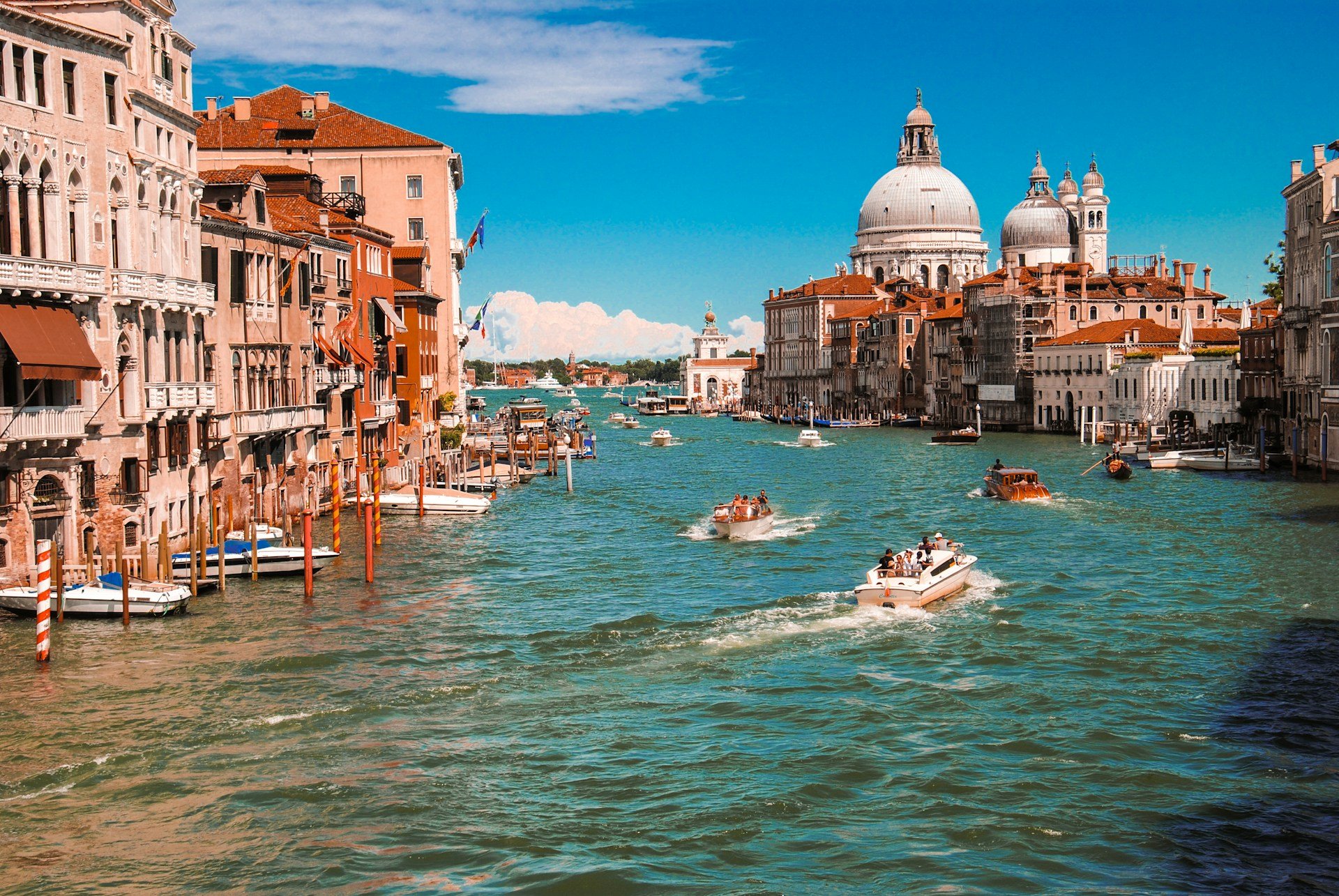
Venice gondola fares are officially set by the Consorzio Gondolieri: EUR 90 for a standard 30-minute ride during the day (09:00-19:00), EUR 110 in the evening (19:00-22:00), for up to 6 passengers. Some gondoliers quote EUR 120-200 to tourists who don't know the official rate, or offer a "special route" or "longer ride" that starts without a confirmed price. The agreed rate and duration must be established before boarding — disputes on the water are resolved entirely in the gondolier's favour.
Confirm the price, duration, and route explicitly before stepping into the gondola. The official rate is EUR 90 (day) / EUR 110 (evening) for 30 minutes, for up to 6 people. Any additional passengers above 6 incur a supplement. A singing gondolier is extra — confirm the fee. Official gondola boarding points have the tariff posted; if it isn't posted, ask to see it before boarding.
🚥 Water Taxi Overcharging
Licensed Venice water taxis (motoscafi) are legitimately expensive — EUR 115-140 from Marco Polo Airport to central Venice for up to 4 passengers, with a regulated tariff. Unlicensed water taxis quote comparable or higher prices with no regulated accountability. The Alilaguna airport boat (EUR 9-15 depending on line and destination) and the vaporetto (public water bus, EUR 9.50 single) serve the same routes for a fraction of the price. Some tourists pay EUR 120+ for a water taxi when a EUR 9.50 vaporetto would deliver them to the same point.
The Alilaguna Orange Line runs from Marco Polo Airport to central Venice stops for EUR 9 (70-80 minutes). The vaporetto (ACTV) covers all Venice canal routes for EUR 9.50 single or EUR 20 for a 24-hour pass. Water taxis are legitimate and useful for heavy luggage or group convenience — but clarify you want a licensed motoscafo and confirm the metered tariff before boarding. Never accept transport from anyone approaching you inside the airport terminal.
🍽 St Mark's Square Restaurant Extreme Premium
St Mark's Square restaurants are among Europe's most expensive and this is, to a large extent, genuine market pricing for a globally in-demand location. A coffee at Caffè Florian (founded 1720) costs EUR 12-18 and the price includes a small orchestra — this is a deliberate experience, not a scam. The trap: live music restaurants and cafes on the square charge a "musica" supplement of EUR 6-8 per person that is sometimes not displayed clearly on the menu. Additionally, some tourist-facing restaurants just off the square with San Marco views charge similar prices for significantly inferior food.
The historic cafes on St Mark's Square (Florian, Quadri, Lavena) are genuine experiences at genuine high prices — know what you're paying for before you sit. Check whether a music supplement applies before ordering. For good food at honest Venice prices: the Rialto Market area (Mercato di Rialto) has excellent cicchetti bars (Venetian tapas) where a glass of wine and three cicchetti costs EUR 5-8. The further you get from San Marco, the more honest the pricing.
🏭 Murano Glass and Burano Lace Misrepresentation
Venetian Murano glass and Burano lace are world-famous craft traditions. Much of what is sold in Venice's souvenir shops as "Murano glass" is mass-produced glass from China or Eastern Europe. Genuine Murano glass carries a "Vetro Artistico Murano" trademark — a certification with a hologram label and a number traceable to a licensed Murano furnace. Burano lace sold as handmade is almost always machine-made — genuine Burano handmade merletto is extremely labour-intensive and priced accordingly (EUR 200+ for small pieces).
For genuine Murano glass: buy directly on Murano island from a furnace showroom and look for the "Vetro Artistico Murano" hologram certification. For Burano lace: visit the Museo del Merletto on Burano to understand genuine handmade lace before purchasing. Any "Murano glass" sold in a Venice tourist shop without the certification hologram may not be from Murano.
Florence Scams
👐 San Lorenzo Market Leather Misrepresentation
Florence has a genuine and excellent leather artisan tradition. The San Lorenzo market, which tourists are widely recommended to visit for leather goods, also has significant numbers of stalls selling mass-produced goods falsely presented as Florentine artisan work. Vendors claim jackets are "handmade here in Florence" or "genuine full-grain Florentine leather" when they are machine-made imports. The EU "vera pelle" (genuine leather) tag is required by law but only certifies the material is leather — not where it was made or how it was crafted. Prices at San Lorenzo stalls are negotiable, which creates the impression of a market transaction, but the starting prices are calibrated to tourists.
For certified Florentine artisan leather: the Scuola del Cuoio (Leather School) inside the Santa Croce complex produces and sells leather with full artisan provenance — you can watch the craftspeople at work. Prices are higher than San Lorenzo stalls but the product is genuine. For San Lorenzo shopping: treat it as a market (prices are negotiable, quality is variable) rather than an artisan destination. Check seams, stitching, and lining quality carefully. A full-grain leather jacket made in Florence costs EUR 300-600 minimum — anything significantly below this is unlikely to be what it claims.
👷 Santa Maria Novella Station Pickpockets
Florence's main train station is Italy's most consistently reported pickpocket location outside Rome. Tourists arrive tired with luggage, often unfamiliar with the city, and immediately face the disorientation of a busy Italian station. Teams work the platforms, the exit corridors, and the bus stops outside. The distraction technique — someone asking for directions or help with a map while a second person accesses bags — is reported here more than anywhere else in Tuscany.
Bag zipped and at the front from the moment you step off the train. Phone in an inside pocket. Anyone who approaches immediately as you exit the train asking for directions or help: address the question while keeping your hand on your bag and never stop moving. Hotel check-in can wait five minutes until you are in a less exposed position.
🏛 Uffizi and Accademia Ticket Touts
The Uffizi Gallery and Accademia (home to Michelangelo's David) both require timed entry tickets that sell out weeks in advance in peak season. Individuals outside both entrances offer "skip the line" tickets at above-face-value prices — EUR 30-50 for tickets that officially cost EUR 20-22. Some are genuine resold tickets; others are counterfeit. Official Uffizi ticket: EUR 20 standard (b-ticket.com). Official Accademia ticket: EUR 12-16 depending on season.
Book Uffizi tickets at b-ticket.com and Accademia tickets at b-ticket.com or firenzemusei.it — both are the official ticketing platforms. Book at least 2-3 weeks in advance for summer visits. The Firenze Card (EUR 85, covers 72 museums over 72 hours including the Uffizi, Accademia, and Bargello) is good value for intensive Florence itineraries and is bookable at firenzemusei.it.
Transport Scams
✈️ Rome Fiumicino Airport Taxi Overcharging
Rome has a fixed taxi fare from Fiumicino to any address within the Aurelian Walls (Rome's historic centre): EUR 50 flat rate, including luggage and all passengers. Unlicensed drivers inside the terminal and some licensed drivers ignore this rate and charge EUR 70-120 for the same journey. The Leonardo Express train (FCO to Roma Termini, EUR 14, 32 minutes) is faster than a taxi in traffic and eliminates all transport fraud risk.
Take the Leonardo Express train (EUR 14, every 15 minutes to Roma Termini) — the fastest and cheapest option. If you need a taxi: use the official white taxi rank outside arrivals, confirm the EUR 50 fixed rate before getting in, and take a photo of the taxi licence number. Free Now operates in Rome with upfront pricing. Never accept transport from anyone inside the terminal.
🚊 Italian Train Ticket Validation
This is not a scam but catches enormous numbers of tourists: regional train tickets in Italy must be validated (stamped) in the yellow machines at the platform entrance before boarding. Unvalidated tickets are treated as unpurchased regardless of the payment receipt. Fines: EUR 50-200 plus the full ticket cost. High-speed Trenitalia and Italo tickets (Frecciarossa, Frecciargento, Italo) are validated digitally and do not need the yellow machine — only regional tickets require physical validation.
For any regional (not high-speed) train ticket: stamp it in the yellow validation machine at the platform before boarding, every time. If you forget and are checked on-board: tell the inspector immediately before they check — declaring the error voluntarily results in a smaller fine than being caught. High-speed tickets bought on the Trenitalia or Italo app do not require validation.
An Airalo eSIM for Italy activates before you board. Italy coverage (TIM, Vodafone IT, WindTre) is good in all major cities and along main tourist routes. Free Now, Google Maps, and train ticket apps all need a connection — have it before you exit Fiumicino arrivals.
Restaurant Traps & What Things Should Cost
What Things Actually Cost in Italy 2026
🍽 Coperto, Pane, and Servizio Undisclosed Charges
Italy's most consistent restaurant complaint: tourist-facing restaurants add coperto (cover charge, EUR 1-5 per person), pane (bread charge, EUR 1-3 per person), and servizio (service charge, 10-15%) to bills that were not prominently disclosed. Each is individually small but combined can add EUR 10-20+ to a table of two. Some restaurants present menus without these charges and only reveal them on the bill. Italian consumer law requires all charges to be listed on the menu — but enforcement in tourist areas is inconsistent.
Check the menu for coperto and servizio before ordering — they must be listed if they apply. Ask "C'è il coperto?" (Is there a cover charge?) if it isn't clear. If bread arrives, ask if it's included. Restaurants displaying "no coperto" signs are increasingly common in Italian cities — a useful signal of honest pricing. Always itemize the bill before paying and query any charge that wasn't on the menu.
Shopping Traps
💴 Counterfeit Designer Goods and Customs Risk
Italy produces the world's most counterfeited luxury goods — Gucci, Prada, Versace, and Fendi fakes are sold openly by street sellers near tourist sites. The specific Italian legal risk: Italian law makes it an offence for buyers as well as sellers. Tourists caught purchasing counterfeit goods in Italy can be fined EUR 1,000-10,000 on the spot by police. This is actively enforced — particularly in Rome and Florence. Importing counterfeits home carries additional home-country customs risk.
Do not buy from street sellers near tourist sites. Italian law fines the buyer — the police risk is real and sporadically enforced. For genuine Italian luxury: official brand stores are on Via Montenapoleone (Milan), Via Condotti (Rome), and Via Tornabuoni (Florence). End-of-season outlet shopping at Serravalle Scrivia (Milan) or The Mall (Florence) offers genuine Italian luxury brands at significant discount with full authenticity guarantees.
🍼 Gelato Sized by Scoop vs Container
Some tourist-area gelaterias price by the cup or cone size rather than by number of scoops, then heap a dramatically oversized amount and charge EUR 7-12 for what a neighborhood gelateria charges EUR 2.50-4. Others ask "how many flavours?" and then charge per flavour rather than by size. If the price isn't posted clearly, ask before you choose.
Confirm the price before the gelatiere scoops. Genuine artisan gelaterias (artigianale) display the price per cup size. Avoid anywhere that prices aren't posted. A quality 2-scoop gelato should cost EUR 2.50-4. Anything above EUR 5 for a standard cone warrants a price check beforehand. The gelateria queue used to signal quality no longer does in tourist areas — walk one street further.
Digital Scams
🌐 Fake Attraction Booking Sites
Fake booking sites for the Colosseum, Vatican Museums, Uffizi, and Accademia appear in search results — particularly for sold-out peak-season slots. They charge EUR 5-20 above face value for tickets that may be genuine resales, counterfeit, or nonexistent. Italy's major attractions sell out weeks in advance in summer and the demand for "any available ticket" makes tourists willing to pay premiums on sites that appear in Google ads above the official pages.
Official booking sources: Colosseum/Forum/Palatine (coopculture.it), Vatican Museums (museivaticani.va), Uffizi (b-ticket.com), Accademia (b-ticket.com or firenzemusei.it). Book 3-4 weeks ahead for summer. The Omnia Vatican and Rome Card and the Firenze Card are multi-site passes available at official tourist offices and are legitimate.
🔢 Euronet ATM Overcharging
Euronet private ATMs are prolific in Italian tourist areas and charge fixed withdrawal fees (EUR 3-5 per transaction) plus Dynamic Currency Conversion at unfavourable rates. They are often placed more visibly than bank branch ATMs near major tourist sites. The combination of a transaction fee and a poor exchange rate makes each withdrawal significantly more expensive than a bank branch machine.
Use ATMs inside Italian bank branches (Intesa Sanpaolo, UniCredit, BancoBPM, Poste Italiane). Always choose to pay in EUR. Avoid any ATM with a fixed fee disclosure — bank branch ATMs typically charge no transaction fee beyond your own bank's standard rates. Use Wise or Revolut to minimise costs further.
Universal Prevention Guide
Walk Past the Gladiators
Eye contact with a costumed character at the Colosseum begins the transaction. Keep walking, no eye contact, no acknowledgement. If you want a photo, agree the price before any prop touches you. EUR 5 is a fair negotiated rate.
Book Attractions 3 Weeks Ahead
The Vatican, Colosseum, Uffizi, and Accademia all sell timed tickets online that eliminate queues and tour touts simultaneously. Booking in advance is both faster and the complete prevention against fake ticket sellers outside.
EUR 90 for Gondolas
The official Venice gondola tariff is EUR 90 for 30 minutes during the day. Agree price, duration, and route before boarding. Never step into a gondola without a confirmed price — disputes on the water resolve in the gondolier's favour.
EUR 50 Fixed from FCO Airport
The Rome Fiumicino fixed taxi rate to anywhere within the Aurelian Walls is EUR 50. Show any driver this rate before moving. The Leonardo Express train at EUR 14 to Termini is faster than any taxi in traffic.
Check for Coperto Before Ordering
Ask "C'è il coperto?" at any Italian restaurant before you sit down. The cover charge, bread charge, and service charge combined can add EUR 10-20 to a meal. Italian law requires them to be on the menu — if they aren't listed, they cannot be charged.
Scuola del Cuoio for Leather
For guaranteed authentic Florentine leather: the Scuola del Cuoio inside Santa Croce is a working artisan school with verified provenance. San Lorenzo market is for browsing and bargaining — treat it as a market, not an artisan guarantee.
GetYourGuide lists reviewed licensed operators for skip-the-line Colosseum tours with official tickets, Vatican early-access tours, Florence Uffizi walks with art historians, and Venice evening gondola experiences at the official tariff. Transparent pricing — the ticket cost is the official rate, no street markup.
Reporting Scams in Italy
What to Do if You're Scammed
Italy Is One of the World's Great Destinations. Go Knowing This.
Walk past the gladiators. Book Vatican and Colosseum tickets three weeks ahead. Confirm EUR 90 before the gondola moves. Check the menu for coperto. Take the Leonardo Express from FCO. Those five habits eliminate every significant scam and overcharge on this page. Italy — the food, the art, the cities, the sheer accumulated beauty of the place — delivers something genuinely irreplaceable. Go.