
What You're Actually Dealing With
The Scams That Actually Catch People
Paris has the most developed tourist scam ecosystem in Western Europe. The operations are practised, fast, and rely on social compliance — your instinct to be polite is the weapon being used against you.
A man approaches and begins tying a bracelet around your wrist before you've agreed to anything. Once it's on, he demands payment — typically €10-20 — and friends appear to create social pressure. Removing a half-tied bracelet while he's still holding your wrist is physically awkward, which is the design. The Sacré-Coeur steps are where this operates most aggressively, with dozens of operators working simultaneously.
- Keep hands in pockets when walking through the Montmartre steps area and Pont des Arts — no eye contact, no stopping, no verbal response.
- If a bracelet starts going on your wrist, pull your hand back immediately and firmly: "Non merci" while stepping away. Don't wait for it to be tied.
- If it's already on: remove it, hand it back, and walk away. You owe nothing for something you didn't agree to buy.
Someone approaches with a clipboard and a cause — supporting deaf children, protecting animals, a charitable campaign. While you're signing or distracted by the petition, an accomplice lifts your phone or wallet. The clipboard is the distraction. Some variants demand a cash donation after you've signed, framing refusal as supporting an implied bad cause.
- Don't sign anything on the street you didn't seek out yourself — "Non merci" without eye contact and continuing to walk ends it.
- If you stop to engage, keep your hand on your bag and phone at all times — the approach and the pick happen simultaneously.
- Legitimate charities collecting in France are registered, wear official branded clothing, and can take card donations.
Someone picks up a ring from the ground near you and asks if you dropped it. When you say no, they offer it to you as a "lucky find" to share. You take it, they then ask for money for the gesture — or while you're examining the ring, an accomplice is going through your bag. The ring is brass, worth nothing.
- Don't pick up or accept any object handed to you or found near you by a stranger.
- Shake your head and keep walking without engaging — "Non" once and continue.
Three cups or walnut shells, one ball. People in the crowd are winning money — they're accomplices. You bet, you lose. The game is not winnable: the operator palms the ball during the shuffle and you can never guess correctly. Police occasionally move on these operations but they relocate and restart. The crowd of "players" you see winning are all part of the team.
- Don't bet. The game cannot be won by an honest player and the crowd is not the public.
- Note: participating and then failing to pay can escalate to physical intimidation from the assembled accomplices. Walk past entirely.
Drivers in arrivals halls who approach you offering a taxi are unlicensed. Licensed taxis queue outside at designated ranks. From CDG, unlicensed drivers quote €80-150 for a journey the official rate covers at €53-58. They also sometimes add luggage surcharges, toll surcharges, or simply drive a longer route. This catches tired arrivals who don't know the correct flat rate.
- The official CDG flat rate to Paris is €53 (Right Bank) or €58 (Left Bank); Orly is €35 (Left Bank) or €32 (Right Bank). State these figures before getting in any taxi.
- Never get into a vehicle with a driver who approached you inside the terminal — only use the official taxi ranks outside.
- The RER B train from CDG to central Paris costs €11.80, takes 35 minutes, and requires zero negotiation — often the better option entirely.
- Uber and Bolt both pick up at CDG; book through the app before landing to have a price confirmed before you reach the rank.
Professional pickpocket teams work the crowded metro carriages and the queues at major tourist sites. Common methods: crowding at metro doors as they close, distraction by "spilling" something, groups surrounding a tourist at ticket machines, or the "hold this map" technique where spreading a large map over you covers the hands going into your pockets. Phones are the most targeted item — taken from jacket pockets, back pockets, and hands while looking at a screen.
- Keep phones in front trouser pockets or an inner jacket pocket — never in a back pocket or jacket pocket you can't feel.
- Use a crossbody bag worn in front in crowded situations; zip it shut and keep your hand on it in metro cars.
- At ticket machines, be aware of anyone standing unusually close — legitimate travellers give each other space.
- If someone spreads a map over you, push it away immediately and check your pockets before engaging with whatever they're "asking."
The Destinations — Honest Takes
France rewards going beyond Paris. Each region is distinct, the food culture is specific, and the scam profile drops to near zero the moment you leave the capital's tourist zones.
Paris is one of the great cities and it is exactly as good as advertised — the museums, the food, the architecture, the specific quality of light in the late afternoon on Haussmann boulevards. The scam density around the main tourist sites is also exactly as documented. The practical approach: keep valuables secure, don't engage with unsolicited contact, and remember that the Paris most visitors miss — the arrondissements beyond the 1st and 2nd, the neighbourhood markets, the canal Saint-Martin on a Sunday morning — is where the city is most itself and where none of the above applies.
- Hands in pockets on the Sacré-Coeur steps; the bracelet operation is active daily
- Metro lines 1 and 4, RER B, and Châtelet station require crossbody-bag-in-front awareness
- Taxi from CDG: €53 Right Bank, €58 Left Bank — state the figure before getting in; alternatively RER B for €11.80
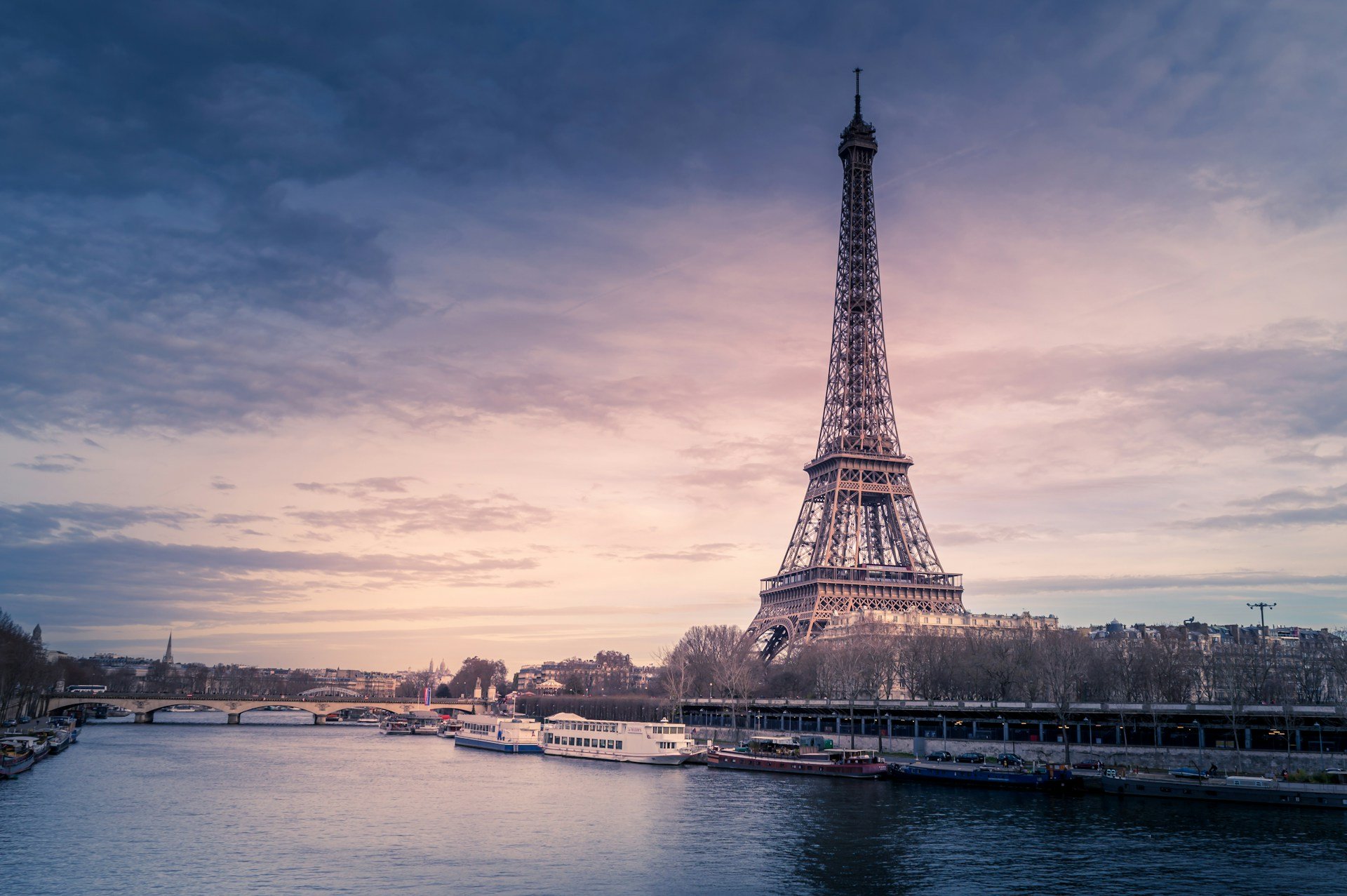
- The Eiffel Tower mini-replica sellers around the base are licensed — they cannot sell while the tower is illuminated (trademark protection), which is why they pack up quickly at dusk then return
- Book Louvre and Musée d'Orsay tickets online in advance — the queues for walk-up tickets are where the fake petition operators concentrate
Provence is lavender fields, hilltop villages, Roman ruins, and one of the finest food cultures in France. The Luberon villages — Gordes, Les Baux, Roussillon — are tourist-facing and priced accordingly; the plain below and the Alpilles range have better restaurants at better prices. Nice on the Côte d'Azur is a proper city with an excellent old town, a promenade, and direct access to Monaco (25 minutes by train). The French Riviera in July and August is crowded and expensive; May, June, and September are the right months.
- Very low scam presence throughout the region
- Nice's Vieux-Nice market area has the standard tourist-facing price premium; the local market at Cours Saleya on weekday mornings is the real one
- Monaco's casino is genuinely accessible for a look even without gambling; the €17 entry covers the main gaming rooms
- Rental car is essential for exploring the Luberon and Alpilles properly — bus service to smaller villages is minimal
Normandy has D-Day beaches and cemeteries that reward careful visiting rather than rushed day trips, Mont Saint-Michel rising from tidal flats in a way that photographs still can't quite capture, and Honfleur — a harbour town of tall slate-roofed houses that was one of the Impressionists' favourite subjects. Brittany is Celtic, rainy, and magnificent: the Quiberon peninsula, the standing stones at Carnac, the walled city of Saint-Malo, and Concarneau's fortified island fishing port. Both regions reward slower travel and a willingness to eat where locals eat.
- No meaningful scam presence in either region
- Mont Saint-Michel charges for access to the island and the abbey separately; the abbey entry is worth it, the restaurants on the main causeway street are not
- The D-Day beach circuit requires a car or a guided tour from Bayeux — public transport doesn't cover it adequately
The Loire Valley is the garden of France — 300km of river lined with châteaux built by the kings of France when the Loire was the centre of royal power. Chambord's double helix staircase (designed, allegedly, by Leonardo da Vinci), Chenonceau spanning the Cher river on arches, Villandry's geometric Renaissance gardens. Tours is the practical base; the valley is best covered by bicycle on the Loire à Vélo cycling route that connects most of the major châteaux. Worth two or three days minimum.
- No scam presence — the Loire operates on a settled tourism model with fixed prices and honest interactions
- Pre-book the most popular châteaux (Chambord, Chenonceau, Villandry) online to avoid queues during peak summer
- The Loire à Vélo cycling route is one of the finest cycle tourism routes in Europe — flat, well-signposted, and connecting everything worth seeing
Bordeaux is a port city rebuilt in the 18th century around wine trade wealth and has more listed buildings than any French city except Paris — an extraordinary uniform neoclassical streetscape along the Garonne. The Cité du Vin wine museum is genuinely excellent and includes a tasting. The Dordogne valley east of Périgueux has the highest concentration of prehistoric cave art in the world: Lascaux IV (a complete replica of the original cave), the cave of Font-de-Gaume (still has original paintings accessible to limited daily visitor numbers), and dozens of smaller sites. The medieval cliff villages of Rocamadour and Les Eyzies anchor the prehistoric circuit.
- No tourist scam presence in either area
- Font-de-Gaume takes only 200 visitors per day and tickets sell out months in advance — book before planning the trip, not after
- The Bordeaux wine region (Médoc, Saint-Émilion, Pomerol) is best explored with a driver or on a guided tour — drinking and driving on rural roads is not compatible
Lyon is France's second gastronomic city — the bouchons (traditional Lyon bistros) serve quenelles, tablier de sapeur (crumbed tripe), and andouillette (a sausage so specific it requires its own level of commitment from the diner) in a way that makes it the most honest food city in France. The old town (Vieux-Lyon) is a UNESCO Renaissance district. Chamonix in the Alps is the classic mountain town under Mont Blanc, with cable cars to extraordinary elevation and the Mer de Glace glacier accessible from the town. The road from Chamonix into Italy through the Mont Blanc Tunnel is one of the great Alpine drives.
- No tourist scam presence in Lyon or the Alpine towns
- Lyon's bouchons have a quality designation (Bouchon Lyonnais label) — look for the official sign; tourist-facing restaurants in Vieux-Lyon without it are less reliable
- Chamonix cable car queues in peak ski season and summer hiking season are long; book the Aiguille du Midi cable car online before arriving
Before You Go — The Checklist
- ✓ Don't engage with anyone who approaches you uninvited in a Paris tourist area — no eye contact, no verbal response, keep walking. This covers the bracelet, petition, ring, and shell game in one rule.
- ✓ Phones and wallets in front pockets or inner jacket pockets on the metro — never back pockets. Crossbody bag worn in front and zipped in crowded carriages.
- ✓ Know the official CDG taxi flat rate before landing: €53 (Right Bank) or €58 (Left Bank). Only use taxis from the official rank outside — never drivers who approach you inside the terminal.
- ✓ Book Louvre, Musée d'Orsay, and major château tickets online in advance — this skips the queues where scam operations concentrate and is faster anyway.
- ✓ Use Uber, Bolt, or the RER B (€11.80) from CDG rather than random taxis — all three eliminate the overcharging risk entirely.
- ✓ Always pay in euros and decline dynamic currency conversion at any ATM or card terminal.
- ✓ Check transport disruption news before any travel day — strikes can close metros and trains with little advance notice.