Atlas Guide

Explore the World

Ibiza sunset over the Mediterranean from Dalt Vila fortified old town
Mediterranean · Spain

Ibiza,
La Isla Blanca

The White Isle contains multitudes — a UNESCO-listed medieval fortress city, secret pine-fringed coves of heartbreaking clarity, the world's most legendary sunset ritual, and a nightlife scene unlike anything else on earth. Come for one reason, stay for all of them.

🏛️ UNESCO World Heritage Old Town
🌅 Mediterranean's Most Famous Sunset
🏖️ 50+ Secret Coves & Beaches
🎶 World Capital of Electronic Music
About Ibiza

The Island That Contains Everything

Ibiza's reputation is built almost entirely on one thing — the nightlife. Pacha, Ushuaïa, Hi, DC-10, Amnesia: these names carry a weight in global clubbing culture that no other destination can match. From June to September, the island pulsates with an energy that is genuinely unique in the world — a concentrated, euphoric, and often absurdly expensive celebration of music, bodies, and Mediterranean summer that draws hundreds of thousands of people annually.

But Ibiza has always been more than its clubs — and the more you explore it, the more the other island reveals itself. The UNESCO World Heritage old town of Dalt Vila — a 16th-century fortified city rising on a rocky promontory above the harbour — is one of the finest medieval citadels in the Mediterranean. The north of the island is almost entirely untouched: pine forests, dry-stone walls, ancient churches, terraced fig and almond groves, and a bohemian creative community that arrived in the 1960s and never really left.

The beaches range from the wide, buzzing Las Salinas — where the beautiful people congregate and the DJs play from beach club terraces — to completely isolated coves that you reach by scrambling down a cliff path, where the only sound is the water. And 30 minutes by ferry lies Formentera: flat, pine-covered, with sand so white and water so clear it looks photoshopped. Ibiza is whatever you need it to be.

🏨 Find Hotels in Ibiza

Dalt Vila fortified old town of Ibiza rising above the harbour at golden hour Secret pine-fringed cove in northern Ibiza with turquoise water
50+
Beaches & Hidden Coves
Must-See

Top Attractions in Ibiza

From a UNESCO fortress city and the Mediterranean's most celebrated sunset to a mythical sea rock and an island of impossible beaches a short ferry away — Ibiza is endlessly more than it appears.

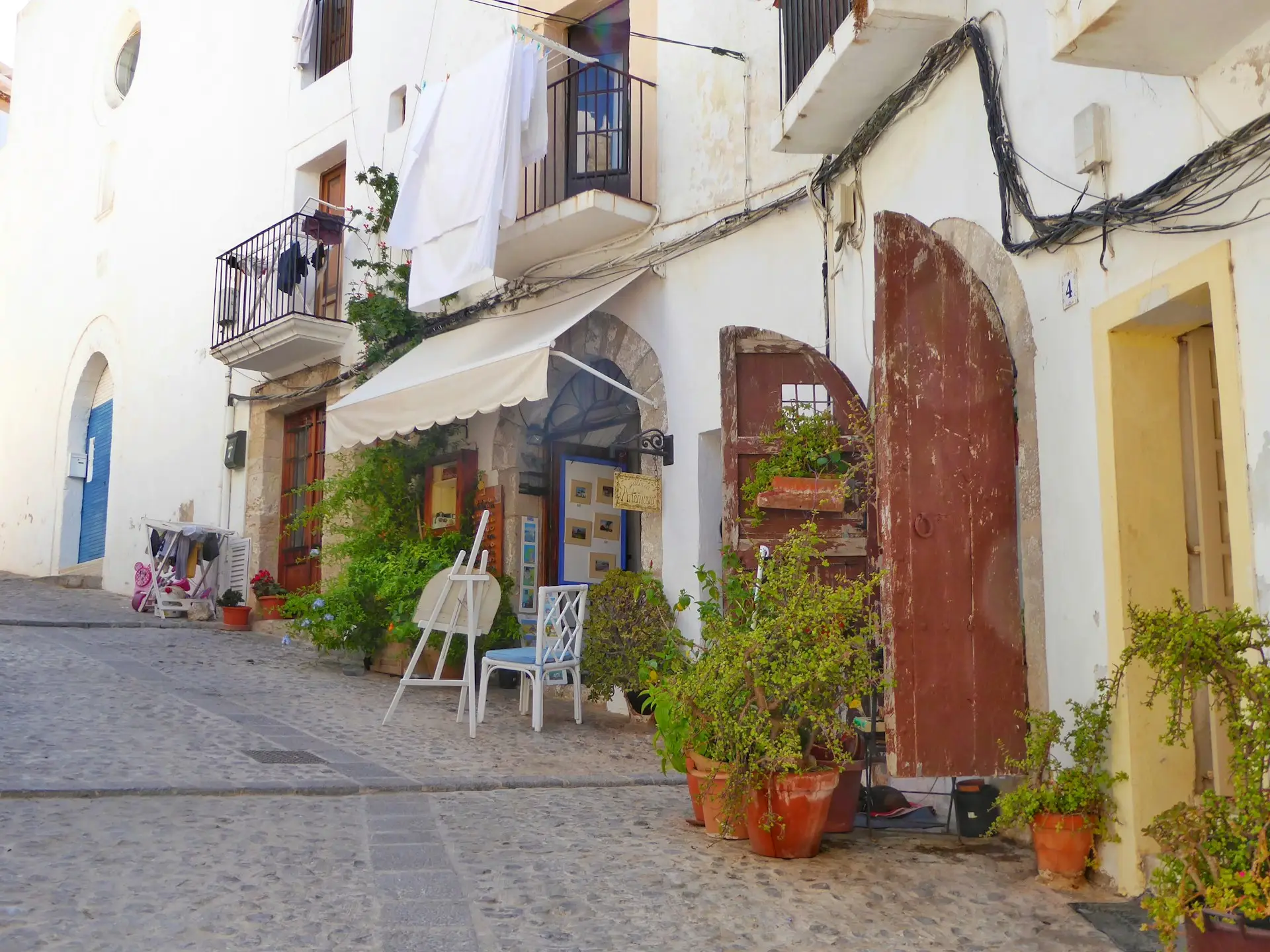
Dalt Vila Ibiza old town cobblestone streets and whitewashed walls at night
🏰 UNESCO World Heritage

Dalt Vila — The Old Town

The ancient walled city perched on a rocky hill above Ibiza Town is one of the best-preserved Renaissance fortification systems in the world — designated UNESCO World Heritage in 1999 alongside the surrounding posidonia seagrass meadows. Seven bastions and massive stone walls encircle a maze of cobblestone streets, whitewashed houses, and the Cathedral of Our Lady of the Snows at the summit, with 360° views over the harbour, the salt flats, and the open sea. The walk up from the Portal de ses Taules gateway at dusk, as the old town glows golden and the harbour lights up below, is one of the most beautiful things to do on the island — and it is entirely free.

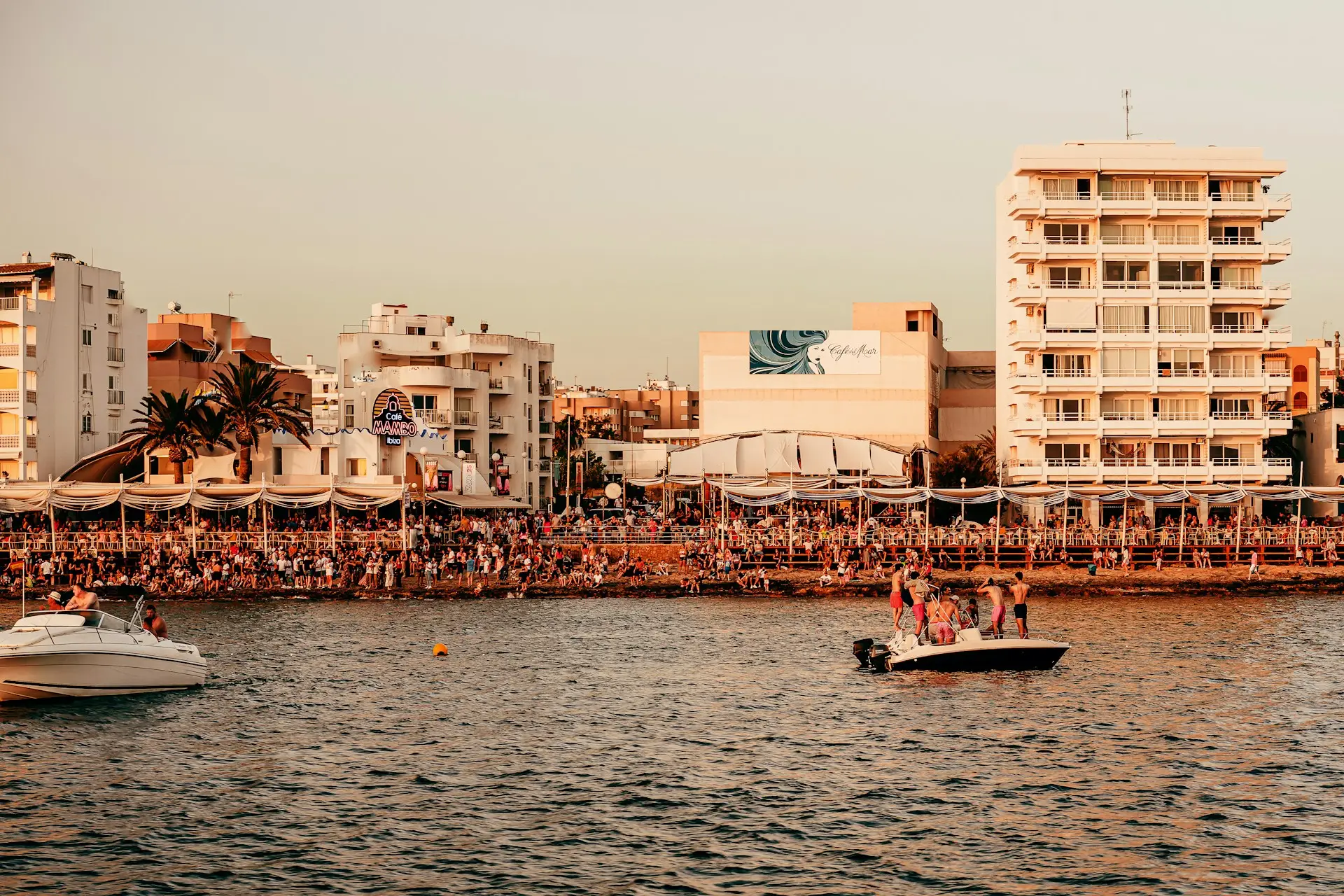
Ibiza sunset from the cliffs at San Antonio with orange sky over the sea
🌅 Legendary Ritual

The Ibiza Sunset

Ibiza's most famous daily event has nothing to do with clubs — it is the sunset. The west-facing coast around San Antonio offers some of the most spectacular sunsets in the Mediterranean, and watching the sun sink into the sea from the cliff terraces of Café del Mar, Café Mambo, or Savannah has been a nightly ritual since the 1980s. The DJs play as the sun descends; the crowd applauds when it disappears. It is free, it is beautiful, and it is one of those travel experiences that genuinely lives up to its reputation. The cliffs near Cala Conta and Es Vedrà offer equally spectacular sunsets away from the main crowds.

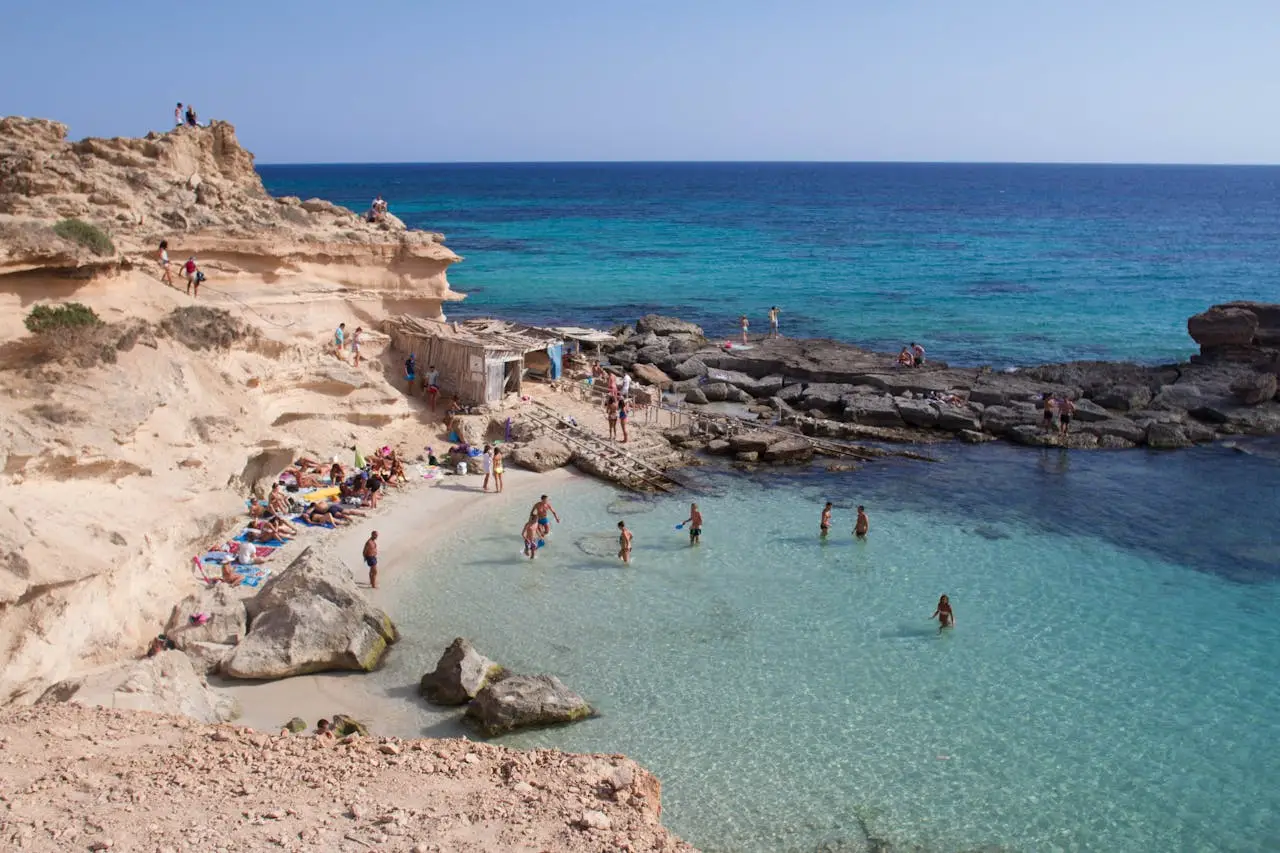
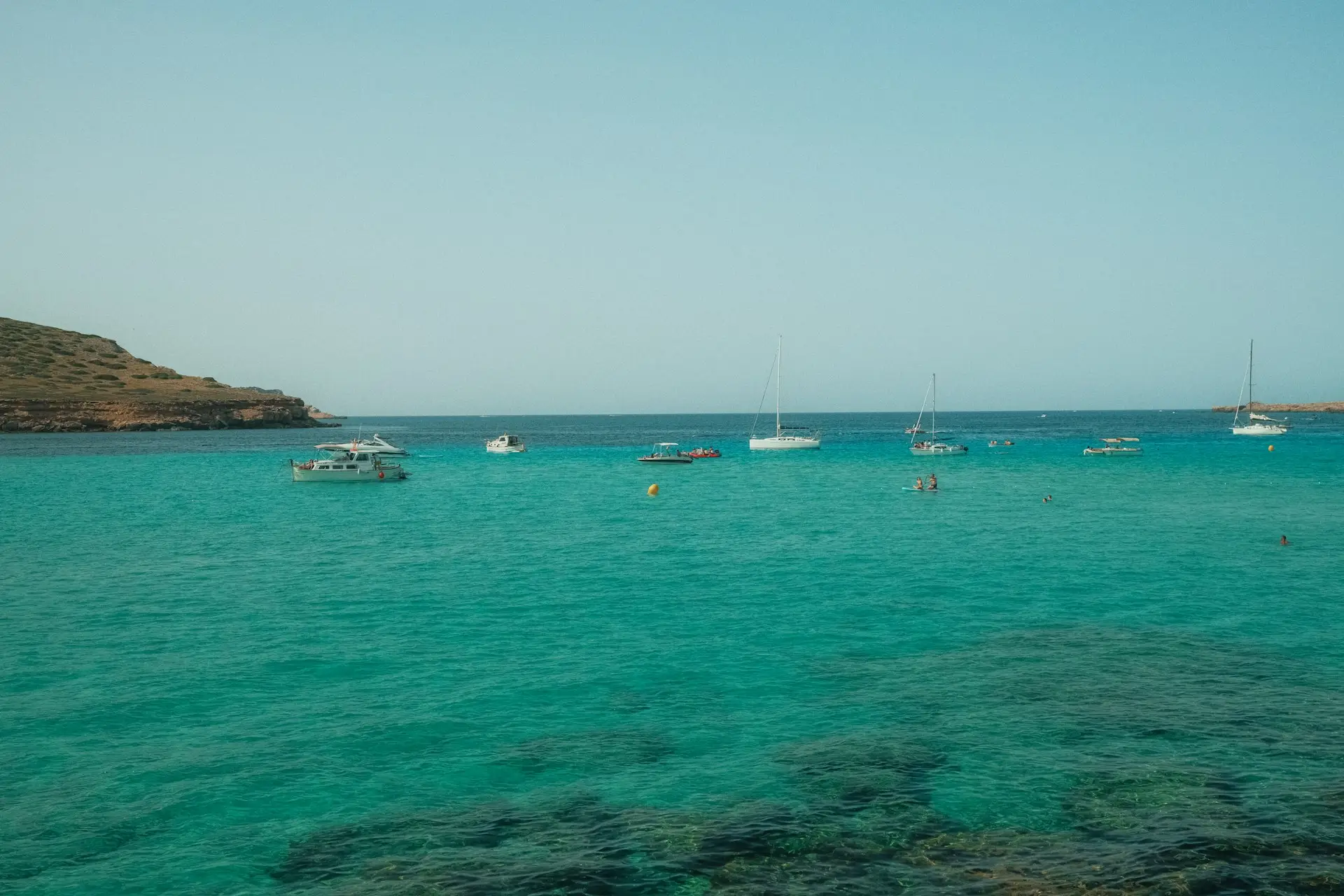
Cala Comte Ibiza rocky headland with multiple turquoise swimming inlets
🏖️ Most Beautiful Beach

Cala Comte

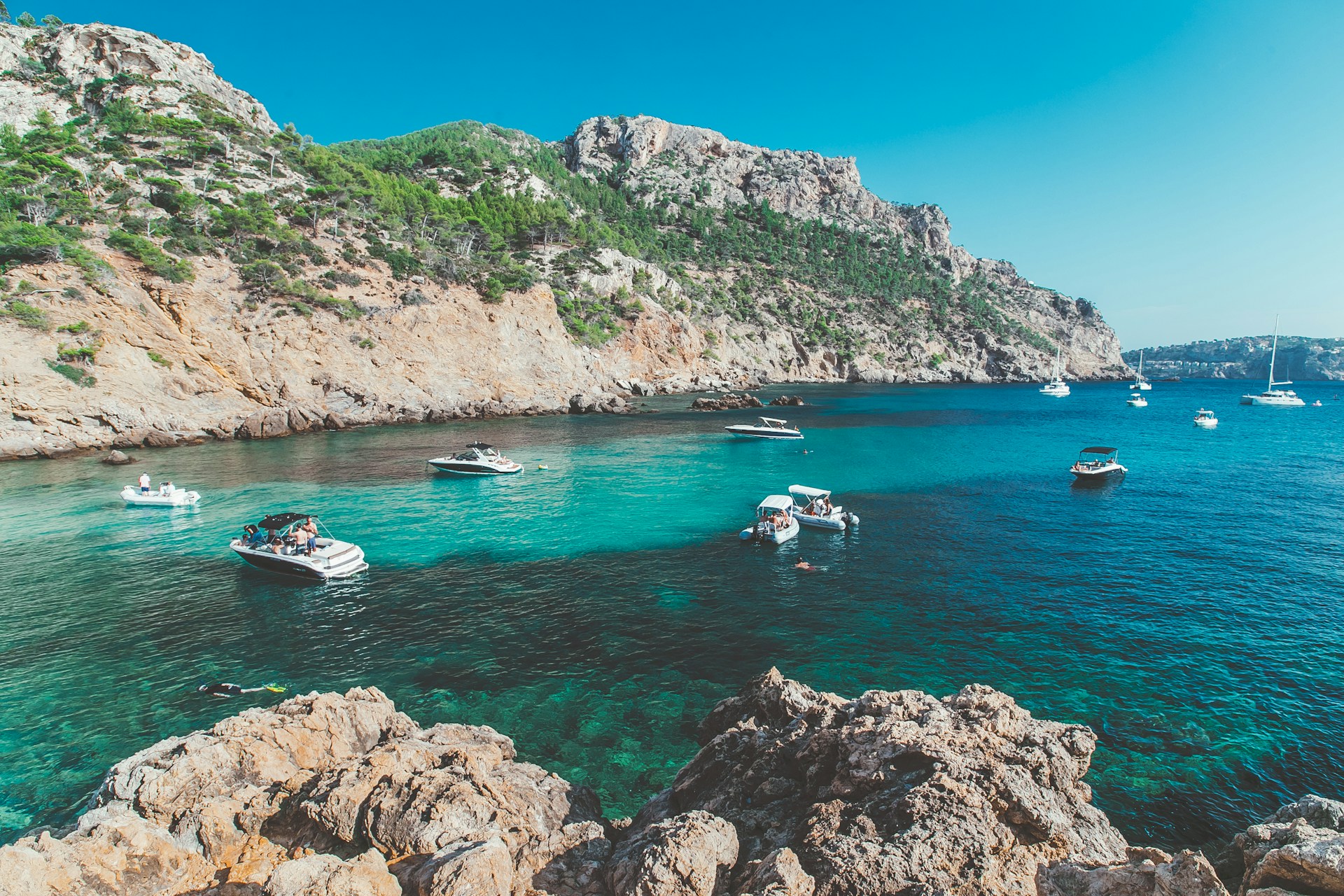
Consistently voted the most beautiful beach in Ibiza — a series of rocky coves and small sandy inlets on the southwest coast facing a scattering of offshore islets, with water that shifts from jade green in the shallows to deep cobalt in the channels. The rock platforms are perfect for sunbathing; the swimming is exceptional. A beach bar serves food and drinks through the summer. It faces directly west — sunsets here are among the finest on the island. Arrive before 10am in July and August; parking fills completely and becomes extremely difficult by mid-morning.

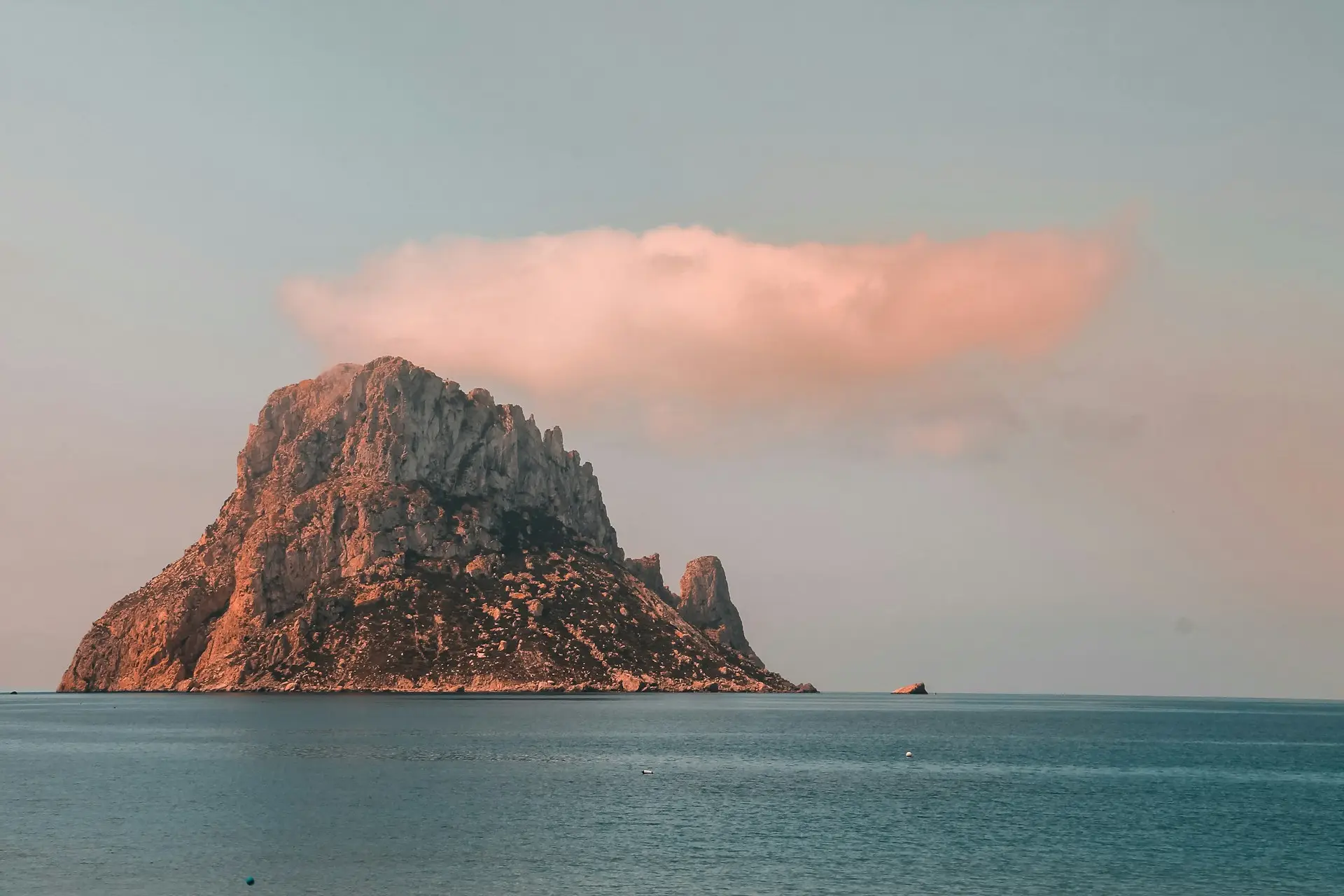
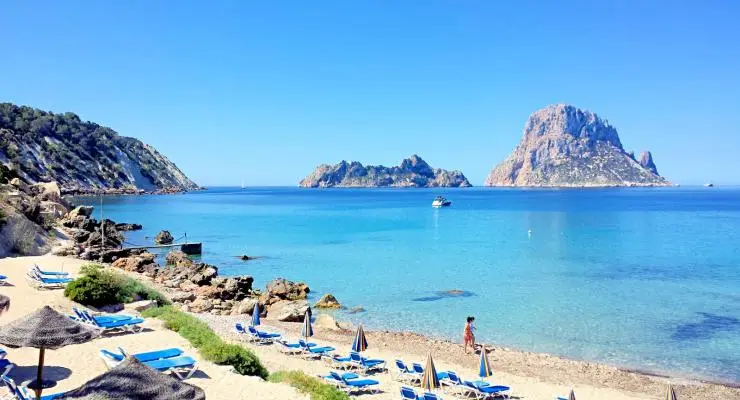
Es Vedrà dramatic rocky islet rising from the sea at sunset off Ibiza
🗿 Mythical Rock

Es Vedrà

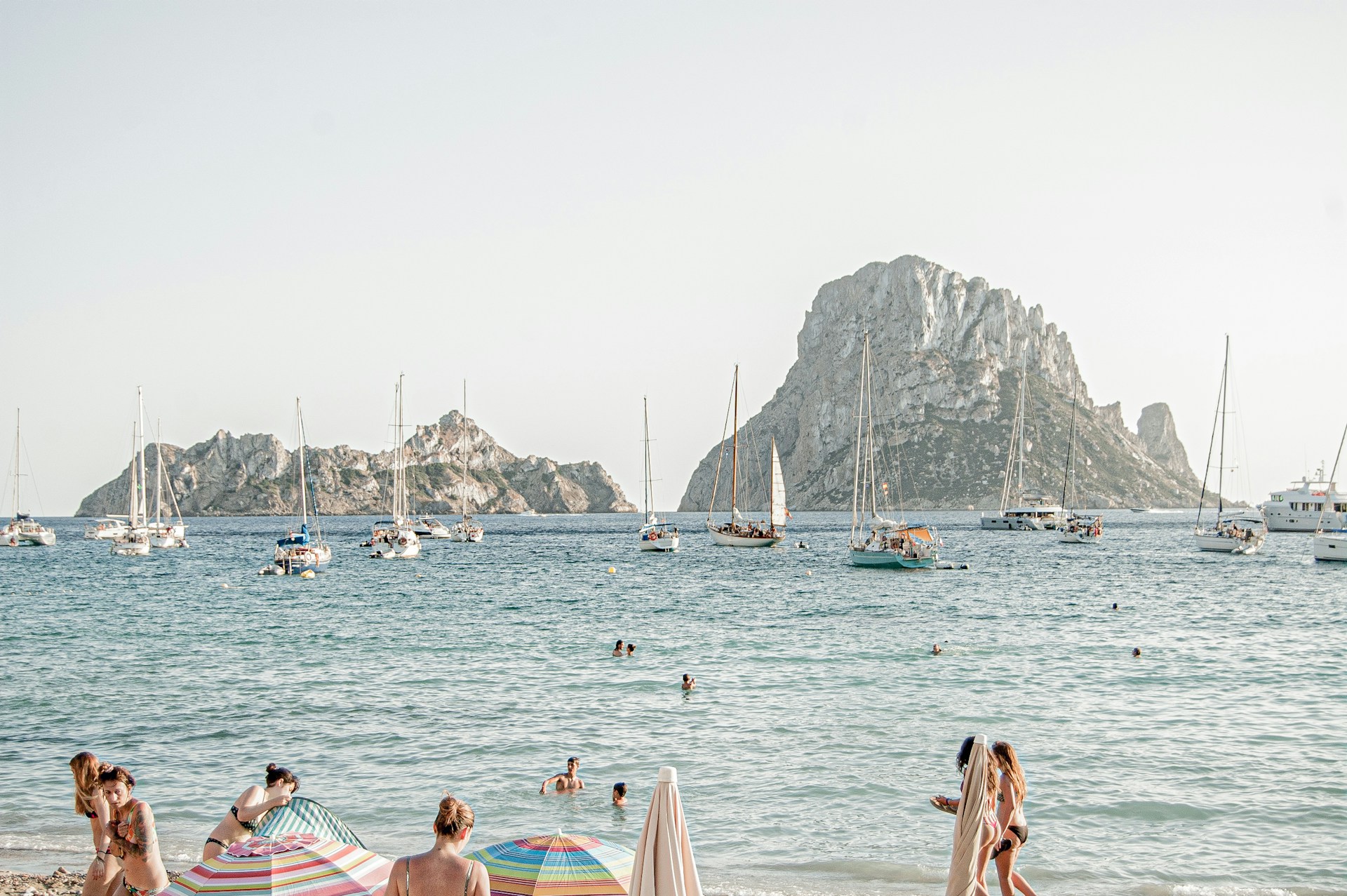
The most visually arresting sight on the island — a 382-metre limestone islet rising dramatically from the sea off the southwest coast, uninhabited except for wild goats and Eleonora's falcons, surrounded by legends (the Sirens from the Odyssey, a UFO hotspot, one of the world's strongest magnetic fields). The view from the mirador above Cala d'Hort is one of the finest on the island, particularly at sunset when the rock turns amber against the darkening sea. Glass-bottom boat tours and kayak trips from Cala d'Hort circle the islet and enter the surrounding sea caves.

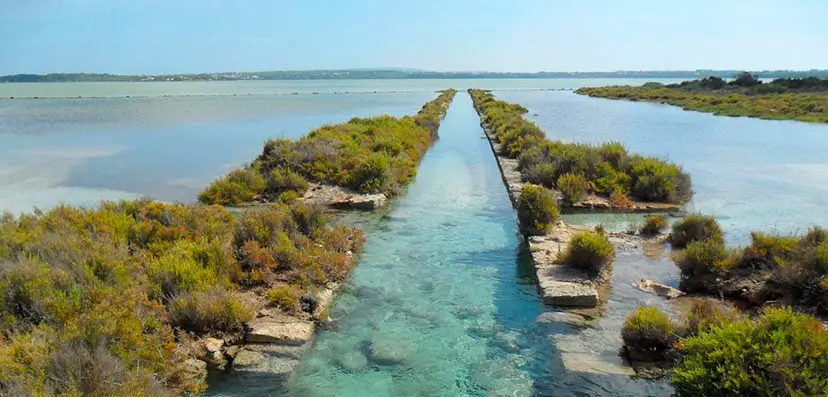
Las Salinas beach Ibiza with clear turquoise water and pine-backed shore
🌿 Natural Park Beach

Las Salinas

The most fashionable beach on the island — a long, straight stretch of fine sand backed by pine trees at the southern tip of the island, within the Ses Salines Natural Park that also protects the ancient salt flats (in use since Phoenician times). The Sa Trinxa and Jockey Club beach bars are legendary for their soundtrack and clientele. The water is shallow and extraordinarily clear. At the southern end of the beach, a 20-minute walk along a nature trail leads to the ferry point for Formentera — making it an excellent starting point for a day crossing.

Formentera Ses Illetes beach with impossibly clear Caribbean-like turquoise water
⛴️ Island Escape

Formentera

Thirty minutes by fast ferry from Ibiza Town lies Spain's smallest inhabited island — flat, pine-covered, car-free in its best areas, and home to some of the most extraordinary beaches in the Mediterranean. Ses Illetes on the north peninsula has water of an almost Caribbean clarity — clear, shallow, and impossibly turquoise over white sand. Playa de Llevant on the east side of the same peninsula faces the sunrise. The island is small enough to explore entirely by bicycle in a day. No airports, no mega-resorts, no clubs — just beaches, seafood, and silence.

Where to Stay

Ibiza's Key Areas

Ibiza is small but its zones are dramatically different in character. Choosing where to base yourself is the most important decision you make for the kind of trip you want.

🏛️
Ibiza Town (Eivissa) — The Capital

The most rewarding base on the island — Dalt Vila and the old town to explore, the harbour front lined with restaurants and bars, the lively La Marina and Sa Penya districts, proximity to Las Salinas beach, and easy access to the ferry terminal for Formentera. The most sophisticated and culturally rich area, with excellent boutique hotels in and around the old town walls. Pacha club is a short walk from the port.

🎶
Playa d'en Bossa — Club Central

The long beach strip south of Ibiza Town is ground zero for club tourism — Ushuaïa and Hi clubs are both here, the beach is lined with hotel-megacomplexes, and the energy from June to September is relentless. The most expensive and loudest part of the island. Perfect if you want to be at the heart of the nightlife without travelling far; less ideal if you want quiet or authentic Ibizan character. Excellent transport links to Ibiza Town and the rest of the island.

🌅
San Antonio — Sunset Strip

The second town of Ibiza and the spiritual home of the Ibiza sunset — the Café del Mar strip, Amnesia club nearby, a long beach promenade, and budget accommodation that makes it popular with younger visitors. More package-holiday in character than Ibiza Town, with a lively strip of bars and restaurants. The West End area is the most boisterous. San Antonio is also the departure point for sunset boat trips and has good bus connections to beaches in the southwest.

🌿
The North (Sant Joan & Santa Gertrudis) — Rural Ibiza

The almost entirely unspoiled rural north is Ibiza's best-kept secret — ancient white churches on hilltops, pine-forested interior, the famous Las Dalias hippie market (Saturdays), finca villa rentals, and the wild beaches of Benirràs (famous for Sunday drumming at sunset) and Cala Xarraca. Completely different in atmosphere from the club south. The village of Santa Gertrudis has some of the island's best restaurants and galleries. Essential for anyone who wants the real Ibiza beyond the season.

🏖️
Santa Eulalia & the East Coast

Ibiza's most family-friendly area — a pleasant marina town with a relaxed seafront promenade, good restaurants, a Saturday market, and access to some of the island's calmer beaches (Cala Nova, Cala Llenya, Es Figueral). Less frenetic than the west and south, with a good mix of Spanish locals and longer-stay visitors. The DC-10 club at Playa d'en Bossa is accessible by taxi for nights out without being on the doorstep.

Southwest Coves (Cala Conta, Cala Bassa)

The most beautiful coastal strip on the island — Cala Comte, Cala Bassa, Cala Tarida, and Cala Vedella are clustered in the southwest, all with spectacular water and excellent beach clubs. Staying here requires a hire car and means commuting to Ibiza Town and clubs, but the morning beach experience — calm, clear, and gorgeous before the day crowds — is worth it. Several luxury boutique hotels operate in this area, particularly around Cala Tarida and Cala Vedella.

Eat & Drink

What to Eat & Drink in Ibiza

Ibiza has one of the most sophisticated food scenes of any Mediterranean island — a combination of traditional Ibizan (Pagès) cuisine rooted in land and sea, and decades of international influences brought by the island's creative international community.

Bullit de peix Ibizan fish stew with saffron and potatoes
🐟 Essential Dish

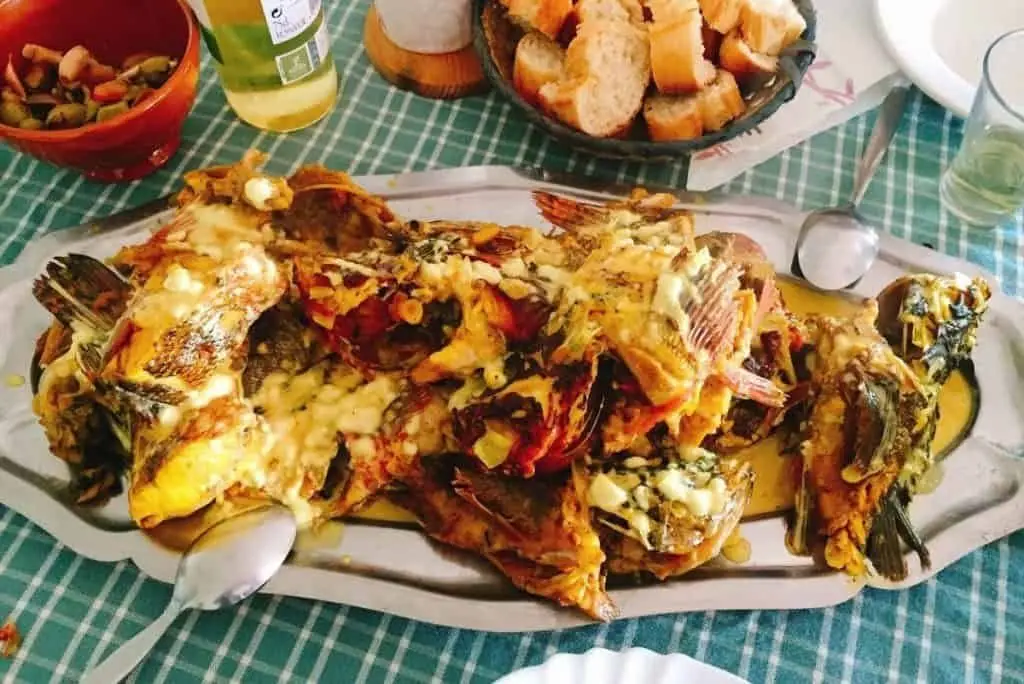
Bullit de Peix

The defining dish of traditional Ibizan cooking — a two-course ritual that begins with a clear, deeply flavoured saffron-infused fish broth, in which a selection of whole local fish (typically scorpionfish, grouper, and potato) has been gently poached. The broth is served first, poured over rice cooked in the same pot (arroz a banda — "rice on the side"). Then the fish itself arrives, served cold with alioli (garlic mayonnaise) and picada sauce. Found at traditional fishermen's restaurants (cas pagès) in the fishing villages of Sant Carles, Santa Eulalia, and Cala de Bou. A meal, a ritual, and a story about the island in two courses.

Sofrit pagès Ibizan meat and potato stew traditional dish
🍖 Country Kitchen

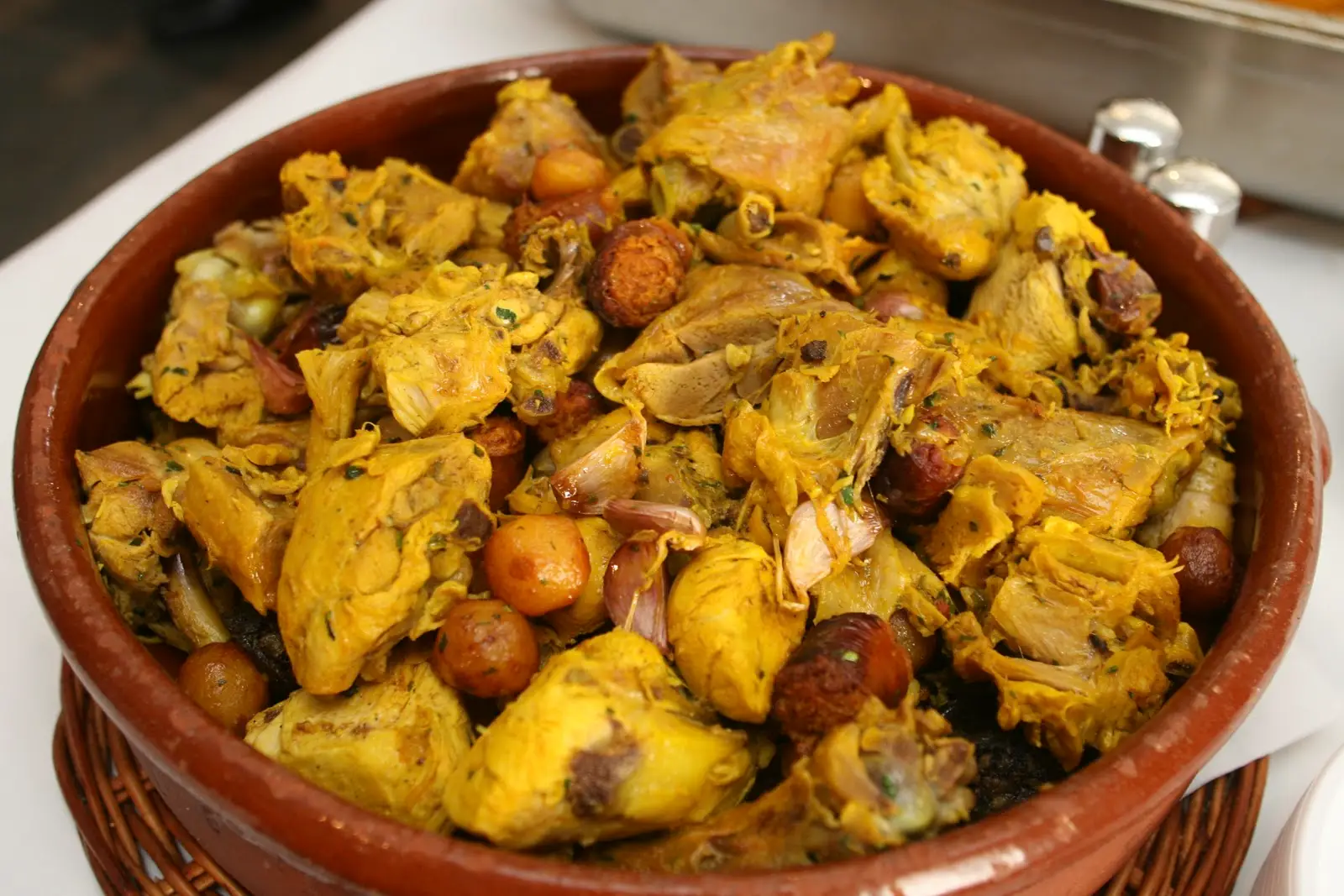
Sofrit Pagès

The Ibizan farmer's feast dish — a rich, satisfying stew of chicken, lamb, sobrassada (red-cured sausage), butifarra (white sausage), potatoes, and peppers slowly fried together with garlic, saffron, and herbs. Traditionally the centrepiece of celebrations and family gatherings in the rural interior, sofrit pagès is honest, hearty cooking that has barely changed in centuries. The village restaurants of Santa Gertrudis and Sant Miquel serve the most authentic versions. Completely at odds with Ibiza's glamorous image — and all the better for it.

Hierbas Ibicencas herbal liqueur bottle with aromatic herbs
🌿 Island Liqueur

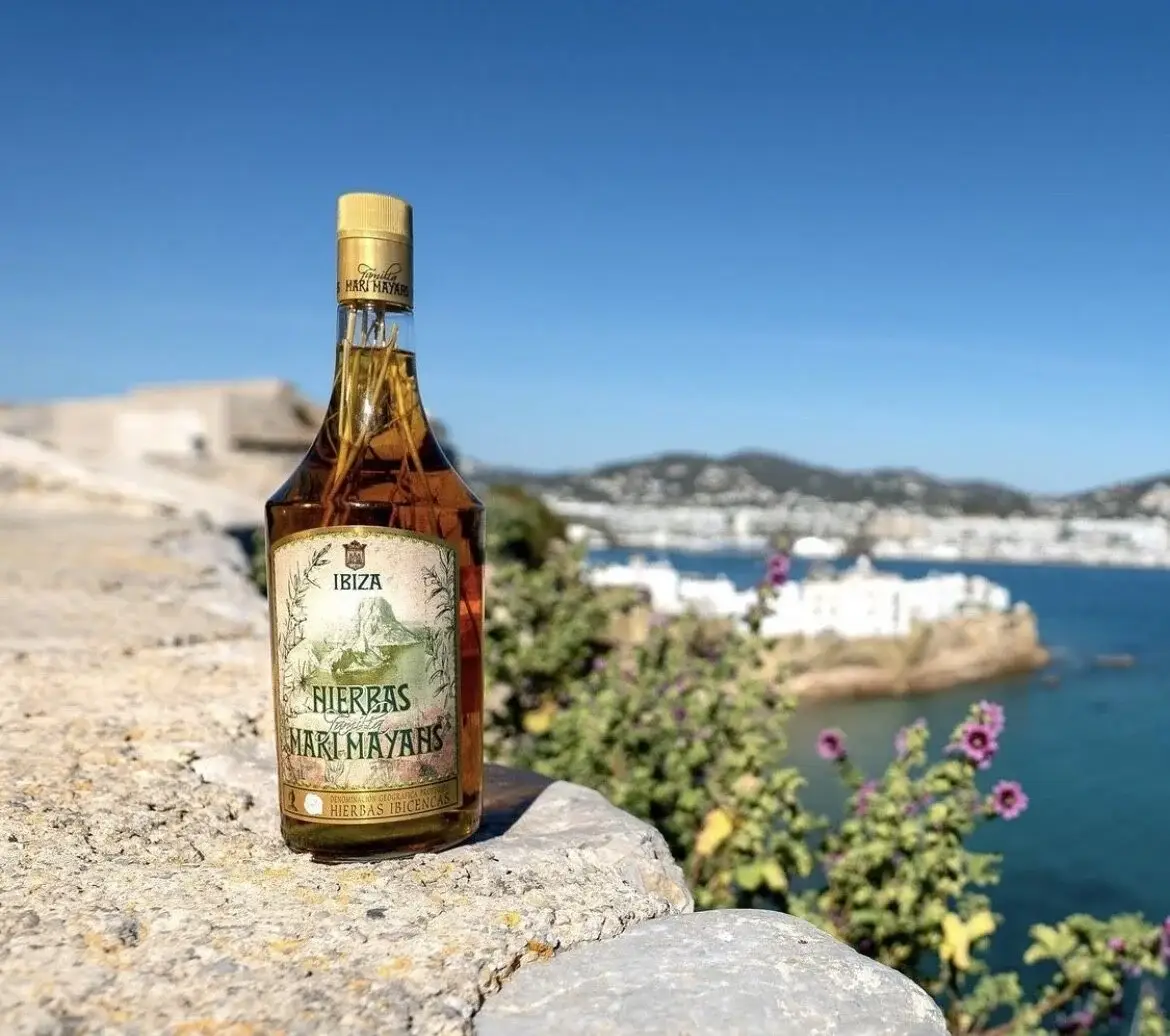
Hierbas Ibicencas

Ibiza's most distinctive drink — a sweet herbal liqueur made by macerating a mixture of wild island herbs (rosemary, thyme, fennel, juniper, and up to 20 others depending on the producer) in anise spirit. Every family and every restaurant has their own blend; the flavour varies from delicately aniseed to intensely herbal and resinous. Drunk ice-cold after dinner as a digestif, or over ice as a long drink. The best hierbas comes from small artisanal producers in the island's north — look for unlabelled bottles sold at Las Dalias market and rural farmhouses.

Flaó Ibizan cheesecake with mint and aniseed on rustic plate
🍰 Island Dessert

Flaó

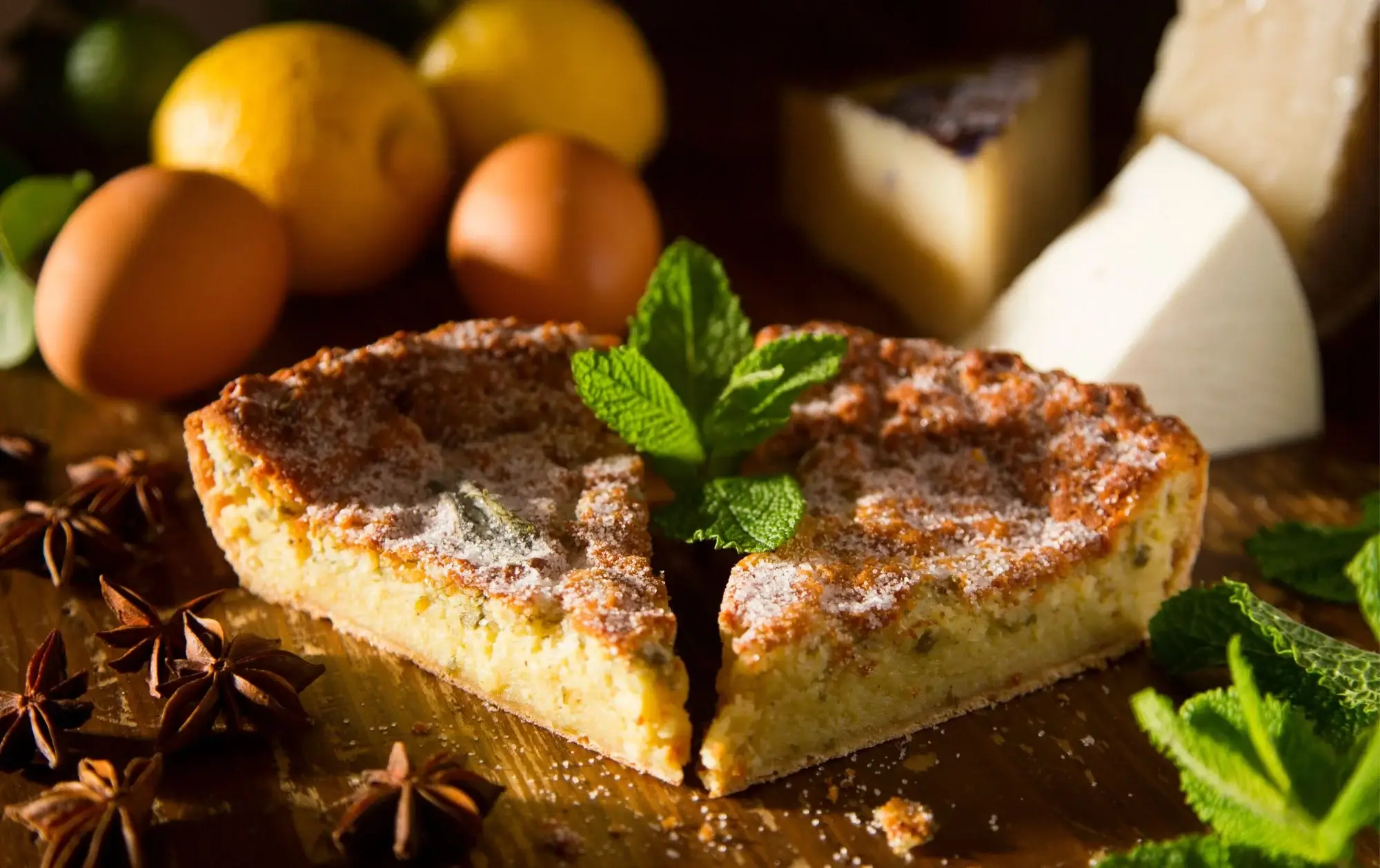
Ibiza's most beloved traditional dessert — an open tart filled with a mixture of fresh goat's cheese (or sheep's cheese), eggs, sugar, aniseed liqueur, and fresh mint, baked in a pastry shell. It is lighter than a cheesecake, fragrant with anise and mint, and completely unlike any other Spanish dessert. Every Ibizan family bakes their own version for celebrations; the recipe has been traced back to Moorish and even pre-Islamic Ibiza. Found at traditional restaurants and the better pastry shops in Ibiza Town and the village markets.

Plan Your Trip

When to Visit Ibiza

No destination on this list is more season-dependent than Ibiza. When you go fundamentally changes which island you find.

Jan
Feb
Mar
Apr
May
Jun
Jul
Aug
Sep
Oct
Nov
Dec
Best — Warm, Swimmable, Manageable Good — Quieter, Opening Up Peak Season — Busy, Expensive Off Season — Most Things Closed
🌸
Late Spring (May – Jun) — The Sweet Spot

May and June offer everything Ibiza has without the extreme prices and crowds of July and August. Sea temperatures reach 22–24°C and are perfect for swimming. The club season opens in June with the big opening parties. Accommodation is 40–60% cheaper than August. The island is genuinely beautiful at this time — flowers everywhere, beaches uncrowded, restaurants easy to book. The best overall time for a first-time Ibiza visit.

🎶
Peak Season (Jul – Aug) — Full Intensity

July and August are when Ibiza is most fully itself — the clubs are at peak programming, every celebrity DJ is on rotation, the beaches are packed, the energy is extraordinary and the prices are eye-watering. Beach sunbeds €50–100, club entry €50–120, cocktails €18–25, hotel rooms €300–600. If the nightlife and the full seasonal experience is the reason you're going, this is the time — but budget generously and book everything months in advance.

🍂
Autumn (Sep – Oct) — The Best Kept Secret

September and October are arguably the finest months for anyone not exclusively focused on clubs. The sea is at its warmest (25–26°C in September), the closing parties of the big clubs happen in late September and October with legendary energy, the beaches thin out dramatically after the first week of September, and prices drop sharply. October is particularly beautiful — clear light, warm days, and an island slowly returning to its local self. Highly recommended.

🌾
Winter (Nov – Mar) — The Local Island

Outside the season, Ibiza retreats into a completely different existence — the clubs close, most beach bars shut, and the island belongs to the year-round community of farmers, artists, and long-term residents who have always been the island's soul. The weather is mild (12–18°C), the old town is magnificent without crowds, and the northern rural landscape is strikingly beautiful. Not for beach holidays, but extraordinary for anyone who wants to understand what Ibiza actually is beneath the seasonal performance.

Insider Knowledge

Ibiza Travel Tips

What experienced Ibiza visitors know — how to have the best possible time without the most common costly mistakes.

🎫
Buy Club Tickets in Advance — Always

Ibiza's headline clubs (Pacha, Ushuaïa, Hi, Amnesia, DC-10) charge significantly more at the door than in advance — and in July and August, popular nights sell out completely. Check club websites and official ticket platforms directly for the best prices; avoid touts outside clubs at all costs. The most in-demand nights (closing parties, headline DJ residencies) can sell out weeks ahead. Pre-season tickets bought in May for July dates are often 20–30% cheaper than buying closer to the date.

🌅
The Sunset is Free — Use It

The Café del Mar sunset strip in San Antonio is one of the most famous experiences in Ibiza — and the cliffs where you watch the sunset cost absolutely nothing. Walk along the seafront promenade from San Antonio town, find a spot on the rocks, and watch one of the Mediterranean's finest sunsets unfold. If you want a drink, arrive early enough to get a seat at Café del Mar or Café Mambo (from around 6pm). Alternatively, the clifftop at Cala d'Hort looking towards Es Vedrà has a sunset that rivals anything on the strip, with a fraction of the people.

Take the Ferry to Formentera — At Least Once

Formentera is 35 minutes from Ibiza Town port by fast ferry — and the beaches there are dramatically more beautiful than almost anything in Ibiza itself. Ses Illetes on the north peninsula has water clarity that belongs in the Caribbean rather than the Mediterranean. Go midweek if possible (it gets crowded on weekends), take the first boat of the day (around 8am), bring everything you need (food, water, sun cream), and hire a bicycle or scooter at La Savina to reach the best beaches under your own power. One of the most memorable day trips in the Mediterranean.

🗺️
Explore the North — It's a Different Island

The rural north of Ibiza — Sant Joan de Labritja, Sant Miquel, the back roads between them — is almost shockingly different from the club south. Ancient stone farmhouses (fincas), fig and almond terraces, wild herbs along the roadside, whitewashed village churches with no tourists. The Las Dalias hippie market (Saturdays, plus summer night markets) has been running since 1954 and sells genuine handcraft, jewellery, and local produce alongside the tourist trinkets. The beach at Benirràs (famous for Sunday drumming sessions at sunset) is spectacular.

🍽️
Eat Away From the Tourist Strips

The restaurant strips of Playa d'en Bossa and San Antonio's West End serve overpriced, mediocre food targeting people who aren't paying attention. The excellent Ibizan restaurants are in the village centres of Santa Gertrudis, Sant Carles, Sant Miquel, and the backstreets of Ibiza Town's La Marina. Local restaurants serve authentic bullit de peix, sofrit pagès, and arroz a banda at normal Spanish prices — typically €15–25 for a main course versus €30–50 at tourist-strip equivalents. Ask your accommodation for recommendations; the best places are rarely on the main tourist maps.

🚗
Hire a Car or Scooter for the Coves

The island's most beautiful beaches — Cala d'Hort, Cala Comte, Cala Xarraca, Cala Benirrás — are not reachable by bus from the main resorts. A hire car (from €35/day in summer) or scooter (from €25/day) transforms your ability to explore independently. Scooters are particularly well-suited to Ibiza's scale and the roads to smaller coves. Book hire cars well in advance for July and August — demand is extremely high and availability can be exhausted. Note that parking at popular coves is strictly limited; arrive early or you will find no space.

Need to Know

Practical Information

Everything you need to plan your Ibiza trip smoothly — from arriving at the airport to getting around the island.

✈️
Getting There
  • Ibiza Airport (IBZ) — 7km southwest of Ibiza Town; one of Europe's busiest summer airports
  • Direct flights from most major European cities: Ryanair, easyJet, Vueling, Jet2, TUI
  • Flight time: approximately 2h20 from UK, 2h from Germany, 1h from Barcelona
  • Airport bus (Line 10) to Ibiza Town — €4, 20 minutes; Line L9 to San Antonio
  • Taxi to Ibiza Town ~€15; to San Antonio ~€25; to north of island ~€40–60
🚗
Getting Around
  • Hire car — recommended for beaches and the interior; book well in advance for summer
  • Scooter hire — popular and practical for the island's scale; from €25/day
  • Buses — frequent routes connecting Ibiza Town to San Antonio, Santa Eulalia, and main beaches
  • Discobus — night bus between clubs and resorts, runs until 6am in summer
  • Taxis — metered but very scarce in peak summer; pre-book via Cabify app
💰
Money & Budget
  • Currency: Euro (€); VAT (IVA) included in prices
  • Budget: €80–120/day (hostel/apartment, local restaurants, no clubs)
  • Mid-range: €200–350/day (hotel, dining out, occasional club night)
  • Peak clubbing: add €50–120 per night per person for major club entry
  • July–August prices are 50–100% higher than May or October for accommodation
📶
Connectivity
  • EU roaming — no extra charges for EU/EEA mobile users throughout Spain
  • Good 4G coverage across most of the island; some rural dead spots in the north
  • Free Wi-Fi in most hotels and restaurants; patchy at remote beaches
  • Spanish SIM cards from Movistar, Vodafone, and Orange at airport and shops
  • Airalo eSIM works well for non-EU visitors — buy before travel
🏥
Health & Safety
  • Ibiza is generally safe; petty theft in crowded areas and clubs is the main risk
  • Emergency services: 112 (EU standard)
  • EU EHIC / GHIC cards cover EU/UK citizens for emergency healthcare
  • Can Misses Hospital in Ibiza Town is the main public hospital
  • Sun protection is critical — UV is intense June–September; drink plenty of water
📋
Entry Requirements
  • Ibiza is part of Spain and the Schengen Area — no border control for EU/EEA travellers
  • UK citizens — passport required; 90-day Schengen visa-free period applies
  • US, Canada, Australia — visa-free for up to 90 days in Schengen zone
  • ETIAS authorisation required from 2026 for visa-exempt non-EU visitors (€7)
  • Passport must be valid for at least 3 months beyond departure date
Trusted Partners

Book Your Ibiza Trip

Everything you need to plan and book your Ibiza visit in one place.

Common Questions

Ibiza FAQ

The questions every Ibiza-bound traveller asks — answered honestly.

It depends entirely on what you want. For the full club season at maximum energy: July and August — extraordinary but very expensive. For the best overall experience balancing beaches, nightlife, price, and manageability: late May to mid-June or September to early October. For the club closing parties (some of the best nights of the season): late September. For the real, quiet Ibiza with locals and no tourists: November to March. There is no universally "best" time — there are different Ibizas in different seasons.
Absolutely not — this is the most persistent myth about the island. Ibiza has a UNESCO World Heritage old town, some of the finest beaches in Europe, excellent food, a fascinating bohemian artistic history, and a beautiful rural north that has nothing to do with clubs. The island attracts everyone from families in Santa Eulalia to luxury wellness retreat visitors in the north, to serious foodies in Ibiza Town. The club scene is one layer of a complex island — and one you can entirely avoid if you choose to.
Ibiza Town (Eivissa) is the cultural, architectural, and gastronomic capital of the island — the UNESCO old town, the harbour, the best restaurants, and a sophisticated atmosphere. It is the best base for first-time visitors who want to experience more than just clubs. San Antonio is primarily a resort town built around package tourism and the sunset strip — louder, younger in character, and centred on the West End bar scene and the Café del Mar sunset ritual. Both are well-connected by bus and both have their merits depending on what you want.
Regular ferry services depart from Ibiza Town port (Estació Marítima) to La Savina on Formentera throughout the day in summer — approximately every 30–60 minutes from around 7am to 9pm. The crossing takes 30–35 minutes on a fast ferry; return tickets cost approximately €25–35. In July and August, book ferry tickets in advance online as popular sailings can sell out. At La Savina port on arrival, bicycle and scooter hire stalls are right at the dock and are the best way to explore the island.
For scenic beauty: Cala Comte (multiple turquoise inlets, spectacular sunset views, southwest coast). For atmosphere: Las Salinas (fashionable, great music, proximity to Formentera ferry). For seclusion: Cala d'Hort (small, view of Es Vedrà, dramatic). For families: Cala Bassa (calm water, beach club, good facilities). For wildness: Cala Xarraca (rocky, remote north coast, crystal clear). For ease: Talamanca (near Ibiza Town, calm bay, very accessible). For drama: Aguas Blancas (nudist, wild, striking red cliffs of the northeast).
For a specific type of visitor, absolutely — October to April offers the authentic Ibiza that most summer tourists never see. The old town without queues, the rural north in bloom, local restaurants with no waiting list, rental villas at a fraction of summer prices, and an island moving at a completely different rhythm. November and December are quiet to the point of being genuinely sleepy, but January and February are when the island's artistic community is most active. It is a completely different experience from the summer season — and many who discover it prefer it.
Keep Exploring

More Popular Destinations

Loved Ibiza? These destinations are equally unmissable.