
What You're Actually Getting Into
Tuvalu is the fourth smallest country on earth, a Polynesian nation of nine coral atolls and reef islands with a total land area of 26 square kilometers, roughly a small city park, distributed across 900,000 square kilometers of the central Pacific. The population is around 11,000, most living on Funafuti Atoll where the capital Fongafale sits on a strip of land averaging 400 meters wide. At its narrowest, that strip is perhaps 20 meters across, ocean on one side, lagoon on the other.
The case for visiting isn't built on a checklist of attractions; there are no ancient temples, no extraordinary mountains, no colonial heritage districts. What Tuvalu has is the lagoon, a body of water of staggering clarity, a conservation area containing some of the most pristine reef in the central Pacific, a traditional culture of polyphonic singing and structured community dance still performed for real occasions rather than tourist programs, and WWII history written physically into the landscape: the runway you land on was built by American Seabees in six weeks in 1943. It also has the climate change story that every visitor absorbs simply by being on a piece of land two meters above the ocean and looking at the weather.
The honest complications
Fiji Airways flies to Funafuti roughly three times a week; there's one main hotel and a handful of guesthouses, food options are limited, and the internet is slow and expensive. The country receives fewer than 2,000 tourists per year, which means you'll be conspicuous, and that the warmth of Tuvaluan hospitality toward genuine visitors is real and undiluted by saturation. You don't observe Tuvalu, you participate in it, simply by being there. Come with curiosity, humility, and realistic expectations about comfort.
A History Worth Knowing
The Tuvaluan people are Polynesian, descended from migrants who settled these atolls perhaps 3,000 years ago, probably from Samoa and Tonga. Their traditional name, Tuvalu, means "eight standing together," predating the discovery of the ninth atoll, Niulakita, which was later incorporated. Each atoll developed a distinct community identity while maintaining shared traditions of fishing, navigation, weaving, and the polyphonic vocal music central to Tuvaluan social life today.
- ~1000 BCE
Polynesian settlement. Migrants settle the atolls, likely from Samoa and Tonga, each developing a distinct community identity.
- 1863-1864
Blackbirding catastrophe. Peruvian slavers take virtually all adult men from Nukulaelae and other atolls; disease follows, some atolls lose the majority of their population.
- 1892
British protectorate. Combined with Kiribati as the Gilbert and Ellice Islands Colony in 1916.
- 1943
WWII, Funafuti airstrip. American Seabees build the airstrip in six weeks; Japanese bombers attack, and the craters remain part of the landscape.
- 1974-1978
Separation & independence. Ellice Islanders vote to separate from the Gilbertese, becoming Tuvalu, achieving full independence October 1, 1978.
- 2000
.tv domain revenue. Tuvalu licenses its .tv extension for an initial $50 million plus annual royalties, transforming the country's fiscal situation.
- 2023
Falepili Union. Tuvalu and Australia sign an agreement providing Australian residency pathways while preserving Tuvalu's statehood.
Read the full history: the blackbirding era, WWII, and the climate diplomacy story
European contact came with Spanish explorer Álvaro de Mendaña in 1568, but the islands were largely avoided by traders through the early 19th century due to shallow harbors. This changed with missionaries in the 1860s and, catastrophically, with blackbirders, labor traffickers who raided Funafuti, Nukulaelae and other atolls for plantation labor in Peru and Fiji. Nukulaelae's entire male population was taken in 1863 and almost none returned; the 1864 epidemic that followed reduced some communities to fewer than 70 people.
Tuvalu's post-independence economic story rests on two unusual revenue sources: the .tv domain, licensed in 2000, and fishing license sales in its extensive exclusive economic zone, combined with aid from Australia, New Zealand and Japan. The climate diplomacy story begins in earnest in the 1990s, when Tuvaluan leaders began attending international negotiations arguing that low-lying atolls faced an existential threat the rest of the world was responsible for causing. Prime Minister Toaripi Lauti and his successors became among the most persistent voices in international climate diplomacy, speaking with moral authority from living the threat rather than modeling it. The 2023 Falepili Union with Australia is the most recent chapter in a 30-year story about a small nation's future depending on decisions made by larger countries that won't bear the direct consequences of their emissions.
Tuvalu's Sights
Tuvalu doesn't have sights in the conventional travel sense; it has experiences, rooted in the natural environment of Funafuti's lagoon, the living traditional culture, and the physical evidence of WWII scattered across the atoll landscape. A visitor who brings curiosity and the ability to follow local rhythms will find a week here more memorable than a month in many better-known destinations.
Funafuti Conservation Area
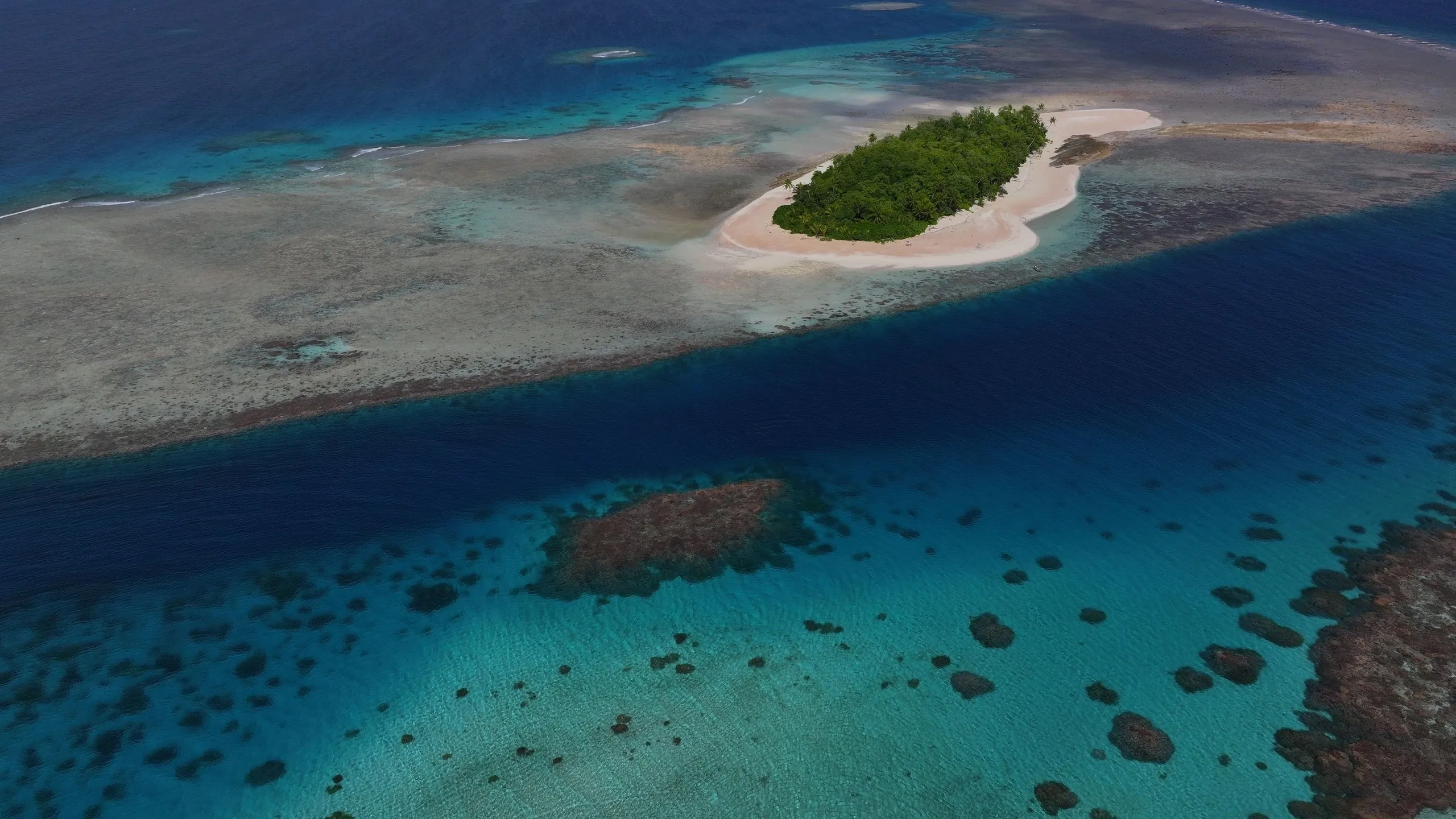
On the western side of Funafuti Atoll, 33 square kilometers of lagoon, reef flat, ocean side and six uninhabited islands managed by the local community since 1996. The boat crossing from Fongafale, 20 to 40 minutes over water of extraordinary translucency, is one of the more beautiful half-hours available in the Pacific. The uninhabited islands have white sand beaches, nesting sea turtles, and snorkeling directly off the shore onto coral gardens with giant clam colonies among the largest in the Pacific. Your guesthouse arranges the boat; bring your own snorkel equipment, since rental options are limited.
Fatele & Te Ano
Fatele is the traditional Tuvaluan community dance, men and women seated in rows, moving arms in synchronized patterns while singing in a polyphonic style of unusual complexity and beauty. Te ano, an older form, involves specific call-and-response singing and movement. These aren't tourist performances; they happen at weddings, community celebrations and national occasions. Ask your guesthouse whether any events are scheduled during your stay, they almost always know what's happening.
The Airstrip & War Relics
The runway you land on was built by American Seabees in six weeks in early 1943, following the same alignment across the same strip of coral the construction battalion laid. Japanese bomb craters from the 1943 air raids remain visible as shallow depressions along the main road south of the runway; American gun emplacements at the lagoon edge remain in place. The small WWII Museum near the airport has collected photographs, equipment and documents from the campaign, and a local guide can walk you through the sites.
Nanumea, Nukufetau & Beyond
The outer eight atolls, Nanumea, Nanumaga, Niutao, Nui, Vaitupu, Nukufetau, Nukulaelae and Niulakita, each have distinct community cultures and reef systems. Getting to them requires a government supply ship running irregularly or an occasional charter flight; none have dedicated tourist accommodation, only community guesthouses or homestays. For visitors with flexible time and genuine cultural interest, the outer islands offer an immersion Funafuti's slightly more developed infrastructure can't fully replicate.
Culture & Etiquette
Tuvalu is a Polynesian society with strong communal values and a deeply embedded Christian faith, the majority belonging to the Church of Tuvalu, a Congregationalist denomination established through 19th-century London Missionary Society work. Community structure centers on the kaupule (island council) and falekaupule (traditional assembly), which make decisions through a consensus process that carries genuine authority.
Do
- Observe Sunday. Church attendance dominates the morning, the rest of the day is family time; the conservation area boat doesn't run. Plan nothing.
- Dress conservatively everywhere. Swimwear stays at the beach; shoulders and knees covered in town and around community buildings is the minimum.
- Accept hospitality genuinely offered. Tuvaluans extend hospitality with a directness that can seem surprising; accepting it is the best part of being there.
- Ask before photographing people. Almost everyone will say yes; the asking creates the interaction that makes the photograph worth having.
- Engage with the climate context thoughtfully. Listen more than you speak; their perspective is shaped by experience outsiders don't share.
Don't
- Treat the climate story as a tourist attraction. It's the lived reality of the people you're visiting, not a backdrop for dramatic travel photography.
- Assume things will be open and available. Build flexibility into every day and approach logistics as collaboration with your hosts rather than a service expectation.
- Litter or damage the reef. Pack out what you pack in; never stand on coral; use reef-safe sunscreen only.
- Complain about the infrastructure. The slow internet and limited food are the reality of a small island nation; adapt cheerfully or stay elsewhere.
Deeper culture: the maneapa, weaving, and philatelic heritage
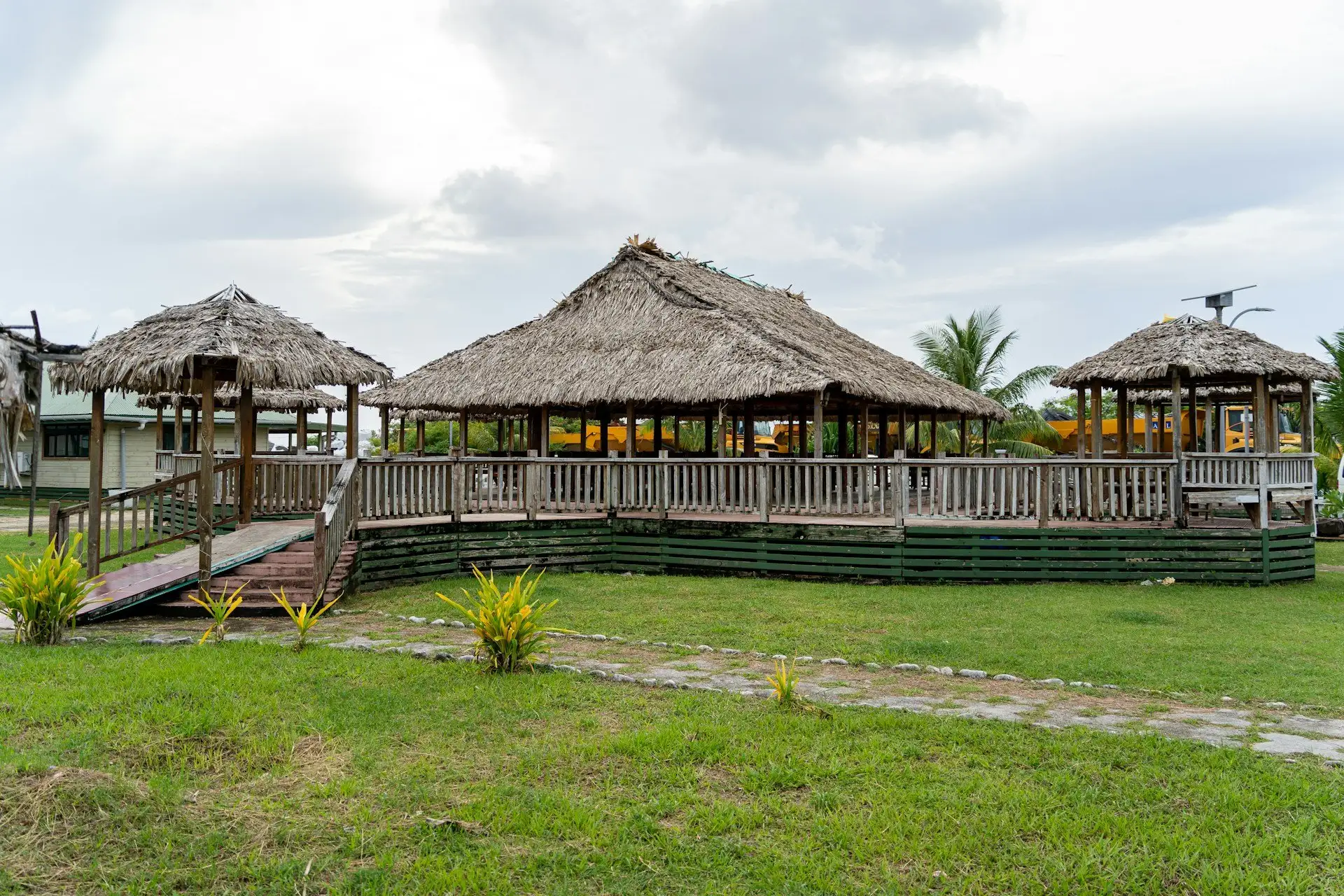
The maneapa. The open-sided community meeting house at the center of every Tuvaluan community's social life, where falekaupule meetings, fatele performances and community meals for significant occasions happen. Visitors are welcome to sit nearby during public events but shouldn't enter without invitation.
Weaving. Traditional pandanus weaving by Tuvaluan women produces mats, baskets, fans and decorative items among the most distinctive Pacific crafts; the patterns encode family and island identity. Buying woven items directly from the weaver, arranged through your guesthouse, is both the best way to acquire them and the most direct economic contribution to individual households.
Philatelic heritage. Tuvalu has historically produced some of the Pacific's most beautiful and sought-after postage stamps, used by collectors worldwide to represent a country that almost nobody visits. The Philatelic Bureau in Fongafale sells current issues and historical sets.
Food & Drink
Food in Tuvalu is simple, limited in variety, and significantly more expensive than anywhere in the Pacific you've come from. Almost everything is imported from Australia or Fiji. Fresh fish is the exception, when a boat returns with a good catch, tuna or reef fish is the best and most available food on the island. Your guesthouse provides meals in most cases; do not arrive expecting restaurant options.
Fresh Fish
When available, most days when weather allows fishing, fresh tuna, wahoo or reef fish is the best thing to eat in Tuvalu, typically grilled or fried simply and served with rice. Consistently the best meal of the day.
Pulaka
A giant taro variety grown in pits dug to reach the freshwater lens below the atoll surface, one of the more extraordinary agricultural adaptations in the Pacific, growing a starchy root vegetable on a coral island with almost no soil.
Hotel Restaurant AUD $20-40
The Vaiaku Lagi Hotel restaurant is the one real restaurant on the island, serving a limited menu of fish, chicken and rice at prices reflecting import costs. Book ahead, since it fills with visiting officials and NGO workers.
Coconut & Breadfruit
Coconut in multiple forms and breadfruit and pandanus fruit round out the traditional Tuvaluan staples alongside pulaka.
Imported Supplies
Rice, canned goods, flour and processed food from Australia and Fiji make up the majority of the daily diet beyond fresh fish; a can costing AUD $1.50 in Brisbane can cost $5-8 in Funafuti.
Hotel Bar Drinks
Beer and spirits at Australian-level prices plus import costs; the hotel bar is the social hub in the evenings for visiting officials, development workers and any tourists present.
When to Go & Itineraries
Tuvalu has two broad seasons: a drier, slightly cooler period from March to October, and a wetter, hotter period from November to February. Tuvalu is equatorial and consistently hot and humid year-round; the drier months bring better lagoon visibility and calmer boat conditions, and April through October is the preferred window for most visitors.
Both seasons compared, with temperatures
| Season | Verdict | Temps | Notes |
|---|---|---|---|
| Apr-Oct | Better | 28-31°C | Lower rainfall, better snorkeling visibility, calmer boat conditions; Independence Day Oct 1 |
| Nov-Mar | Wetter | 29-33°C | More rain, cyclone risk; king tides periodically flood parts of Fongafale, climatically instructive but difficult for the community |
Funafuti averages, consistently hot and humid year-round. Sea temperature is 28-30°C throughout.
Itineraries
Tuvalu planning starts and ends with the Fiji Airways flight schedule, roughly three times per week each direction; check it directly before booking anything else. Five to seven days is the right length for a first visit.
- Day 1
Arrival & orientation. Walk the main road end to end, identify the lagoon edge, the maneapa, the market. Evening: lagoon sunset and the hotel bar.
- Day 2
Funafuti Conservation Area. Full day boat trip, snorkel the reef, turtle nesting signs, giant clam colonies.
- Day 3
WWII sites & history. A local guide for bomb craters, gun emplacements, the WWII Museum; the Philatelic Bureau in the afternoon.
- Day 4
Slow day. No planned activities, the maneapa if something's happening, weaving from the market.
- Days 5-7
Buffer & departure. A community event if one occurs, or a second conservation area visit; fly out on the scheduled service.
- Days 1-7
Funafuti full engagement. The core program above, plus a second conservation area day, a community cooking session if offered, and the Te Ano ball game on Saturday.
- Days 8-12
Outer island, if schedule allows. Confirm the government supply ship's status in Funafuti; if running, three to four days on an outer atoll with no tourist infrastructure and a community with almost no visitor experience.
- Days 13-14
Return to Funafuti & departure. A final conservation area swim or lagoon evening before flying to Nadi.
Getting there & around
Fiji Airways is the only scheduled airline serving Tuvalu, operating from Nadi roughly three times weekly, about three hours. Once on Funafuti, the main island is small enough to walk end to end in under an hour.
All transport options with prices: motorcycle taxis, lagoon boats, the supply ship
| Option | Price | Notes |
|---|---|---|
| Fiji Airways | FJD 800-1,600+ return | ~3x weekly from Nadi, ~3 hours. Monitor the schedule; changes seasonally. |
| Motorcycle taxis | AUD 2-5/trip | Informal, agree a price before getting on; not always available. |
| Lagoon boats | AUD 40-100/trip | For the conservation area and any lagoon crossing, arranged through your guesthouse, 20-40 minutes each way. |
| Government supply ship | AUD 30-80/passage | Serves outer atolls roughly once a month, 1-3 days depending on destination. |
The flight buffer rule: never book an international connection out of Nadi departing less than 24 hours after your scheduled Funafuti departure, since flight changes and cancellations happen. This is the single most important logistical principle for Tuvalu travel. GetTransfer arranges Nadi airport transfers for your layover.
Where to stay
Vaiaku Lagi Hotel
The main hotel on Funafuti, government-operated, on the lagoon-facing side of the main road. Air-conditioned rooms, a restaurant and bar; book directly, since it fills with officials and development workers.
Guesthouses
Family-run guesthouses like Filamona and Te Fiti offer basic rooms and more direct community connection; hosts are often the best source of information about what's happening on the island.
Budget Planning
Tuvalu is expensive relative to what it offers, since everything is imported across significant ocean distances on infrequent shipping. The flight itself, available only from Fiji, is the major variable cost. There's no meaningful budget-vs-luxury choice; the range is narrow and defined by which guesthouse you're in.
- Family guesthouse, meals sometimes included
- Walking and motorcycle taxis
- One conservation area boat trip
- Local guide for WWII sites
- Vaiaku Lagi Hotel
- Hotel restaurant for most meals
- Multiple conservation area trips
- Guided cultural and WWII program
Quick reference prices: hotel, meals, transport
| Vaiaku Lagi Hotel room | AUD $120-180/night |
| Guesthouse room | AUD $60-100/night |
| Hotel restaurant meal | AUD $20-40 |
| Conservation area boat, half day | AUD $40-70 |
| Local guide, full day | AUD $40-60 |
| Beer at hotel bar | AUD $7-10 |
| Fiji Airways return fare | FJD $800-1,600 |
Prices reflect July 2026 research and drift over time. Treat them as a planning baseline, not a quote.
Visa & Entry
Most nationalities receive a free visitor's permit on arrival at Funafuti International Airport for stays up to 30 days. You need a valid passport, a return or onward ticket (your Fiji Airways return booking is sufficient), and proof of accommodation or funds. Extensions are available at the Immigration Division in Funafuti; some nationalities may require advance visas, so check current requirements before booking.
✓ Valid passport
Valid for the full duration of your stay plus margin; six months beyond departure is standard guidance.
✓ Return or onward ticket
Your Fiji Airways return booking to Nadi is sufficient evidence.
✓ Accommodation confirmation
Hotel or guesthouse booking confirmation for your Funafuti stay.
⚠ Cash in AUD before boarding
The Funafuti ATM is unreliable; withdraw sufficient Australian dollars in Nadi for your full stay plus emergency reserve.
| Tuvalu | Kiribati | |
|---|---|---|
| Size | 9 atolls, 26 km² total land, ~11,000 people | 33 atolls, 811 km² land, 3.5M km² EEZ |
| Access | Via Fiji only, ~3 hours to Funafuti | Via Fiji only, ~4 hours to Tarawa |
| Signature draw | The lagoon and conservation area, fatele culture | Betio battlefield, Kiritimati bonefishing |
| Climate frontline profile | The 2023 Falepili Union with Australia is a global first | Internationally prominent through Anote Tong's advocacy |
Safety in Tuvalu
Tuvalu is among the safest destinations in this guide for personal security. The community is small, cohesive and genuinely hospitable; a stranger is immediately visible and generally approached with curiosity rather than intent. The genuine risks are environmental: heat, dengue, ocean conditions, and limited medical infrastructure that makes any significant health issue a logistical challenge.
Heat & dehydration
Equatorial heat and high humidity make dehydration a genuine risk, particularly for unacclimatized visitors. Carry water everywhere; avoid midday walking during your first few days.
Dengue fever
Present with no vaccine or prophylaxis; repellent is your only protection. Apply DEET at dawn and dusk, and sleep under a net.
Cyclones
Season runs November through April; Tuvalu's low elevation makes it particularly vulnerable to storm surges. Insurance covering cyclone evacuation and trip interruption is essential in this window.
Ocean conditions and medical limitations
Ocean & lagoon: the lagoon is generally calm and safe for swimming; the ocean side faces open Pacific swell and should be treated with caution, particularly in the wet season. Never snorkel alone, and ask your boat operator about pass currents before entering.
Medical limitations: Princess Margaret Hospital handles primary care but has very limited specialist capacity. Serious issues require evacuation to Fiji, a process that takes hours to organize; medical evacuation insurance is essential, and do not travel with unmanaged serious medical conditions.
Emergency numbers
Embassy contacts, via Suva or Wellington
No embassies are permanently resident in Tuvalu; consular assistance runs from Suva (Fiji) or Wellington (New Zealand).
- Australia (Suva)
- +679-338-2211
- New Zealand (Suva)
- +679-331-1422
- UK (Suva)
- +679-322-9100
- USA (Suva)
- +679-331-4466
- Germany (Wellington)
- +64-4-473-6063
Medical evacuation: stabilization at Princess Margaret Hospital followed by evacuation to Colonial War Memorial Hospital in Suva. Save both your insurer's emergency line and the Suva High Commission number before departure, offline on your phone.
Tuvalu FAQ
How do you get to Tuvalu?
Fiji Airways is the only scheduled airline serving Tuvalu, flying from Nadi to Funafuti roughly three times a week, about a three-hour flight. There are no other routes in or out; every trip to Tuvalu goes through Fiji.
Is Tuvalu sinking?
Tuvalu's nine atolls average about two meters above sea level, and the combination of sea level rise, storm surges and saltwater intrusion is visible on every inhabited island. In 2023, Tuvalu and Australia signed the Falepili Union, giving Tuvaluans a pathway to Australian residency if the islands become uninhabitable, while Tuvalu retains its statehood regardless.
Is Tuvalu safe to visit?
Yes, among the safest destinations in the Pacific for personal security; crime is extremely low in a community of 11,000 people who notice every visitor. The genuine risks are environmental: heat, dengue fever, ocean conditions, and limited medical infrastructure that makes serious health issues a logistical challenge.
Do I need a visa for Tuvalu?
Most nationalities receive a free visitor's permit on arrival at Funafuti International Airport for up to 30 days, requiring a valid passport, a return or onward ticket, and proof of accommodation or funds.
How many days do you need in Tuvalu?
Five to seven days is the right length for a first visit. The atoll itself can be walked in a morning, but the experience deepens over several days as you become a familiar face in the guesthouse and community.
What is the Funafuti Conservation Area?
33 square kilometers of lagoon, reef and six uninhabited islands on the western side of Funafuti Atoll, managed by the local community since 1996, with giant clam colonies, nesting sea turtles and some of the most pristine reef in the central Pacific.
What is the .tv domain fact about Tuvalu?
Tuvalu licensed its .tv internet domain extension to a California company in 2000 for an initial $50 million plus ongoing annual royalties, a revenue stream that has meaningfully sustained government services for a nation of 11,000 people.
What happened in Tuvalu during WWII?
American Seabees built the Funafuti airstrip, the same one visitors land on today, in just six weeks in early 1943, transforming the atoll into a central Pacific staging base. Japanese bombers attacked several times, and the bomb craters and gun emplacements remain visible in the landscape.
Is Tuvalu expensive to visit?
Yes, relative to what it offers, since everything is imported across long distances on infrequent shipping. Guesthouse-based travel runs about AUD $100-140 a day; the Fiji Airways flight itself is the largest single cost.
What language is spoken in Tuvalu?
Tuvaluan is the national language and English is co-official and widely spoken, making navigation straightforward for English-speaking visitors.
Tuvalu mo te Atua
"Tuvalu mo te Atua," Tuvalu for the Almighty, is the national motto, appearing on the coat of arms alongside the eight traditional stars representing the atolls. It's a statement of faith and identity from a people who have navigated open ocean for 3,000 years and who are now navigating a different kind of ocean, one whose boundary conditions are changing faster than any canoe can outpace.
The Tuvaluans have not been passive about their situation. They've gone to every conference, made every speech, filed every legal argument, and signed every treaty available to a country of 11,000 people with almost no diplomatic leverage. They've done this with dignity and without self-pity. You'll be one of fewer than 2,000 people this year who make the trip, a number small enough that your visit genuinely matters, to the guesthouse family, to the boat operator, to the children who wave at the foreign face on the main road. There are places in the world that deserve more witnesses than they have. Tuvalu is one of them.