
Micronesia
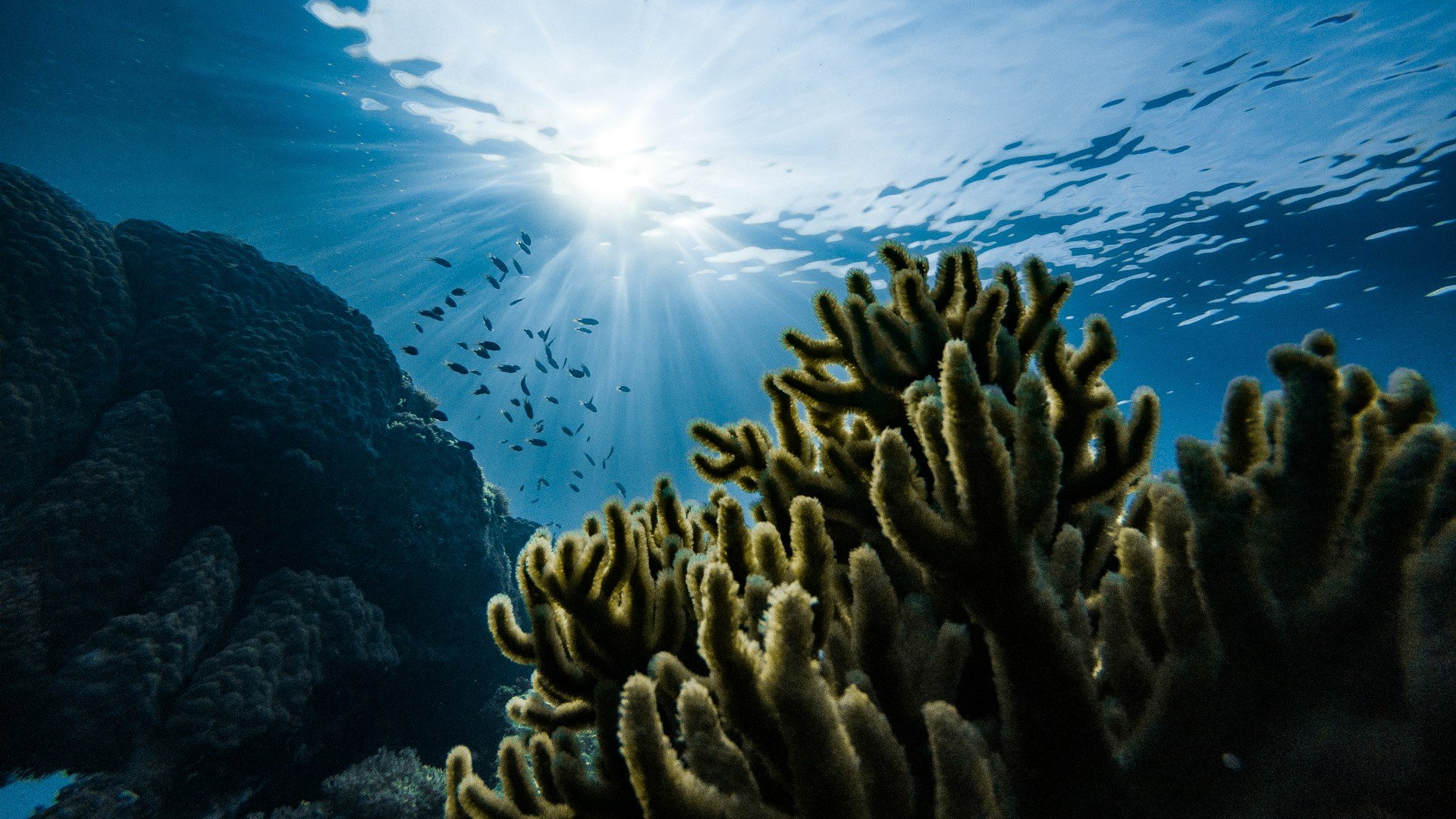
Four island states. Sixty sunken warships. Stone money still traded in village banks. Ancient ruins rising from a jungle lagoon. The Pacific most people never reach — and the one divers dream about for years.
What You're Actually Getting Into
The Federated States of Micronesia is not one place. It's four completely distinct island states — Chuuk, Pohnpei, Yap, and Kosrae — spread across 2,700 kilometers of the western Pacific, each with its own language, character, and reason to visit. They share a flag, a president, and a United Airlines flight path. That's mostly where the similarities end.
Chuuk is where you come to dive. Truk Lagoon, as it was called when Operation Hailstone turned it into the world's largest naval graveyard in February 1944, holds more than 60 Japanese warships and 200 aircraft in water clear enough to photograph at depth. Divers who have been everywhere rate it as one of the few truly unmissable dive destinations on earth. Non-divers have almost no reason to come to Chuuk specifically, and that's fine.
Pohnpei is where you come for Nan Madol, a city of 92 artificial basalt islets built in a jungle lagoon between 1200 and 1500 CE that has been called the Venice of the Pacific. It's also where you come for the jungle, the waterfalls, the sakau bars that run until midnight, and some of the best surf in Micronesia. Yap is where you come for manta rays and stone money — two things that exist nowhere else in quite the same form. Kosrae is where you come when you want a Pacific island that tourism has genuinely not yet found, and you're comfortable with the infrastructure implications of that.
The honest difficulty of FSM: getting here requires commitment. United's Island Hopper is the only commercial service, runs twice weekly, and seats are finite. Inter-island flights within FSM are limited and subject to change. Accommodation ranges from adequate to basic depending on which state you're in. None of this is a deal-breaker. It's just the price of being somewhere that most people don't go.
Micronesia (FSM) at a Glance
A History Worth Knowing
People have lived across what is now the Federated States of Micronesia for at least 4,000 years, navigating the open Pacific in ways that remain astonishing by any standard. The Carolinian and Pohnpeian peoples developed distinct cultures, languages, and social systems across islands separated by hundreds of kilometers of open ocean, maintaining contact and trade through sailing traditions that were extraordinarily sophisticated.
The most visible evidence of Micronesia's pre-colonial past is Nan Madol, off the southeastern coast of Pohnpei. Between roughly 1200 and 1500 CE, the Saudeleur dynasty built a political and ceremonial capital on 92 artificial islets in a tidal lagoon, using basalt columns quarried from the other side of the island and somehow floated or rafted into place. The largest stones weigh 50 tonnes. There are no wheels in the archaeological record. Nan Madol functioned as the Venice of the Pacific, a city built entirely on water, housing the ruling class and their elaborate ritual life. When the Saudeleur dynasty fell, the city was abandoned and the jungle moved in. It was declared a UNESCO World Heritage Site in 2016.
Yap's stone money tradition evolved separately and is equally remarkable. The Yapese quarried limestone from Palau, several hundred kilometers away, shaped it into large circular discs with a hole in the center, and transported it back to Yap by canoe. The stones, called rai, functioned as a form of wealth. Ownership transferred through oral agreement and social consensus rather than physical movement. A stone at the bottom of the ocean, lost during transport centuries ago, is still considered owned by a Yapese family and retains its value. The stones still stand in traditional village money banks across Yap today and still matter in the social economy of land and marriage.
Spanish, German, and then Japanese colonial authority passed across Micronesia in sequence from the late 16th century onward. Japan's administration, which began after WWI under a League of Nations mandate, transformed the islands economically and militarily. By the 1930s, Japan had built port facilities, airstrips, and garrison infrastructure across the FSM islands, and Truk Lagoon had become the most important Japanese naval base in the Pacific, called the "Gibraltar of the Pacific."
Operation Hailstone, launched on February 17-18, 1944, changed all of that in 48 hours. American carrier-based aircraft caught the Japanese fleet in Truk Lagoon and sank more than 60 ships and 200 aircraft in what was the largest loss of Japanese shipping in a single operation during the entire Pacific War. The Japanese naval power in the Central Pacific effectively ended in two days. The wrecks settled to the floor of the lagoon, where they have been slowly becoming one of the greatest coral reef ecosystems in the world. Today they are also one of the greatest dive sites.
The FSM became a United Nations Trust Territory administered by the United States after WWII, and achieved independence in 1986 under the Compact of Free Association with the US. The compact provides financial assistance and US defense coverage in exchange for strategic basing rights. It has been renewed and updated since, and remains the framework for the FSM-US relationship today.
Austronesian peoples settle the Carolinian and Pohnpeian islands, developing distinct ocean-going cultures and navigation traditions.
The Saudeleur dynasty builds a capital of 92 artificial islets off Pohnpei using basalt columns. Population estimated in the thousands.
Spain claims the Carolines, sells them to Germany in 1899 after the Spanish-American War. German copra trade dominates.
Japan takes control after WWI. Truk becomes the most powerful Japanese naval base in the Pacific, the "Gibraltar of the Pacific."
US carrier aircraft sink 60+ ships and 200 aircraft in Truk Lagoon in 48 hours. The Pacific War's balance tips decisively.
Compact of Free Association with the US. FSM becomes a sovereign nation with four constituent states.
Recognized as a World Heritage Site and simultaneously placed on the List of World Heritage in Danger due to encroaching mangroves and lack of conservation resources.
The Four States
Think of FSM not as a single destination but as four separate trips that happen to share an entry stamp. Each state requires a separate decision about whether it's worth the flight time and logistics to get there. For most visitors, Chuuk or Yap is the anchor and others are added depending on time and interest. Doing all four in one trip is possible but requires a week minimum and careful flight sequencing on the Island Hopper.
Chuuk (Truk Lagoon)
Chuuk's entire reason to exist on a travel itinerary is the lagoon floor. Operation Hailstone in February 1944 turned it into the world's greatest accidental reef, and 80 years of coral growth have made the wrecks otherworldly. The Fujikawa Maru, a 133-meter armed merchant vessel, sits upright at 15 to 34 meters with her aircraft holds still full of Zeroes. The Shinkoku Maru, a fleet oiler, is considered by many the most beautiful wreck dive on earth, so encrusted in coral it looks like a natural reef that happens to have a ship-shaped skeleton. The Sankisan Maru still carries munitions and torpedoes in her holds. You need at least a week in Chuuk to begin to understand what's down there. Non-divers will find very little to do above water. This is genuinely, completely, a diver's destination.
Pohnpei
Pohnpei is the most diverse of the four states for non-diving visitors. Nan Madol sits in a tidal lagoon off the southeastern coast, accessible only by boat at high tide and with a licensed guide. Sokehs Rock looms over the capital Kolonia like a basalt fist. The interior jungle holds waterfalls, including Kepirohi Falls, reachable on foot, and the ruins of a German colonial administrative center. Pohnpei also has a genuine local drink culture built around sakau, a sedative made from kava roots pounded on a special stone, served in coconut shell halves at sakau bars that run all evening. It tastes like muddy water with an agenda. The surf at Palikir Pass on the north shore has a serious local following and a few visiting surfers who've found their way there.
Yap
Yap has two things that exist nowhere else in quite the same form: manta rays in Mi'l Channel and stone money in village banks along the main road. The resident manta population in Mi'l Channel is one of the most stable and studied in the world. On a good day in January through April you can be in the water with 20 or more mantas doing barrel rolls in the current 10 meters below the surface. The dive is done on a line at 15 meters, hanging in the current, watching. It is completely unlike any other manta experience. Yap also has strong traditional culture and genuine community life, more intact than anywhere else in FSM. The stone money banks along Yapese roads are still actively maintained and occasionally used in traditional exchange for land and marriage. Ask before photographing them in village contexts.
Kosrae
Kosrae is what Pohnpei looked like before Pohnpei had a road network. A single main road rings the island, the interior is dense jungle with a few hiking trails, and the reef is among the healthiest and least-dived in the entire FSM. The Lelu ruins, a complex of basalt walls and channels similar in construction to Nan Madol, sit on a small peninsula connected to the main island and are almost entirely unvisited. There are perhaps a dozen guesthouses and small hotels on the island. Accommodation will be basic. The reef will be extraordinary. That tradeoff defines Kosrae entirely.
Ant & Pakin Atolls
Two uninhabited atolls 15 kilometers off Pohnpei's western coast. Ant is a closed atoll with a pass dive that produces hammerheads, eagle rays, and grey reef sharks on the right tide. Pakin has a larger lagoon and even more protected reef. Day trips by boat from Pohnpei. Your dive operator in Kolonia organizes everything. These are the FSM dives that rival anything in the Indo-Pacific for sheer fish biomass.
Palikir Pass
A left-hander breaking over a shallow reef on Pohnpei's north shore that has been surfed since the 1990s and remains known only to a small committed community. The wave is consistent April through October, works best on east swells, and is located in front of a former Japanese colonial structure now used as a surf camp by a handful of operators. Intermediate to advanced surfers only given the reef below.
Culture & Etiquette
Each of the four FSM states has a distinct cultural identity, and the differences matter. What's appropriate in Chuuk may not apply in Yap. The common thread across all four is that Micronesian society is fundamentally community and clan oriented, with strong traditions of respect for elders, land rights tied to family lineage, and a pace of daily life that runs on its own clock. Visitors who embrace the pace rather than fighting it have a significantly better time.
Yap in particular has a formal traditional authority structure that is still actively maintained and deserves specific respect. Certain areas on Yap are kapin taamow, taboo to outsiders without permission. These are not performative restrictions. They are enforced socially and you will notice if you've crossed a line.
On Yap especially, women should cover shoulders and wear skirts or long shorts in traditional villages. Men in shorts are generally fine. Swimwear is for the water only. The Yap Visitors Bureau publishes specific guidance worth reading before you arrive.
The rai stones are not tourist installations. They are active cultural property. In village contexts, always ask the village authority before photographing them. Most will say yes. The asking matters.
If a local community invites you to share food or join a gathering, accept. Declining without obvious reason is considered rude. You don't need to eat everything, but engaging is important.
This is both ethically correct and practically necessary. Local guides know the tides, the access points, the history, and the social context. The fee goes directly into local families.
In all four states, walking past someone without acknowledgment is considered impolite. A nod, a hello, a simple wave — just acknowledge people as you pass through their community.
The kapin taamow system identifies areas, meeting houses, and community spaces off-limits to outsiders. Signs are sometimes posted in Yapese. When in doubt, stop and ask. Entering without permission is a serious breach.
Removing anything from Truk Lagoon's wrecks is illegal, internationally condemned, and deeply disrespectful to Japanese families for whom the ships are war graves. This is enforced. Items have been taken back to Japan for reburial.
FSM is a political federation, not a cultural unit. Chuukese, Pohnpeian, Yapese, and Kosraean people have distinct identities and would not appreciate being grouped into a single "Micronesian" culture by visitors.
Alcohol norms vary significantly. Kosrae has had periods of state-level dry laws. Outer villages on all islands may have community rules. Read the situation and follow local practice.
Christianity is deeply embedded across all four states. Sundays are quiet, many businesses are closed, and community church is central to social life. Plan accordingly and keep noise levels down on Sunday mornings.
Yap Stone Money
The rai stones range from small discs you could lift to massive limestone wheels three meters across. A stone's value is determined not by size but by its history — the difficulty of its quarrying, the danger of its transport, the story attached to it. A stone lost at sea during transport still has high value because the difficulty of its journey is known. The Yapese oral tradition maintains complete ownership records across centuries.
Sakau Culture (Pohnpei)
Sakau — kava prepared the Pohnpeian way, pounded on a flat stone and squeezed through hibiscus fibers — is central to social and ceremonial life on Pohnpei. It's served in half a coconut shell. The taste is earthy and numbing. The effect is relaxed and slightly sedative. Sharing sakau is sharing community. Being invited to a sakau session is an honor. You don't have to finish every shell.
Weaving & Traditional Arts
Yapese women are known for their loom weaving, producing lavalavas (wraparound skirts) and other textiles using traditional patterns that carry clan identity. On Pohnpei, woven baskets and wooden carvings are produced for both traditional use and sale. Buying directly from the maker is always preferable to buying from souvenir shops in the capital.
Marine Conservation
Several FSM communities have established traditional taboo areas on the reef, called ra or similar in different states, where fishing is prohibited. These function as effective marine reserves. Respecting these areas as a diver or snorkeler is both a legal and cultural obligation. Local dive operators know where they are and will brief you.
Food & Drink
Food in FSM is not the reason to visit, and you'll have a better time if you accept that early and adjust expectations accordingly. The diet across the islands has been significantly affected by American-administered food aid and trade during the trust territory period, which introduced canned goods, rice, and processed food that have largely replaced traditional staples in everyday eating. Diet-related health issues are a serious public health challenge across all four states.
What you'll find that's genuinely worth seeking out: fresh fish when a boat comes in, traditional preparations at community gatherings if you're invited, and the sakau culture on Pohnpei which is its own complete experience. Restaurant options in each state capital are limited but functional. Budget for higher prices than you'd expect, because virtually everything is imported.
Fresh Fish
Tuna, mahi-mahi, and reef fish caught the same morning are the best food available in FSM. In each state capital, find the fish market or the dock where boats come in and follow the catch. Grilled over coconut husks with lime and chili, it is genuinely excellent. This is the meal worth seeking.
Traditional Staples
Breadfruit, taro, yam, and coconut form the base of traditional cooking across all four states. Breadfruit baked in an earth oven with coconut milk is the dish most visitors encounter at community gatherings. On outer islands, this may be most of what's available. It's filling and good.
Sakau (Pohnpei)
The evening ritual on Pohnpei. A sedative kava preparation served in a coconut shell half at open-air bars where men sit around the pounding stone from dusk onward. The effect is mild relaxation and slight numbness of the lips and tongue. It tastes like muddy water. You drink it anyway, because the social context is entirely the point.
Restaurants
Each state capital (Weno in Chuuk, Kolonia in Pohnpei, Colonia in Yap, Tofol in Kosrae) has a handful of restaurants serving American-influenced food, some Chinese, and occasionally local fish dishes. The Ocean View Restaurant in Colonia on Yap and the Village Hotel restaurant on Pohnpei are the most reliable options. Don't expect menus to match what arrives.
Practical Supplies
Each capital has one or two small supermarkets with imported canned goods, rice, bread, and basics. Stock up thoroughly before heading to outer islands or doing liveaboard trips. Prices are significantly higher than on the US mainland. A box of cereal costs $8 to $10. Plan your provisioning budget accordingly and bring supplements from home.
Drinking
Beer is available in hotels and some restaurants across the four states. Kosrae had periods of restricted alcohol laws historically, and individual community rules still apply in some areas. Check the situation in any community you're staying in. The national drink equivalent is sakau on Pohnpei, which is non-alcoholic but does the job socially.
When to Go
December through April is the dry season and the best time for most visitors. Diving visibility in Truk Lagoon peaks January through March. Yap's manta ray aggregations are at their largest January through April. Pohnpei's Nan Madol is most accessible in the dry months when tidal conditions are more predictable. The wet season brings more rain but keeps the jungle spectacularly green, and serious divers know that Truk's visibility doesn't drop dramatically even in the wet months.
Dry Season
Dec – AprBest diving visibility, clearest skies, calmest seas for inter-island boat travel. Peak manta season in Yap January through April. Truk liveaboards run extensively in these months. Book everything several months ahead.
Shoulder
May & NovTransition months with a mix of dry and wet days. Diving remains excellent. Fewer visitors means more flexibility with dive boats and accommodation. Manta rays still present in Yap through May.
Wet Season
Jun – OctHigher humidity and rain. Typhoon risk increases July through October, though FSM sits in an area that can be affected. Pohnpei is among the wettest places on earth year-round (around 7,500mm annually), so "wet season" there is a relative term.
Trip Planning
FSM planning starts with one non-negotiable: book your United Airlines flights first. The Island Hopper runs twice weekly in each direction and stops at Chuuk and Pohnpei on the eastbound run (Honolulu to Guam) and again on the westbound run. Yap is served by a separate United flight from Guam, not on the Island Hopper route. Kosrae is on the Island Hopper. Sequencing a multi-state trip means understanding the flight days and building your itinerary around what the schedule actually allows.
A focused one-state trip needs a minimum of seven days. A two-state trip needs fourteen. Attempting all four states in two weeks is logistically possible but wastes significant time in transit and leaves you scratching the surface of each place.
Chuuk: Full Wreck Focus
Seven days in Truk Lagoon is the minimum to do it justice. Days one through six: dive two tanks per day, working through the major wrecks in sequence — Fujikawa, Shinkoku, Sankisan, Heian Maru, Rio de Janeiro Maru, the Nippo Maru. Day seven: surface exploration of Chuuk's main island Weno or a rest day before your Island Hopper connection.
Yap: Mantas + Stone Money
Fly in from Guam. Days one through five: morning manta dives in Mi'l Channel, afternoon village visits to stone money banks along the road toward Tamil and Ngof. Day six: Goofnuw Channel wall dive and Yap's traditional dance performance if timing allows. Day seven: fly back to Guam or connect onward.
Pohnpei: Ruins + Jungle
Island Hopper to Pohnpei. Days eight and nine: Nan Madol with a licensed boat guide at high tide, taking two full days to explore properly and understand what you're looking at. Day ten: Kepirohi waterfall hike through the interior. Days eleven and twelve: dive Ant Atoll for the reef fish and shark density. Days thirteen and fourteen: sakau evenings in Kolonia and buffer before departure.
Yap
Fly Guam to Yap. Full week of manta diving, stone money village exploration, traditional culture, and Yapese reef dives. The Yap Divers operation runs structured village programs worth booking in advance.
Chuuk Liveaboard
Fly Yap to Guam to Chuuk. Join a Truk liveaboard for a full week — the only way to access the outer lagoon wrecks properly. Blue Lagoon Dive Shop and Truk Stop Hotel both operate excellent day-dive operations if you prefer a land base.
Pohnpei + Kosrae
Island Hopper to Pohnpei for Nan Madol and Ant Atoll diving. Then connect to Kosrae for two to three days of completely untouched reef and the Lelu ruins. Return via Island Hopper to Honolulu. Allow a full buffer day on Pohnpei or Kosrae before any connections.
Vaccinations
No mandatory vaccinations. Recommended: Hepatitis A, Hepatitis B, Typhoid, and routine vaccines. Dengue fever is present across all four states. Use repellent and long sleeves at dawn and dusk. There have been occasional dengue outbreaks.
Full vaccine info →Connectivity
FSM Telecommunications operates mobile coverage in each state capital. Coverage drops off quickly outside towns. Data is limited and expensive. Airalo has Pacific eSIM options, but coverage will be patchy. Download offline maps for all islands before you arrive. Satellite communicator essential for outer island travel.
Get eSIM →Power & Plugs
120V, Type A/B (same as the US). Power outages occur in all four states. Outer islands typically run on generator power with limited hours. Bring a power bank for camera and dive computer charging on multi-day trips.
Dive Certification
Open Water certification is sufficient for most Truk Lagoon and Yap dives. Advanced Open Water is recommended for deeper wreck penetration. Wreck Diver specialty is valuable for Chuuk. Bring your certification cards, logbook, and make sure your dive computer battery is fresh before departure.
Travel Insurance
Medical evacuation from FSM requires transfer to Guam, Hawaii, or the Philippines for anything serious. Costs are substantial. Get comprehensive travel insurance with diving cover and medical evacuation before you leave. Verify the policy specifically covers wreck diving and the depth range you plan to dive.
Medical Supplies
Bring a complete first aid kit, any prescription medications in full supply, rehydration sachets, broad-spectrum antibiotics (get a prescription), anti-diarrheal medication, and a full course of anti-malarial medication if your doctor recommends it. Pharmacy options in FSM capitals are limited.
Transport in Micronesia
Transport is the defining challenge of FSM travel. Getting between states requires either the Island Hopper (which doesn't stop at Yap) or routing through Guam. Getting around within each state depends almost entirely on whether you're in the capital or trying to reach an outer island. On land, each capital has basic taxi service. On water, dive operators and charter boat companies handle everything else.
United Island Hopper
$600–1,800+ per segmentHonolulu to Guam with stops at Kosrae, Pohnpei, and Chuuk. Runs twice weekly each way. Not all stops occur on every routing. Yap requires a separate United flight from Guam. Book months ahead for dry season travel.
Caroline Islands Air
VariesSmall carrier operating some inter-island routes within FSM. Schedules are limited and change. Always verify current routing options directly with the airline rather than relying on third-party booking sites.
Dive Liveaboards
$250–400/day all-inFor Truk Lagoon, liveaboards provide the best access to the full range of wrecks across the lagoon. Land-based diving from Weno covers the inner lagoon. Operators include Truk Odyssey and the Blue Lagoon vessel. Research the specific boat carefully.
Taxis
$1–5 per tripAvailable in each state capital. No meters, no apps. Negotiate the fare before getting in. Drivers in each capital generally know the hotels, dive shops, and main sites. English is functional for basic directions.
Charter Boats
$80–200/dayEssential for Nan Madol access from Pohnpei, outer atoll diving from any state, and inter-islet travel within lagoons. Your hotel or dive operator organizes these. Always confirm the boat has life jackets, radio, and fuel capacity for the intended trip.
Car Rental
$50–80/dayAvailable on each of the four main islands. Roads are limited: Pohnpei has the most extensive road network, Yap has a ring road and some interior tracks, Chuuk's Weno is mostly one main road, Kosrae's ring road takes about 90 minutes to drive in full. An international driving permit is required.
Accommodation in Micronesia
Each FSM state has one or two hotels that function as the reference point for visitors, and a handful of smaller guesthouses for budget travelers. None of the accommodation in FSM will match a mid-range Asian or Caribbean hotel in terms of facilities or value. What you get instead, in the better properties, is direct reef access, friendly staff who know the water, and proximity to dive operations. For Truk specifically, the choice between liveaboard and land-based accommodation significantly shapes your diving experience.
Truk Stop Hotel (Chuuk)
$100–160/nightThe main land-based dive operation in Chuuk. Rooms are simple but the dive operation is serious, the dock is steps from your room, and the equipment is maintained. For inner lagoon wrecks this is the efficient choice over a liveaboard.
Village Hotel (Pohnpei)
$100–150/nightWell-regarded property with lagoon views, a reliable restaurant, and good connections to local boat operators for Nan Madol and dive trips. The most consistently recommended accommodation on Pohnpei.
Manta Ray Bay Hotel (Yap)
$120–180/nightBuilt specifically for divers. Lagoon access, Yap Divers operation on-site, and a solid restaurant. The Mnuw bar area is where Yap's small diving community congregates in the evenings. Booking this and the dive package together is the standard approach for Yap visits.
Kosrae Nautilus Resort
$90–140/nightThe best option on Kosrae with direct reef access, a dive operation, and bungalow-style rooms. The reef directly in front of the property is among the healthiest and most accessible in FSM. This is a place to slow down and dive at your own pace.
Budget Planning
FSM is not a budget destination, and the costs are structural rather than market-driven. Everything is imported to islands that are far from major trade routes. Your flights alone will be among the most expensive part of any Pacific itinerary. Once there, the costs of accommodation and food are moderate by Pacific island standards, but dive operations represent the major daily expenditure for most visitors.
- Guesthouse accommodation
- Market food and self-catering
- Shore diving and snorkeling
- Taxi transport only
- Bring food supplies from Honolulu
- Hotel with dive operation (Truk Stop, Village Hotel)
- Two tank dive day trips
- Restaurant meals once or twice daily
- Nan Madol guided boat trip
- Charter boat for outer reefs
- Liveaboard (includes accommodation, meals, diving)
- Multiple inter-state flights
- Private charter boats for remote sites
- Full dive equipment rental
- All meals at hotel restaurants
Quick Reference Prices
Visa & Entry
Entry to FSM is straightforward for most Western visitors. US citizens enter visa-free for up to one year under the Compact of Free Association, with the right to live and work in the FSM. All other nationalities receive a 30-day visitor entry permit on arrival. Extensions up to a further 60 days are possible through the immigration offices in each state capital.
You'll need a valid passport, a return or onward ticket, and proof of sufficient funds. Each state has its own immigration stamp, so if you're visiting multiple states you'll accumulate stamps. This is not a problem but worth knowing so you're not surprised at the fourth entry.
Available to most nationalities. US citizens get up to one year. Entry is processed at the airport of each state you fly into separately.
Family Travel & Pets
FSM is not designed for family travel with young children and does not pretend to be. The flights are long, the connections are infrequent, the medical infrastructure is limited, and the primary activities, wreck diving and remote island exploration, are adult-focused. Families with older teenagers who dive are a different case, and Yap's manta rays in particular are a genuinely transformative experience for young divers who are ready for it.
For families, Pohnpei offers the most to non-divers: Nan Madol as a history experience for older children, waterfall hikes in the interior, and a town culture that is more developed than the other three states. Kosrae's calm and safe lagoon is good for supervised snorkeling for kids comfortable in the water.
Nan Madol for Teens
The ancient basalt city genuinely excites curious teenagers in a way that conventional museum visits often don't. The combination of boat access at high tide, massive stone columns, and the mystery of how it was built makes it a compelling destination for history-minded young travelers.
Junior Diver in Yap
Young divers with open water certification find Yap's manta channel a profound experience. The dive is at 15 meters on a line, well within junior diver limits, and the manta encounter is the kind of thing people describe for the rest of their lives.
Medical Planning
Each state capital has a hospital, but facilities are limited. Serious medical issues require evacuation to Guam or Hawaii. For families with children, comprehensive travel insurance with medical evacuation cover is non-negotiable. Bring a full pediatric first aid kit.
Kosrae Snorkeling
The calm, protected lagoon at Kosrae Nautilus Resort is among the safest and best snorkeling in FSM for children comfortable in the water. The reef starts shallow and the fish density is outstanding. A good base for families who want the Pacific without the extreme logistics of outer-island travel.
Traveling with Pets
Bringing pets to FSM is not practical and not recommended. The FSM applies import requirements including health certificates and vaccination documentation, veterinary support on the islands is extremely limited, and the logistics of inter-state transport within FSM make pet travel genuinely complicated. Leave pets at home for this trip.
Safety in Micronesia
FSM is generally safe for visitors, with the primary risks being environmental rather than criminal. Each state capital is low-crime by any international standard. The genuine hazards are in the water and in the remoteness: strong currents, limited medical infrastructure, and the consequences of being far from emergency services if something goes wrong on an outer island or a dive.
General Security
Low crime across all four states. Petty theft can occur in town areas, particularly in Chuuk's Weno which has more transient population than the other capitals. Basic precautions are sufficient.
Diving Safety
Truk Lagoon wreck diving involves penetrations, poor-visibility holds, and potential for silt disturbance. Never exceed your certification level. Always dive with a local guide on the first visit to a new wreck. Decompression chamber facilities are limited in FSM — the nearest reliable facility is in Guam.
Currents
Yap's manta channels run strong tidal currents. Chuuk's outer lagoon passes can be demanding. Pohnpei's Ant Atoll pass is not beginner water. Know your limits and dive with experienced local guides who know the site-specific conditions.
Medical Emergencies
Hospitals in each state capital handle basic care. Serious injuries, diving accidents, and medical emergencies requiring surgery or specialist treatment need evacuation to Guam. This takes time and is expensive without insurance.
Typhoons
Typhoon season runs July through November. FSM sits in a zone that can see significant typhoon activity. Monitor weather and have contingency plans if you're on an outer island or at sea during storm season.
Chuuk Social Situation
Chuuk historically has had more social tension than the other three states. Alcohol-related incidents in Weno's town area occur. Stick to your hotel or liveaboard area after dark and avoid walking alone at night in Weno.
Emergency Information
US Embassy & Consular Services
The US Embassy to the FSM is located in Kolonia, Pohnpei. The US is the key consular contact for emergency assistance given the Compact of Free Association.
Book Your Micronesia Trip
Everything in one place. These are services worth actually using.
Tirow
In Yapese, "tirow" is a greeting of deep respect, used when approaching someone of higher social standing or entering a traditional space. It carries the meaning of "I come with humility and good intent." It is the right posture for arriving anywhere in Micronesia as a visitor.
FSM doesn't reward the traveler who arrives with a checklist and a schedule. It rewards the one who slows down, sits with the discomfort of limited infrastructure, and pays attention to what's actually there. The wrecks in Chuuk are 80 years old and still becoming more beautiful. The stone money in Yap has been standing for 500 years. Nan Madol was built before anyone in Europe had heard of the Pacific. The patience the islands require of you is nothing compared to the patience embedded in the place itself.