
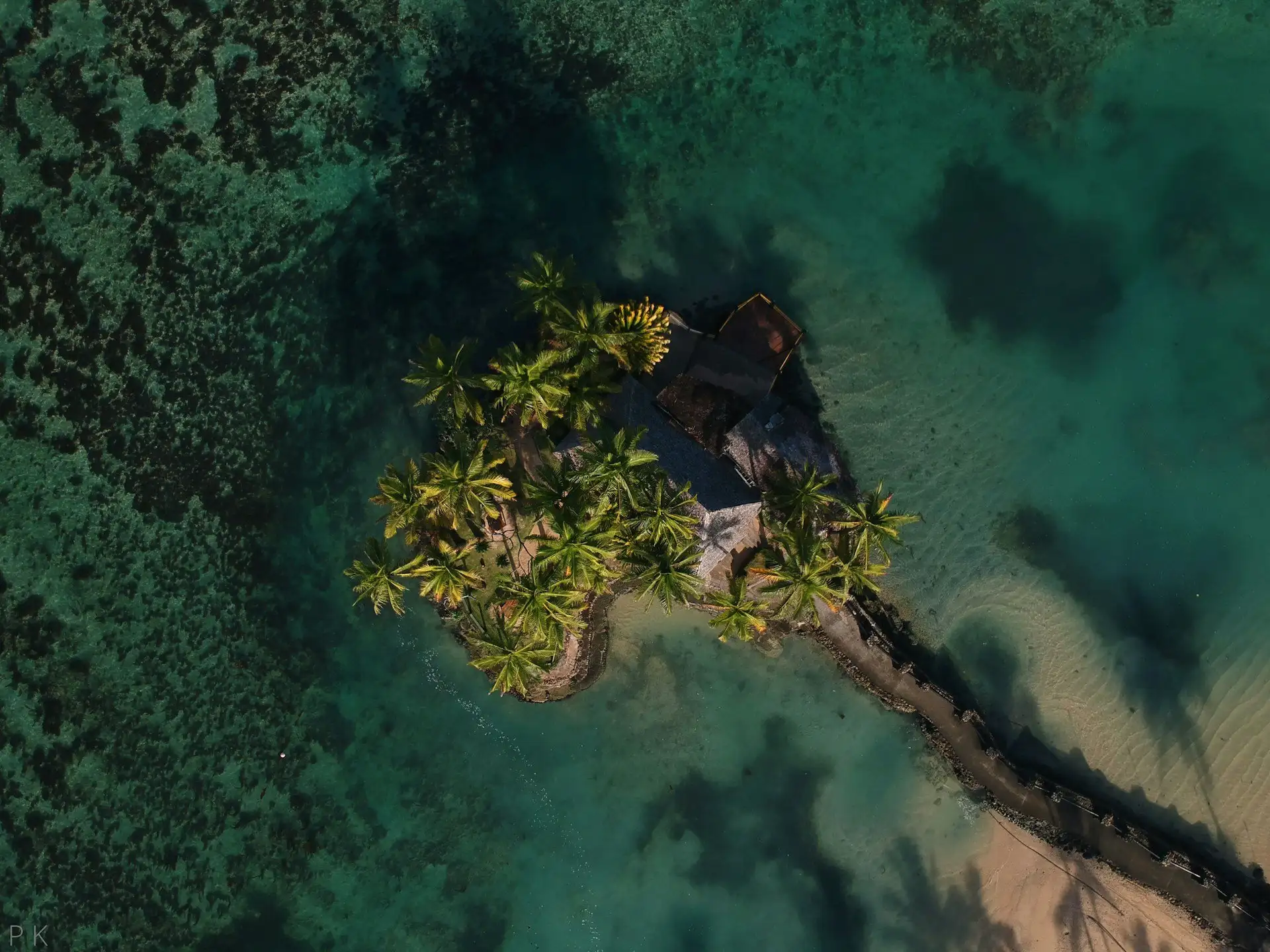
Fiji
Three hundred and thirty-three islands spread across 1.3 million square kilometres of the South Pacific. The softest coral in the world. Kava ceremonies in villages where the chief still decides who sits where. The Yasawa chain by local ferry. Soft coral so dense at Taveuni it colours the water purple. And the word everyone says when they greet you: bula — which means alive.
What You're Actually Getting Into
Fiji has two versions and most visitors only see one. The resort version occupies the Mamanuca and southern Yasawa island chains, the overwater bungalows of the Coral Coast, and the high-end international hotel infrastructure around Nadi. It is a very good version of a tropical resort destination — the reef is excellent, the service is warm, the weather is generally superb, and the international traveller need for a switch-off week is reliably met. This guide does not dismiss it. The Mamanuca Islands in particular deliver exactly what they promise at a quality level most comparable destinations cannot match.
The other version of Fiji is the country itself: 900,000 people from Melanesian, Polynesian, and Indo-Fijian communities living across 333 islands with a social system built around villages, chiefs, clans, and the kava circle that has been governing community life here for three thousand years. This version is accessible from the same ferry dock in Nadi, on the same island chains, and is not geographically separate from the resort version. It requires a different posture — showing up at a village homestay rather than a resort, sitting in a chief's meeting hall rather than a spa, drinking yaqona from a coconut shell rather than rum from a tumbler — but it is available to anyone willing to seek it.
Fiji's diving is world-class and specifically distinctive. The soft coral reefs of Taveuni and the Somosomo Strait — marketed as the Soft Coral Capital of the World, a claim that expert divers largely endorse — produce curtains of colour (purple, orange, pink, yellow) at depths accessible to recreational divers that have no direct equivalent in the Indo-Pacific. The outer reef walls of the Bligh Water between Viti Levu and Vanua Levu are among the finest pelagic dive sites in the world. The Astrolabe Reef off Kadavu is one of the Southern Hemisphere's most significant reef systems. Fiji earns its reputation for diving in a way it is also entirely possible to visit without ever engaging with underwater.
The price range in Fiji is unusually wide. A night at the Six Senses Fiji on Malolo Island costs $3,000+ AUD. A night at a village guesthouse in the Yasawas costs $60–100 FJD all-in including meals. The Bula Pass (Yasawa Flyer ferry unlimited travel pass) costs $300–600 FJD for 2–12 days of island-hopping. These are genuinely different products in the same geography, and the lower price bracket is not a compromise version of the experience. It is a different and in some ways richer experience of the same islands.
Fiji at a Glance
A History Worth Knowing
Fiji was settled by Melanesian and Polynesian peoples approximately 3,500 years ago, with the Lapita culture — recognised by its distinctive geometric pottery, found in archaeological sites across Fiji — representing the earliest known occupants. The society that developed was complex: hierarchical, with a system of chiefs (Ratu) governing clans and confederacies, sophisticated in its oral history and navigational knowledge, and intermittently violent in its internal warfare. The practice of cannibalism in Fiji — which was real and documented, not colonial myth — was embedded in the context of inter-clan warfare and spiritual practice. European contact from the 18th century onward documented it extensively, sometimes with more horror than the practice warranted from within its own cultural context.
European contact began with Abel Tasman's sighting in 1643 and accelerated after William Bligh — of Bounty mutiny fame — charted much of the island group in 1789 after being set adrift by the mutineers and navigating a longboat through Fijian waters to Timor. Beachcombers (European deserters and castaways), missionaries, sandalwood traders, and then planters arrived through the early 19th century. The most significant chiefly figure of this period was Ratu Seru Epenisa Cakobau, who unified much of Fiji under his authority in the 1850s and 1860s and converted to Christianity in 1854, a conversion that accelerated missionary influence throughout the islands. In 1874, Cakobau and other high chiefs ceded Fiji to Queen Victoria — a Deed of Cession that is the founding document of the modern Fijian state and remains politically significant in contemporary Fijian constitutional debates.
The British colonial period introduced the element that most defines modern Fiji's social complexity: the importation of indentured labourers from India between 1879 and 1916, brought to work the sugar cane plantations after the colonial administration decided that Fijian people should not be compelled to work in ways that disrupted their communal land and social systems. Approximately 61,000 Indian workers arrived under the girmit (indenture) system — the word is a Fijian pronunciation of "agreement." Their descendants, known as Indo-Fijians, today constitute approximately 37% of the population and have maintained distinct cultural, religious, and linguistic traditions while becoming fully Fijian by citizenship and lived experience.
The relationship between indigenous Fijians (iTaukei) and Indo-Fijians has been the defining tension of post-colonial Fijian politics. Fiji gained independence from Britain on October 10, 1970 — a date still celebrated as Fiji Day. The coups of 1987 (two, by Lieutenant Colonel Sitiveni Rabuka), 2000 (George Speight's civilian-led takeover), and 2006 (Commodore Frank Bainimarama) all involved, to varying degrees, the question of land ownership, political power, and the relationship between the two major communities. The 2013 constitution introduced by Bainimarama attempted to resolve the communal political divisions by making all citizens equal under the single category of "Fijian" — previously only iTaukei people were called Fijian, with Indo-Fijians referred to as Fiji-Indians. The 2014 elections returned Bainimarama to power democratically. The 2022 elections removed him.
For visitors, this history is most relevant in understanding two things: why approximately 44% of the land in Fiji is communally owned by iTaukei clans (not individually owned, not state-owned — clan-owned, governed by the iTaukei Land Trust Board) and why the village social structure — chief, clan, communal obligation — is not pre-modern but is an actively functioning governance system operating in parallel with the state. When you visit a village and bring a sevusevu (gift of kava root) and sit with the chief and ask permission to be in his community's space, you are engaging with a sovereignty that predates and coexists with the Fijian state. This is not tourism performance. This is how things actually work.
The Lapita culture settles Fiji — among the earliest known Oceanic settlements. Their distinctive pottery survives in archaeological sites throughout the islands.
Abel Tasman notes the Fijian islands. European contact remains sporadic for another century.
William Bligh, set adrift after the Bounty mutiny, navigates a longboat through Fijian waters and charts much of the archipelago on his 47-day voyage to Timor.
The paramount chief Ratu Seru Cakobau's conversion accelerates missionary influence and begins consolidating political authority in the islands.
Cakobau and other high chiefs cede Fiji to Queen Victoria. Britain takes formal control. The British administration decides not to compel iTaukei people to plantation labour.
61,000 Indian workers arrive under the girmit indenture system to work sugar plantations. Their descendants — Indo-Fijians — now form approximately 37% of the population.
October 10. Fiji Day. The country joins the Commonwealth as an independent nation.
Four coups across these years, all involving — in different ways — the political relationship between iTaukei and Indo-Fijian communities, land ownership, and electoral power. The 2006 Bainimarama coup leads to the 2013 constitution and 2014 democratic elections.
Rabuka's SODELPA coalition defeats Bainimarama's FijiFirst party in free elections. The first peaceful democratic transfer of power in Fijian history.
Top Destinations
Fiji's 333 islands spread across a sea area larger than Western Europe, but the main visitor destinations cluster into manageable zones. Most visitors arrive at Nadi on Viti Levu (the main island) and either stay on Viti Levu, head to the Mamanuca or Yasawa island chains to the northwest, or fly to Taveuni, Savusavu, or Kadavu for more specialised diving or off-grid experiences. The two main islands — Viti Levu and Vanua Levu — have road networks. The outer islands are connected by ferry, small plane, or boat.
Yasawa Islands
A chain of volcanic islands stretching 60 kilometres north of the Mamanucas, accessible by the Yasawa Flyer catamaran that departs Port Denarau daily. The islands are relatively undeveloped, with small villages, backpacker guesthouses, and a handful of boutique resorts. Blue Lagoon — the filming location for the 1980 Brooke Shields movie — is on Nanuya Levu island near the centre of the chain. The Sawa-i-Lau caves on the northern Yasawas, accessible by boat and swim, have limestone chambers above the waterline where 19th-century Fijians hid during warfare. The entire Yasawa chain is island-hopped most naturally on the Bula Pass: buy a 7–12 day pass, get on and off at will, and let the chain reveal itself at its own pace.
Taveuni
Fiji's third-largest island, lying to the northeast of Vanua Levu across the Somosomo Strait. The Strait is the reason divers come here: the Rainbow Reef, running along the length of the Strait, has the highest density of soft coral in the world. The Great White Wall — a dive site at approximately 30 metres where white soft coral covers a vertical wall like snow — is one of the most spectacular single dives in the Pacific. Taveuni is also the Garden Island: the interior rainforest harbours the tagimaucia flower (a climbing plant whose red and white flowers are found only in Fiji, only at altitudes above 500 metres, and appear on the Fijian ten-dollar note), Bouma National Heritage Park with its three-tier waterfall system, and the line of longitude 180° that runs through the island and on which stands a sign marking the International Date Line.
Mamanuca Islands
The Mamanucas are the nearest island group to Nadi — most are 30–90 minutes by boat from Port Denarau — and have the highest concentration of resort hotels in Fiji. Malolo Island, Matamanoa, Tokoriki, Treasure Island, and several others all have purpose-built resort infrastructure ranging from budget to ultra-luxury. The reef around the Mamanucas is good for snorkelling and beginner diving. The islands themselves are small, low-lying, and primarily oriented around beach and water activities. For visitors who want the resort experience close to Nadi's international connections, the Mamanucas are the efficient choice. They are not the Fiji that a village homestay provides and they do not pretend to be.
Savusavu, Vanua Levu
Savusavu is a small, unhurried town on Fiji's second-largest island that serves as the main cruising yacht hub in the country and has developed a small expatriate community of divers, sailors, and long-term visitors. The town has a working copra (dried coconut) processing plant whose smell of toasting coconut follows you up the main street, a produce market, and the Copra Shed Marina where boats from New Zealand and Australia check in each sailing season. The diving around Savusavu — the Namena Marine Reserve to the south is a spectacular outer reef system — and the overland route through the jungle interior of Vanua Levu to Taveuni are both excellent reasons to base here rather than on Viti Levu.
Kadavu & Great Astrolabe Reef
Kadavu is a large, rugged, mountainous island south of Viti Levu that is rarely visited by the mainstream tourist circuit. The Great Astrolabe Reef that rings Kadavu and the Astrolabe Group is one of the four largest barrier reefs in the world and one of the least commercially dived — the combination of exceptional size, pristine condition, and limited visitor traffic makes it among the finest diving destinations in the Southern Hemisphere. Mantas are common at the passages on an incoming tide. The village life on Kadavu, less touched by tourism infrastructure than the Mamanucas or Yasawas, is the most genuine rural Fijian experience accessible without a private yacht.
Suva
Fiji's capital on the southeastern coast of Viti Levu is the most authentically Fijian city you will visit if you are accustomed to Pacific resort towns. Suva is a real city: the USP (University of the South Pacific) gives it an intellectual energy, the Municipal Market has the best produce selection in Fiji, the Fiji Museum in Thurston Gardens holds the canoe used in the massacre of the crew of the HMS Bounty survivor's vessel, and Albert Street between 6pm and midnight is where the city actually lives. It rains in Suva more than anywhere else in Fiji — the eastern side of Viti Levu is the wet side — and the city has developed an indoor food and coffee culture that Nadi's tourist strip has never needed to.
Viti Levu Highland Interior
Most visitors to Viti Levu see the coastal strip between Nadi and Sigatoka (the Coral Coast) and the Queen's Road between Nadi and Suva. The interior — the Nausori Highlands, the Ba River valley, the highlands around Navala village — is genuinely dramatic: cloud forest, traditional thatched bure (house) villages, and a landscape that feels entirely separate from the beach resort geography of the coast. Navala is the only remaining village in Fiji where all the houses are built in the traditional bure style — thatched, oval, on raised earth platforms. It is a working village, not a heritage museum, and it receives visitors under the sevusevu protocol.
Pacific Harbour & Beqa Lagoon
Pacific Harbour on Viti Levu's south coast, approximately 90 minutes from Suva, is the base for the Beqa Lagoon shark dive — one of the most famous shark diving experiences in the world. Eight species of shark, including bull sharks and tiger sharks, converge on a feeding site at 30 metres where divers kneel in a circle while feeders in chain mail pass fish to animals that are large enough to make you forget you chose to be here. The dive is run daily by Shark Reef Marine Reserve operators. It is not for the tentative. The lagoon around Beqa Island is also excellent for non-shark diving — the soft coral and fish diversity are excellent.
Culture & Etiquette
Fiji is a society built around three intersecting cultural systems. The iTaukei (indigenous Fijian) culture is communal, hierarchical, and governed by the vanua — the concept of land, people, and custom combined into a single social unit. The Indo-Fijian culture is the inheritance of the girmit workers — Hindu, Muslim, and Christian communities that have maintained South Asian cultural practices while becoming thoroughly Fijian over 140 years. And the colonial British overlay, still visible in the legal system, the cricket field in every town, and the kava-drinking habit of civil servants in Suva, sits over both.
For visitors, the most important cultural rules are the village rules. Fiji's villages are private spaces with a functioning social structure. You are entering someone's home community, not a cultural theme park. The sevusevu is the minimum courtesy. The dress code (shoulders and knees covered, no hats in a chief's presence, no sunglasses when being addressed) is the practical expression of that courtesy. The kava circle is the social event. Sitting cross-legged, accepting the bilo, drinking in one go without spilling, clapping once, and saying "bula" — these are not difficult steps. They are the behaviours that make you a guest rather than an intruder.
Any visit to a village requires a sevusevu — a bundle of dried kava root presented to the chief or headman as a formal request to enter the community's space. Available at any market for $5–20 FJD. The act of bringing it is more important than the quality of the bundle.
Shoulders and knees covered in any village context. No swimwear away from the beach. Women should bring a sulu (wraparound skirt) that can be tied quickly when approaching village communities. Men in board shorts should cover up. The heat is the same regardless of your clothing. The respect is not.
If offered a bilo of kava at a village ceremony, accept it. Sit cross-legged. Receive the bowl with both hands, say "bula," drink it all in one go, and clap once. Then clap three times and say "mathe" (it is finished). The kava will numb your lips and relax you. It will not intoxicate you at a single serving. The ceremony is the point, not the drink.
Covering the head is disrespectful in iTaukei culture — the reverse of many other traditions. Remove hats when entering any formal village space, when being addressed by a chief, and in general in traditional contexts. A chief will not correct you. He will simply be silently less warm toward you.
"Bula" (hello, alive, health), "vinaka" (thank you), and "moce" (goodbye, pronounced "mothe"). These three words, deployed with genuine intention rather than tourist performance, open more doors than any amount of money or status. Fijians respond to effort with warmth that is specific and generous.
Entering a Fijian village without a sevusevu and without announcing yourself to the headman is entering someone's private home. The village may have no physical boundary — it is the social boundary that matters. If you see a village and want to visit, find the community member who greets you at the edge and ask to be taken to the turaga-ni-koro (village headman). Never just walk in.
In villages, at ceremonies, and at markets, ask before photographing. This is particularly important in the context of the kava ceremony — the circle is a formal social event, not a photographic opportunity. If someone says no, that is a complete sentence.
In iTaukei culture the head is the most sacred part of the body. Do not pat children on the head, ruffle hair, or touch anyone's head in any context. The gesture that is affectionate in some cultures is disrespectful here.
Many villages are officially "dry" and alcohol is culturally inappropriate in the village context where kava is the social drink. Do not bring alcohol to a village or offer it in a traditional context. If in doubt about any village's specific protocols, ask your guide or host before arriving.
Fiji has two major cultural communities that are distinct in religion (Christianity and Methodism in iTaukei communities; Hinduism, Islam, and Sikhism in Indo-Fijian communities), food traditions, music, language, and relationship to land. Treating "Fijian culture" as a monolith misses half the country's cultural identity.
Kava (Yaqona)
Kava is the social institution of Fiji. Made from the ground root of the Piper methysticum plant mixed with water and strained through hibiscus bark into a tanoa (carved wooden bowl), it is drunk from a bilo (coconut shell half) in circles that can last from one hour to all night. The effects are a gentle relaxation, a numbing of the lips and tongue, and a sociability that the communal context of the ceremony amplifies. The kava plant is Fiji's most important cash crop and its most important social technology. The formal kava ceremony (yaqona ceremony) at a village chief's house is governed by specific protocols. The informal evening kava circle outside the village store is governed by different protocols. Both are genuine expressions of the same cultural institution.
Music: Meke & Farewell Songs
The meke is the traditional Fijian performance combining music, dance, and storytelling. Warriors perform the cibi (war dance) with weapons and formal movement. Women perform the seasea (fan dance). Both are performed at significant cultural occasions and are not tourist spectacles when seen in their proper context — hotel meke performances are an entirely different and significantly diminished version of the same tradition. The Isa Lei, the Fijian farewell song sung to departing visitors, is a genuinely moving cultural moment when it occurs at a village departure rather than as a hotel entertainment. If you hear it sung in a genuine context, stop and receive it — it is being sung specifically for you.
The Vanua
The vanua is the foundational concept of iTaukei Fijian identity — it translates approximately as "land" but encompasses land, people, ancestors, custom, and social obligation in a single concept. The vanua is why land in Fiji cannot be sold (only leased through the iTaukei Land Trust Board) — the land belongs to the ancestors and to the future descendants as much as to the living, and therefore no single generation can permanently alienate it. This is not pre-modern thinking. It is a specific and deliberate legal and cultural framework that has survived colonisation, coups, and globalisation because the people who hold it consider it non-negotiable.
Indo-Fijian Culture
Approximately 37% of Fiji's population is Indo-Fijian — descendants of the girmit workers brought from India between 1879 and 1916. Their cultural traditions are Hindu, Muslim, and Sikh, expressed in the temples and mosques visible in every Fijian town, the Diwali lights festival in October–November, the Holi festival in March, and the food traditions of dal, roti, and curry that have become part of Fiji's broad food culture. The Indo-Fijian relationship with land — most lease rather than own, under the iTaukei Land Trust system — creates specific economic vulnerabilities that have shaped Fijian politics for a century. The most thoughtful visitors engage with both Fiji's main communities rather than treating the island as purely Melanesian.
Food & Drink
Fijian food divides along the same cultural lines as the society. The iTaukei Fijian cooking tradition is built around root crops (cassava/tavioka, taro/dalo, sweet potato/kumala) and fresh seafood cooked in coconut milk or lolo — the rich, sweet liquid pressed from fresh coconut. The Indo-Fijian tradition is the curry, dal, and roti cooking of South Asia transposed to Fijian ingredients — the curry here uses local green vegetables, fresh fish, and a spice profile shaped by 140 years of island adaptation. Both traditions are excellent. The resort buffet version of neither is where you will find either at its best.
Kokoda
Fiji's national dish and the South Pacific equivalent of ceviche. Raw fish — usually walu (Spanish mackerel) or fresh tuna — marinated in lime juice until the acid "cooks" the protein, then mixed with fresh coconut cream, chilli, tomato, cucumber, and spring onion. The combination of the tart lime, the sweet coconut, and the firm fish texture is genuinely excellent and entirely specific to this part of the Pacific. Available at the Suva Municipal Market from $5–8 FJD, at village homestays as a standard first course, and at tourist restaurants throughout Viti Levu at significant markup. The market version is better.
Roti & Curry
The Indo-Fijian curry and roti tradition is the most widely available food in Fiji outside resort hotels. The roti here differs from Indian roti in the same way Trinidadian roti differs from it — heavier, softer, adapted to available ingredients over generations. The curry is made with fresh local fish, chicken, or dal (lentils), with a spice profile that is milder than Indian restaurant curry in most Western countries but richer than most Pacific island food. Available at the Nadi Municipal Market, the Suva Municipal Market, and at small Indo-Fijian takeaways in every town for $3–7 FJD per plate.
Lovo
The traditional Fijian earth oven — a pit filled with heated stones over which food is placed, covered in banana leaves, and cooked slowly for several hours. A lovo meal at a village feast includes fish, chicken, pork (in non-Muslim communities), cassava, taro, sweet potato, and palusami (taro leaves cooked in coconut cream) all cooked simultaneously in the earth. The smoke of the fire and the steam from the leaves give everything a distinctive flavour that no above-ground cooking method replicates. Village homestays that offer lovo feasts on certain evenings are the right place to encounter it. Resort lovo nights are a reliable but reduced version.
Palusami & Fresh Seafood
Palusami is taro leaves stuffed with coconut cream and onion and baked in the lovo — a rich, slightly earthy vegetable package that is the comfort food of Fiji. Fresh seafood from the market in Suva or Lautoka includes walu, yellow-fin tuna, mahi-mahi, crab, and prawns caught by local fishermen and sold at dawn. A whole fresh fish at the Suva market costs $5–15 FJD depending on size. The fish fillet at a tourist restaurant in Nadi costs $25–40 FJD. Both are from the same sea. Only one of them was caught this morning.
Kava (Yaqona)
Not a food but the most consumed drink in Fiji outside of water. Prepared by mixing ground kava root with water and straining through bark into the tanoa, it is consumed from coconut shell bowls throughout the day and particularly in the evening. The taste is earthy, slightly bitter, and distinctly itself — nothing quite prepares you for it on first encounter. The numbing of the lips is immediate. The gentle sedation accumulates over a long session. In the kava circle, it is not about the drink. It is about the conversation, the sharing, and the time given to it.
Fiji Gold & Fiji Bitter
Fiji Gold and Fiji Bitter are the national lagers produced by Paradise Beverages in Suva. Both are clean, cold, tropical lagers that are exactly right at a beach bar or a hotel pool. Fiji Gold is slightly lighter; Fiji Bitter is the more characterful of the two. Both cost $5–8 FJD at a local bar and $12–18 FJD at a resort. The rum punch that appears at most resorts uses Bounty Rum (a Fijian sugar cane rum) in its honest versions and a generic imported rum in its less honest versions. Ask which before ordering.
When to Go
The dry season from May to October is the clear best time to visit Fiji. The wet season from November to April brings cyclones (particularly January and February), heavy rainfall, and significantly reduced visibility for diving and snorkelling. The peak months of July and August are the driest and most reliable, with consistent trade winds and the clearest water. The shoulder months of May and October give excellent conditions with lower accommodation prices and fewer visitors.
Dry Season
May – OctThe best conditions for diving, snorkelling, hiking, and outdoor activities across all island groups. Trade winds cool the heat to a consistent 22–28°C. Visibility underwater is at its highest. Cyclone risk is minimal. July and August are peak tourist months with the highest accommodation prices and the most visitors, particularly on the Yasawas and Mamanucas.
Shoulder Months
May, OctTransitional months with good conditions, lower prices, and fewer visitors. May is the beginning of the dry season — the rains have largely stopped but the ground is still lush and green. October is the end of the dry season with warmer water and the first hint of wet season clouds building in the evenings. Both are excellent months to visit.
Cyclone Season
Nov – AprFiji lies in the South Pacific cyclone belt. Significant cyclones have caused major damage to resort infrastructure and island communities — Cyclone Winston in 2016 was the most powerful tropical cyclone ever recorded in the Southern Hemisphere. January and February are the highest-risk months. Travel insurance with cyclone cancellation cover is non-negotiable if visiting during this period. Visibility for diving drops significantly with the increased rainfall.
Trip Planning
Ten days is the comfortable minimum for Fiji. Less and you'll either stay in one place (fine if the place is Taveuni for diving) or rush between islands without absorbing any of them. Two weeks allows the Yasawa chain island-hop plus either a resort week in the Mamanucas or a dive trip to Taveuni. Three weeks gives you the full country: Viti Levu cultural circuit, Yasawas by Bula Pass, Taveuni or Kadavu diving, and the Savusavu sailing scene.
The Bula Pass (issued by Awesome Adventures Fiji for the Yasawa Flyer catamaran) is the single most important planning tool for budget Yasawa travel. Available for 2, 3, 5, 7, 10, or 12 days. Get at least 7 days — the northern Yasawas take 4–5 hours to reach from Port Denarau and you want time at each stop. Book online before arriving; the pass sells out in peak season.
Nadi & Viti Levu
Arrive at Nadi International Airport. Day one: recover, visit the Sri Siva Subramaniya Swami Temple in Nadi (the largest Hindu temple in the Southern Hemisphere — remove shoes, photography inside requires permission), and the Nadi Municipal Market. Day two: the Garden of the Sleeping Giant — a orchid garden in the foothills east of Nadi in the former property of Raymond Burr (Perry Mason actor and serious orchid collector) — and the Sabeto mudpools and hot springs for a volcanic mud bath.
Yasawa Islands (Bula Pass)
Board the Yasawa Flyer at Port Denarau with a 7-day Bula Pass. Head north: Naviti Island for snorkelling, Nanuya Levu for the Blue Lagoon caves, Nacula for a village homestay and kava ceremony. Spend your nights at backpacker guesthouses ($60–100 FJD all meals included) rather than the resorts on the same islands. The village guesthouses are on the same beaches and provide a fundamentally different and more textured experience.
Return & Departure
Return south on the Yasawa Flyer (takes 4–5 hours from the northern Yasawas). Afternoon at Port Denarau. Departure flight from Nadi International Airport.
Viti Levu Circuit
Three days on Viti Levu: Nadi on day one (temple, market, sevusevu purchase). Day two: drive the Queens Road to the Sigatoka Sand Dunes (the largest sand dunes in the South Pacific, with Lapita pottery shards exposed at the surface) and the Tavuni Hill Fort (a 200-year-old hilltop fortress with ocean views). Day three: the interior route north from Nadi to Navala village for the all-bure village experience (sevusevu required, guide recommended).
Yasawa Island-Hop
Seven-day Bula Pass. Head north on the Yasawa Flyer, stopping at Waya island (the most dramatic volcanic landscape in the chain), Naviti, Blue Lagoon, Sawa-i-Lau caves (swim through a submerged passage into a limestone chamber above the water — one of the finest natural experiences in Fiji), and Nacula for village homestay. Return south on day 10.
Mamanuca Decompression
Four days at a Mamanuca Island resort if funds allow, or at Mana Island backpacker for budget. Snorkelling the reef, stand-up paddleboard, afternoon beach. This is the legitimate resort experience of Fiji — enjoy it without guilt after the village circuit. Fly home from Nadi.
Viti Levu Cultural Circuit
Nadi, Navala village, the Nausori Highlands, Suva (Fiji Museum, Municipal Market, USP campus). Suva gets two nights — it is the most genuinely Fijian urban experience and the one most tourists skip because it rains. The Suva Municipal Market on a Saturday morning is one of the most vivid food markets in the South Pacific.
Yasawa Full Chain
10-day Bula Pass. The full Yasawa chain, including stops at the small outer islands beyond Nacula that most visitors skip. Matagi Island (not on the Yasawa chain but accessible from the north) for its excellent house reef. The overwater hammocks at Barefoot Manta Island. A full evening kava circle at a Nacula village homestay that starts at 8pm and ends when the last person falls asleep.
Taveuni Diving
Fly from Nadi to Taveuni (45 min via Fiji Link). Five days: two days diving the Rainbow Reef (the Great White Wall on day one, the Purple Wall on day two — back-to-back dives that are among the finest in the Pacific). Day three: Bouma National Heritage Park — the three-tier waterfall system and the Des Voeux Peak hike for the view across the Somosomo Strait. Day four: Lavena Coastal Walk — a 9km trail along the coast to a waterfall accessible only by swimming through a canyon. Day five: the 180° longitude marker, Des Voeux Peak, and the tagimaucia flower search with a local guide.
Savusavu & Return
Boat from Taveuni to Savusavu (2 hours) or fly back to Nadi via Taveuni airport. Two nights in Savusavu for the copra shed atmosphere, the farmers market, and a Namena Marine Reserve dive day if budget allows. Return to Nadi and fly home.
Bula Pass
The Yasawa Flyer (operated by Awesome Adventures Fiji) runs daily from Port Denarau Marina near Nadi. The Bula Pass (2–12 days, hop-on-hop-off) is the standard budget tool for the Yasawa chain. Book online at awesomefiji.com before arriving — the pass sells out in July and August peak season. The 7-day pass allows the full Yasawa circuit comfortably.
Sevusevu
Dried kava root, available at any Fijian market or produce stall for $5–20 FJD per bundle. Buy it before visiting any village. The presentation protocol (presenting it to the chief with both hands, a brief speech of respectful greeting) is something your guide or host will walk you through. Arriving without one is the single biggest cultural mistake visitors make.
Currency
Fijian Dollar (FJD). Approximately 1 USD = 2.25 FJD, 1 AUD = 1.45 FJD. ATMs at Nadi Airport, in Nadi town, Suva, and Lautoka. No ATMs on the Yasawa or Mamanuca islands — withdraw sufficient FJD before boarding any inter-island ferry. Resorts and tourist businesses accept credit cards. Village guesthouses are cash-only.
Connectivity
Vodafone Fiji and Digicel Fiji are the main providers. Good coverage in Nadi, Suva, Lautoka, and the main tourist areas. Limited coverage on the outer Yasawa islands and Taveuni interior. Download offline maps before leaving. A Vodafone Fiji SIM at the airport ($10–15 FJD) is the easiest connectivity option.
Get a Fiji eSIM →Health
No mandatory vaccinations. Recommended: Hepatitis A, Typhoid, and routine vaccines. No malaria in Fiji. Dengue fever is present — use mosquito repellent particularly at dawn and dusk. Leptospirosis risk near freshwater after heavy rain — avoid swimming in rivers after rainfall. The sun at 18°S is intense — SPF 50+ and reef-safe formulation.
Full vaccine info →Travel Insurance
Essential with cyclone cancellation cover if visiting November–April. Medical evacuation cover is important — the Yasawa and outer island clinics are very basic, and serious injuries require evacuation to Nadi or Suva. Diving insurance (DAN) is strongly recommended for any diving activity. The Fiji Recompression Chamber is in Suva at the Colonial War Memorial Hospital.
Transport in Fiji
Fiji's transport divides into two worlds. The main island of Viti Levu has a functional road network, regular bus services, and taxis. The outer islands are reached by the Yasawa Flyer catamaran, small inter-island planes, speed boats from resort jetties, or water taxis. For Taveuni, Savusavu, and Kadavu, the domestic Fiji Link airline (Fiji Airways subsidiary) is the practical option over the slow inter-island ferry alternatives.
Nadi International Airport
NAN — South Pacific hubNadi International Airport is the South Pacific's most connected hub — direct flights from Sydney, Melbourne, Brisbane, Auckland, Los Angeles, Hong Kong, Singapore, Tokyo, and other Pacific cities. The airport is 9km north of Nadi town and 30km from Port Denarau Marina (the Yasawa ferry dock). The taxi to Port Denarau takes 30–40 minutes and costs $25–35 FJD; booking in advance is not necessary.
Yasawa Flyer (Bula Pass)
$300–600 FJD for 7–12 daysThe Yasawa Flyer catamaran departs Port Denarau Marina daily at 8:30am for the Mamanuca and Yasawa islands. The Bula Pass allows unlimited stops for 2–12 days. Individual journeys can also be booked. The full journey to the northern Yasawas (Tavewa, Nacula) takes approximately 4.5–5 hours. Buy tickets and passes at the Awesome Adventures Fiji desk at Port Denarau or online at awesomefiji.com.
Domestic Flights
$80–200 FJD per sectorFiji Link (Fiji Airways subsidiary) operates turboprop aircraft between Nadi and Taveuni, Savusavu, Kadavu, Labasa, and several outer island strips. The flights are short (45–75 minutes) and the baggage limits are strict. For Taveuni diving or Savusavu sailing, the domestic flight is the practical option — the inter-island ferry alternatives take 12+ hours.
Local Bus (Viti Levu)
$1–5 FJD per journeyFrequent bus service connects Nadi, Lautoka, and Suva along the Queens Road (south coast) and Kings Road (north coast). The Nadi–Suva express bus takes approximately 4 hours and costs $10–12 FJD. Local buses are slower, stop frequently, and cost $1–3 FJD for shorter hops. This is how Fijians travel between towns and is perfectly functional for visitors with time.
Taxi
Metered, $3–30 FJDTaxis in Nadi, Suva, and Lautoka are metered. Longer journeys (Nadi to Coral Coast) are negotiated. Taxis are readily available outside the airport, at hotels, and at taxi stands in town centres. For remote areas and rural villages, hiring a taxi for the day ($80–150 FJD) is the most practical transport option. Confirm the fare before departing for any rural destination.
Resort Speedboats & Water Taxis
$50–200 FJD per tripPrivate speedboats connect most Mamanuca Island resorts to Port Denarau in 30–90 minutes. The resort books this as part of your arrival transfer. Water taxis between Yasawa island stops (for visitors not using the Yasawa Flyer) cost $50–200 FJD depending on distance. Always agree the price before boarding any private water transport in Fiji.
Accommodation
Fiji's accommodation range is wider than the resort marketing suggests. The full spectrum from Six Senses luxury to village homestays for $30 FJD per night including meals exists within the same island groups. The village homestay and backpacker guesthouse sector on the Yasawa and outer islands is well-developed, genuinely good value, and provides a culturally richer experience than any resort at the same location. The choice between resort and guesthouse is not a quality choice — it is a values choice about what kind of trip you want to have.
Luxury Resort
$600–3,500+/nightSix Senses Fiji on Malolo Island (overwater villas, world-class spa), Laucala Island Resort (private island, Fiji's most exclusive property at $3,000+/night), Kokomo Private Island on the Great Astrolabe Reef, and the Mamanuca Island resorts of Tokoriki, Matamanoa, and Likuliku Lagoon (the only true overwater bungalows in Fiji). The resort product is genuinely excellent at this level. Book 3–6 months ahead for peak season.
Boutique & Mid-Range
$150–400/nightThe Uprising Beach Resort in Pacific Harbour (surf-friendly, good dive base for the Beqa shark dive), the Taveuni Palms on Taveuni (boutique, dive-focused), the Jean-Michel Cousteau Fiji Islands Resort north of Savusavu (world-class dive operation, excellent reef access). All have smaller scale and more personal service than the large Mamanuca resorts.
Village Homestay
$60–120 FJD/night (all meals)The genuinely Fijian accommodation option. Guesthouses operated by village communities on the Yasawa and outer islands include all meals (typically fresh local food cooked communally), access to the kava circle, participation in village activities, and the sevusevu ceremony. The facilities are basic — bucket showers, composting toilets, mosquito nets. The experience is irreplaceable. Book through the Awesome Adventures Fiji booking system or directly by email when available.
Backpacker Resort
$80–180 FJD/night (meals inc.)The Yasawa and Mamanuca backpacker resorts (Mana Island Backpackers, Mantaray Island Resort, Navutu Stars on Yasawa) provide social, activity-focused stays with included meals, snorkelling gear, and the Yasawa Flyer stop built into the day. Dorm accommodation or basic private bures. The social scene between backpackers and the island community is the strength of this option. WiFi is limited or absent.
Budget Planning
Fiji has a surprisingly wide budget range. Village guesthouses on the Yasawas including three meals cost $60–120 FJD ($27–53 USD) per night — some of the best value in the South Pacific for an all-inclusive island experience. Resort accommodation runs $300–3,500 FJD per night. The Bula Pass for ferry transport is $300–600 FJD for 7–12 days. Budget Fiji — using the Bula Pass, staying at village guesthouses, eating local food — is genuinely achievable. Resort Fiji is one of the most expensive island destinations in the world.
- Village guesthouse (3 meals included)
- Bula Pass ferry transport
- Market kokoda and roti
- Snorkelling from guesthouse beach
- Kava at the village circle
- Boutique resort or mid-range hotel
- Resort dining or local restaurants
- Guided diving or snorkelling tours
- Village cultural tours with guide
- Domestic flight to Taveuni or Kadavu
- Six Senses, Laucala, or Likuliku
- Private speedboat transfers
- Private dive guides and liveaboard
- Helicopter island tours
- Private island hire (Laucala, Kokomo)
Quick Reference Prices (FJD)
Visa & Entry
Citizens of the United States, Canada, United Kingdom, all EU member states, Australia, New Zealand, Japan, and most other Western nations enter Fiji visa-free for stays of up to 4 months. This is one of the most generous tourist visa allowances in the Pacific region. You need a valid passport, a return or onward ticket, and accommodation details for your first night. An embarkation card is completed on the aircraft and submitted at immigration.
Most Western passport holders enter without a visa for up to 4 months. One of the most generous allowances in the South Pacific. Return ticket and accommodation details required at immigration.
Family Travel & Pets
Fiji is one of the finest family destinations in the South Pacific. The resort infrastructure in the Mamanucas is specifically good for families — several resorts (Castaway Island, Tokoriki, Musket Cove) have children's clubs and shallow calm lagoon beaches. The Fijian warmth toward children is not marketing — Fijian culture is deeply child-oriented and children in villages are community children. A family visiting a village homestay on the Yasawas will find children gathering around within minutes, offering to show them things, teach them words, and include them in activities that no cultural tour packages.
Lagoon Swimming
The protected lagoons of the Mamanuca Islands — Malolo Barrier Reef, the lagoons at Castaway, Treasure Island, and Mana — have calm, warm, shallow water with sandy bottoms that are ideal for children who can swim or are learning. The visibility is exceptional. The coral gardens at 2–3 metres accessible from the beach provide snorkelling that works for children from age 6 with a life jacket.
Village Cultural Experience
Children at a Yasawa village homestay receive a different quality of cultural education than any school trip provides. The communal meals, the kava circle observation (children watch rather than participate), the school children who adopt visiting children as immediate companions, and the village activities (fishing, weaving, coconut husking) are directly participatory rather than observed. The Fijian community relationship with children is warm and specific in a way that delights families.
Snorkelling the Reef
The house reefs of the Yasawa and Mamanuca island guesthouses are accessible from the beach and begin in 1–2 metres of water. Parrotfish, angelfish, and sea turtles are common sightings for children who can float and look down. Guided snorkel tours for children (most operators: minimum age 8 with a life jacket) introduce the reef with direct ecological commentary. The Mantaray Island Resort offers regular manta ray snorkel tours suitable for strong child swimmers from age 10+.
Bouma Waterfalls (Taveuni)
The Bouma National Heritage Park waterfall system on Taveuni has three tiers accessible by walking trail through tropical forest. The first waterfall (accessible in 20 minutes from the trailhead) has a natural swimming pool suitable for children. The third waterfall requires a full-day hike and is suitable for fit teenagers. The forest trail has the specific sensory impact of a 135-million-year-old ecosystem that produces genuine awe in children who pay attention to what's around them.
Sigatoka Sand Dunes
The largest coastal dunes in the South Pacific — the Sigatoka Sand Dunes National Park on Viti Levu's Coral Coast — are a natural play environment for children: enormous sand slopes to run down, exposed Lapita pottery shards that tell 3,000 years of Fijian prehistory at the surface, and the Sigatoka River mouth with wading birds and the occasional crocodile (no, not really — but the children will hope). A guided walk with the national park rangers contextualises the archaeological significance.
Kava Ceremony (Families)
Children observe rather than participate in the kava circle — they are seated with the family group and included in the ceremony without being offered the drink. Fijian families drink kava together and children grow up watching the ceremony. In a village context, having children present at the kava circle is natural and welcome. The ceremonial components — the clapping, the "bula," the formal call-and-response — are things children learn quickly and take genuine pride in performing correctly.
Traveling with Pets
Fiji has strict biosecurity regulations for pet imports designed to protect the island's disease-free status. Dogs and cats require a lengthy preparation process: current rabies vaccination, a rabies antibody titre test at an approved laboratory, a health certificate from an accredited veterinarian, and a Fiji Ministry of Agriculture import permit. The process typically takes 6+ months. All animals are subject to inspection on arrival and may be placed in quarantine.
In practical terms, bringing pets to Fiji is not appropriate for any visit shorter than a year. The resort accommodation does not accept pets and the logistics of inter-island travel with animals are significant. Leave pets at home.
Safety
Fiji is generally safe for tourists with low rates of violent crime. The main safety risks are natural rather than human, with some specific urban precautions applicable in Suva and Nadi. The political situation has been stable since the 2013 constitution and 2014 elections — the coups that defined Fiji's reputation through the 1980s and 2000s are historically relevant but not current risks.
The Islands Generally
The Yasawa and Mamanuca islands, Taveuni, Savusavu, and Kadavu are very safe. Village communities have their own social accountability. Crime on the outer islands against tourists is extremely rare. The main risks are environmental: sun, jellyfish, stonefish (wear reef shoes when walking on coral), and rip currents at exposed beaches.
Suva Urban Areas
Suva, particularly after dark in the downtown area around Cumming Street and the waterfront, has a higher incidence of opportunistic theft than the outer islands. Don't display expensive cameras, phones, or jewellery openly in crowded markets and streets. Take taxis after dark rather than walking in unfamiliar areas.
Nadi Hustlers
The area around the Nadi bus station and the main tourist strip has persistent vendors and taxi touts who target arriving visitors. Agree taxi fares before getting in, confirm prices before purchasing anything, and be aware that the "duty-free shop" offers near the airport are rarely competitive with actual duty-free pricing. Firm polite refusals work well.
Ocean Hazards
Rip currents at exposed surf beaches on the east coast of Viti Levu. Stonefish and sea urchins on reef flats — always wear reef shoes when walking on coral. Fire coral (causes a burning rash on contact with bare skin). Jellyfish, including the box jellyfish in some northern waters — check locally before swimming. Strong tidal currents at reef passages require dive guide knowledge.
Cyclone Awareness
If visiting November–April, monitor Fiji Meteorological Service forecasts regularly. Cyclone warnings give 24–48 hours notice. Follow resort and accommodation staff instructions in all cyclone situations — they have protocols and you don't. The Yasawa Flyer ceases operations before a significant cyclone; plan flexibility into any outer island itinerary during cyclone season.
Village Safety
Villages are extremely safe but require the cultural protocols described throughout this guide. Arriving at a village uninvited, particularly after dark or without a guide, creates discomfort and potential misunderstanding. Always use the sevusevu protocol and go through the headman. The villages will take care of you once you've been properly received.
Emergency Information
Your Embassy in Suva
Most countries handle Fiji consular matters from embassies in Suva or refer to their Australian or New Zealand embassies.
Book Your Fiji Trip
Everything in one place. Buy the Bula Pass. Bring a sevusevu. Say bula.
Bula
The word Fijians say when they greet you — bula — does not mean hello. It means alive. It is a wish for your health and vitality that has been shortened over centuries into a greeting. When a Fijian says bula to you on the road, in the market, from the village gate, they are saying: may you be alive. This is the correct thing to wish someone in a place where the sea can be rough, the sun can be intense, and the nearest hospital can be an hour away by boat. It is also a philosophy.
Fiji has survived colonial annexation, the girmit indenture system, four coups, and Cyclone Winston — the most powerful tropical cyclone ever recorded in the Southern Hemisphere — and each time the response has been, broadly: we are still here. We are still alive. Bula. The vanua persists. The kava circle reforms. The Yasawa Flyer leaves Port Denarau at 8:30am the morning after the storm as soon as the seas allow. This is not denial. It is the specific optimism of people who live on islands in the Pacific and have learned that the alternative to resilience is not available.
When Fijians sing Isa Lei — the farewell song that village communities sing to departing guests — they are not performing for tourism. They are saying, in four-part harmony without accompaniment, that your departure is a genuinely felt loss and that they hope the currents between you will bring you back. It is the most beautiful farewell in the Pacific. It is worth going to Fiji specifically to earn it. Go. Be bula. Let the song find you.