
The city that set the template for "big city"
New York City is five boroughs, Manhattan, Brooklyn, Queens, the Bronx and Staten Island, but most first visits mean Manhattan plus a slice of Brooklyn. It's dense in every sense: the tallest buildings sit blocks from the oldest tenements, a $28 pastrami sandwich is a ten-minute walk from a $3 slice of pizza, and the subway that looks intimidating on a map turns out to be the fastest way to understand how the city actually fits together.
What changes a New York trip from exhausting to great is accepting the density rather than fighting it. Pick a few neighborhoods a day rather than trying to hit every landmark, walk when the distance is walkable, and let the subway handle the rest. The city rewards people who slow down enough to notice it, not people racing between checklist items.
The honest complications
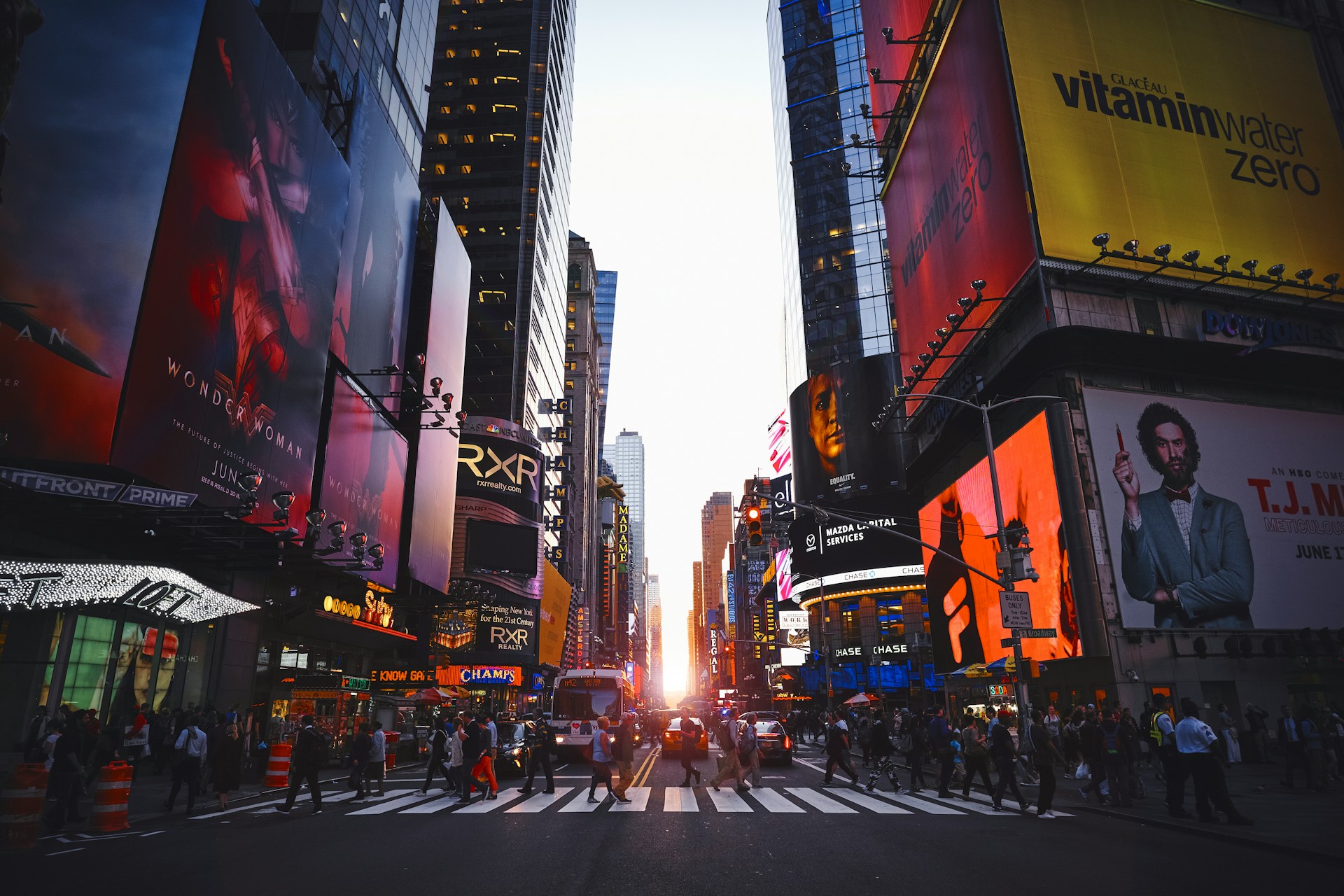
New York is expensive even by US standards: hotels, food and attractions all run higher than most American cities. Times Square and the immediate blocks around major landmarks are genuinely overwhelming with crowds and costumed characters angling for tips. Summers are hot and humid, winters are cold with occasional snow that slows the whole city down, and the subway, while extensive, has real gaps in accessibility and can be uncomfortably crowded at rush hour. None of this is a reason to skip the city, but arriving with realistic expectations makes the first day much easier.
Six neighborhoods that matter for a first visit
New York's neighborhoods each have a distinct character, and where you base yourself shapes the whole trip. Manhattan covers most first-visit priorities; Brooklyn is worth a full day even if you stay in Manhattan.
Midtown
Home to Times Square, the Empire State Building, Rockefeller Center and Broadway's theater district. It's the most convenient base for a first visit since almost everything is walkable or a short subway ride, but it's also the most crowded and touristy patch of the city. Expect noise at all hours.
Lower Manhattan & FiDi
The oldest part of the city, now a mix of the Financial District's skyscrapers, the 9/11 Memorial and Museum, and the ferry terminal for the Statue of Liberty and Ellis Island. Quieter at night than Midtown since it's less residential, but full of history and river views.
SoHo & Greenwich Village
Cast-iron architecture, cobblestone streets and the city's densest concentration of both flagship and independent shopping in SoHo, with Greenwich Village's tree-lined blocks, jazz clubs and NYU campus just north. One of the most pleasant parts of Manhattan to simply walk without a plan.
Upper West & Upper East Side
Flanking Central Park on either side, these are New York's classic residential neighborhoods: quieter, more genteel, and home to the city's biggest museums, the American Museum of Natural History on the West Side, the Metropolitan Museum of Art on the East Side. A good base if Midtown's noise doesn't appeal.
Harlem
The historic center of African American culture in New York, with a jazz and gospel heritage that's still audible on a Sunday morning. Sylvia's, the Harlem soul food institution since 1962, anchors the neighborhood's food scene on Malcolm X Boulevard.
Williamsburg, Brooklyn
A short subway ride from Manhattan, Williamsburg has become a destination in its own right: independent restaurants and bars, a waterfront with some of the best Manhattan skyline views anywhere, and the boutique Wythe Hotel anchoring the neighborhood's hospitality scene.
From a $55 dorm bed to a floor-to-ceiling-windows suite
New York hotel prices run higher than almost anywhere else in the US, but there's a genuine option at every budget once you know where to look.
At the budget end, HI New York City Hostel, a castle-like building on Amsterdam Avenue on the Upper West Side, a block from Broadway and a short walk to Central Park, has dorm beds from around $55-99 a night depending on season, with a movie lounge and a large patio. In Times Square itself, Pod Times Square runs small, efficient rooms from about $98-257 a night (averaging around $156), the most central budget option in the city.
In the mid-range, Freehand New York, set in the former George Washington Hotel near Kips Bay and NoMad, combines five restaurants and bars, a rooftop bar, and rooms from roughly $250-320 a night. Across the river in Williamsburg, the Wythe Hotel, a converted 1901 factory, runs from about $250-290 a night and has arguably the best skyline view of any hotel in the city from its rooftop bar.
At the top end, The Ritz-Carlton New York, NoMad has floor-to-ceiling windows over Lower Manhattan and an indoor pool on the 47th floor, from roughly $750 a night and up depending on season and demand.
Pastrami, dollar-slice pizza and soul food, often on the same block
New York's food scene spans immigrant-community institutions that have barely changed in decades and a fine-dining scene that sets national trends. The best introduction mixes both.
Katz's Delicatessen
Katz's Delicatessen on Houston Street is New York's oldest deli and still hand-carves its pastrami to order; the classic sandwich now runs $28.95, and yes, it's worth it once. Take a ticket at the door, watch the carvers, and eat it standing up if the tables are full.
Joe's Pizza
Joe's Pizza on Carmine Street in Greenwich Village is the reference point for a classic New York slice: thin, foldable, and about $3.25 for a plain cheese slice eaten standing at the counter or walking down the block.
Peter Luger Steak House
Peter Luger Steak House in Williamsburg has been Brooklyn's defining steakhouse for over a century; the porterhouse for two runs around $135-148 and the Brooklyn location is cash-only (US debit cards and checks work, credit cards don't), so plan accordingly and book well ahead.
Ess-a-Bagel & Sylvia's
Ess-a-Bagel in Midtown East hand-rolls bagels loaded generously enough that most sandwiches run $8-16. Uptown, Sylvia's Restaurant in Harlem, open since 1962 and still family-run, remains the city's best-known soul food address for fried chicken, cornbread and Sunday gospel brunch.
More landmarks than any reasonable trip can fit
New York's sights range from free (Central Park, the High Line) to genuinely expensive (a combo observation deck ticket), and booking the paid ones ahead of time saves real queueing time.
The classic skyline views
The Empire State Building's 86th floor deck starts around $44-60; the combo ticket adding the 102nd floor runs about $79-96. Top of the Rock at Rockefeller Center, the alternative with the Empire State Building itself in the frame, runs $47-60. Both are worth booking a timed slot online in advance rather than queueing at the door.
The harbor and downtown
The ferry to the Statue of Liberty and Ellis Island departs Battery Park roughly every 20-30 minutes from 9am, costs $25.50-31 round trip, and includes stops at both islands. The 9/11 Memorial plaza is free to visit; the adjoining 9/11 Memorial Museum costs $33 for adults and is one of the most affecting museum experiences in the city.
Museums and free parks
MoMA in Midtown costs $30 for adults (free for New York residents on Fridays 5:30-8:30pm with an advance reservation). Central Park and The High Line, the elevated park built on a former rail line running from Gansevoort Street to 34th Street, are both free, always, with no reservation needed.
Broadway
A Broadway show is one of the city's defining experiences. Standard tickets run $50-200 depending on the show and seat; joining TDF ($42 a year) unlocks member tickets from $11-60, and most shows also run same-day rush or digital lottery tickets through their official sites for steep discounts if you're flexible.
One, two or three days, planned by neighborhood
Three full days covers New York's essentials without feeling rushed; even one well-planned day hits the highlights.
- Morning
Midtown. Top of the Rock or the Empire State Building before the crowds, then a walk through Rockefeller Center.
- Midday
Joe's Pizza in Greenwich Village. Subway or walk down through Midtown to the Village for a classic slice.
- Afternoon
Lower Manhattan. The 9/11 Memorial, then the Statue of Liberty ferry from Battery Park if time allows.
- Evening
Times Square and a Broadway show. Even without tickets, the theater district at night is worth the walk.
- Day 1
The one-day route: Midtown views, the Village, Lower Manhattan, Broadway.
- Day 2 morning
Central Park and a museum. The Met or the American Museum of Natural History, depending which side of the park you're on.
- Day 2 afternoon
The High Line and Chelsea. Walk the elevated park, then explore the Chelsea Market food hall nearby.
- Day 2 evening
Dinner in Harlem or the East Village. Sylvia's for soul food, or the East Village's dense restaurant strip.
- Days 1-2
The two-day route above, at a gentler pace.
- Day 3
Brooklyn. Walk the Brooklyn Bridge into DUMBO for the classic skyline photo, then subway to Williamsburg for Peter Luger and an evening on the waterfront.
The subway is the fastest way to understand the city
New York is served by three airports: JFK and LaGuardia in Queens, and Newark across the river in New Jersey. From JFK, the AirTrain (about $8.50) connects to the subway (base fare $3 as of 2026) at Jamaica or Howard Beach, totaling roughly $11.50 and taking 60-75 minutes to Midtown; a taxi or rideshare runs $60-90 and 45-60 minutes depending on traffic. The subway itself runs 24 hours a day on the OMNY contactless system: tap a card or phone, $3 per ride with a weekly cap of $35 for unlimited rides, no need to buy a separate pass in advance.
Manhattan's numbered grid makes walking and orienting yourself straightforward north of Houston Street; below it, older, angled streets take some getting used to. Taxis and rideshare apps are widely available but slow in Midtown traffic; the subway is usually faster for anything over 10-15 blocks.
Best time to visit and seasonal notes
April to June and September to October bring the mildest weather and the most comfortable crowds. Summer (July-August) is hot and humid with high humidity, and winter is cold with occasional snow; the holiday season from late November through New Year's is magical but comes with the year's highest hotel prices and heaviest crowds around the big tourist landmarks.
One of the most expensive cities in the US
New York costs more than almost anywhere else in the country, but the gap between a $150 day and a $350 day comes down almost entirely to where you sleep and eat, not where you go: most of the best free things (Central Park, the High Line, walking the Brooklyn Bridge) cost nothing.
- Hostel dorm bed $55-99
- Pizza slices, bagels, food carts $20-30
- Subway with weekly cap ($35)
- Free parks plus one paid attraction
- Mid-range hotel $250-320
- Sit-down meals $40-70
- Subway plus the occasional rideshare
- An observation deck and a museum
- The Ritz-Carlton NoMad or equivalent $750+
- Peter Luger and other fine dining
- Broadway premium seats
- Private tours
Safer than its reputation, with a few things to know
Major crime in New York has been falling for years, and the neighborhoods tourists actually spend time in, Midtown, the Upper West and Upper East Sides, Chelsea, Lower Manhattan, are busy, heavily policed and among the safer urban areas in the country. The subway carries over three million riders a day without incident for the overwhelming majority; standard awareness on the platform and in crowded cars is enough.
The main risk for visitors is petty theft, pickpocketing and phone snatching, concentrated in dense tourist crowds like Times Square, Herald Square and busy subway platforms during rush hour. Keep bags zipped and phones out of back pockets in crowds, use licensed yellow cabs or app-based rideshare rather than unlicensed drivers who approach at the airport, and the same city-awareness habits that work in any major world city apply here. Emergency number is 911 from any phone.
Two easy escapes if you have a fourth day
New York's train connections make a couple of worthwhile day trips easy without a car.
Philadelphia
Amtrak's Acela and Northeast Regional trains run 40-plus times a day from Penn Station, with the fastest Acela service covering the distance in just over an hour. Independence Hall, the Liberty Bell and Philadelphia's food scene (a cheesesteak is close to mandatory) make it a full and worthwhile day.
The Hudson Valley
Metro-North's Hudson Line runs from Grand Central to towns like Cold Spring, a small riverside village with antique shops, hiking trails and views back across the Hudson River, particularly good during fall foliage season in October.
New York City FAQ
Is New York City safe for tourists?
Yes. Major crime has been falling for years and the areas tourists spend time in, Midtown, the Upper West and Upper East Sides, Chelsea and Lower Manhattan, are busy and heavily policed. The main risk is pickpocketing and phone theft in crowds like Times Square, not violent crime.
How many days do I need in New York City?
Three full days covers the essentials: one for Midtown and the classic sights, one for Lower Manhattan and downtown neighborhoods, one for a museum, Central Park and an outer borough. A fourth day fits a day trip to Philadelphia or the Hudson Valley.
How much does New York City cost per day?
Budget travelers manage on $100-150 a day with a hostel bed and pizza-slice meals; mid-range runs $250-350 with a nicer hotel and sit-down dinners. Attractions and Broadway tickets add up fast if you don't plan ahead.
When is the best time to visit New York City?
April-June and September-October: mild weather and manageable crowds. Summer is hot and humid, winter is cold but atmospheric around the holidays, and hotel prices spike around Christmas and New Year's Eve.
What is the best area to stay in New York City?
Midtown for first-timers who want to walk to the classic sights; the Upper West Side for a quieter, more residential base near Central Park; Williamsburg in Brooklyn for nightlife and food a subway ride from Manhattan.
How do I get from JFK Airport to Manhattan?
The AirTrain to Jamaica or Howard Beach (about $8.50) plus the subway ($3) costs roughly $11.50 total and takes 60-75 minutes. A taxi or rideshare costs $60-90 and takes 45-60 minutes depending on traffic.
Is New York City walkable?
Manhattan's grid layout makes it very walkable, and the subway covers longer distances and the outer boroughs efficiently. You don't need a car, and driving in Manhattan is actively unpleasant with parking scarce and expensive.
What is the New York CityPASS and is it worth it?
CityPASS bundles the Empire State Building and American Museum of Natural History with three attractions of your choice for $164 (adult), valid over 9 days. It's worth it if you plan to visit at least four of the included paid attractions.
Should I see a Broadway show and how do I get tickets?
Yes, it's one of the city's signature experiences. Standard tickets run $50-200; join TDF ($42/year) for member tickets from $11-60, or try same-day rush and lottery tickets through each show's official site for steep discounts.
Do I need a car in New York City?
No, and you shouldn't rent one for time inside the city. The subway runs 24 hours, covers all five boroughs, and parking is scarce and expensive. A car only makes sense for day trips outside the subway and train network.
What Stays With You
New York doesn't soften its edges for visitors, and that's exactly the point. The city keeps running at its own speed, the deli line at Katz's, the subway platform musicians, the porterhouse arriving sizzling at Peter Luger, and lets you step into the middle of it for however many days you can spare. None of it slows down for you, which is precisely why it stays with you after you leave.
Walk the Brooklyn Bridge into Manhattan at golden hour on your last evening, watch the skyline you spent days looking up at from below, and understand why eight million people choose to live inside the noise every day.