
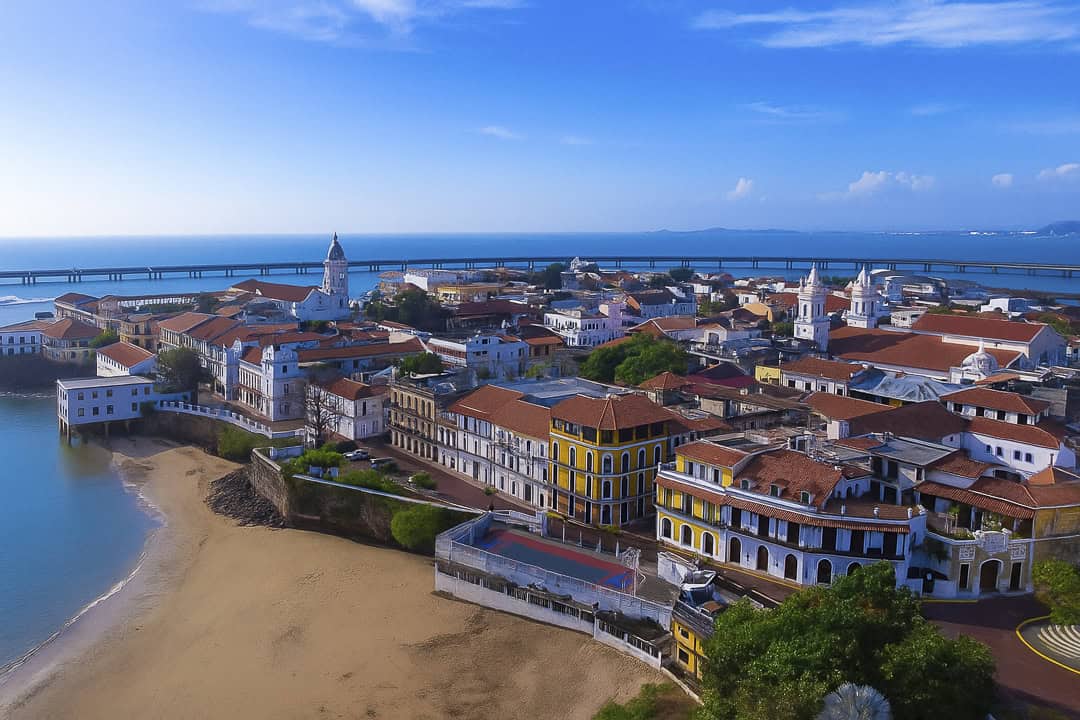
A colonial old town, a skyline and a canal
Panama City was founded in 1519 at what is now Panamá Viejo, the first European city on the Pacific coast of the Americas. After pirate Henry Morgan burned it in 1671, it was rebuilt on a fortified peninsula, today's Casco Viejo, a UNESCO World Heritage Site. Over the 20th century the city grew with the canal, and since the 2000s banking, trade and real estate have filled the bay with skyscrapers.
The result is a city of striking contrasts. The restored plazas and churches of Casco Viejo sit across the water from the towers of Punta Paitilla and Punta Pacífica; the Cinta Costera waterfront park links them for walkers and cyclists. The canal's Miraflores Locks are 20 minutes from the centre, and the Metropolitan Natural Park, the only tropical rainforest within a capital city's limits in Latin America, is closer still.
The honest complications
Panama City is hot and humid year-round, and traffic can be terrible at rush hour. Some neighbourhoods next to Casco Viejo, notably El Chorrillo and parts of Santa Ana, have high crime, so it is important to know the boundaries. It is also more expensive than other Central American capitals.
Don't just stay in a tower. The financial district hotels are comfortable but soulless. Spend at least a night or two in or near Casco Viejo, where the city's history, restaurants and nightlife are.
Six neighbourhoods that matter
Panama City stretches along the Pacific coast for miles. Most visitors split their time between Casco Viejo and the modern districts, with the canal and causeway a short Uber ride away.
Casco Viejo
The restored 17th-century old town of plazas, churches, boutique hotels, rooftop bars and the best restaurants in the city. Lively at night and well policed in its central streets.
Bella Vista and El Cangrejo
Central residential and business areas with mid-range hotels, cafés, restaurants and metro access, a practical base between the old and new cities.
Obarrio and Marbella
The banking district, with business hotels, casinos, shopping and the Calle Uruguay nightlife strip.
Punta Paitilla and Punta Pacífica
Towering apartment blocks and luxury hotels on the bay, with the Multiplaza mall nearby.
Amador Causeway
A causeway built from canal excavation spoil, linking three islands, with the Biomuseo, cycle paths, restaurants and views of ships entering the canal.
Balboa and Ancón
The former US Canal Zone, with the Canal Administration Building, Ancón Hill and quiet, leafy streets.
From restored colonial hotels to bayside towers
Panama City has a big range of hotels, from luxurious colonial conversions in Casco Viejo to international chains in the financial district and lively hostels.
At the top, the Sofitel Legend Casco Viejo, with a rooftop pool overlooking the bay and skyline, starts around $350 a night. The American Trade Hotel (from $250), in a restored 1917 building on Plaza Herrera, has a famous jazz club and a beautiful lobby café. Las Clementinas (from $200) offers spacious apartment-style suites in a 1930s building.
In the mid-range, business hotels in Bella Vista and El Cangrejo offer good rooms with pools from around $80-130. On a budget, Luna's Castle (dorms from $18) is a long-running, characterful hostel in a colonial mansion in Casco Viejo.
Ceviche, fondas and Central America's best restaurants
Panama City's food scene ranges from ceviche stalls and fondas to restaurants ranked among Latin America's best. Casco Viejo is the centre of the dining scene, with chefs reinventing Panamanian ingredients.
Mercado de Mariscos
The fish market's outdoor stalls sell cups of fresh ceviche for a few dollars, and the restaurant upstairs grills the catch of the day. Go at lunchtime.
Modern Panamanian at Maito
Chef Mario Castrellón's Maito, regularly on Latin America's 50 Best list, blends Afro-Caribbean, Chinese and Indigenous influences in a creative tasting menu.
Fonda Lo Que Hay
A casual, playful take on Panamanian fonda food from the same team, with dishes like tuna tostadas and pork belly with plantain.
Rooftop bars
Rooftops like Tántalo and the bar at the Sofitel have spectacular views of the skyline across the bay at sunset.
Coffee
Specialty cafés like Café Unido serve Panamanian coffee, including a cup of the famous Geisha variety, for the price of a cocktail.
The canal, the old town and the rainforest
Panama City's highlights are spread around the city but easy to reach by Uber or metro. Plan your canal visit around the ship schedule and the heat.
The Panama Canal
At the Miraflores Locks visitor centre ($17.22 for non-resident adults, including an IMAX film), watch ships being raised or lowered from viewing terraces, with a museum and film explaining the canal's history. Ships usually pass in the morning and mid-afternoon. For the full experience, book a partial canal transit by boat through the Miraflores and Pedro Miguel locks.
Casco Viejo
Wander the restored streets of the old town: the Metropolitan Cathedral on Plaza de la Independencia, the golden altar of the Church of San José, saved from Henry Morgan's pirates, the Plaza de Francia and its monument to the French canal workers, and the waterfront Paseo Esteban Huertas. The Canal Museum on the main plaza tells the canal story in depth.
Panamá Viejo and the Biomuseo
The ruins of Panamá Viejo (small entry fee), the original 1519 city burned by Henry Morgan, include a cathedral tower you can climb. On the Amador Causeway, Frank Gehry's colourful Biomuseo explains how the isthmus formed and changed life on Earth.
Rainforest in the city
Hike the trails of the Metropolitan Natural Park for sloths, toucans and views over the skyline, or climb Ancón Hill for a 360-degree panorama of the city and canal. For more wildlife, take a day trip to Gamboa.
One, two or three days, from the canal to the old town
Two to three days covers Panama City properly, with time for a day trip to the rainforest or islands. These plans group sights to avoid traffic.
- Morning
Miraflores Locks. Watch ships transit and visit the museum.
- Midday
Ceviche at the Mercado de Mariscos. Lunch at the fish market.
- Afternoon
Casco Viejo. Plazas, churches and the Canal Museum.
- Evening
Rooftop sunset and dinner. A rooftop drink with skyline views, then dinner in Casco Viejo.
- Day 1
The one-day route: the canal, ceviche and Casco Viejo.
- Day 2 morning
Metropolitan Natural Park or Ancón Hill. An early hike for wildlife and views.
- Day 2 afternoon
Amador Causeway and Biomuseo. Cycle the causeway and visit the museum.
- Day 2 evening
Cinta Costera and dinner. A walk along the waterfront and dinner at Maito or Fonda Lo Que Hay.
- Days 1-2
The two-day route above, adding Panamá Viejo.
- Day 3, option A
Partial canal transit. A half or full day on a boat through the locks.
- Day 3, option B
Gamboa and Lake Gatún. Birding on Pipeline Road, a boat to Monkey Island and an Emberá village visit.
Metro, Uber and the Cinta Costera
From Tocumen International Airport (PTY), Metro Line 2's airport branch connects to the city (change to Line 1 for the centre) for about $0.85. A taxi costs around $30-40 to Casco Viejo or the financial district, and Uber is usually cheaper. Allow for heavy traffic at rush hour.
Panama City's metro (Lines 1 and 2) is clean, cheap and air-conditioned, using a rechargeable card. MetroBus covers routes the metro does not. Uber and inDrive are inexpensive and the easiest way to reach the canal, Amador Causeway and Panamá Viejo. Street taxis have no meters; agree the fare first. The Cinta Costera waterfront path is great for walking or cycling between Casco Viejo and the modern city.
Best time to visit and the rainy season
Mid-December to April is the dry season, with sunny days and breezes. May to November is the rainy season, with heavy afternoon storms, especially in October and November, but mornings are often fine for sightseeing. Carnival in February or March is a big celebration in the city too.
Practical prep: an eSIM before landing saves the airport kiosk. Bring small US dollar bills, as taxis and shops often refuse $50s and $100s. Check the canal ship schedule before visiting Miraflores.
Dollar prices, Central American exceptions
Panama City is the most expensive city in Central America, but fondas, the metro and many sights keep costs manageable. Fine dining and hotels in Casco Viejo can be priced close to US levels.
- Hostel dorm $15-25
- Fondas and ceviche $4-10
- Metro and MetroBus
- Free Casco Viejo, Cinta Costera and Ancón Hill
- Boutique or business hotel
- Restaurant meals $20-40
- Miraflores Locks and Panamá Viejo
- Uber rides
- Sofitel Legend or American Trade Hotel
- Tasting menus at Maito
- Partial canal transit
- Private guides
Safe in visitor areas, with clear boundaries
Panama City shares Panama's Level 2 "Exercise Increased Caution" rating. The main visitor areas, central Casco Viejo, Bella Vista, El Cangrejo, Obarrio, Punta Paitilla and the Amador Causeway, are generally safe, with a strong police presence in Casco Viejo. Petty theft is the most common issue.
The neighbourhoods bordering Casco Viejo, especially El Chorrillo and parts of Santa Ana and Curundú, have high crime; do not wander beyond the restored streets, particularly at night. Use Uber after dark, keep phones and valuables discreet, and agree taxi fares in advance. Emergency number is 911; police are 104.
Rainforest, islands and two oceans
Panama City is a superb base for day trips: rainforest, the canal's lake, Caribbean forts and Pacific islands are all within two hours.
Gamboa and Soberanía National Park
Pipeline Road is one of the world's top birding trails, with toucans, trogons and sloths. Add the Panama Rainforest Discovery Center's canopy tower.
Lake Gatún and Monkey Island
Boat trips on the canal's artificial lake pass huge ships and stop to see capuchin and howler monkeys. Book a Monkey Island tour.
Emberá village
Visit an Emberá community on the Chagres River by dugout canoe, with traditional dancing, crafts and lunch.
Portobelo and Agua Clara
Spanish colonial forts on the Caribbean coast, and the Agua Clara visitor centre at the canal's expanded Atlantic locks.
Taboga Island
The "Island of Flowers" in the Pacific, with a quiet village, beaches and views of ships waiting to enter the canal.
Panama City FAQ
Is Panama City safe for tourists?
Yes, in the main visitor areas like Casco Viejo, Bella Vista, El Cangrejo and the financial district. Avoid El Chorrillo and nearby neighbourhoods, especially at night, and use Uber after dark.
How many days do I need in Panama City?
Two to three days covers Casco Viejo, the Miraflores Locks, Panamá Viejo and the Amador Causeway, plus a day trip to Gamboa or the islands.
How much does Panama City cost per day?
Budget travellers manage on $50-70 a day; mid-range runs $140-220. It is the most expensive city in Central America.
When is the best time to visit Panama City?
Mid-December to April, the dry season. The rainy season brings afternoon storms but quieter, cheaper travel.
How do I see ships in the Panama Canal?
The Miraflores Locks visitor centre is the best place. Ships usually pass in the morning and mid-afternoon; check the schedule. A partial transit by boat is the ultimate experience.
How do I get from Tocumen airport to the city?
Metro Line 2's airport branch connects to the city for about $0.85 including the change to Line 1. A taxi costs around $30-40 and Uber about $18-28.
What is the best area to stay in Panama City?
Casco Viejo for atmosphere and restaurants, Bella Vista or El Cangrejo for value and metro access, and Punta Pacífica for luxury towers.
Is Uber available in Panama City?
Yes, Uber and inDrive are widely used, cheap and safer than hailing street taxis, which have no meters.
Can I drink the tap water in Panama City?
Generally yes. Panama City's tap water is treated and considered safe, though many visitors prefer bottled water.
Can I visit the San Blas Islands from Panama City?
Yes, on packages that include a 4x4 transfer (about 2.5-3 hours) and a boat. Day trips are possible but tiring; one or two nights is better.
What Stays With You
Panama City is a place where history and ambition sit side by side: a church altar saved from pirates, a canal that took two nations and tens of thousands of lives to build, a skyline that has grown in a generation. Step out of the air-conditioned towers and it reveals a warm, musical, very Caribbean side, especially on a Casco Viejo plaza on a Friday night.
Watch the lights of the ships waiting to enter the canal from a rooftop on your last evening, and you will understand why this city has always been, and still is, a crossroads of the world.