
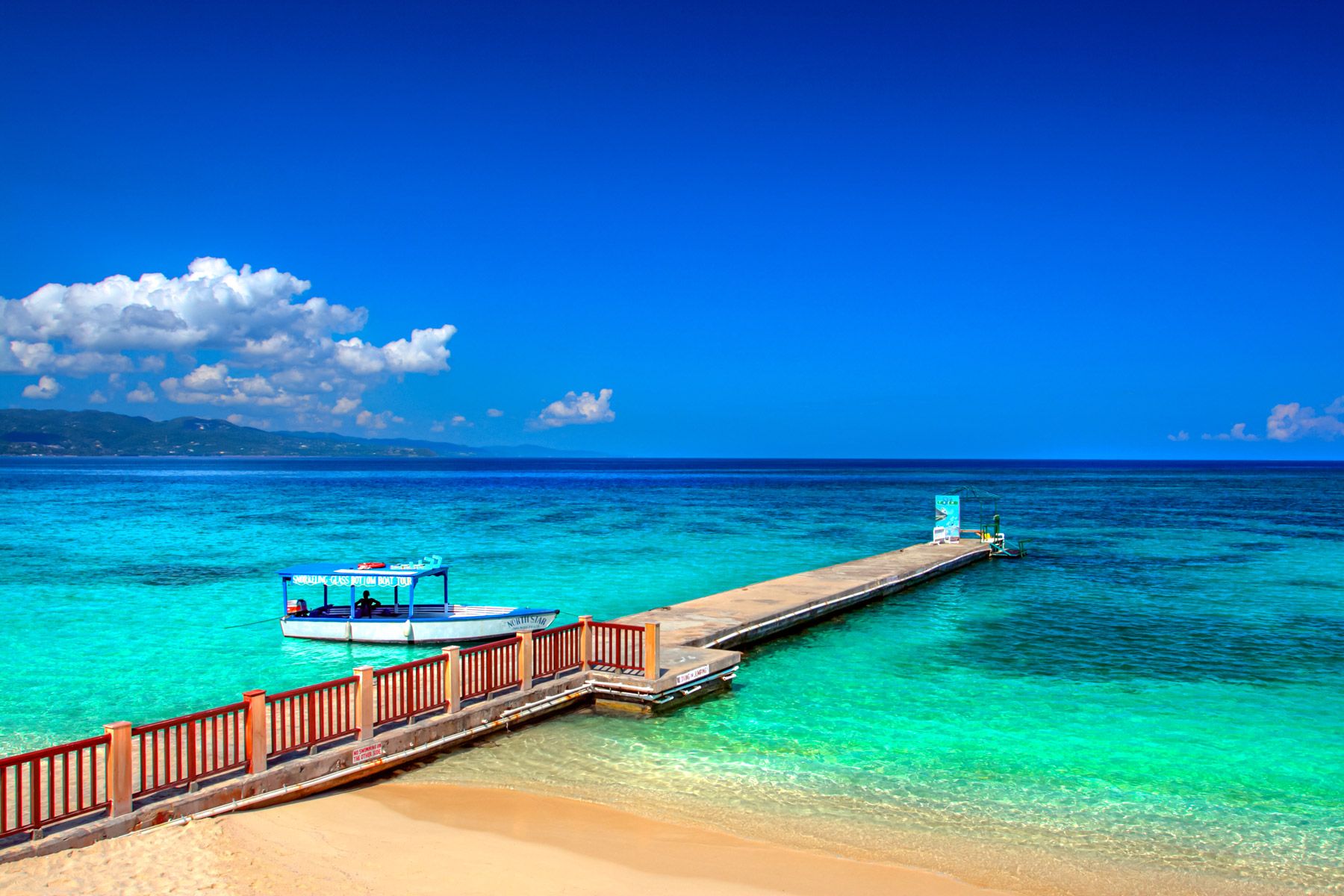
Jamaica's front door, beaches and all
Montego Bay is Jamaica's second-largest city and its tourism capital. Its airport, Sangster International, welcomes most of the island's visitors, and the coast either side of it is lined with resorts, from the Hip Strip in town to the luxury enclaves of Rose Hall, Ironshore and Round Hill. In the 1950s and 60s it was a glamorous winter escape for Hollywood stars; today it is busier and more commercial, but the beaches and the setting remain beautiful.
Beyond the resorts, MoBay is a real Jamaican city, with a historic downtown around Sam Sharpe Square, named after the Baptist preacher who led the 1831 Christmas Rebellion against slavery. It also sits within easy reach of some of western Jamaica's best experiences: rafting on the Martha Brae, the glowing Luminous Lagoon, Negril's Seven Mile Beach and the waterfalls of Ocho Rios.
The honest complications
Montego Bay was hit hard by Hurricane Melissa in October 2025, with flooding and wind damage across St James. The airport, main resorts and most attractions have reopened, but some neighbourhoods and smaller businesses are still recovering; check that your accommodation and tours are operating. Parts of the city have high crime rates, and vendors on the Hip Strip can be persistent.
Don't judge MoBay by the Hip Strip alone. Gloster Avenue's bars and souvenir shops are fun but touristy; the best of the area is on the rivers, in the hills, at local jerk centres and on day trips along the coast.
Six areas that matter
Most visitors stay along the coast east or west of the city, rather than in the city itself. Where you stay shapes how much of Jamaica you see beyond the resort.
The Hip Strip (Gloster Avenue)
The tourist strip next to Doctor's Cave Beach, with mid-range hotels, bars, restaurants and souvenir shops. Lively, convenient and close to the airport, with persistent vendors.
Rose Hall
East of the airport, with large all-inclusive resorts, golf courses and the Rose Hall Great House. Self-contained and safe, but far from local life.
Ironshore
An upscale residential area with villas and smaller hotels between the airport and Rose Hall.
Downtown
The historic city centre with the square, the Church of St James, markets and local shops. Best visited by day with a guide.
Reading, Hopewell and Round Hill
West of the city, home to the legendary Round Hill and Tryall Club, with private villas and quiet coves.
Falmouth
A historic Georgian town and cruise port near the Martha Brae and Luminous Lagoon.
From legendary hideaways to beach hotels
Montego Bay has the widest range of hotels in Jamaica, from historic luxury retreats to big all-inclusives and simple guesthouses. Most have reopened since Hurricane Melissa, including Round Hill, Half Moon and the S Hotel, but Hyatt's resorts in Montego Bay and Rose Hall are not expected back until early 2027, so check before you book.
At the top, Round Hill Hotel and Villas, a hideaway of whitewashed cottages that hosted the Kennedys and Hollywood stars, starts around $700 a night. Half Moon (from $500) is a sprawling, elegant resort on a crescent beach in Rose Hall.
In the mid-range, S Hotel Montego Bay (from $250) is a stylish adults-friendly hotel next to Doctor's Cave Beach on the Hip Strip, with a rooftop bar. All-inclusive resorts line Rose Hall and the Hip Strip in every price range. On a budget, guesthouses and apartments around the Hip Strip and in the hills above town offer rooms from around $50-90.
Jerk centres, patties and seafood
Montego Bay is one of the best places in Jamaica to eat jerk, and its local restaurants serve classic Jamaican dishes for a fraction of resort prices. Escape the buffet at least once.
Scotchie's
Scotchie's is MoBay's most famous jerk centre, with pork, chicken and sausage slow-smoked over pimento wood under zinc sheets, served with festival and roast breadfruit.
The Pork Pit
A long-running, open-air jerk spot on Gloster Avenue, convenient for a quick, authentic plate.
Patties and cook shops
Grab a beef patty in coco bread from Juici Patties or a cook shop plate of curry goat or brown stew chicken with rice and peas.
Seafood by the sea
Fresh escovitch fish, lobster in season (July to March) and shrimp at beachside restaurants along the bay and in Falmouth.
Rum and rooftop drinks
A rum punch or Red Stripe at a rooftop or beach bar along the Hip Strip at sunset.
Beaches, rivers and history
Montego Bay's own attractions fill a couple of days, with beaches, a great house and river trips, but its real strength is as a base for exploring the west and north coasts.
Doctor's Cave Beach and the bay
Doctor's Cave Beach (around $8 entry), on the Hip Strip, has calm, clear water and has been famous since the 1920s, when a doctor declared its waters healing. Nearby, Aquasol Beach and Dead End Beach are popular with locals, and the Montego Bay Marine Park offers snorkelling and glass-bottom boat trips.
Rose Hall and Greenwood
Rose Hall Great House ($30 day tour, $35 night tour), a restored 1770s plantation mansion, is famous for the legend of Annie Palmer, the White Witch, and offers day and night tours. Greenwood Great House nearby, once owned by the family of poet Elizabeth Barrett Browning, has a fascinating collection of antiques. Both tell part of the history of slavery on Jamaica's plantations.
Rivers and rafting
Glide down the Martha Brae River on a 10-metre bamboo raft poled by a local captain, around 30 minutes east. Book a rafting trip, or try river tubing on the Great River.
Downtown and the Luminous Lagoon
Visit Sam Sharpe Square and the National Heroes monument by day, ideally with a guide. At night, take a boat on the Luminous Lagoon near Falmouth, where microorganisms make the water glow when disturbed, one of only a handful of such lagoons in the world.
One, two or three days from MoBay
Three days covers Montego Bay and one big day trip. These plans assume a Hip Strip or resort base and use licensed drivers or tours.
- Morning
Doctor's Cave Beach. Swim and snorkel before the crowds.
- Midday
Jerk lunch. Taxi to Scotchie's for jerk pork and chicken.
- Afternoon
Rose Hall Great House. The tour and the White Witch legend.
- Evening
Hip Strip sunset. A rooftop drink and dinner on Gloster Avenue.
- Day 1
The one-day route: beach, jerk, Rose Hall and the Hip Strip.
- Day 2 morning
Martha Brae rafting. A gentle bamboo raft trip near Falmouth.
- Day 2 afternoon
Falmouth. Georgian architecture and a seafood lunch.
- Day 2 evening
Luminous Lagoon. A night boat trip and swim in the glowing water.
- Days 1-2
The two-day route above, at a gentler pace.
- Day 3, option A
Negril. About 1.5 hours west: Seven Mile Beach and sunset at the West End cliffs.
- Day 3, option B
Ocho Rios. About 1.5 hours east: Dunn's River Falls and the Blue Hole, or Nine Mile for Bob Marley.
Licensed taxis, drivers and coaches
Sangster International Airport (MBJ) is just 5 km from the Hip Strip. Licensed JUTA taxis charge around $15-25 to Hip Strip hotels and $25-40 to Rose Hall; many resorts include transfers. Agree the fare before getting in.
Getting around Montego Bay is easiest by licensed taxi (look for red PP or JUTA plates), hotel shuttle or private driver. Knutsford Express coaches leave from the city for Negril, Ocho Rios, Kingston and other towns, with comfortable seats and Wi-Fi. Route taxis are cheap but crowded. Renting a car is possible, but driving is on the left and the roads are hectic; a driver is often worth the cost for day trips.
Best time to visit and hurricane season
December to April is the dry season and peak time. May and June are good-value shoulder months. July brings Reggae Sumfest, Jamaica's biggest music festival, usually held in Montego Bay (the 2026 edition moved to St Ann for one night because of hurricane damage). Hurricane season runs June to November, peaking from August to October; Hurricane Melissa in October 2025 caused major damage, so insurance is essential in this period.
Practical prep: complete Jamaica's free online C5 immigration and customs form at enterjamaica.gov.jm before flying. An eSIM before landing saves the airport kiosk, and Digicel and Flow sell local SIMs.
Resort prices, local exceptions
Montego Bay can be expensive if you stay in resorts and eat on the Hip Strip, but local food and transport are cheap. Prices in tourist areas are often in US dollars.
- Guesthouse or apartment $50-80
- Jerk and patties $5-12
- Route taxis and Knutsford Express
- Public beaches
- Hip Strip hotel or mid-range all-inclusive
- Restaurant meals $20-40
- Rafting and Rose Hall tours
- Licensed taxis
- Round Hill or Half Moon
- Private drivers and day trips
- Catamaran cruises
- Fine dining and spa
Safe in tourist areas, with sensible precautions
Montego Bay's tourist areas, the Hip Strip, Rose Hall, Ironshore and the resorts, are generally safe, but parts of the wider city have high rates of violent crime linked to gangs, and the US government restricts its staff from certain neighbourhoods. Most visitors have trouble-free stays by sticking to tourist areas and using licensed transport.
Avoid walking alone at night, even on the Hip Strip, and do not explore downtown or residential areas without a guide. Be firm with vendors and people offering drugs or tours. Use licensed taxis with red PP or JUTA plates, keep valuables in the hotel safe and do not leave belongings unattended on the beach. Check which areas are still affected by hurricane damage. Emergency numbers are 119 for police and 110 for ambulance and fire.
Beaches, waterfalls and Bob Marley
Montego Bay is the best base for exploring western and northern Jamaica. Most trips are 30 minutes to two hours away by road, with a driver or tour.
Negril
Seven Mile Beach for swimming and snorkelling, then the West End cliffs and Rick's Café for cliff-jumping and sunset. Negril was heavily affected by Hurricane Melissa; check what is open.
Ocho Rios
Climb Dunn's River Falls, swim at the Blue Hole and try Mystic Mountain's bobsled. Go on a non-cruise day if possible.
Nine Mile
Bob Marley's birthplace and mausoleum in the hills of St Ann, with tours led by Rastafarian guides.
Luminous Lagoon and Falmouth
A Georgian town by day and a glowing bioluminescent lagoon by night.
YS Falls and Appleton Estate
A beautiful waterfall on a working estate and Jamaica's most famous rum tour; check status after hurricane damage in St Elizabeth.
Montego Bay FAQ
Is Montego Bay safe for tourists?
Generally yes in tourist areas like the Hip Strip, Rose Hall and the resorts. Avoid walking alone at night, use licensed taxis and do not explore unfamiliar neighbourhoods without a guide.
Has Montego Bay recovered from Hurricane Melissa?
Largely. The airport, major resorts and attractions have reopened since the October 2025 storm, but some neighbourhoods and smaller businesses are still rebuilding. Check your hotel and tours before booking.
How many days do I need in Montego Bay?
Three days covers the beaches, Rose Hall, rafting and one day trip. Many visitors combine MoBay with Negril or Ocho Rios.
How much does Montego Bay cost per day?
Budget travellers manage on $70-90 a day; mid-range runs $180-280. All-inclusive and luxury resorts cost much more.
When is the best time to visit Montego Bay?
December to April, the dry season. Hurricane season runs June to November.
What is the best beach in Montego Bay?
Doctor's Cave Beach on the Hip Strip is the classic, with calm, clear water. Many resorts also have private beaches.
How do I get from Montego Bay airport to my hotel?
Licensed JUTA taxis charge around $15-40 depending on distance; many resorts include transfers. Agree the fare first.
Can I day trip to Negril or Ocho Rios from Montego Bay?
Yes. Both are about 1.5 hours by road. Book a licensed driver, tour or Knutsford Express coach.
Is Montego Bay good for families?
Yes, especially at family resorts, with calm beaches, rafting, waterfalls and kid-friendly attractions nearby.
Do I need Jamaican dollars in Montego Bay?
US dollars are widely accepted in tourist areas, but paying in Jamaican dollars at local businesses is usually cheaper.
What Stays With You
Montego Bay is often just the place where a Jamaica trip begins, but it rewards a closer look: the smoke rising from Scotchie's jerk pits, the slow glide of a bamboo raft under the trees, the glow of the lagoon at night, the energy of a city that has been rebuilding with remarkable determination since Hurricane Melissa.
Watch the sun go down over the bay from the Hip Strip on your last evening, rum punch in hand, and you will understand why so many people who come to Jamaica for a week come back for a lifetime.